Plan your trip
New Caledonia Travel Budget: How Much Does a Trip Cost? Prices and Tips
We may earn a commission when you book through links on this page, at no extra cost to you. We don't visit or try the places we cover: we summarize published sources. How we work
In short
- Excluding the international flight, a 10-day trip runs about €900-1,300 ($1,045-1,510) per person on a backpacker budget, €1,800-2,800 ($2,090-3,250) at mid-range, and €4,000 ($4,640) or more at the premium level.
- The currency is the Pacific franc (XPF), fixed against the euro at about 119.3 XPF per €1; a quick rule is to divide by 120 to get euros.
- A small rental car costs about €45-80 ($52-93) per day plus fuel; sharing it between two or four people divides the bill.
- Nature, beaches and many hikes are free or cheap; eating local and avoiding school holidays are the biggest savings.
New Caledonia has a reputation as an expensive destination, and the reputation is deserved: the archipelago is at the other end of the world, a large share of products are imported, and air links between the islands weigh on the budget. But a stay there is not reserved for the wealthy. Between a night in a tribal guesthouse, a picnic on a deserted beach and a stay in a lagoon-side hotel, the gap is considerable, and you decide which side of the dial you land on.
This guide details the budget for a trip to New Caledonia item by item, offers three sample profiles (backpacker, mid-range, premium) and ends with the tips that really lower the bill.
An important note. The amounts below are rounded orders of magnitude, expressed in euros with the dollar equivalent (1 € = $1.16) and the Pacific franc conversion where useful. Fares change with season, airline and booking date: always check the price shown when you book before fixing your budget.
Currency and conversion tips
New Caledonia uses the Pacific franc (XPF), whose rate against the euro is fixed: €1 is worth about 119.3 XPF. In practice, remember the “divide by 120” rule: a dish at 2,400 XPF costs about €20 (about $23), a room at 15,000 XPF about €125 (about $145).
A few pointers for daily life:
- Bank cards: accepted without difficulty in Nouméa, in hotels, at rental companies and in most restaurants.
- Cash: essential for small bush shops, markets, tribal guesthouses and some of the Loyalty Islands, where card payment is not systematic.
- Withdrawals: make them in Nouméa or in the West Coast towns before moving away, as ATMs become rarer outside the centers.
- Bank fees: ask your bank about foreign transaction and withdrawal fees, since the XPF is not the euro even though it is pegged to it.
The flight: the first expense
For most travelers, the plane ticket is the heaviest item. The journey is long, with one or more stopovers, and fares vary strongly with the period.
- Outside school holidays: fares are generally lower and flights are easier to find.
- During school holidays and the year-end holidays: prices can climb sharply, and flights fill up months ahead.
- For families: multiply by the number of passengers and check child fares, which are not always very advantageous on such long distances.
To know which period to choose according to weather, whales and cyclones, read our guide when to go to New Caledonia. The calendar affects your comfort as much as your wallet.
Flights to New Caledonia
The long-haul ticket is the first item in the budget: compare several dates and airlines before booking.
Lodging: from camping to lagoon hotels
Lodging is the second expense, and the one where you have the most room to maneuver. Several options coexist, and you can combine them during the trip.
Camping and very simple lodging
Camping is the cheapest option: generally allow a few thousand Pacific francs per person per night, in the order of €10 to €25 (about $12 to $29). Some seaside or hiking sites offer simple pitches, sometimes with shelters or small basic bungalows.
Tribal guesthouses and B&Bs
This is the most authentic option: sleeping with a family or in a guesthouse run by a Kanak family lets you discover local life, often with a shared meal in the evening. Rates are generally €40 to €90 per person per night (about $46 to $105) depending on comfort and package (with or without meals). Remember to book in advance and plan on cash. To understand the customs to respect before staying, read our article on Kanak culture.
Hotels and residences
In Nouméa, a mid-range hotel room is often in the range of €90 to €180 a night (about $105 to $210), with large variations by neighborhood, season and sea view. Residences with a fitted kitchen are worthwhile for families and long stays, since they let you cook. Our guide where to stay in Nouméa details the neighborhoods so you can choose according to budget.
Resorts and lagoon hotels
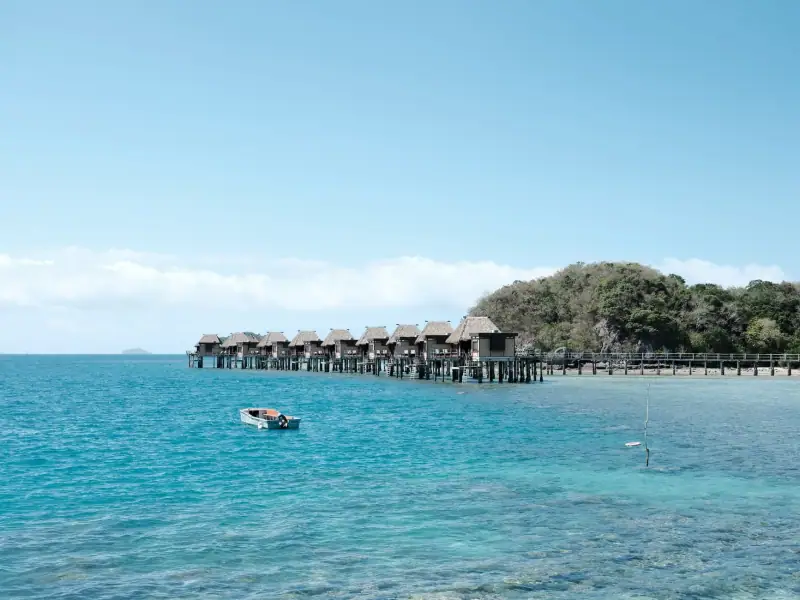
On the Isle of Pines, the Loyalty Islands or by the lagoon on the West Coast, high-end properties regularly exceed €250 a night (about $290), sometimes much more for an overwater bungalow or a villa. Book early: choice is limited and the best addresses fill up.
Places to stay in New Caledonia
Compare hotel and residence prices for your dates, from Nouméa to the Isle of Pines.
Getting around: car, bus and domestic flights
The car on Grande Terre
Outside the Nouméa urban area, public transport is limited: a rental car is the simplest way to explore the West Coast, the East Coast and the Grand Sud. For a small car, generally allow €45 to €80 per day (about $52 to $93) depending on season and length, plus fuel and possibly extra insurance. Renting with two or four people divides the bill accordingly.
Distances stay reasonable, but the roads can be winding and the East Coast takes time: do not plan too many kilometers a day, which also limits the fuel bill. Our New Caledonia 10-day itinerary offers a realistic pace.
Transport in Nouméa
In the capital, the city bus network is inexpensive (a trip costs in the order of a few hundred Pacific francs) and enough to reach the beaches, downtown and markets. Taxis are considerably more expensive: reserve them for night trips or transfers with luggage.
Flights and crossings to the islands
Reaching the Isle of Pines or the Loyalty Islands (Lifou, Maré, Ouvéa) is done by plane with the domestic airline, or by boat for some destinations. These links are a significant expense: for a round trip, plan on a sum counted in tens of thousands of Pacific francs per person, commonly several hundred euros for a stay including several islands. Luggage is often weight-limited on small planes: travel light.
To choose among the islands according to your tastes and budget, read our comparison of the Loyalty Islands and our guide to the Isle of Pines.
Excursions and activities
Boat trips, guided visits, diving: compare the prices of activities you can book in New Caledonia.
Meals: eat local to spend less
Imported products are expensive, but local cooking (fish, root vegetables, seasonal fruit, bougna) is much less so. Here are the usual ranges:
- Breakfast and snacks: a pastry, a sandwich or a street snack can generally be found for a few euros.
- Dish of the day or simple meal: about €12 to €20 (about $14 to $23) at an unpretentious restaurant.
- Standard restaurant: allow €25 to €45 (about $29 to $52) per person for a main and dessert, drink included or not depending on the place.
- Fine-dining or lagoon table: €60 (about $70) per person and above.
- Supermarket groceries: prices are higher than you may be used to, especially for imported products; local fruit, vegetables and fish are the best deals, notably at markets.
To know what to try without mistakes, see our guide what to eat in New Caledonia. Alternating a restaurant meal with a market picnic remains the most effective combination for keeping the budget under control.
Activities: from free to very expensive
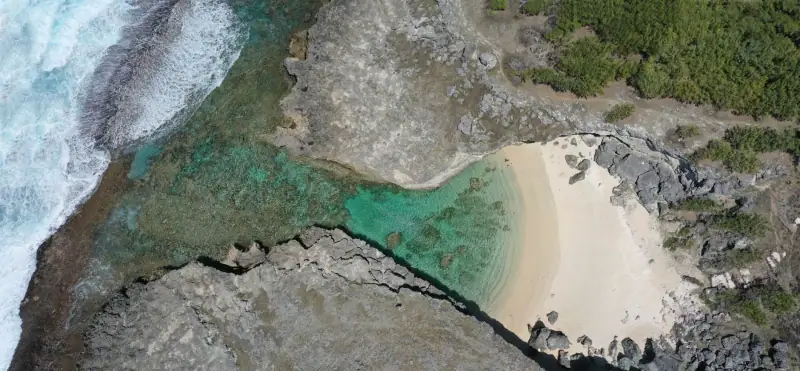
New Caledonia’s great strength is that its best assets are free: beaches, trails, viewpoints, snorkeling from the beach. Guided activities, on the other hand, cost money:
- Free or almost: swimming, hiking on marked trails, the Nouméa market, a seaside walk.
- Park and site entry: generally a few euros, with specific rates for children. This is the case for Rivière Bleue Park.
- Boat excursion or lagoon outing: in the order of €50 to €120 (about $58 to $140) per person depending on length, meal included and site.
- Introductory dive or diving outing: generally €70 to €150 (about $81 to $175). Our guide to diving and snorkeling helps you choose.
- Whale watching: regulated trips in season, to be booked with approved operators.
For a ten-day stay, allow €150 to €250 (about $175 to $290) of paid activities on a tight budget, €300 to €600 (about $350 to $695) at mid-range, and considerably more if you add lots of diving and private excursions.
Lock in your lodging early
The good addresses on the Isle of Pines and the Loyalty Islands fill up fast: booking ahead lets you compare rates and cancellation terms.
Three sample budgets for 10 days
The following amounts are per person, for 10 days on the ground, excluding the international flight. They assume a trip for two, which lets you share the car and the room.
Backpacker profile: about €900 to €1,300 ($1,045 to $1,510)
| Item | Estimate over 10 days |
|---|---|
| Lodging (camping, simple guesthouses, dorms) | €250-450 (~$290-520) |
| Transport (shared car, bus, one flight to an island) | €250-400 (~$290-465) |
| Meals (groceries, markets, simple meals) | €200-300 (~$230-350) |
| Activities | €100-150 (~$115-175) |
This profile means giving up comfort and preparing many meals yourself. It suits flexible travelers who put nature first.
Mid-range profile: about €1,800 to €2,800 ($2,090 to $3,250)
| Item | Estimate over 10 days |
|---|---|
| Lodging (mid-range hotels, comfortable guesthouses) | €700-1,100 (~$810-1,275) |
| Transport (car, flights to the Isle of Pines or Loyalty Islands) | €400-700 (~$465-810) |
| Meals (varied restaurants) | €450-700 (~$520-810) |
| Activities (excursions, diving, entry fees) | €300-600 (~$350-695) |
This is the budget of most travelers: comfortable, without excess, with a mix of hotels, tribes and excursions.
Premium profile: €4,000 ($4,640) and up
| Item | Estimate over 10 days |
|---|---|
| Lodging (lagoon hotels, bungalows) | €2,000 and up (~$2,320+) |
| Transport (car, multiple inter-island flights) | €700-1,200 (~$810-1,390) |
| Meals (fine-dining tables) | €800-1,200 (~$930-1,390) |
| Activities (private outings, diving, scenic flights) | €600 and up (~$695+) |
At this level, the budget depends mainly on the number of islands visited and the category of lodging. Add the international flight and solid travel insurance.
Ten tips to spend less
- Avoid school holidays: flights and lodging are noticeably more expensive then, as our article on the best time to go explains.
- Book the flight early and compare dates: shifting your departure by a few days can change the price notably.
- Alternate lodging: one night in a guesthouse, one in a hotel, to balance cost and comfort.
- Share the car: with four people, the cost per person becomes very reasonable.
- Cook some of your meals: the kitchen of a residence or guesthouse, combined with market produce, sharply cuts the meal budget.
- Eat local: fish, root vegetables and seasonal fruit are more affordable than imported products.
- Favor free activities: trails, beaches, snorkeling from the beach rather than on an excursion.
- Group the islands: limit the number of inter-island flights and stay several days in the same place rather than chaining trips.
- Travel light: small planes limit luggage weight, and excess can be charged.
- Keep a 10 to 15% margin for the unexpected: cash, fuel, weather, flight changes.
What not to forget in your budget
- Travel insurance: notably with cancellation and repatriation cover, all the more useful during the cyclone season.
- Fuel: plan according to your kilometers.
- Tips: they are not mandatory.
- Gifts and souvenirs: local crafts, seafood products, vanilla; plan a small envelope.
- Custom: in some tribes, a small gift for the host is appreciated; ask before you go.
- Phone and internet: check your carrier’s international plan or use a travel eSIM.
How to build your budget
Start by fixing the length and the period, then book the flight, which conditions everything else. Next decide how many islands you want to visit: each extra island adds a flight and a night of lodging, but also a very different experience. Finally, split your nights between simple lodging and more comfortable addresses, keeping a few days for free nature: that is where New Caledonia reveals itself best, without costing much.
With a little anticipation and flexibility, a quality stay in New Caledonia remains within reach of many budgets. Once your figures are set, you can book with confidence and enjoy your trip without unpleasant surprises.
Sources
- IEOM (Institut d’émission d’outre-mer): prices checked November 2026
Frequently asked questions
What budget should you plan for 10 days in New Caledonia?
Excluding the international flight, plan about €900 to €1,300 (about $1,045 to $1,510) per person on a tight budget (guesthouses, camping, groceries), €1,800 to €2,800 (about $2,090 to $3,250) on a mid-range budget (hotels, car, restaurants) and €4,000 (about $4,640) or more on a premium budget. The flight is on top and is often the biggest expense. These figures are orders of magnitude to confirm when you book.
Is New Caledonia expensive?
Yes, it is one of the most expensive destinations in the Pacific: imported goods, lodging and local air transport weigh on the budget. On the other hand, nature, beaches and many hikes are free or very cheap, which helps keep the bill under control.
What currency is used in New Caledonia?
The currency is the Pacific franc (XPF), whose rate against the euro is fixed: 1,000 XPF is worth about €8.38, or €1 for about 119.3 XPF. Bank cards are accepted in Nouméa, but plan on cash in the bush, in tribes and on the Loyalty Islands.
How can you cut the cost of a trip to New Caledonia?
Travel outside school holidays, compare flights well in advance, alternate tribal guesthouses and regular lodging, buy groceries at the supermarket for some meals, share the rental car and favor free nature activities: beaches, trails, snorkeling from the beach.
Do you need to rent a car in New Caledonia?
To explore Grande Terre beyond Nouméa, yes: public transport is limited outside the urban area. The car is a major expense, but it is easily shared between two or four people. On the Loyalty Islands and the Isle of Pines, you rent a car, scooter or bike there depending on the island.
Are prices in New Caledonia shown in euros?
No, they are in Pacific francs. To convert quickly, divide by 120: 12,000 XPF is about €100 (about $116). This simple rule avoids unpleasant surprises in the first days.
More New Caledonia guides
Keep reading
When to Go to New Caledonia: Seasons, Weather and the Best Months
When to go to New Caledonia? Cool season, hot season, cyclones, humpback whales: a month-by-month guide to choosing the best time.
Is Hienghène Worth the Detour? Poule Couveuse, Lindéralique and Tao Falls
Is Hienghène worth the detour? Poule couveuse, Lindéralique, Tao Falls, Ouaïème ferry, getting there from Nouméa, where to sleep and how long to stay.
Visiting New Caledonia: The Complete Guide to Planning Your Trip
Complete guide to visiting New Caledonia: regions, highlights, when to go, flights, getting around, lodging and budget, with links to detailed guides.
Ready-made
New Caledonia itineraries
10 days
New Caledonia in 10 Days: An Itinerary Through Nouméa, the Bush and the Islands
A 10-day New Caledonia itinerary: Nouméa, Grand Sud, West Coast, Hienghène, then the Isle of Pines or Lifou, with pacing and budget tips.
7 days
New Caledonia in 7 Days Without a Car: A Realistic Itinerary
NouméaIsle of Pines
3 days
New Caledonia's Grand Sud in 3 Days: Yaté, Rivière Bleue and Port-Boisé
3-day Grand Sud itinerary from Nouméa: Rivière Bleue, Yaté Lake, Madeleine Falls, Port-Boisé, with practical tips.