Itineraries
New Caledonia in 10 Days: An Itinerary Through Nouméa, the Bush and the Islands
We may earn a commission when you book through links on this page, at no extra cost to you. We don't visit or try the places we cover: we summarize published sources. How we work
Day by day
- Days 1-2Nouméa: Port Market, downtown, Anse Vata, Baie des Citrons
- Day 3Grand Sud and Rivière Bleue Park
- Days 4-6West Coast: Bourail, Roche Percée, north to Koné
- Days 7-8East Coast: Hienghène, Poule couveuse, tribal welcome
- Days 9-10Isle of Pines or Lifou, then back to Nouméa
Weather through the year on this route
| Jan | Feb | Mar | Apr | May | Jun | Jul | Aug | Sep | Oct | Nov | Dec | |
|---|---|---|---|---|---|---|---|---|---|---|---|---|
| High °F (°C) | 8127 | 8127 | 8127 | 7926 | 7524 | 7323 | 7222 | 7222 | 7222 | 7323 | 7524 | 7926 |
| Low °F (°C) | 7725 | 7926 | 7725 | 7524 | 7323 | 7222 | 6820 | 6820 | 7021 | 7222 | 7323 | 7524 |
| Rain in (mm) | 4.1105 | 4.1105 | 5.9150 | 3.9100 | 3.590 | 3.385 | 2.870 | 2.460 | 1.640 | 1.435 | 2.460 | 3.075 |
Normals 1991–2020 at Nouméa: averages over 30 years, not a forecast. Source: NASA POWER (MERRA-2), grid of about 50 km. Figures computed by us in November 2026.
In short
- Ten days split into four blocks: days 1-3 Nouméa and the Grand Sud, days 4-6 the West Coast, days 7-8 the East Coast (Hienghène), days 9-10 an island.
- A car is the most flexible way to do the Grande Terre part; the islands are reached by plane or boat.
- The cool, drier season, about May to October, is the most pleasant for the road and hiking; the hot season is wetter and can bring cyclones.
- Keep a night in Nouméa before the international flight, so a delayed domestic flight does not put your departure at risk.
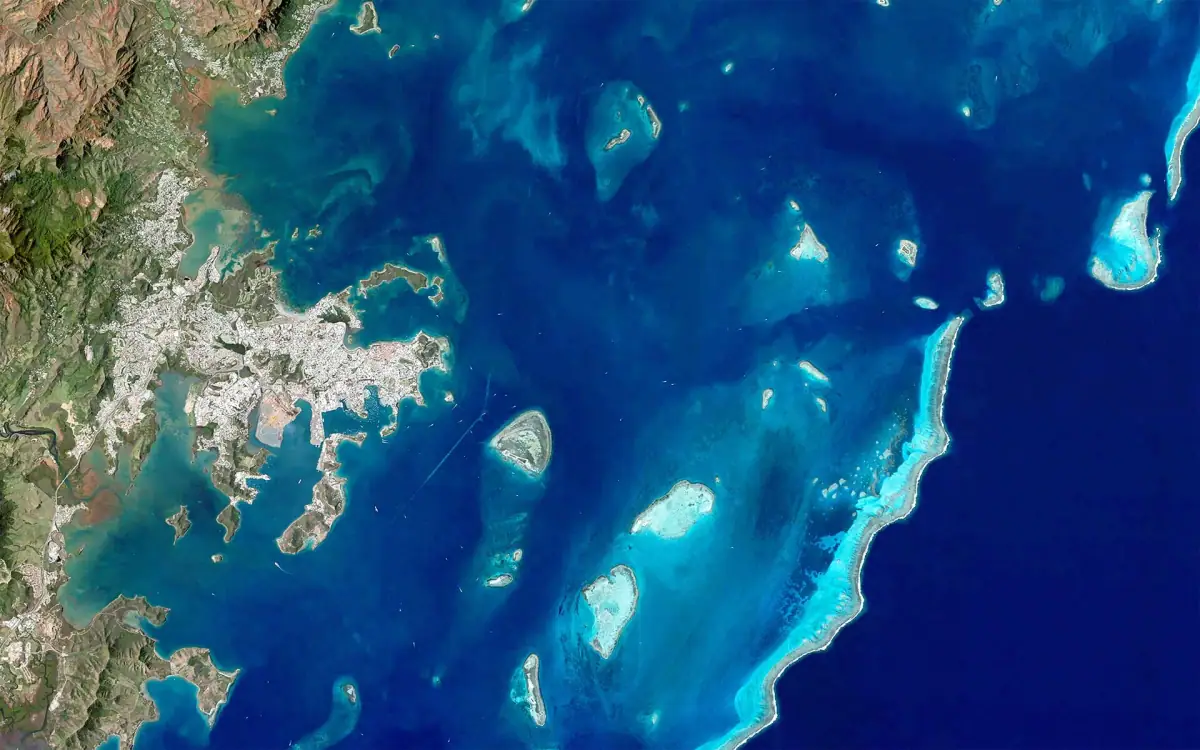
Ten days in New Caledonia is enough to feel the diversity of the archipelago without rushing: a cosmopolitan capital, a Grande Terre of bush and mountain landscapes, and a UNESCO-listed lagoon best enjoyed from an island. This route is designed as a simple thread: Nouméa and the Grand Sud, the West Coast, the East Coast toward Hienghène, then an island to finish gently.
The key is not to want to see everything. The roads are good but winding, driving is relaxed, and days are short in the tropics: the sun sets early all year. The times given are orders of magnitude, to confirm with your navigation app on the day.
Overview: the route at a glance
The circuit splits into four blocks: days 1 to 3 in Nouméa and the Grand Sud, days 4 to 6 on the West Coast, days 7 and 8 on the East Coast, then days 9 and 10 on an island, before returning to Nouméa for the international flight. If you prefer to limit the driving, drop the East Coast and gain two beach days.
Before booking, check the length of your flight and the time difference with home: you arrive after a very long journey, and a first night in Nouméa lets you recover.
Flights to New Caledonia
Fix your dates before booking the rest: compare flights to Nouméa.
Days 1 to 2: Nouméa, the gateway
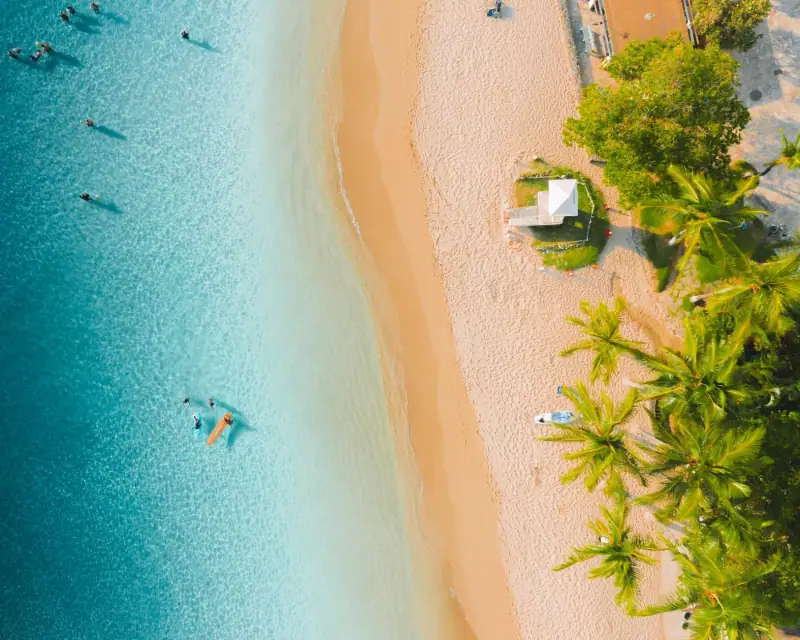
Drop your bags in Nouméa and leave the first day free. The trip from La Tontouta international airport takes about an hour, which is a reason not to plan anything heavy on arrival day. A seaside walk and a meal at a downtown or Anse Vata restaurant are enough to get into the rhythm.
On the second day, explore the city: the Port Market, downtown and its shopping streets, then a swim at Anse Vata or Baie des Citrons. For visit details, see our guide what to do in Nouméa. To choose your neighborhood, the comparison where to stay in Nouméa will help.
Practical tip: pick up the rental car when you leave the city, not before. Parking and traffic downtown are easier without a vehicle. Compare rental offers before you book.
Hotels in Nouméa
Compare Nouméa lodging for your first and last nights, by dates and budget.
Day 3: the Grand Sud and Rivière Bleue Park
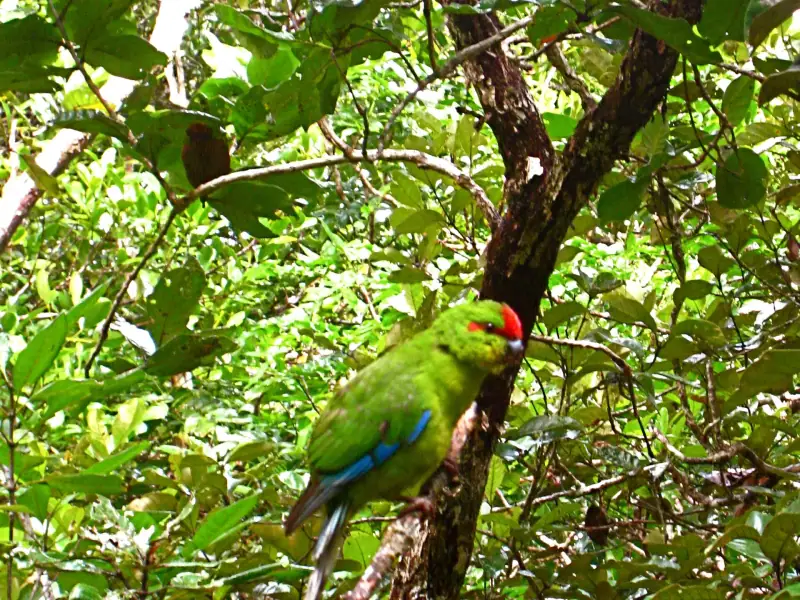
The Grand Sud is a radical change from the urban landscape: red lateritic soil, forest, lakes and rivers. Rivière Bleue Park is the natural stop for this day, with trails of varying difficulty and a forest home to species unique to the archipelago. We detail the possible loops in our article on hiking in Rivière Bleue Park.
Bring water, sun protection and closed shoes. Check access conditions and hours before you go, as they may vary with season and weather. The day can be done as a round trip from Nouméa, which avoids changing lodging.
Days 4 to 6: the West Coast and the bush
Leave Nouméa northward on the territorial road that follows the West Coast. Here the scenery becomes that of the “bush”: savanna, cattle ranches, coconut palms along the beaches and small villages. Bourail is a classic stop, with its beaches and coastal rock formations such as Roche Percée, a much-photographed site.
Two nights in the area are enough to alternate swimming, walks and encounters. Guesthouse or bungalow lodging is common: it offers a more personal welcome than the big hotels of Nouméa.
The road between Nouméa and the West Coast is long but never difficult. Work out your times to arrive before dark: lighting is limited outside villages, and there may be cattle near the roads.
Places to stay on the West Coast
Guesthouses, hotels and bungalows in the bush: compare before hitting the road.
On the sixth day, continue north toward Koné and the Voh-Koné-Pouembout area, before joining the East Coast by the cross-island road. It is mostly a driving day: save your energy for what follows and take regular breaks.
Days 7 and 8: Hienghène and the East Coast
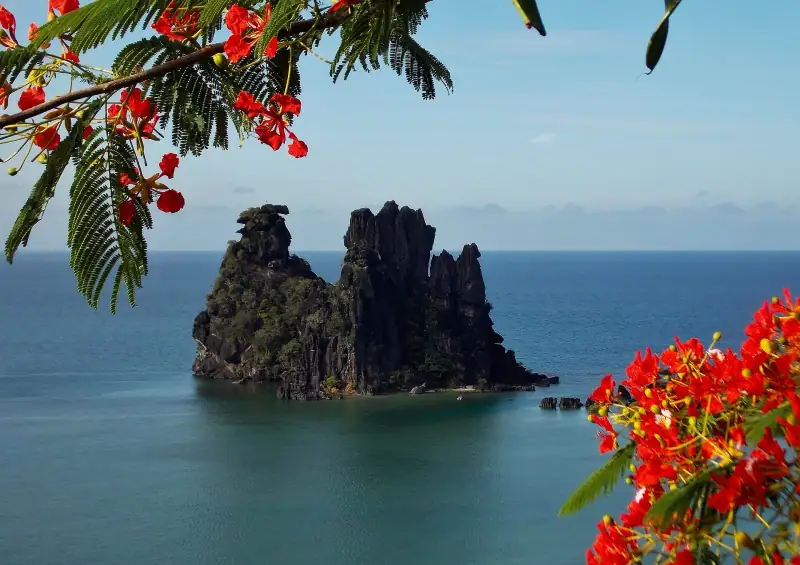
The East Coast is greener, wetter and more mountainous than the West. Hienghène is famous for its rock formations standing in the bay, like the Poule couveuse (Brooding Hen), and for an atmosphere deeply rooted in Kanak culture. You come for the scenery but also for the encounter: a stay with a tribe or in a local guesthouse is one of the best memories of a trip to New Caledonia. To know whether the stop is worth the drive, see our guide Is Hienghène worth the detour?.
Respect customary practices: always ask permission before photographing residents or crossing private land, and follow your hosts’ advice. A small gesture of politeness is appreciated and often opens doors.
On the eighth day, enjoy a boat outing or a local hike, then prepare the return to Nouméa to reach your chosen island. Distances are long: if your flight to the island leaves early, spend the previous night near Nouméa.
Activities and excursions
Boat trips, diving, guided visits: discover the experiences you can book before you leave.
Days 9 and 10: an island to finish gently
To close the trip, reach a lagoon island by plane or boat from Nouméa. Two options stand out:
- The Isle of Pines: white sand beaches, calm water and pine groves. It is the more beach-oriented option. Details in our guide what to do on the Isle of Pines.
- Lifou, in the Loyalty Islands: cliffs, coves and a strong Kanak culture. Our article on the Loyalty Islands helps you compare Lifou, Maré and Ouvéa.
Book domestic flights early if you travel during school holidays, as seats are limited. Keep a one-night margin in Nouméa before the international flight, so as not to depend on a possible domestic flight delay.
Adapting the itinerary to your pace
In 7 days: drop the East Coast and keep Nouméa, the Grand Sud, the West Coast and one island. In 14 days: add a second island, for example Lifou after the Isle of Pines, and one more night on each coast.
Families with kids: limit driving to about two hours a day, add beach stops and favor lodging with a kitchen.
Active travelers: add an extra hike in the Grand Sud or a diving outing from Nouméa or an island.
Tight budget: alternate guesthouses and equipped campsites, shop at supermarkets and markets, and favor local cooking. See also our guide what to eat in New Caledonia.
Practical tips for making this route work
- Driving: you drive on the right, speed limits are often low and the roads winding; avoid driving at night.
- Network and money: mobile coverage can be weak in the bush and mountains; carry some cash for small shops and tribes. The local currency is the Pacific franc (CFP).
- Weather: check forecasts before each leg, especially in the wet season. Our article when to go to New Caledonia details the seasons.
- Lodging: book ahead in high season, especially on the islands where choice is limited.
- Respect for the place: do not take shells or corals, do not walk on reefs and take your trash with you.
Key takeaways
A good itinerary in New Caledonia accepts slowness: four stops savored are better than eight rushed. Start with Nouméa, let the bush and the East Coast take you somewhere new, and finish on an island where the lagoon does the rest.
To turn the idea into a plan, proceed in this order: first fix your dates and book the international flight, then the nights in Nouméa, then the flights or crossings to the chosen island, which are the most constrained, and finally the West Coast and East Coast stops, easier to adjust. Keep a buffer day before the return, because a storm or a domestic flight delay can throw off a schedule that is too tight.
Finally, do not hesitate to adapt this route to your tastes: this breakdown is a starting point, not a set of specifications. A successful stay in New Caledonia often comes down to an encounter, an almost deserted beach or an impromptu evening with a local family, more than to a checklist of sights.
Frequently asked questions
Are 10 days enough to visit New Caledonia?
Ten days let you see the essentials: Nouméa, a loop on Grande Terre and one lagoon island. You have to accept making choices, because the archipelago is large and distances on Grande Terre are longer than they look on the map.
Do you need to rent a car for this route?
Yes, for the Grande Terre part a car is the most flexible way. The islands are reached by plane or boat, and a rental car there or transfers arranged by your accommodation are then enough.
Which island should you choose: Isle of Pines or Lifou?
The Isle of Pines appeals for its beaches and calm waters, Lifou for its cliffs, coves and cultural dimension. If you only have time for one, choose according to whether you prefer beach relaxation or wilder discovery.
What is the best period for this route?
The cool, drier season, from about May to October, is the most pleasant for the road and hiking. The hot season is wetter and may include cyclone episodes, to check before you book.
Can you do this route with kids?
Yes, by limiting long driving legs and planning swimming breaks. The beaches of Nouméa, the West Coast and the islands suit families well.
More New Caledonia guides
Keep reading
Is Hienghène Worth the Detour? Poule Couveuse, Lindéralique and Tao Falls
Is Hienghène worth the detour? Poule couveuse, Lindéralique, Tao Falls, Ouaïème ferry, getting there from Nouméa, where to sleep and how long to stay.
Visiting New Caledonia: The Complete Guide to Planning Your Trip
Complete guide to visiting New Caledonia: regions, highlights, when to go, flights, getting around, lodging and budget, with links to detailed guides.
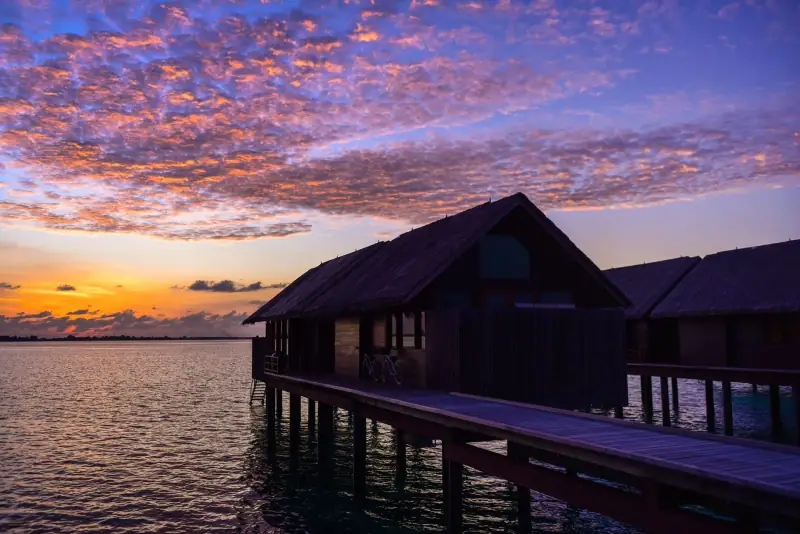
Sleeping Outside Nouméa: Tribal Guesthouse, Bungalow or Campsite in New Caledonia
Tribal guesthouse, seaside bungalow or campsite: compare lodging outside Nouméa in New Caledonia, with booking tips and the customary gesture.
Ready-made
New Caledonia itineraries
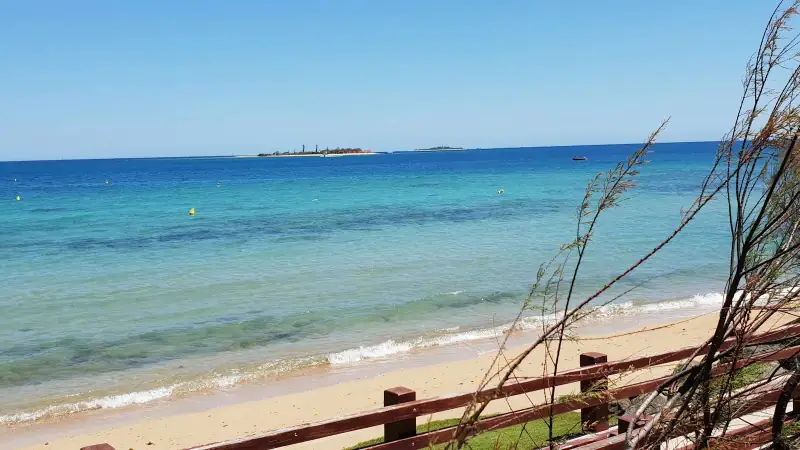
7 days
New Caledonia in 7 Days Without a Car: A Realistic Itinerary
NouméaIsle of Pines
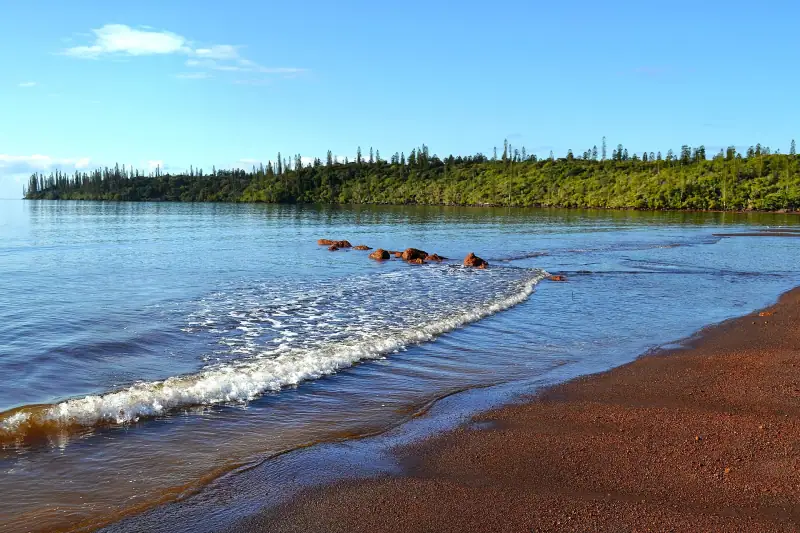
3 days
New Caledonia's Grand Sud in 3 Days: Yaté, Rivière Bleue and Port-Boisé
3-day Grand Sud itinerary from Nouméa: Rivière Bleue, Yaté Lake, Madeleine Falls, Port-Boisé, with practical tips.
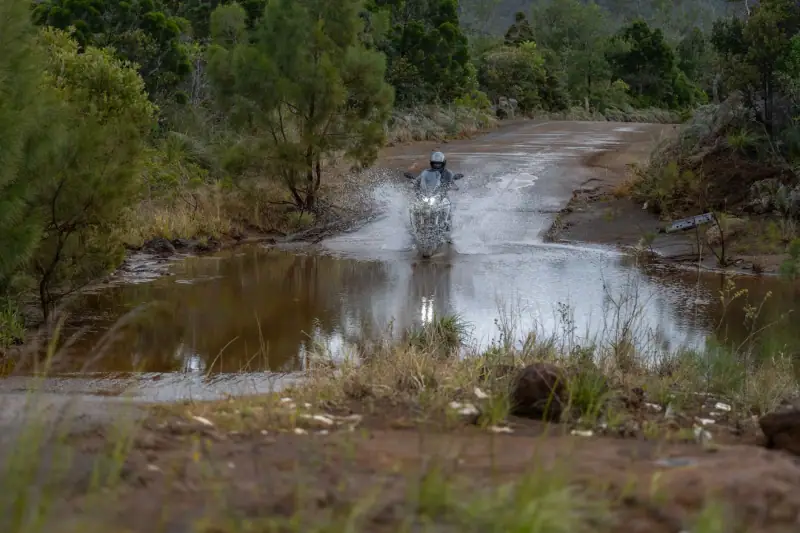
4 days
New Caledonia West Coast Road Trip in 4 Days
BourailKoné