What to see
Isle of Pines: What to Do and See, Oro Bay, Kuto and Pic N'Ga
We may earn a commission when you book through links on this page, at no extra cost to you. We don't visit or try the places we cover: we summarize published sources. How we work
In short
- Three days cover the essentials: Kuto Bay, Oro Bay, Pic N'Ga and the village of Vao; four or five days leave time for beaches and boat outings.
- Reach the island by plane from Magenta airport in about 20 minutes, or by fast boat from Nouméa on a slightly longer crossing.
- Oro Bay takes some effort to reach: a forest walk of roughly twenty minutes, then a traditional outrigger canoe crossing to the natural pool.
- The cool, drier season, May to October, is generally the most comfortable; the austral summer is hotter and wetter, with cyclone risk.
About a hundred kilometers (60 mi) southeast of Nouméa, the Isle of Pines (Kunié in the Kanak language) is often presented as the most beautiful face of New Caledonia. White sand, turquoise water, a shallow lagoon and the slender silhouette of the columnar pines that gave it its name: the setting lives up to its promise. But the island is more than its beaches. It is also a place of memory, between Kanak culture, penal colony history and Catholic traditions, where time seems to flow more slowly.
This guide presents what to see and do there, how to get there and how to organize a stay without rushing.
Why visit the Isle of Pines
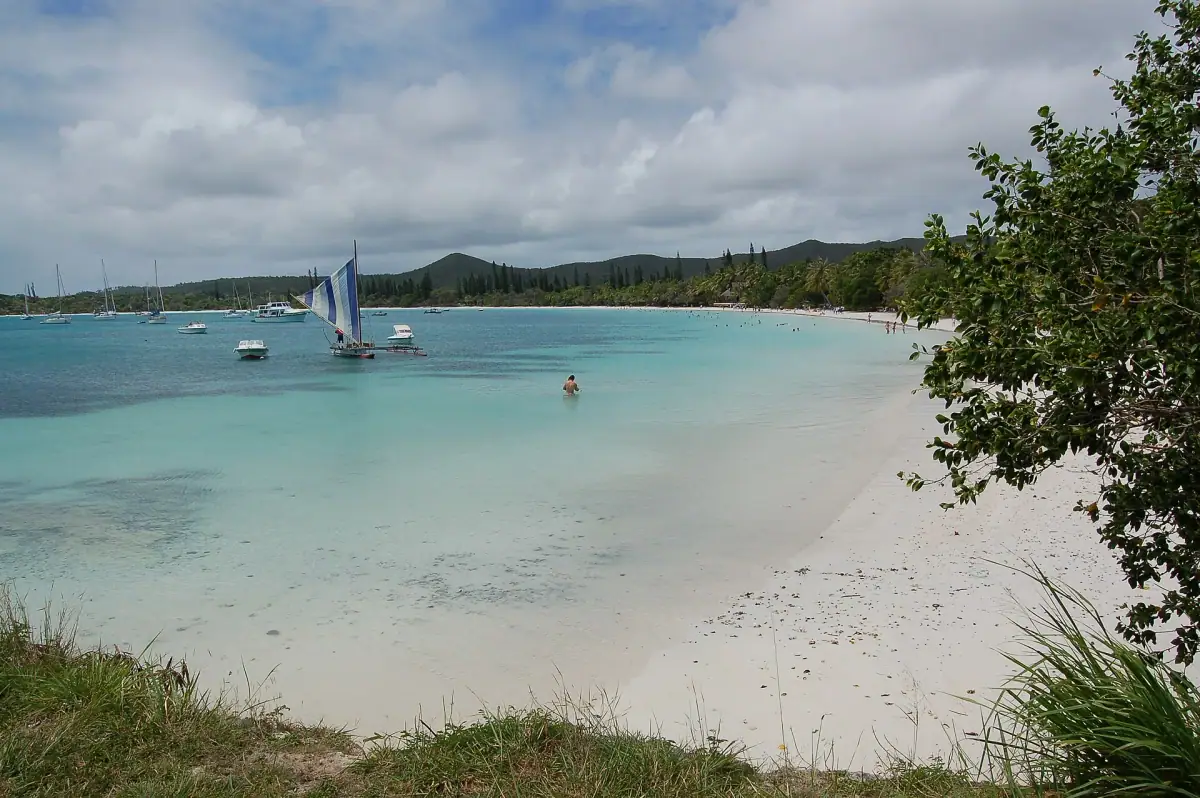
The Isle of Pines is part of the South Province. It is small, flat for the most part, and easy to cross from end to end. Its vegetation is one of its signatures: the Araucaria columnaris, the columnar pines that sometimes rise on the horizon like masts, line several beaches and give the island its visual identity.
Here is what attracts travelers:
- An exceptional lagoon, listed with New Caledonia’s other lagoons as a UNESCO World Heritage site.
- A peaceful atmosphere, far from Nouméa’s urban life.
- Varied beaches, from big open bays to sheltered coves.
- A living culture, with tribes, chiefdoms and customs to respect.
The island attracts couples looking to do nothing as much as families and snorkeling fans. If you like packed programs, the island’s slowness may surprise you: that is precisely its appeal.
Getting to the Isle of Pines
There are two main options from Nouméa:
- By plane: the flight from Magenta airport takes about 20 minutes. It is the fastest option, useful if your stay is short.
- By boat: a fast sea link connects Nouméa to the island. The trip is longer, but it lets you arrive facing the lagoon and carry more luggage.
Schedules and frequencies change with the seasons and days of the week. Check them directly with the companies before booking, and keep a margin in your schedule if you have an international flight right afterward. During school holidays, seats go fast.
Flights to New Caledonia
Before reaching the Isle of Pines, you first have to land in Nouméa. Compare flights for your dates to find the best fare.
Kuto Bay and Kanumera Bay
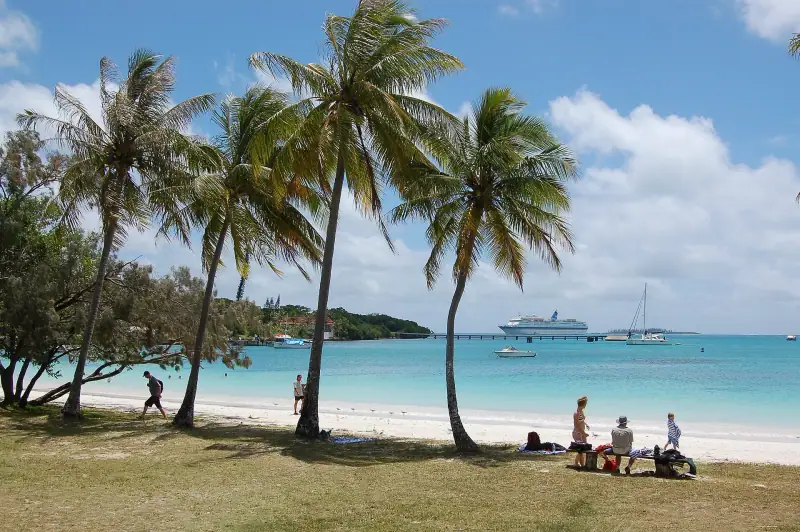
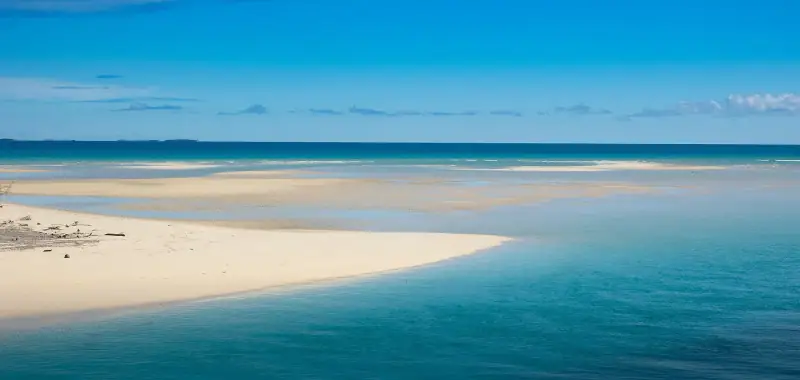
This is the tourist heart of the island. Kuto Bay is a long white sand beach, wide and protected, where the water is calm and shallow: an ideal spot for swimming, including with kids. The columnar pines form a postcard setting, especially at the end of the day.
Right next to it, Kanumera Bay offers a more intimate setting, with very clear water and equally fine sand. The two bays are separated by a narrow strip of land, so you can walk from one to the other and choose according to wind and light.
Tips:
- Go early in the morning or late in the afternoon: the light is better and the heat gentler.
- Bring suitable sun protection, preferably lagoon-friendly.
- Pack a mask and snorkel: even near the shore, you can see small fish.
Oro Bay and its natural pool
Oro Bay is the island’s most famous image. It takes some effort to reach: you get there by a trail through the forest, then cross by traditional outrigger canoe to the natural pool, a basin of transparent water fed by the lagoon, often described as one of the finest swimming spots in the South Pacific.
There, you can swim, watch the fish and enjoy a very well-preserved setting. The walk takes about twenty minutes depending on your pace, and the canoe crossing is part of the experience.
Good to know before you go:
- Wear good shoes, as the trail can be damp or uneven.
- Respect the site’s rules and the residents’ instructions: the place is sensitive and part of customary heritage.
- Do not touch the coral and take nothing, neither shells nor fragments.
- Ask locally about access conditions, which can change with the tides and weather.
Many travelers combine this visit with an organized day, which often includes a lunch or a boat outing. It is handy if you do not want to deal with the logistics.
Pic N’Ga: the best viewpoint
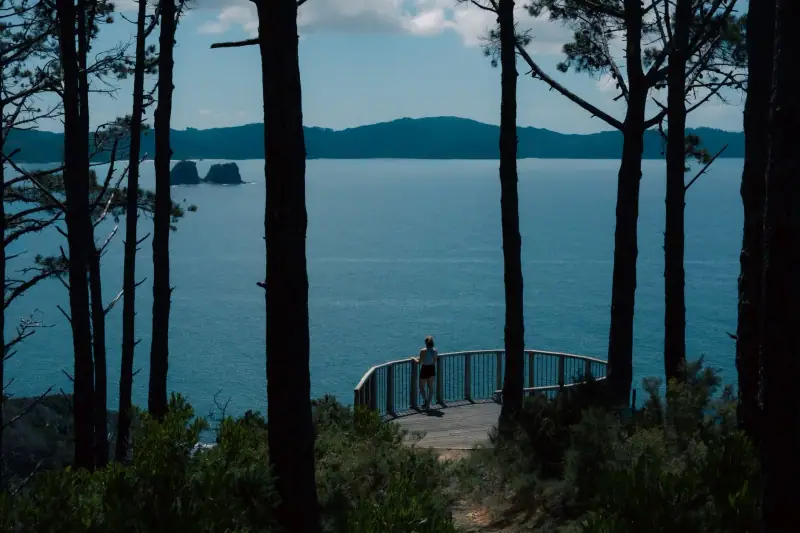
Pic N’Ga is the island’s highest point, at about 260 m (850 ft). The climb is short and accessible to most walkers in good shape, but it is sometimes steep and slippery after rain. The trail crosses low vegetation before reaching a summit with a panorama over the lagoon, the islets and the indented beaches.
The best time to climb is early morning, to avoid the heat and enjoy sharp light. Bring water, a hat and closed shoes.
It is an excellent way to understand the island’s geography: you see at a glance the bays, the reefs and the changing color of the water, from deep blue to milky green.
Places to stay on the Isle of Pines
Bungalows, hotels, guesthouses: compare the lodging available for your dates. Choice is limited, so it is better to book ahead.
Vao and the island’s historic heritage
The village of Vao is the island’s main center. You find the town hall, a few shops and the church, whose architecture and history reflect the missionary influence of the 19th century. A visit of a few hours is enough to understand the importance of religion and custom in local life.
The island’s history is also marked by the penal colony. After 1871, convicts of the Paris Commune were deported to New Caledonia, and the Isle of Pines received several hundred of them. Remains from this period, notably ruins of buildings, survive near Kuto Bay and recall this dark page of French history.
Visiting these sites gives depth to the stay. They invite you to look at the island differently than as a simple beach destination. In the villages, be discreet: some areas are customary, and asking permission or simply greeting residents is part of local custom.
Boat outings and water activities
The lagoon is the island’s main playground. Several activities are possible, offered by local operators:
- Outrigger canoe or boat trip to the neighboring islets, with a picnic on the beach.
- Snorkeling in calm areas, to see colorful fish and corals.
- Diving for enthusiasts, with varied sites depending on season and level.
- Kayak or paddleboard in sheltered bays, in calm weather.
Compare offers, check that the operator is professional and registered, and ask what is included (gear, meal, duration). Weather and tides can change the program: keep some flexibility.
Activities and excursions in New Caledonia
Boat trips, diving, guided visits: discover the experiences you can book before you leave.
Where to sleep and how to get around
Lodging is less dense than in Nouméa and consists mostly of small properties: bungalows, small hotels, guesthouses and rooms with residents. Most are near the big bays. In high season and during school holidays, it is wise to book well in advance.
For getting around, three options:
- Rental car or scooter, to explore freely.
- Bike, pleasant given the island’s small size, but bring water and sunscreen.
- Transfers offered by the lodging, handy for arrival and excursions.
Also think about cash: card payments are not accepted everywhere on an island this size, and ATMs are rare. Buy your essentials before you come and keep a few days of margin for the weather.
How long to stay and when to go
Two days give a quick overview, often as an excursion from Nouméa. Three to four days are ideal to see the main sites without stress, alternate swimming and visits and enjoy calm evenings. Beyond that, the island is lived at a slow pace: it is the perfect formula for resting.
As for season, the cool, drier period, May to October, is generally the most comfortable for walking and sightseeing. The austral summer is hotter and wetter, with cyclone risk: plan insurance covering cancellation. To choose your dates, see our guide When to go to New Caledonia.
Practical tips for your stay
- Respect custom: ask before photographing people or entering private land, and greet residents.
- Protect the lagoon: use suitable sunscreen, do not touch the coral and take your trash with you.
- Bring small change: the Pacific franc (XPF) is the local currency, and small shops sometimes prefer cash.
- Take mosquito repellent, useful especially in the evening.
- Stay flexible: flight and boat schedules can be changed by the weather.
The Isle of Pines is not a destination to tick off, but a place where you take your time. With a few days ahead of you, a good pair of walking shoes and a snorkel mask, you leave with the impression of having seen one of the most beautiful lagoons in the world.
Frequently asked questions
How long should you stay on the Isle of Pines?
Three days let you see the essentials: Kuto Bay, Oro Bay, Pic N'Ga and the village of Vao. With four or five days, you enjoy the beaches, boat outings and the island's very calm pace even more.
How do you get to the Isle of Pines from Nouméa?
You reach the island by plane from Magenta airport, a flight of about 20 minutes, or by fast boat from Nouméa, a slightly longer crossing. Ask the companies about schedules, which vary by season, and book early in high season.
Do you need to rent a car on the Isle of Pines?
It is not essential, but it is handy: the island is small, the sites are scattered and public transport is limited. You can rent a car, scooter or bike there, or rely on the transfers offered by lodgings.
What is the best time to visit the Isle of Pines?
The cool, drier season, May to October, is generally the most comfortable. The austral summer is hotter and wetter, with cyclone risk. See our guide on the best time to go to New Caledonia to choose your dates.
Can you swim in Oro Bay?
Yes, swimming and snorkeling are very popular there thanks to shallow, calm water. Follow local rules, do not touch the coral and remember that access takes some effort, with a forest walk and then an outrigger canoe crossing.
More New Caledonia guides
Keep reading
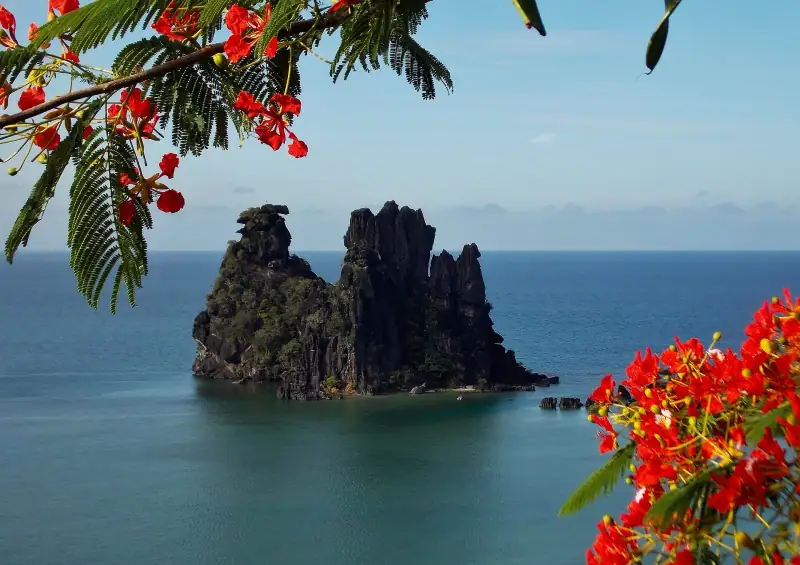
Is Hienghène Worth the Detour? Poule Couveuse, Lindéralique and Tao Falls
Is Hienghène worth the detour? Poule couveuse, Lindéralique, Tao Falls, Ouaïème ferry, getting there from Nouméa, where to sleep and how long to stay.
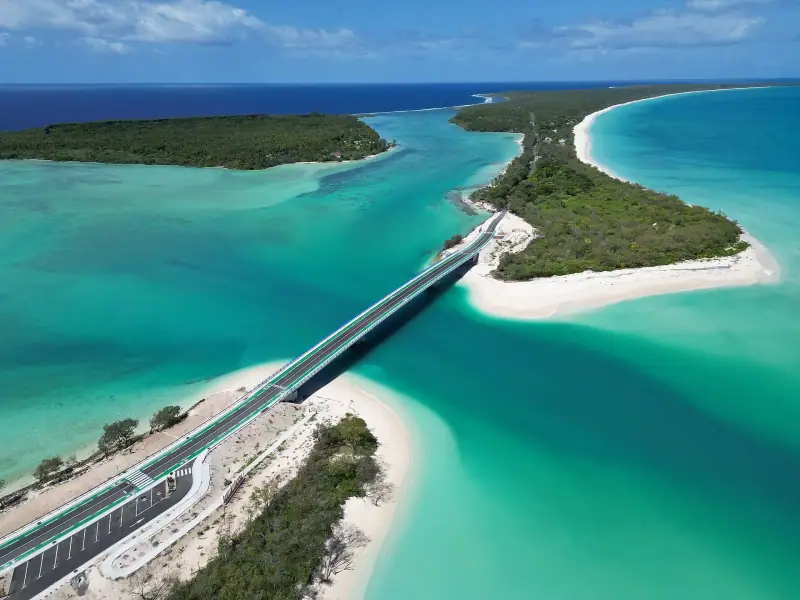
Visiting New Caledonia: The Complete Guide to Planning Your Trip
Complete guide to visiting New Caledonia: regions, highlights, when to go, flights, getting around, lodging and budget, with links to detailed guides.
Loyalty Islands: Lifou, Maré or Ouvéa, Which One to Choose?
Lifou, Maré or Ouvéa? Compare the three Loyalty Islands: landscapes, beaches, Kanak culture, access from Nouméa and tips for organizing your stay.
Ready-made
New Caledonia itineraries
10 days
New Caledonia in 10 Days: An Itinerary Through Nouméa, the Bush and the Islands
A 10-day New Caledonia itinerary: Nouméa, Grand Sud, West Coast, Hienghène, then the Isle of Pines or Lifou, with pacing and budget tips.
7 days
New Caledonia in 7 Days Without a Car: A Realistic Itinerary
NouméaIsle of Pines
3 days
New Caledonia's Grand Sud in 3 Days: Yaté, Rivière Bleue and Port-Boisé
3-day Grand Sud itinerary from Nouméa: Rivière Bleue, Yaté Lake, Madeleine Falls, Port-Boisé, with practical tips.