What to see
Loyalty Islands: Lifou, Maré or Ouvéa, Which One to Choose?
We may earn a commission when you book through links on this page, at no extra cost to you. We don't visit or try the places we cover: we summarize published sources. How we work
In short
- Lifou is the simplest first choice (largest island, widest range of lodging and sites); Maré suits wild nature and natural pools; Ouvéa suits the long beach, the lagoon and calm.
- Fly from Magenta airport in Nouméa; flights take roughly half an hour to an hour depending on the island. Boats serve some islands with longer crossings.
- Allow at least three to four days per island; for two islands, a week is more comfortable, since links generally go through Nouméa.
- A rental car is advised on all three islands; lands are under customary regime, so greet people and ask before photographing.
East of Grande Terre, the Loyalty Islands form an archipelago of raised coral islands: no rivers, no big mountains, but coral cliffs, low forests, caves and lagoons of remarkable clarity. Three main islands share travelers’ attention: Lifou, Maré and Ouvéa. They resemble each other in spirit, but very little in landscape.
This guide helps you choose among them, explains how to get there and offers some pointers for traveling respectfully in a region where Kanak culture remains very present in daily life.
The Loyalty Islands in brief
The archipelago belongs to the Loyalty Islands Province. The three large islands are Ouvéa in the north, Lifou in the center and Maré in the south. A fourth, Tiga, smaller and sparsely populated, completes the group.
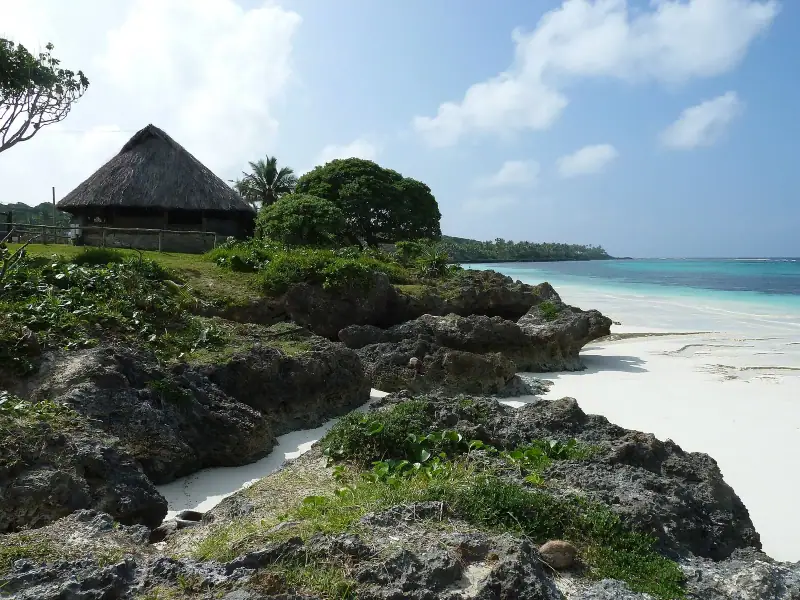
Unlike Grande Terre, these islands are made of coral limestone. Rainwater seeps into the ground, which explains the absence of surface streams and the presence of caves, sinkholes and basins of clear water. The sand is often very white, and cliffs sometimes drop straight into the sea.
Here, life follows the tribes and chiefdoms. Villages are organized around custom, family and church. You come for nature, but the trip makes the most sense when you take time to talk with residents, share a meal at a tribal guesthouse or visit a local market.
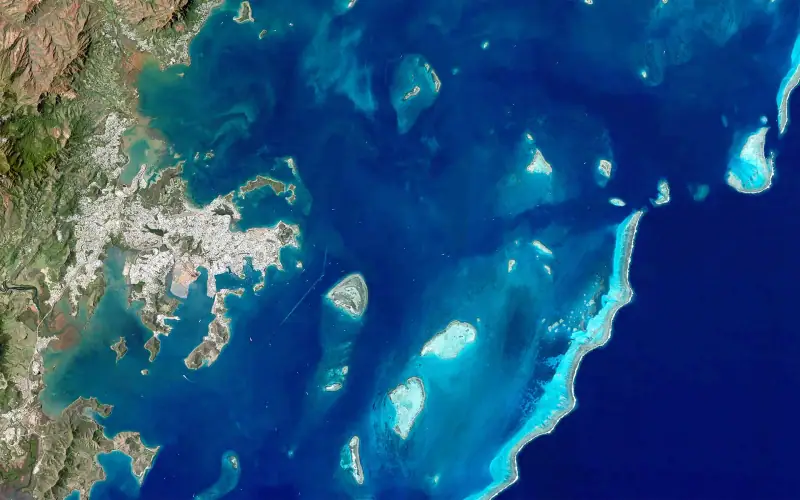
The lagoon surrounding New Caledonia and its islands is a UNESCO World Heritage site, under the Lagoons of New Caledonia listing. The Loyalty Islands are therefore also a good playground for snorkeling, as long as you respect the coral and local rules.
Lifou: the largest, the most versatile
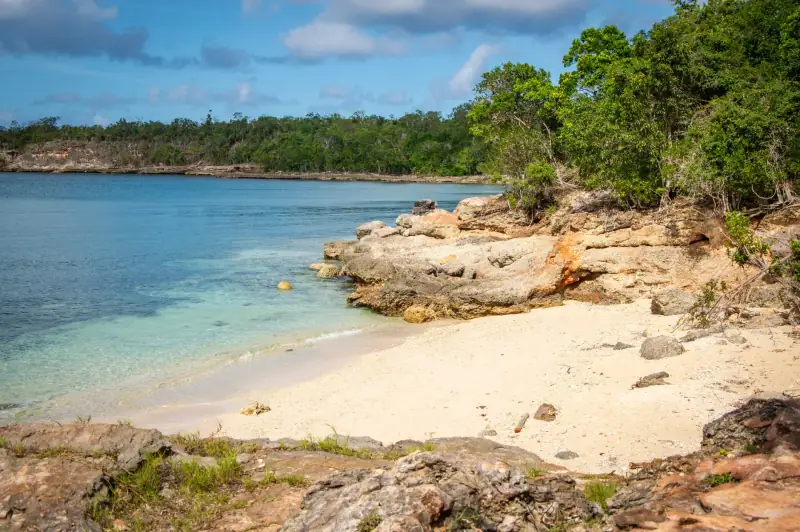
Lifou is the largest island in the archipelago and the easiest to discover for a first time. Its main town, Wé, concentrates shops, services and a good part of the activity. The rest of the island is dotted with tribes, beaches and natural sites.
What to see on Lifou
- Jinek Bay: a calm lagoon lined with vegetation, much appreciated for snorkeling and swimming.
- The Jokin cliffs: a lookout on the coast, where coral forms high walls facing the ocean.
- The Anémata Blue Hole: a natural basin in the rock where you can swim and watch fish, depending on conditions.
- Luengoni beach: a large pale sand beach, suited to swimming as well as long walks.
- Notre-Dame de Lourdes chapel, in Easo: a place of contemplation built on a site overlooking the sea.
Lifou suits travelers who want to alternate beach, walks and visits without constantly changing lodging. Tribal guesthouses, small hotels and a few seaside bungalows offer a reasonable range of choices. For people hesitating between several islands, it is often the best entry point.
Maré: the wildest
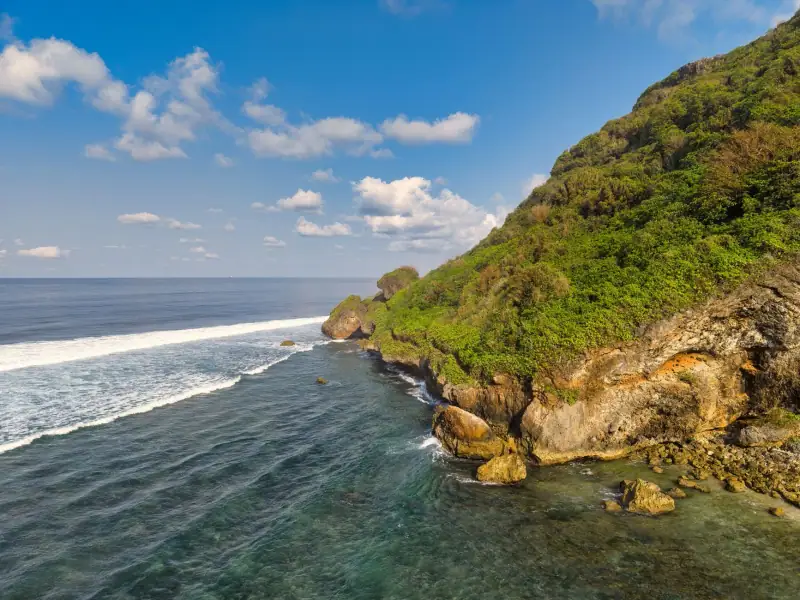
Maré, in the south, is the most rugged and least touristy of the three. Its main town is Tadine. Here the landscapes are more contrasted: cliffs, dense forests, caves and hidden coves.
Maré’s highlights
- The Shabadran natural pool: a basin of clear water fed by the sea, perfect for a quiet swim and for watching marine life.
- Medu Bay: a remote inlet, appreciated for its calm and transparent water.
- The coastal cliffs: some stretches of shoreline offer spectacular views, to be discovered with care.
- The villages: tribal life has remained very present, and meeting residents is part of the trip.
Maré is for travelers who like raw nature and do not mind simpler comfort. Lodging is more limited than on Lifou: it is better to book well ahead and plan your logistics, notably for meals and getting around.
Flights to New Caledonia
To reach the Loyalty Islands, you first have to land in New Caledonia. Compare flights for your dates to find the best fare.
Ouvéa: the lagoon and the endless beach
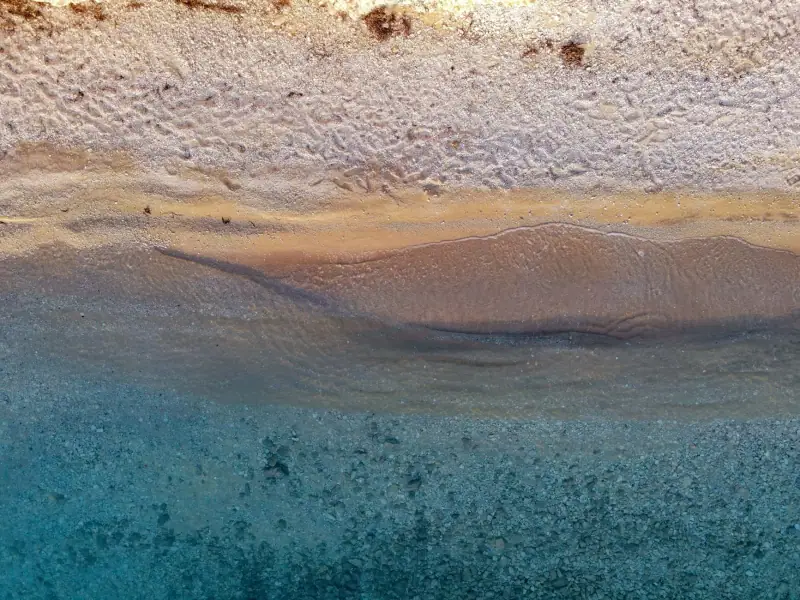
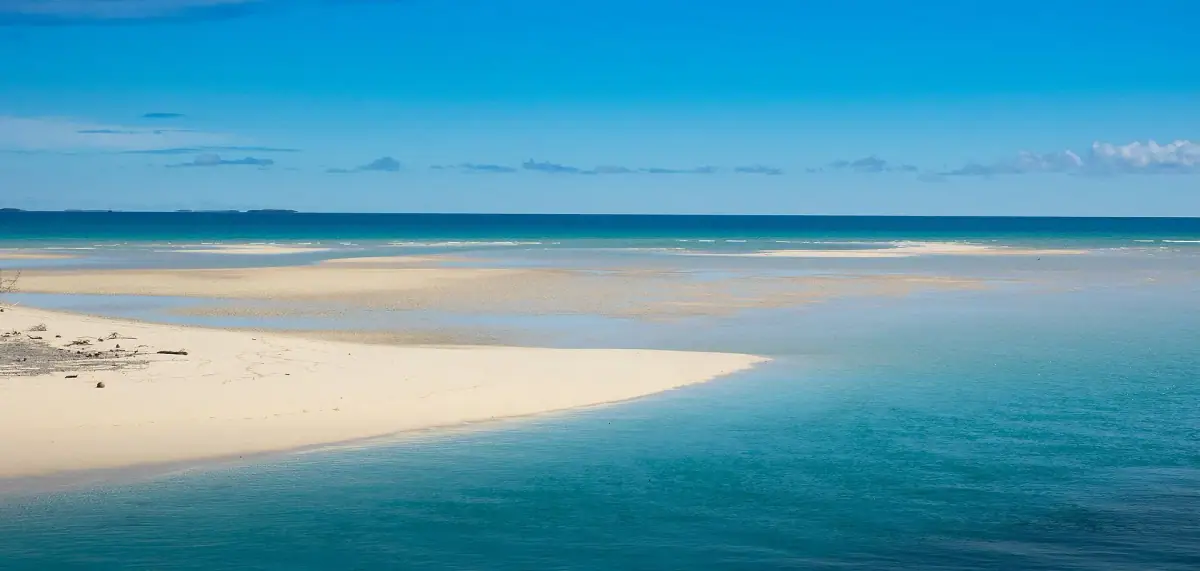
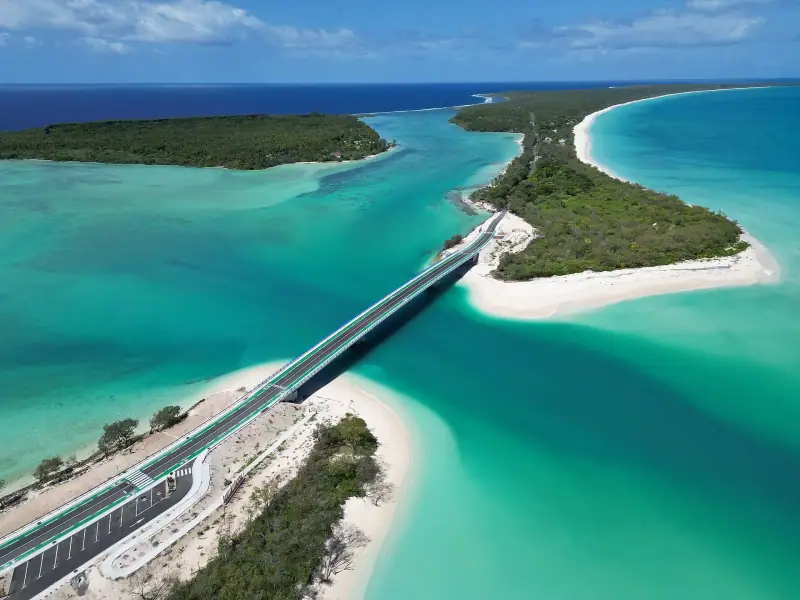
Ouvéa, in the north, looks like a crescent of land stretched between a huge lagoon and the ocean. The island is long and narrow, with a very long white sand beach on its west coast that makes its reputation. It is among the most photographed places in the archipelago.
Ouvéa’s strong points
- The long beach on the west coast: pale sand, turquoise water, a peaceful atmosphere.
- The Mouli bridge: a passage between the main island and the small island of Mouli, surrounded by clear water, much prized for swimming and watching fish.
- The Hnathalo hole: a natural well connected to the sea, in which you can watch marine life, to be visited with a guide or following local directions.
- Lagoon excursions: outrigger canoe or boat trips to discover the islets and shallows.
Ouvéa is a place to slow down. Activities are simpler: swimming, walking, fishing, talking. The island also carries a more recent and painful memory, linked to the events of 1988. It is discovered with restraint and respect, by listening to residents rather than trying to photograph everything.
How to choose among Lifou, Maré and Ouvéa
A few pointers to help you decide:
| Island | Ideal for | Good to know |
|---|---|---|
| Lifou | A first stay, variety of activities | The largest island, the widest range of lodging |
| Maré | Wild nature, natural pools | Less infrastructure, early booking useful |
| Ouvéa | The beach, the lagoon, calm | Long, narrow island, very slow pace |
If you only have a week, a single island, chosen with care, is better than three races against the clock. If you have two weeks, combining Lifou and Ouvéa, or Lifou and Maré, offers a good contrast of landscapes. Think about combining the archipelago with the Isle of Pines and Nouméa to cover several facets of the territory.
Places to stay in the Loyalty Islands
Bungalows, guesthouses, small hotels: compare the lodging available for your dates. Choice is limited, so it is better to book early.
Getting to the Loyalty Islands
The great majority of travelers leave from Nouméa.
- By plane: this is the fastest way. Domestic flights leave from Magenta airport in Nouméa and reach each of the three islands. Duration is short, in the order of half an hour to an hour depending on the destination.
- By boat: sea links serve some islands, with longer crossings. They suit those who are not in a hurry or who travel with lots of luggage.
Schedules, service days and baggage allowances change with the seasons. Check the companies’ official sites before booking and keep a margin if you have an international flight right after your return. In school holidays, seats fill up fast.
Once there, a car is the most practical way to explore. A host can sometimes arrange a transfer from the airport, which makes arrival easier.
Where to stay and eat
Lodging falls into three main families:
- Tribal guesthouses: an authentic experience, with family cooking and a simple welcome. They give real contact with local life.
- Bungalows and small hotels: more comfortable, often by the sea, with a restaurant.
- Rentals and rooms with residents: interesting for long stays, but limited in number.
As for food, expect fresh fish, seafood, tubers such as yam, taro and sweet potato, and coconut milk. Bougna, a traditional dish steamed in banana leaves, is generally ordered in advance. To learn more about specialties, see our guide on what to eat in New Caledonia.
Shops are rare outside the towns: buy your essentials on arrival and keep some cash for small payments, as card payment is not always possible in tribes.
Activities and excursions in New Caledonia
Boat trips, diving, guided visits: discover the experiences you can book before you leave.
Traveling with respect: custom and environment
The lands of the Loyalty Islands are under a customary regime. A few simple rules ease the encounter:
- Greet the people you meet and ask permission before photographing someone.
- Find out before accessing a site: some are managed by tribes, sometimes with an entry fee or prior permission.
- Dress modestly in villages and near religious or customary places.
- Do not pick up coral or shells and do not walk on the reef.
- Leave no trash: waste management is a real issue on small islands.
Sunday is a special day in many tribes: many activities are reduced and church holds an important place. Plan your shopping and travel accordingly.
When to go
The cool, drier season, generally May to October, is the most pleasant for travel: temperatures are mild and days bright. The austral summer is hotter and wetter, with a risk of cyclones. To refine your dates, see our guide on the best time to go to New Caledonia.
A sample one-week itinerary
For a first discovery, here is a balanced outline:
- Days 1 and 2: arrive in Nouméa, visit the city (our ideas for visits in Nouméa).
- Days 3 to 6: flight to Lifou, with a rental car to reach the bays, cliffs and Blue Hole.
- Day 7: return to Nouméa and prepare for the international flight.
With ten days, add Ouvéa or Maré, going through Nouméa for the connection, rather than trying to chain too many transfers.
Practical questions
Plan for sun protection suited to marine ecosystems, reef shoes, a mask and snorkel, and a headlamp if you stay in an isolated tribe. Entry rules depend on your passport. Check the official travel advice of your government before you book: travel.state.gov (US), GOV.UK (UK), travel.gc.ca (Canada), Smartraveller (Australia) (checked November 2026).
In short, the Loyalty Islands reward travelers who take their time. Lifou for versatility, Maré for wild nature, Ouvéa for the beach and calm: the best choice depends above all on the pace you are looking for.
Frequently asked questions
Which Loyalty Island should you choose for a first stay?
Lifou is the simplest choice: it is the largest island, lodging is varied and there are many sites. Ouvéa appeals mostly for its huge beach and lagoon, Maré for its wilder landscapes and natural pools.
How do you get to the Loyalty Islands from Nouméa?
The fastest is a plane from Magenta airport in Nouméa, with the territory's domestic airline. Some islands are also served by boat. Schedules and frequency vary by season: check with the companies and book early in school holidays.
How much time should you plan in the Loyalty Islands?
Allow at least three to four days per island to enjoy the local pace. To combine two islands, a week is more comfortable, since links generally go through Nouméa.
Do you need to rent a car there?
It is advised on Lifou, Maré and Ouvéa: sites are scattered and public transport is limited. Some lodgings also offer transfers or organized excursions, to ask about before booking.
How do you respect custom during a visit?
The land belongs to the tribes. Some sites charge an entry fee or require permission, and it is customary to greet people, ask before photographing them and dress modestly in villages. A small customary gesture may be expected: ask your host.
More New Caledonia guides
Keep reading
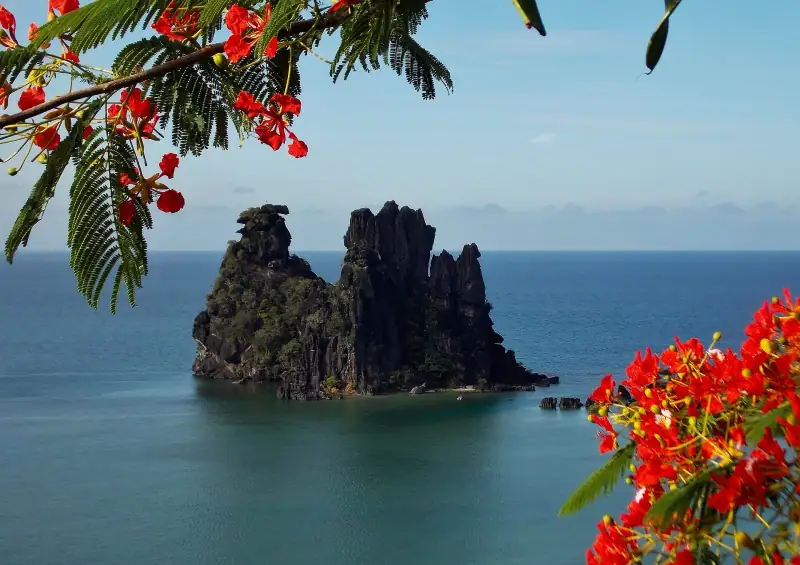
Is Hienghène Worth the Detour? Poule Couveuse, Lindéralique and Tao Falls
Is Hienghène worth the detour? Poule couveuse, Lindéralique, Tao Falls, Ouaïème ferry, getting there from Nouméa, where to sleep and how long to stay.
Visiting New Caledonia: The Complete Guide to Planning Your Trip
Complete guide to visiting New Caledonia: regions, highlights, when to go, flights, getting around, lodging and budget, with links to detailed guides.

Kanak Culture in New Caledonia: Custom, Huts and Places to Visit
Discover Kanak culture when you travel: custom, the welcome gesture, the hut, yam, the Tjibaou Cultural Center and tips for visiting tribes respectfully.
Ready-made
New Caledonia itineraries
10 days
New Caledonia in 10 Days: An Itinerary Through Nouméa, the Bush and the Islands
A 10-day New Caledonia itinerary: Nouméa, Grand Sud, West Coast, Hienghène, then the Isle of Pines or Lifou, with pacing and budget tips.
7 days
New Caledonia in 7 Days Without a Car: A Realistic Itinerary
NouméaIsle of Pines
3 days
New Caledonia's Grand Sud in 3 Days: Yaté, Rivière Bleue and Port-Boisé
3-day Grand Sud itinerary from Nouméa: Rivière Bleue, Yaté Lake, Madeleine Falls, Port-Boisé, with practical tips.