What to see
Complete guide to visiting Martinique: regions, beaches, budget and tips
We may earn a commission when you book through links on this page, at no extra cost to you. We don't visit or try the places we cover: we summarize published sources. How we work
In short
- The island is about 70 km (43 mi) long and 30 km (19 mi) wide; one week covers the south and its beaches, Fort-de-France, the Caribbean coast to Saint-Pierre and a hike.
- February to April is generally drier; the rainy and hurricane season runs roughly June to November, with lower rates but less certain weather.
- A rental car is the most practical option in most cases; ferry shuttles link Fort-de-France and Les Trois-Îlets.
- Les Trois-Îlets and the southern Caribbean coast are the most versatile base for a first stay; the euro is the currency.
Martinique fits in a rectangle about 70 kilometers (43 mi) long by about thirty (19 mi) wide, and yet it changes face every twelve miles or so. In the south, coconut palms and the pale sand of postcard beaches. In the north, a volcano, Mount Pelée, and dense tropical forest. In the east, a windy, wild Atlantic coast. In the center, a lively capital, Fort-de-France, and a network of winding roads that asks for more patience than the map suggests.
This complete guide is the site’s reference article: it presents the island, its regions and towns, the highlights, the best time to go, how to get there and around, where to stay and the budget to plan. At each step, we point to the detailed guides that go deeper into a specific subject. Keep it as a starting point, then dig into the topics that interest you.
Martinique at a glance: a French island in the Lesser Antilles
Martinique is part of the Lesser Antilles archipelago, between Dominica to the north and Saint Lucia to the south. It is a French overseas department and region: French is spoken (and Martinican Creole in daily life), and you pay in euros. Entry rules depend on your passport. Check the official travel advice of your government before you book: travel.state.gov (US), GOV.UK (UK), travel.gc.ca (Canada), Smartraveller (Australia) (checked November 2026).
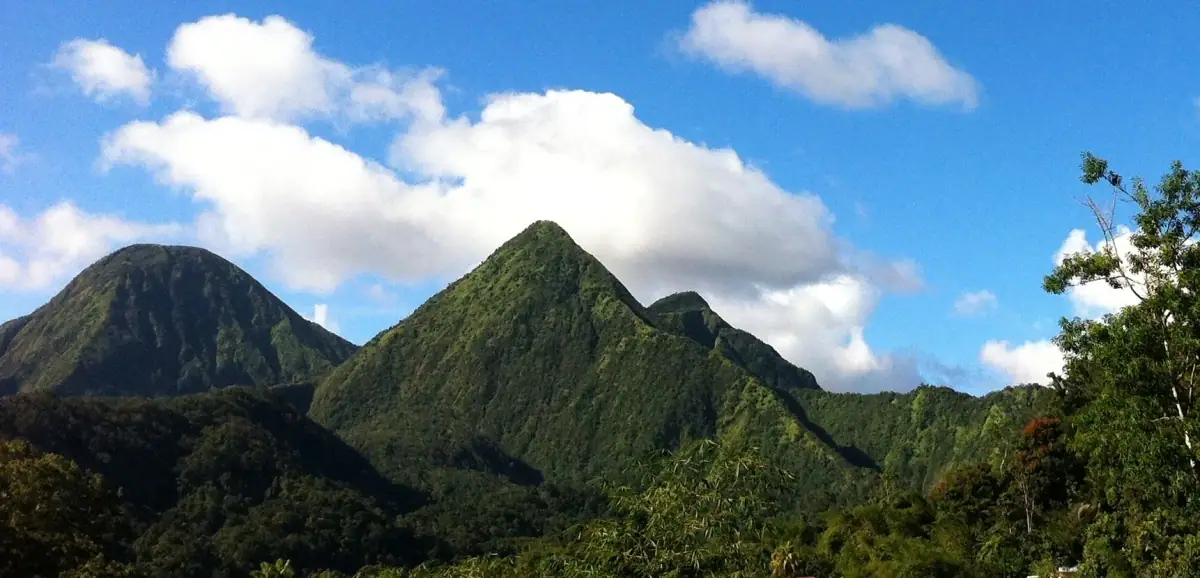
The island is volcanic in origin, which explains its pronounced relief. The north is dominated by Mount Pelée, which peaks at about 1,400 meters (4,600 ft), while the south is made of lower hills, rounded mornes and sheltered bays. The island is covered with lush vegetation: humid forest at altitude, mangroves on the shore, sugarcane and banana fields on farmland.
A few practical points to keep in mind:
- Climate: tropical all year, with a drier season (the “carême”) and a wetter season (the “hivernage”).
- Language: French everywhere, Creole in everyday conversation, a little English in the most tourist-oriented businesses.
- Currency: the euro.
- Driving: on the right.
- Time: the island does not observe daylight saving time, so its time difference with your home country changes during the year.
The destination’s character rests on a balance: a tropical island setting with the everyday rhythm of a French region. You can go from a forest hike to a grilled fish lunch facing the sea, then visit an agricultural rum distillery in late afternoon.
The four main regions to know
To find your way, the island is generally divided into four areas. This is also the division we use throughout the site.
The Caribbean North: volcano, history and forest
The Caribbean North runs along the Caribbean Sea up to Mount Pelée. Its historic “capital” is Saint-Pierre, the island’s former major town, destroyed in 1902 by the eruption of Pelée, one of the deadliest volcanic disasters of the 20th century. Today the town holds ruins, a volcanology museum and a special atmosphere, between remembrance and easy living. Our guide to visiting Saint-Pierre details the sites to see and the volcano’s history.
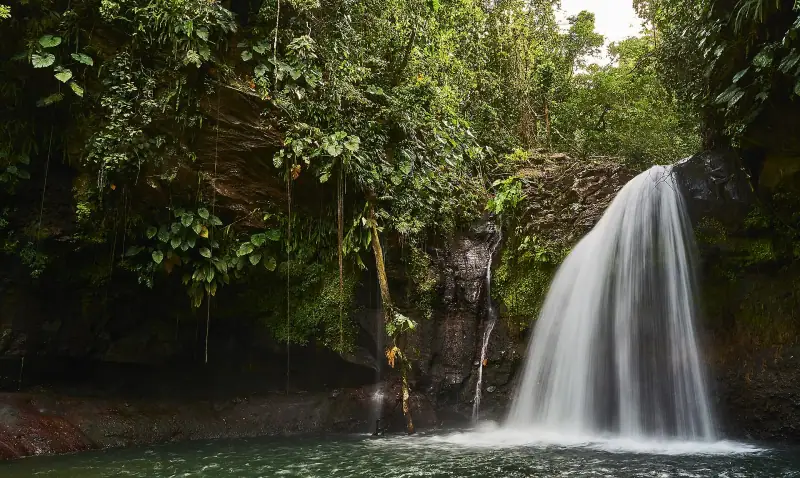
This area is also the hikers’ playground: forest trails, waterfalls, access to the summit of Pelée in clear weather. Beaches here are often dark volcanic sand, very different from those of the south.
The Atlantic North: the wild coast
On the east side, the Atlantic coast is more exposed to wind and waves. It is cut into bays, peninsulas and less developed beaches. The Caravelle Peninsula, near La Trinité, is the emblematic place of this side: coastal trails, cliffs, mangrove and open landscapes. The mood is more authentic, less seaside-resort, with fishing villages and old plantations.
Here swimming calls for caution: the water is rougher than on the Caribbean coast and currents can be strong. People come mainly to walk, take in the landscape and enjoy good local tables.
The Center: Fort-de-France and Le Lamentin
This is the island’s economic and administrative heart. Fort-de-France, the capital, stretches around a large bay and concentrates museums, markets, restaurants and government offices. Le Lamentin, right next to it, hosts Martinique Aimé Césaire International Airport, shopping centers and the main roads. To plan a day in the capital, see our article on Fort-de-France.
This is also where traffic is heaviest, especially at rush hour. Keep that in mind for your arrival and departure.
The South: beaches, bays and fishing villages
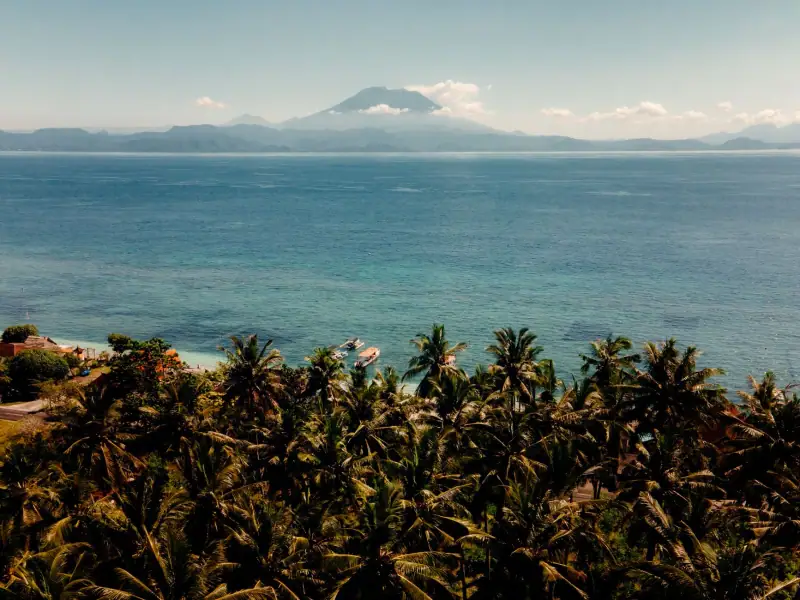
The south is the most touristy region. Les Trois-Îlets, Les Anses-d’Arlet, Le Diamant, Sainte-Anne and Les Salines make up a string of villages and beaches that give the island its reputation. Most hotels, residences and guesthouses are found here. The landscape alternates coves of pale sand, hills covered in vegetation and Diamond Rock, an isolated rocky islet in the sea that serves as a visual landmark.
Towns and villages to know
The list below covers the towns that structure most stays.
Fort-de-France is the capital. You stroll around the Place de la Savane, the waterfront and the large covered market, with architecture mixing colonial style and 19th-century buildings. It is the starting point of many ferry shuttles.
Les Trois-Îlets is a practical seaside base, opposite the capital, across the bay. A ferry link reaches Fort-de-France without a car.
Les Anses-d’Arlet is a fishing village with small family beaches. The water is generally calm, which makes the area very popular for snorkeling with fins, mask and snorkel.
Le Diamant stretches facing the rock of the same name, with a long beach and many restaurants.
Sainte-Anne is the peaceful village at the southern tip, close to Les Salines, a large coconut-lined beach that is very busy in season.
Saint-Pierre, at the foot of Pelée, is the island’s most striking historic site.
La Trinité, on the Atlantic coast, is the gateway to the Caravelle Peninsula.
Compare flights to Martinique
Check fares and schedules for your dates: prices vary a lot with the season and school vacations.
Highlights of a stay in Martinique
Here is what comes up in almost every successful stay, sorted by type of interest.
Beaches
The south and the Caribbean coast concentrate the best swimming beaches: Les Salines, Grande Anse des Salines, the coves of Les Anses-d’Arlet, Le Diamant beach. Each has its own mood: some are family-friendly and sheltered, others more open and busier. To choose by coast and profile, read our selection of the most beautiful beaches in Martinique.
A few simple tips: arrive early in the morning at very busy beaches, protect yourself from the sun (it is intense all year) and leave nothing valuable in a car parked near an isolated beach.
Mount Pelée and hiking
The volcano is the great symbol of the north. Humid forest trails, waterfalls and viewpoints over the coast attract walkers all year. The weather changes fast: the summit is often in cloud by late morning, so you need to set off early. Suitable shoes, water and rain gear are essential. Details on trails, required level and precautions are in our guide to hiking in Martinique.
Saint-Pierre and the memory of the volcano
Saint-Pierre is a place apart. The remains visible in town, the museum devoted to the 1902 disaster and the view over the bay tell the story of what was long called the “Little Paris of the Antilles”. Allow half a day, more if you combine the visit with a hike in the area.
The distillery route and agricultural rum
Martinique produces rhum agricole, made from fresh cane juice, which has a protected designation of origin (AOC). Several distilleries can be visited, often on historic estates surrounded by cane fields. Visits generally include an explanation of production and a tasting. We have gathered the main stops in our article on the Martinique distillery route. A useful reminder: if you drive after a tasting, designate a driver who does not drink.
Creole cuisine
Martinican gastronomy mixes African, European, Amerindian and Indian influences. Salt cod accras, Creole blood sausage, colombo, grilled fish, avocado and cod féroce, desserts made with coconut, banana or guava: you eat very well, in seaside restaurants as well as small village tables or at markets. Find the dishes to try in our guide to what to eat in Martinique.
Excursions and activities in Martinique
Boat trips, guided visits, guided hikes: compare the activities offered on the island.
When to go to Martinique
Martinique can be visited all year, but the experience varies markedly by season.
The drier season, running roughly from December to May, is the most sought-after period. The sky is clearer, the trade winds cool the air and the sea is pleasant. It is also when flight and lodging rates are highest, especially over the year-end holidays and school vacations.
The wet season, from about June to November, is hotter, more humid and stormier. It is also hurricane season, with a more marked weather risk in August, September and October. In return, vegetation is dazzling, crowds are smaller and rates are lower. If you travel then, choose flexible bookings and check the coverage of your insurance.
Carnival gives the island a special atmosphere early in the year: parades, costumes, music. If you want to attend, book early, because lodging fills up fast.
In short: February to April for the best compromise between weather and crowds, December and January for the festive atmosphere, summer and fall for tighter budgets. Everything is detailed month by month in our article on when to go to Martinique.
How to get to Martinique
There is no alternative to the plane for most travelers. Martinique Aimé Césaire International Airport (FDF) is at Le Lamentin, in the center of the island, about half an hour from Fort-de-France outside heavy traffic.
A few tips for booking:
- Plan ahead, especially for school vacations and the December to February period: direct tickets go quickly and prices rise.
- Compare airlines and departure airports, because price gaps can be large from one day to the next.
- Aim for a midday arrival, to avoid evening traffic around Fort-de-France and keep a margin to pick up your car.
- Check included baggage: some airlines apply different rules depending on the fare.
- Check entry rules: they depend on your passport. See the official sources listed at the top of this guide.
For health, insurance and local rules specific to overseas departments, check the official sources of your own government before leaving, including hurricane season notices.
How to get around the island
On the map, everything seems close. In reality, roads are winding, the relief significant and traffic around Fort-de-France can turn a trip of a few dozen kilometers into an hour on the road. You therefore need realistic days and should avoid multiplying changes of base.
A rental car is the most practical solution for most stays. It gives access to the southern beaches, northern trails and the Atlantic coast, and lets you adapt to the weather. Book ahead in high season. Drive carefully: narrow roads, hairpin bends and scooters weaving through are common. The rental comparison tool offered on the site lets you compare offers for your dates.
Ferry shuttles link Fort-de-France to the Les Trois-Îlets area: a pleasant alternative to the road, avoiding the bay’s traffic jams and offering a nice view of the harbor.
Shared taxis and buses exist, but the network remains limited outside the Fort-de-France urban area. They suit occasional use, not a stay devoted to beaches and hikes.
Regular taxis are useful for a transfer or an evening out. For a full day, the budget climbs fast.
Details on each option, with our practical tips, are in getting around Martinique. If you are preparing a car-free stay, read it before booking your lodging.
Where to stay in Martinique
Your choice of base shapes your days: drive time, evening atmosphere, access to the sea. As a first approach:
- Les Trois-Îlets and Pointe du Bout: the most versatile area. Beaches, restaurants, a ferry shuttle to the capital, access to the south and north in a little over an hour’s drive.
- Les Anses-d’Arlet: calm, fishing village, fine snorkeling possibilities.
- Le Diamant: long beach, good choice of restaurants, relaxed mood.
- Sainte-Anne and Les Salines: to spend most of your stay at the beach, far from the bustle.
- Saint-Pierre and the north: for hikers and history lovers, but farther from the big beaches.
- Fort-de-France: practical for a first or last night, close to the airport and services.
The lodging stock mixes hotels, apart-hotels, guesthouses, bungalows, villas and bed-and-breakfasts. Rentals with a kitchen are very common and help control the budget, especially for families. If your stay exceeds ten days, splitting it between the south and the north will spare you daily round trips. All areas are compared in our guide to where to stay in Martinique.
Find lodging in Martinique
Compare hotels, guesthouses and villas by area and dates, and remember to book early in high season.
How many days to plan and which itinerary to choose
The ideal length depends on your pace, but here are simple benchmarks:
- 4 to 5 days: a single area, for example the south and Fort-de-France. It is short, but enough for a first glimpse.
- 7 days: the most common format. The stay is split between the southern beaches, the capital, the Caribbean coast to Saint-Pierre and a hike.
- 10 days and more: you add the Atlantic coast, the Caravelle Peninsula, the distilleries and a few rest days.
A golden rule: do not plan more than one major visit a day. Roads are slow, heat tires you and surprises (showers, traffic) are part of the trip. If you want a ready-made framework, our 7-day Martinique itinerary offers a day-by-day plan for a first stay, with realistic travel times.
An example of logic for organizing your week, without going into detail:
- The first days: southern beaches and rest after the flight.
- The middle of the stay: Fort-de-France, market, museum, a waterfront stroll.
- A day in the north: Saint-Pierre and, if the weather allows, a forest hike or a walk toward Pelée.
- A “rum” day: a distillery visit with a Creole lunch.
- The last days: back to a favorite beach, souvenir shopping, preparing for departure.
What budget to plan for Martinique
Martinique is not a cheap destination. Prices can be high on some imported goods. Rather than give figures that vary strongly by season, here is the breakdown of the main expense items, from the heaviest to the lightest.
- The flight: generally the heaviest item. Price gaps between low and high season are large.
- Lodging: the gap is considerable between a seaside hotel in high season and a guesthouse outside vacations.
- The car: essential in most cases, it is a significant budget item, to which fuel is added.
- Food: very variable. Markets, small Creole tables and beach snack stands cost less than restaurants facing the sea.
- Activities: hikes and beaches are free, but boat trips, guided visits and excursions are paid.
A few tricks to control the budget:
- Travel outside school vacations and avoid the Christmas period if you can.
- Favor a guesthouse or residence with a kitchen: making some of your own meals clearly reduces the bill.
- Eat local: fruit, fish and Creole dishes from the markets often cost less than imported products.
- Book the car early, and compare offers rather than taking the first one you find.
- Use the ferry shuttle rather than the car to reach Fort-de-France from Les Trois-Îlets: you save fuel and time.
Since prices change, always check fares at the time of booking rather than relying on an old range.
Practical tips before you go
Health and safety. Ask your doctor or a travel clinic, and see the official travel health pages (CDC in the US, TravelHealthPro in the UK). Insects are a practical point in the Antilles: a suitable repellent and covering clothes in the evening are useful.
Sun and water. The tropical sun is intense all year: sunscreen, hat, sunglasses and plenty of water are essential, especially when hiking.
Sea. Respect signs and flags, avoid swimming alone on the Atlantic coast and do not touch sea urchins or coral. If you snorkel, choose sheltered beaches.
Respect for the environment. Use reef-friendly sunscreen if possible, do not take coral or shells, and leave no trash on the beach or trails.
Electricity and network. Check whether you need a plug adapter. Check your carrier’s international plan or use a travel eSIM before you leave.
Packing. Bring light clothing, a windbreaker or rain gear, good walking shoes for the trails and water shoes for some rocky beaches.
Local manners. A “bonjour” when entering a shop or passing someone is the basis of politeness. Take your time: the island’s rhythm is slower than you may be used to, and it is part of its charm.
Our guides to go further
Here are all the site’s articles, grouped by theme to prepare each step of your trip.
Preparing the trip
- When to go to Martinique: weather, seasons, hurricanes and carnival.
- Getting around Martinique: car, ferry shuttles and shared taxis.
- Where to stay in Martinique: areas compared by type of stay.
Organizing your days
- Martinique in 7 days: a day-by-day itinerary for a first stay.
- Hiking in Martinique: Mount Pelée, gorges and coastal trails.
- Distillery route: the agricultural rums to visit.
Discovering the island
- Best beaches in Martinique: our selection by coast and profile.
- Visiting Fort-de-France: what to see and do in the capital.
- Visiting Saint-Pierre: ruins, museum and volcano history.
Tasting
- What to eat in Martinique: Creole specialties, rum and good addresses.
This pillar guide will be enriched as new articles are published: come back to find all the site’s resources. In the meantime, the simplest approach is to start by fixing your dates, choosing your base and booking your flights and lodging before polishing the rest. Have a great trip to Martinique!
Frequently asked questions
How long do you need to visit Martinique?
One week lets you see the essentials: the south and its beaches, Fort-de-France, the Caribbean coast to Saint-Pierre and a hike. Ten days give time to add the Atlantic coast and the Caravelle Peninsula without rushing. An extended weekend of four or five days is possible, but you then need to choose a single area.
What is the best time to go to Martinique?
From February to April, the weather is generally drier, the trade winds cool the air and the sea is pleasant. December and January are also very nice, but more expensive. The rainy and hurricane season runs roughly from June to November: rates drop, but the weather is less certain.
Do you need a passport or visa for Martinique?
Entry rules depend on your passport. Check the official travel advice of your government before you book: travel.state.gov (US), GOV.UK (UK), travel.gc.ca (Canada), Smartraveller (Australia) (checked November 2026). Martinique is a French overseas region, and the currency is the euro. If your trip passes through another country, that country's rules apply: check them before booking.
Do you need to rent a car in Martinique?
In most cases, yes. Public transport exists, but it serves the southern beaches, northern trails and the Atlantic coast poorly. A car gives the freedom to spread visits according to the weather. Only a stay focused on Fort-de-France and Les Trois-Îlets can do without a vehicle, thanks to ferry shuttles.
Where should you stay in Martinique for a first trip?
The Les Trois-Îlets area and the southern Caribbean coast is the most versatile base: beaches, restaurants and quick access to the rest of the island. Sainte-Anne suits those who want to spend most of their time at the beach, and Saint-Pierre suits hikers. Our dedicated guide details each area.
Is Martinique expensive?
Yes, on many items: the flight, lodging in high season, car rental and part of the imported food. You can control the budget by choosing a guesthouse with a kitchen, eating at markets and in Creole restaurants, and traveling outside school vacations.
Can you swim everywhere in Martinique?
No. The Caribbean coast, in the west, is generally more sheltered and suited to swimming. The Atlantic coast, in the east, is more exposed to wind and waves, with sometimes dangerous currents. Ask locally and respect flags and information signs.
More Martinique guides
Keep reading
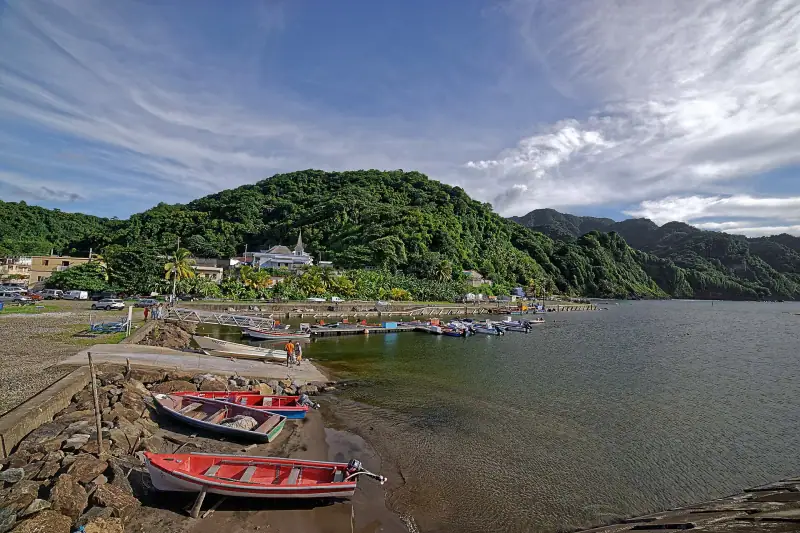
Grand'Rivière in Martinique: is it worth the detour, and what to do at the end of the road?
Grand'Rivière, a fishing village in northern Martinique: getting there from Fort-de-France, what to see, the Anse Couleuvre hike, where to eat.
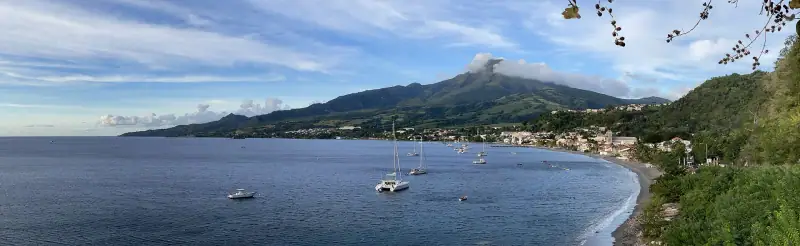
Visiting Saint-Pierre in Martinique: ruins, museum and volcano history
What to see in Saint-Pierre, the "Pompeii of the Antilles" destroyed by Mount Pelée in 1902: theater ruins, volcanology museum, Cyparis's cell, tips.
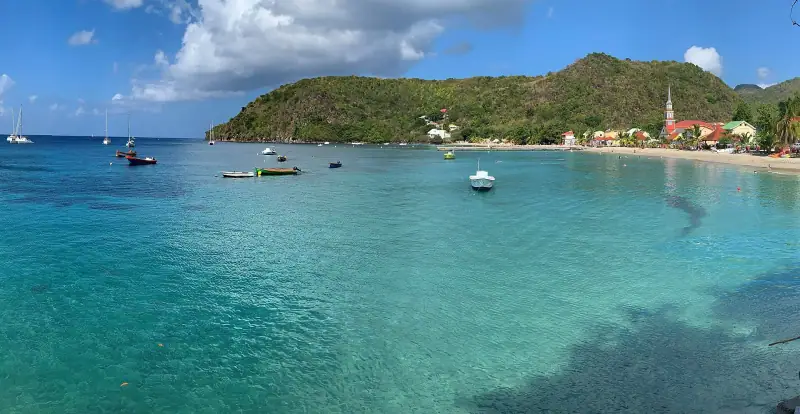
Best beaches in Martinique: a selection by coast and by travel style
The best beaches in Martinique: Grande Anse des Salines, Les Anses-d'Arlet, Le Diamant, Anse Couleuvre, Caravelle. How to choose by coast and style.
Ready-made
Martinique itineraries
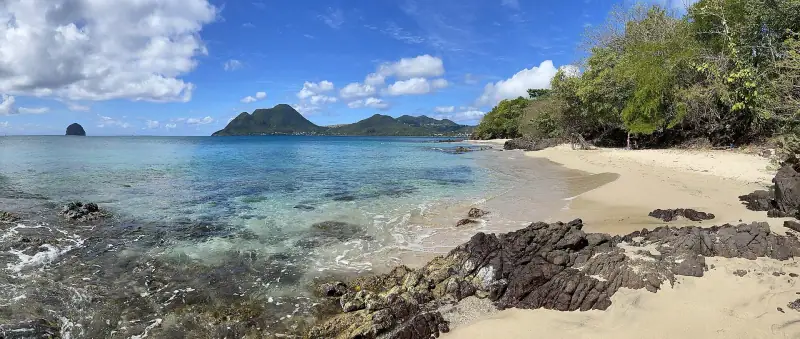
5 days
Martinique in 5 days with kids: stops, distances and a realistic pace
Martinique in 5 days with kids: day-by-day stops, distances, drive times, safe beaches and breaks to keep the pace without wearing out the family.
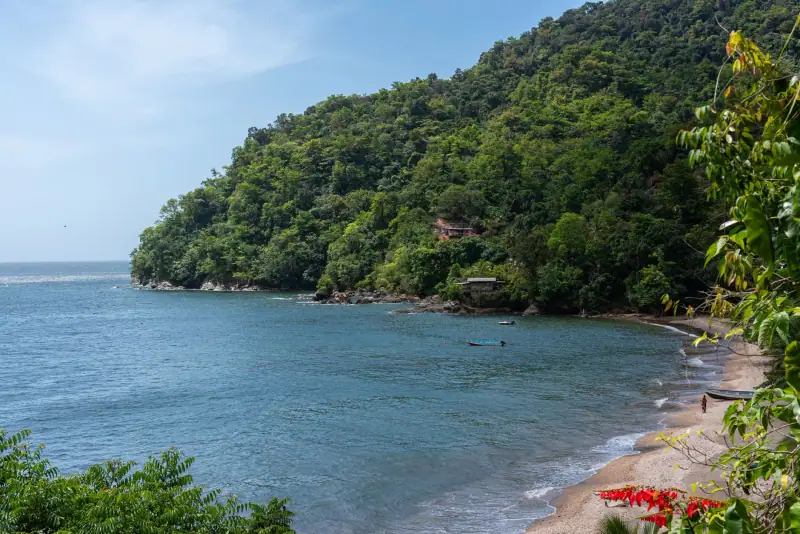
3 days
3 days in northern Martinique: a volcano, forest and wild coast itinerary
A 3-day itinerary for northern Martinique: Saint-Pierre, Mount Pelée, the Caribbean coast, the Trace and the Atlantic coast, with tips and variations.
7 days
Martinique in 7 days: a day-by-day itinerary for a first stay
Martinique in 7 days: a day-by-day itinerary through Fort-de-France, Saint-Pierre, the Caravelle and the southern beaches, with drive times and tips.