What to see
Grand'Rivière in Martinique: is it worth the detour, and what to do at the end of the road?
We may earn a commission when you book through links on this page, at no extra cost to you. We don't visit or try the places we cover: we summarize published sources. How we work
In short
- Grand'Rivière, with fewer than 600 inhabitants, is the last village in the north, about 1 h 30 by road from Fort-de-France.
- It is worth the detour for its end-of-the-world mood and wild coast, not for a quick sightseeing stop; allow half a day to a full day.
- Without a car it is hard to reach: there is no car rental in the village, so rent in Fort-de-France or at the airport.
- The hike to Anse Couleuvre covers 16 to 18 km (10 to 11 mi) in 5 to 6 hours and is for fit walkers; start early and plan the return.
Grand’Rivière is the last village in the north of Martinique, where the road ends at the Atlantic. It is worth the detour for its end-of-the-world mood, its wild coast and the start of the hikes toward Anse Couleuvre, not for a quick tour of monuments.
Allow half a day at minimum from the Caribbean coast, and a full day if you hike or have lunch there.
In short: Grand’Rivière, with fewer than 600 inhabitants, is about 1 h 30 from Fort-de-France. You come by car for the fishing village, its colorful houses and the northern trails. Plan a full day, bring water and good shoes, and have a plan B in case of rain.
What exactly is Grand’Rivière?
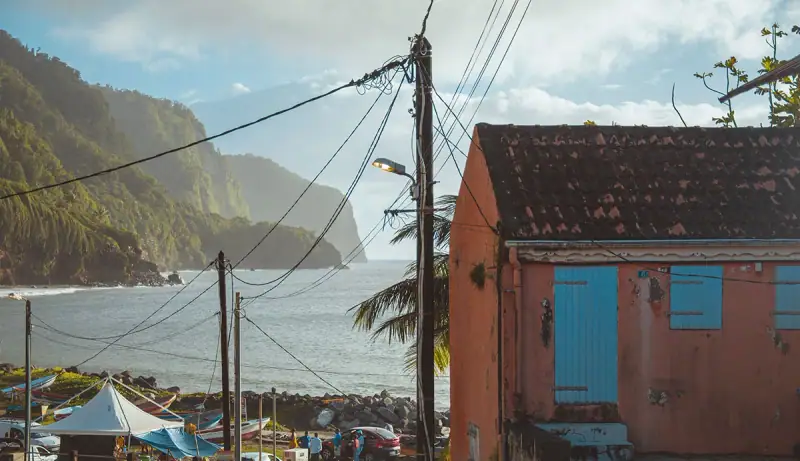
The town sits at the very north of the island, at the foot of Mount Pelée, on the Atlantic coast. It has a little under 600 inhabitants, according to the latest official figures, making it one of the least populated towns on the island. It is often called Martinique’s “end of the world”: after the village, there is no more road.
In 2025, Grand’Rivière was one of 14 villages in the running in a national French TV contest for favorite village, and it was the only overseas candidate that year. That explains the recent attention paid to a village that remains, all the same, very quiet.
How to get from Fort-de-France to Grand’Rivière
From Fort-de-France, allow about 1 h 30 by road via the N3 then the N1, according to guides. From Saint-Pierre, the trip is shorter, but the road remains winding. It crosses forest, fords rivers and, according to the local press, passes over two metal bridges that are part of the experience.
There is no airport and no car rental company in the village: pick up your vehicle in Fort-de-France or at the airport. Transport options are detailed in our guide to getting around Martinique.
A car to reach the north of the island
Compare rental companies: without a car, Grand'Rivière is hard to reach.
What to see in Grand’Rivière in half a day
The village is visited on foot, with no heavy program. The most often cited items:
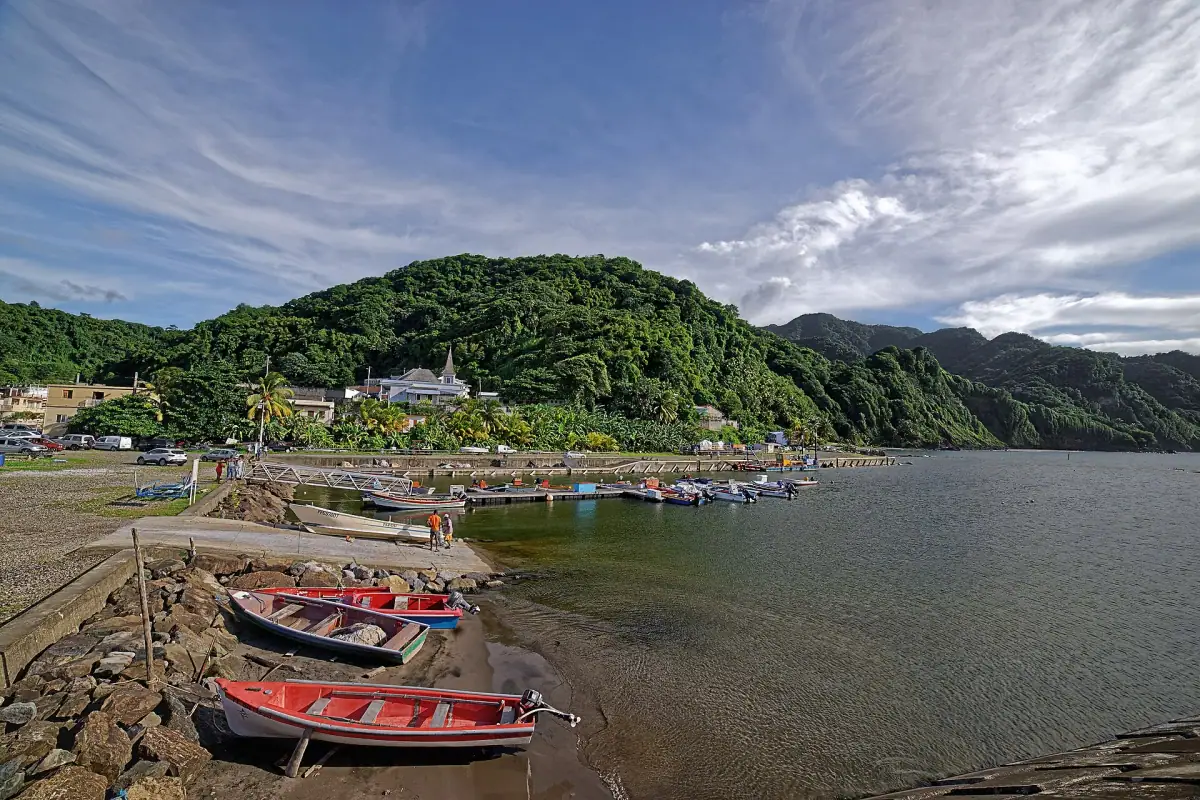
- The fishing harbor: colorful boats, and seine fishing, which is still sometimes practiced.
- The colorful wooden houses of the village, discovered by strolling.
- Habitation Beauséjour, a former plantation house.
- The church that overlooks the village, and the view from above over the village and the ocean.
- The statue of the Virgin of the Sailors, reached by a steep lane, with a fine viewpoint.
- The black-sand beaches and the river that gives the village its name.
Do not expect a museum or a classic guided tour: the appeal is the atmosphere and the landscape. To combine with other stops, look at our 3-day northern itinerary.
Grand’Rivière or Saint-Pierre: which to choose if you are short on time?
If you have only one day in the north, Saint-Pierre has more to see: ruins, museum, the volcano’s history. Grand’Rivière suits those who have already seen the big classics and want calm, or those who plan to walk.
The most logical approach is to combine both on the same day by setting out early, or to sleep in the north to avoid round trips.
Sleep in the north to avoid the road
Compare lodging on the north coast and in Saint-Pierre to set off early toward Grand'Rivière.
Grand’Rivière to Anse Couleuvre hike: who is it for?
This is the north’s big hike: a coastal trail linking Grand’Rivière to Anse Couleuvre and Le Prêcheur through the forest. Sources give between 16 and 18 km (10 to 11 mi) and 5 to 6 hours of walking, depending on the end point and pace. The tourist office rates it as a level 1 hike, while other guides reserve it for experienced walkers: take that as a signal for caution.
A few simple rules:
- Set off early in the morning and keep a margin before dark.
- Carry plenty of water, food and a basic first-aid kit.
- Arrange the return before you leave (second vehicle, taxi or boat). Boat rides along the coast exist from Grand’Rivière: confirm schedules and fares there.
- After several days of rain, river crossings and mud change the effort.
If 16 km (10 mi) is too much, other shorter trails start from the village: ask the tourist office. Our page on hiking in Martinique gives other ideas, including the nearby Gorges de la Falaise.
Hikes and guided outings in the north
If you prefer not to walk alone, compare guided nature outings in Martinique.
What to bring for a day in Grand’Rivière
The north is wetter than the south and the weather changes fast. Bring:
- closed-toe shoes with grippy soles, not flip-flops;
- a light jacket against showers;
- water and something to snack on, because choices are limited;
- insect repellent for the trails and rivers;
- a little cash for small places, and a full tank of gas before heading up.
For the rest of your packing, see also our useful accessories for Martinique.
Where to eat in Grand’Rivière
Choices are modest and mostly Creole. The restaurant Tante Arlette comes up in several guides for its fish and seafood cooking. Places on the village square are also known to motorcyclists, who stop there for traditional dishes. In a village this size, hours change: call before you come, especially off season, and do not count on eating late.
To choose what to order, our guide to what to eat in Martinique details the dishes to know.
When to go: dry season or rainy season?
The dry season, from January to early July or so according to guides, is more comfortable for walking. The north stays wet all year, and the rainy season makes trails slipperier: from late July to October, guides report frequent rain. Rivers can then swell fast, and mud clearly slows the hike to Anse Couleuvre. Morning is the best slot, since showers often concentrate in the afternoon over the hills. If you come in the rainy season, keep a spare day and a plan B on the Caribbean coast. To compare seasons, see our guide to choosing when to go to Martinique.
Grand’Rivière at a glance
| Question | Quick answer |
|---|---|
| Where? | Far north of Martinique, Atlantic coast |
| From Fort-de-France | About 1 h 30 by road |
| Without a car | Difficult, rent in Fort-de-France |
| Suggested time | Half a day to a full day |
| Hike | Anse Couleuvre, 5 to 6 h, fit walkers |
| Food | A few Creole tables, book ahead |
| Avoid | Coming without a plan B when it rains |
Sources
Frequently asked questions
Is Grand'Rivière worth the detour if you only have a few days?
Yes if you like wild coasts and quiet villages, no if you are looking for developed beaches and shops. The trip is long: allow half a day to a full day for the visit to make sense.
How long does it take to get from Fort-de-France to Grand'Rivière?
Guides give about 1 h 30 by road, via the N3 then the N1. The northern road is winding and the time varies with traffic and weather: leave with a margin.
Can you get to Grand'Rivière without a car?
It is difficult. There is no car rental office in the village, and public transport barely serves this end of the island. Rent in Fort-de-France or at the airport, or book a guided excursion in the north.
Are there beaches at Grand'Rivière?
The village is lined with black-sand beaches and rivers, but on the Atlantic side the sea can be strong. Ask locally before swimming and prefer the river or a Caribbean-coast beach if in doubt.
Can you sleep and eat in Grand'Rivière?
Yes, but choices are limited: a few Creole restaurants, including Tante Arlette, cited by several guides, and a few places to stay. In high season or on weekends, call before you come to reserve a table or a room.
Is the hike to Anse Couleuvre accessible to everyone?
No. Sources describe a walk of about 5 to 6 hours, over 16 to 18 km (10 to 11 mi), reserved for fit walkers. Start early, with water and a plan for the return, and check the trail's condition after heavy rain.
More Martinique guides
Keep reading
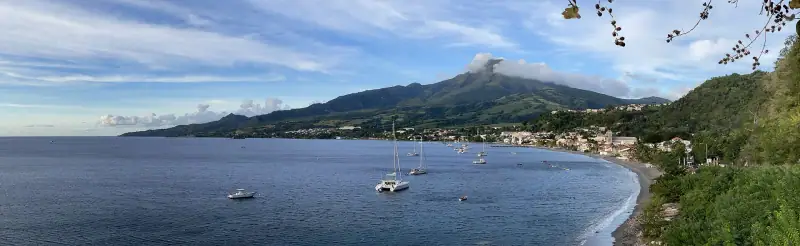
Visiting Saint-Pierre in Martinique: ruins, museum and volcano history
What to see in Saint-Pierre, the "Pompeii of the Antilles" destroyed by Mount Pelée in 1902: theater ruins, volcanology museum, Cyparis's cell, tips.
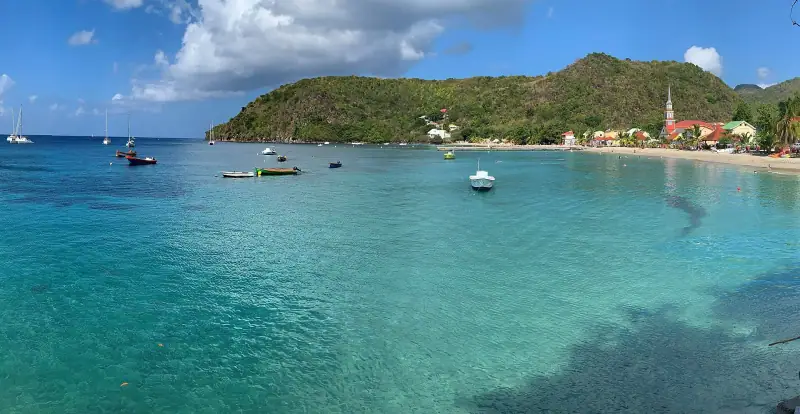
Best beaches in Martinique: a selection by coast and by travel style
The best beaches in Martinique: Grande Anse des Salines, Les Anses-d'Arlet, Le Diamant, Anse Couleuvre, Caravelle. How to choose by coast and style.
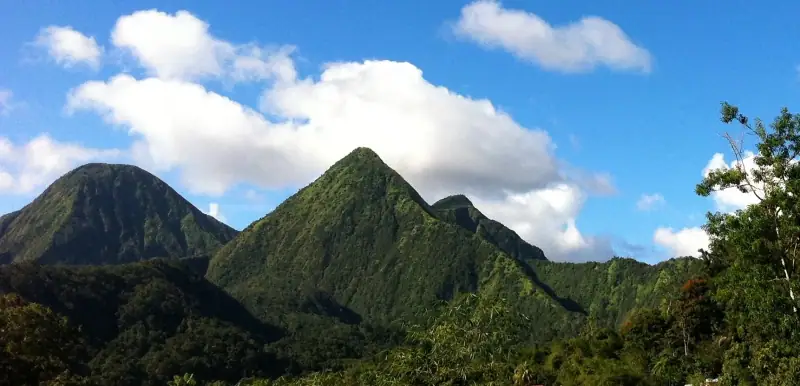
Complete guide to visiting Martinique: regions, beaches, budget and tips
Visiting Martinique: regions, towns, highlights, when to go, getting there, getting around, where to stay and budget. The pillar guide to plan your trip.
Ready-made
Martinique itineraries
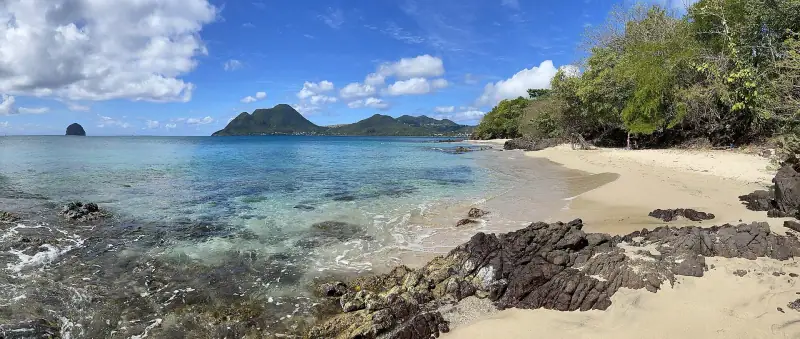
5 days
Martinique in 5 days with kids: stops, distances and a realistic pace
Martinique in 5 days with kids: day-by-day stops, distances, drive times, safe beaches and breaks to keep the pace without wearing out the family.
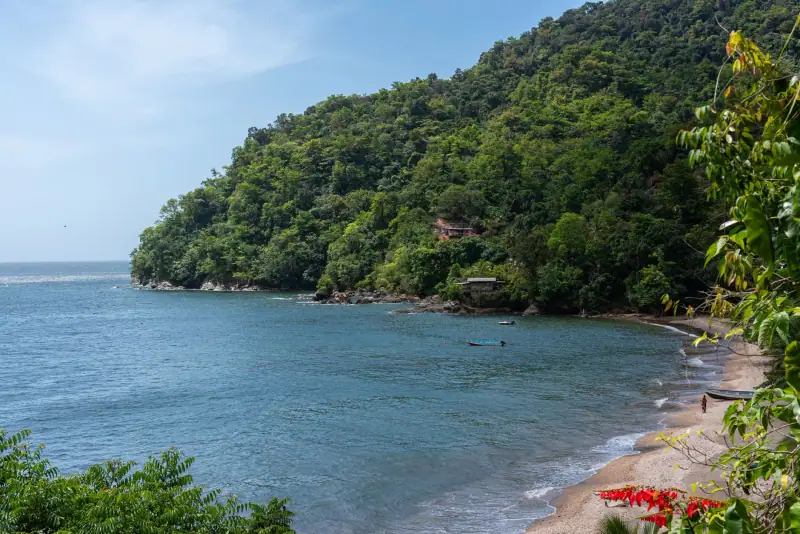
3 days
3 days in northern Martinique: a volcano, forest and wild coast itinerary
A 3-day itinerary for northern Martinique: Saint-Pierre, Mount Pelée, the Caribbean coast, the Trace and the Atlantic coast, with tips and variations.
7 days
Martinique in 7 days: a day-by-day itinerary for a first stay
Martinique in 7 days: a day-by-day itinerary through Fort-de-France, Saint-Pierre, the Caravelle and the southern beaches, with drive times and tips.