Itineraries
3 days in northern Martinique: a volcano, forest and wild coast itinerary
We may earn a commission when you book through links on this page, at no extra cost to you. We don't visit or try the places we cover: we summarize published sources. How we work
Day by day
- Day 1Saint-Pierre ruins and museum, distillery, Le Prêcheur
- Day 2Mount Pelée climb or Gorges de la Falaise, Balata Garden, the Trace
- Day 3La Trinité, Caravelle Peninsula, Château Dubuc, coast villages
Weather through the year on this route
| Jan | Feb | Mar | Apr | May | Jun | Jul | Aug | Sep | Oct | Nov | Dec | |
|---|---|---|---|---|---|---|---|---|---|---|---|---|
| High °F (°C) | 8027 | 8027 | 8027 | 8127 | 8228 | 8228 | 8228 | 8329 | 8429 | 8329 | 8228 | 8127 |
| Low °F (°C) | 7926 | 7725 | 7725 | 7926 | 8127 | 8127 | 8127 | 8228 | 8228 | 8228 | 8127 | 7926 |
| Rain in (mm) | 2.975 | 2.155 | 2.975 | 3.695 | 4.3110 | 5.3135 | 6.0155 | 7.2185 | 7.4190 | 7.8200 | 7.7195 | 3.9100 |
Normals 1991–2020 at Les Trois-Îlets and Sainte-Anne: averages over 30 years, not a forecast. Source: NASA POWER (MERRA-2), grid of about 50 km. Figures computed by us in November 2026.
In short
- Three days cover Saint-Pierre and the Caribbean north coast, Mount Pelée or the Gorges de la Falaise with the Trace forest road, and the Atlantic coast and Caravelle Peninsula.
- A rental car is strongly recommended; northern roads are winding, and a 30 km (19 mi) trip can take over an hour.
- Two nights around Saint-Pierre cut the driving, especially if you plan to climb Mount Pelée.
- February to April is generally best for hiking; fill the tank before heading north, where gas stations are fewer.
When you think of Martinique, you first picture the southern beaches. Yet it is in the north that the island shows its rawest character: a still-monitored volcano, dense humid tropical forest, villages clinging to the slope and an Atlantic coast beaten by the trade winds. This three-day route is designed for those who want to explore this green half of the island without spreading yourself thin, with realistic days and time to stop.
If you would rather have an overview, our 7-day Martinique itinerary combines north and south. For the beaches and rums of the south, see 3 days in southern Martinique.
Before you go: organizing your northern loop
The north of Martinique is covered by car, and you need to accept a slow pace. Mountain roads are narrow, bends are many, and a trip of 30 km (19 mi) can easily take more than an hour. That is a good thing: the landscape changes at every turn, and photo stops come naturally.
A few simple principles help you make the most of these three days:
- Set off early for natural sites. In the mountains, clouds often settle in from late morning, and morning light is far more beautiful.
- Bring layers: a light windbreaker and a thin fleece are not superfluous at altitude, even in the tropics.
- Carry water and snacks: shops are rare on trails and in some isolated villages.
- Keep a swimsuit and towel in the car: an impromptu swim on the Caribbean coast is the best way to finish a hike.
- Check the weather every morning: the north is the wettest part of the island, and conditions can change in minutes.
As for a base, two options work well. Either you keep a single lodging in the center or south (see our guide on where to stay in Martinique), or you spend two nights around Saint-Pierre to cut the driving. The second option is more restful, especially if you plan to climb Mount Pelée.
Where to stay in Martinique
Compare hotels, guesthouses and residences to choose a base close to the north of the island.
Day 1: Saint-Pierre and the Caribbean north coast
To begin, reach Saint-Pierre along the Caribbean coast. From Fort-de-France, allow about 40 to 50 minutes in normal conditions. The road follows the sea, passes through villages like Le Carbet, and already offers fine views of Mount Pelée dominating the horizon.
The remains of the destroyed town
Saint-Pierre was destroyed in 1902 by the eruption of Mount Pelée, one of the deadliest volcanic disasters of the 20th century. Long nicknamed the “Little Paris of the Antilles”, the town has kept moving ruins: the theater, the prison, the Mouillage church. The volcanology museum helps you understand how the eruption unfolded and its consequences through objects found in the rubble. Our guide to visiting Saint-Pierre details the sites not to miss.
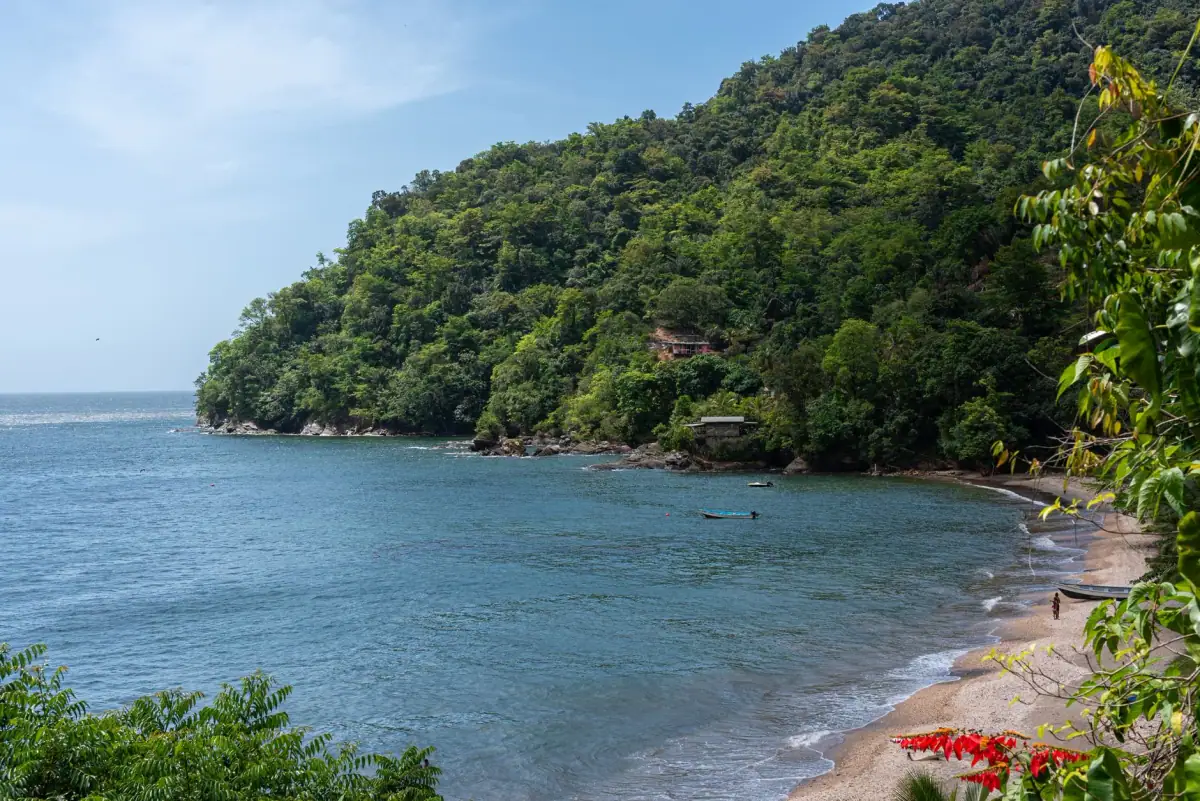
Allow half a day for the town: museum visit, a walk among the ruins, then a break on the waterfront, where dark sand and lush vegetation create a striking contrast.
A distillery and a beach at the end of the day
In the afternoon, several options. The surroundings of Saint-Pierre include distilleries and plantations that can be visited: check hours before you go, as they vary by season. Our article on the distillery route helps you choose.
If you prefer the sea, continue north to Le Prêcheur, a quiet village at the end of the coastal road. This little-developed stretch of shoreline is ideal for a swim on a gray-sand beach, far from the crowds of Les Salines. Keep a margin for the return: the road is winding, and night falls quickly in the tropics.
For diving fans, the Bay of Saint-Pierre is known for its wrecks linked to the eruption. If interested, read our article on snorkeling and diving in Martinique and book with an approved club.
Day 2: Mount Pelée and the Trace
The second day is devoted to the volcano and the forest. Two main options are open to you, depending on your fitness and the weather.
Option A: climbing Mount Pelée
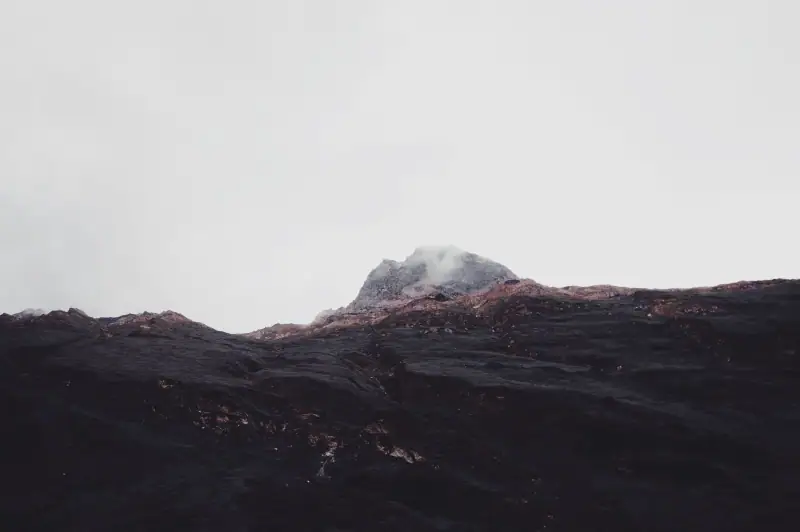
Mount Pelée, an active volcano monitored continuously, peaks at almost 1,400 m (4,580 ft). The climb is demanding: allow half a day or more, good walking shoes, water, a jacket and favorable weather. The summit is frequently in cloud, which can spoil the view: set off first thing in the morning and do not hesitate to turn back if conditions are bad.
Trails are sometimes slippery and fog can blur your bearings: follow the markings, do not separate from your group and tell someone your route. For more detail on the trails, see our article on hiking in Martinique.
Option B: forest, gorges and gardens
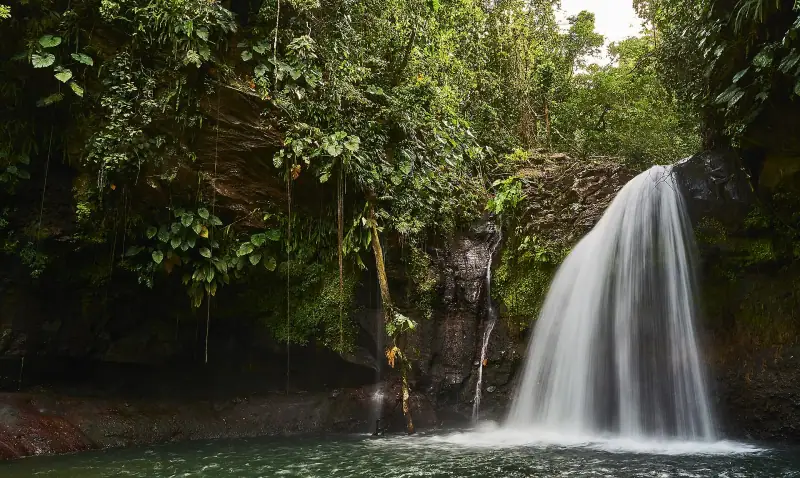
If the climb seems too ambitious, other walks are just as rewarding for less effort. The Gorges de la Falaise, near Ajoupa-Bouillon, are explored in a green canyon with passages in the water, a setting much appreciated by families. Always find out about flood conditions before you go, because water can rise fast after heavy rain. A local guide adds real value.
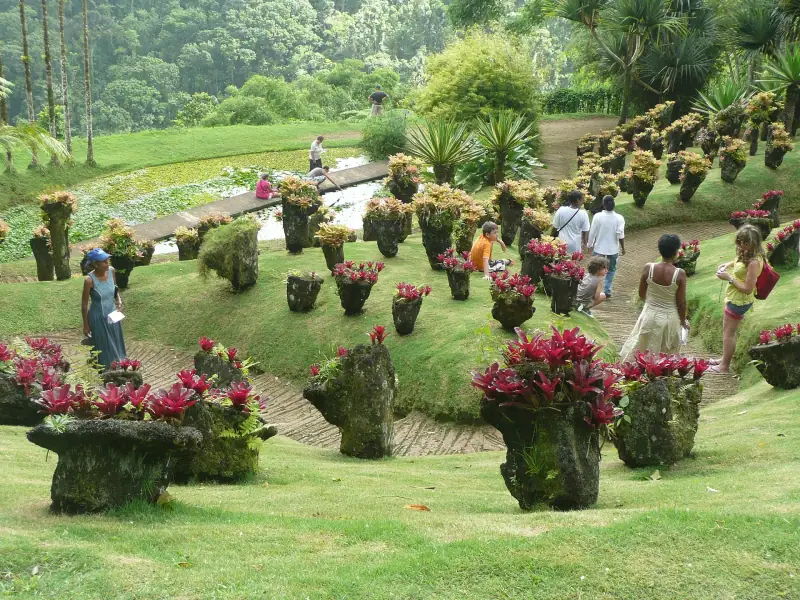
Another ideal stop: Balata Garden, at the gates of Fort-de-France, laid out around a former Creole plantation house, with tree ferns, heliconias, anthuriums and walkways suspended in the trees. Allow about two hours for the visit.
The Trace, a forest road
Whichever option you choose, take the Route de la Trace, which crosses the humid tropical forest between Fort-de-France and the north. Scenic stops, giant ferns and the misty atmosphere make this drive a highlight of the stay. Be careful: the road is narrow, visibility sometimes reduced, and sudden rain frequent.
Excursions and guided hikes
Guided hikes, boat trips and visits: book in advance in high season.
Day 3: the Atlantic coast and the Caravelle Peninsula
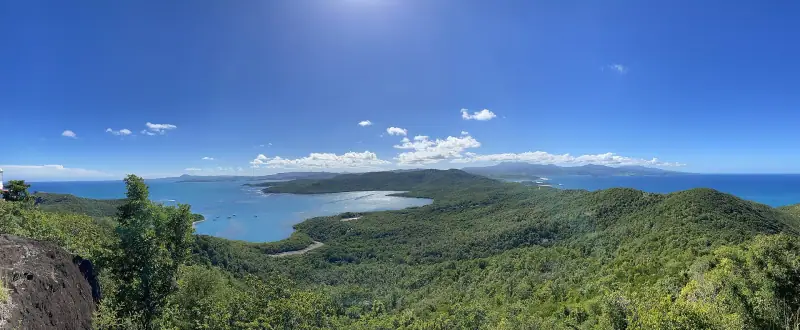
For the last day, change scenery and head to the Atlantic coast, wilder, windier and much less set up for swimming than the Caribbean side. Waves are powerful, cliffs and mangroves draw a harsher landscape, and the mood is radically different.
La Trinité and the Caravelle Peninsula
Head to La Trinité, then the Caravelle Peninsula, a nature reserve jutting into the Atlantic. Its seaside hiking trails and mangroves let you discover a nature very different from the volcano’s. You also find the remains of Château Dubuc, a former sugar plantation that recalls the island’s colonial history and its dark sides.
Allow half a day for this area: walking, a picnic and taking in the landscapes. Bring water, a hat and sun protection, as shade is rare on some stretches.
Return along the coast
On the way back, take the time to stop in the coastal villages: bakeries, small markets, simple restaurants serving grilled fish, accras or colombo. To know what to taste, see what to eat in Martinique. To round out the tasting with a local drink, also read our article on Martinique’s drinks.
Flights to Martinique
Compare flights to Fort-de-France for your dates and prepare your stay.
Variations by profile
This program can be adapted easily to your wishes:
- With kids: replace the Mount Pelée climb with Balata Garden and a short forest walk. Keep drives limited and plan regular breaks.
- Experienced hikers: devote two full days to the north, with a very early start for the volcano and a second day on coastal trails, for example from Grand’Rivière, at the very end of the road.
- History buffs: extend your time in Saint-Pierre, between museum, ruins and walking, and add Château Dubuc at the end of the route.
- Rum fans: include one or two distilleries open to visitors, checking hours in advance.
- Tight budget: stay in a guesthouse with a kitchen, shop at local markets and favor free activities like beaches and trails.
Practical tips for a successful loop
A few reminders that avoid unpleasant surprises:
- Fuel: fill up before heading into the north, where gas stations are fewer.
- Mobile network: it can be weak in the forest and valleys. Download your maps for offline use.
- Rain: bring a light waterproof layer, even if the morning is fine.
- Safety: leave no valuables visible in the car, especially at trailhead car parks.
- Respect for nature: stay on marked trails, take your trash with you, pick nothing in the reserves.
- Bookings: in high season, December to April and during school vacations, book lodging and car well in advance.
For the car, compare offers before you leave and book early: on an island where public transport remains limited, it determines your freedom of movement. Our guide to getting around Martinique details the options. Entry rules depend on your passport. Check the official travel advice of your government before you book: travel.state.gov (US), GOV.UK (UK), travel.gc.ca (Canada), Smartraveller (Australia) (checked November 2026). Also consider travel insurance suited to your trip.
What pace to adopt so you do not wear yourself out?
The classic trap of the north is wanting to see everything. Distances look modest, but every trip needs concentration: tight bends, slopes, narrow passages in villages, and traffic that thickens quickly near Fort-de-France. A lighter program, with two or three visits a day, is better than an endless list that turns the stay into a race against the clock.
Here is a simple way to spread your energy. On the first day, keep a quiet pace: it is discovery, with many places on foot and few kilometers. The second day is the most physical, so go to bed early the night before and plan a real breakfast. On the third day, alternate driving and short walks, with a long lunch break. If the weather upsets a morning, simply swap two days: the program is deliberately flexible.
Eating on the road
In the north, restaurants are often small village tables or family-run places. Service hours are generally concentrated around lunch, and many kitchens close early in the afternoon: arrive before 1:30 pm if possible. For dinner, plan ahead, especially outside Saint-Pierre. A picnic of fruit, bread and cheese bought at the market remains a simple, economical solution for hiking days.
What to bring back from this loop
Spices, cocoa, local jams and agricultural rum are easy souvenirs to slip into a suitcase. If you visited a distillery, you can buy bottles there directly. Pack them carefully and check the carry-on or checked baggage rules with your airline.
Why spend three days in the north?
Northern Martinique is often treated as a simple day trip from the south. That is a pity: by staying longer, you discover a more authentic, less touristy island where nature still dominates. You also take the measure of the volcano that shaped the landscape, the history and the memory of its inhabitants.
In three days, you will have crossed tropical forest, walked in the footsteps of a destroyed town, seen the Atlantic coast and tasted Creole cooking. Adjust the pace to the weather and your energy: here, the best program is the one you take the time to live. And if you still have a few days ahead, complete it with the southern beaches for a truly balanced stay.
Sources
- Martinique Tourism Authority: figures checked November 2026
Frequently asked questions
Are three days enough to discover northern Martinique?
Yes, as long as you spread out the driving well. The north is narrower and greener than the south, but its roads are winding: distances are short on the map, long behind the wheel. Three days let you see Saint-Pierre, Mount Pelée or the gorges, and a glimpse of the Atlantic coast.
Do you need to rent a car for this loop?
It is strongly recommended. Public transport serves the trails, isolated beaches and plantations of the north poorly. A car lets you stop freely and leave early in the morning, which matters for hiking.
Do you need to sleep in the north?
No, but it is more comfortable. From Les Trois-Îlets or Fort-de-France, the north takes under an hour, or a little more depending on traffic. Sleeping in or near Saint-Pierre avoids the morning and evening traffic jams around Le Lamentin.
Is Mount Pelée accessible to everyone?
No. The climb is demanding and the summit is often in cloud. Bring good shoes, water, a jacket and set off early. If the weather is bad or you are traveling with young children, prefer a shorter forest walk.
Can you swim on the north coast?
Yes, especially on the Caribbean side where the sea is generally calmer, with gray to black volcanic sand. On the Atlantic side, the sea is rougher: always respect signs and ask locally before swimming.
Which period should you choose for this loop?
The dry season, roughly February to April, generally offers the best conditions for hiking. In the wet season, June to November, rain is more frequent and it is better to plan flexible bookings.
More Martinique guides
Keep reading
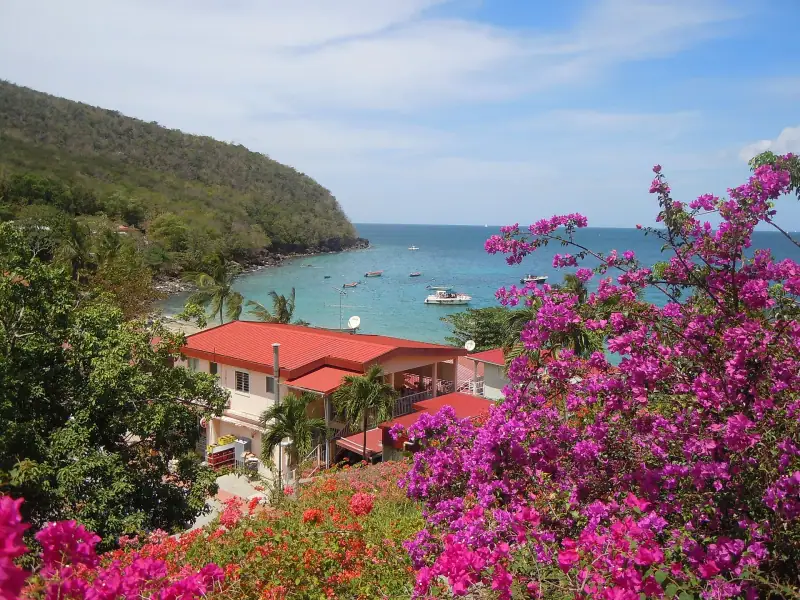
Where to stay in Les Anses-d'Arlet: Grande Anse, Anse Dufour or Petite Anse?
Where to stay in Les Anses-d'Arlet, Martinique: the village, Grande Anse, Petite Anse, Anse Dufour and Anse Noire. Which area, lodging, car or no car.
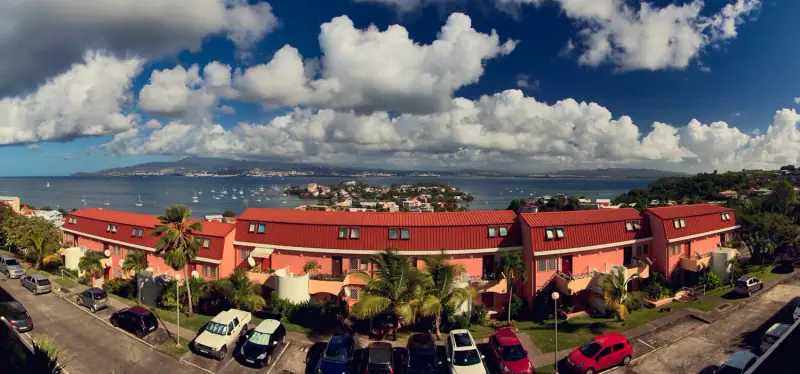
Where to stay in Les Trois-Îlets: Pointe du Bout, Anse Mitan or Anse à l'Âne?
Where to stay in Les Trois-Îlets, Martinique: Pointe du Bout, Anse Mitan, Anse à l'Âne and the village compared, with lodging types and booking tips.
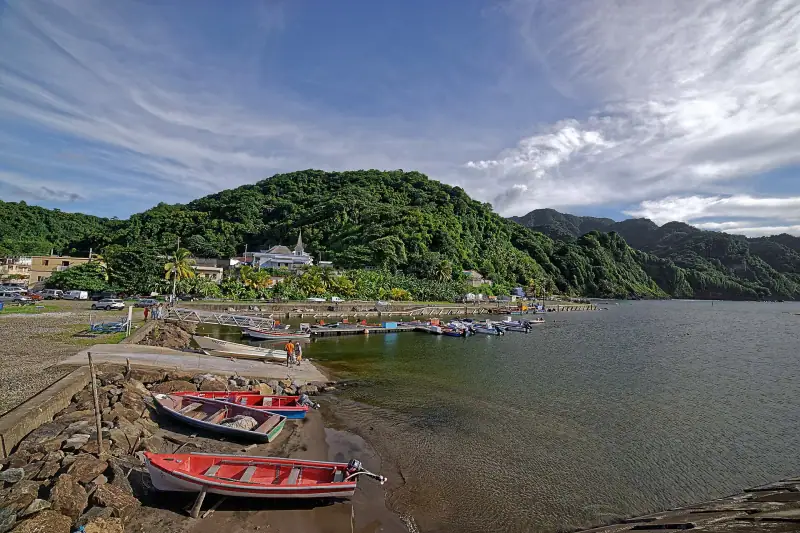
Grand'Rivière in Martinique: is it worth the detour, and what to do at the end of the road?
Grand'Rivière, a fishing village in northern Martinique: getting there from Fort-de-France, what to see, the Anse Couleuvre hike, where to eat.
Ready-made
Martinique itineraries
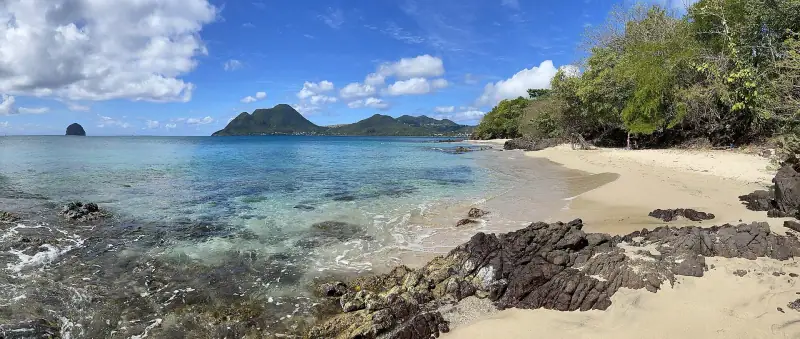
5 days
Martinique in 5 days with kids: stops, distances and a realistic pace
Martinique in 5 days with kids: day-by-day stops, distances, drive times, safe beaches and breaks to keep the pace without wearing out the family.
7 days
Martinique in 7 days: a day-by-day itinerary for a first stay
Martinique in 7 days: a day-by-day itinerary through Fort-de-France, Saint-Pierre, the Caravelle and the southern beaches, with drive times and tips.
3 days
3 days in southern Martinique: beaches, villages and rum
A 3-day itinerary for southern Martinique: Les Trois-Îlets, Les Anses-d'Arlet, Le Diamant, Sainte-Anne and Les Salines, with drive times and beach tips.