What to see
Best beaches in Martinique: a selection by coast and by travel style
We may earn a commission when you book through links on this page, at no extra cost to you. We don't visit or try the places we cover: we summarize published sources. How we work
In short
- The Caribbean coast and the south are the calmest for swimming; on the Atlantic coast, wind, waves and currents make swimming riskier.
- Grande Anse des Salines is the signature beach of the south: pale sand, coconut palms, calm water. Arrive early.
- Les Anses-d'Arlet (Anse Dufour, Anse Noire) are the best bet for snorkeling; the north has gray to black volcanic sand.
- The dry season, roughly December to April, is the most pleasant for the beach; check local information on sargassum before you go.
Martinique is a small island, but its beaches offer surprising variety. In the south, long ribbons of pale sand lined with coconut palms and calm water. On the Caribbean coast, fishing coves where you can put on a mask a few yards from the shore. In the north, dark-sand beaches at the foot of tropical forests and a volcano. On the Atlantic coast, wilder, wind-swept landscapes that are better admired than swum in. Here is our selection, sorted by area, with tips for choosing according to your profile and enjoying the sea safely.
How to choose your beach: Caribbean coast, south or Atlantic?
Before comparing beaches one by one, keep the island’s geographic logic in mind. The Caribbean coast, in the west, is sheltered from the prevailing winds: the sea is generally calm, which makes it the favorite playground of families and snorkeling fans. The south, between Le Diamant, Sainte-Anne and Les Salines, concentrates the big pale-sand beaches, the island’s most classic. The Atlantic coast, in the east, takes the trade winds head-on: spectacular landscapes, waves and currents, but swimming should be approached with caution. Finally, the north, around Saint-Pierre and Mount Pelée, has darker volcanic-sand beaches and a very different atmosphere.
Travel time matters as much as the beach. Martinique’s roads are winding and often busy around Fort-de-France at rush hour: a trip that looks short on the map can take much longer. To limit driving, pick a suitable place to stay, and see our guide on where to stay in Martinique.
One last point: the season. The dry season, roughly December to April, is the most pleasant for the beach, with less rain and often calmer seas. We detail the months, risks and events in our article on choosing when to go to Martinique.
Stay near the most beautiful beaches
Hotels, residences and rentals in the south and on the Caribbean coast: compare lodging for your dates.
Grande Anse des Salines: the signature beach of the south
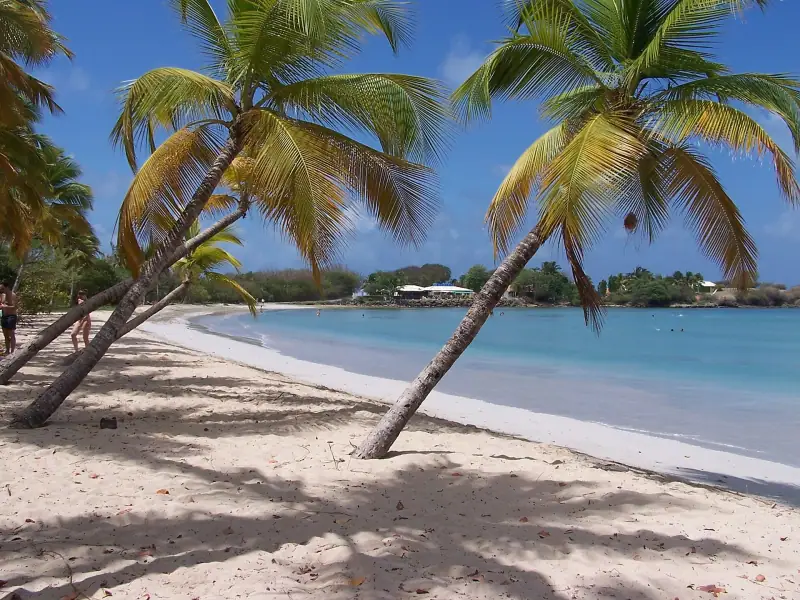
This is the beach everyone names first, and for good reason. Located in the town of Sainte-Anne, at the southern tip of the island, Grande Anse des Salines unrolls a long arc of pale sand, lined with coconut palms and coastal vegetation. The water is generally calm and shallow for the first few yards, which suits families and anyone who prefers to paddle rather than swim.
Its success has a downside: in high season and on weekends, the beach fills up, especially near the main entrance. The solution is simple: arrive early in the morning, or walk a little along the shore, where space quickly returns. Part of the back beach is shaded by trees, but shade remains limited in places; bring a hat, sunscreen and water.
Small snack stands and refreshment huts near the car park let you eat without leaving the beach, with specialties like those we present in our guide to what to eat in Martinique. The site also has walking trails in a protected natural environment: respect the vegetation and the signs, and leave no trash.
Who it suits: families, lovers of pale sand and wide open spaces, and travelers who want the classic Caribbean postcard.
Sainte-Anne and surroundings: Pointe Marin and Cap Chevalier
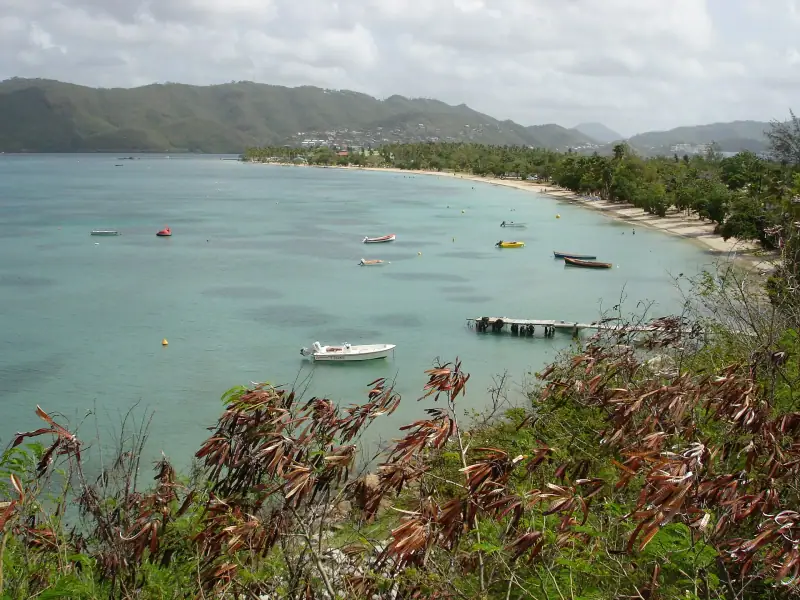
The Sainte-Anne area is not limited to Les Salines. The village itself is a practical starting point, with its shops, restaurants and village beach, very lively on weekends when Martinican families gather there. Nearby, Pointe Marin beach is one of the busiest in the town, with a large stretch of sand and shade under the trees.
For a wilder atmosphere, push east to Cap Chevalier, where you find more isolated beaches exposed to the trade winds and the Atlantic. The landscapes are superb, but swimming there calls for more vigilance: wind, currents and uneven bottoms can change the situation quickly. Observe the place first, ask residents and do not swim alone if you have any doubt.
The south is also the starting point for lovely coastal walks. Bring closed-toe shoes, water and sun protection, as the terrain is often unshaded.
Flights to Martinique
Compare flights to Fort-de-France to head to the beach at the best time.
Les Anses-d’Arlet: snorkeling in front of the fishing village
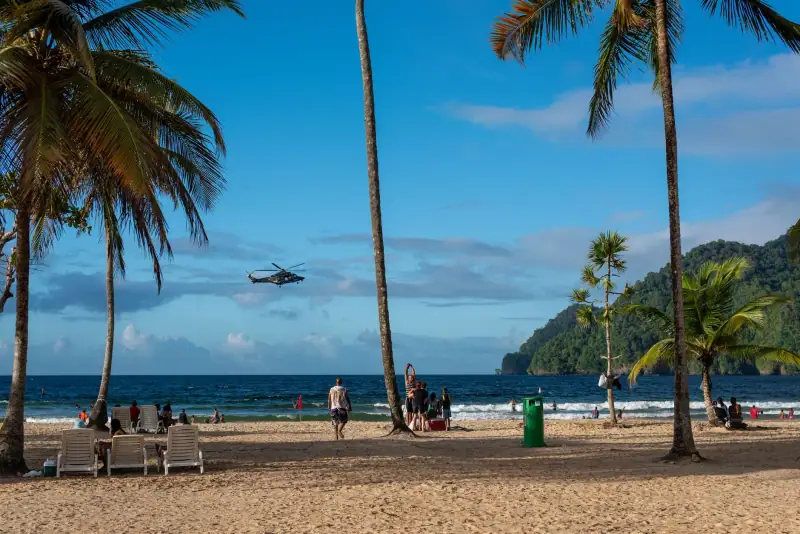
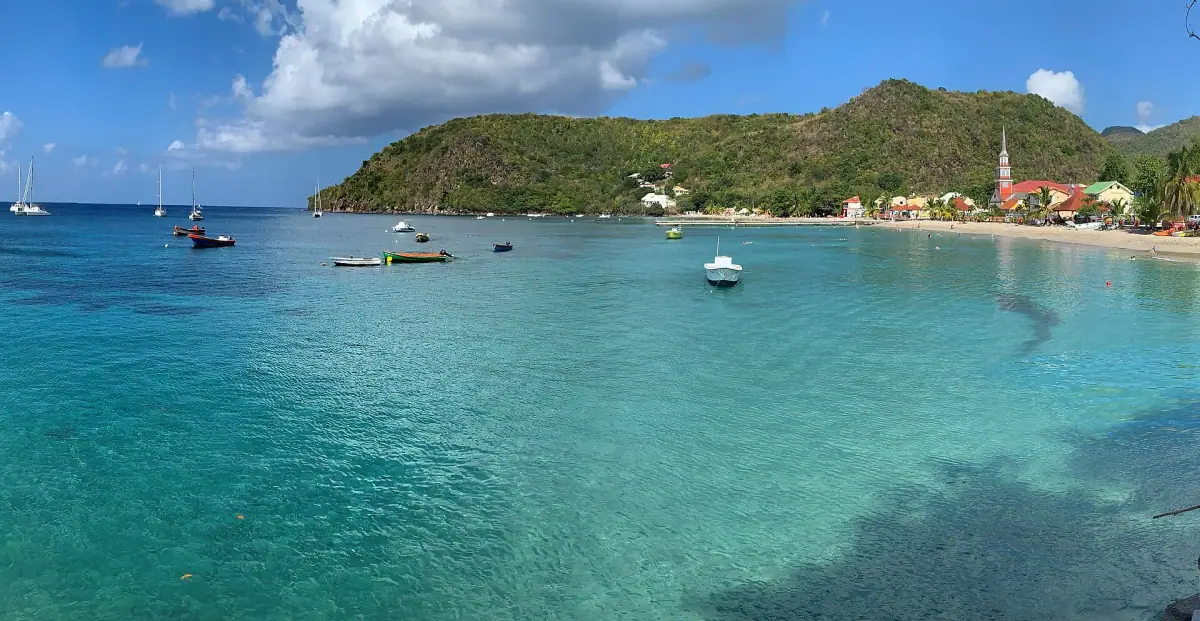
On the Caribbean coast, Les Anses-d’Arlet is among the most charming places on the island. The village stretches around its small bays, with a church close to the beach, fishing boats pulled up on the sand and coconut palms. People often talk about “Grande Anse” for the main beach, where local life mixes with visitors.
The big asset of this area is the sea. It is generally calm and clear, and you can watch tropical fish with just a mask and snorkel, sometimes sea turtles near the seagrass beds. Respect them: do not touch them, do not chase them and keep your distance. It is one of the best places on the island for a first snorkel with children who are comfortable in the water.
Nearby, Anse Dufour and Anse Noire make a much-loved pair. The first is a small bay of pale sand and colorful boats, the second a crescent of dark volcanic sand that contrasts with its neighbor. The two are linked by a short path, so you can compare the atmospheres in a few minutes. Parking spaces are limited in high season: arrive early.
Who it suits: lovers of calm, snorkeling and authentic villages.
Le Diamant: a long beach facing the famous rock
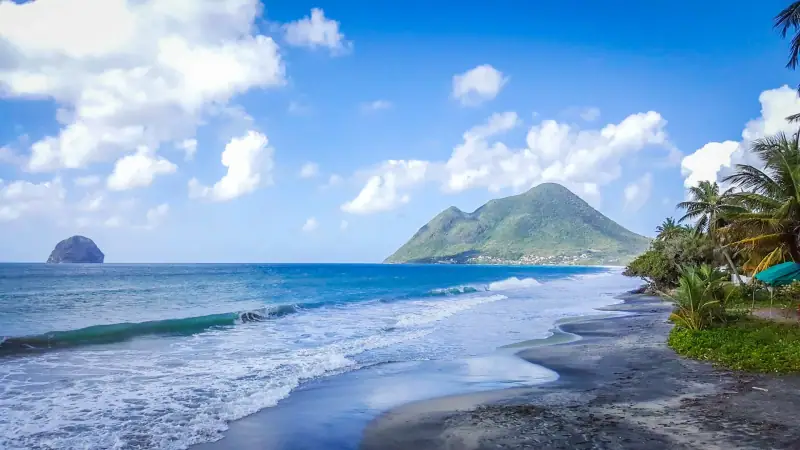
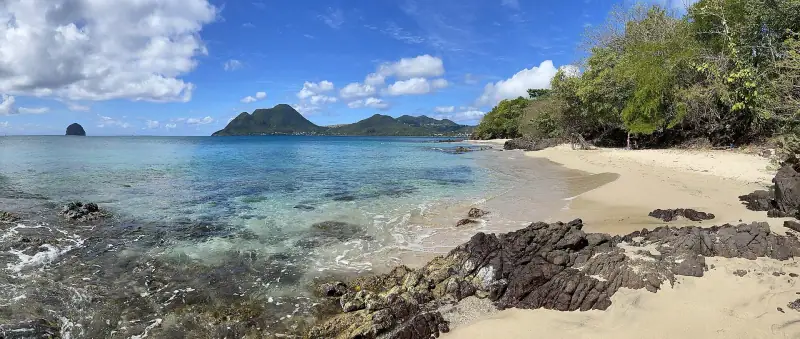
Le Diamant beach stretches for several kilometers, facing Diamond Rock (Rocher du Diamant), a volcanic islet that is one of the island’s best-known images. The view is exceptional, especially at the end of the day, when the light gilds the sand and the rock stands out against the sky.
This beach is mainly appreciated for walking, sunsets and long barefoot strolls. Swimming calls for caution: depending on the day, swell and currents can be stronger than in the neighboring coves, and signs mark areas best avoided. Always ask for advice locally before entering the water.
Le Diamant is also a good place to stay: the village has restaurants, shops and varied lodging, close to beaches and trailheads. We detail this area, with its advantages and limits, in our guide to choosing where to stay in Martinique.
Les Trois-Îlets: Anse Mitan and Anse à l’Âne, the convenient beaches
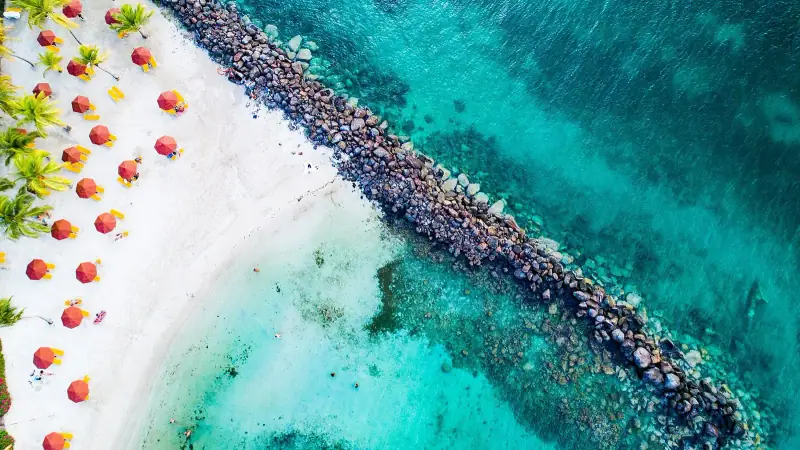
Across the Bay of Fort-de-France, the town of Les Trois-Îlets gathers several easy-to-reach beaches. Anse Mitan, in the Pointe du Bout resort, is one of the busiest: close to restaurants, shops and hotels, a lively mood and generally quiet water. Anse à l’Âne, a little farther on, offers a more relaxed setting, with a view of the bay and Fort-de-France.
These beaches are not the wildest on the island, but they have the advantage of convenience, notably for families and travelers without a car: they are easy to reach from the lodgings in the area. A ferry shuttle also links Pointe du Bout to Fort-de-France, so you can combine swimming and a city visit in the same day. Check schedules with the local companies before planning.
Boat trips and snorkeling
Catamaran excursions, diving and snorkeling: book your water activities in advance in high season.
The Caribbean north: Anse Couleuvre and the dark-sand beaches
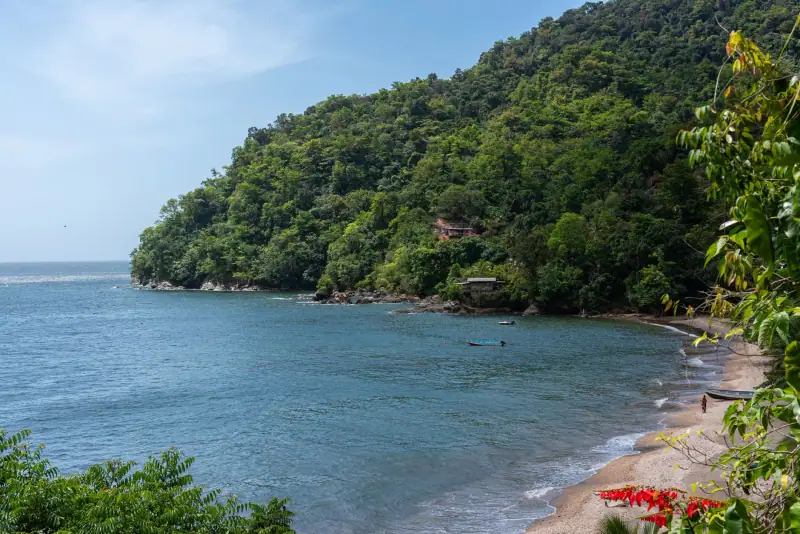
The north of the island has a personality of its own. Gray to black beaches of volcanic origin are surrounded by dense vegetation, at the foot of forested hills. Anse Couleuvre, at the far north of the Caribbean coast, is one of the loveliest: a wild beach shaded by the forest, reached at the end of a winding road. Access is not always as simple as at the southern beaches, but the setting rewards the effort.
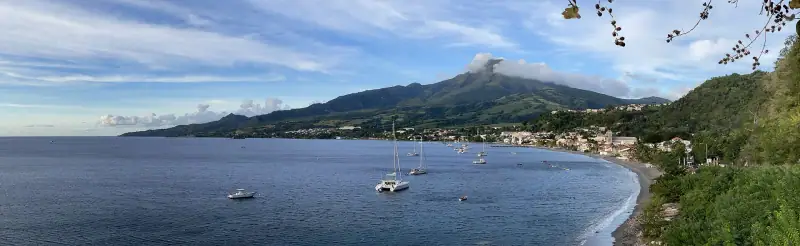
Farther south, around Saint-Pierre and Le Prêcheur, other dark beaches offer varied atmospheres, often calmer and less busy than in the south. This area is also very rich in history: the town of Saint-Pierre, destroyed by the eruption of Mount Pelée in 1902, deserves a visit in addition to swimming. Plan at least half a day to combine it with the beach.
There, the sea can be rougher and beaches less equipped than in the south: few services, sometimes no restrooms or food. Bring water, snacks and sun protection, and leave nothing behind.
Who it suits: travelers who like wild settings, hikers and history buffs.
The Atlantic coast: Caravelle and wild landscapes
Martinique’s Atlantic coast is visited for its landscapes. The Caravelle Peninsula, near La Trinité, is a protected natural site with trails, cliffs, mangroves and isolated beaches. The atmosphere is very different from the south: wind, waves, dense vegetation, and a feeling of being far from everything.
On many beaches of this coast, swimming is discouraged or requires real caution because of swell and currents. Coves sheltered by reefs, where they exist, sometimes offer calmer areas, but it is better to rely on local guidance. Sargassum strandings can also affect this side in some years: check before you head out.
This coast is therefore ideal for hikers, photographers and nature lovers, more than for swimmers. Pair it with a day of exploring rather than a day of lounging.
Tips for enjoying the beaches safely
A few simple rules make the day more pleasant:
- Rent a car to combine the south, the Caribbean coast and the north. Roads are winding: allow plenty of time for your trips.
- Arrive early at the busiest beaches, notably Les Salines, Les Anses-d’Arlet and Le Diamant.
- Respect signs and flags and never swim if in doubt, especially on the Atlantic side.
- Protect yourself from the sun: sunshine is strong all year. Hat, sunglasses, UV shirt and sunscreen suited to marine environments.
- Leave nothing behind: avoid leaving trash, cigarette butts and valuables in the car. Leave nothing visible in your vehicle while you swim.
- Respect wildlife: do not touch turtles, coral or sea urchins, and do not walk on seagrass beds.
Selection by profile
- Family with children: Grande Anse des Salines or Anse Mitan, for the calm water and nearby services.
- Snorkeling and nature: Les Anses-d’Arlet, Anse Dufour and Anse Noire, on the Caribbean side.
- Sunsets and walking: Le Diamant beach, facing the rock.
- Adventure and dark sand: Anse Couleuvre and the Caribbean north.
- Hiking and scenery: the Caravelle Peninsula, on the Atlantic coast.
Whatever your selection, keep time to relax. Martinique lends itself to days that mix swimming, walking and Creole meals, and one week is enough to discover several very different atmospheres. Enjoy the beach!
Frequently asked questions
What is the most beautiful beach in Martinique?
It is a matter of taste, but Grande Anse des Salines, in the south, almost always comes first: pale sand, coconut palms, calm water and lots of space. For a village atmosphere and snorkeling, Les Anses-d'Arlet is an excellent choice.
Where can you swim safely in Martinique?
The Caribbean (west) coast and the south coast, sheltered from the prevailing winds, generally offer calm water suited to families. On the Atlantic coast, wind, waves and currents make swimming riskier: always ask locally and respect flags and signs.
Is there black sand in Martinique?
Yes. In the north, of volcanic origin, the sand is gray to black, notably around Saint-Pierre and Le Prêcheur. In the south, the sand is white to golden. You can see both atmospheres in a single week, because the island is small.
Do you need to rent a car to visit the beaches?
It is strongly recommended. Some beaches are easy to reach from where you stay, but to combine the south, the Caribbean coast and the north, a car gives much more freedom. Roads are winding and travel times often longer than you think.
Is sargassum a problem for swimming?
Sargassum (brown seaweed) strandings occur in some years, mostly on Atlantic-facing coasts. They vary a lot by period. Before heading out, check local information from the town or the prefecture, which report affected areas.
Can you snorkel without your own gear?
It is better to bring your own mask and snorkel, or to rent there from the seasonal providers near the busiest beaches. Consider reef-friendly sunscreen and avoid touching the bottom, the coral and the turtles.
More Martinique guides
Keep reading
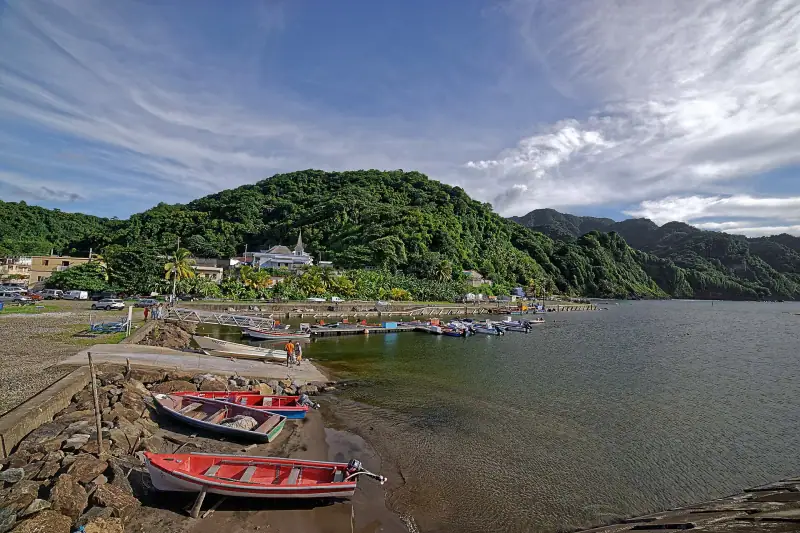
Grand'Rivière in Martinique: is it worth the detour, and what to do at the end of the road?
Grand'Rivière, a fishing village in northern Martinique: getting there from Fort-de-France, what to see, the Anse Couleuvre hike, where to eat.
Visiting Saint-Pierre in Martinique: ruins, museum and volcano history
What to see in Saint-Pierre, the "Pompeii of the Antilles" destroyed by Mount Pelée in 1902: theater ruins, volcanology museum, Cyparis's cell, tips.
Complete guide to visiting Martinique: regions, beaches, budget and tips
Visiting Martinique: regions, towns, highlights, when to go, getting there, getting around, where to stay and budget. The pillar guide to plan your trip.
Ready-made
Martinique itineraries
5 days
Martinique in 5 days with kids: stops, distances and a realistic pace
Martinique in 5 days with kids: day-by-day stops, distances, drive times, safe beaches and breaks to keep the pace without wearing out the family.
3 days
3 days in northern Martinique: a volcano, forest and wild coast itinerary
A 3-day itinerary for northern Martinique: Saint-Pierre, Mount Pelée, the Caribbean coast, the Trace and the Atlantic coast, with tips and variations.
7 days
Martinique in 7 days: a day-by-day itinerary for a first stay
Martinique in 7 days: a day-by-day itinerary through Fort-de-France, Saint-Pierre, the Caravelle and the southern beaches, with drive times and tips.