What to see
Visiting Saint-Pierre in Martinique: ruins, museum and volcano history
We may earn a commission when you book through links on this page, at no extra cost to you. We don't visit or try the places we cover: we summarize published sources. How we work
In short
- On May 8, 1902, Mount Pelée destroyed Saint-Pierre; estimates cited put the toll at nearly 28,000 victims.
- The compact center is visited on foot in half a day: theater ruins, Cyparis's cell and the volcanology museum (about one hour).
- The bay has gray to black volcanic-sand beaches on the calmer Caribbean side, and shipwrecks from 1902 for divers.
- A car is the most practical way to combine Saint-Pierre with Mount Pelée, the northern beaches and Le Prêcheur.
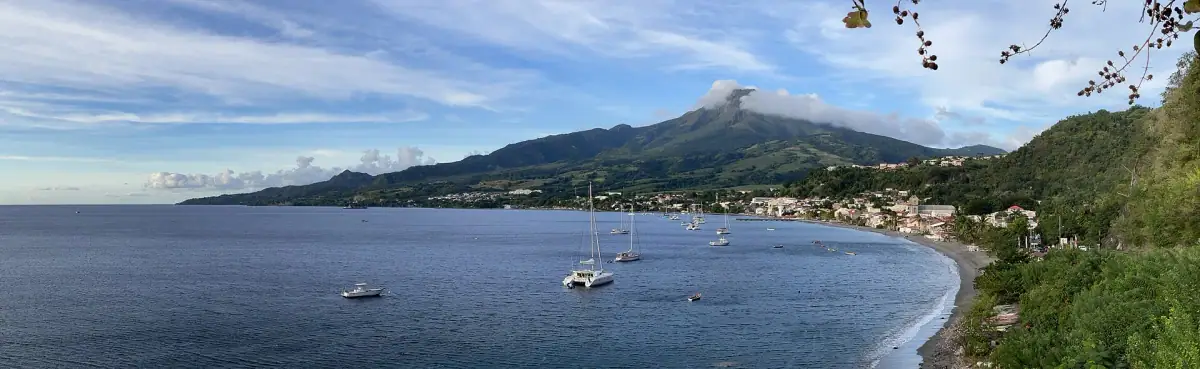
At the foot of Mount Pelée, facing the Caribbean Sea, Saint-Pierre is one of the most striking places in Martinique. Former economic and cultural capital of the island, it was nicknamed the “Little Paris of the Antilles” before being wiped out on May 8, 1902 by the volcano’s eruption. Today the town has recovered a peaceful life: you wander among ruins, a museum, dark-sand beaches and seaside cafés. Here is how to organize your visit, what to see and how to combine it with the rest of the north of the island.
The history of Saint-Pierre: from Little Paris of the Antilles to the 1902 disaster
Founded in the 17th century, Saint-Pierre grew thanks to its port, its position on the Caribbean coast and the sugar and rum trade. At the end of the 19th century it was the most important town on the island: it had a theater, shops, stone houses, a lively cultural life and a very busy port. Fort-de-France, today the capital, only overtook it after the disaster.
In spring 1902, Mount Pelée showed signs of activity: ash emissions, tremors, sulfur smells. On May 8, 1902, a pyroclastic cloud, a mix of burning gases, ash and rock, rushed down the volcano’s slopes and reached the town in a very short time. Nearly the entire population perished; the generally accepted estimates speak of nearly 28,000 victims. The event remains one of the greatest volcanic disasters of the 20th century and deeply marked the island’s history.
Among the few survivors, the one most often cited is Louis-Auguste Cyparis, a prisoner protected by the thickness of his cell walls. His story went around the world. The town was later partly rebuilt, but it never regained its former role. Understanding this past gives full meaning to a walk through the ruins: every wall and every stone staircase belongs to a town that stopped dead.
What to see in Saint-Pierre: the ruins, the theater and Cyparis’s cell
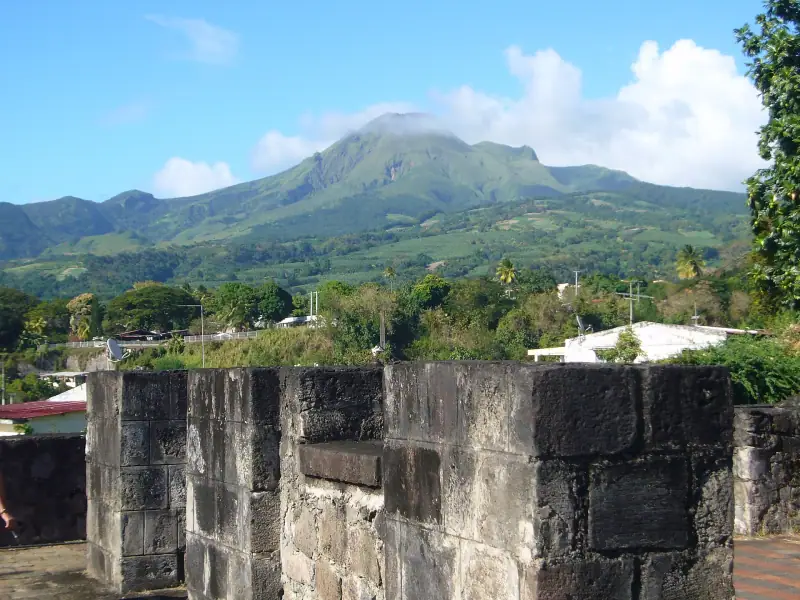
The heart of Saint-Pierre’s heritage is discovered on foot, following the main street and the lanes near the waterfront. The remains of the theater, with its double-flight stone staircases and partly preserved walls, are one of the symbols of the town before 1902. Imagine the auditorium of a prosperous city, now open to the sky, with the mountain in the background: the contrast is striking.
Not far away, Cyparis’s cell can be visited freely: it is the cell where the prisoner is said to have survived the pyroclastic cloud. A small stone structure, very plain, but full of history. Other ruins are scattered through the town: house foundations, remains of the church, walls of public buildings or warehouses. Many are marked with information panels that help you find your way around the old town.
Take the time to walk slowly, read the panels and look up at the mountain: Pelée dominates the whole landscape. The best light for photos is in the morning, before clouds cling to the summit, and in late afternoon, when golden light brings out the dark stone of the ruins. Wear comfortable shoes: streets are sometimes steep and the paving uneven.
Stay in Saint-Pierre and the north
To enjoy the town in peace after the day visitors leave, compare lodging around Saint-Pierre.
The volcanology museum: understanding the eruption of Mount Pelée
To put images to the story, head to the Saint-Pierre volcanology museum, created from the work of the American volcanologist Frank Perret, who came to study Mount Pelée in the years after the eruption. The museum presents objects found in the ruins: melted dishes, objects deformed by heat, period photographs and documents on life in the town before the disaster.
The visit is short, but it gives the event a real human dimension. You see everyday objects transformed by the heat of the pyroclastic cloud, which makes the scale of the tragedy more concrete than any text. The explanations of how the volcano works are accessible even without prior knowledge, and the panels suit a family audience.
Hours and fares can vary by season and public holidays: check the official website or ask there before you go. Allow about an hour for the visit, a little more if you like to read every caption. This museum is an excellent complement to a hike up the volcano, which we detail in our guide to hiking in Martinique.
Saint-Pierre’s beaches and bay: swimming at the foot of the volcano
The Bay of Saint-Pierre is lined with gray to black sand beaches, typical of volcanic islands. On the Caribbean side, the water is generally calmer than on the Atlantic coast, which makes it a good place to swim after visiting the ruins. The contrast between dark sand, turquoise water and tropical vegetation is one of the charms of the northwest coast.
The bay is also popular with divers and snorkelers, because the 1902 eruption left wrecks on the bottom of the roadstead. Several dive clubs offer outings to discover them: ask a professional and choose an approved club, because diving conditions depend on level and weather. For a relaxed swim, favor supervised or busy areas, and respect information signs.
For other swimming ideas on the island, see our selection of the most beautiful beaches in Martinique. The southern beaches, paler and wider, offer a very different atmosphere from the north: ideally, combine both during your stay.
Excursions and activities in the north
Diving, guided visits, nature outings: compare the activities offered in Martinique.
Around Saint-Pierre: Mount Pelée, Le Prêcheur and the north coast
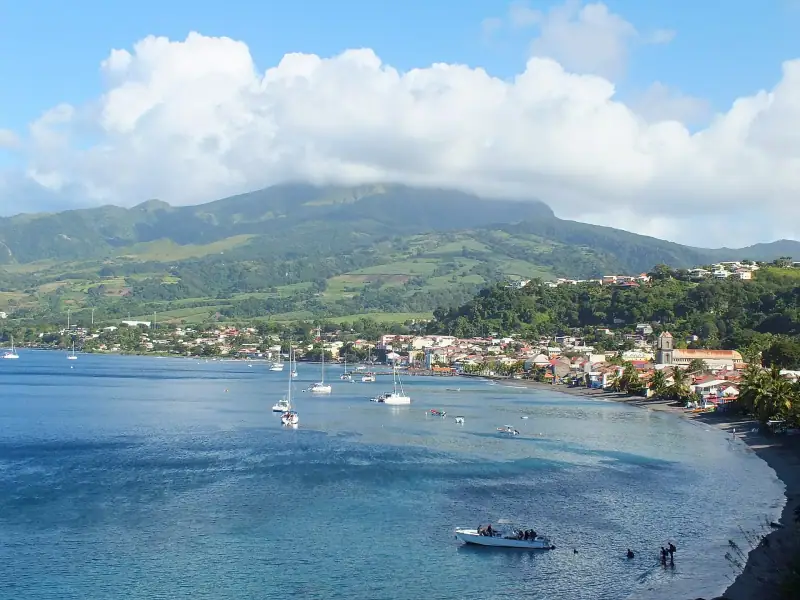
Saint-Pierre is the ideal starting point for exploring the Caribbean north. Mount Pelée, which overlooks the town, offers one of the island’s most famous hikes: the climb calls for good fitness and fine weather, because the summit is often in the clouds. Set off early, bring water and suitable clothing, and check the day’s conditions before climbing.
North of the town, the road follows the coast to Le Prêcheur, a fishing village where the road nearly ends: landscapes there are wilder, with isolated beaches and dense vegetation. It is a nice way to extend the day if you like quiet places, and if you want to go even further, our guide to Grand’Rivière explains what you find at the end of the road. Near Saint-Pierre you will also find a well-known distillery, Depaz, which can be visited and fits well into a day devoted to history and heritage. Check its visitor conditions before you go.
To fit Saint-Pierre into a broader stay, our 7-day Martinique itinerary offers a day-by-day plan. To get around the island easily, our guide to getting around Martinique details the transport options.
Practical tips for visiting Saint-Pierre
Saint-Pierre can be visited all year, but the dry season, from about February to April, is generally drier and more pleasant for walking among the ruins. In the rainy season, bring a light waterproof layer, as showers can be sudden. The sun is strong all year: hat, sunscreen and water are essential, especially for outdoor visits.
The town is easy to cover on foot, but a car remains the most practical way to come from Fort-de-France or the south of the island and to combine several stops in the north. The coastal road is winding in places: leave a little margin in your plans rather than aiming for a tight schedule. Parking is generally near the waterfront.
On the practical side, small tables and snack stands on the waterfront let you have a simple lunch of Creole specialties. To find out what to taste, see our guide to Martinican food. Finally, respect the character of this place of remembrance: Saint-Pierre is also a site of mourning for the descendants of the victims.
Flights to Martinique
Compare flights for your dates and set off to discover the volcano and the island's history.
Bottom line: why Saint-Pierre deserves a stop
Saint-Pierre is not just a historical visit: it is a place where you take the measure of nature’s power and an island’s resilience. In half a day you can walk the ruins, enter the museum, swim in the bay and look up at Mount Pelée, which changed everything. Combined with a hike up the volcano or a drive to Le Prêcheur, it is one of the highlights of a stay in northern Martinique. Bring good shoes and water, and let this singular story be told to you.
Frequently asked questions
Why is Saint-Pierre nicknamed the Pompeii of the Antilles?
On May 8, 1902, an eruption of Mount Pelée destroyed the town in moments. As at Pompeii, ruins remain visible: house foundations, stone walls, remains of the theater. It was one of the greatest volcanic disasters of the 20th century.
How long does it take to visit Saint-Pierre?
Allow half a day for the main sites on foot: the center is compact. With a lunch break, a swim and an unhurried museum visit, you can easily fill a whole day.
Can you swim in Saint-Pierre?
Yes, the bay has gray to black volcanic-sand beaches on the Caribbean side, which is generally calmer than the Atlantic. Always respect signs and local safety instructions.
Is the volcano still active?
Mount Pelée is an active volcano, monitored continuously by a volcanological observatory. No alert affects usual visits, but it is advisable to check official information before you go.
Do you need a car to get to Saint-Pierre?
It is the most practical, notably to combine the town with Mount Pelée, the northern beaches and Le Prêcheur. Once there, the center is visited on foot.
More Martinique guides
Keep reading
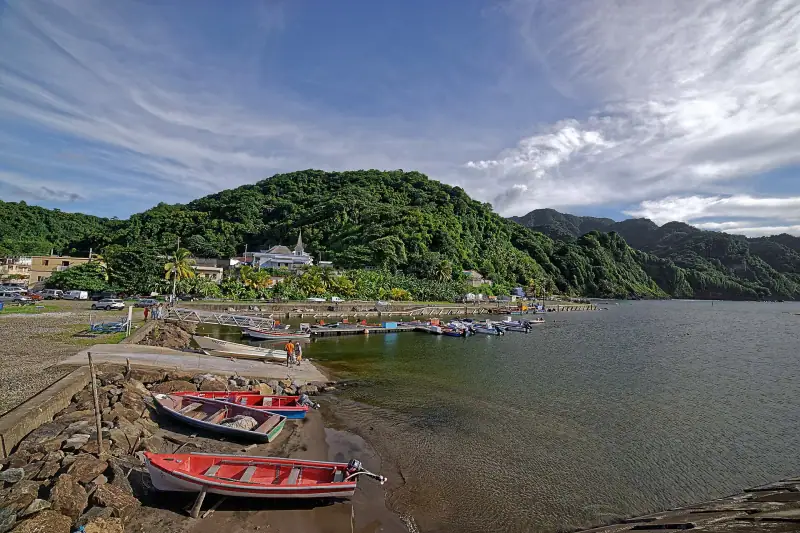
Grand'Rivière in Martinique: is it worth the detour, and what to do at the end of the road?
Grand'Rivière, a fishing village in northern Martinique: getting there from Fort-de-France, what to see, the Anse Couleuvre hike, where to eat.
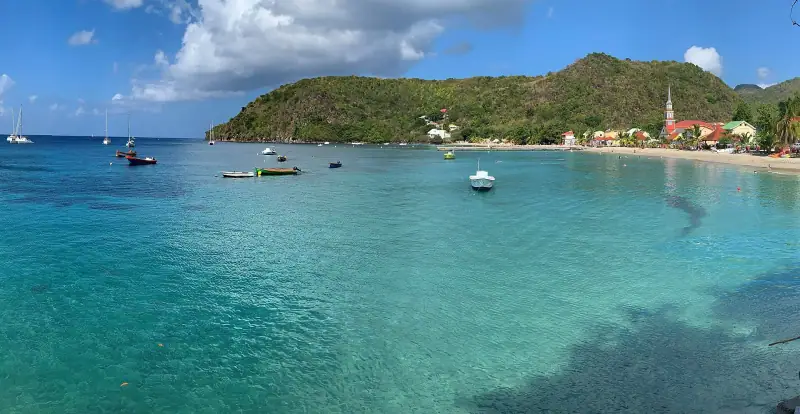
Best beaches in Martinique: a selection by coast and by travel style
The best beaches in Martinique: Grande Anse des Salines, Les Anses-d'Arlet, Le Diamant, Anse Couleuvre, Caravelle. How to choose by coast and style.
Complete guide to visiting Martinique: regions, beaches, budget and tips
Visiting Martinique: regions, towns, highlights, when to go, getting there, getting around, where to stay and budget. The pillar guide to plan your trip.
Ready-made
Martinique itineraries
5 days
Martinique in 5 days with kids: stops, distances and a realistic pace
Martinique in 5 days with kids: day-by-day stops, distances, drive times, safe beaches and breaks to keep the pace without wearing out the family.
3 days
3 days in northern Martinique: a volcano, forest and wild coast itinerary
A 3-day itinerary for northern Martinique: Saint-Pierre, Mount Pelée, the Caribbean coast, the Trace and the Atlantic coast, with tips and variations.
7 days
Martinique in 7 days: a day-by-day itinerary for a first stay
Martinique in 7 days: a day-by-day itinerary through Fort-de-France, Saint-Pierre, the Caravelle and the southern beaches, with drive times and tips.