What to see
Visiting Fort-de-France: what to see and do in Martinique's capital
We may earn a commission when you book through links on this page, at no extra cost to you. We don't visit or try the places we cover: we summarize published sources. How we work
In short
- Half a day is enough for the essentials of the center on foot: La Savane, Schoelcher Library, the cathedral and the covered market.
- Allow a full day if you add a museum and Balata Garden, in the hills north of the city.
- Traffic is heavy at rush hour: park in a paid car park near La Savane or the waterfront, or cross the bay by ferry shuttle from Les Trois-Îlets.
- The center is quiet on Sundays and holidays; the market is liveliest in the morning on weekdays and Saturdays.
Economic and administrative capital of Martinique, Fort-de-France is often treated as a simple stop between the airport and the beaches. That is a pity: nestled at the end of a large bay, facing the Caribbean Sea and backed by green hills, the city mixes Creole architecture, late 19th-century metal buildings, colorful markets and places of remembrance. It is easy to visit on foot and is an excellent complement to the southern beaches and the northern volcano. Here is what to see, how to organize your day and where to take a tasty break.
Why spend time in the capital
Fort-de-France does not have the frozen charm of a postcard village: it is a real, living city, sometimes noisy and congested, where you meet schoolchildren in uniform, shopkeepers calling out to passersby and musicians in the streets. That is precisely what makes it interesting. Here you understand today’s Martinique, its African, European and Caribbean influences, and its place in Caribbean history.
The city grew up around its fort and its bay, a natural shelter prized since colonial times. It took on its role as capital after the destruction of Saint-Pierre by the eruption of Mount Pelée in 1902, an episode we detail in our guide to visiting Saint-Pierre. Today it concentrates government offices, shops, museums and much of the island’s cultural life.
For a first visit, allow half a day there. Morning is ideal: it is cooler, traffic is still reasonable and the markets are at their best. Wear a hat and good walking shoes and bring a water bottle, because the sun heats the sidewalks quickly.
La Savane: the historic heart of the city
The best starting point is La Savane, a large park planted with palms and tropical trees that stretches between downtown and the sea. It is Fort-de-France’s green lung, a place where residents come to stroll, exercise or meet in the shade. It once held the statue of Empress Josephine, born in Les Trois-Îlets, which was beheaded in 1991 and then toppled in 2020: it is no longer there and only the pedestal remains. The episode illustrates how the island debates its colonial past.
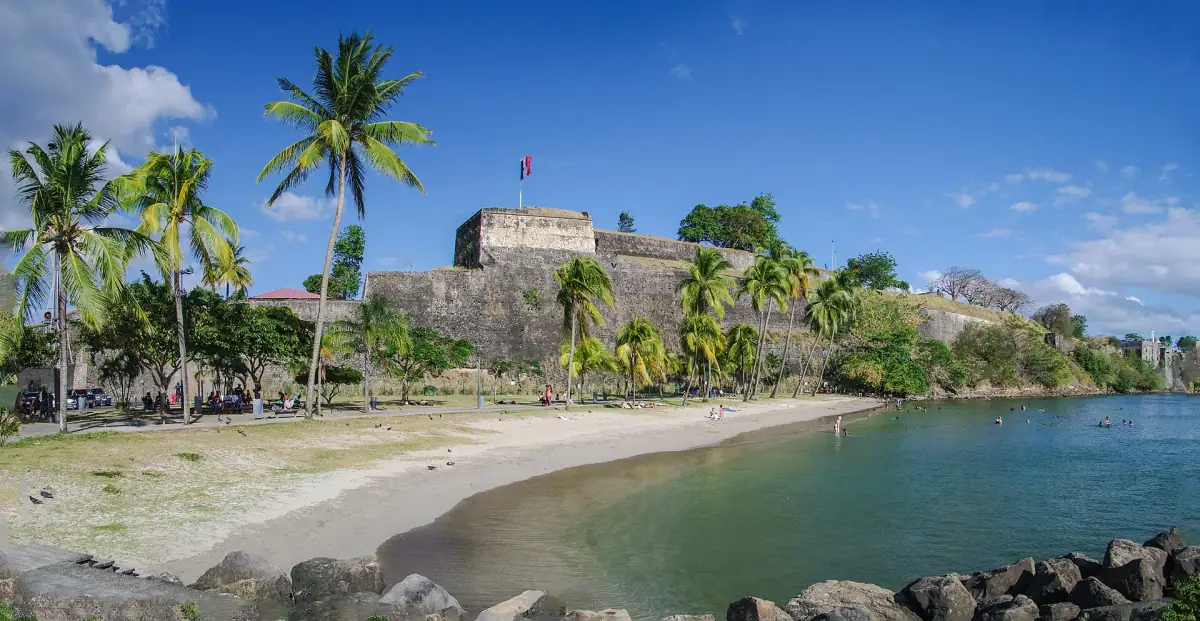
La Savane is also a good place to get your bearings. On one side you can see Fort Saint-Louis, which overlooks the harbor and remains largely a military installation: visiting possibilities are therefore limited, so check before you go. On the other, the shopping streets of the center lead toward the cathedral and the market.
Take the time to walk to the water’s edge: the view of the bay and the hills around it is one of the best free viewpoints in the city. On fine days, the boats crossing to Les Trois-Îlets liven up the scene.
Stay in Fort-de-France
To visit the capital on foot and easily reach the rest of the island, compare lodging in the center and around the bay.
Schoelcher Library: a metal jewel
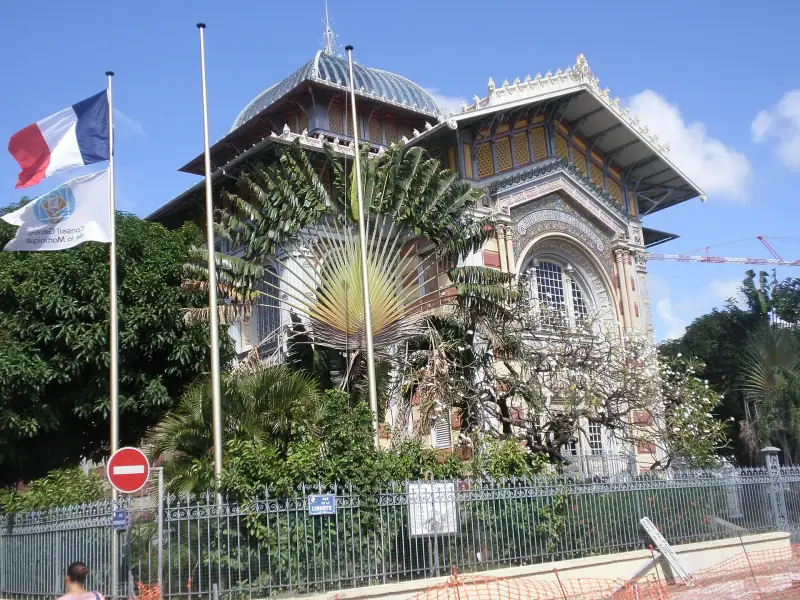
Steps from La Savane, the Schoelcher Library is probably the most photographed building in the city. Its metal and brightly colored architecture, with ornamental motifs, was designed by the architect Henri Pick. It was first shown at the Paris World’s Fair in 1889, then dismantled and rebuilt in Fort-de-France, where it opened a few years later.
It is named after Victor Schoelcher, a major figure in the abolition of slavery in France in 1848. The collection he bequeathed to Martinique is the origin of the institution. Even if you are not a big reader, the facade is worth a detour, and the interior, when access is possible, lets you admire the metal structure and bright volumes.
The visit is short, about twenty minutes is enough, but it sets the tone: in Fort-de-France, heritage is often surprising and deeply rooted in Caribbean history. Opening hours vary by day and period, so check them before you come.
Saint-Louis Cathedral and the downtown streets
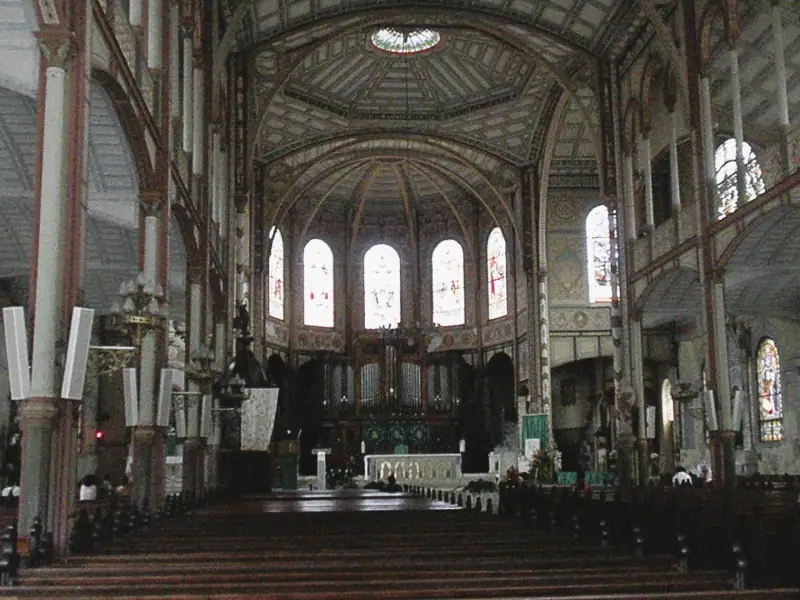
A few streets away, Saint-Louis Cathedral stands out for its Romanesque Revival style and metal frame. It was designed by the architect Pierre-Henri Picq at the end of the 19th century. The choice of metal, more resistant to earthquakes and humidity, was a response to the island’s natural hazards, regularly hit by earthquakes and hurricanes.
The interior is plain and bright, with fine stained glass that filters the tropical light. As in any place of worship, appropriate dress and discretion are expected, especially during services.
Around the cathedral, the shopping streets deserve a stroll: you find fabric shops, craft stalls, pastry shops and small Creole houses with ornate balconies, sometimes side by side with modern buildings. Keep your eyes open: the city reveals itself in these details. If you are looking for a souvenir, favor local crafts and island products, such as agricultural rum, spices or madras fabrics.
The large covered market and the city’s markets
You cannot visit Fort-de-France without passing through its covered market, also called the spice market. Under a metal hall, the stalls overflow with tropical fruit, root vegetables, chili peppers, vanilla, cinnamon, bay rum leaves, infused rums and bags of spices. The mood is cheerful, and vendors let you taste and are not shy about advising you.
It is also the best place to get acquainted with the ingredients of Creole cooking: chayote, yams, breadfruit, passion fruit, bananas of every kind. If your lodging has a kitchen, this is where you will do your best shopping. To know what to taste and what to order in a restaurant, see our guide on what to eat in Martinique.
A few practical tips: come in the morning, when produce is freshest and the mood liveliest; always ask before taking photos of people; and compare prices before buying souvenirs, as rates can vary from one stall to another. For payments, bring a little cash in small bills.
Fort-de-France’s museums
The capital has several museums that help you understand the island’s history beyond the postcard. Among them, the departmental museum of pre-Columbian archaeology and prehistory presents objects left by the first Amerindian peoples who lived on the island before the Europeans arrived: pottery, tools, ornaments. It is a very accessible visit that breaks the clichés about Martinique.
The regional museum of history and ethnography is also a good option to better understand Martinican society, the legacy of slavery and Creole culture. Hours and fares change, so check them before you go, especially on weekends and holidays.
Allow one to two hours per museum. If you have only half a day, choose according to your interests: archaeology for early history, ethnography for Creole society. Families will appreciate the visual displays and everyday objects.
Guided visits and excursions
City tours, boat excursions, island tours: compare the activities offered in Martinique.
Balata Garden and the hills above the city
A few kilometers north of Fort-de-France, on the Route de la Trace that runs into the forest, Balata Garden is an ideal stop to round out the day. This botanical garden gathers hundreds of tropical species: anthuriums, heliconias, orchids, palms, tree ferns. A shaded path and suspended walkways let you stroll while watching for hummingbirds, if you are lucky.
It is also a good way to enjoy the cool of the heights, where the temperature is noticeably milder than by the sea. Allow one to two hours for the visit and wear suitable shoes, as the paths can be wet after rain.
Very close by, the Sacré-Cœur de Balata church recalls, on a smaller scale, the Montmartre basilica in Paris. It offers an unexpected silhouette amid the vegetation, and its forecourt opens onto fine landscapes. The Route de la Trace is also the starting point of many forest walks: to go further, see our selection of hikes in Martinique.
Getting organized: traffic, transport and parking
Fort-de-France has a well-earned reputation as a congested city, especially at morning and evening rush hours. To avoid stress, arrive early, park in a car park in the center or on the waterfront and visit on foot: the main sites are within walking distance of each other.
If you are staying in Les Trois-Îlets or around the bay, the ferry shuttle is a practical alternative to the car. The crossing is short, offers a nice view of the bay and lets you arrive directly in the center of the capital. Check schedules before you leave and plan to return before service ends.
Aimé Césaire Airport is at Le Lamentin, a short distance from the capital, but the length of the trip depends heavily on traffic. We detail the options (rental car, taxis, buses, shuttles) in our guide to getting around Martinique. For a full stay, a car remains the most flexible way to link the capital with the southern beaches and the northern sites.
Flights to Martinique
Compare flights to Fort-de-France and choose the period that suits you.
Fitting Fort-de-France into your stay
The capital fits easily into almost any program. For a week-long stay, half a day on arrival or departure day is a good compromise. Our 7-day Martinique itinerary offers a full plan, with the southern beaches, the volcano and the fishing villages.
To choose where to sleep, the capital has a good choice of shops and restaurants, but the beach atmosphere is stronger in Les Trois-Îlets, Le Diamant or Sainte-Anne. See our guide on where to stay in Martinique to compare areas by budget and travel style.
Finally, think about the season: heat and humidity are stronger during the rainy season, and showers can be abrupt. A light umbrella or raincoat in your bag is useful all year. An early-morning visit, a Creole lunch break and a return to the sea in late afternoon make a balanced day.
Practical tips for your visit
- Hours: the center is liveliest on weekdays and Saturday mornings. On Sundays, many shops are closed.
- Safety: as in any capital, stay alert with your belongings and leave nothing visible in the car.
- Heat: drink plenty of water, protect yourself from the sun and take breaks in the shade.
- Respect: some places, such as the cathedral or sites tied to the memory of slavery, call for discretion.
- Budget: visiting the center is essentially free. Only budget for parking, museum entry and meals.
With these pointers, Fort-de-France becomes much more than a stopover: a dense, colorful and instructive day that complements Martinique’s landscapes perfectly.
Frequently asked questions
How long does it take to visit Fort-de-France?
Half a day is enough to see the essentials of the center on foot: La Savane, Schoelcher Library, the cathedral and the covered market. Allow a full day if you add a museum and Balata Garden, in the hills north of the city.
Is Fort-de-France a safe city for tourists?
The center is busy during the day and can be visited without difficulty with the usual precautions of a big city: leave nothing visible in the car and avoid wandering alone on deserted streets at night. If in doubt, ask your host for advice.
Where do you park in Fort-de-France?
Parking in the center is limited and traffic is often heavy at rush hour. The simplest option is a paid car park near La Savane or the waterfront, then doing everything on foot. Arrive early in the morning to avoid traffic jams.
Should you stay overnight in Fort-de-France?
The capital is practical for its central location and transport, but the beach atmosphere is found more in the south or in Les Trois-Îlets. Many travelers prefer to sleep near the sea and visit the capital on a day trip.
How do you get from Fort-de-France to Les Trois-Îlets without a car?
Ferry shuttles run regularly between the capital's waterfront and the Bay of Les Trois-Îlets. It is a short, pleasant crossing and often faster than the road in traffic jams. Check schedules and fares with the company before you leave.
Are shops open on Sundays?
Downtown life is much quieter on Sundays and public holidays: many shops and some sites are closed. The market is liveliest in the morning on weekdays and on Saturdays. Ask locally for exact hours.
More Martinique guides
Keep reading
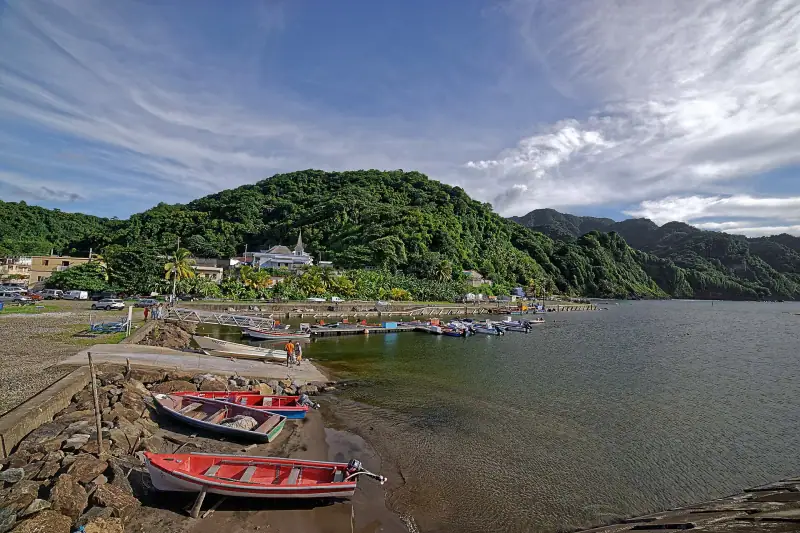
Grand'Rivière in Martinique: is it worth the detour, and what to do at the end of the road?
Grand'Rivière, a fishing village in northern Martinique: getting there from Fort-de-France, what to see, the Anse Couleuvre hike, where to eat.
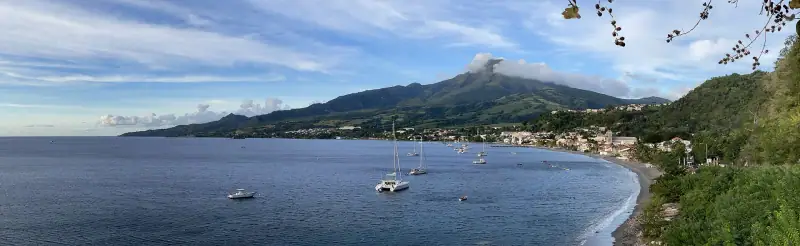
Visiting Saint-Pierre in Martinique: ruins, museum and volcano history
What to see in Saint-Pierre, the "Pompeii of the Antilles" destroyed by Mount Pelée in 1902: theater ruins, volcanology museum, Cyparis's cell, tips.
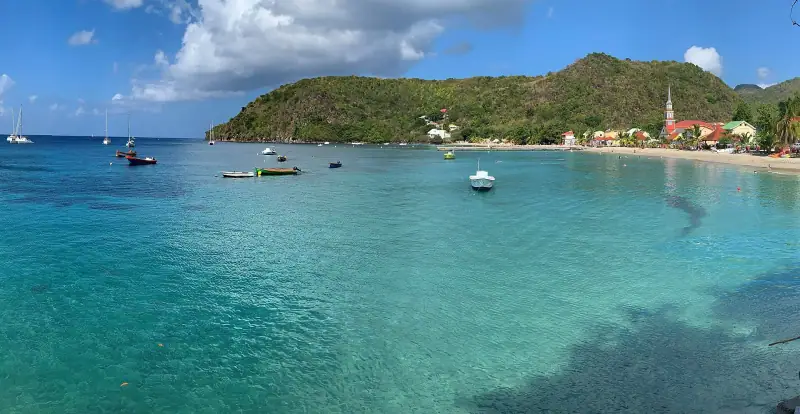
Best beaches in Martinique: a selection by coast and by travel style
The best beaches in Martinique: Grande Anse des Salines, Les Anses-d'Arlet, Le Diamant, Anse Couleuvre, Caravelle. How to choose by coast and style.
Ready-made
Martinique itineraries
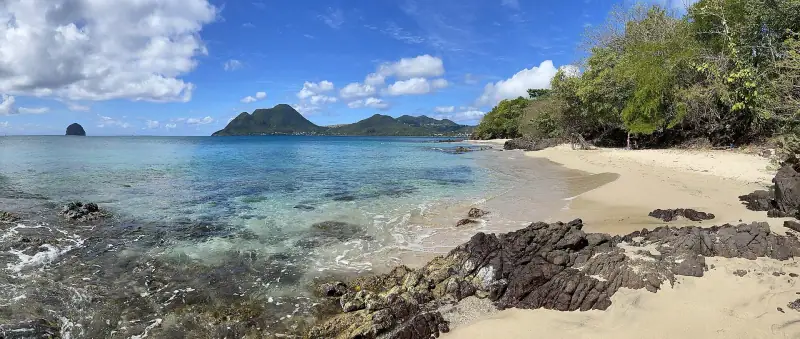
5 days
Martinique in 5 days with kids: stops, distances and a realistic pace
Martinique in 5 days with kids: day-by-day stops, distances, drive times, safe beaches and breaks to keep the pace without wearing out the family.
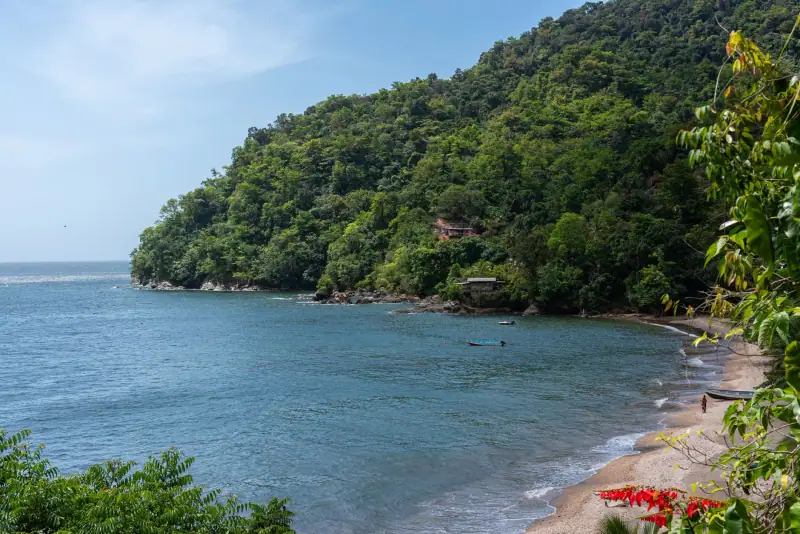
3 days
3 days in northern Martinique: a volcano, forest and wild coast itinerary
A 3-day itinerary for northern Martinique: Saint-Pierre, Mount Pelée, the Caribbean coast, the Trace and the Atlantic coast, with tips and variations.
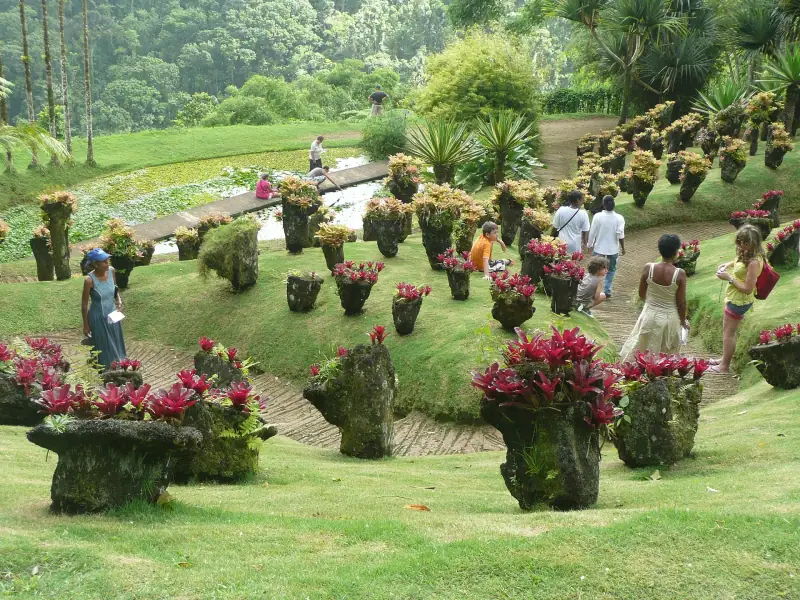
7 days
Martinique in 7 days: a day-by-day itinerary for a first stay
Martinique in 7 days: a day-by-day itinerary through Fort-de-France, Saint-Pierre, the Caravelle and the southern beaches, with drive times and tips.