Plan your trip
Japan budget: what a trip costs, item by item, and how to spend less
We may earn a commission when you book through links on this page, at no extra cost to you. We don't visit or try the places we cover: we summarize published sources. How we work
In short
- Excluding international flights, two weeks cost about €1,000-1,500 ($1,160-1,740) per person on a tight budget, €1,750-2,750 ($2,030-3,190) at mid-range, and over €4,500 ($5,220) at the high end.
- Lodging is the biggest and most variable item; a business hotel room runs about 10,000 to 15,000 yen in Kyoto, and meals can be cheap (a ramen bowl is often 800 to 1,200 yen).
- Tokyo-Kyoto by Nozomi with a reserved seat costs a little over 14,000 yen in 2026; a 7-day JR Pass is listed at 50,000 yen, and only pays off with several long trips.
- No tipping in Japan. The departure tax rose to 3,000 yen on July 1, 2026 and is included in the airfare.
“Japan costs a fortune.” The preconception dies hard, and it still puts many travelers off. The reality is more nuanced: a hearty bowl of ramen often costs under 1,000 yen, a few dollars, hundreds of temples and shrines are free, and urban trains are cheap. On the other hand, some items, such as nights in Kyoto in high season or long Shinkansen journeys, can blow up a badly prepared budget.
This guide details real costs item by item, offers three priced budget profiles (tight, mid-range, high-end), then gives the tips that really save money. Unless otherwise noted, amounts are per person, international flights excluded. Euro figures are converted at about 170 yen per €1 (the rate varies: check it before you leave), and dollar figures use €1 = $1.16. Prices were collected in October 2026; they change, so treat them as orders of magnitude.
Lodging: the first expense
It is the most variable item, and the one where you have the most room to maneuver. The ranges below match the rates seen in big cities in 2026.
From a dorm bed to a business hotel
- Hostel (dorm bed): about 2,500 to 6,500 yen a night (€15-38 / $17-44). In Tokyo, the median price of a dorm bed is around 4,300 yen.
- Capsule hotel: about 3,000 to 5,500 yen a night (€18-32 / $21-37). It is a typically Japanese experience, but comfort is minimal and bulky luggage is a problem.
- Business hotel: about 10,000 to 15,000 yen a room (€60-90 / $70-105) in Kyoto, a little less or more depending on the neighborhood in Tokyo. Rooms are small but spotless, with a private bathroom. For two people, the double room is often better value than two dorm beds.
- Mid-range hotel: about 20,000 to 35,000 yen a room (€120-205 / $140-240).
- Ryokan and luxury hotels: from 60,000 yen and well beyond a night, especially if the traditional dinner is included.
The season trap
Seasonal gaps are spectacular. In Kyoto, the same room can cost several times more at the peak of fall foliage than in the off-season. Booking early, preferably with free cancellation, is the best insurance against these spikes. To choose your dates well, see our guide when to go to Japan.
Choosing the right neighborhood
Staying in the most prominent neighborhoods is not essential. In Tokyo, areas like Ueno, Asakusa or Ikebukuro generally show lower rates than Shinjuku and Shibuya for an equivalent hotel category, while being well served by the subway. Our article where to stay in Tokyo compares the neighborhoods, and the one on Kyoto does the same for the former capital.
Compare lodging prices
Hostels, business hotels or mid-range rooms: compare rates for your dates and filter by free cancellation.
Transport: an item very sensitive to your itinerary
Transport cost depends almost entirely on the number of cities visited and the distances between them. It splits in two: long-distance trips and daily getting around.
Shinkansen trips
A concrete example: a Tokyo-Kyoto ticket on the Nozomi, with a reserved seat, costs a little over 14,000 yen (about €85 / $99) in 2026, for a trip of about 2 h 15. An unreserved seat costs about 1,000 yen less, but may force you to stand in busy periods. A round trip between these two cities therefore comes to nearly €170 ($197), which shows the importance of limiting the number of stops.
The JR Pass: calculate, do not buy by reflex
The 7-day Japan Rail Pass in standard class is listed at 50,000 yen (about €290 / $336). According to published information, an increase to 53,000 yen applies from October 1, 2026 at sales points abroad, while the official online reservation service would keep the current rates. Check the price in force when you buy. This pass only pays off if you chain several long trips in a short period: a simple Tokyo-Kyoto round trip is not enough to cover it. Our guide Shinkansen, JR Pass and IC cards explains the calculation method and regional alternatives.
Getting around in town
For daily trips, the rechargeable IC card (Suica, Pasmo, ICOCA) saves you from working out each ticket. Generally expect 500 to 1,500 yen a day (€3-9 / $3-10) depending on your pace of visits. In Tokyo, the 72-hour Tokyo Subway Ticket costs 2,000 yen (about €12 / $14) for the Tokyo Metro and Toei lines, a good deal if you concentrate your visits in the capital.
Luggage
Sending suitcases from one hotel to the next by carrier is a handy service, but it adds a cost. Traveling light with a reasonably sized bag is the simplest saving.
Meals: one of the cheapest items
This is the pleasant surprise of the Japanese budget. Everyday food is plentiful, good and cheap.
Reference prices
- Convenience stores (konbini): an onigiri sells for 130 to 250 yen, a bento for 400 to 700 yen. It is the ideal cheap breakfast.
- Rice-bowl and curry chains: a beef bowl at the popular chains costs about 500 to 900 yen, a curry 700 to 1,200 yen.
- Ramen and small restaurants: generally 800 to 1,200 yen for a full bowl.
- Mid-range restaurant: 1,500 to 3,500 yen per person.
- High-end dining: above 10,000 yen per person.
On this basis, you eat decently for 2,500 to 3,500 yen a day (€15-20 / $17-23) by favoring simple places, and for 5,000 to 8,000 yen (€30-47 / $35-55) with a sit-down restaurant dinner every evening. To know what to order, read our selection of specialties to try in Japan.
Drinks and alcohol
Tap water is drinkable, and vending machines sell drinks at reasonable prices. A beer in an izakaya bar quickly raises the evening bill: if you want to save, buy it at a convenience store.
A guided food discovery
To taste local specialties with a guide, food tours and cooking classes are offered in Japan's big cities.
Activities and visits: lots of free, a few big tickets
What costs almost nothing
Many major sights are free or very affordable. Kyoto’s Fushimi Inari shrine and Tokyo’s Senso-ji temple can be visited freely, and the Golden Pavilion (Kinkaku-ji) asks an entry fee of about 400 to 500 yen. Parks, old districts and street markets complete an excellent program without spending. To build these days, see our guides what to do in Kyoto, what to do in Tokyo and what to do in Osaka.
Paid attractions
Observation decks and big attractions cost more. For example, the Shibuya Sky platform costs about 2,700 yen (€16 / $19) when booked ahead versus 3,000 yen at the door, and the Tokyo Skytree combined ticket is about 3,100 yen in advance versus 3,500 yen on the day. Booking online therefore saves a few dollars per person.
How much to plan per day
Plan about 500 to 1,000 yen a day on average if you favor free places, 1,500 to 3,000 yen with one or two paid visits a day, and clearly more with private experiences (tea ceremony, classes, guided excursions).
Tickets and excursions to book ahead
Observation decks, guided visits and day excursions: booking online avoids lines and often costs less.
Extra costs not to forget
Connection and phone
To stay connected, an eSIM or prepaid SIM card generally costs a few tens of dollars for a few weeks. Compare with your carrier’s plan and its international options before you leave.
Travel insurance
Medical care in Japan is good quality but can be expensive for an uninsured foreigner. Travel insurance with good health and repatriation cover is an item not to neglect, even on a tight budget.
Departure tax and tax-free shopping
The departure tax rose from 1,000 to 3,000 yen per person on July 1, 2026, but it is included in the airfare. On the shopping side, tax-free shopping becomes a refund system from November 1, 2026: you pay the tax-inclusive price in the store and the tax is returned after a check when you leave the country. Allow for slightly more money up front when you shop.
Entry authorization
Entry rules depend on your passport. Check the official travel advice of your government before you book: travel.state.gov (US), GOV.UK (UK), travel.gc.ca (Canada), Smartraveller (Australia) (checked November 2026).
Three priced budget profiles
The amounts below are estimates per person per day, flights excluded, based on about 170 yen per €1 (dollars at €1 = $1.16). Double rooms are assumed shared by two.
Tight budget: about €60 to 90 ($70-105) a day
- Lodging: dorm or capsule, about 4,500 to 6,000 yen (€27-35 / $31-41).
- Meals: konbini, rice bowls and ramen, about 2,500 to 3,500 yen (€15-20 / $17-23).
- Local transport: about 800 to 1,000 yen (€5-6 / $6-7).
- Activities: mostly free, about 500 to 1,000 yen (€3-6 / $3-7).
Over 14 days, plan about €840 to 1,260 ($975-1,460), plus trips between cities (€150 to 250 / $175-290 for two or three stages), or about €1,000 to 1,500 ($1,160-1,740) excluding flights.
Mid-range: about €110 to 175 ($128-203) a day
- Lodging: shared mid-range hotel double room, about 10,000 to 17,500 yen per person (€60-100 / $70-116).
- Meals: a mix of simple places and sit-down dinners, about 5,000 to 8,000 yen (€30-47 / $35-55).
- Local transport: about 1,500 yen (€9 / $10).
- Activities: several paid visits, one guided experience, about 2,000 to 3,000 yen (€12-18 / $14-21).
Over 14 days, that is about €1,540 to 2,450 ($1,790-2,840), plus €200 to 300 ($230-350) of Shinkansen, or about €1,750 to 2,750 ($2,030-3,190) excluding flights.
High-end: from €330 ($383) a day
- Lodging: ryokan with traditional dinner or luxury hotel, from 60,000 yen a room and well beyond.
- Meals: fine-dining restaurants, over 10,000 yen per person for a dinner.
- Transport: Green Car seats, taxis, private guide.
According to published estimates, this profile starts around €330 ($383) a day and can exceed €650 ($754). Over two weeks, you go well beyond €4,500 ($5,220) excluding flights.
To apply these budgets to a specific route, start from our two-week itinerary for Japan and price each stage.
10 tips to spend less
- Travel outside the peaks. Golden Week, Obon and the year-end holidays push up lodging prices and saturate trains.
- Book lodging early, with free cancellation to benefit from any price drop.
- Choose less popular neighborhoods that are well served by the subway.
- Limit the number of stops. Each extra Shinkansen costs about a hostel night. Two or three bases are enough for a first visit.
- Calculate before buying a pass. The JR Pass does not pay off for a simple Tokyo-Kyoto round trip.
- Rely on konbini and bowl chains for breakfast and lunch, and keep the restaurant for one dinner a day.
- Favor lunch. In many restaurants, midday menus are clearly better value than dinners.
- Book paid attractions online ahead, when the price gap is proven.
- Travel light to avoid luggage forwarding.
- Choose an “open jaw” flight (arrive in Tokyo, leave from Osaka) to remove a backtrack and one Shinkansen trip.
Compare flights to Japan
Dates, stopovers, arrival and departure airports: the first saving is often on the plane ticket.
Cash, cards and exchange
Japan has opened up considerably to card payments, but cash remains useful. Withdraw yen at the ATMs of convenience stores or post offices, which generally accept foreign cards, rather than exchanging large sums before leaving. Check with your bank the withdrawal and foreign-payment fees, and the exchange rate applied: on a two-week trip, cumulative fees can add up to several tens of dollars. Do not try to pay everything by card: a cash budget of 3,000 to 5,000 yen a day is enough for small restaurants, temples and local transport.
How to set your budget
Start by setting the envelope for lodging and trips between cities: these are the two items on which your itinerary choices weigh most. Then add a daily allowance for meals, urban transport and activities, with a margin of about 10 to 15% for the unexpected. A well-prepared trip to Japan often costs less than you imagine, and it is one of the countries where it is easiest to adapt to your budget without sacrificing the experience.
Sources
- Japan Rail Pass (JR Group): figures checked November 2026
- Tokyo Metropolitan Bureau of Transportation (Toei): figures checked November 2026
- Shokoku-ji (Kinkaku-ji): figures checked November 2026
- Shibuya Scramble Square (Shibuya Sky): figures checked November 2026
- Japan National Tourism Organization (JNTO): figures checked November 2026
Frequently asked questions
What budget should you plan for two weeks in Japan?
Excluding international flights, plan about €1,000 to 1,500 ($1,160-1,740) per person on a tight budget, €1,750 to 2,750 ($2,030-3,190) at mid-range and more than €4,500 ($5,220) at the high end. These ranges include lodging, meals, transport and activities, based on about 170 yen per €1. Flights are extra and vary strongly by season.
Is Japan really expensive?
Less than its reputation. Meals, urban transport and the many free sights stay affordable. What weighs most is lodging in very busy cities in high season and long Shinkansen journeys. With a little organization, a controlled-budget stay is quite possible.
Should you pay in cash or by card?
Cards are increasingly accepted in hotels, big chains and stations, but cash remains useful for small restaurants, some temples, meal-ticket machines and rural buses. Always keep a few thousand yen on you. Convenience-store ATMs generally accept foreign cards.
Do you tip in Japan?
No. Tipping is not customary and can even embarrass staff. It is one more saving compared with other destinations. Some restaurants do add a small service or cover charge, which appears on the bill.
What taxes or fees should you expect when leaving the country?
The departure tax rose from 1,000 to 3,000 yen per person on July 1, 2026. It is included in the airfare, so there is nothing to pay at the airport. Also, tax-free shopping moves to a refund system from November 1, 2026: you pay the tax-inclusive price in the store, then the tax is refunded after a check when you leave the country.
What is the cheapest time to go?
Avoid Golden Week in late April and early May, the Obon period in mid-August, the year-end holidays, and the peak cherry blossom and maple seasons in Kyoto, when room rates climb sharply. Calmer months, such as early winter outside the holidays or late spring, offer better prices and fewer crowds.
More Japan guides
Keep reading
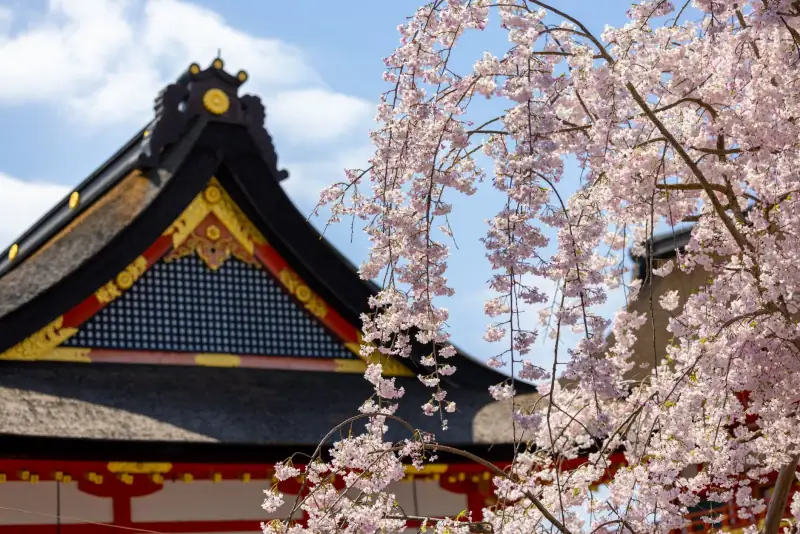
When to go to Japan: seasons, weather and events month by month
What is the best time to travel to Japan? Cherry blossoms, red leaves, rain, typhoons, snow: the month-by-month guide to choosing your dates.
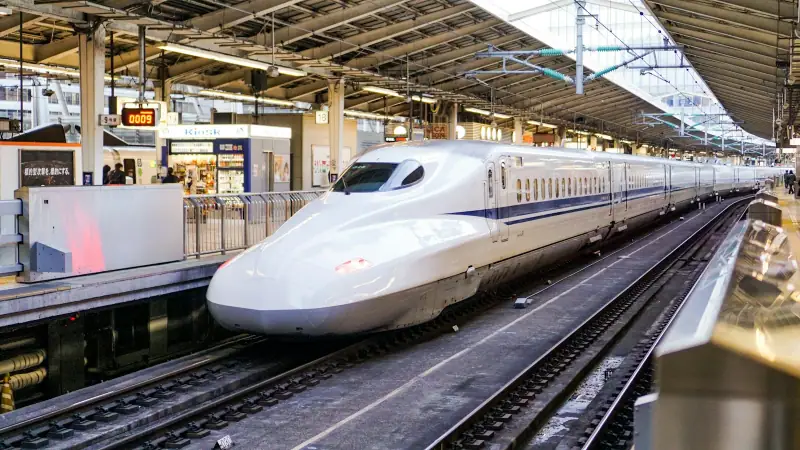
Getting around Japan: the Shinkansen, JR Pass and IC cards explained
Shinkansen, subway, bus, JR Pass or single tickets: how to get around Japan without mistakes, with tips to choose the right pass and save time.
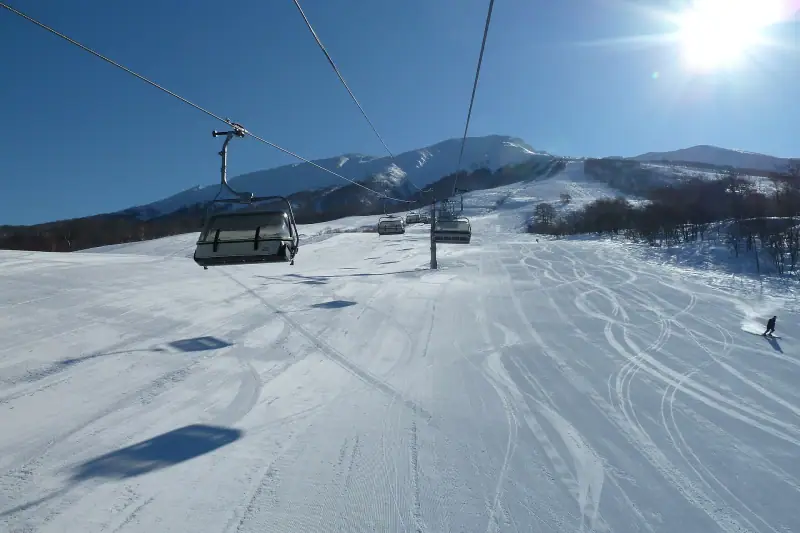
Skiing in Japan: Hokkaido, Niseko, Hakuba, powder, season and budget
Skiing in Japan: Niseko or Hakuba, powder season, 2026-2027 lift pass prices from official sites, access, lodging and budget to plan your trip.
Ready-made
Japan itineraries
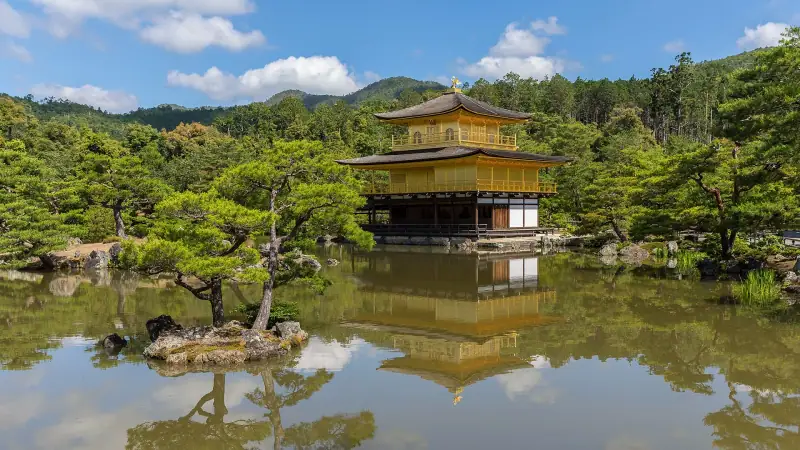
5 days
Kyoto, Nara and Osaka in 5 days: a day-by-day itinerary
A 5-day Kansai itinerary: Kyoto temples, Nara deer and Osaka street food, with transport, tips and mistakes to avoid.
10 days
Japan in 10 days with kids: stops, journeys and a realistic pace
TokyoHakoneKyoto

5 days
Tokyo, Hakone and Mount Fuji in 5 days: a detailed itinerary
A 5-day itinerary through Tokyo, Hakone and the Mount Fuji lakes: trains, onsen, volcano views, budget and mistakes to avoid on a first trip.