What to see
Visiting Lahaina: complete guide to Maui's historic town
We may earn a commission when you book through links on this page, at no extra cost to you. We don't visit or try the places we cover: we summarize published sources. How we work
In short
- Lahaina welcomes visitors again after the August 8, 2023 fire (102 victims, more than 2,200 structures destroyed), but visits must be respectful and parts of the historic center are still closed.
- Front Street reopened to traffic on August 1, 2026 and the harbor runs daytime trips only; the banyan tree park and the old courthouse are fenced off. Check MauiRecovers.org first.
- Most lodging in Lahaina itself was destroyed; the main options are Kaanapali (about 5 km / 3 mi north) or Kihei and Wailea (about 50 minutes south).
- From the harbor: whale watching (December to April), Molokini snorkeling ($80-140 per adult) and diving; the beaches of Kaanapali, Kapalua Bay and Olowalu are close by.
Lahaina. For millions of travelers, this name evokes the charm of an old Maui town with its art galleries, fresh fish restaurants, historic harbor and its immense century-old banyan tree planted in Courthouse Square. For the Hawaiian community, it also evokes the former royal capital of the Kingdom of Hawaii, a place of deep memory, Polynesian culture and complex colonial history.
Since August 8, 2023 and the devastating fires that ravaged the town in a few hours, Lahaina carries a new meaning: that of a wounded but determined community, slowly rebuilding on the ashes of an irreplaceable heritage. Visiting Lahaina today also means agreeing to be a respectful witness to this rebuilding, to understand what this town represents beyond tourism, and to contribute, modestly, to its economic renewal.
This guide offers a complete portrait of Lahaina: its exceptional history, what exists today, the beaches and activities of Maui’s west coast, and all the practical advice to prepare your stay. For an overview of Maui and its comparison with Oahu, see our article Oahu vs Maui: which island to choose?
The history of Lahaina: a town of many lives
The royal capital of the Kingdom of Hawaii
Before being a tourist destination, Lahaina was the center of power of the whole Hawaiian archipelago. Under Kamehameha III, the town was the official capital of the Kingdom of Hawaii from 1820 to 1845, a pivotal period when the kingdom tried to navigate between the growing influence of American missionaries, the colonial ambitions of foreign powers (United States, Great Britain, France) and the preservation of indigenous Hawaiian culture.
The Hawaiian chiefs (ali’i) lived in Lahaina. Kamehameha III’s palace (Hale Piula) was there, as was the first secondary school west of the Rockies, Lahainaluna High School, founded in 1831 by missionaries and still in operation today, which makes it one of the oldest schools in the United States.
The whaling boom: Lahaina, capital of the Pacific
In the 1820s-1860s, Lahaina underwent a radical transformation with the rise of the whaling industry. The town became one of the most important ports of call in the whole Pacific Ocean; by some estimates, up to 400 whaling ships could be anchored in the roadstead at the same time in peak season.
This influx of sailors (sometimes brutal and unconcerned with local laws) created permanent tensions with the Protestant missionaries, who had banned hula dancing and various traditional Hawaiian practices. Lahaina’s streets were the stage of cultural tensions that sum up the upheavals of this era well.
The whales themselves continue to visit Maui’s waters every winter. Our guide on whale watching in Hawaii explains how to watch these giants from Lahaina harbor itself.
The sugar era and the 20th century
After the decline of whaling, Lahaina turned to the sugar industry, which dominated Maui’s economy for more than a century. Sugarcane plantations covered all the slopes of Iao Valley until the early 2000s (Maui’s last mill closed in 2016).
In the 20th century, Lahaina gradually turned into a tourist destination thanks to its colonial architectural charm, its art galleries (it had become one of the most active art streets in the United States), its seafood restaurants and the rise of Hawaiian tourism after World War II.
Places to stay on Maui's west coast
Kaanapali and Kapalua: compare resorts and hotels with free cancellation.
Lahaina after the 2023 fires: understand before you visit
What happened on August 8, 2023
On the morning of August 8, 2023, strong winds linked to Hurricane Dora, which was passing offshore of Hawaii, spread a fire that had started in the dry grass of the heights beyond Lahaina. In a few hours, the fire, fed by gusts exceeding 100 km/h (62 mph), crossed the town from north to south, destroying more than 2,200 structures.
The fire caused 102 confirmed deaths, including a large proportion of indigenous Hawaiian residents, elderly people and people who had no time to evacuate. Whole families lost their homes, their memories, their neighborhood. Lahaina, whose residential fabric had for generations blended Hawaiian, Filipino, Japanese and Portuguese families, saw part of its soul erased.
The banyan tree: a symbol of resilience
One of the rare surviving witnesses of Lahaina’s historic heart is the great banyan tree of Courthouse Square. Planted in 1873 to mark the 50th anniversary of the arrival of the first Protestant missionaries, this banyan fig (Ficus benghalensis) is one of the largest trees in the United States, with dozens of aerial trunks covering about an acre (4,000 m²).
The tree suffered serious damage in the fires: its leaves burned and several trunks were blackened by flames. But it survived, and its slow rebirth was followed with intense emotion by the whole Hawaiian community and beyond. Today the banyan tree is turning green again: its new shoots are the symbol of Lahaina’s resilience. As we write, the banyan park and the square remain fenced off for safety reasons: check access on MauiRecovers.org before you come.
How to visit with respect
The Lahaina community has expressed its expectations of visitors very clearly. Here are the essential rules to follow:
Do:
- Come to pay your respects around Courthouse Square and the banyan tree (fenced off for now, access to check on MauiRecovers.org)
- Support the local businesses that have reopened on Front Street and nearby
- Go to Lahaina harbor for a sea trip
- Learn about Hawaiian history and culture
- Show discretion, silence and respect
Don’t:
- Photograph or film the destroyed residential areas (known locally as “disaster tourism”)
- Enter closed-off areas or private property
- Take souvenirs or pick up objects from the debris
- Show morbid curiosity or voyeurism toward the residents’ suffering
Rebuilding Lahaina is a process that will take many years. Residents appreciate visitors who come with respect, spend locally and contribute to the economic rebirth, but not those who come looking for “disaster photos”.
What to see in Lahaina today
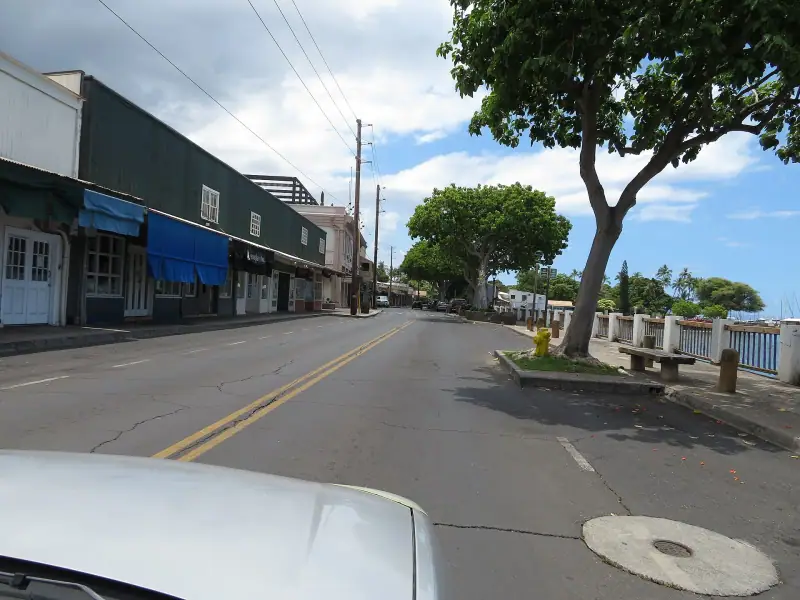
Courthouse Square and the banyan tree
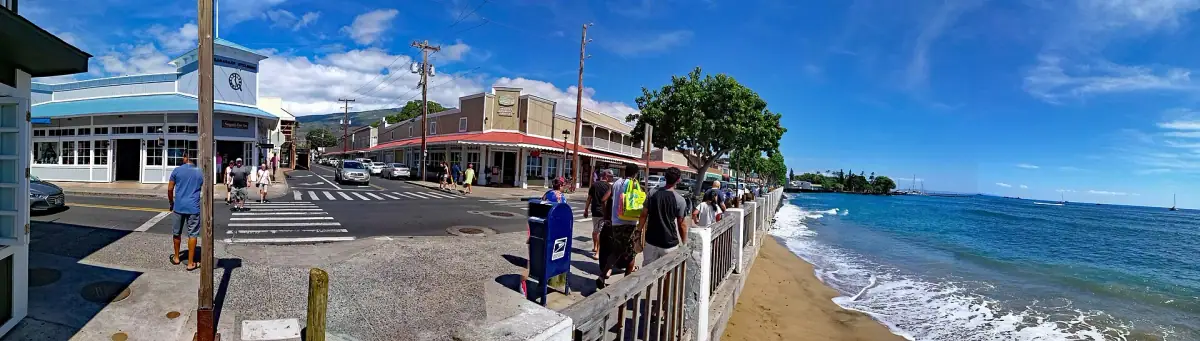
Lahaina’s central square remains the symbolic meeting point of the town, but it is fenced off for now: check access before you come. The century-old banyan tree, its trunks blackened but its green leaves back, is a sight both moving and hopeful. Several shops and galleries nearby have reopened in rebuilt ruins or in temporary structures.
The Lahaina Courthouse, built in 1859, was very severely hit by the fires, as was the Lahaina Heritage Museum it housed. It is closed and fenced off, with no known reopening date.
Lahaina harbor
Lahaina Boat Harbor, the town’s small marina, has resumed operations. This is where most sea trips leave from: whale watching (December to April), snorkeling to Molokini Crater, diving, catamaran tours and sport fishing. The harbor has not yet regained its electricity: trips run in daytime only and the schedules should be checked with the operators. It is still one of the best places to feel that Lahaina is coming back to life.
Lahainaluna High School and Museum
Perched on the heights above the town, Lahainaluna High School, founded in 1831, is one of the oldest secondary schools in the United States west of the Rockies. The Hale Pai Museum, attached to the school, houses a restored historic printing press where the first Hawaiian-language newspaper was printed. The museum is open for visits by appointment.
Trips from Lahaina
Molokini snorkeling, whale watching, catamaran... Book your sea activities.
The beaches of Maui’s west coast around Lahaina
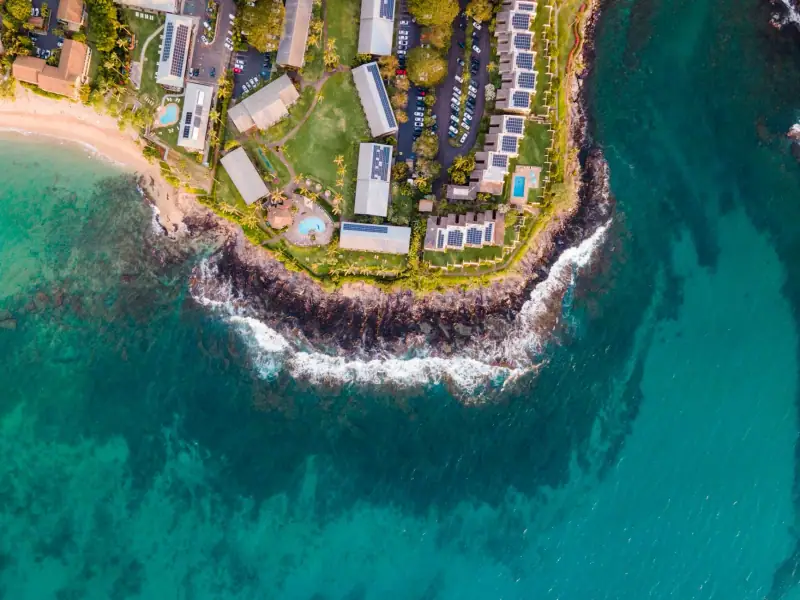
Kaanapali Beach: the most beautiful beach on Maui
5 km (3 mi) north of Lahaina, Kaanapali Beach is one of the most famous beaches in the whole Hawaiian archipelago. This fine white sand beach stretches over more than 5 kilometers (3 mi) lined with Maui’s big historic resorts: Sheraton, Westin, Marriott and the legendary Ka’anapali Beach Hotel, often called “Hawaii’s Most Hawaiian Hotel” for its attachment to local culture.
The beach is split into two sections by Black Rock (Pu’u Keka’a), a black lava promontory from which ancient Hawaiians believed the souls of the dead leapt into the afterlife. Today it is the area’s most popular snorkeling spot: turtles, tropical fish and sometimes harmless reef sharks frequent the crystal-clear waters all around.
Every evening at sunset, a diver in traditional Hawaiian dress leaps from the top of Black Rock holding a lit torch, a tradition started by the Sheraton in 1962 and still carried on. The show is free and open to all.
Kapalua Bay: the snorkeling paradise
15 km (9 mi) north of Lahaina, Kapalua Bay is regularly named among the best beaches in the United States. The crescent-shaped bay, protected by two rocky points, creates exceptional snorkeling conditions: calm water, visibility up to 15 meters (50 ft) and abundant marine life.
Green Hawaiian sea turtles (honu) regularly visit the bay, and it is common to see them from the shore. Always stay at least 3 meters (10 ft) from turtles; it is a legal requirement in Hawaii. Parking access is paid ($10 a day) but the beauty of the place is well worth it.
Olowalu Beach: the locals’ secret
8 km (5 mi) south of Lahaina on Honoapiilani Highway, Olowalu Beach is one of the beaches least known to visitors and one of Maui residents’ favorites. Olowalu’s fringing reef is one of the richest on Maui in biodiversity: healthy corals, sea turtles, rays, moray eels and a profusion of colorful tropical fish.
Access is simple: informal roadside parking, a few minutes’ walk on the beach and you are alone or nearly so. Bring your mask and snorkel; you won’t be disappointed.
Our guide to snorkeling in Hawaii details the conditions and best spots of the archipelago.
Car rental in Maui
Essential to explore the west coast and reach Lahaina from the airport.
Lahaina’s emblematic activities
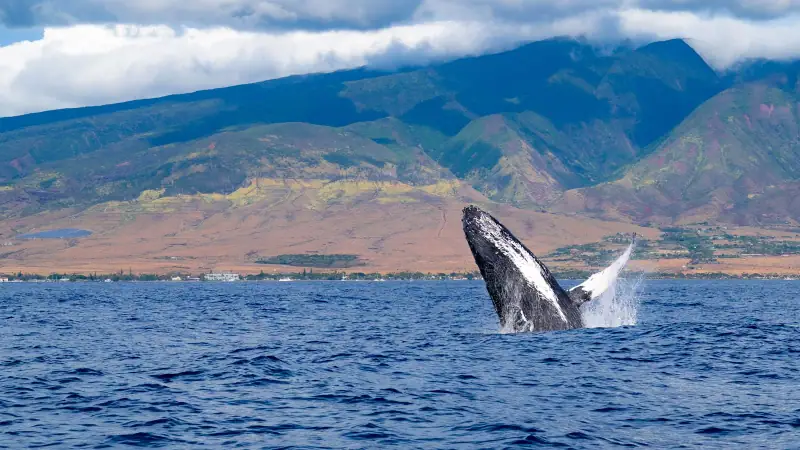
Whale watching: the great winter show
From December to April, humpback whales migrate from Alaska to Maui’s warm waters to breed and give birth. The waters between Maui, Lanai and Molokai are one of the most important gathering areas in the world for this species. It is estimated that more than 10,000 humpback whales visit Hawaiian waters each winter.
Lahaina harbor is the favorite departure point for whale watching trips. Departures run all day on catamarans, rigid-hull inflatables or sailboats. The whales are so numerous that they are sometimes spotted from the edge of the harbor itself. Our dedicated article on whale watching in Hawaii gives you all the tips for choosing your trip.
Snorkeling at Molokini Crater
The most famous sea trip from Lahaina is without question the snorkeling outing to Molokini Crater, a partly submerged former volcanic crater about 5 km (3 mi) off Maui’s south coast. The semicircular Molokini atoll is a protected marine sanctuary: the water reaches spectacular visibility (sometimes over 30 meters / 100 ft), and marine life is remarkably diverse.
Trips generally leave from Lahaina or Ma’alaea Harbor early in the morning (7-8 am) to take advantage of the calmest water and best visibility. Most include lunch and equipment. Expect between $80 and $140 per adult depending on the operator and the type of boat.
Scuba diving
Maui’s west coast offers some of the best diving conditions in the whole archipelago. From Lahaina, the most popular sites include:
- Carthaginian Reef: the wreck of a historic ship deliberately sunk to create an artificial reef, at about 15 m (50 ft) depth, with many marine species
- Airport Beach: a shallow reef ideal for beginners, with corals in excellent condition
- The Pinnacles: submerged lava columns frequented by blacktip sharks and manta rays
Several dive schools operate from Lahaina harbor and offer introductory dives ($120 to $150) as well as trips for certified divers.
The Road to Hana from Lahaina
For travelers based in Lahaina, the famous Road to Hana can be done in one well-organized day. Allow about 1 h 30 of driving from Lahaina to the start of the road at Paia. The 84 km (52 mi) route on Maui’s north shore crosses landscapes of tropical jungle, waterfalls and spectacular valleys. Note that the road requires a car (no public transport) and a parking reservation at some stops.
Food and restaurants in Lahaina
The rebirth of the food scene
Despite the 2023 destruction, several Lahaina restaurateurs made the courageous choice to stay or come back. The town’s food scene is gradually coming back to life, often in temporary or rebuilt spaces, but always with the same passion for fresh local produce.
Lahaina Fish Company: On what remains of Front Street, this seafood restaurant was among the street’s addresses (check that it has actually reopened before going). Sashimi platters, fish tacos and catch-of-the-day grills are still on offer, in a setting with a harbor view. Expect $25 to $50 per person.
Leoda’s Kitchen and Pie Shop: At Olowalu, on the road between Lahaina and Kihei, this country cafe is a Maui institution. The savory pies (mac nut chicken pie, Maui onion pie) and sweet pies (banana, macadamia, kaffir lime) are legendary. A great lunch stop on the road.
Sansei Seafood Restaurant & Sushi Bar: Recognized as one of the best sushi restaurants on Maui, Sansei survived the fires and continues to offer a creative fusion of Japanese and Hawaiian cuisine: sashimi, ahi tartare, monkfish wok and spectacular desserts. Book ahead.
World cuisines and street food
The immigrant community that has always made up Lahaina’s cultural richness (Filipinos, Japanese, Portuguese, Mexicans) leaves its mark on local food. The food trucks that are taking back their spots offer a world tour in a few stops: Hawaiian plate lunches, Japanese bento, Filipino adobo, fresh fish tacos.
To go further in discovering the archipelago’s food, our guide to Hawaiian cuisine decodes all the local specialties.
Where to stay near Lahaina
Kaanapali: the upscale reference
5 km (3 mi) north of Lahaina, the Kaanapali Beach Resort complex holds most of the upscale hotel supply on Maui’s west coast. All the big hotel groups are represented:
Marriott’s Maui Ocean Club: A vacation complex directly on Kaanapali beach, with several pools, restaurants and a full spa. Ideal for families. Rates: $350 to $700 a night depending on the season.
Hyatt Regency Maui Resort & Spa: One of the largest resorts on Maui, with a romantic “Swan Court”, a 3-acre pool and one of the island’s best Hawaiian cultural programs (Hawaiian culture classes, torch legend, stargazing). Rates: $400 to $800 a night.
Ka’anapali Beach Hotel: Nicknamed “Hawaii’s Most Hawaiian Hotel”, this human-scale property stands out for its deep commitment to Hawaiian culture: hula classes, Hawaiian cooking, ti leaf weaving, traditional chants. Less luxurious than its neighbors but with an incomparable soul. Rates: $250 to $450 a night.
Mid-range and budget options
For less expensive lodging, the towns of Kihei and Wailuku (on the other side of the island, 45 min from Lahaina) offer a wide range of rental apartments and mid-range hotels. Vacation rental platforms also offer excellent options in the Kaanapali and Napili condos.
Our complete guide to where to stay on Maui details all the island’s areas with recommendations by budget.
Itinerary: 2 days in Lahaina and Maui’s west coast
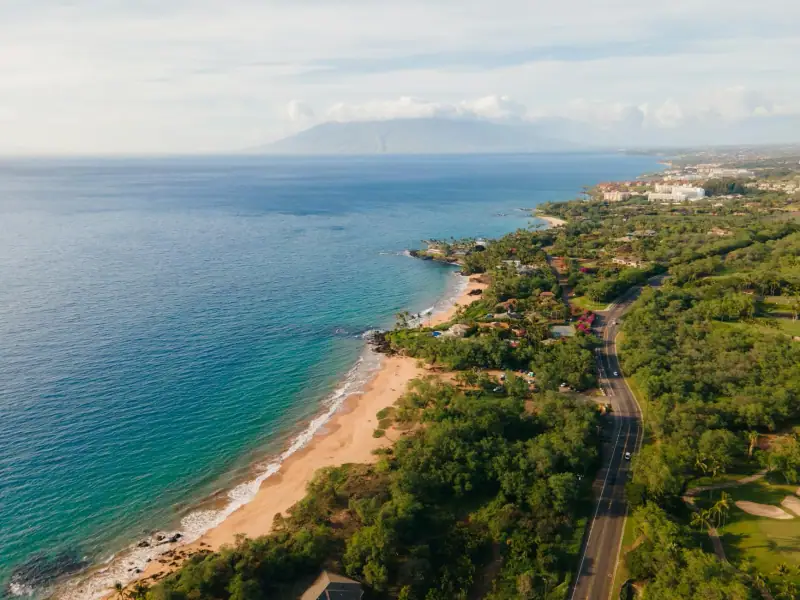
Day 1: Lahaina and its surroundings
Morning: Arrive in Lahaina early (8:30 am) before the heat. Start with a moment of reflection around Courthouse Square and the banyan tree (the area is fenced off for now: check access on MauiRecovers.org).
Explore what has reopened of Front Street and the adjacent streets. Support the local businesses that have resumed: art galleries, Hawaiian craft shops, restaurateurs.
Lunch: Lahaina Fish Company or a food truck recommended by your lodging.
Afternoon: Sea trip from Lahaina harbor. In winter (December-April), choose a whale watching outing (2 h). The rest of the year, choose snorkeling at Molokini or along the coast. Sunset from Kaanapali beach with the torch ceremony from Black Rock (around 6:30-7 pm depending on the season).
Dinner: A Kaanapali restaurant or, if you are staying closer, Sansei Seafood in Kapalua.
Day 2: beaches and nature
Morning: Leave early for Kapalua Bay (arrive before 9 am for parking). 2 hours of snorkeling in crystal-clear water with the turtles. Continue toward the tip of Maui visiting Honolua Bay beach if the waves allow (a legendary surf spot when the swell is up).
Lunch: Sandwiches and wraps bought the day before or at a grocery in Napili on the way.
Afternoon: Stop at Olowalu Beach for a last snorkeling session on the reef (bring your equipment). Head back up to Lahaina for a last pass along Front Street before the shops close.
Evening: Dinner and sunset on Kaanapali Beach.
Practical information for visiting Lahaina
Getting there
A rental car is essential to visit Lahaina from Kahului Airport (OGG); there is no practical public transport. Honoapiilani Highway (Route 30) follows the west coast and links Kahului to Lahaina in 40 to 60 minutes depending on traffic. Note: the road can be jammed in the late afternoon toward Lahaina (return direction to Kahului).
A car is also needed to explore the beaches of the north coast (Kapalua, Napili, Honolua Bay), which are 10-20 km (6-12 mi) north of Lahaina.
When to visit
Maui’s west coast is one of the sunniest and driest areas of Maui; it is no accident that all the big resorts concentrated there. Rain is rare, temperatures mild (26-30 °C / 79-86 °F in summer, 22-26 °C / 72-79 °F in winter).
- December to April: whale season, high tourist season, high prices
- May to June: excellent period, fewer crowds, intermediate prices
- July to August: summer high season, very busy
- September to November: low season, best prices, excellent weather
Our guide to the best time to visit Hawaii compares the seasons for all the islands.
Indicative budget
Lahaina and Maui’s west coast are among the most expensive areas of Maui. A realistic budget per person per day:
- Tight budget: $200 to $280 (budget lodging in Kihei, groceries and food trucks, free beach/snorkeling activities)
- Mid-range: $350 to $550 (3-4 star hotel in Kaanapali, restaurants, 1 sea trip)
- Luxury: $700+ (5-star resort, fine dining, private excursions)
See our Hawaii budget guide for cost-cutting tips across the archipelago.
Entry requirements
Hawaii is a US state, so the formalities are those of any trip to the United States. Entry rules depend on your passport. Check the official travel advice of your government before you book: travel.state.gov (US), GOV.UK (UK), travel.gc.ca (Canada), Smartraveller (Australia) (checked November 2026).
Lahaina is not a destination like any other. It is a town that carries within it the complete history of Hawaii: royal glory, the whaling boom, colonization, cultural resistance, and now rebuilding after tragedy. Visiting it means choosing to be present at this particular moment of its history, to contribute to its renewal, and to keep the memory of what the 2023 fires took away.
The white sand beaches, the turquoise waters of Kaanapali, the whales leaping on the horizon from the harbor, the banyan tree turning its leaves green again on the central square: all of this is still there. What has changed is the awareness that nothing is permanent, and that every trip is also a form of attention paid to the world and to those who live in it.
Frequently asked questions
Can you still visit Lahaina after the 2023 fires?
Yes, Lahaina welcomes visitors again, but a visit must be made with respect and humility. The old historic center (Lahaina Heritage District) is still partly under reconstruction. Front Street reopened to traffic on August 1, 2026 and the harbor is resuming sea trips (daytime only), but the banyan tree park and the old courthouse are fenced off: check the situation on MauiRecovers.org before you come. Visitors are asked not to approach the destroyed residential areas and not to photograph private debris, out of respect for the families.
What is the history of Lahaina?
Lahaina was the capital of the Kingdom of Hawaii from 1820 to 1845 under Kamehameha III. In the 19th century it was one of the most important whaling ports in the Pacific, with up to 400 whaling ships anchored in its bay each year. The town then moved to the sugar industry, then tourism. Listed as a national historic site, Lahaina held one of the largest concentrations of 19th-century historic buildings in the United States.
What happened to Lahaina in August 2023?
On August 8, 2023, fires fed by strong winds linked to Hurricane Dora ravaged Lahaina in a few hours. The fire destroyed more than 2,200 buildings and caused 102 deaths, including many Hawaiian residents and descendants of indigenous peoples. It is one of the deadliest natural disasters in modern US history. The community is rebuilding.
Which beaches should you visit near Lahaina?
The beaches of Maui's west coast, around Lahaina, are among the most beautiful in the archipelago. Kaanapali Beach (north of Lahaina) is a 5 km (3 mi) white sand beach with luxury hotels. Kapalua Bay (15 km / 9 mi north) is a protected bay ideal for snorkeling. Olowalu Beach (8 km / 5 mi south) is appreciated for its exceptional seabed.
How do you get to Lahaina from Maui airport?
Kahului Airport (OGG) is about 40 km (25 mi) from Lahaina. Renting a car is strongly recommended: Route 30 (Honoapiilani Highway) follows the west coast and links Kahului to Lahaina in 45 to 60 minutes depending on traffic. There is no direct, practical public transport between the airport and Lahaina. A taxi or rideshare costs about $50 to $70.
Where should you stay near Lahaina today?
Much of the lodging in Lahaina itself was destroyed in the 2023 fires. The best remaining options are in Kaanapali (north, 5 km / 3 mi), with its big beachfront resorts, or in Kihei and Wailea (south coast of Maui, 50 min), which have a wide intact hotel supply. The town of Lahaina itself is gradually resuming business activity.
What is the best time to visit Lahaina?
Maui's west coast enjoys exceptional sunshine all year. The dry season (April to October) guarantees sunny days and mild nights. Whale season (December to April) is ideal for watching humpback whales from Lahaina harbor. July-August are the busiest and most expensive months.
More Hawaii guides
Keep reading
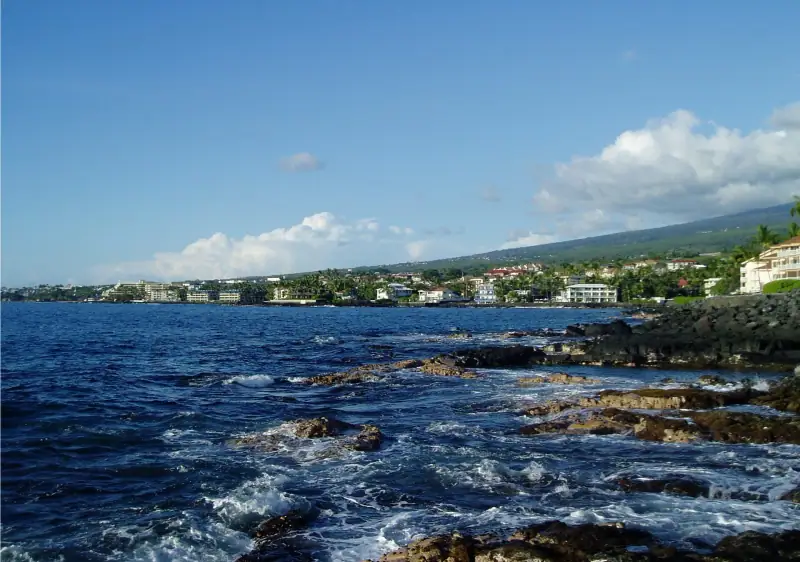
Visiting Kailua-Kona: complete guide to Big Island's coastal town
Kailua-Kona, gateway to Big Island: manta rays, Kona coffee, snorkeling with turtles, Ali'i Drive and Pacific sunsets.
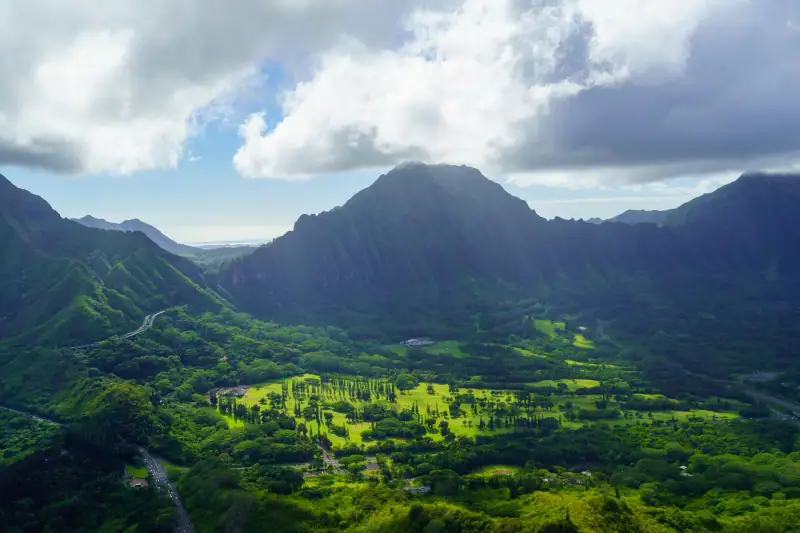
Oahu: the must-sees you shouldn't miss
The top 20 things to do and see on Oahu: Pearl Harbor, Diamond Head, the North Shore and more, with prices, hours and practical tips.
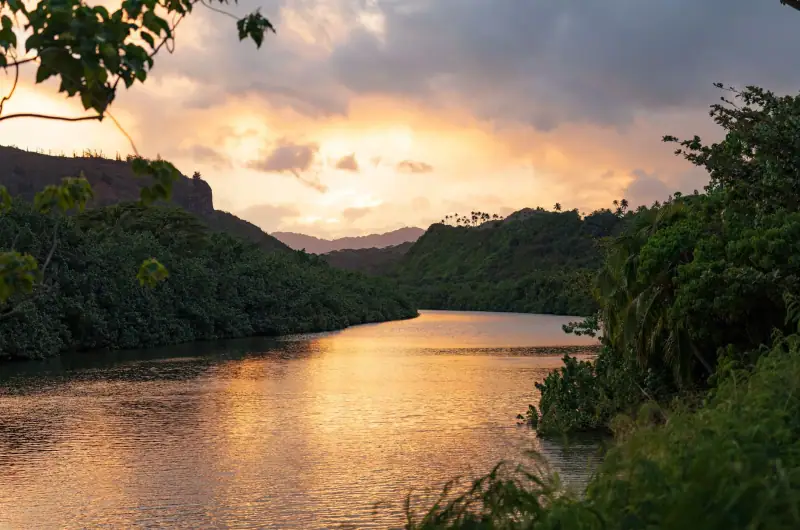
Visiting Kauai: complete guide to the island of Kauai in Hawaii
Visiting Kauai: Na Pali Coast, Waimea Canyon, Hanalei Bay, beaches, hikes and practical tips to plan your Hawaii trip.
Ready-made
Hawaii itineraries
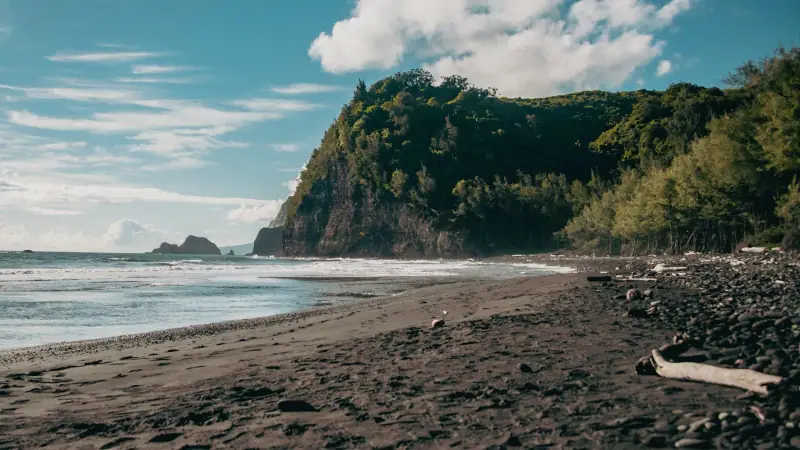
5 days
Big Island road trip in 5 days
Kailua-KonaVolcano VillageHilo or Hamakua Coast
7 days
Kauai 7-day itinerary: the best road trip on the wild island
A detailed 7-day Kauai itinerary: Na Pali Coast, Waimea Canyon, Hanalei Bay and the best beaches. Day-by-day plan for an unforgettable road trip.
7 days
Maui 7-day itinerary: the complete guide to planning your trip
Maui in 7 days: Road to Hana, Haleakala, Wailea and Kaanapali beaches. A day-by-day plan to discover the pearl of the Hawaiian archipelago.