Things to do
Snorkeling in Hawaii: the best spots
We may earn a commission when you book through links on this page, at no extra cost to you. We don't visit or try the places we cover: we summarize published sources. How we work
In short
- Hawaii's water stays between 24 and 27 °C (75 to 81 °F) all year, and more than 25% of the fish you see are endemic to Hawaiian waters.
- Easiest starts: Hanauma Bay (Oahu, $25, reservation required, closed Monday and Tuesday), Kahalu'u Beach Park (Big Island) and Poipu Beach (Kauai).
- Shark's Cove, Honolua Bay and Tunnels Beach are summer spots (May to September or April to October); in winter the north-facing coasts are often unsafe.
- Use reef-safe sunscreen: Hawaii has banned the sale and use of sunscreens with oxybenzone and octinoxate since January 1, 2021.
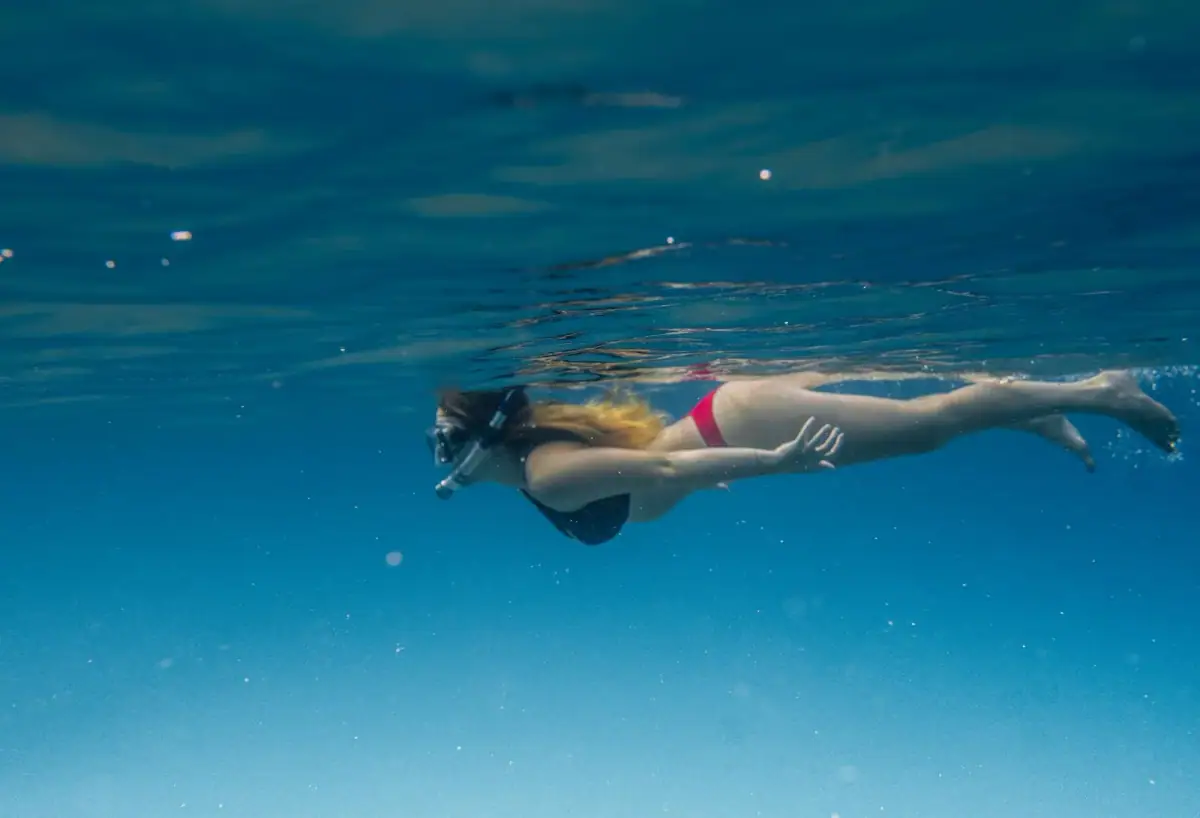
Hawaii is home to some of the most spectacular seabeds on the planet. With exceptionally clear water, temperatures between 24 and 27 °C (75 to 81 °F) all year, and marine biodiversity unique in the world, the archipelago is a dream destination for snorkeling. More than 25% of the fish species you will see here exist nowhere else on Earth: they are endemic to Hawaiian waters, the result of millions of years of geographic isolation in the middle of the Pacific.
Whether you are a complete beginner or an experienced snorkeler, every island has spots suited to all levels. From sheltered bays with gentle currents to dizzying drop-offs full of manta rays, this guide takes you to discover the best snorkeling sites in Hawaii. To organize your stay around these underwater wonders, see our complete Hawaii guide, which covers all the trip logistics.
The best snorkeling spots on Oahu
Oahu is the most visited island of the archipelago, and its snorkeling spots are among the most accessible. From Honolulu, most sites can be reached in under 30 minutes by car.
1. Hanauma Bay: the classic jewel
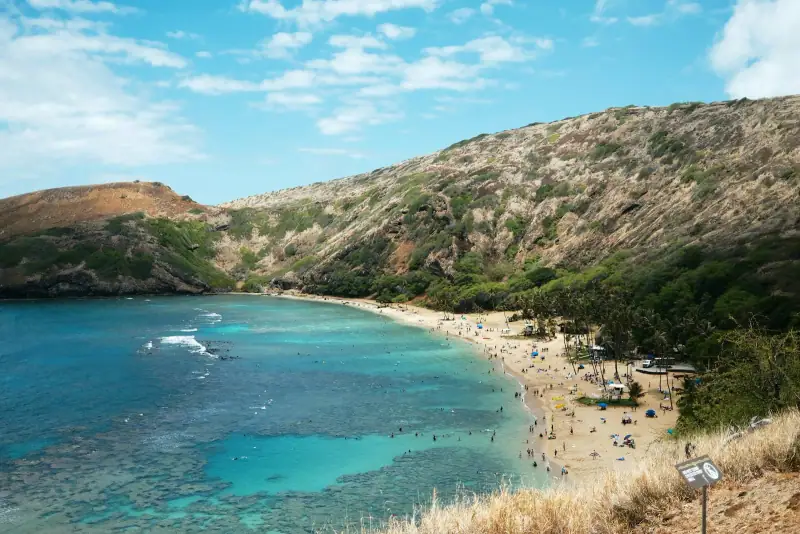
Hanauma Bay is probably the most famous snorkeling spot in all of Hawaii, and for good reason. This crescent-shaped bay, set in an old volcanic crater, has been a protected nature reserve since 1967. The bay is home to more than 400 species of fish and is the ideal place for a first snorkeling experience.
Practical information:
- Level: Beginner to intermediate
- Access: Online reservation required, $25 per person (free for residents)
- Hours: 6:45 am to 4 pm, closed Monday and Tuesday
- Depth: 1 to 5 meters (3 to 16 ft) in the main area
- Visibility: 10 to 25 meters (33 to 82 ft) depending on conditions
- Getting there: 20 minutes by car from Waikiki, bus no. 22
What you will see. Entering the water from the fine sand beach, you will immediately be surrounded by multicolored parrotfish, yellow tangs, butterflyfish and triggerfish. The shallow central part of the bay is perfect for families with children. More experienced snorkelers can venture toward the outer reef, where marine life is even denser and more varied.
Tips:
- Arrive at opening to get the best spots and calmer water.
- A short mandatory educational film is shown at the entrance (about 9 minutes): it explains the reserve’s rules and the actions to take to protect the reef.
- Parking is limited to 300 spaces. On weekends it is often full before 9 am.
- Remember that feeding the fish is strictly forbidden.
2. Shark’s Cove: adventure on the North Shore
Despite its intimidating name, Shark’s Cove has no sharks dangerous to swimmers. This North Shore site is considered one of the best snorkeling spots in the whole Pacific. The volcanic rock formations create a network of natural pools, underwater caves and miniature canyons teeming with life.
Practical information:
- Level: Intermediate to advanced
- Access: Free, no reservation
- Best season: May to September (in winter, North Shore waves make the site dangerous)
- Depth: 2 to 12 meters (6 to 40 ft)
- Visibility: 15 to 30 meters (50 to 100 ft) in summer
What you will see. Moray eels, octopus, colorful nudibranchs, schools of tangs and green turtles are the stars of the site. The underwater caves add a fascinating dimension of exploration. The rocky bottom is covered in sea urchins (wear water shoes) and anemones.
Tips:
- Come only in summer. In winter, the North Shore’s giant waves turn this peaceful site into a deadly trap. If you visit between November and March, choose surfing on the North Shore instead.
- Getting into the water is tricky: the rocks are slippery and uneven. Water shoes are essential.
- Bring your own equipment: there is no rental there.
3. Electric Beach (Kahe Point): dolphins on the guest list
Located at the western tip of Oahu, Electric Beach takes its name from the neighboring power plant whose warm-water discharge attracts exceptional marine life. The water there is slightly warmer than average, which creates a particularly rich ecosystem.
Practical information:
- Level: Intermediate (currents possible)
- Access: Free, roadside parking
- Depth: 3 to 15 meters (10 to 50 ft)
- Visibility: 15 to 30 meters (50 to 100 ft)
What you will see. It is one of the few spots on Oahu where you can see spinner dolphins, turtles in large numbers, and sometimes eagle rays. The schools of tropical fish are immense and the corals are in excellent condition.
Tips:
- Stay near the shore if you are a beginner; currents can be strong offshore.
- Early morning offers the best chance of seeing dolphins.
- Don’t be put off by the industrial look of the site at the surface: underwater, it is a paradise.
The best snorkeling spots on Maui
Maui is often considered the best island in Hawaii for snorkeling. Its waters, protected by the neighboring islands of Molokai and Lanai, offer exceptional conditions almost all year. If you are staying on this island, see our recommendations on where to stay in Maui to choose lodging near the best spots.
4. Molokini Crater: the legendary spot
Molokini is a half-submerged volcanic crater located 5 km (3 mi) off Maui’s south coast. This crescent of volcanic rock protects an inner bay of crystal clarity, with visibility that can reach 45 meters (150 ft). It is one of the top-rated snorkeling sites in the world.
Practical information:
- Level: All levels (inner side), advanced (outer wall)
- Access: Only by boat trip from Ma’alaea Harbor (from $60)
- Duration: Half day (4 to 5 hours with the boat ride)
- Depth: 3 to 20 meters (10 to 65 ft) (inner side), up to 90 meters (300 ft) (outer wall)
- Visibility: 30 to 45 meters (100 to 150 ft)
What you will see. The inner side of the crater is home to more than 250 species of fish, including many endemic species. The outer wall, reserved for experienced divers, is a spectacular drop-off where whitetip reef sharks, manta rays and schools of tuna swim.
Tips:
- Book your trip at least 2 weeks ahead; boats sell out quickly.
- Choose an early morning departure (6:30 am) to enjoy calmer water and fewer boats.
- If you are prone to seasickness, ask your doctor or a travel clinic beforehand and see the official travel health pages (CDC in the US, TravelHealthPro in the UK). The crossing can be rough.
5. Honolua Bay: the underwater forest
Honolua Bay, on Maui’s northwest coast, has been a protected marine reserve since 1978. The bay is lined with thick rainforest that comes down to the water, creating a wild and preserved setting. Under the surface, the coral reef is among the healthiest in the whole archipelago.
Practical information:
- Level: Intermediate
- Access: Free, roadside parking (10-minute walk to the beach)
- Best season: April to October
- Depth: 2 to 10 meters (6 to 33 ft)
- Visibility: 15 to 25 meters (50 to 82 ft)
What you will see. Green turtles in large numbers, trumpetfish, groupers, giant parrotfish and sometimes eagle rays. The coral reef is exceptionally colorful and alive, with fan corals and imposing brain corals.
6. Turtle Town (Maluaka Beach): the turtle kingdom
As its name says, Turtle Town is the best place on Maui to swim with green turtles. Located south of Wailea, these underwater rock formations serve as a cleaning station for turtles, which come to have their parasites removed by cleaner fish.
Practical information:
- Level: Beginner to intermediate
- Access: Free, limited parking at Maluaka Beach
- Depth: 2 to 8 meters (6 to 26 ft)
- Visibility: 10 to 20 meters (33 to 65 ft)
What you will see. Green turtles, sometimes dozens, swimming peacefully around you. Keep a distance of at least 3 meters (10 ft): it is federal law, and fines for harassing turtles can reach $20,000.
The best snorkeling spots on Big Island
Big Island offers snorkeling spots of unmatched variety, from the crystal-clear bays of the Kona coast to the wilder waters of the Hilo coast.
7. Kealakekua Bay: the underwater monument
Kealakekua Bay is considered by many to be the best snorkeling spot in all of Hawaii. This bay, designated a marine reserve, holds a preserved coral reef of extraordinary richness. It is also a major historic site: Captain James Cook was killed here in 1779, and a white monument marks the exact spot on the north shore of the bay.
Practical information:
- Level: Intermediate
- Access: By kayak (rental from $35 for a half day), by boat trip, or on foot via a steep 3 km (2 mi) trail (400 m / 1,300 ft elevation change)
- Depth: 3 to 30 meters (10 to 100 ft)
- Visibility: 20 to 40 meters (65 to 130 ft)
What you will see. A spectacular reef with giant brain corals, schools of hundreds of yellow tangs, spinner dolphins (early in the morning), and turtles. The concentration of marine life is among the highest in the whole archipelago.
8. Two Step (Honaunau Bay): the perfect entry
Located right next to Pu’uhonua o Honaunau National Historical Park (the Place of Refuge), Two Step takes its name from the two natural steps in the volcanic rock that let you enter the water easily. This spot is a favorite of locals and underwater photographers.
Practical information:
- Level: Intermediate
- Access: Free, national park parking ($20 per vehicle)
- Depth: 2 to 15 meters (6 to 50 ft)
- Visibility: 15 to 30 meters (50 to 100 ft)
What you will see. Turtles, dolphins, seahorses, octopus and an incredible variety of reef fish. The drop-off starts only a few meters from the shore, offering a striking vertical sight.
9. Kahalu’u Beach Park: the family spot
Kahalu’u is the most accessible and most family-friendly snorkeling spot on Big Island. A natural reef forms a protected basin where the water is calm and shallow, letting even young children discover the underwater world safely.
Practical information:
- Level: Beginner
- Access: Free, parking available
- Depth: 0.5 to 3 meters (1.6 to 10 ft)
- Visibility: 5 to 15 meters (16 to 50 ft)
- Services: Equipment rental at the park, lifeguards, restrooms, showers
What you will see. Green turtles (very numerous here), parrotfish, butterflyfish, triggerfish and sea urchins. The reef is fragile: never walk on it, even if the water is shallow.
The best snorkeling spots on Kauai
Kauai, the Garden Isle, is less known for snorkeling than Maui or Big Island, but it hides remarkable sites, notably on its south coast, protected from the trade winds.
10. Poipu Beach: easy snorkeling
Poipu Beach is Kauai’s most popular snorkeling spot. The beach is divided into two zones by a natural sandbar: the left side is protected and perfect for beginner snorkeling, while the right side offers good waves for bodyboarding.
Practical information:
- Level: Beginner
- Access: Free, large parking lot
- Depth: 1 to 4 meters (3 to 13 ft)
- Services: Equipment rental nearby, lifeguards, showers
What you will see. Hawaiian monk seals (an endangered species, keep your distance), turtles, and a nice variety of tropical fish. Monk seals regularly come to rest on the beach, a rare and moving sight.
11. Tunnels Beach (Makua Beach): the labyrinth reef
Tunnels Beach owes its name to its network of underwater lava tunnels covered with coral. Located on Kauai’s north shore, at the foot of the spectacular cliffs of the Na Pali Coast, this spot offers a breathtaking natural setting.
Practical information:
- Level: Intermediate to advanced
- Access: Free, very limited parking (arrive before 8 am)
- Best season: May to September
- Depth: 2 to 12 meters (6 to 40 ft)
- Visibility: 10 to 25 meters (33 to 82 ft)
What you will see. Green turtles, whitetip reef sharks (harmless), moray eels, octopus and exceptional coral diversity. The underwater tunnels create a fascinating landscape found nowhere else.
Secret spots on Lanai and Molokai
12. Hulopoe Bay (Lanai): the hidden pearl
Hulopoe Bay, on the small island of Lanai, is a protected marine reserve of striking beauty. Limited access to the island (ferry from Maui or a short flight) means the site is never crowded. The bay offers perfect snorkeling conditions with crystal-clear water and a thriving reef.
Practical information:
- Level: All levels
- Access: Ferry from Lahaina, Maui ($30 one way, 45 minutes)
- Depth: 1 to 10 meters (3 to 33 ft)
- Visibility: 20 to 35 meters (65 to 115 ft)
13. Dixie Maru Beach (Molokai): the forgotten island
Molokai remains the least touristy island in Hawaii, and its snorkeling spots are almost deserted. Dixie Maru Beach (also called Kapukahehu) is a small protected cove on the island’s west coast, offering intimate, preserved snorkeling.
Snorkeling gear: rent or buy
Renting
Renting is the most practical option if you only snorkel occasionally. You will find rental shops in all the tourist areas of every island.
Average prices:
- Mask + snorkel: $8 to $15 a day, $25 to $40 a week
- Mask + snorkel + fins: $12 to $20 a day, $35 to $55 a week
- Shorty wetsuit (if you feel the cold): $5 to $10 a day
Pros: No extra luggage, maintained equipment, the chance to swap sizes if the mask doesn’t fit.
Cons: Cumulative cost over a long stay, variable hygiene depending on the shop, not always available in high season.
Buying
If you travel often or plan to snorkel over several days, buying your own gear pays for itself within the first week.
New gear budget:
- Quality mask: $25 to $60
- Snorkel with a dry-top valve: $15 to $35
- Short fins: $25 to $50
- Total full kit: $65 to $145
Buying tips:
- Invest in a quality mask with a soft silicone skirt. A mask that leaks will ruin your experience.
- Choose a snorkel with a splash guard valve at the top and a purge valve at the bottom.
- Choose short fins (travel fins) for easy transport on a plane.
- Try your mask in the store: place it on your face without the strap and breathe in through your nose. It should hold on its own if the size is right.
Hawaii’s marine life: what you will see
The most common species
Hawaii is home to more than 680 species of fish, about 25% of which are endemic. Here are the species you will see most often while snorkeling.
Emblematic fish:
- Humuhumunukunukuapua’a (reef triggerfish): Hawaii’s official state fish, recognizable by its bright colors and unpronounceable name
- Yellow tang (lau’ipala): schools of hundreds of bright yellow fish are a striking sight
- Parrotfish: several species with vivid colors that crunch coral with their powerful beaks
- Butterflyfish (kikakapu): elegant and colorful, often in pairs
- Trumpetfish: long and thin, it moves in a vertical position to surprise its prey
- Moray eel: often hidden in crevices of the reef, impressive but not very aggressive
Turtles and marine mammals:
- Green turtle (honu): ubiquitous at all spots, it is Hawaii’s emblematic marine animal. Always keep a distance of at least 3 meters (10 ft).
- Hawaiian monk seal: a critically endangered species, only about 1,400 individuals. Seeing a seal is a rare privilege.
- Spinner dolphins: visible early in the morning in some bays (Kealakekua, Electric Beach)
- Humpback whales (season from December to April): visible from the surface, they don’t approach snorkelers but their song is sometimes audible underwater
Manta rays: the ultimate experience
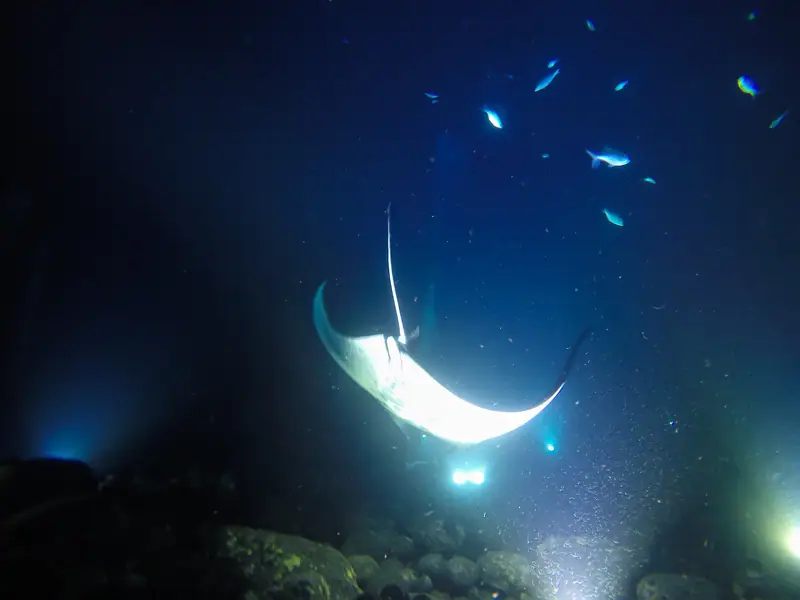
One of the most extraordinary snorkeling experiences in the world takes place off Big Island’s Kona coast: night snorkeling with manta rays. These graceful giants, whose wingspan can reach 5 meters (16 ft), come every night to feed on plankton attracted by artificial lights. Floating at the surface while these majestic creatures swirl a few inches from you is an unforgettable experience. Price, reservation, minimum age and rules: see our guide to night snorkeling with manta rays in Kona.
Practical information:
- Trips: from $80 per person (2 to 3 hours)
- Best time: all year, but moonless nights are preferable
- Success rate: about a 90% chance of seeing manta rays
- Departure point: Keauhou Bay or Kona airport
Best season for snorkeling in Hawaii
Hawaii has favorable snorkeling conditions all year thanks to its tropical climate, but some periods are clearly better than others depending on the island.
April to October (dry season): This is the best period overall. The sea is calmer, visibility is better, and the North Shore (Oahu) and north coast (Kauai, Maui) spots are accessible. It is the ideal season for Shark’s Cove, Honolua Bay and Tunnels Beach.
November to March (wave season): The north and west spots are often unusable because of the winter swell. However, the south and east coasts stay protected and offer excellent conditions. It is also humpback whale season, a nice bonus. To plan your visit by weather, see our article on the best time to visit Hawaii.
Optimal day-to-day conditions:
- Go early in the morning (before 10 am) for the best visibility and less wind
- Avoid days of heavy rain, which reduce visibility
- Check sea conditions on a Hawaii surf report site before you go
Safety: the essential rules
Snorkeling is a relatively safe activity, but Hawaiian waters require some precautions. Every year, tourists get into difficulty through lack of preparation.
Basic safety rules
- Never snorkel alone. Always go with at least one other person.
- Stay within your limits. If you are a beginner, stay in shallow, sheltered areas.
- Respect currents. If you feel a current pulling you out to sea, don’t fight it head on. Swim parallel to the shore to get out of it, then return toward the shore.
- Watch the conditions. Waves that build quickly or water that turns cloudy are signs that you should get out.
- Stay hydrated. The tropical sun and physical effort cause rapid dehydration, even in the water.
- Protect yourself from the sun. Your back is permanently exposed: wear a rash guard or UV shirt.
- Watch for jellyfish. Box jellyfish (cubozoans) appear on Oahu’s south coasts about 10 days after the full moon. Check the jellyfish calendar before swimming.
Specific hazards
- Sea urchins: present on all rocky bottoms. Wear water shoes to enter the water.
- Fire coral: contact causes a painful burn. Never touch coral.
- Rip currents: common on open beaches. Learn to identify them before you go.
- Shore break: especially dangerous on beaches with a steep slope.
Reef-safe sunscreen: a requirement
Since January 1, 2021, Hawaii bans the sale and use of sunscreens containing oxybenzone and octinoxate, two chemicals that degrade coral reefs. This pioneering legislation aims to protect the archipelago’s fragile marine ecosystems.
How to choose a reef-safe sunscreen:
- Check that the sunscreen contains neither oxybenzone nor octinoxate
- Choose mineral filters based on zinc oxide or titanium dioxide
- Look for the “Reef Safe” or “Reef Friendly” label on the packaging
- Note: “Reef Friendly” is not a regulated term. Read the ingredient list.
Recommended brands: You will easily find compliant sunscreens in Hawaii’s supermarkets and pharmacies. Local brands like Kokua Sun Care and Raw Elements are among the most reliable. Expect $12 to $20 for a tube.
Alternatives:
- Wear a rash guard: it is the most effective and most eco-friendly sun protection
- A wide-brimmed hat for time out of the water
- Apply sunscreen at least 15 minutes before entering the water so it adheres well to the skin
Guided trips vs snorkeling on your own
Guided trips
Guided trips are ideal for sites not reachable from shore (Molokini, night snorkeling with manta rays) or for beginners who want supervision.
Pros:
- Access to sites far from the coast
- Equipment provided (mask, snorkel, fins, sometimes a wetsuit)
- Supervision by experienced guides who know the best spots
- Safety briefing before each session
- Often with snacks and drinks
Indicative prices:
- Half-day boat trip: $60 to $120 per person
- Night snorkeling with manta rays: $80 to $150 per person
- Molokini trip from Maui: $80 to $200 per person
- Kayak + snorkeling at Kealakekua Bay: $100 to $160 per person
Tips for choosing an operator:
- Check reviews on online booking platforms
- Choose small groups (12 people maximum) for a better experience
- Ask whether the equipment includes a mask with optical correction if you wear glasses
- Find out about the cancellation policy in case of bad weather
Snorkeling on your own
Most of the spots presented in this guide are accessible free from the beach. Snorkeling on your own gives you the freedom to choose your hours, stay as long as you like, and return to your favorite spots.
Tips for snorkeling on your own:
- Find out the day’s sea conditions from the lifeguards
- Tell someone your plan (place and expected return time)
- Bring a signaling buoy if you swim far from shore
- Keep an eye on your exit point so you don’t drift
Snorkeling budget in Hawaii
Snorkeling is one of the most affordable activities in Hawaii if you choose free spots reachable from the beach. Here is an estimate of costs for a week of snorkeling.
Minimum budget (free snorkeling only):
- Equipment rental (week): $35 to $55
- Reef-safe sunscreen: $15
- Hanauma Bay entry: $25
- Total: about $75 to $95 per person
Comfortable budget (with trips):
- Equipment rental (week): $35 to $55
- Reef-safe sunscreen: $15
- Hanauma Bay entry: $25
- Molokini trip: $100
- Night snorkeling with manta rays: $120
- Total: about $295 to $315 per person
To fit snorkeling into your overall travel budget, see our Hawaii budget guide.
Our recommendations by profile
You are a beginner: Start with Hanauma Bay (Oahu), Kahalu’u Beach Park (Big Island) or Poipu Beach (Kauai). These spots offer calm, shallow water and abundant marine life.
You travel with family: Kahalu’u Beach Park is your best choice thanks to its lifeguards, equipment rental on the spot and shallow water. Hanauma Bay is also excellent for families, despite the crowd.
You are experienced: Head for Kealakekua Bay (Big Island), Molokini (Maui) or Shark’s Cove (Oahu in summer). These spots offer exceptional biodiversity and more demanding conditions.
You are looking for adventure: Night snorkeling with manta rays on Big Island is an absolutely unique experience in the world. Don’t miss the underwater tunnels of Tunnels Beach on Kauai either.
To discover other water activities, see our guide to surfing in Hawaii, or explore the most beautiful beaches of the archipelago to combine relaxing and underwater exploration. If you are planning a one-week stay, our 7-day Hawaii itinerary fits several snorkeling sessions into a complete, balanced plan.
Frequently asked questions
Where can you see turtles in Hawaii?
The best spots to see green turtles are Laniakea Beach (Oahu's North Shore), Ho'okipa Beach on Maui and snorkeling sites like Electric Beach and Hanauma Bay. Keep a distance of at least 3 meters (10 ft); it's the law.
Do you need to know how to swim to snorkel?
It is recommended to know how to swim to snorkel safely. However, spots like Hanauma Bay have very shallow areas (1 to 2 meters / 3 to 6 ft) where beginners can build confidence, and flotation vests are available for rent.
What is the best island for snorkeling?
Maui is often considered the best island for snorkeling thanks to Molokini Crater and the crystal-clear waters of Kapalua Bay. Oahu also has excellent spots like Hanauma Bay and Shark's Cove.
Is sunscreen banned in Hawaii?
Hawaii bans sunscreens containing oxybenzone and octinoxate, which are harmful to coral reefs. Use a <strong>reef-safe sunscreen</strong> (based on zinc oxide or titanium dioxide), which you will easily find in local stores.
Can you rent a mask and snorkel in Hawaii?
Yes, snorkel gear rental is available on all the islands, in beach shops, hotels and sporting goods stores. Expect $10-15 a day for a mask-and-snorkel set, or $30-40 a week.
More Hawaii guides
Keep reading
Night snorkeling with manta rays in Kona: booking, prices, season and minimum age
Swimming with manta rays at night in Kona: prices ($80-140), booking, duration, kids, seasickness and rules to follow. A practical guide.
Hanauma Bay: how to reserve, prices and closing days
Hanauma Bay on Oahu: book 2 days ahead at 7 am Hawaii time, $25 per adult, closed Monday and Tuesday. How to get your slot.
Visiting Kailua-Kona: complete guide to Big Island's coastal town
Kailua-Kona, gateway to Big Island: manta rays, Kona coffee, snorkeling with turtles, Ali'i Drive and Pacific sunsets.
Ready-made
Hawaii itineraries
5 days
Big Island road trip in 5 days
Kailua-KonaVolcano VillageHilo or Hamakua Coast
7 days
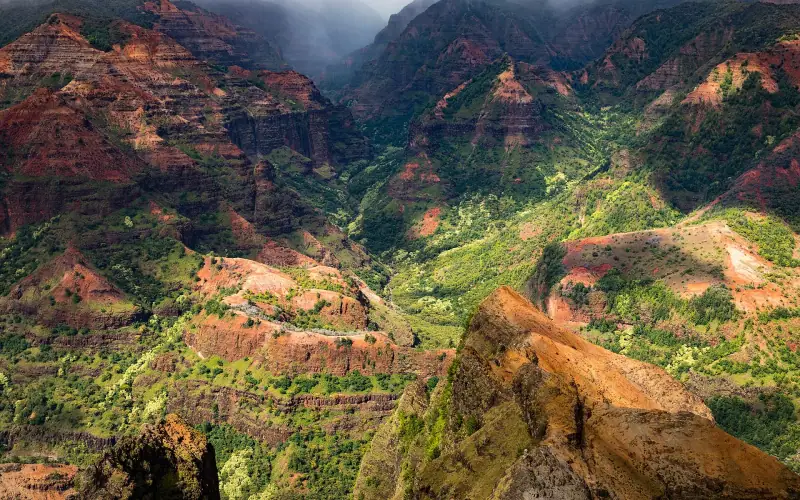
Kauai 7-day itinerary: the best road trip on the wild island
A detailed 7-day Kauai itinerary: Na Pali Coast, Waimea Canyon, Hanalei Bay and the best beaches. Day-by-day plan for an unforgettable road trip.
7 days
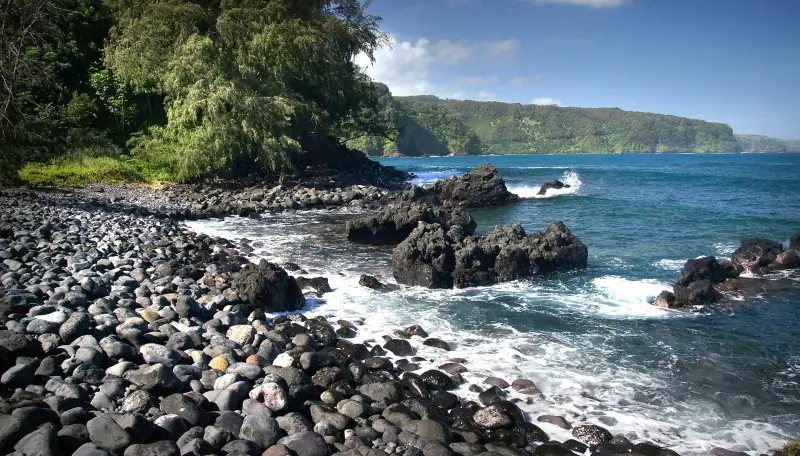
Maui 7-day itinerary: the complete guide to planning your trip
Maui in 7 days: Road to Hana, Haleakala, Wailea and Kaanapali beaches. A day-by-day plan to discover the pearl of the Hawaiian archipelago.