Itineraries
Big Island road trip in 5 days
We may earn a commission when you book through links on this page, at no extra cost to you. We don't visit or try the places we cover: we summarize published sources. How we work
Day by day
- Day 1Arrive in Kona: Ali'i Drive, Hulihe'e Palace, Kahalu'u snorkeling
- Day 2Kona coffee farms, Pu'uhonua o Honaunau, Punalu'u black sand beach
- Day 3Hawaii Volcanoes National Park: Crater Rim Drive, Chain of Craters Road
- Day 4Hilo, Akaka Falls, Rainbow Falls, Waipio Valley lookout
- Day 5Mauna Kea, Saddle Road, return to Kona
Where to sleep
- Kailua-Kona1 night
- Volcano Village2 nights
- Hilo or Hamakua Coast1 night
Weather through the year on this route
| Jan | Feb | Mar | Apr | May | Jun | Jul | Aug | Sep | Oct | Nov | Dec | |
|---|---|---|---|---|---|---|---|---|---|---|---|---|
| High °F (°C) | 7725 | 7725 | 7725 | 7725 | 7725 | 7926 | 7926 | 8127 | 8127 | 8127 | 7926 | 7926 |
| Low °F (°C) | 7524 | 7323 | 7323 | 7524 | 7524 | 7725 | 7725 | 7926 | 7926 | 7926 | 7725 | 7524 |
Normals 1991–2020 at Kailua-Kona: averages over 30 years, not a forecast. Source: NASA POWER (MERRA-2), grid of about 50 km. Figures computed by us in November 2026. Rain is shown only where a weather station confirms the figures.
In short
- Five days cover the Kona coast, the coffee belt, the south coast beaches, Hawaii Volcanoes National Park, Hilo and its waterfalls, and Mauna Kea.
- A car is essential: there is no viable tourist public transport, and the full loop of the island is about 380 km (236 mi).
- The estimated budget per person is €1,120 to €5,950 (about $1,300 to $6,900) for 5 days, depending on comfort level.
- The Waipio Valley road is closed to visitors on their own; only residents and authorized guided tours go down.
Big Island lives up to its name: it is the largest island of the Hawaiian archipelago, bigger than all the others combined. With 10,432 km² (4,028 sq mi), it offers striking geological and climatic variety, from the barren black lava fields of the west coast to the dripping rainforests of the east coast, by way of the snow-capped summit of Mauna Kea at 4,207 meters (13,803 ft) and the active lava flows of Kilauea. Eleven of the world’s thirteen climate zones are found on this one island.
A road trip is by far the best way to discover Big Island. Distances are considerable (the full loop of the island is about 380 km / 236 mi), the scenery changes completely from one hour of driving to the next, and the main attractions are scattered across the island. This 5-day itinerary takes you to the most spectacular sights on Big Island, with a plan designed to enjoy each stop without wearing yourself out. For an overview of preparing your Hawaii trip, see our complete Hawaii guide.
Practical information before you go
Getting to Big Island
Big Island has two airports: Kona (KOA) on the west coast and Hilo (ITO) on the east coast. Kona receives most flights, including a few direct flights from the U.S. mainland. The inter-island flight from Honolulu takes about 45 minutes.
Car rental
A car is absolutely essential on Big Island. There is no viable tourist public transport. Book your vehicle as early as possible: an SUV is recommended for the access roads to Mauna Kea (a 4x4 is required for the summit) and some coastal tracks. Expect €60 to €120 per day (about $70 to $140) depending on the season and the type of vehicle.
Estimated budget for 5 days (per person)
| Item | Budget | Mid-range | Comfort |
|---|---|---|---|
| Round-trip inter-island flight | €80-150 (~$93-174) | €120-200 (~$140-232) | €200-350 (~$232-406) |
| Car rental (5 days) | €300-450 (~$350-520) | €450-600 (~$520-695) | €600-900 (~$695-1,045) |
| Lodging (5 nights) | €400-650 (~$465-755) | €700-1,200 (~$810-1,390) | €1,500-3,000 (~$1,740-3,480) |
| Meals (5 days) | €180-250 (~$210-290) | €300-450 (~$350-520) | €500-800 (~$580-930) |
| Activities and entry fees | €100-200 (~$115-230) | €200-400 (~$230-465) | €400-800 (~$465-930) |
| Gas | €60-80 (~$70-93) | €60-80 (~$70-93) | €80-100 (~$93-116) |
| Estimated total | €1,120-1,780 (~$1,300-2,065) | €1,830-2,930 (~$2,120-3,400) | €3,280-5,950 (~$3,805-6,900) |
For full advice on managing your budget, our Hawaii budget guide details the spending items and ways to save.
Distances and driving times
| Route | Distance | Time |
|---|---|---|
| Kona - Hilo (north route) | 150 km (93 mi) | 2 h |
| Kona - Hilo (south route) | 200 km (124 mi) | 2 h 45 |
| Kona - Volcano Village | 160 km (99 mi) | 2 h 15 |
| Hilo - Volcano Village | 50 km (31 mi) | 45 min |
| Kona - Waipio Valley | 80 km (50 mi) | 1 h 30 |
| Hilo - Akaka Falls | 25 km (16 mi) | 30 min |
| Kona - Mauna Kea (summit) | 70 km (43 mi) | 1 h 30 |
Day 1: arrival in Kona and the west coast
Morning: arrival and settling in
Land at Kona airport, one of the few open-air airports in the United States. Pick up your rental car and head for Kailua-Kona, the small seaside town that makes an ideal base for exploring the west coast. The mood is immediately different from Honolulu or Maui: more relaxed, more authentic, less touristy.
Settle into your lodging. Kailua-Kona has a wide choice of places to stay, from hostels to the resorts of the Kohala coast. For good value, the condominiums around Ali’i Drive are recommended.
Afternoon: Kailua-Kona and Ali’i Drive
Explore Kailua-Kona on foot along Ali’i Drive, the main waterfront promenade. Visit Hulihe’e Palace, the former vacation home of Hawaiian royalty, now a museum. Right next door, Mokuaikaua Church, the oldest Christian church in all of Hawaii (1820), is worth a look.
Take a swim at Kahalu’u Beach Park, one of the best easy snorkeling spots on Big Island. The shallow, sheltered waters are full of tropical fish and green sea turtles. Volunteers are often there to tell you about marine life and the rules protecting turtles.
Evening: sunset and dinner
The west coast of Big Island offers memorable sunsets. Find a spot on the Kailua pier or by the natural pool in Kona for a free daily show. For dinner, try local food at Da Poke Shack (the best poke on Big Island according to locals) or Huggo’s on the Rocks for a meal with your feet in the sand and a sunset view.
Day 2: coffee plantations and the south coast
Morning: the Kona coffee belt
The Kona coffee belt stretches across the slopes of Hualalai and Mauna Loa between 250 and 750 meters (820 to 2,460 ft) in elevation. This narrow strip enjoys an ideal microclimate (sunny mornings, afternoon clouds and rich volcanic soil) that produces one of the most prized coffees in the world.
Visit one of the many farms that open their doors to visitors. Greenwell Farms offers a free, detailed tour of the production process, from coffee cherry to cup. Hula Daddy Coffee offers premium tastings with an ocean view. Mountain Thunder is the largest organic farm in the area and runs guided tours in the plantation.
Take the opportunity to buy coffee directly at the source: prices are better than in shops and you know you are getting 100% Kona coffee (beware of “Kona Blend” mixes in supermarkets, which often contain only 10% real Kona).
Midday: Pu’uhonua o Honaunau
Continue south to Pu’uhonua o Honaunau National Historical Park (City of Refuge). This sacred Hawaiian site was once a place of refuge where people who broke the kapu (sacred laws) could obtain absolution. The carved wooden tikis, the restored temple and the massive 300-meter (980 ft) stone wall create a powerful, solemn atmosphere. Entry costs $20 per vehicle (valid for 7 days).
Just before the park, Two Step (Honaunau Bay) is one of the best snorkeling spots in all of Hawaii. The crystal-clear water and the coral drop-off shelter extraordinary marine life: dolphins, turtles, butterflyfish and sometimes manta rays.
Afternoon: black and green sand beaches
Continue south on Route 11. Two beaches unique in the world await you:
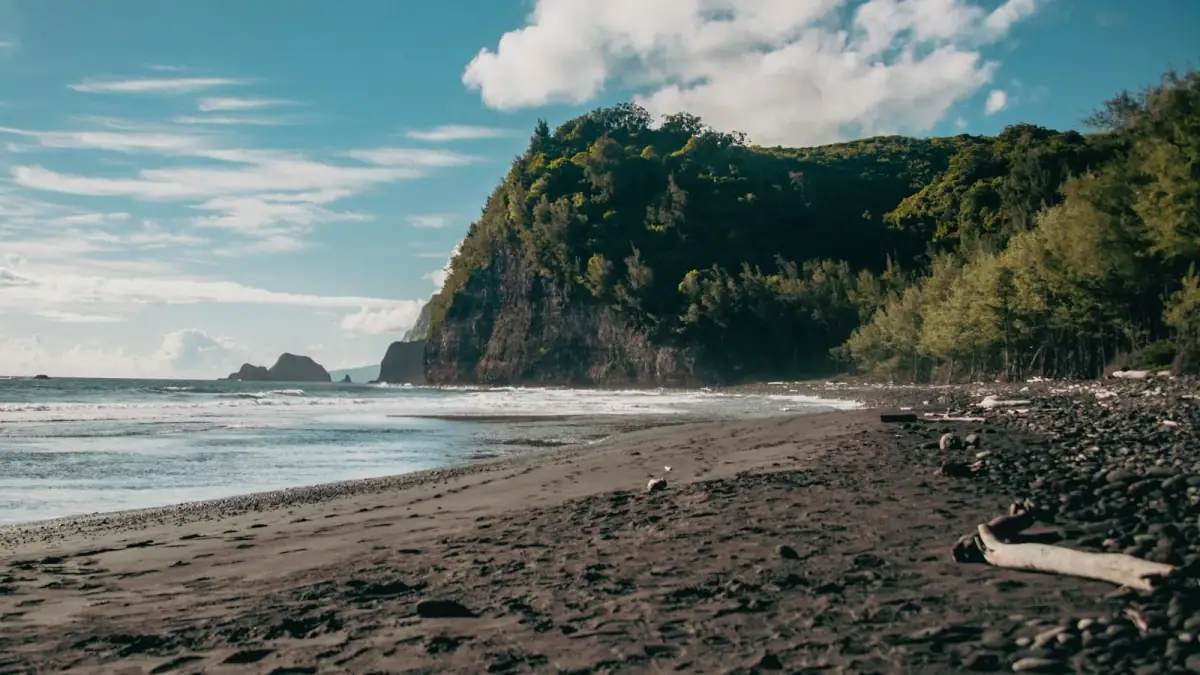
Punalu’u Black Sand Beach. This beach of ink-black volcanic sand is one of the most photographed in Hawaii. Green sea turtles regularly come to rest on the sun-warmed sand. Keep a distance of at least 3 meters (10 ft) from the turtles (federal law) and resist the urge to touch them.
Papakolea Green Sand Beach (optional, for adventurers). One of the four green sand beaches in the world, formed by olivine crystals from the Puu Mahana volcanic cone. Access requires a 5 km (3 mi) round-trip walk on unmarked, windy terrain. Bring enough water and sunscreen.
Evening: overnight near the volcano
Drive to Volcano Village (about 1 hour from Punalu’u), where you will spend the next two nights. This small village tucked in the rainforest at 1,200 meters (3,940 ft), at the gates of the national park, offers charming lodging among tree ferns and ohia lehua. Nighttime temperatures drop to 12-15 °C (54-59 °F): bring warm layers.
Recommended lodging: Volcano Rainforest Retreat (cabins in the forest), Kilauea Lodge (historic inn with a restaurant), or Volcano House (the national park hotel, the only one on the crater rim).
Hotels on Big Island
Compare prices and book with free cancellation.
Day 3: Hawaii Volcanoes National Park
Full day: Hawaii Volcanoes National Park
This day is devoted to the jewel of Big Island: Hawaii Volcanoes National Park, a UNESCO World Heritage Site. The park is home to two active volcanoes, Kilauea and Mauna Loa, and offers some of the most surreal landscapes on the planet. Entry costs $30 per vehicle (valid for 7 days). For trail fans, our guide to hiking in Hawaii covers several routes in the park.
Morning: Crater Rim Drive and Kilauea Overlook
Start at the Visitor Center for the day’s information on volcanic activity and trail conditions. Then drive Crater Rim Drive, the scenic road around the Kilauea caldera.
Key stops:
- Kilauea Overlook: a plunging view of the caldera and Halemaumau crater. If the volcano is erupting (lava fountains happen in episodes: check the NPS or USGS website), you may see the glow or jets of lava, especially at dusk.
- Uēkahuna Overlook: the best viewpoint over Halemaumau crater, on the site of the old Jaggar Museum (demolished in 2024). The terrace reopened in 2025; check its access on the NPS website. During eruption episodes, the red-orange glow of the lava lights up the steam clouds in a hypnotic show.
- Thurston Lava Tube (Nahuku): a lit lava tunnel 500 meters (1,640 ft) long, where you walk through a solidified lava flow about 500 years old. The entrance is framed by a forest of giant tree ferns.
- Devastation Trail: a short boardwalk stroll through a lunar landscape created by the 1959 eruption of Kilauea Iki.
Afternoon: Chain of Craters Road
Take Chain of Craters Road, a 30 km (19 mi) road that drops 1,100 meters (3,610 ft) from the Kilauea caldera to the ocean, crossing lava flows from different eras. The landscape has a stark, fascinating beauty: black lava as far as the eye can see, secondary volcanic cones and, at the end of the road, the spot where lava covered the road itself.
Recommended hikes along the road:
- Kilauea Iki Trail (5 km / 3 mi, 2 h): a descent into an extinct crater, walking across the floor of a former lava lake. The most popular hike in the park.
- Pu’u Loa Petroglyphs (2.5 km / 1.6 mi, 1 h): a flat trail to one of the largest concentrations of Hawaiian petroglyphs (more than 23,000 carvings).
- Holei Sea Arch: at the end of the road, a natural arch carved by the ocean in the lava cliff.
Evening: the volcano’s glow
If Kilauea is in an eruptive phase, return to Kilauea Overlook or Uēkahuna Overlook at nightfall to see the glow from the crater. The sight of lava lighting the clouds in the dark is one of the most striking experiences Hawaii can offer. Even if the volcano is not erupting, the sulfur fumaroles and the active geothermal activity at Steam Vents create a mysterious atmosphere at night.
Have dinner at the Kilauea Lodge restaurant in Volcano Village: reinvented Hawaiian cuisine in a former YMCA meeting hall from 1938, with a fireplace and a mountain-lodge feel.
Day 4: Hilo, waterfalls and the east coast
Morning: the road to Hilo
Leave Volcano Village for Hilo (45 minutes). Hilo is the rainiest city in the United States, with 3,300 mm (130 in) of annual rainfall, which explains the exceptional lushness of its vegetation. Don’t let the rain put you off: it is often intermittent and the clear spells come quickly.
Akaka Falls State Park. A spectacular first stop 25 minutes north of Hilo. A paved 800-meter (0.5 mi) loop trail runs through a forest of giant bamboo and tree ferns to the Akaka Falls viewpoint, a 135-meter (443 ft) waterfall plunging into a green gorge. For non-residents, entry costs $5 per person, plus $10 parking per vehicle (card payment only, ideally before you arrive). It is one of the most photogenic waterfalls in all of Hawaii.
Pepe’ekeo Scenic Route. Just north of Hilo, this 6 km (4 mi) coastal road runs through a natural botanical garden with metal bridges, miniature waterfalls and dense tropical vegetation. It is a small detour that takes 15 minutes but offers lovely views.
Midday: exploring Hilo
Hilo is a town of quiet charm, with its 1930s Art Deco buildings and small rural-town atmosphere. Explore downtown on foot:
- Hilo Farmers Market (Wednesday and Saturday, the biggest): one of the best farmers markets in all of Hawaii. Tropical fruit (rambutan, mangosteen, passion fruit), orchids, local honey, macadamia nuts and crafts. A feast for the senses.
- Rainbow Falls: a 3-minute drive from downtown, this 24-meter (80 ft) waterfall is spectacular in the morning when the sun creates a rainbow in the mist. Free access, easy parking.
- Lili’uokalani Gardens: the largest Japanese garden outside Japan, with bridges, pagodas and koi ponds. Free entry, a peaceful setting on the bay.
Lunch in Hilo: Cafe 100 has been a local institution since 1946, famous for its loco moco (rice, hamburger patty, fried egg, gravy), the quintessential Hawaiian comfort food. Suisan Fish Market sells ultra-fresh poke straight from the fish auction.
Afternoon: Waipio Valley
Head north to Waipio Valley (1 h 15 from Hilo), the most spectacular valley on Big Island. This amphitheater-shaped valley, 800 meters (2,600 ft) deep, was once the seat of Hawaiian royal power and was home to thousands of people. Today only a handful of families still live there, growing taro in the old terraces.
The lookout at the top of the cliff offers a plunging view of the valley, the winding river and the black sand beach below. The road that descends into the valley is very steep (25% grade over 1 km / 0.6 mi) and is closed to visitors: you may not drive or walk it on your own. Only residents and authorized guided tours (4x4 shuttle) go down; the lookout itself stays open. Check the current rules with Hawaii County before booking a tour.
Evening: overnight in Hilo or on the Hamakua Coast
Spend the night in Hilo or on the Hamakua Coast to break up the drive back. The Inn at Kulaniapia Falls is an extraordinary place to stay: a lodge beside a private 36-meter (118 ft) waterfall where you can swim in the natural pool at the foot of the falls. More conventional, the Hilo Hawaiian Hotel is a good base on the bay.
Day 5: Mauna Kea and the return to Kona
Morning: going up Mauna Kea
Mauna Kea rises to 4,207 meters (13,803 ft) above sea level (and 10,203 meters / 33,474 ft from the ocean floor, which technically makes it the tallest mountain on the planet). Its summit holds the largest astronomical observatories in the world thanks to exceptionally pure air.
Option 1: Mauna Kea Visitor Information Station (2,800 m / 9,200 ft). Reachable in a standard car, this high-altitude station already offers extraordinary views and lets you watch the starry sky in the evening, weather permitting. The free telescope program ended in 2019: paid stargazing evenings exist, to be checked on the University of Hawaii at Hilo website.
Option 2: Mauna Kea summit (4,207 m / 13,803 ft). Reaching the summit requires a 4x4 vehicle. The 13 km (8 mi) unpaved road from the visitor station is passable but demanding. At the top, the observatories stand out against a strikingly clear sky. The air is thin (60% of sea-level oxygen). Ask your doctor or a travel clinic about high altitude, and see the official travel health pages (CDC in the US, TravelHealthPro in the UK).
Important: access to Mauna Kea is subject to restrictions. Check current conditions on the official website. Children under 13, pregnant women and people with heart or breathing conditions are advised not to go beyond the visitor station.
Midday: Saddle Road
Saddle Road (Highway 200) crosses the central plateau between Mauna Kea and Mauna Loa, with moon-like high-altitude landscapes. Old lava fields stretch as far as the eye can see, dotted with volcanic cones and the occasional shrub.
Stop at the Pu’u Huluhulu Trail (a short 30-minute loop) for a walk in a kipuka, an island of forest spared by the lava flows, an oasis of life amid desolation.
Afternoon: back to Kona and last activities
Back on the west coast, use your last hours for a memorable activity:
Snorkeling with manta rays (in the evening). Big Island is one of the only places in the world where you can swim with giant manta rays (wingspan of 3 to 5 meters / 10 to 16 ft) in their natural habitat. Night excursions leave from the Kona coast and last about 1 h 30. Underwater lights attract plankton, which in turn attracts the rays. Watching them glide gracefully a few inches from you is an unforgettable experience. Expect $80 to $130 per person. Book ahead, as spots are limited.
Or: Mauna Kea Beach. Considered the most beautiful beach on Big Island, this crescent of white sand is lined with coconut palms and has turquoise water that is perfect for swimming and snorkeling. Access is free but parking is limited (arrive before 10 am).
Evening: last dinner and departure
For your last meal on Big Island, choose between Lava Lava Beach Club (feet in the sand, modern Hawaiian cuisine, craft cocktails) and the Four Seasons Hualalai restaurant (world-class dining in a sumptuous setting, reservation needed).
If your flight leaves the next morning, spend the night in Kona. If you have an evening flight, return the car and leave Big Island having explored one of the most extraordinary islands on the planet.
Variations and adjustments
If you have 7 days instead of 5
Add an extra day in Hilo to explore the Hawaii Tropical Botanical Garden (the largest tropical botanical garden in the world), Boiling Pots waterfall and the Puna coast with its geothermal pools. Also give a day to the Kohala coast north of Kona for the Hapuna and Mauna Kea beaches, the Puako petroglyphs and the historic trails of the Ala Kahakai National Historic Trail.
If you prefer the opposite direction
Starting in Hilo (if you can find a flight to ITO) lets you visit the volcano park on the first day, when the excitement of the trip is at its peak. You would finish with the beaches and snorkeling of Kona, a perfect conclusion before the flight home.
Combined with other islands
Big Island combines well with Maui (a flight of about 45 minutes; check with the airlines for the direct Kona-Kahului flights currently operating) or Oahu (direct Kona-Honolulu flight, 50 minutes). A popular itinerary combines 5 days on Big Island + 7 days on Oahu and Maui for a full two-week trip. Check the best time to visit Hawaii before planning your trip.
Essential road trip tips
Gas. Gas stations are rare in some areas (south coast, Hamakua Coast, the Mauna Kea road). Never go below half a tank. Gas prices in Hawaii are among the highest in the United States.
Roads and driving. Most main roads are in good condition, but some secondary roads (beach access, Mauna Kea, Waipio Valley) are gravel or very steep. Check the terms of your rental contract regarding unpaved roads.
Changeable weather. Big Island’s climate changes radically from one side to the other. The west coast (Kona) is dry and sunny. The east coast (Hilo) is wet and often cloudy. The summit of Mauna Kea can see snow in winter. Pack clothes for all conditions: swimsuit, rain jacket, warm fleece and hiking shoes.
Respect for sacred sites. Big Island has many sites sacred to Hawaiian culture (heiau, petroglyphs, sacred valleys). Respect the signs and barriers. Never move stones and don’t take lava home as a souvenir: the legend of Pele (goddess of fire) says it brings bad luck, and the Hawaii postal service receives parcels every year containing lava sent back by unlucky visitors.
Stargazing. Big Island is one of the best places in the world for stargazing thanks to its remoteness, its altitude and its low light pollution. Even from the coast, the Milky Way is clearly visible on moonless nights. An organized stargazing evening from the Mauna Kea Visitor Information Station (check the current programs) is well worth doing.
Big Island is unlike any other island. Here the Earth is still building itself before your eyes, lava meets the ocean, summits touch space and nature unfolds with a raw power that leaves you speechless. This 5-day road trip only scratches the surface of the island, but it shows you enough to understand why Big Island holds a special place in the hearts of those who have driven it.
Sources
- Hawaii Volcanoes National Park (National Park Service): prices checked November 2026
- Hawaii State Parks (DLNR): prices checked November 2026
Frequently asked questions
How many days do you need to visit Big Island?
Plan at least 4 to 5 days to see the major sights (volcanoes, black sand beaches, waterfalls). A full week lets you explore the island without rushing.
Do you need a 4x4 on Big Island?
A standard SUV is enough for most roads. A 4x4 is required only to reach the summit of Mauna Kea and a few secondary tracks.
Can you see lava in Hawaii?
Volcanic activity varies. Hawaii Volcanoes National Park on Big Island lets you see craters and lava fields, but the flows you can see depend on Kilauea's activity.
Is Big Island dangerous?
No, Big Island is very safe for visitors. Respect the safety signs near volcanoes and cliffs, and check the weather before you hike.
Kona or Hilo for where to stay?
Kona (west coast) has the best weather, more restaurants and more activities. Hilo (east coast) is more authentic, cheaper and close to the volcano park.
More Hawaii guides
Keep reading
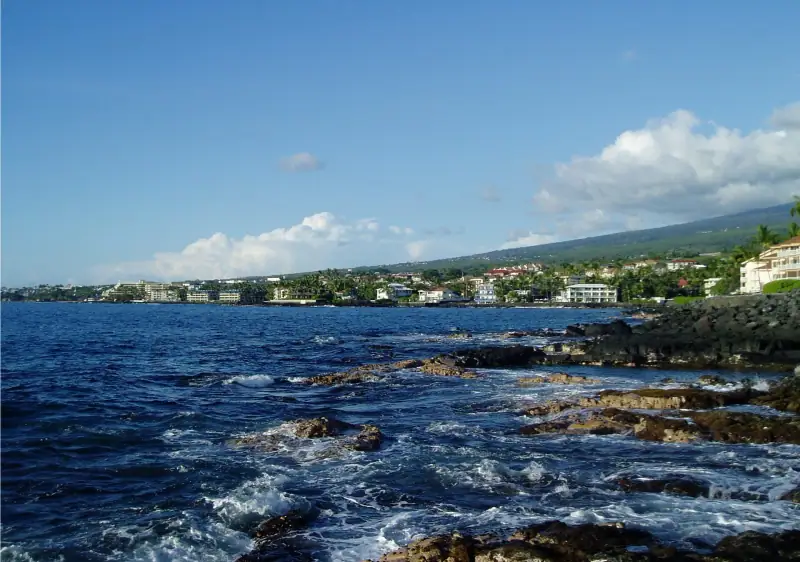
Visiting Kailua-Kona: complete guide to Big Island's coastal town
Kailua-Kona, gateway to Big Island: manta rays, Kona coffee, snorkeling with turtles, Ali'i Drive and Pacific sunsets.
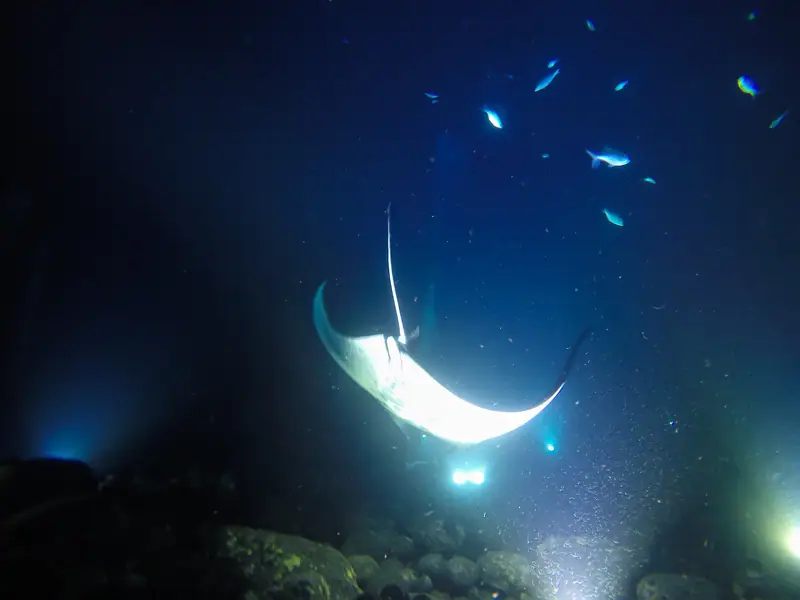
Night snorkeling with manta rays in Kona: booking, prices, season and minimum age
Swimming with manta rays at night in Kona: prices ($80-140), booking, duration, kids, seasickness and rules to follow. A practical guide.
Snorkeling in Hawaii: the best spots
The best snorkeling spots in Hawaii: tropical fish, turtles and coral reefs on every island, with access, depths and practical tips.
Ready-made
Hawaii itineraries
7 days
Kauai 7-day itinerary: the best road trip on the wild island
A detailed 7-day Kauai itinerary: Na Pali Coast, Waimea Canyon, Hanalei Bay and the best beaches. Day-by-day plan for an unforgettable road trip.
7 days
Maui 7-day itinerary: the complete guide to planning your trip
Maui in 7 days: Road to Hana, Haleakala, Wailea and Kaanapali beaches. A day-by-day plan to discover the pearl of the Hawaiian archipelago.