What to see
Visiting Kauai: complete guide to the island of Kauai in Hawaii
We may earn a commission when you book through links on this page, at no extra cost to you. We don't visit or try the places we cover: we summarize published sources. How we work
In short
- Plan at least 5 to 7 days on Kauai: with 5 days you can see the Na Pali Coast (by boat or hike), Waimea Canyon, the north shore and Poipu.
- A car is essential. Kauai Bus is very limited and the isolated natural sites are not served.
- The Na Pali Coast cannot be reached by car: boat trips cost $150-250 per adult, helicopter flights $200-350. The Kalalau Trail beyond 3 km (2 mi) needs a permit, and Hā'ena State Park needs a reservation.
- Kauai is one of the most expensive Hawaiian islands: about $150-200 a day on a tight budget, $350-500 mid-range, $700+ for luxury, plus a rental car at $60-150 a day.
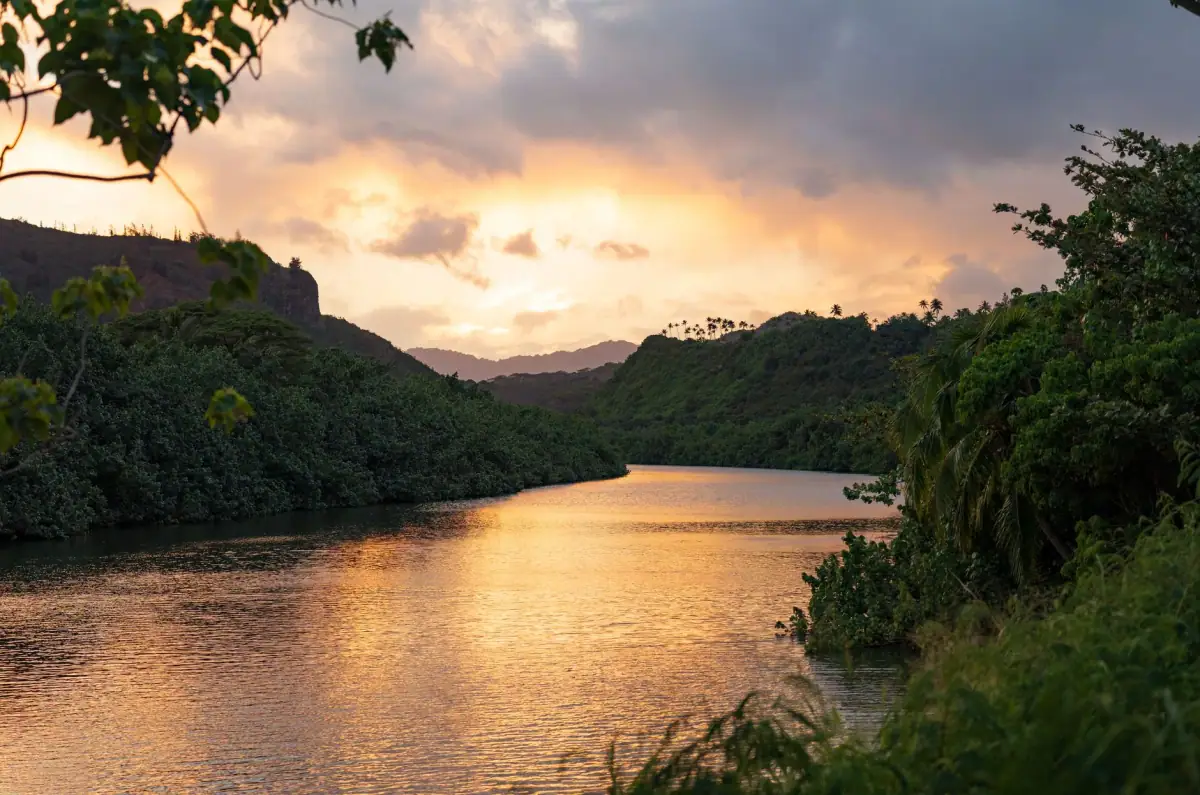
Kauai. The oldest of the main Hawaiian islands, formed about five million years ago by the volcanic forces of the Pacific. The island Hawaiians nickname The Garden Isle for its almost unreal lushness, its cliffs covered in giant ferns and its rivers cascading from summits perpetually in the clouds. The island where Steven Spielberg shot Jurassic Park, where landscapes seem to come from a prehistoric, untouched world.
Kauai is the Hawaiian destination that attracts the fewest visitors in absolute numbers, and that is exactly why seasoned travelers often name it their favorite island of the archipelago. Less commercial than Oahu, less beach-resort than Maui, Kauai is the island of vast wild spaces, spectacular hikes and sunsets over cliffs that you feel you are the only one watching.
This complete guide gives you all the keys to prepare your stay on Kauai: the highlights, the regions to explore, the best beaches, the activities and practical tips for a successful trip. You can also see our 7-day Kauai itinerary for a detailed day-by-day plan.
Kauai at a glance: geography and regions
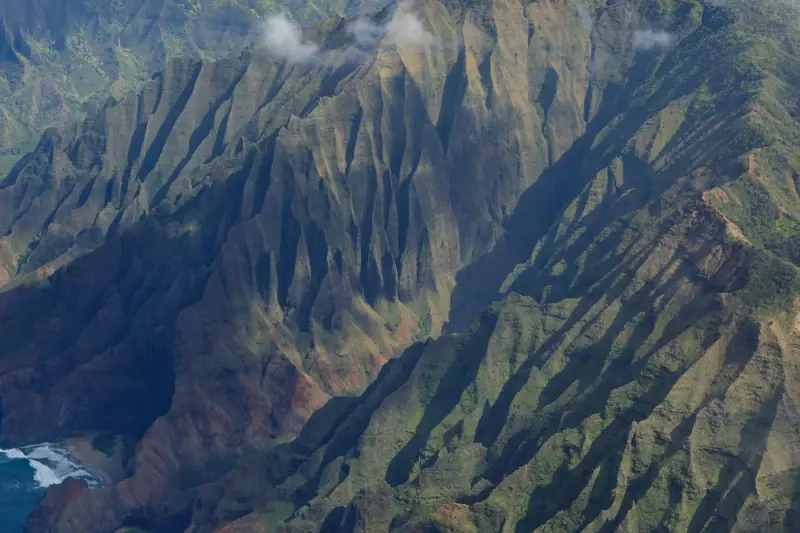
Kauai is the fourth largest Hawaiian island by area, at about 1,456 km² (562 sq mi). Its shape is nearly circular, unlike the two-volcano silhouette of Maui or the elongated shape of Big Island. In the center of the island, Mount Waialeale rises to about 1,569 meters (5,148 ft) (its neighbor Kawaikini, the island’s highest point, reaches 1,598 meters / 5,243 ft) and is considered one of the wettest places on the planet, with annual rainfall that can exceed 10,000 mm (394 in). This central humidity feeds dozens of rivers and waterfalls running down to the coasts, giving Kauai its character of a permanent tropical garden.
The north shore — The Hanalei and Princeville region is the most spectacular and most photographed part of Kauai. This is where the golden sand beaches framed by jagged mountains, the taro paddies in Hanalei Valley and the departure points for the Na Pali Coast are found. The north shore is also the wettest and the most likely to be hit by rain in winter.
The east coast / Sunrise Coast — The zone between Lihue (the airport), Wailua and Kapaa is the most populated and most commercially developed. This is where shopping centers, affordable restaurants, local markets and the most accessible lodging are concentrated. The Kuhio Highway (Highway 56) that follows the east coast offers many ocean views.
The south shore — Poipu and Koloa are Kauai’s sunniest tourist zone, with resorts, quality restaurants and the best snorkeling conditions. The south shore has a drier microclimate than the rest of the island, making it a safe bet in any season.
The west side — The Waimea, Hanapepe and Kekaha region is the driest and least touristy part of Kauai, with ranch landscapes and barer volcanic terrain recalling some American desert scenery. The road to Waimea Canyon and Koke’e State Park starts from the west side.
Car rental in Kauai
Essential to explore Kauai: Waimea Canyon, the north shore, Na Pali. Book early, the fleet runs out fast.
The Na Pali Coast: the jewel of Kauai
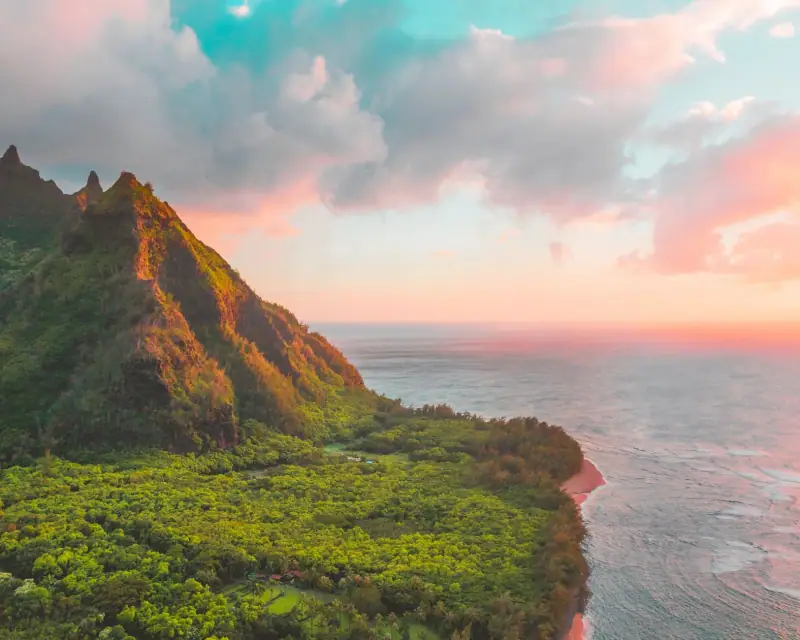
The Na Pali Coast (na pali means “the cliffs” in Hawaiian) is Kauai’s most emblematic attraction, and one of the most impressive in all of America. These green basalt cliffs plunging straight into the Pacific Ocean over about 27 km (17 mi) of coastline have an absolutely striking verticality and color, especially seen from the sea at sunset.
The Na Pali Coast is protected by Napali Coast State Wilderness Park and cannot be reached by car or by a coastal road, which is precisely what gives it its intact wild character.
By boat or catamaran
The most popular way to discover the Na Pali Coast is a catamaran trip from Port Allen (south coast) or from Hanalei Bay (north shore). Trips generally last 4 to 7 hours and follow the whole Na Pali Coast with snorkeling stops at sea caves and swimming.
Tours from Port Allen go around the whole Na Pali Coast and are offered much of the year depending on weather and swell (trips can be canceled, and Port Allen harbor has seen closures after a hurricane in 2026: check with the operator). Departures from Hanalei run in summer only.
Operators generally offer two types of trips: comfortable catamarans (with a meal, snorkeling gear) and Zodiacs (faster, less comfortable but able to reach areas catamarans cannot). Expect between $150 and $250 per adult depending on the operator and the type of boat.
The Kalalau Trail
The Kalalau Trail is considered by many hikers to be one of the most spectacular trails in the United States. This 18 km (11 mi) one-way trail follows the Na Pali Coast from the Ke’e Beach Trailhead, at the end of the north shore road.
The first 3 kilometers (2 mi) to Hanakapi’ai Beach don’t require a camping permit, but access to Hā’ena State Park (the trailhead) is by advance reservation of an entry or parking via GoHaena (check availability and trail condition before you go). They already offer spectacular views of the Na Pali cliffs. Hanakapi’ai Beach itself is subject to strong waves (swimming discouraged), but the round-trip hike of about 3 hours is accessible to any walker in good condition.
Beyond that, from Hanakapi’ai to Kalalau Beach (15 more kilometers / 9 mi), a permit is mandatory, even for the day (online reservation on the official Hawaii State Parks website, about $35 per person per night for non-residents, plus booking fees; permits go very fast). The full hike, often done over 2 days with a night at Hanakoa Camp, requires good physical shape, since the trail repeatedly goes up and down between valleys.
By helicopter
A helicopter offers a unique perspective on the Na Pali Coast and Kauai’s inland valleys, including the north shore cliffs, Waimea Canyon and the wet center of the island around Waialeale. Tours generally last 50 to 75 minutes from Lihue. Expect between $200 and $350 per adult, with open-door options for photographers.
Waimea Canyon: the Grand Canyon of the Pacific
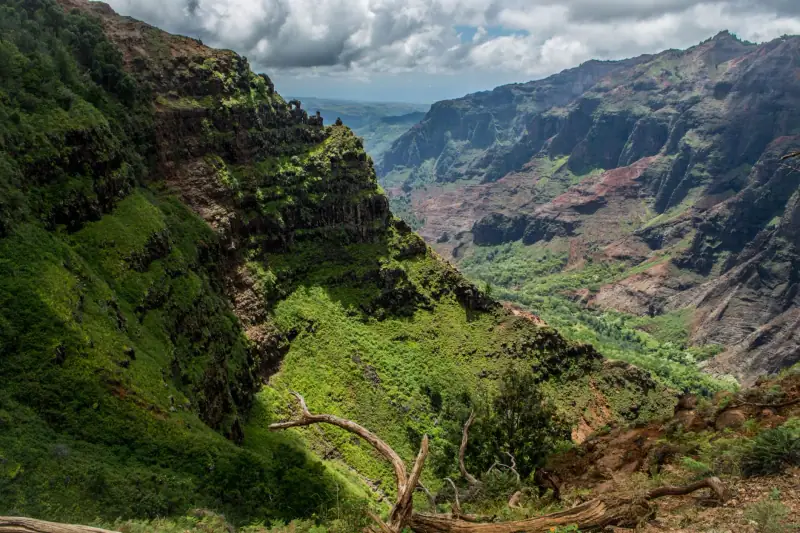
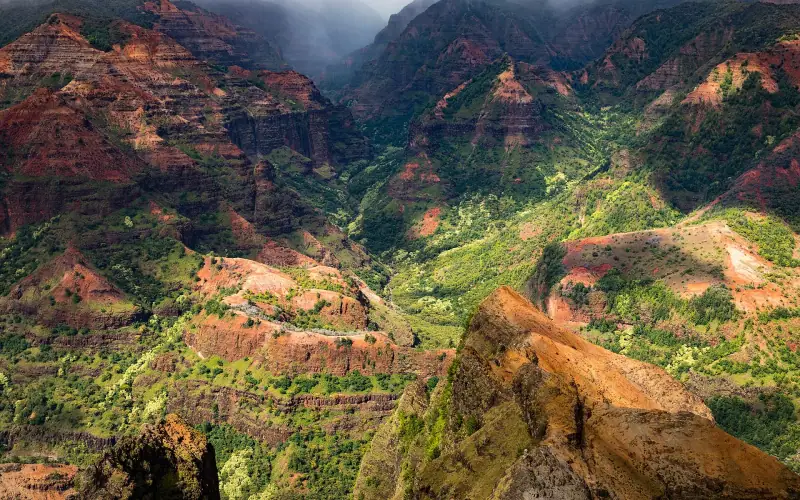
Waimea Canyon is often called the “Grand Canyon of the Pacific”, a flattering comparison but one that gives a fair idea of the sense of immensity it conveys. About 16 km (10 mi) long, about 1.6 km (1 mi) wide and about 900 meters (2,950 ft) deep, this canyon with multicolored layers (brick red, purple, ocher, green) carved by the Waimea River is quite simply one of the most spectacular landscapes of the Hawaiian archipelago.
How to get there
Waimea Canyon is on Kauai’s west coast, reached from the town of Waimea via Waimea Canyon Drive (Highway 550). The road climbs gradually from sea level to Kalalau Lookout, at about 1,200 meters (3,940 ft) in elevation, with several lookouts over the canyon on the way.
Waimea Canyon Lookout (about 875 m / 2,870 ft in elevation) offers the first classic panorama of the canyon, with a plunging view of the lava layers and the Waimea River winding along the bottom. Pu’u Hinahina Lookout (about 975 m / 3,200 ft) offers a slightly different perspective, sometimes with a glimpse of the Na Pali Coast in clear weather. Continuing on Highway 550 to Kalalau Lookout and Pu’u o Kila Lookout (about 1,200 m / 3,940 ft), you reach the most spectacular lookouts with a plunging view of the Na Pali Coast and Kalalau Valley.
Hikes in the canyon
Waimea Canyon has several marked hiking trails for different levels:
- Canyon Trail: One of the most popular trails (about 5 km / 3 mi round trip), which descends into the canyon with a view of Waipo’o Falls, a two-tier waterfall.
- Kukui Trail: A demanding trail that descends to the canyon floor and the banks of the Waimea River (about 10 km / 6 mi round trip, 600 m / 1,970 ft elevation change). For experienced hikers only; the climb back is very physical.
- Pihea Trail: Reached from Pu’u o Kila Lookout, this trail follows the ridge with views of the Na Pali Coast and the Alakai plateau, a spectacular combination.
Koke’e State Park
Adjacent to Waimea Canyon, Koke’e State Park is a vast protected high-altitude area (between about 1,050 and 1,350 m / 3,445 and 4,430 ft) with koa and ohia forests, hiking trails and a small museum devoted to Kauai’s fauna and flora. The Alakai Swamp, a cloud swamp at one of Kauai’s highest elevations, is home to rare endemic bird species, one of the rare opportunities in the world to see species like the Puaiohi (Myadestes palmeri) in their natural habitat.
Na Pali Coast and canyon tours
Catamaran, helicopter or guided hiking trips: explore Kauai's natural jewels safely.
The north shore: Hanalei Bay and Princeville
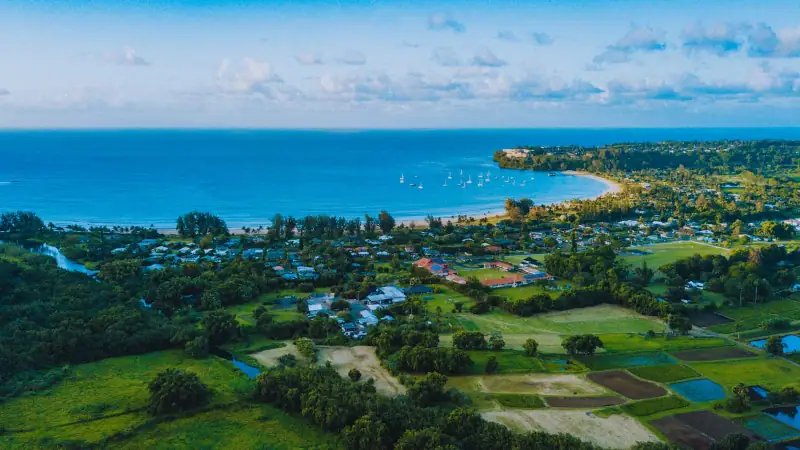
Kauai’s north shore is the island’s most cinematic region, the one that will make you feel you have landed on an adventure movie set. And it isn’t just a feeling: many films and series were shot there, from Jurassic Park to Pirates of the Caribbean to The Descendants.
Hanalei Bay
Hanalei Bay is a vast crescent-shaped bay on Kauai’s north shore. Its backdrop of mountains covered in tropical vegetation, the famous jagged peaks of the Na Pali range, and its turquoise water make it one of the most photographed bays in Hawaii. Hanalei village, with its colorful shops, small restaurants and local market, has kept the charm of an authentic Hawaiian town.
In summer (May to September), the bay offers beginner to intermediate surf conditions, with gentle waves suited to learning. In winter, the north swell turns Hanalei Bay into a professional surf spot (with waves sometimes exceeding 6 meters / 20 ft), and swimming is then discouraged for non-surfers.
Hanalei Valley
Hanalei Valley is one of the few taro (kalo in Hawaiian) production areas still active in Hawaii. These irrigated terraced fields, which look like Asian rice paddies, stretch as far as the eye can see from the Hanalei Valley Overlook (on Highway 56, just before the one-lane bridge into the valley). Taro is a sacred plant in Hawaiian culture; it is used to make poi, a staple of traditional cuisine.
Princeville
Princeville, on the heights above Hanalei Bay, is the north shore’s most developed resort area. Luxury hotels, golf courses, fine-dining restaurants and panoramas of Hanalei Bay and the mountains make it the ideal base for a comfortable stay on the north shore. Queen’s Bath, a natural pool carved in the black lava formations at the edge of the Princeville cliffs, is a very popular Instagram spot, but accessible only in summer and in calm seas (fatal accidents in winter are frequent; respect the warning signs).
Kilauea Lighthouse
The Kilauea Point National Wildlife Refuge is a spectacular headland on Kauai’s north shore, a few miles east of Princeville. The historic Kilauea Lighthouse (built in 1913) stands at the edge of cliffs plunging into the ocean. It is above all the sanctuary for rare seabirds that makes the site interesting: great frigatebirds (Fregata minor), red-footed boobies (Sula sula), brown noddies and Laysan albatross nest on the cliffs. Entry costs about $10 per adult (free under 16) and is reserved in advance on Recreation.gov, in time slots, with opening limited to certain days of the week; the lighthouse interior visit is currently suspended (check with the refuge).
Kauai’s beaches
Kauai has a remarkable variety of beaches for an island of its size, from tropical white sands to green sand beaches (a world rarity) to secluded coves reachable only on foot.
Poipu Beach Park
Poipu Beach Park, on the south coast, is Kauai’s most popular beach for families. Protected by a double natural cove, it offers a calm area for children and beginners, and a livelier area for surfers and swimmers. Sea turtles regularly come up on the sand; keep your distance (the law requires a minimum of 3 meters / 10 ft). Hawaiian monk seals (Neomonachus schauinslandi), one of the most threatened pinnipeds in the world, also occasionally appear on the beach.
Our guide to Hawaii’s beaches ranks Poipu Beach among the ten best beaches of the archipelago.
Hanalei Beach
The big sand beach of Hanalei Bay stretches about 3 km (1.9 mi) with the Na Pali mountain chain as a backdrop. In summer, the water is calm enough for family swimming and snorkeling. The beach is freely accessible from central Hanalei and has free parking lots.
Tunnels Beach (Makua Beach)
Tunnels Beach, west of Hanalei, owes its nickname to the underwater tunnel-shaped coral formations that make it one of Kauai’s best snorkeling sites in calm weather (summer only). Spinner dolphins (Stenella longirostris) are frequently seen in the bay, along with many sea turtles.
Polihale State Park
At Kauai’s western end, Polihale is the island’s most isolated and wildest beach. The access road (a dirt track of several miles) discourages most tourists, which leaves an immense stretch of white and golden sand almost deserted, facing the Na Pali Coast cliffs visible to the north. Swimming is often dangerous because of currents and waves; the appeal is mostly contemplative.
Papakolea Beach (Green Sand Beach)
Papakolea Beach is a worldwide geological curiosity located on Big Island (Hawaii Island), in the Ka’ū district near South Point, hundreds of miles from Kauai. Its olive color comes from olivine crystals, a volcanic mineral present in the sand. There are only four green sand beaches in the world. If you plan to combine Kauai with Big Island, this beach is worth the detour: access is on foot (about 8 to 9 km / 5 to 5.5 mi round trip from the parking lot, or 2.5 miles each way); the “shuttle” offered by private individuals on the access road is not official.
Activities on Kauai
Kauai is an adventure and outdoor destination par excellence, with an offering of activities that goes well beyond swimming.
Hiking
Kauai is often considered the best island in Hawaii for hiking. Besides the Kalalau Trail and the Waimea Canyon trails already mentioned, several other routes are worth the detour. Our guide to hiking in Hawaii details the island’s best trails.
The Sleeping Giant Trail (Nounou Mountain Trail), reached from the east coast near Kapaa, is a 2 to 3 hour climb with a panoramic view of the east coast and inland valleys from the summit (about 366 m / 1,200 ft in elevation). The mountain, seen in profile from the road, looks like a sleeping giant lying down.
The Maha’ulepu Heritage Trail, on the south coast near Poipu, is a 5 km (3 mi) coastal trail along limestone cliffs, fossil dunes and secluded coves. No significant elevation change, spectacular sea panoramas, and sea turtles and Hawaiian monk seals to spot from the cliffs.
Snorkeling and diving
Kauai offers excellent snorkeling conditions on its south coast (Poipu, Koloa Landing) and, in summer, on its north shore (Tunnels Beach). Our guide to snorkeling in Hawaii details all the spots and conditions. Divers will find varied coral reefs along the south coast, with dive centers based in Poipu.
River kayaking
Kayaking on the Wailua River is one of Kauai’s most popular activities. This navigable river, the only one in Hawaii, runs past the Fern Grotto, a natural cave covered in cascading ferns, about 3.2 km (2 mi) upstream from the launch point. The grotto is visited from a platform (you can no longer go inside), and access is mainly provided by motorboats: kayakers paddle up the river and join the trail, but the rules for kayak access to the grotto change, so check with the operator before booking.
Surfing
Kauai’s surf spots vary by season. The north shore (Hanalei Bay, Tunnels) offers world-class waves in winter for experienced surfers. The east coast (Kapaa) and the south coast (Poipu) have more accessible waves for beginners and intermediates, with surf schools available there.
Na Pali catamaran trips
Sail along the Na Pali cliffs with snorkeling stops at sea caves: Kauai's essential experience.
Lihue: the gateway to Kauai
Lihue is Kauai’s main town and the air arrival point for almost all visitors. With about 8,000 residents, it is a functional town rather than a tourist one, but it deserves a half day of exploring.
The Grove Farm Museum is a former sugar plantation estate open to visits, tracing Kauai’s economic and social history in the 19th century. The Kauai Museum, downtown, brings together collections on geology, Hawaiian culture and the island’s history from the first Polynesians to the present day.
Wailua Falls, reached from Lihue by Maalo Road, are among Kauai’s most easily accessible waterfalls. These twin falls about 52 meters (170 ft) high plunge into a pool surrounded by tropical vegetation, one of the most photographed sites on the island, visible from a roadside lookout in just a few minutes.
Where to stay on Kauai
Our complete guide to where to stay on Kauai details all the options by area and budget.
North shore (Princeville, Hanalei) — The most luxurious and most spectacular area, with 5-star hotels overlooking Hanalei Bay and properties facing the Na Pali mountains. Prices are high ($300-800 a night in high season), but the location is ideal for the Na Pali Coast, north shore hikes and Hanalei’s white sand beaches.
East coast (Kapaa, Wailua) — The most affordable and most practical area, with most of the mid-range hotels, condos and guesthouses. A good base for day trips north or south. Shopping centers, cheap restaurants and local markets are concentrated there.
South shore (Poipu, Koloa) — The sunniest area, with luxury resorts, condos and vacation houses facing the ocean. Ideal for families (Poipu Beach Park) and snorkeling fans.
Lihue — Practical, often cheaper lodging near the airport. Not very interesting scenically but useful for short stopovers or arrival/departure nights.
Hotels and lodging in Kauai
Compare and book the best lodging on Kauai (north shore, Poipu, Kapaa) with free cancellation.
Food on Kauai
Kauai has a food scene that mixes traditional Hawaiian cuisine, Asian influences (Japanese, Filipino, Korean) inherited from the plantation era, and a booming “farm to table” cuisine driven by the island’s agricultural richness.
Ahi tuna poke is everywhere on Kauai and generally remarkably fresh. Local supermarkets (Foodland, Times) often offer the best versions at very reasonable prices ($8-15 a bowl).
Shave ice, crushed ice covered in tropical fruit syrups (lilikoi/passion fruit, guava, lychee, coconut), is the snack par excellence on the island. Waimea and Hanapepe have spots appreciated by locals.
Plate lunch (rice + macaroni salad + grilled protein) remains the quintessential popular meal, available at the many food trucks along the island’s roads. Expect $10-15 for a full, hearty meal.
Taro, the base of traditional Hawaiian cuisine, is grown in Kauai’s valleys and goes into making poi (fermented paste) but also many pastries and modern dishes in the island’s restaurants.
The Hanapepe Friday Night Art Walk (every Friday evening), in the old town of Hanapepe on the west coast, combines art galleries, restaurants, street food vendors and live music, an authentic cultural experience much appreciated by travelers who want to meet Kauai’s residents outside the usual tourist areas.
Practical information
Entry requirements
Hawaii is a US state, so the formalities are those of any trip to the United States. Entry rules depend on your passport. Check the official travel advice of your government before you book: travel.state.gov (US), GOV.UK (UK), travel.gc.ca (Canada), Smartraveller (Australia) (checked November 2026).
How to get to Kauai
Lihue Airport (IATA code: LIH) is Kauai’s only commercial airport. It is served from West Coast airports (Los Angeles, San Francisco, Seattle) with direct flights, and from Honolulu with Hawaiian Airlines and Southwest Airlines inter-island flights (about 30 to 40 minutes of flight, fares generally between $60 and $200 depending on availability).
Overall budget
For a detailed look at the costs of a Hawaii trip, see our Hawaii budget guide.
As a guide for Kauai:
- Budget lodging: $100-180 a night (hostel, shared guesthouse, cheap condo)
- 3-star hotel / rental condo: $200-350 a night
- 4-5 star hotel: $400-800 a night
- Budget meal: $8-15 per person (food truck, market, supermarket)
- Mid-range restaurant: $25-50 per person
- Car rental: $60-150 a day depending on the season
- Na Pali catamaran trip: $150-250 per adult
- Helicopter flight: $200-350 per adult
Getting around the island
A rental car is essential. The Kauai Bus public network serves the main areas (Lihue, Kapaa, Poipu, Hanalei) at very affordable fares (about $2 a ride), but frequencies are low and isolated natural sites are not served. Ride-hailing (Uber, Lyft) exists but is less available than in Honolulu.
Kauai is the Hawaiian island that best rewards those who take the time to discover it at their own pace. In an archipelago that can sometimes feel too developed and too busy, Kauai keeps a character of authentic wilderness that few places in the world can still offer. The Na Pali Coast, Waimea Canyon, Hanalei Bay and the inland hiking trails make up a picture of rare natural generosity. To plan your full Hawaii stay and decide how many days to give each island, see our complete guide to the Hawaiian archipelago.
Frequently asked questions
How many days do you need to visit Kauai?
Plan a minimum of 5 to 7 days to discover Kauai without rushing. With 5 days, you can see the Na Pali Coast (by boat or hike), Waimea Canyon, the north shore and Poipu. With 7 to 10 days, you will have time to explore the more remote hiking trails, snorkel at several sites and enjoy the island's quiet pace. Kauai is smaller than Maui or Big Island, but its winding roads and the richness of its landscapes take time.
What is the best time to visit Kauai?
Kauai is pleasant all year, but April-May and September-October offer the best compromise between weather, rates and crowds. Summer (June-August) is sunny and very busy, especially on the north shore. Winter (December-March) brings more rain, notably on the north shore (Hanalei, Princeville), but it is the ideal season to watch humpback whales in Kauai's waters. The south coast (Poipu) remains overall the sunniest whatever the season.
Do you need to rent a car on Kauai?
Yes, a car is essential on Kauai. Public transport (Kauai Bus) is very limited in frequency and does not serve isolated natural sites. Nearly all the main sights (Waimea Canyon, the Na Pali Coast, Koke'e State Park, Hanalei Bay, Kilauea Lighthouse) are inaccessible without a vehicle. Book your car as soon as your flight is confirmed, because the fleet is often exhausted in high season and prices can double or triple if you wait until the last minute.
How do you reach the Na Pali Coast?
The Na Pali Coast cannot be reached by car, which is precisely what keeps it so preserved. There are three ways to enjoy it. By boat or catamaran from Port Allen (south coast) or Hanalei Bay (north shore): the most accessible option, with trips of 4 to 7 hours. By hiking the Kalalau Trail, an 18 km (11 mi) one-way trail that follows the Na Pali Coast with exceptional viewpoints. The first 3 km (2 mi) to Hanakapi'ai Beach require an entry or parking reservation at Hā'ena State Park (via GoHaena), and beyond that a camping permit is mandatory. By helicopter: a spectacular aerial view from Lihue, Princeville or Port Allen (tours of 50 to 75 minutes).
Can you snorkel on Kauai?
Yes, Kauai is an excellent snorkeling destination, as long as you choose the right sites and the right season. The best conditions are on the south coast (Poipu Beach, Koloa Landing) in summer, and on the north shore (Tunnels Beach / Makua Beach) from May to September, when the north swell calms down. In winter, swell conditions make the north shore dangerous for swimming. Sea turtles (honu) are common at many Kauai sites, notably Poipu Beach Park.
What budget should you plan for a trip to Kauai?
Kauai is one of the most expensive Hawaiian islands, on par with Maui. Expect about $150-200 a day on a tight budget (budget lodging other than hotels, home cooking or food trucks, few paid activities), $350-500 a day mid-range (3-4 star hotel, restaurants, 1-2 guided activities) and $700 and up for luxury. Car rental is a fixed cost of about $60-150 a day. Catamaran or helicopter trips ($200-300 per person) are the main activity expenses.
Can you combine Kauai with another Hawaiian island?
Absolutely; combining Kauai with Oahu or Maui is very common. Inter-island flights from Honolulu (code OGG for Maui, LIH for Kauai) take about 30 to 45 minutes with Hawaiian Airlines or Southwest Airlines, at fares generally between $60 and $200 each way depending on availability. A classic 2-week Hawaii itinerary can combine 4-5 days on Oahu (Waikiki, Pearl Harbor), 4-5 days on Kauai and 4-5 days on Maui or Big Island.
More Hawaii guides
Keep reading
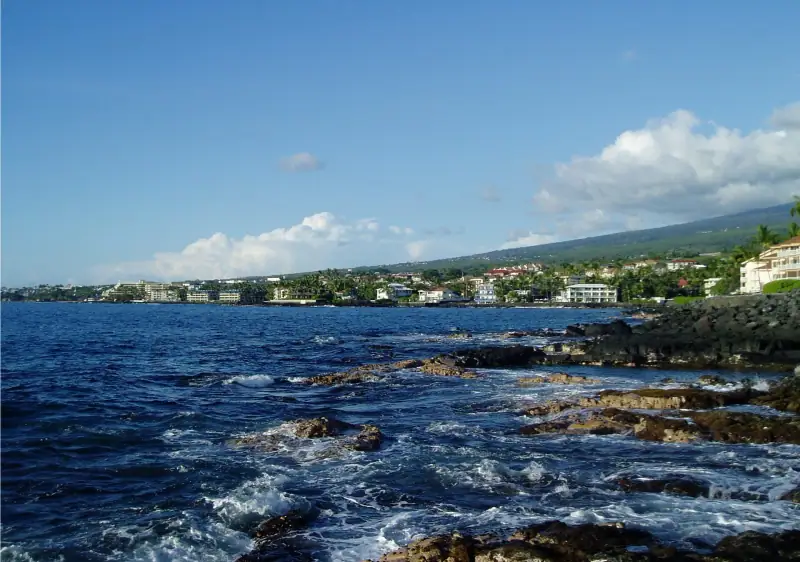
Visiting Kailua-Kona: complete guide to Big Island's coastal town
Kailua-Kona, gateway to Big Island: manta rays, Kona coffee, snorkeling with turtles, Ali'i Drive and Pacific sunsets.
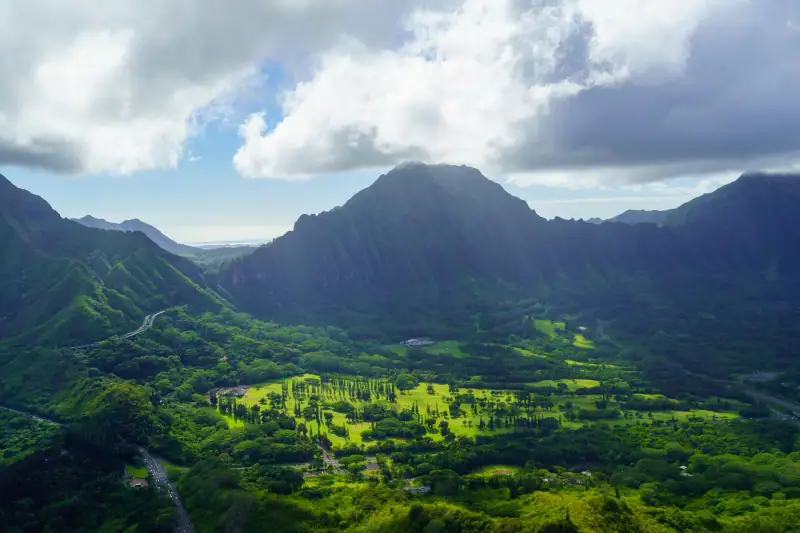
Oahu: the must-sees you shouldn't miss
The top 20 things to do and see on Oahu: Pearl Harbor, Diamond Head, the North Shore and more, with prices, hours and practical tips.
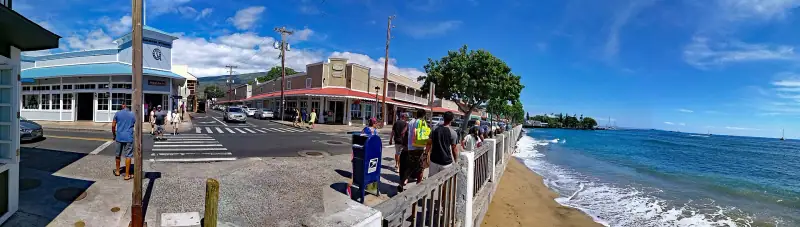
Visiting Lahaina: complete guide to Maui's historic town
Lahaina, former capital of the Kingdom of Hawaii, is recovering after 2023. A complete guide to visiting this Maui landmark respectfully.
Ready-made
Hawaii itineraries
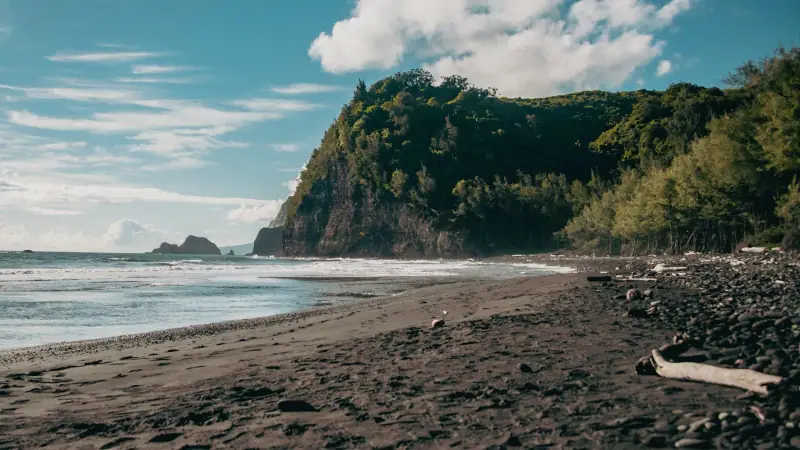
5 days
Big Island road trip in 5 days
Kailua-KonaVolcano VillageHilo or Hamakua Coast
7 days
Kauai 7-day itinerary: the best road trip on the wild island
A detailed 7-day Kauai itinerary: Na Pali Coast, Waimea Canyon, Hanalei Bay and the best beaches. Day-by-day plan for an unforgettable road trip.
7 days
Maui 7-day itinerary: the complete guide to planning your trip
Maui in 7 days: Road to Hana, Haleakala, Wailea and Kaanapali beaches. A day-by-day plan to discover the pearl of the Hawaiian archipelago.