Things to do
Night snorkeling with manta rays in Kona: booking, prices, season and minimum age
We may earn a commission when you book through links on this page, at no extra cost to you. We don't visit or try the places we cover: we summarize published sources. How we work
In short
- The trip lasts 2 h 30 to 3 h 30 and costs about $80 to $140 per adult, equipment included; big boats are cheapest, small groups (6 to 12 people) the most expensive.
- Book a few days ahead, or one to two weeks ahead in high season (December to April, summer) and for sunset departures.
- Mantas are resident on the Kona coast all year but never guaranteed; you float at the surface holding a lit float, and you never touch them.
- Departures are from Kailua-Kona or Keauhou Bay, typically around 5:00-5:30 pm or 8:00 pm. Minimum age depends on the operator (some accept 5 or 6 years old).
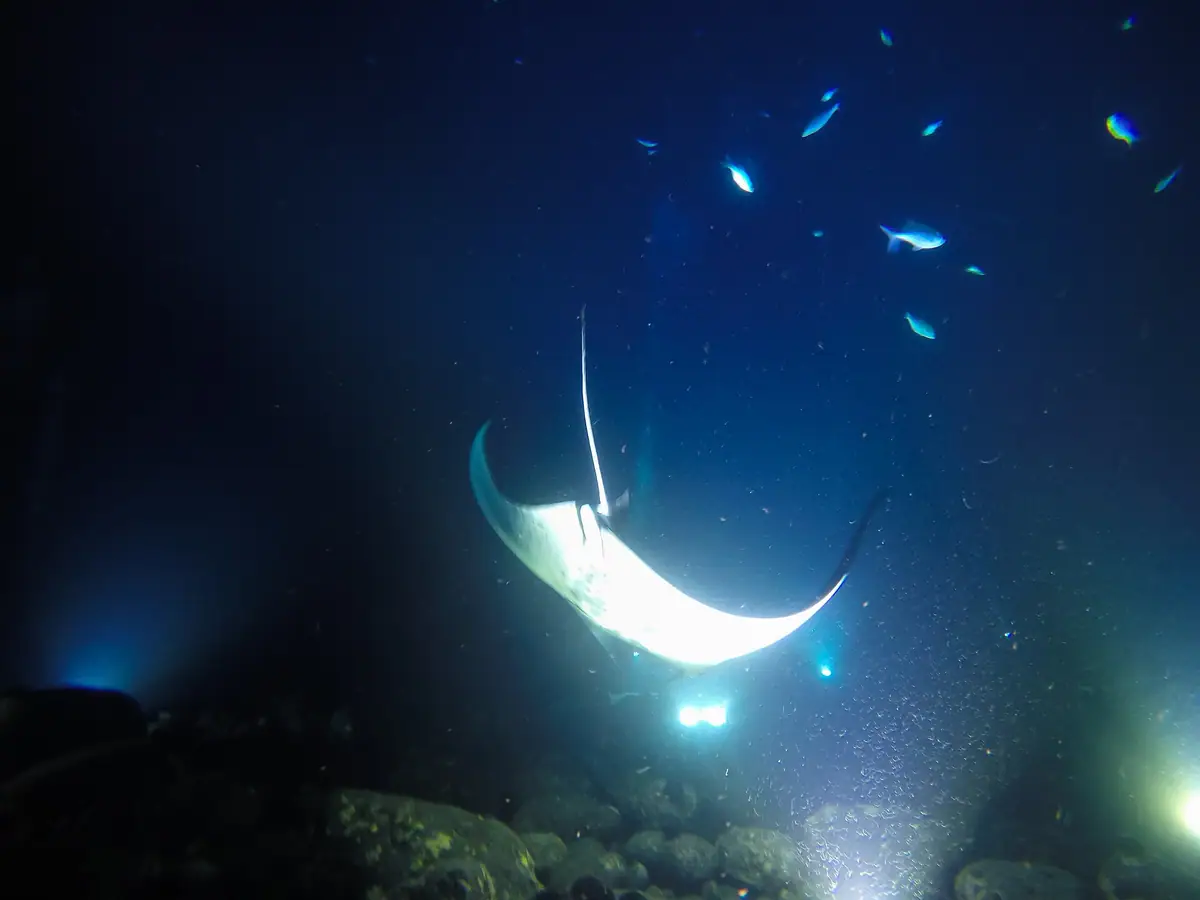
Every evening, off the Kona coast, giant manta rays come to feed under the boats’ spotlights. They swirl just inches from swimmers, and it is one of the most memorable animal encounters in Hawaii. Here is how to organize this trip: where to book, how much it costs, from what age you can take part and what to bring.
In short: the trip lasts 2 h 30 to 3 h 30 and costs about $80 to $140 per adult, equipment included. Book a few days ahead, choose a small group if possible and plan something to keep warm. The rays are never guaranteed, and you do not touch them.
How does a manta ray trip in Kona work?
The principle is simple. Submerged lights attract plankton, and the manta rays (harmless animals with no stinger, which filter the water to feed) come to eat it, making loops and somersaults below the surface. You don’t have to look for anything: the show comes to you.
The sequence is almost always the same:
- Meet at the harbor, in Kailua-Kona or Keauhou Bay, for check-in, equipment handout and a briefing.
- Boat ride of 15 to 30 minutes to one of the two sites where the rays gather. The operator picks the evening’s site according to the swell and recent sightings.
- Getting in the water with mask, snorkel, float and wetsuit provided. You hold on to a large lit float and keep your face in the water.
- Watching for 30 minutes to an hour. The rays pass under the float, sometimes a few inches away, and you can see several at once.
- Back to the harbor, often with a hot drink and a towel.
Departures are generally around 5:00 pm or 5:30 pm (a trip that starts at sunset) or around 8:00 pm (a later trip). In total, allow between 2 h 30 and 3 h 30. Kona’s water is around 26 to 27 °C (79 to 81 °F), but you get cold quickly staying still, which is why the operator provides a wetsuit.
Should you book ahead or on site?
We advise booking ahead. It is the most in-demand activity on the Kona coast, and sunset slots and small groups go first. The right approach:
- High season (December to April, summer) and American school vacations: book one to two weeks ahead.
- The rest of the year: a few days is usually enough.
- Walk-up: possible by stopping at the harbor or the hotel, but you take the slot that remains, sometimes the latest one.
Another advantage of booking online: you read the cancellation policy in advance, and the “re-trip” policy if no ray shows up. Terms vary from one operator to another, and some refund up to 48 hours before departure. The sea can also cancel a trip: keep a spare evening in your stay, especially if you only spend two or three nights in Kona.
Compare manta ray trips from Kona
Departure times, group size, cancellation terms and reviews: compare night trips before booking.
How much does snorkeling with manta rays cost?
Published rates range from about $80 to $140 per adult. The range depends mostly on group size and the boat:
| Option | Indicative price per adult | Good to know |
|---|---|---|
| Big boat (large group) | about $80 to $110 | The cheapest, more people in the water |
| Small group (6 to 12 people) | about $120 to $140 | More room around the float |
| Child rate (often ages 5 to 12) | a bit cheaper | To check, depending on the operator |
| Scuba diving | higher | Dive certification required |
These prices change by season: check the rate when you book. Remember to tip the crew (optional; we detail the customs in our article on paying in Hawaii). To place this expense in your stay, see our budget for Hawaii.
Which season, which time: when to go?
Kona’s manta rays are residents: they are seen on the coast throughout the year, not only in one season. What changes is the state of the sea. Trips can be canceled in heavy swell or strong wind, more often in winter. The simplest thing is to plan the trip early in your stay, so you have a second chance if it falls through.
As for time, the sunset departure lets you enjoy the boat in daylight before the rays arrive, while the 8:00 pm one offers a calmer setting, with slightly fewer boats at the site. If you have jet lag, the late departure can be hard the first nights: our guide on jet lag in Hawaii helps you place the trip.
Winter is also humpback whale season. If you are there from December to April, a daytime whale trip complements the night one well: see our whale watching in Hawaii guide.
Night snorkeling with manta rays with children: minimum age
There is no single minimum age: each operator sets its own. According to published trip listings, some accept children from 5 or 6 years old, with a child rate, while others ask for a higher age. Check three things on the trip page:
- the minimum age and any requirement to know how to swim;
- the presence of a vest or float that fits the child;
- the option to stay on board and watch through the lighting, useful for a hesitant child. Some boats offer a view from the surface.
A child who doesn’t like putting their face in the water, or who is afraid of the dark, will do better watching from the boat. For family trips, our guide to Kailua-Kona describes the coast’s other activities.
Seasickness, cold and courage: night snorkeling for beginners
Swimming in the dark intimidates many people, but the activity is designed for beginners. You stay at the surface, holding on to the float, with a guide in the water or on the boat. The points that really cause problems are elsewhere:
- Seasickness. The boat stays in place, and the rocking can be felt during the viewing. If you are prone to it, ask your doctor or a travel clinic before the trip, and see the official travel health pages (CDC in the US, TravelHealthPro in the UK).
- Cold. Even at 26 °C (79 °F), you chill within 45 minutes without moving. Bring a warm garment and a towel for the return.
- The crowd. Several boats can be at the same site, which explains the choice of a small group.
The rules to respect with manta rays
Manta rays are wild and fragile animals, and tourism pressure on the Kona coast is strong. Guides apply simple rules that you must follow:
- Never touch a ray: its protective mucus is damaged and the animal becomes more vulnerable.
- Don’t chase or dive toward it: stay on the float and let them pass.
- Follow the guide’s instructions on light: the boat’s spotlights are enough to attract plankton, so don’t switch on a personal light without their agreement.
- Sunscreen: if you put some on in the late afternoon, choose a mineral “reef-safe” sunscreen and apply it well before boarding. One option is the Sun Zapper zinc sunscreen.
Note: Hawaii state authorities began looking at specific regulation as early as 2022 of manta trips in Kona, since several dozen boats share the same sites. So choose a registered company, with a clear briefing and a reasonable number of participants. The official tourism site also advises using a local guide or chartered boat for snorkeling, who knows the day’s conditions.
Where to stay for a manta ray trip?
The two departure harbors are Kailua-Kona and Keauhou Bay, south of town: sleeping in Kona saves you a long night drive. Keep in mind that you often get back after 9:30 pm for the late departure. Lodging on the Ali’i Drive waterfront is convenient. To compare areas, see our guide where to stay on Big Island.
Hotels in Kailua-Kona
Compare lodging near Ali'i Drive and the departure harbor of the manta ray trips.
What to bring for the trip?
- Swimsuit worn under an easy-to-remove garment.
- Large towel and a warm top (sweatshirt or windbreaker) for the return.
- Dry change of clothes, which you leave in a bag on the boat.
- Anything you need for seasickness, as advised by your doctor or a travel clinic.
- Some cash for the crew’s tip.
- No camera or phone in the water unless the operator allows it: at night, photos are rarely successful, and flash is frowned upon.
To keep your things dry on deck, a small waterproof bag will do. Our article on accessories to bring to Hawaii lists other useful ideas.
Scuba diving or snorkeling: which to choose?
Snorkeling is the simplest option: no certification, a lower price, and the view from the surface is excellent. Scuba diving requires a certification, but it puts you on the bottom, a few meters below the lights, to see the rays move above you. For a first time, we recommend snorkeling. If you are already a diver, diving adds another perspective. For the archipelago’s other spots, our guide to snorkeling in Hawaii compares the sites on each island.
Quick summary
| Question | Answer |
|---|---|
| Trip length | 2 h 30 to 3 h 30 (viewing: 30 min to 1 h) |
| Price per adult | about $80 to $140 |
| Departure harbors | Kailua-Kona, Keauhou Bay |
| Times | around 5:00 / 5:30 pm or around 8:00 pm |
| Equipment | mask, snorkel, float, wetsuit provided |
| Level | beginners accepted, able to swim or comfortable in the water |
| Rays guaranteed | no, wild animals |
| Avoid | touching the rays, personal light, sunscreen |
Sources
Frequently asked questions
Do you need to book manta ray snorkeling in advance?
Yes, we advise booking several days ahead, and one to two weeks ahead in high season or for a sunset departure. Small groups are the first to fill. At the harbor, there are sometimes spots left the same day, but with no choice of time.
How much does a manta ray trip in Kona cost?
Expect about $80 to $140 per adult depending on group size: big boats are the cheapest, small groups the most expensive. The child rate is often a little lower. Equipment (mask, snorkel, float, wetsuit) is generally provided.
Do you need to be a strong swimmer to see manta rays?
No, you don't need to be a good swimmer: you stay at the surface, holding on to a lit float, without swimming. You simply need to be comfortable in the water, with your face in the water using a snorkel, at night. A vest or board is provided.
What is the minimum age to take part?
It depends on the operator: some accept children from 5 or 6 years old, others set a higher age or require that they can swim. Check the age requirement in the trip description before paying.
Are manta rays guaranteed?
No, they are wild animals. They are seen very regularly on the Kona coast, but no trip can guarantee them. Some operators offer to redo the trip for free if no rays appear: look for this mention when you book.
Can you touch manta rays?
No. The mucus that protects their skin is damaged by contact and makes them more fragile. You look without touching, without chasing the animal and without diving toward it. Guides remind you of this before departure.
More Hawaii guides
Keep reading
Snorkeling in Hawaii: the best spots
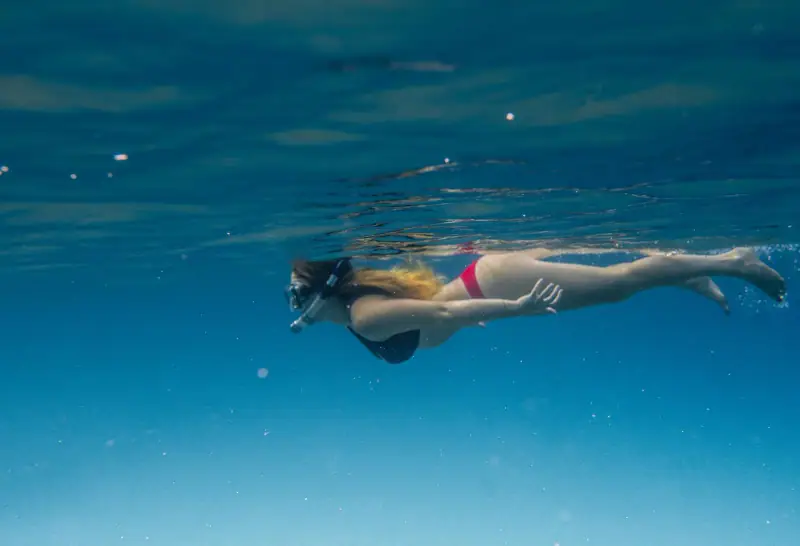
The best snorkeling spots in Hawaii: tropical fish, turtles and coral reefs on every island, with access, depths and practical tips.
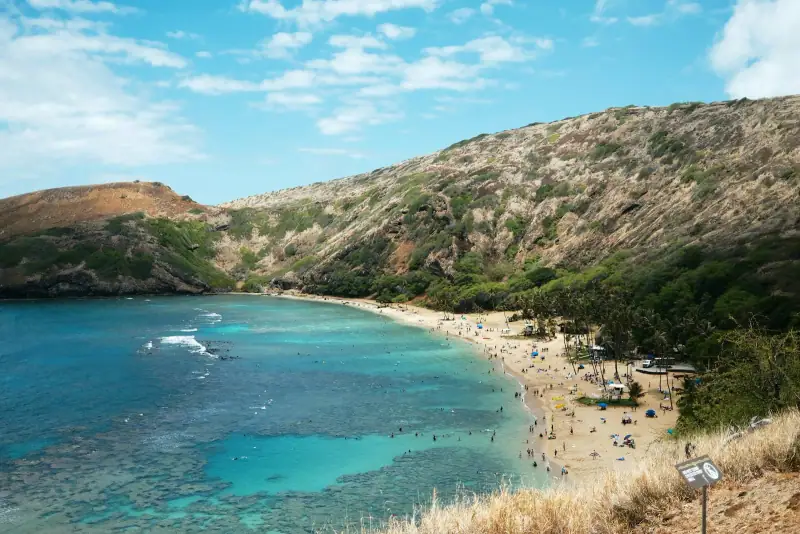
Hanauma Bay: how to reserve, prices and closing days
Hanauma Bay on Oahu: book 2 days ahead at 7 am Hawaii time, $25 per adult, closed Monday and Tuesday. How to get your slot.
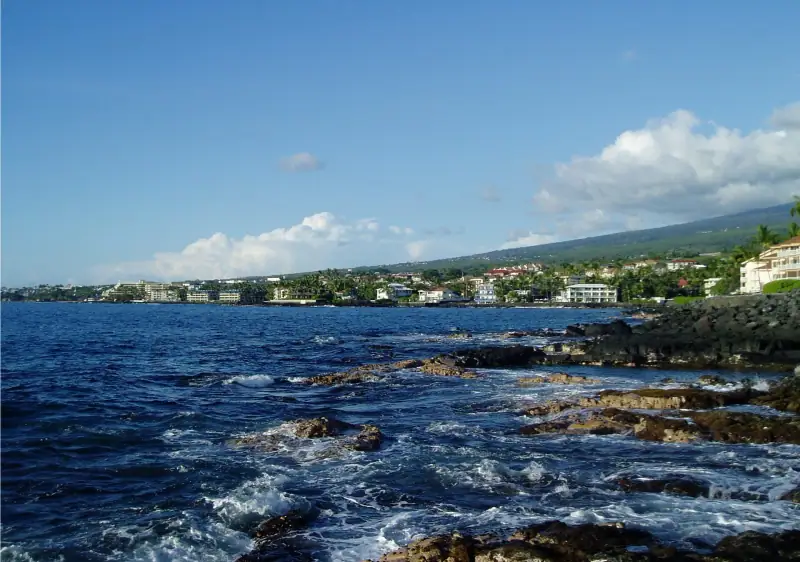
Visiting Kailua-Kona: complete guide to Big Island's coastal town
Kailua-Kona, gateway to Big Island: manta rays, Kona coffee, snorkeling with turtles, Ali'i Drive and Pacific sunsets.
Ready-made
Hawaii itineraries
5 days
Big Island road trip in 5 days
Kailua-KonaVolcano VillageHilo or Hamakua Coast
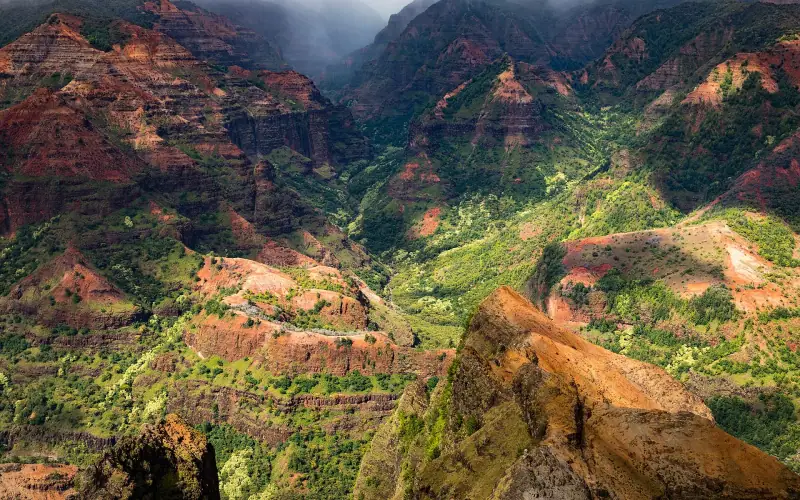
7 days
Kauai 7-day itinerary: the best road trip on the wild island
A detailed 7-day Kauai itinerary: Na Pali Coast, Waimea Canyon, Hanalei Bay and the best beaches. Day-by-day plan for an unforgettable road trip.
7 days
Maui 7-day itinerary: the complete guide to planning your trip
Maui in 7 days: Road to Hana, Haleakala, Wailea and Kaanapali beaches. A day-by-day plan to discover the pearl of the Hawaiian archipelago.