Things to do
Water sports in Guadeloupe: kayak, kitesurfing, paddleboarding and boat trips
We may earn a commission when you book through links on this page, at no extra cost to you. We don't visit or try the places we cover: we summarize published sources. How we work
In short
- Mangrove kayaking in the Grand Cul-de-Sac Marin (from the Morne-à-l'Eau area) usually takes about three hours with a guide, and no experience is required.
- Kitesurfing: the Saint-François lagoon and the Sainte-Anne area suit learning in flat water; Atlantic reef breaks such as Le Moule or Anse-Bertrand are for experienced riders.
- Humpback whales visit from January to April, peaking in February and March. Swimming with cetaceans is forbidden in the Agoa sanctuary.
- The dry season (December to May) has the calmest sea and steadiest trade winds. Always check the marine forecast and keep a spare day for weather.
With its sheltered lagoons, its mangrove, its steady trade winds and its livelier Atlantic coast, Guadeloupe is a varied water playground. There is enough to fill an entire stay without touching a scuba tank: mangrove kayaking, kitesurfing, paddleboarding, catamaran trips and whale watching. This guide explains where to do each activity, when and with what precautions.
Underwater fans will find what they are looking for in our article on diving and snorkeling around the Cousteau Reserve. Here, the focus is on everything done on the surface, from quiet family activities to more demanding board sports.
Understanding the sea in Guadeloupe before choosing
Before choosing an activity, understand a simple rule: the archipelago has not one sea but several.
- The Caribbean coast, west of Basse-Terre, is sheltered from the trade winds. The water there is generally calmer, which suits kayaking, paddleboarding and swimming.
- Southern Grande-Terre, around Sainte-Anne, Le Gosier and Saint-François, is largely protected by a reef barrier. There are shallow lagoons there, popular with beginners.
- The Atlantic coast, exposed to wind and swell, is wilder. Waves and currents are stronger, and swimming is often discouraged. Only experienced practitioners venture there.
- The neighboring islands, such as Les Saintes and Marie-Galante, have well-sheltered bays and clear water.
Another essential point: marine weather changes fast. A calm lagoon in the morning can get rough in the afternoon when the trade winds strengthen. Always check the marine forecast and follow the instructions posted on beaches. Swimming flags mean something: with a red flag, you do not swim.
Our guide when to go to Guadeloupe details the seasons. For water activities, remember that the carême (about December to May) is the most stable period, while the wet season (June to November) is wetter and more exposed to storms and hurricane episodes.
Mangrove kayaking: the most unusual outing
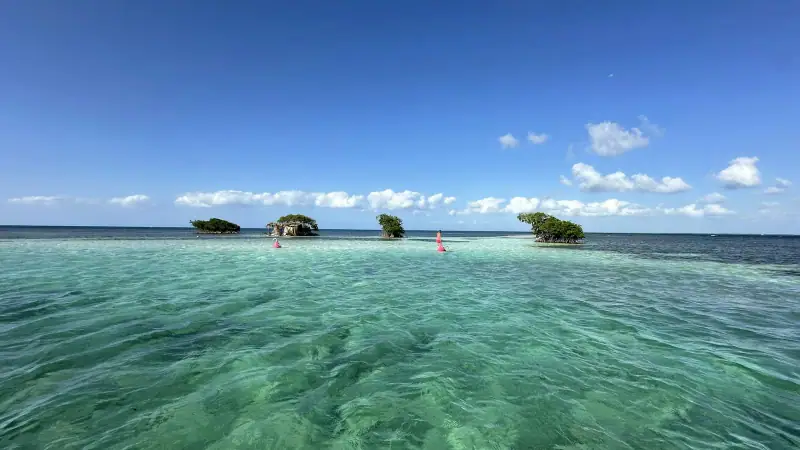
If you were to do only one “calm” water activity, this would be it. The Grand Cul-de-Sac Marin, a vast bay between Grande-Terre and Basse-Terre, shelters one of the largest mangroves in the French Antilles. It is part of the National Park’s protected zone and is recognized for its wealth of birds and marine life.
What you see
Sea kayak outings leave especially from the Morne-à-l’Eau area, on the Grande-Terre side. You paddle on calm water, among the mangrove roots and out to a few islets of the lagoon. Depending on the outing, you can see pelicans, frigatebirds, herons, egrets, crabs and even starfish. The silence of the paddle lets you approach wildlife without disturbing it.
How to organize
- Duration: guided outings generally last about three hours.
- Level: no experience is required. A qualified guide leads the group and provides life vests.
- Time: in the morning, the water is often calmer and the heat less strong. Some outings also run late in the day, for sunset.
- What to bring: hat, sunscreen (ideally reef-friendly), water, mosquito repellent and shoes that can go in the water.
The mangrove is a fragile environment. Leave no trash, pick nothing and keep your distance from nesting birds.
Kayak trips in Guadeloupe
Compare guided kayak and mangrove excursions, with guide and equipment provided.
Kitesurfing: the Saint-François and Sainte-Anne lagoon
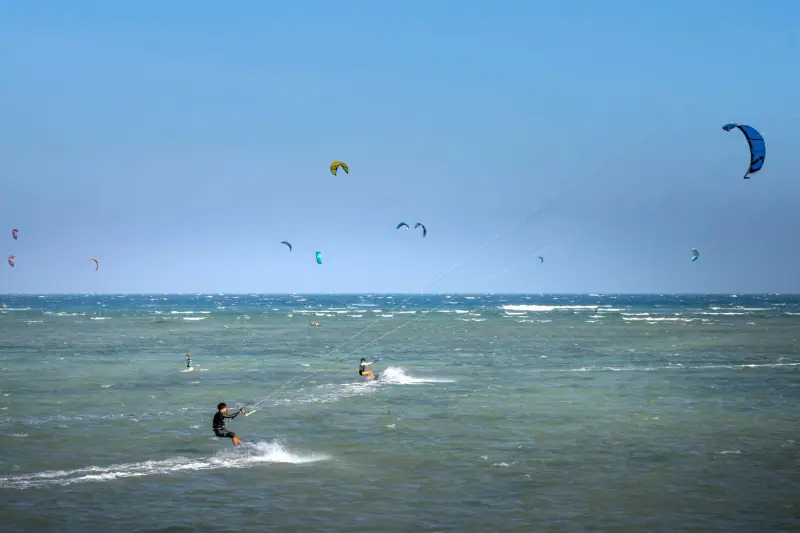
The trade winds blow fairly steadily over Grande-Terre, which makes it a popular destination for kitesurfing, but also wingfoil and windsurfing. Most spots are concentrated in the south and east of the island.
Where to learn
The Saint-François lagoon is often cited as a versatile spot: a large stretch of shallow turquoise water for freeriding, and waves on the reef for the more experienced. Around Sainte-Anne, the Anse du Belley area is known for its kitesurf schools and a secured launch zone, useful for first sessions. There are also schools in the Bois Jolan area.
To start, generally allow several sessions before you are independent. A recognized school provides the kite, board, harness, helmet and vest, and also teaches you the right-of-way and safety rules on the water.
Spots reserved for experienced riders
On the Atlantic coast, some spots such as Le Moule or Anse-Bertrand are reef breaks: the wave breaks on a shallow reef, with currents, sometimes sea urchins and a narrow channel. They are reserved for experienced riders. If you are a beginner, do not venture there alone, and always ask a local school for advice before getting in the water.
When to go
The wind is generally steadier during the carême, from about December to May. In the wet season it is more irregular and storms can interrupt sessions. Ask schools about conditions before you leave: they know the favorable days.
Paddleboarding and sea kayaking on the leeward coast
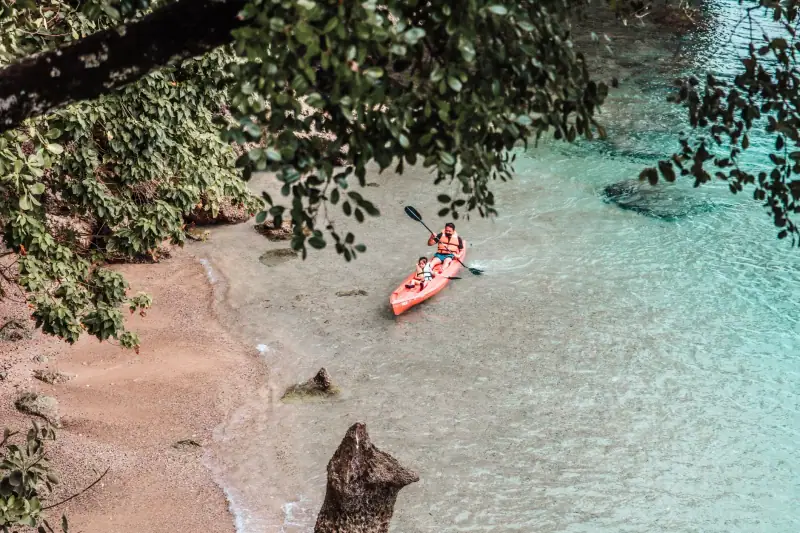
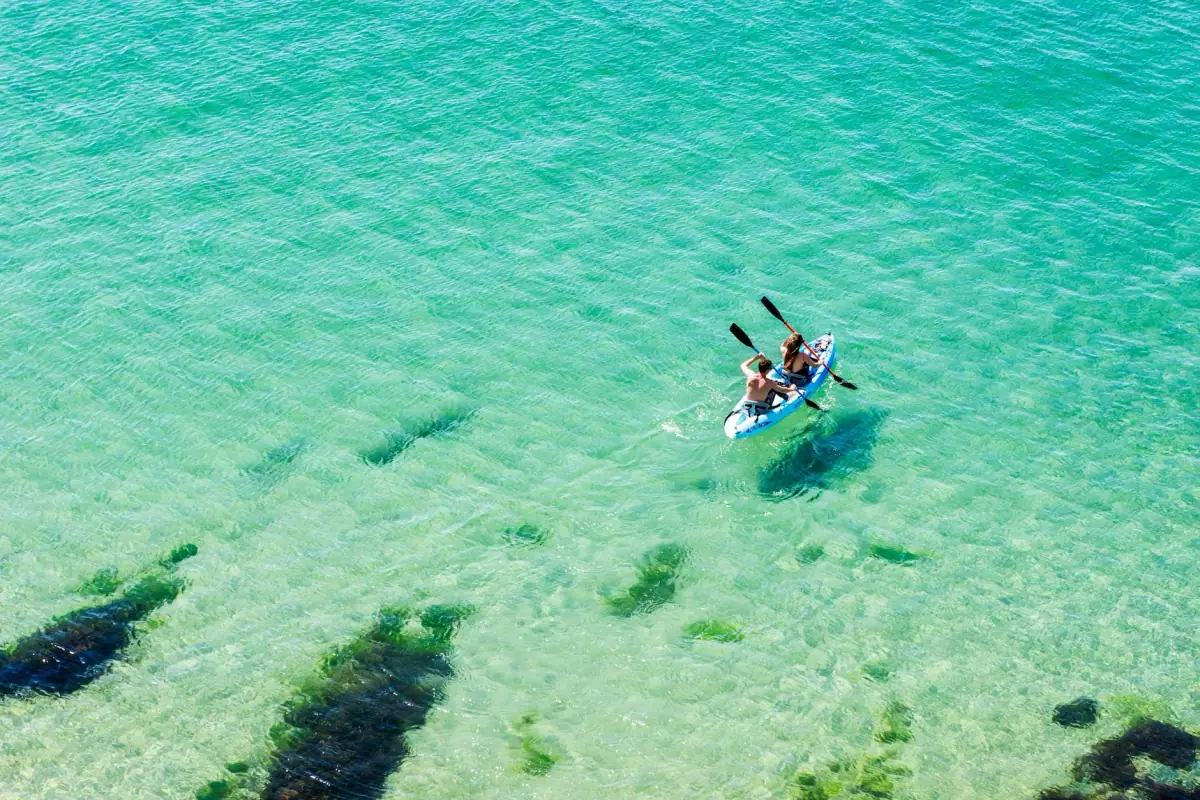
Stand-up paddleboarding is the most accessible activity: you stand on a stable board and move with a paddle, ideally on calm water. It is done in sheltered bays, the lagoons of Grande-Terre and on the Caribbean coast of Basse-Terre, where the sea is often smoother in the morning.
A few tips for starting safely:
- Choose calm, shallow water, out of the wind. Avoid areas where the current would take you away from the coast.
- Go in the morning. The trade winds often strengthen during the day, and paddling back against the wind quickly tires you out.
- Stay near the shore if you are alone, and tell someone about your outing.
- Protect yourself from the sun. Reflection off the water amplifies sunburn: a rash guard, hat and sunscreen are essential. Our selection of essential accessories for Guadeloupe helps you pack.
Sea kayaking is used the same way on quiet coasts. It lets you follow cliffs, reach small coves that are hard to reach on foot and, with a little luck, spot a turtle coming up to breathe. If you rent equipment, ask where the swimming areas, boat lanes and areas to avoid are.
Catamaran and boat trips: the islands reachable by boat
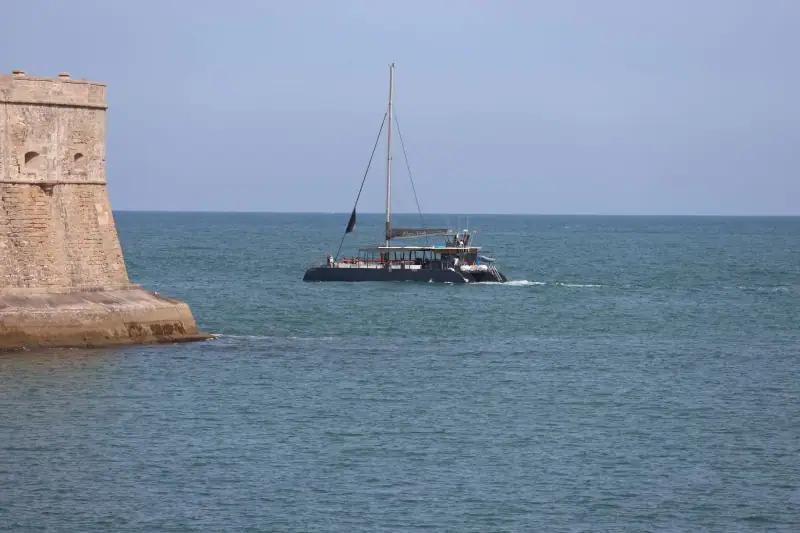
Sailing is an excellent way to see the archipelago from another angle. Several formulas exist, from a half-day outing to a full excursion with lunch on board.
Common formulas
- A catamaran outing for the day or half day, often with swimming and snorkeling stops. It is the easiest formula, since the crew takes care of everything.
- The crossing to the neighboring islands: Les Saintes, Marie-Galante and La Désirade are linked to the mainland by boat. See our guides to visiting Les Saintes and Terre-de-Haut and visiting Marie-Galante to decide which deserves a day or a night.
- Outings to the lagoon islets, practical for a swim in clear water without going far.
Choosing your operator
Check that the boat has life vests for all passengers, that the crew is professional and that the route takes the weather into account. A good company does not hesitate to cancel or change the outing if the sea is too rough. Be wary of overly spectacular promises: the weather decides.
On budget, prices vary widely with the formula, duration and season. Our article Guadeloupe budget gives guidelines for spreading your spending over the stay.
Catamaran excursions
Discover the boat trips and cruises offered in Guadeloupe, with swimming and snorkeling stops.
Watching whales and dolphins
The waters of the archipelago are visited by many cetaceans: the area has more than twenty recorded species. The pantropical spotted dolphin is the most often seen, and the sperm whale is present in the region. Humpback whales come to breed in the warm waters of the archipelago: the vast majority of sightings are between January and April, with a peak in February and March.
Guided watching
The waters of the archipelago belong to the Agoa sanctuary, which protects marine mammals in the French Antilles. An approach charter governs outings: trained operators must keep a minimum distance of about 100 meters (330 ft) from the animals, and swimming with cetaceans is forbidden. Choose an outing that clearly states its commitment to respecting wildlife.
Keep in mind that no sighting is guaranteed. A good operator will tell you so honestly, and a successful outing is not only about a whale appearing: seabirds, flying fish and turtles are also part of the show.
Bring a windbreaker: at sea, the air quickly turns cool.
Whale and dolphin watching trips
Compare boat trips to watch dolphins and whales, depending on the season.
Safety at sea: the rules to follow
Water sports are accessible, but the sea remains a demanding environment. A few basic habits:
- Check the marine forecast every morning, and postpone the outing if conditions are bad.
- Wear a vest for kayaking, paddleboarding and any boat outing.
- Never go out to sea alone, and always tell someone your route.
- Respect swimming areas and navigation channels: boats do not always see you.
- Protect the reefs: do not walk on corals, do not touch turtles or fish, and use a reef-friendly sunscreen.
- Stay hydrated: heat and wind dehydrate faster than you think.
- Check your insurance: good health and repatriation cover is useful for an active stay.
If you are with family, favor guided activities and calm-water beaches. Our selection of the best beaches in Guadeloupe shows which ones suit swimming with children.
Where to stay for water sports
The choice of area depends on the main activity:
- Saint-François, Sainte-Anne and Le Gosier (Grande-Terre) suit kitesurfing, paddleboarding and lagoon fans.
- Morne-à-l’Eau and its surroundings are practical for the mangrove and kayaking; while there, see also the Morne-à-l’Eau cemetery.
- Deshaies and Bouillante (Basse-Terre) are good bases for boat trips on the Caribbean coast.
- Terre-de-Haut (Les Saintes) has an end-of-the-world feel, with calm bays.
To compare areas in more detail, see our guide where to stay in Guadeloupe.
Places to stay near water-sport spots
Compare hotels, bungalows and villas in Saint-François and Sainte-Anne, close to the lagoons.
Getting from spot to spot
The spots are spread over the whole archipelago and public transport serves lagoons and outing departure points poorly. A rental car is the simplest way to link the mangrove, the lagoons of Grande-Terre and the leeward coast. Book early in high season, as the vehicle fleet can be limited.
A sample water-sports week
Here is one way to organize a week, leaving room for the weather:
- Day 1: arrival, swimming and rest on a sheltered Grande-Terre beach.
- Day 2: introduction or session of kitesurfing or paddleboarding in the Saint-François or Sainte-Anne lagoon.
- Day 3: kayak outing in the Grand Cul-de-Sac Marin mangrove.
- Day 4: free day or hike, to rest your shoulders.
- Day 5: catamaran excursion, with swimming stops.
- Day 6: leeward coast, snorkeling and paddleboarding in the morning.
- Day 7: whale-watching trip if in season, otherwise a last swim before departure.
Always leave a buffer day to absorb unfavorable weather: a canceled outing can then be rescheduled without stress.
Final tips
Between the silent mangrove, the windy lagoons, the sheltered bays and boat trips, Guadeloupe offers enough to fill whole days without leaving the surface of the water. The most important thing is to adapt the activity to the day’s conditions, choose reputable operators and respect a fragile environment. One last tip: start with a gentle activity such as kayaking or paddleboarding to get into the rhythm, then step up the intensity according to your level and the weather.
Frequently asked questions
Where can you kayak in Guadeloupe?
The Grand Cul-de-Sac Marin mangrove, around Morne-à-l'Eau, is one of the best-known settings: you paddle between mangroves and islets, usually with a guide. The calm waters of the leeward coast also suit coastal outings.
Where can you kitesurf in Guadeloupe?
The Saint-François lagoon and the Sainte-Anne area are the most cited places to learn or progress in flat water. Some Atlantic-coast spots, such as Le Moule or Anse-Bertrand, are reserved for experienced riders because of reefs and currents.
What is the best time of year to watch whales?
Humpback whales visit the archipelago from about January to April, peaking from February to March. Dolphins and sperm whales may be seen more widely through the year, with no guarantee.
Can you swim with whales or dolphins?
Swimming with cetaceans is forbidden in the Agoa sanctuary. Reputable outings follow an approach charter with a minimum distance and reduced speed: choose an operator that commits to it.
Do you need to know how to swim for these activities?
For kayaking, paddleboarding and guided catamaran outings, a life vest is provided and a modest swimming level is generally enough. For kitesurfing and open-water snorkeling, being a confident swimmer is essential. Tell the organizer your level.
What is the best season for water sports?
The carême, from about December to May, offers a calmer sea and steady trade winds, popular for kitesurfing and boat trips. The wet season, from June to November, is wetter and more exposed to storms and swells; always check the marine forecast.
Do you need to book ahead?
In high season, from December to April, it is better to book group outings a few days ahead. Out of season, a last-minute booking is often possible, depending on the weather.
More Guadeloupe guides
Keep reading
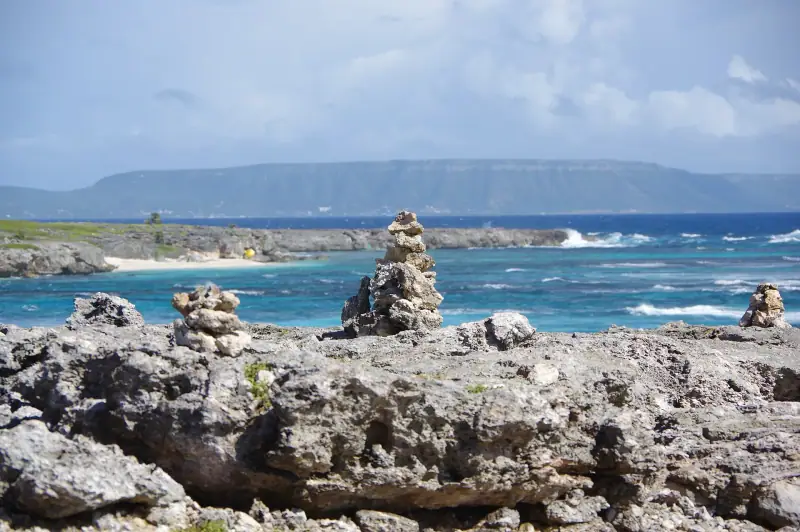
La Désirade in a day from Saint-François: ferry, booking, price and plan
La Désirade in one day: ferry times from Saint-François, booking, rentals on the island, beaches and viewpoints. A realistic plan and mistakes to avoid.
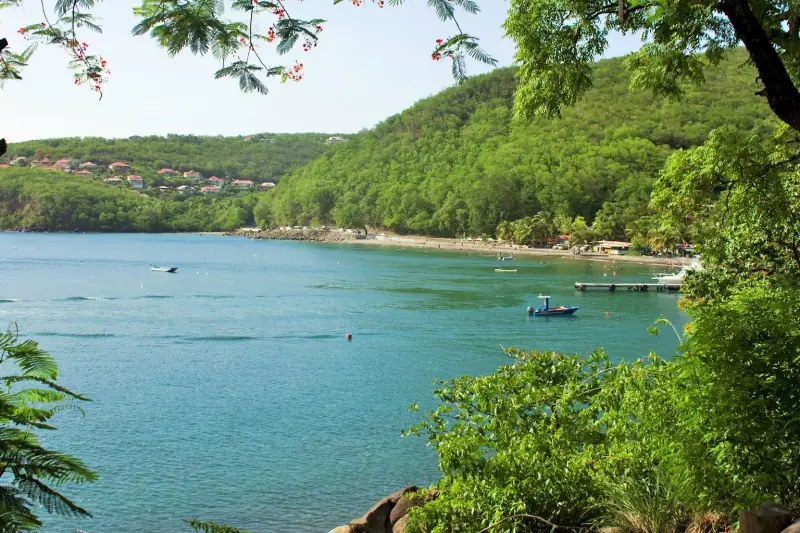
Diving and snorkeling in Guadeloupe: the Cousteau Reserve and Pigeon Island
Diving and snorkeling in Guadeloupe: the Cousteau Reserve and Pigeon Island, in Bouillante. Tips, levels, seasons and planning.
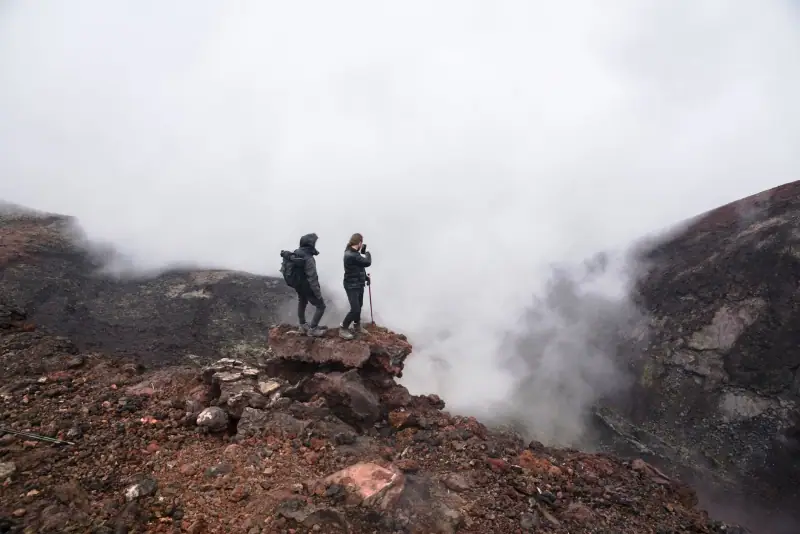
Hiking La Soufrière: climbing Guadeloupe's volcano
Hiking La Soufrière in Guadeloupe: access from Basse-Terre, routes, duration, weather, gear and precautions for climbing the volcano safely.
Ready-made
Guadeloupe itineraries
3 days
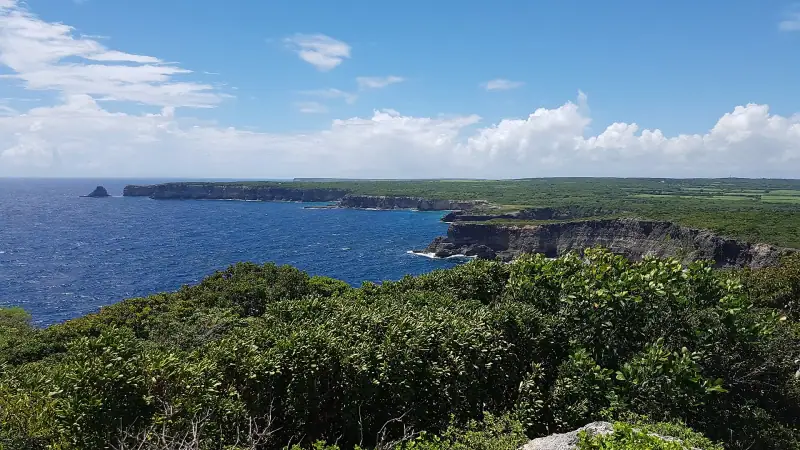
Grande-Terre in 3 days: beaches, cliffs and Pointe des Châteaux
A 3-day itinerary in Grande-Terre: Le Gosier, Sainte-Anne, Saint-François, Pointe des Châteaux, Le Moule and the northern cliffs. Stops, tips and bases.
5 days
Guadeloupe in 5 days without a car: a realistic itinerary
Visiting Guadeloupe without a car in 5 days is possible: a base in Le Gosier or Sainte-Anne, buses, taxis, excursions and the boat to Les Saintes.
3 days
Basse-Terre road trip in 3 days: volcano, waterfalls and the leeward coast
Southern Basse-Terre (Capesterre-Belle-Eau or Saint-Claude)Leeward coast (Bouillante or Deshaies)