Things to do
Diving and snorkeling in Guadeloupe: the Cousteau Reserve and Pigeon Island
We may earn a commission when you book through links on this page, at no extra cost to you. We don't visit or try the places we cover: we summarize published sources. How we work
In short
- The best-known site is the Cousteau Reserve and Pigeon Island, off Malendure beach in Bouillante, on Basse-Terre's leeward coast.
- You do not need to dive: snorkeling and glass-bottom boats work for beginners, and clubs offer guided introductory dives.
- Diving is possible all year in warm water; the dry season (December to May) generally has better visibility and a calmer sea.
- Bring your certification card and dive log if you are certified, and keep a weather margin in your schedule.
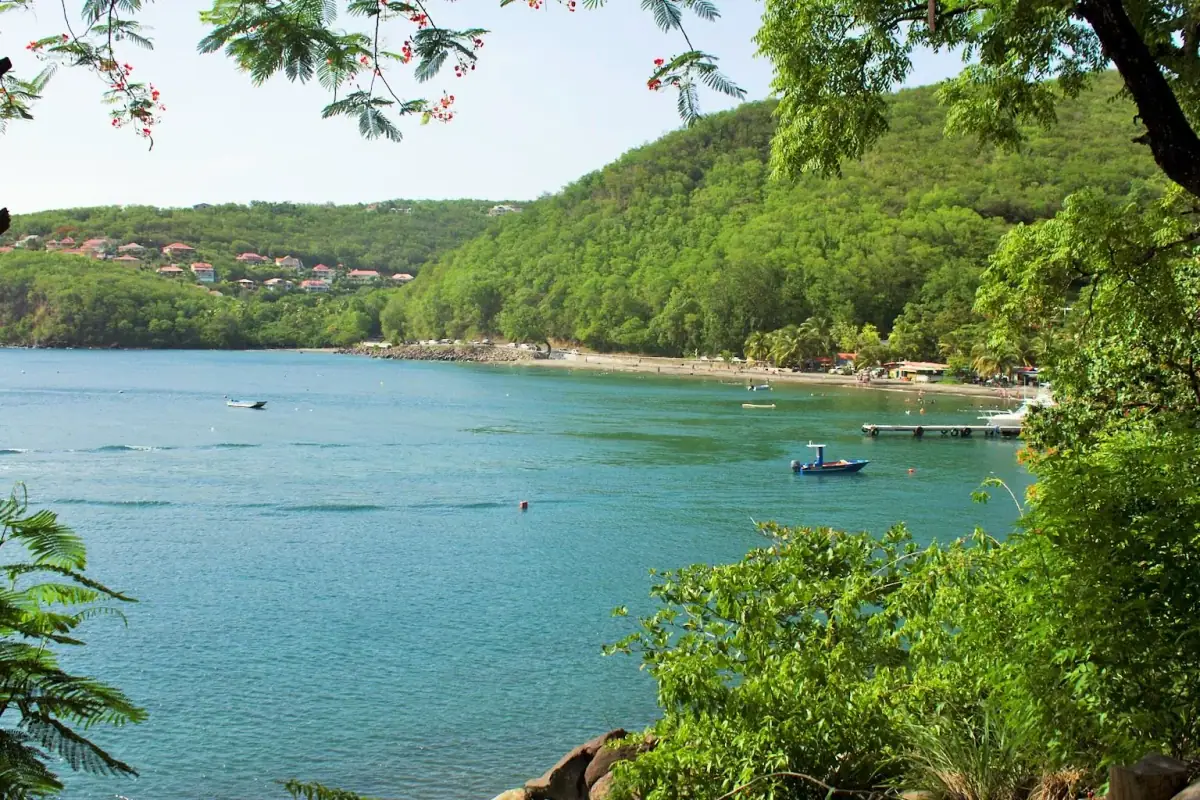
On the west coast of Basse-Terre, the Caribbean Sea gives Guadeloupe one of its finest playgrounds. Between the beach, the rocky islets and the colorful underwater scenery, the Cousteau Reserve draws experienced divers, families and simply curious people with a mask and snorkel.
This guide covers diving and snorkeling in Guadeloupe: where to go, how to choose between an introductory dive, an exploration dive or a glass-bottom boat ride, when to go and how to prepare your outing without stress.
Why dive in Guadeloupe
The archipelago combines several advantages that are rare for a destination like this: warm water all year, a great variety of underwater scenery and well-organized dive clubs. The volcanic seafloor of Basse-Terre, dotted with rocks, sea fans and corals, contrast with the reefs of Grande-Terre, which are more lagoon-oriented.
Another advantage: most outings are accessible to beginners. You do not need to be an experienced diver to enjoy the marine life. Snorkeling, glass-bottom boats and guided introductory dives let everyone find a formula.
The Cousteau Reserve and Pigeon Island
Facing Malendure beach, in the town of Bouillante, two small rocky islets rise a short distance from the shore: these are the islets of Pigeon Island. They form the core of the marine reserve named in honor of Commander Jacques-Yves Cousteau, who explored these seabeds in the early 1960s and helped make them internationally known.
The islets are today an emblematic site of Guadeloupe. Depending on the day, you can see:
- tropical fish of every color, often not very shy;
- corals and sponges on the rock walls;
- sea turtles, which you sometimes meet by chance;
- schools of small fish moving around the rocks.
The reserve is protected: anchoring, fishing and collecting are regulated. Follow the instructions posted there and those of professionals.
Diving and snorkeling in Guadeloupe
Compare introductory dives, boat trips and guided excursions around Bouillante.
Malendure and the Bouillante coast
Malendure is the usual departure point for trips to Pigeon Island. The beach, lined with shops and dive clubs, is lively during the day, especially in high season. It is also where you board for a glass-bottom boat ride or a kayak excursion.
Beyond the main beach, the Bouillante coast has several coves where you can get in the water from the shore. The seabeds there are more or less rocky, with conditions that vary with the swell. Ask local professionals before swimming, and favor morning slots, which are often calmer.
Bouillante is also known for its geothermal activity: the water is sometimes lukewarm in certain spots, and the town hosts a plant that uses this energy. It is a local feature that reminds you that you are in volcanic territory.
Scuba diving: the possible formulas
There, clubs generally offer several types of outings, suited to all levels:
- The introductory dive: a first guided experience, with no prerequisite other than being in good health and comfortable in the water. An instructor goes with you and explains the essential gestures.
- The exploration dive: for people who are already certified, with sites chosen according to level and the day’s conditions.
- Training: some clubs offer a first diving level during your stay, over several days.
For certified divers, remember to bring your certification card, your dive log and, depending on the club, a recent medical certificate. Requirements vary: ask when you book.
How to choose a dive club
Since no particular club is recommended here, these are the criteria to compare before booking:
- group size: a small group means better supervision;
- the equipment provided and its general condition;
- recent traveler reviews on rating platforms;
- respect for the environment: a briefing on corals, no feeding of fish;
- cancellation terms in case of bad weather.
Snorkeling: seeing without diving
Snorkeling is the simplest way to discover underwater life. With a mask, snorkel and fins, you effortlessly watch the fish moving near the surface.
A few tips for a successful outing:
- Test your mask before leaving: it should stay in place without being too tight.
- Stay away from corals: even light contact can damage them.
- Wear a UV-protection shirt: the tropical sun is strong, even underwater.
- Never swim alone and keep an eye on passing boats.
- Watch for currents: they can be stronger around the islets.
People who are less comfortable can opt for a flotation vest or a guided excursion. It is a good choice for children and beginners.
Staying near Bouillante
Stay on the leeward coast to enjoy boat trips from the morning, when the water is calmest.
The glass-bottom boat
For those who prefer to stay dry, the glass-bottom boat is a popular alternative, notably for families or people with reduced mobility. A window fitted under the hull lets you watch corals and fish without getting wet.
These excursions generally last a little under two hours and often include a stop to swim or snorkel near the islets. Conditions and prices vary by operator: compare before booking, especially in high season.
Other dive spots in Guadeloupe
Bouillante has most of the fame, but the archipelago offers other places to explore:
- Les Saintes: the waters around the archipelago attract divers and snorkelers, with varied seabeds and a more intimate atmosphere. Our guide to visiting Terre-de-Haut will help you plan the stay.
- The Grand Cul-de-Sac Marin: a vast area of lagoons, mangroves and reefs, protected and listed, explored mostly by boat or kayak.
- Grande-Terre beaches: some sheltered coves suit relaxed snorkeling. Find the selection in the guide to the best beaches in Guadeloupe.
Each site has its own conditions. Local professionals know the best slots depending on swell, wind and visibility.
When to dive in Guadeloupe
With warm water all year, diving is possible at any time. Conditions vary, however, by season:
- Carême (about December to May): the dry season generally has better visibility and a calmer sea. It is the best period for most outings.
- Wet season (about June to November): wetter, with a risk of swell, storms and tropical disturbances. Outings may be canceled or postponed.
To plan your trip, see our guide when to go to Guadeloupe. In all cases, build a margin into your schedule in case of weather cancellations.
Getting to Bouillante and organizing your time
Bouillante is on the west coast of Basse-Terre, reached by road from Pointe-à-Pitre across the island. You drive there: public transport is limited and poorly suited to boat-trip schedules. A rental car remains the most practical way to move between the island’s different sites.
Plan to leave early: Basse-Terre’s roads are winding and traffic can slow near tourist areas. For a full day, combine diving or snorkeling with other sights on the west coast or with the La Soufrière hike, accessible from the same region.
Flights to Guadeloupe
Compare dates, durations and layovers before locking in your seaside stay.
Preparing gear and safety
A few simple rules guarantee a pleasant and safe outing:
- Stay hydrated before and after the outing: sun and salt dehydrate quickly.
- Do not dive right before a flight: follow the interval recommended by your dive club.
- Avoid alcohol before an immersion.
- Tell the professional about any health issue (ears, asthma, heart).
- Bring a reef-friendly sunscreen, preferably mineral, and a UV-protection garment.
- Bring water shoes if shore access is rocky.
For children, favor guided outings and shallow areas. A flotation vest is strongly advised.
Respecting marine life
The reserve is a fragile environment. Every gesture counts to preserve it:
- Touch nothing: corals, turtles and fish can be hurt by simple contact.
- Do not feed the fish: it changes their behavior and unbalances the ecosystem.
- Do not collect shells or corals: they are protected and taking them is forbidden.
- Keep your distance from turtles, which come up to breathe at the surface.
- Take your trash with you.
These rules apply everywhere in the archipelago, not only in the Cousteau Reserve.
Bottom line
The Cousteau Reserve and Pigeon Island are among the essentials of Guadeloupe for anyone who loves the sea. Accessible to beginners and experienced divers alike, they offer a first immersion in tropical seabeds without complicated organization. Book preferably in the morning, favor an operator attentive to the environment, keep a weather margin in your schedule and respect marine life: it is the best way to enjoy it.
Frequently asked questions
Where can you dive in Guadeloupe?
The best-known site is on the leeward coast of Basse-Terre, around Pigeon Island, in Bouillante. Dive clubs there offer introductory dives, exploration dives and training. Other spots exist around Les Saintes and Grande-Terre.
Do you need to know how to dive to discover the Cousteau Reserve?
No. Snorkeling (mask, snorkel, fins) lets you see fish and corals near the surface, and clubs offer guided introductory dives for beginners. You simply need to be comfortable in the water.
What is the best time of year to dive in Guadeloupe?
You can dive all year thanks to warm water. The dry season, known as the carême, from about December to May, generally has better visibility and a calmer sea. During the wet season, the weather is less stable: check conditions before booking.
Why is the reserve named after Cousteau?
Commander Jacques-Yves Cousteau explored the seabed around Pigeon Island in the early 1960s and made it known to the general public. His name was later given to the marine reserve that protects the area.
Can you snorkel without a boat?
Yes, some beaches on the Bouillante coast let you put your head underwater from the shore. To reach the islets, however, you need a glass-bottom boat, a kayak or an organized excursion.
Are there special rules in the reserve?
Yes. Do not touch corals or animals, do not feed the fish, do not collect anything and use a sunscreen that respects the marine environment. Always follow the instructions of professionals and local signs.
More Guadeloupe guides
Keep reading
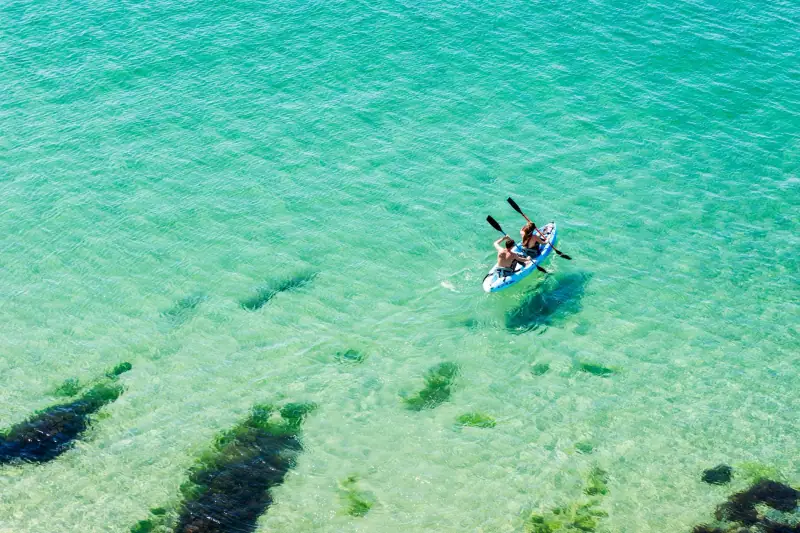
Water sports in Guadeloupe: kayak, kitesurfing, paddleboarding and boat trips
Mangrove kayaking, kitesurfing, paddleboarding, catamaran trips and whale watching: where to do water sports in Guadeloupe, when and with what precautions.
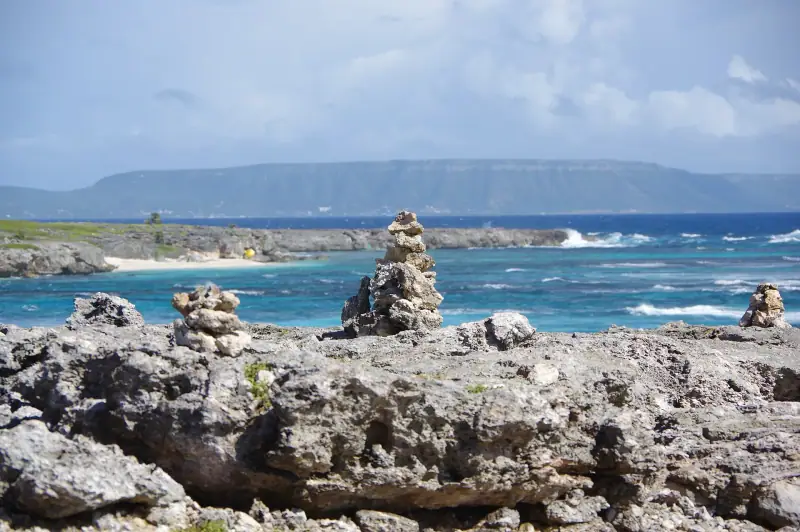
La Désirade in a day from Saint-François: ferry, booking, price and plan
La Désirade in one day: ferry times from Saint-François, booking, rentals on the island, beaches and viewpoints. A realistic plan and mistakes to avoid.
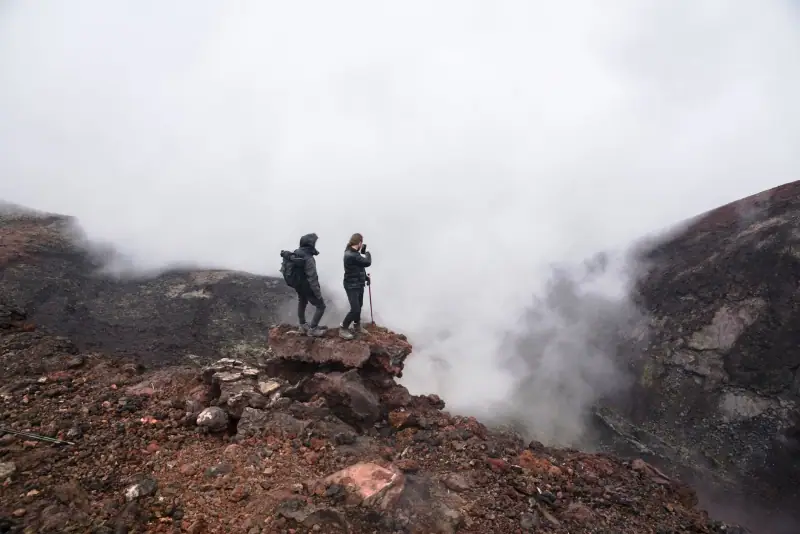
Hiking La Soufrière: climbing Guadeloupe's volcano
Hiking La Soufrière in Guadeloupe: access from Basse-Terre, routes, duration, weather, gear and precautions for climbing the volcano safely.
Ready-made
Guadeloupe itineraries
3 days
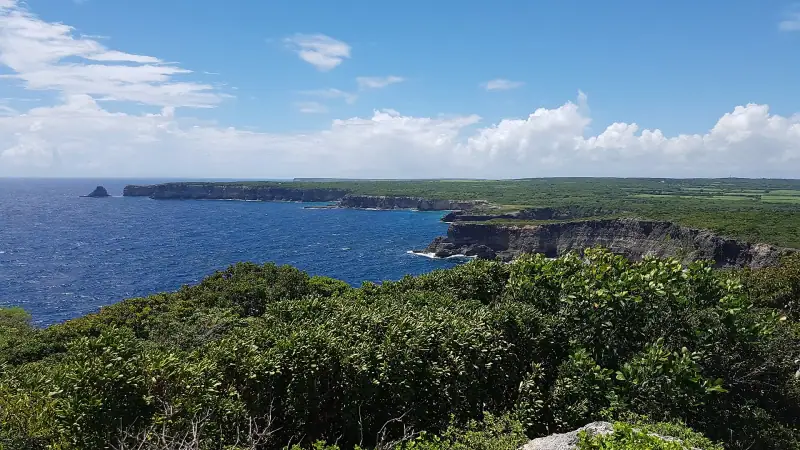
Grande-Terre in 3 days: beaches, cliffs and Pointe des Châteaux
A 3-day itinerary in Grande-Terre: Le Gosier, Sainte-Anne, Saint-François, Pointe des Châteaux, Le Moule and the northern cliffs. Stops, tips and bases.
5 days
Guadeloupe in 5 days without a car: a realistic itinerary
Visiting Guadeloupe without a car in 5 days is possible: a base in Le Gosier or Sainte-Anne, buses, taxis, excursions and the boat to Les Saintes.
3 days
Basse-Terre road trip in 3 days: volcano, waterfalls and the leeward coast
Southern Basse-Terre (Capesterre-Belle-Eau or Saint-Claude)Leeward coast (Bouillante or Deshaies)