Plan your trip
When to go to Guadeloupe? Seasons, weather and best months
We may earn a commission when you book through links on this page, at no extra cost to you. We don't visit or try the places we cover: we summarize published sources. How we work
In short
- It is warm all year (25 to 31 °C / 77 to 88 °F by day on the coast); the sea stays around 26 to 29 °C (79 to 84 °F).
- The carême (dry season), December to May, is the most stable and the priciest; the wet season runs June to November.
- The official hurricane season runs June 1 to November 30, with a higher risk between August and October: take insurance covering cancellation and keep flexibility.
- Carnival runs from January to Ash Wednesday; book very early if you want to be there.
Choosing when to go to Guadeloupe really changes the nature of the stay. Between a sunny week in February, a more tropical and quieter trip in September or an immersion in carnival, the archipelago has very different faces. Here, there is no “bad” season in the European sense of the term: it is warm all year. What varies are humidity, showers, hurricane risk and crowds.
This guide helps you decide according to your priorities: beach, hiking, diving, budget, events or quiet.
Guadeloupe’s climate in brief
Guadeloupe enjoys a maritime tropical climate, softened by the trade winds that blow from the east most of the year. Temperatures vary little: they are generally between 25 and 31 °C (77 and 88 °F) by day on the coast, a little lower at night. The Caribbean Sea stays roughly between 26 and 29 °C (79 and 84 °F) all year.
Two main seasons set the rhythm of the year:
- The carême (dry season), from about December to May, with drier days, more bearable humidity and refreshing trade winds.
- The hivernage (wet season), from about June to November, hotter, heavier, with more frequent showers, often brief and intense, and the hurricane risk.
These limits are not strict: a year can be rainier in January, or stay dry until June. Treat them as a rough guide rather than a precise calendar.
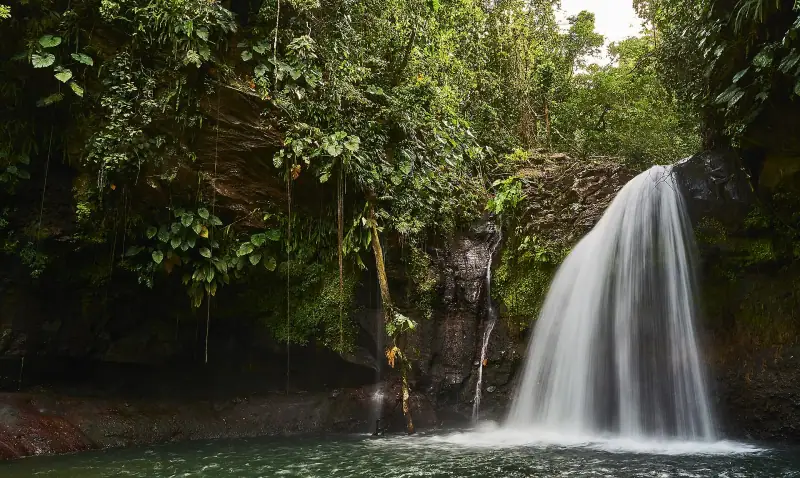
Another essential parameter: geography. Basse-Terre, dominated by La Soufrière and covered in rainforest, is clearly wetter than Grande-Terre, which is flatter and holds the big beaches of the south and east. A summit in the clouds and a sunny beach can coexist on the same day, less than an hour’s drive apart.
December to April: the carême high season
This is the most sought-after period, and for good reasons. The sky is clearer, the days are drier and humidity is lower. Grande-Terre’s beaches are at their best, hiking is more comfortable and boat trips take place in good conditions, even if swell can rise on some days on the Atlantic coast.
The advantages:
- The most stable weather of the year, ideal for a first trip.
- Pleasant conditions for hiking, notably on Basse-Terre trails, even if the heights stay wet.
- A period suited to festivities: year-end holidays, then carnival.
- A good period to watch humpback whales, which visit Caribbean waters during winter and early spring. Ask local operators about the exact period of the season.
The drawbacks:
- Flight and lodging prices at their highest, especially at Christmas, New Year and during school holidays.
- Reservations to make several months ahead for holiday periods.
- More people at the best-known sites and on the boats to Les Saintes and Marie-Galante.
If you go between December and April, book early: it is the best lever to keep your budget under control.
Hotels in Guadeloupe
Compare the lodging available for your dates, especially in high season when the best places go fast.
Guadeloupe carnival: January to February

Carnival is the archipelago’s major cultural event. It begins in January and continues until Ash Wednesday, the final date varying each year with the Easter calendar. On weekends, parades of drum groups (“groupes à peau”), with music and costumes, go through the streets of several towns, including Pointe-à-Pitre.
The fat days (Sunday, Monday and Tuesday before Ash Wednesday) are the high point: the streets are filled with colorful costumes, percussion and dance. Ash Wednesday marks the end of the festivities, with a different, darker atmosphere, where black and white costumes are traditionally seen.
Tips for carnival:
- Book lodging and transport well ahead: this period is in high demand.
- Some shops and services run at a slower pace during the fat days, so plan your shopping in advance.
- Driving can be slowed on parade days: allow a margin.
- Check the towns’ official programs for schedules, which change from year to year.
May to June: the transition period
May marks the gradual end of the carême. Prices begin to drop, crowds thin out and nature is often very green after the first rains. It is hotter and more humid than in the middle of the carême, but conditions remain excellent for enjoying the sea.
It is a good compromise for those who want to avoid the crowds without exposing themselves to the hivernage risks. In June, the official hurricane season begins, but threatening events remain rare early in the period.
Good to know: the presence of sargassum, the brown algae that wash up on some beaches, varies greatly from year to year and coast to coast. Shores exposed to the Atlantic are generally the most affected. Check local information and bulletins before booking seaside lodging.
July to November: the wet season and hurricane season
This is the hottest and wettest period. The official hurricane season runs from June 1 to November 30, with a higher risk between August and October. This does not mean Guadeloupe is permanently under threat: most weeks go by without a major alert. But the risk exists, and it must be taken seriously.
Why go anyway?
- Flight and lodging rates are noticeably lower than in winter.
- Beaches and sites are less crowded.
- July and August coincide with the summer school holidays, with demand rising on flights.
- Local events liven up the summer, such as the Fête des Cuisinières in Pointe-à-Pitre in August, which honors Creole cooking.
How to limit the risks:
- Take out insurance covering cancellation and trip interruption, checking that weather events are included.
- Choose flexible tickets or changeable ones when possible.
- Follow Météo-France and the instructions of the prefecture as soon as an alert is issued. Hurricane vigilance levels must be followed to the letter.
- Keep flexibility in your schedule, notably for the crossings to Les Saintes or Marie-Galante, which can be suspended in rough seas.
Showers are frequent but often short. A sunny morning followed by heavy rain in late afternoon is a common pattern.
Flights to Guadeloupe
Fares vary a lot by date: compare several periods before booking.
Which period for your type of trip?
The “best time” depends above all on what you come looking for.
For the beach and relaxing: favor February to May. The weather is drier, the water is warm and Grande-Terre’s beaches are very pleasant.
For hiking: the carême remains the most comfortable period, but do not forget that on Basse-Terre it can rain at altitude at any time. The summit of La Soufrière is frequently in cloud: start early in the morning, when visibility is generally better, and bring a light waterproof jacket.
For diving and snorkeling: the sea is warm all year. Visibility conditions depend on recent weather and swell; local clubs will guide you according to the day.
For budget: aim for May-June or September-November, outside school holidays. Prices then are generally lower, with a weather risk to accept.
For culture and festivals: carnival in January-February is a highlight; the year-end holidays also have a very special atmosphere.
With family: school holidays set the calendar, but if possible avoid the middle of the wet season with young children, as the humid heat is more tiring.
To explore several islands (Les Saintes, Marie-Galante, La Désirade), choose a period when the sea is calmer and keep a spare day for crossing surprises. Once there, the car remains the most practical way to move between Grande-Terre and Basse-Terre: compare rental offers and book early in high season.
Activities and excursions
Boat trips, guided hikes, visits: discover the experiences you can book in Guadeloupe.
Preparing your trip: flights, entry rules and gear
A few practical points to plan for, whichever season you choose.
Flights and jet lag. Fares vary strongly by date (see above). Plan a quiet first day to recover after a long trip.
Entry rules. Entry rules depend on your passport. Check the official travel advice of your government before you book: travel.state.gov (US), GOV.UK (UK), travel.gc.ca (Canada), Smartraveller (Australia) (checked November 2026).
Recommended gear:
- Sunscreen (preferably reef-friendly), hat and sunglasses.
- Mosquito repellent, useful all year, particularly in the wet season.
- A light rain jacket for hikes and tropical showers.
- Closed-toe walking shoes for the forest and water shoes for some river swimming spots.
- Light, breathable clothes, and a thin sweater for windy evenings or air conditioning.
Health. See the official travel health pages (CDC in the US, TravelHealthPro in the UK).
Summary by priority: when to go?
- Best balance of weather and crowds: March to May, and early December.
- Best weather, but a higher budget: February to April.
- Festive atmosphere: January and February for carnival.
- Low prices and quiet: May-June and late fall, accepting a higher weather risk.
- To avoid if hurricane risk makes you anxious: August to October.
In short, there is no bad time to go to Guadeloupe, only periods better suited to your plans. Choose your priority first (weather, price, festivals or calm), then adjust your dates accordingly, with suitable insurance and a little flexibility.
Frequently asked questions
What is the best month to go to Guadeloupe?
February, March and April are generally the most pleasant: it is the dry season (the carême), rain is less frequent, the air is less humid and the sea stays warm. It is also when flight and lodging prices are highest, especially during school holidays.
When is hurricane season in Guadeloupe?
The official hurricane season runs from June 1 to November 30, with a higher risk between August and October. Not every year is affected, but it is wise to take travel insurance with cancellation cover and to follow Météo-France bulletins.
Can you swim all year in Guadeloupe?
Yes. The Caribbean Sea stays warm all year, around 26 to 29 °C (79 to 84 °F) depending on the season. Swimming is possible at any time, subject to the day's conditions (swell, beach flags) and the possible presence of sargassum on some coasts.
Do you need a visa or passport for Guadeloupe?
Entry rules depend on your passport. Check the official travel advice of your government before you book: travel.state.gov (US), GOV.UK (UK), travel.gc.ca (Canada), Smartraveller (Australia) (checked November 2026).
What is the weather difference between Grande-Terre and Basse-Terre?
Basse-Terre, mountainous and covered in rainforest, gets clearly more rain than Grande-Terre, flatter and drier, where most of the big beaches are. Even in the dry season, it can rain at altitude around La Soufrière.
More Guadeloupe guides
Keep reading
Guadeloupe budget: how much does a trip cost? Real prices and 3 profiles
How much does a trip to Guadeloupe cost? Lodging, car, meals, activities: real costs by item, 3 budget profiles and tips to spend less.
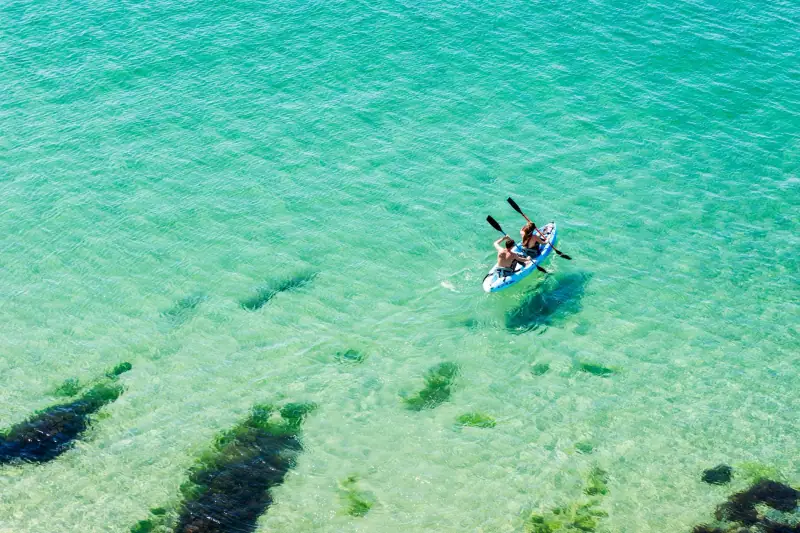
Water sports in Guadeloupe: kayak, kitesurfing, paddleboarding and boat trips
Mangrove kayaking, kitesurfing, paddleboarding, catamaran trips and whale watching: where to do water sports in Guadeloupe, when and with what precautions.
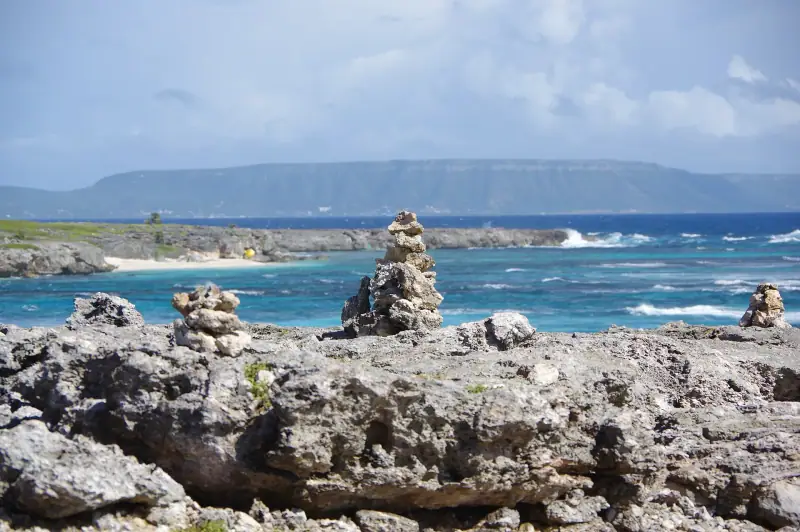
La Désirade in a day from Saint-François: ferry, booking, price and plan
La Désirade in one day: ferry times from Saint-François, booking, rentals on the island, beaches and viewpoints. A realistic plan and mistakes to avoid.
Ready-made
Guadeloupe itineraries
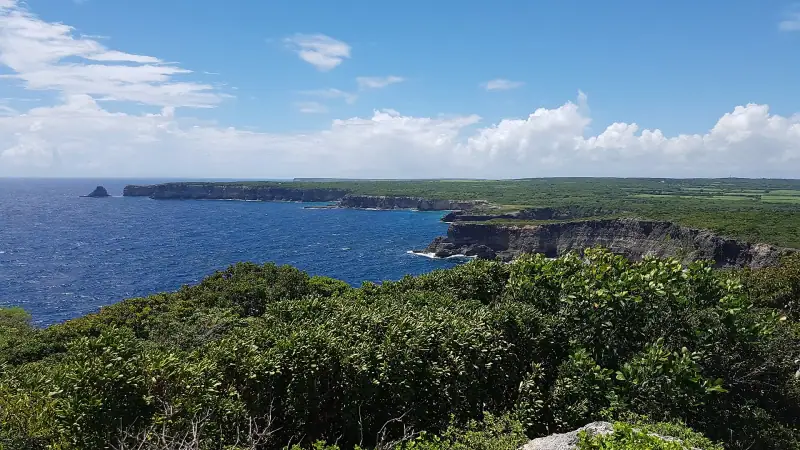
3 days
Grande-Terre in 3 days: beaches, cliffs and Pointe des Châteaux
A 3-day itinerary in Grande-Terre: Le Gosier, Sainte-Anne, Saint-François, Pointe des Châteaux, Le Moule and the northern cliffs. Stops, tips and bases.
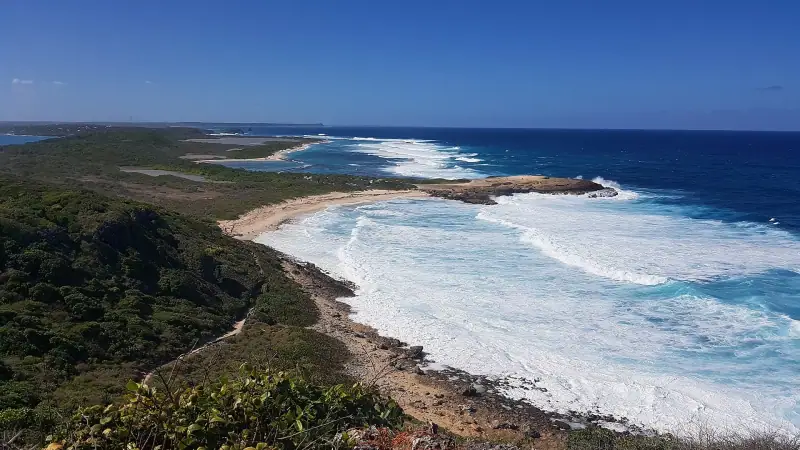
5 days
Guadeloupe in 5 days without a car: a realistic itinerary
Visiting Guadeloupe without a car in 5 days is possible: a base in Le Gosier or Sainte-Anne, buses, taxis, excursions and the boat to Les Saintes.
3 days
Basse-Terre road trip in 3 days: volcano, waterfalls and the leeward coast
Southern Basse-Terre (Capesterre-Belle-Eau or Saint-Claude)Leeward coast (Bouillante or Deshaies)