Itineraries
Grande-Terre in 3 days: beaches, cliffs and Pointe des Châteaux
We may earn a commission when you book through links on this page, at no extra cost to you. We don't visit or try the places we cover: we summarize published sources. How we work
Day by day
- Day 1Pointe-à-Pitre, Le Gosier and its islet, Sainte-Anne
- Day 2Saint-François and Pointe des Châteaux, then a beach
- Day 3Le Moule, Porte d'Enfer, Pointe de la Grande Vigie
In short
- Three days cover Pointe-à-Pitre, Le Gosier and Sainte-Anne (day 1), Pointe des Châteaux (day 2), and Le Moule and the northern cliffs (day 3).
- A car makes everything easier: public transport serves isolated beaches and northern viewpoints poorly.
- One base is enough: Saint-François or Sainte-Anne for the beaches and Pointe des Châteaux, or Le Gosier near the airport.
- The south coast is sheltered by a reef and calm. On the Atlantic side and in the north, swell and currents can be dangerous.
Grande-Terre is the eastern wing of the Guadeloupe butterfly. More limestone, flatter and sunnier than its volcanic neighbor, it has the big palm-lined beaches, the sugar cane fields, the fishing villages and a spectacular northern coast beaten by the Atlantic. It is also where most of the beach accommodation and seafront restaurants are.
This three-day Grande-Terre itinerary is designed as a relaxed road trip: one fixed base, short drives, and a mix of swimming, sightseeing and free time. It complements the 7-day Guadeloupe itinerary and the Basse-Terre road trip, which covers the other wing of the archipelago. To choose your dates, see also when to go to Guadeloupe.
The three days at a glance
- Day 1: Pointe-à-Pitre, Le Gosier and the south beaches, from Sainte-Anne to Saint-François.
- Day 2: Pointe des Châteaux and the southeast coast, ending with the beach and sunset.
- Day 3: Le Moule and the northern coast with its cliffs, before heading back.
You can reverse the order depending on the weather and your flight time. If you arrive late, keep day 1 light and start with a simple swim near your lodging.
Before you go: car, climate and organization
A car makes everything easier. Grande-Terre is the part of the archipelago where driving is simplest: fairly straight roads and little elevation. Slowdowns are concentrated around Pointe-à-Pitre and Le Gosier and at rush hour. Avoid crossing the urban area late in the day. For the rental, use the comparison tool at the bottom of the page and book early in high season.
The sun is strong. Bring sunscreen, a hat, sunglasses and plenty of water: beach areas offer little natural shade. If you swim near reefs, choose a reef-friendly sunscreen. Our selection of essential accessories will help you pack your bag.
Wind and swell. The south of Grande-Terre is sheltered by reefs, which gives calm water. The Atlantic coast, in the north and east, is exposed: you walk and take photos there, but rarely swim.
Where to stay? Three bases work well. Le Gosier is close to the airport and very lively. Sainte-Anne is more family-oriented, with its big beach and market. Saint-François is the most practical base for Pointe des Châteaux. The areas are detailed in where to stay in Guadeloupe.
Accommodation in Grande-Terre
Compare hotels, apartments and villas in Saint-François, Sainte-Anne and Le Gosier.
Day 1: Pointe-à-Pitre, Le Gosier and Sainte-Anne
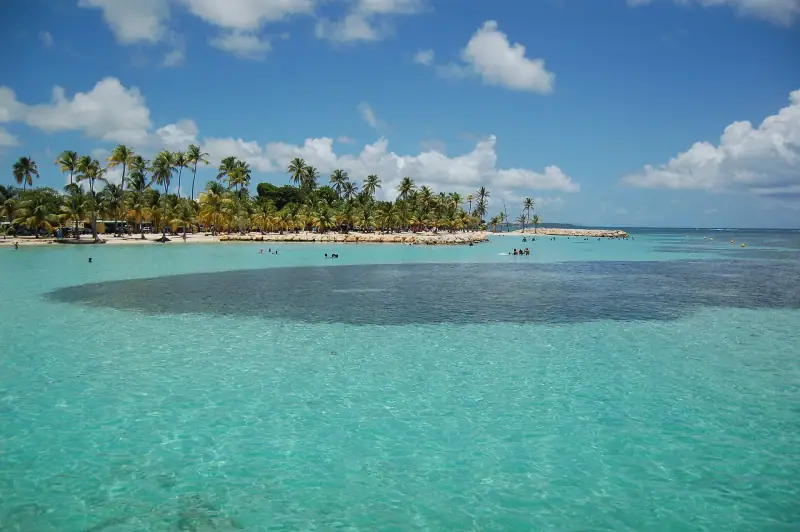
The first day mixes some urban culture with the first swims. It works well if you have just landed: the airport is close to Pointe-à-Pitre and Le Gosier.
Morning: Pointe-à-Pitre
Pointe-à-Pitre is the largest city in the archipelago. It does not have the charm of a beach resort, but it is worth a short visit: its market, its lively streets and the Mémorial ACTe, a center devoted to the memory of the slave trade and slavery, on the waterfront. Check opening hours before you go, as they vary by day. Markets are also a chance to taste fruit and buy spices: our guide to local markets and products helps you choose.
Plan an early start: traffic gets heavier in late morning and parking gets harder. Never leave valuables visible in the car.
Le Gosier and its islet
Then continue to Le Gosier, a seaside resort on a shallow lagoon. Its islet, the Îlet du Gosier, which you can see from the coast, is a classic destination by boat or kayak: ask locally about the services offered, as they depend on the season and the sea. For water activities, see also our advice on watersports in Guadeloupe.
Afternoon: Sainte-Anne
End the day at Sainte-Anne, whose large beach of pale sand, sheltered by palm trees, is one of the busiest on the island. It is lively on weekends, when families picnic there. The village also has a market and small seafront restaurants, ideal for a grilled fish dinner. If you want more calm, follow the coast east: several quieter beaches line the south shore. Our article on the best beaches in Guadeloupe helps you choose according to what you want.
Day 2: Saint-François and Pointe des Châteaux
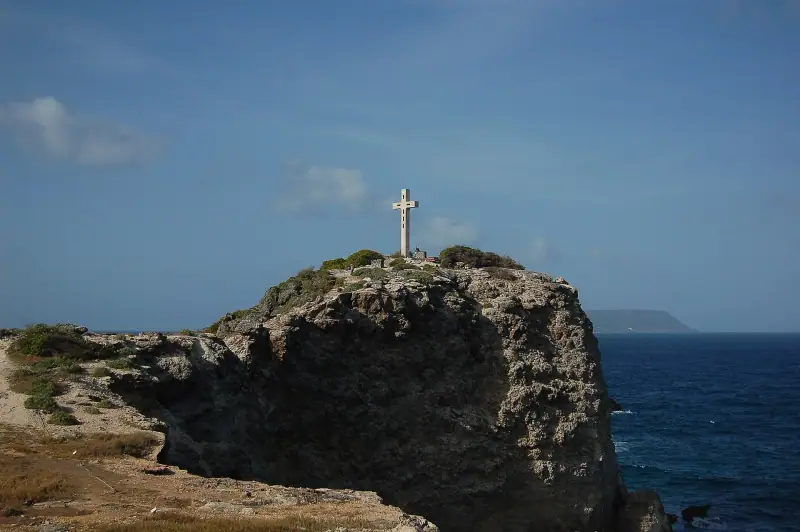
The second day is the scenery day. It takes place in the easternmost part of Grande-Terre, where the land ends in a rocky cape beaten by the ocean.
Morning: Saint-François
Saint-François is a former fishing town turned beach resort, with its marina and golf course. Stop for a coffee there in the morning, then head for the end of the island. The road gets narrower and the vegetation lower and drier as you near the tip.
Pointe des Châteaux
Pointe des Châteaux is probably the most emblematic site in Grande-Terre: a limestone cape where the Atlantic Ocean meets the Caribbean Sea. A small cross stands at the top, with a panorama over the coast and, in clear weather, the neighboring islands such as La Désirade or Marie-Galante. The site is very exposed to wind: bring water, a hat and closed-toe shoes for the climb. Avoid getting close to the cliff edge, as the rock can be slippery and the swell powerful.
Several beaches line the access road. Some are well sheltered, others exposed: read the signs and do not swim where the sea is rough. Come early to find a parking spot and avoid the midday heat. If you like photography, late afternoon has the best light.
Afternoon: swimming and relaxing
After the point, head back down to a sheltered beach for a swim and a simple lunch. This part of the day is deliberately free: it leaves room for a nap, a walk on the beach or a water activity, such as kayaking or paddleboarding on calm water.
Boat trips from Grande-Terre
Catamaran, snorkeling, excursions to the islets: compare trips for your dates.
Day 3: Le Moule and the northern cliffs
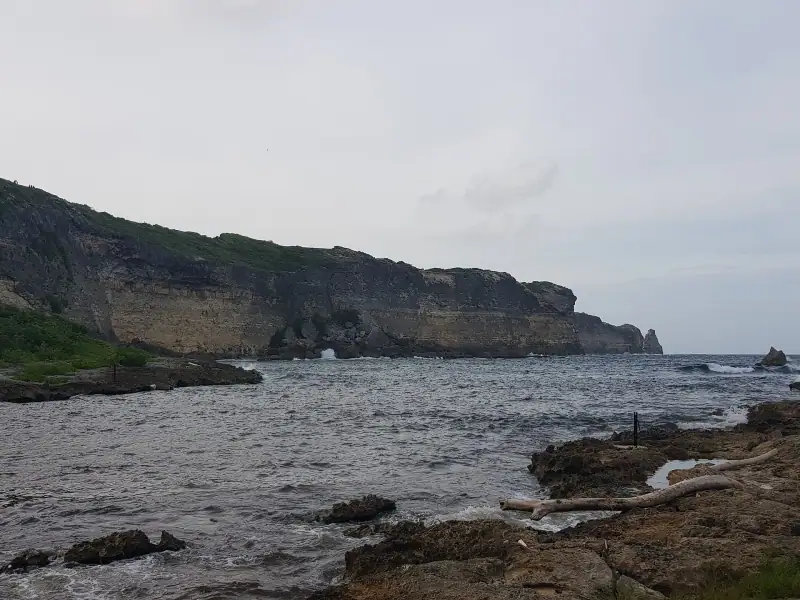
The last day changes the scenery: you leave the southern lagoons for the wilder Atlantic. It is also the best day to see Grande-Terre’s farmland, with its sugar cane fields.
Morning: Le Moule
Le Moule is a former port town on the Atlantic coast. It keeps a quiet charm, with its waterfront, its church and its sandy beaches open to the sea. It is a hub for surfing and bodyboarding, a sign that the swell is generally stronger there than in the south. Heritage fans may also be interested in the traces of the region’s sugar history.
The northern coast
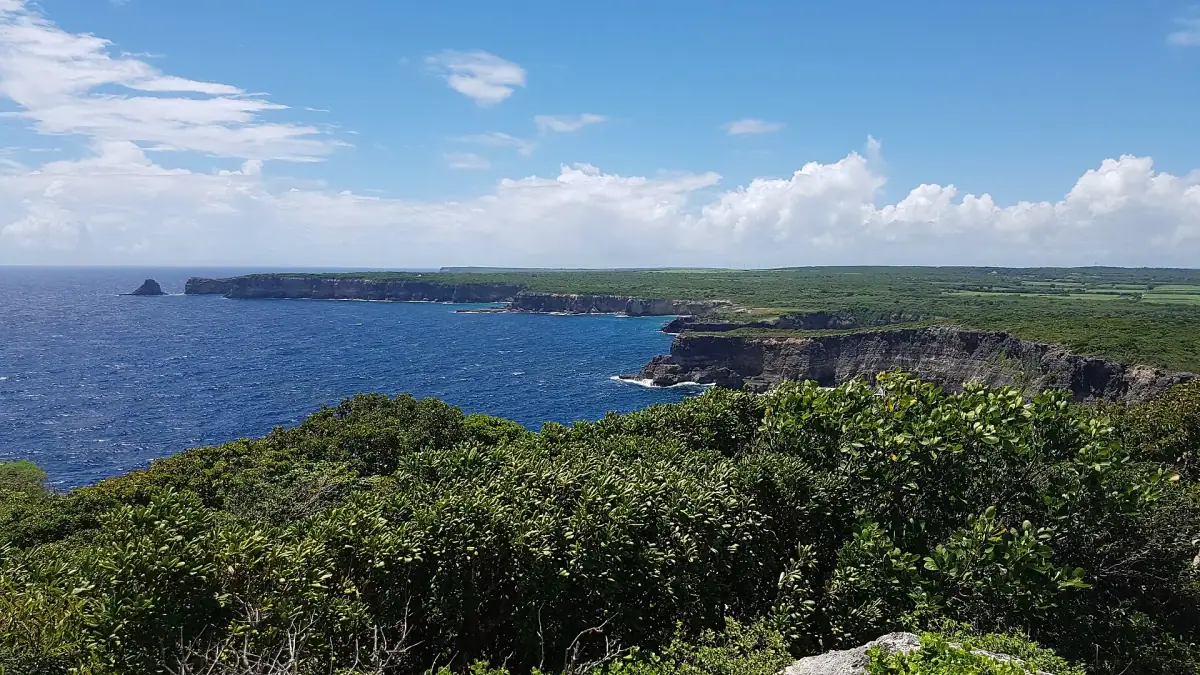
Then head north, toward Anse-Bertrand. The coast there is jagged, rocky and very exposed. Two sites are often mentioned: the Porte d’Enfer, a cut in the rock where the water rushes in and where a natural pool is sometimes accessible when the sea is calm, and the Pointe de la Grande Vigie, a viewpoint over limestone cliffs, the northernmost point of the island. Always check the state of the sea before swimming at Porte d’Enfer, and do not venture onto the rocks in swell.
Allow a comfortable amount of driving time to reach the north from Le Moule: the back roads are slow and there are many villages. Bring water and a snack, as shops are rare in this area.
End of the day
Depending on your flight or your return, head back via Les Abymes or Morne-à-l’Eau. If you have time, you can visit the Morne-à-l’Eau cemetery, known for its tombs decorated with black and white tiles: it is a place of remembrance, to be visited discreetly and respectfully. Our guide to the Morne-à-l’Eau cemetery details access, duration and visiting rules.
Adapting the itinerary to your profile
With family. Favor the sheltered beaches of the south (Sainte-Anne, Le Gosier) and keep Pointe des Châteaux for a short visit early in the morning. Avoid the cliffs with young children.
As a couple. Stay in Saint-François or Sainte-Anne, go watch the sunset on the coast and keep one evening for a fish dinner.
For active travelers. Add a half day of kayaking, paddleboarding or kitesurfing on the sheltered waters of the coast, or a surf session at Le Moule depending on the season.
With little time. Keep day 2 (Pointe des Châteaux) and a half day at the beach in Sainte-Anne. That is enough to get a feel for the eastern wing.
To combine with Basse-Terre. Do Grande-Terre at the end of your stay to rest after the national park hikes. You will find beaches, restaurants and hotels in abundance.
Budget and logistics
The main expenses are accommodation, the car and meals. Grande-Terre offers a wide range of lodging, from simple gîtes to seafront hotels. For meals, markets and small beach restaurants help keep the bill down. Our article on the budget for a stay in Guadeloupe details ranges for different profiles.
Entry rules depend on your passport. Check the official travel advice of your government before you book: travel.state.gov (US), GOV.UK (UK), travel.gc.ca (Canada), Smartraveller (Australia) (checked November 2026). Travel insurance with repatriation cover is a plus, especially if you do water activities.
Safety and respect for the environment
- Swimming: on the Atlantic side and in the north, swell and currents can be dangerous. Follow the flags and signs.
- Cliffs: stay away from the edge, especially in strong wind or on wet ground.
- Sun: drink water, protect yourself and avoid the hottest hours for walks.
- Mangroves and coastline: do not trample coastal vegetation and take your trash with you.
- Car break-ins: leave no valuables visible in the vehicle, including in beach parking lots.
- Reefs: do not touch corals and do not take away sand or protected shells.
Ideas to extend the itinerary
If you have one or two extra days, Grande-Terre is also a starting point for the neighboring islands. From Saint-François, boats serve La Désirade and Marie-Galante depending on the season: check current schedules. Our guide to visiting Marie-Galante details what the island offers, and the one on Les Saintes and Terre-de-Haut will help you plan an extra getaway. To finish on a local note, a detour to a distillery is worthwhile: see our advice on rum distilleries.
Excursions in Guadeloupe
Guided visits, boat trips and activities: compare offers for your dates.
This itinerary is not a race: Grande-Terre is best enjoyed slowly, between a swim, a market and a viewpoint over the ocean. Keep some margin, adapt the order of the days to the weather and leave room for the unexpected. That is often where the best memories come from.
Frequently asked questions
Are three days enough to visit Grande-Terre?
Yes, the island is flat, compact and well served by road. Three days let you see the big beaches of the south, Pointe des Châteaux, Le Moule and the northern cliffs without rushing, as long as you limit each day to two or three stops.
Do you need a car in Grande-Terre?
It is strongly recommended. Public transport exists but serves isolated beaches and the northern coastal viewpoints poorly. A rental car lets you organize the three days freely.
Where should you stay for this route?
A single base is enough: Saint-François or Sainte-Anne to be close to the beaches and Pointe des Châteaux, or Le Gosier to be closer to the airport and Pointe-à-Pitre. Drives stay short from all three areas.
Can you swim everywhere in Grande-Terre?
No. The south coast, protected by the coral barrier, has calm water. On the Atlantic coast and in the north, swell and currents can be dangerous: follow the flags and signs, and stay away from the cliffs when the sea is rough.
What is the best time of year for this plan?
The dry season, known as the carême, from about December to May, has the most stable weather. The rest of the year, short warm showers are frequent and the heat is more humid.
Can you combine Grande-Terre with Basse-Terre?
Yes, the two wings are linked by a bridge and fast roads. Many travelers start with Basse-Terre for nature, then finish in Grande-Terre to relax by the water.
More Guadeloupe guides
Keep reading
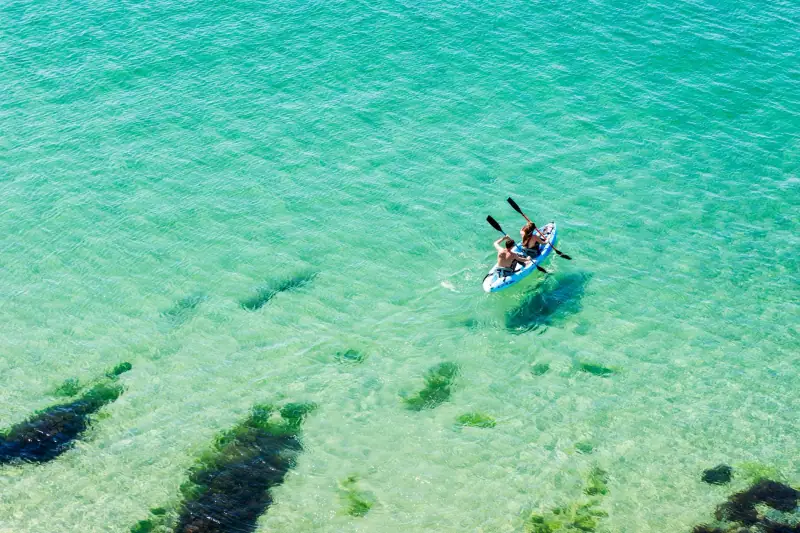
Water sports in Guadeloupe: kayak, kitesurfing, paddleboarding and boat trips
Mangrove kayaking, kitesurfing, paddleboarding, catamaran trips and whale watching: where to do water sports in Guadeloupe, when and with what precautions.
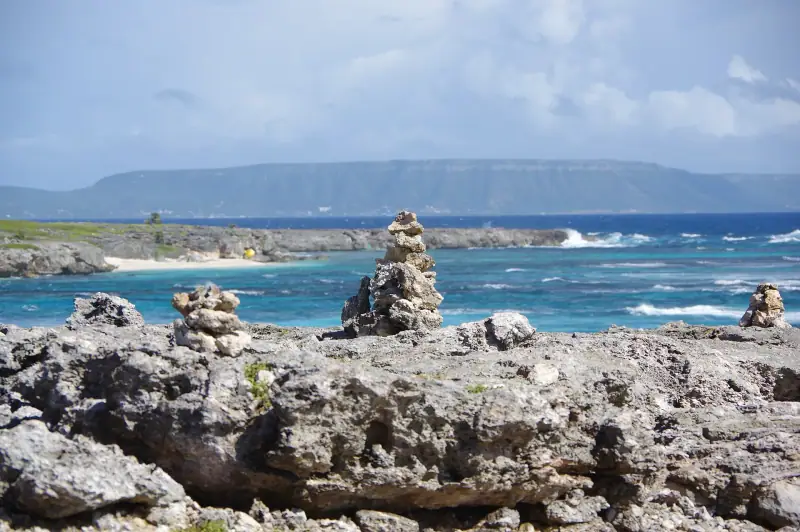
La Désirade in a day from Saint-François: ferry, booking, price and plan
La Désirade in one day: ferry times from Saint-François, booking, rentals on the island, beaches and viewpoints. A realistic plan and mistakes to avoid.
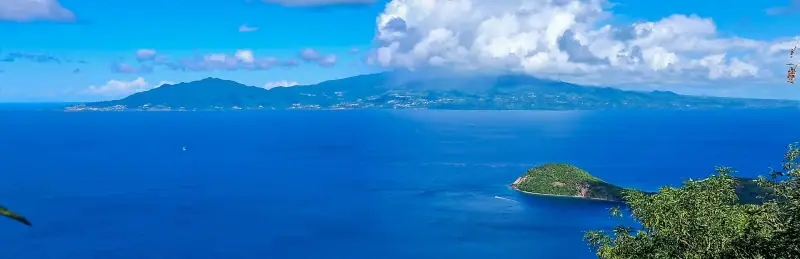
Visiting Les Saintes: what to do on Terre-de-Haut in a day or more
Visiting Les Saintes from Guadeloupe: the crossing, Fort Napoléon, Pain de Sucre, beaches and tips for organizing a day or a weekend on Terre-de-Haut.
Ready-made
Guadeloupe itineraries
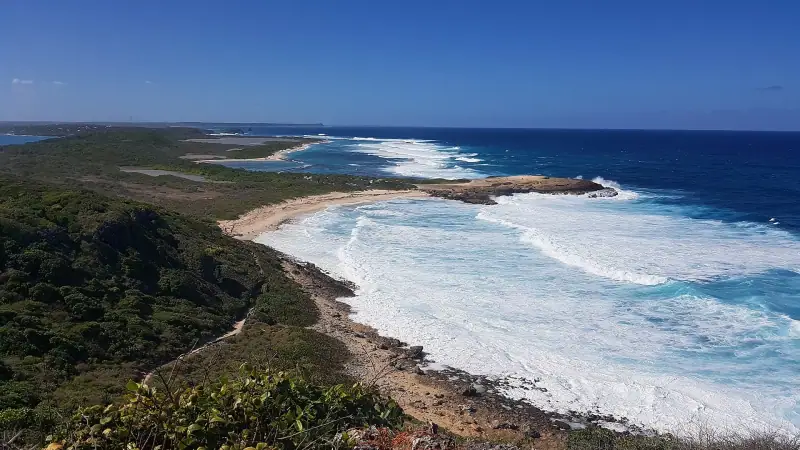
5 days
Guadeloupe in 5 days without a car: a realistic itinerary
Visiting Guadeloupe without a car in 5 days is possible: a base in Le Gosier or Sainte-Anne, buses, taxis, excursions and the boat to Les Saintes.
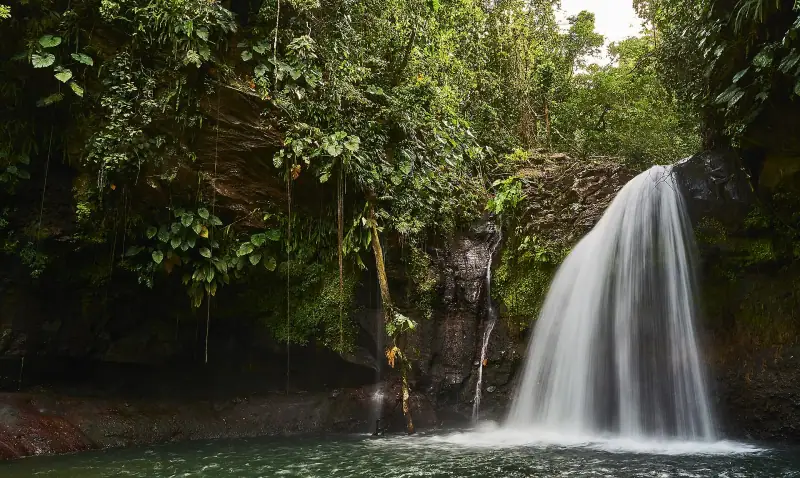
3 days
Basse-Terre road trip in 3 days: volcano, waterfalls and the leeward coast
Southern Basse-Terre (Capesterre-Belle-Eau or Saint-Claude)Leeward coast (Bouillante or Deshaies)
7 days
Guadeloupe in 7 days: Grande-Terre, Basse-Terre and Les Saintes
Southern Grande-Terre (Le Gosier, Sainte-Anne or Saint-François)Southern Basse-Terre (Capesterre-Belle-Eau or Saint-Claude)Leeward coast (Bouillante or Deshaies)