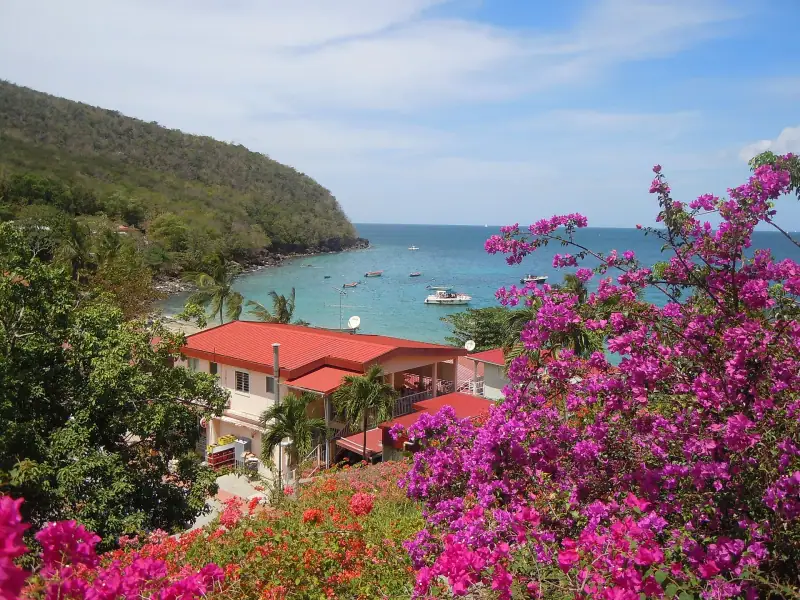
What to see
The best beaches in Guadeloupe: a selection by island
We may earn a commission when you book through links on this page, at no extra cost to you. We don't visit or try the places we cover: we summarize published sources. How we work
In short
- Calm water: the south coast of Grande-Terre (Sainte-Anne, Le Gosier), sheltered by the reef, and the leeward Caribbean side of Basse-Terre. The Atlantic side is for scenery.
- Snorkeling: Malendure and Pigeon Island (Cousteau Reserve) on Basse-Terre's leeward coast.
- Sand varies: pale on Grande-Terre and nearby islands, gray to black on volcanic Basse-Terre.
- Follow flags and signs, avoid Atlantic beaches on swell days, and beware of the manchineel tree, which is toxic.
Turquoise water, palm trees, pale or dark sand depending on the island: the beaches of Guadeloupe are one of the main reasons to come to the archipelago. But they are very varied. Between the calm lagoon of southern Grande-Terre, the coves of Basse-Terre at the foot of the rainforest, Les Saintes and Marie-Galante, it is hard to know where to start.
This guide presents a selection of beaches by area, with what you can do there, which profile they suit and the precautions to know. To choose the right time of year, see also our guide when to go to Guadeloupe.
How are the beaches of the archipelago distributed?
Guadeloupe is formed by two main islands shaped like butterfly wings, Grande-Terre in the east and Basse-Terre in the west, surrounded by dependencies such as Les Saintes, Marie-Galante and La Désirade.
- Grande-Terre: limestone and coral. The south, from Le Gosier to Saint-François, lines up pale-sand beaches sheltered by the reef. The Atlantic coast, in the north and east, is wilder and more exposed.
- Basse-Terre: volcanic. Its Caribbean coast, known as the “leeward” coast, is sheltered and known for snorkeling and diving. You find golden sand there, but also gray to black sand.
- The neighboring islands: Les Saintes and Marie-Galante combine sheltered bays and quiet beaches, with fewer people outside the main holiday periods.
A simple rule: the Caribbean side and southern Grande-Terre for calm water, the Atlantic side for scenery and walks, checking sea conditions before swimming.
Southern Grande-Terre: Le Gosier and Sainte-Anne
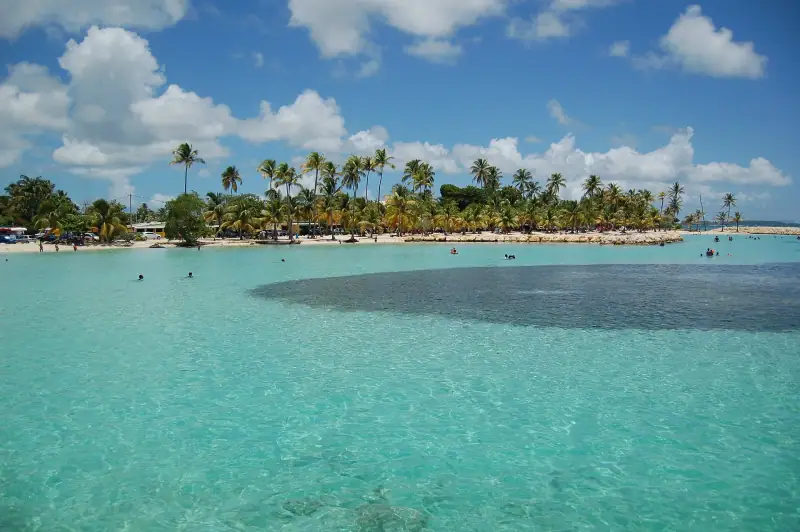
Southern Grande-Terre is the most practical area for a first approach: it is close to Pointe-à-Pitre and the airport, well equipped with lodging and restaurants, and the sea is generally calm thanks to the reef.
Around Le Gosier, the beaches are close to the hotels and lively. They suit those who want to swim without driving much, and Îlet du Gosier, facing the town, is a very classic boat excursion. The atmosphere is more urban, with bars and restaurants nearby.
Around Sainte-Anne, you find postcard beaches: pale sand, shallow water, palm trees and a family feel. The town holds a very busy market, and several beaches follow one another along the coast, from the most developed to the quietest. To stay there, see our where to stay in Guadeloupe guide.
Tip: on the busiest beaches, arrive early in the morning in season, when the light is beautiful and parking is still easy.
Places to stay near the beaches
Compare hotels and rentals in Sainte-Anne and southern Grande-Terre for your dates.
Saint-François and Pointe des Châteaux
At the eastern end of Grande-Terre, Saint-François is known for its marina, golf course and sheltered beaches. It is a good base for those who want a quieter stay than in Le Gosier.
Beyond it, the road leads to Pointe des Châteaux, the easternmost point of the island, where the Atlantic Ocean and the Caribbean Sea meet. The scenery is spectacular: cliffs, rocks sculpted by waves, wild coves and a view of La Désirade, as well as Marie-Galante and Les Saintes in clear weather.
The area has fine beaches, but the sea can be rougher on the Atlantic side: check conditions before entering the water, follow the signs and do not swim where it is marked as dangerous. Bring water and sunscreen, as shade is scarce on some stretches.
Who is it for? Scenery lovers, walkers and those who want to get away from heavily developed beaches.
Leeward coast of Basse-Terre: Bouillante and Malendure
The west coast of Basse-Terre is a great place to mix swimming and discovering the seabed. Around Malendure, in Bouillante, you reach Pigeon Island by boat or with fins, inside the Cousteau Reserve, one of the best-known snorkeling and diving sites in the archipelago.
Malendure beach itself is a practical departure point: there are dive clubs, glass-bottom boats and restaurants. The sand is darker than in southern Grande-Terre, a sign of the island’s volcanic origin.
Snorkeling tips:
- Favor the morning, when the water is clearer and the sea calmer;
- Use a reef-friendly sunscreen, or a UV-protection shirt;
- Do not touch corals or turtles, and do not feed the fish;
- If you are a beginner, choose a guided outing.
Snorkeling, diving and boat trips
Browse the excursions offered in Guadeloupe and book ahead in high season.
Northern Basse-Terre: Grande Anse in Deshaies
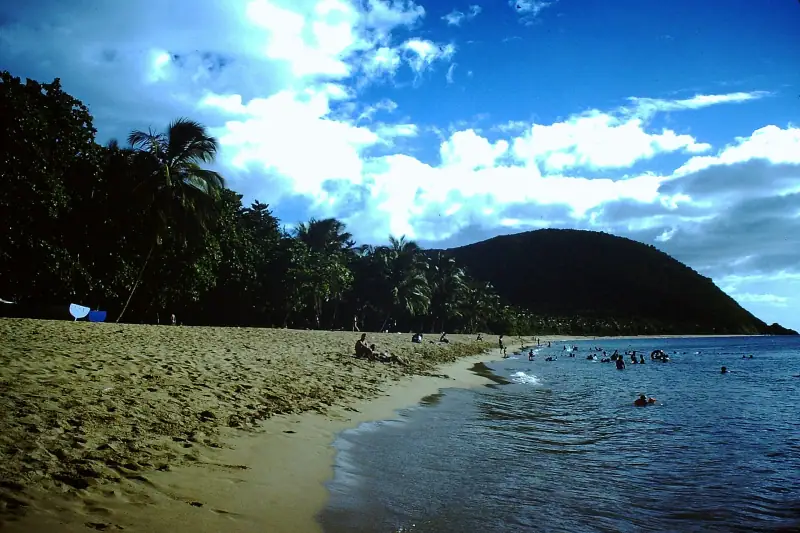
On the northwest coast, Deshaies is a fishing village with colonial charm, surrounded by green hills. Grande Anse is one of the most photographed beaches on the island: a long crescent of golden sand, lined with palm trees and sea grape trees, backed by tropical vegetation.
The beach is much appreciated by families and visitors looking for a tropical setting. Swimming is pleasant, but, as on all Atlantic and northern beaches, the sea can rise with the swell: follow the posted instructions.
Day idea: visit the village in the morning, then the beach, then sunset over the bay. To fit Deshaies into a full stay, see our 7-day Guadeloupe itinerary.
Southern Basse-Terre: gray sand and volcanic scenery
Farther south, the Basse-Terre coast shows a completely different face: beaches of gray or black sand, pebbles, dense vegetation and views of the mountains. The atmosphere is rawer and less touristy, and these beaches combine well with a day of hiking or waterfall visits.
These beaches suit the curious and scenery lovers rather than those looking for a calm lagoon. Dark sand heats up quickly in the sun: bring sandals. If you visit the La Soufrière area, our guide to hiking La Soufrière will help you organize your day.
Les Saintes: sheltered bays and a human-scale island
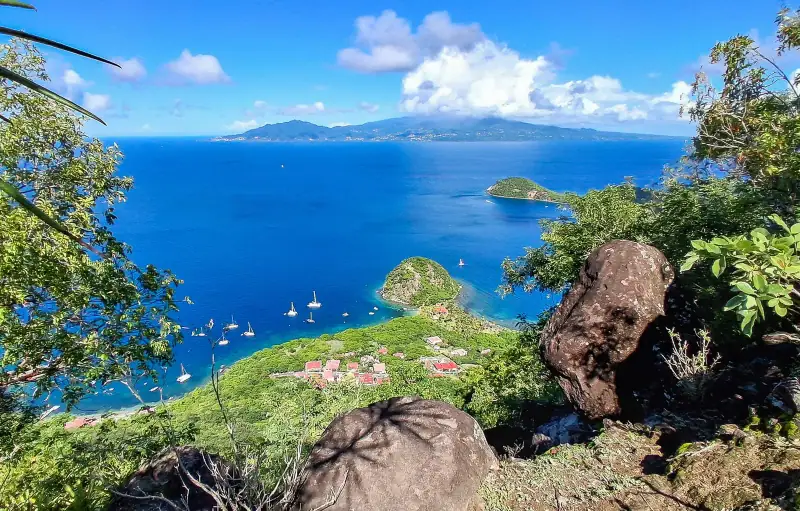
The Les Saintes archipelago, south of Guadeloupe, is reached by boat from mainland Guadeloupe. Terre-de-Haut, the most visited island, is famous for its bay, often cited among the most beautiful in the world, and for its small sheltered beaches.
The island is explored on foot, by bike or by electric scooter, which is a change from getting around by car. A few beaches allow snorkeling close to shore, and the atmosphere is that of a fishing village. Practical details (the crossing, time there, activities) are in our guide to visiting Les Saintes and Terre-de-Haut.
Who is it for? Those who like small islands, walks and calm bays, for a day or a stay of a few nights.
Marie-Galante: the Grande Galette in peace
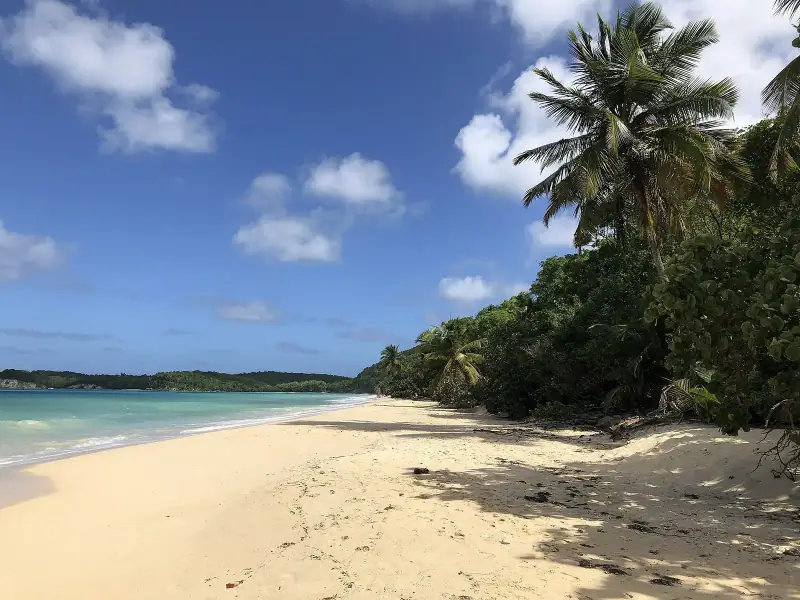
Marie-Galante, nicknamed the “island of a hundred mills”, lies southeast of Grande-Terre and is reached by boat. More rural than mainland Guadeloupe, it is known for its sugar cane, its distilleries and its little-visited beaches, often bordered by vegetation.
On the more sheltered west coast, you find quiet pale-sand beaches, while the east coast is wilder and more exposed. Renting a bike or a car there lets you string together several beaches in one day, with a Creole lunch on the way.
Who is it for? Travelers who want to step away from the bustle and discover a more rural Guadeloupe. Plan at least one night there to really enjoy it.
Flights to Guadeloupe
Compare dates, durations and layovers before locking in your beach stay.
Safety and good habits at the beach
Even under the palm trees, a few precautions are needed:
- Follow the flags and posted instructions, especially on beaches exposed to the Atlantic, where currents and swell can be strong.
- Beware of the manchineel: this coastal tree is toxic (fruit, sap, leaves). It is sometimes marked with a red mark on the trunk; do not shelter under it on rainy days and do not touch its fruit.
- Protect yourself from the sun: in the tropics, sunburn comes very fast. Hat, sunglasses, UV-protection shirt and high-SPF sunscreen.
- Stay hydrated: bring water, especially for isolated beaches.
- Leave nothing of value in the car: as everywhere, avoid leaving bags and devices visible in a parked vehicle.
- Sargassum: these brown algae wash up at times on some coasts, especially those exposed to the Atlantic. Ask locally before choosing your beach.
Which beach to choose by profile?
| Profile | Area to favor |
|---|---|
| Families with children | Southern Grande-Terre (Sainte-Anne, Le Gosier) |
| Snorkeling and diving | Leeward coast of Basse-Terre (Malendure) |
| Scenery and photos | Pointe des Châteaux, Grande Anse in Deshaies |
| Peace and quiet | Marie-Galante, Les Saintes |
| Adventure and nature | Southern Basse-Terre, combined with hiking |
Putting together a beach stay
Guadeloupe does not have a single ideal beach, but several atmospheres: calm lagoon in Grande-Terre, seabeds in Bouillante, tropical settings in Deshaies, calm in Marie-Galante and Les Saintes. The simplest is to choose a base (southern Grande-Terre for ease, the Caribbean coast for nature), then add one or two excursions.
Need to choose lodging? See our guide to choosing where to stay, then build your days with the one-week itinerary.
Frequently asked questions
What are the best beaches in Guadeloupe?
The beaches of Grande-Terre (Sainte-Anne, Saint-François, Pointe des Châteaux) are known for their pale sand and calm water. On Basse-Terre, Grande Anse in Deshaies and Malendure beach appeal with their tropical setting. Marie-Galante and Les Saintes offer quieter beaches.
Which coast should you choose for calm swimming?
The south coast of Grande-Terre, protected by the coral barrier, generally has calm, shallow water, ideal for families. The Atlantic coast, more exposed, is often rougher.
Where can you snorkel in Guadeloupe?
The leeward coast of Basse-Terre, around Malendure and Pigeon Island (Cousteau Reserve), is the best-known area. Some beaches in Grande-Terre and Les Saintes also let you see fish and corals close to shore.
Are all Guadeloupe beaches white sand?
No. Grande-Terre and the nearby islands have mostly pale coral-based sand, while volcanic Basse-Terre also has gray or black sand beaches, as in the south of the Caribbean coast.
Are there special precautions for swimming?
Yes: follow the flags and signs, avoid Atlantic beaches on swell days, protect yourself from the sun and beware of the fruit of the manchineel, a toxic tree sometimes found at the edge of beaches and marked with red paint.
More Guadeloupe guides
Keep reading
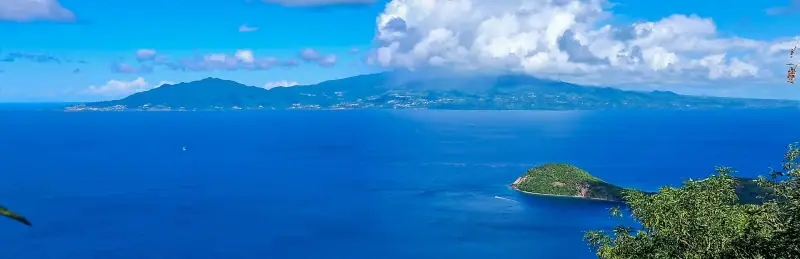
Visiting Les Saintes: what to do on Terre-de-Haut in a day or more
Visiting Les Saintes from Guadeloupe: the crossing, Fort Napoléon, Pain de Sucre, beaches and tips for organizing a day or a weekend on Terre-de-Haut.
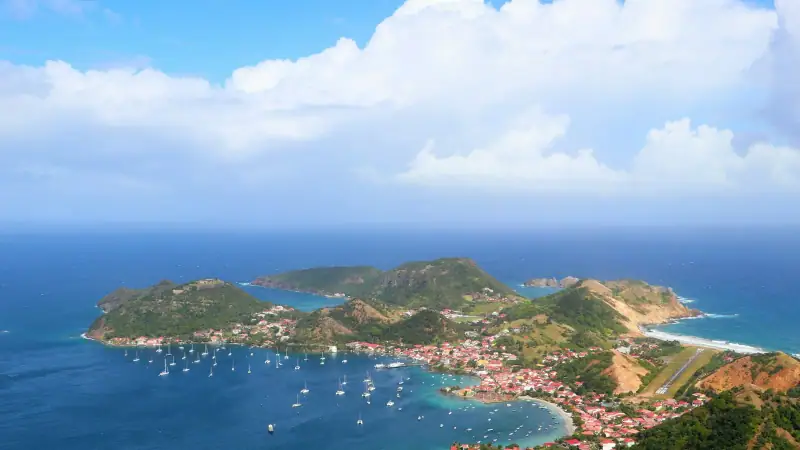
Complete guide to visiting Guadeloupe: regions, highlights and tips
Visiting Guadeloupe: regions, towns, highlights, best time to go, transport, lodging and budget. The pillar guide to plan your trip.
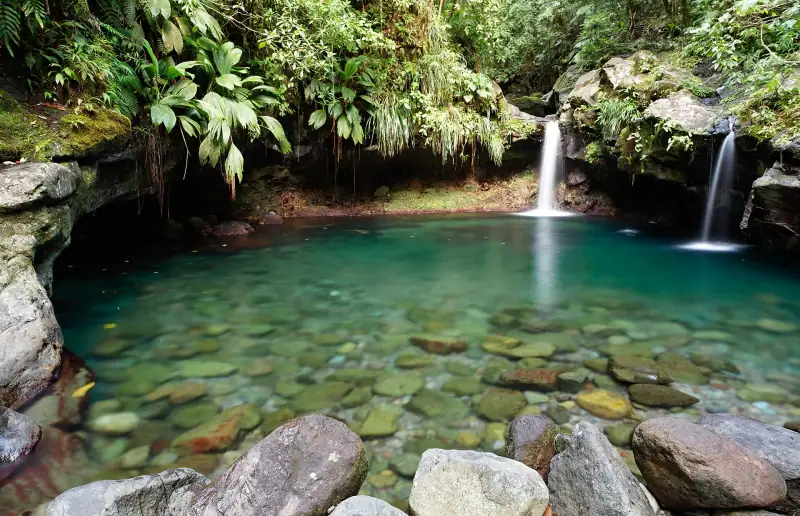
Waterfalls in Guadeloupe: Carbet Falls and the best hikes
The best waterfalls in Guadeloupe on Basse-Terre: Carbet Falls, Cascade aux Écrevisses, Saut de la Lézarde. Access, difficulty and tips for visiting.
Ready-made
Guadeloupe itineraries
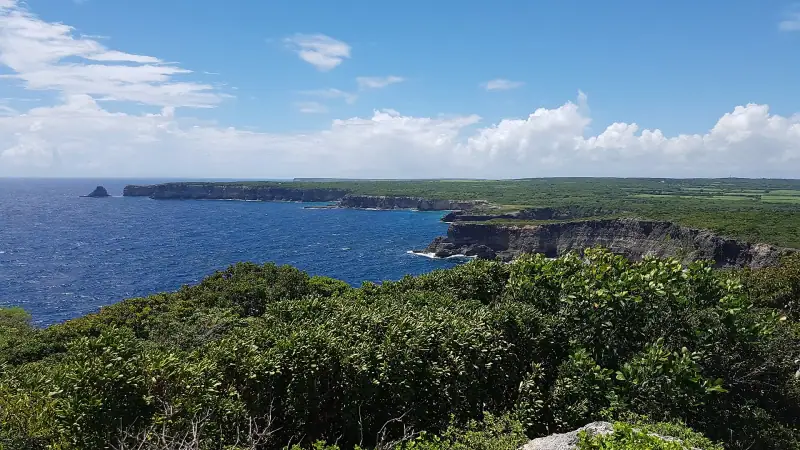
3 days
Grande-Terre in 3 days: beaches, cliffs and Pointe des Châteaux
A 3-day itinerary in Grande-Terre: Le Gosier, Sainte-Anne, Saint-François, Pointe des Châteaux, Le Moule and the northern cliffs. Stops, tips and bases.
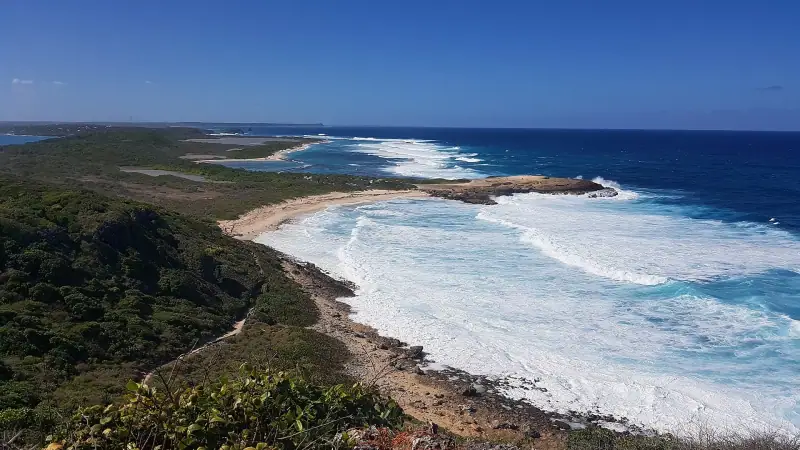
5 days
Guadeloupe in 5 days without a car: a realistic itinerary
Visiting Guadeloupe without a car in 5 days is possible: a base in Le Gosier or Sainte-Anne, buses, taxis, excursions and the boat to Les Saintes.
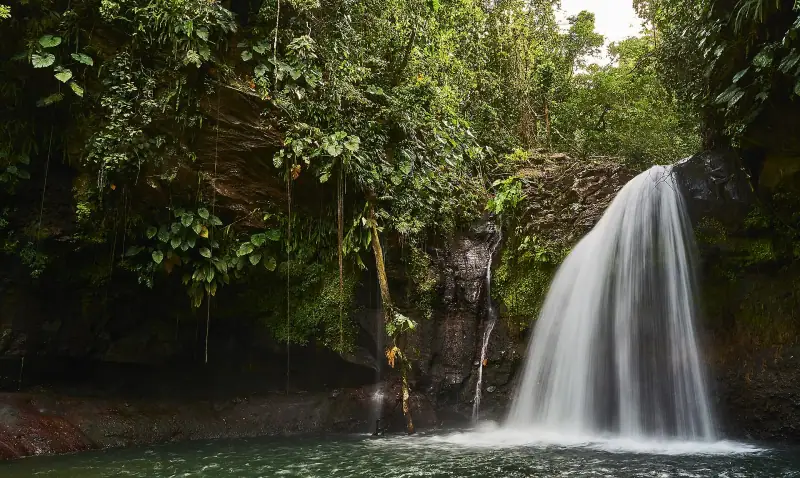
3 days
Basse-Terre road trip in 3 days: volcano, waterfalls and the leeward coast
Southern Basse-Terre (Capesterre-Belle-Eau or Saint-Claude)Leeward coast (Bouillante or Deshaies)