What to see
Visiting Les Saintes: what to do on Terre-de-Haut in a day or more
We may earn a commission when you book through links on this page, at no extra cost to you. We don't visit or try the places we cover: we summarize published sources. How we work
In short
- One day is enough to see the essentials of Terre-de-Haut: the town, Fort Napoléon, a beach and a viewpoint. A night on the island is more relaxed.
- Boats leave from several ports on mainland Guadeloupe. Trois-Rivières has the shortest crossing, about 20 to 30 minutes.
- You do not need a car: leave it on the mainland and get around on foot, by bike or by electric scooter.
- The dry season (December to May) is the most stable. Check the last boat back, and book ahead in high season.
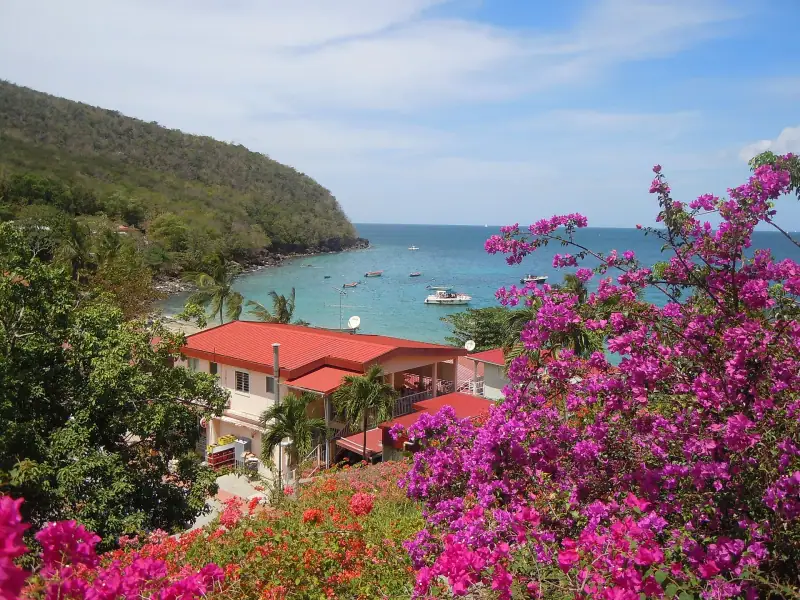
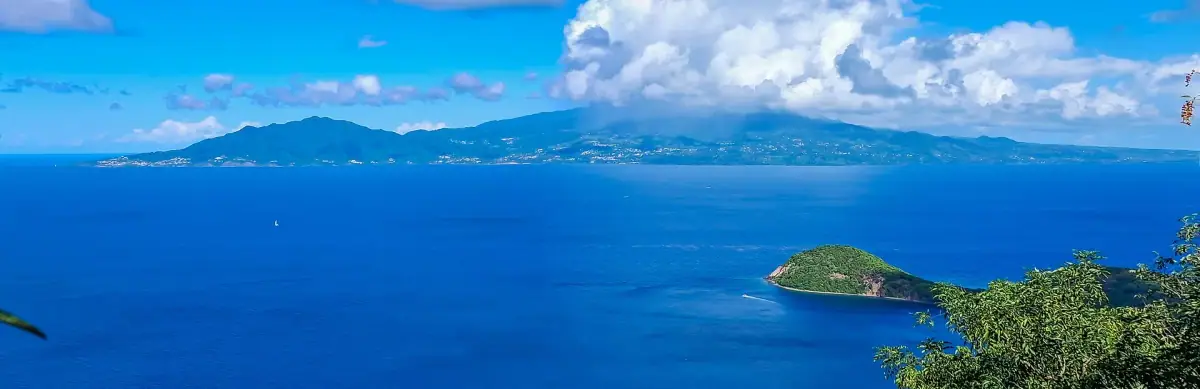
South of mainland Guadeloupe, Les Saintes is one of the destination’s most sought-after getaways. On Terre-de-Haut, the most visited island, there is no big resort: just a fishing village of colorful houses, a much-photographed bay, hills plunging into the sea and a deliberately slow pace.
This guide helps you decide how to visit Les Saintes: how to get there, what to see first, how to get around and whether to stay overnight.
Les Saintes in brief: which island to choose?
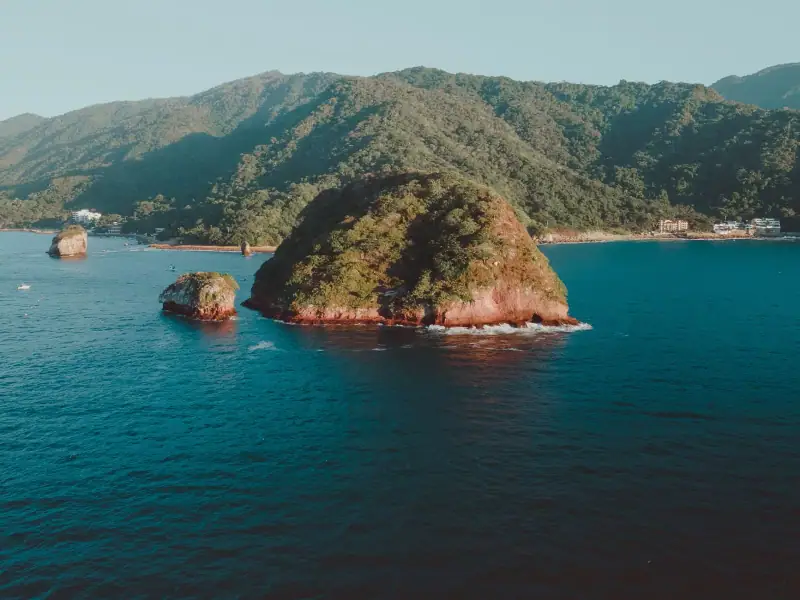
The Les Saintes archipelago is made up of several islands and islets, only two of which are inhabited: Terre-de-Haut and Terre-de-Bas. They are two separate municipalities, grouped in the canton of Les Saintes, and they do not have the same atmosphere.
- Terre-de-Haut is the more touristy: a lively town, restaurants, lodging, a fort and beaches. It is the one almost all first-time visitors choose.
- Terre-de-Bas is quieter and more rural, with few tourist services. It suits those looking for total tranquility.
For a first visit, focus on Terre-de-Haut. The uninhabited islets are most often seen on organized boat trips.
How to get to Les Saintes from Guadeloupe
You get to Les Saintes by boat, on ferries that leave from several points on mainland Guadeloupe. The port of Trois-Rivières, in the south of Basse-Terre, is most often chosen because the crossing is shortest there, around 20 to 30 minutes. From other ports, such as Pointe-à-Pitre, the trip is longer.
Practical tips:
- Book ahead in high season, on weekends and during school holidays: departures can be full.
- Arrive early at the dock for check-in and boarding.
- Check the return schedule the day before: the last departure shapes your whole day.
- The sea can be rough: if you are prone to seasickness, sit in the middle of the boat.
- Leave the car on the mainland. On Basse-Terre, park in a suitable area and leave no valuables visible.
If you prefer not to organize anything, day excursions that include the crossing exist.
Excursions to Les Saintes
Organized day, boat trip or activity there: compare the offers you can book.
The town of Terre-de-Haut and its bay
As soon as you step off the boat, you are in the town. Its narrow lanes, its houses with colorful facades decorated with openwork wood and its small shops are quickly covered on foot. The waterfront, lined with terraces, is a good place for a first coffee or fresh fruit juice while watching the fishing boats.
The Terre-de-Haut bay, often ranked among the most beautiful bays in the world, forms a large arc of calm water surrounded by hills. You can admire it very well from the heights, but also from the water’s edge or from a boat.
The fishermen of Les Saintes have kept a long tradition, and the island community has a strong attachment to its history. A few residents still wear the traditional salako, a hat of wood and fabric inherited from the old fishermen, which is also found as a craft item.
Worth tasting: the tourment d’amour, a small coconut and jam pastry, the sweet emblem of the archipelago. You will find it in the town’s bakeries and on its stalls.
Fort Napoléon and its viewpoint
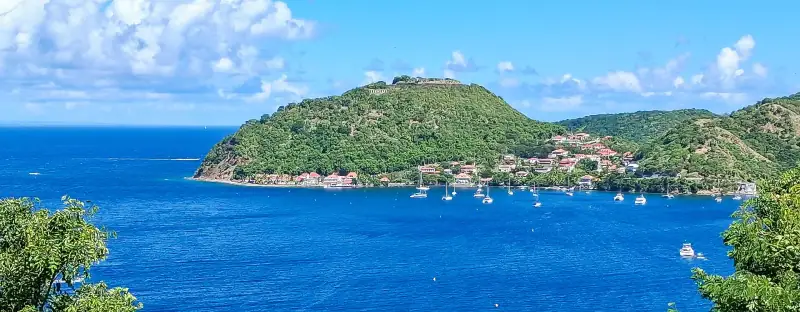
Fort Napoléon overlooks the bay and is the main cultural visit on the island. Built in the 19th century to protect the archipelago, it now houses a museum devoted to the history of Les Saintes, notably the 1782 naval battle in which the French and British fleets fought in these waters. Its ramparts offer a much-admired panorama over the bay, the neighboring islets and, in clear weather, the surrounding islands.
The site also includes a garden of succulents and cacti, which benefits from a dry microclimate. Allow one to two hours for the visit.
Good to know: access is by a climb from the town. It can be done on foot, but it becomes tiring in the hot hours. Start early, bring water and a hat. As hours and prices may change, check the official information before you come.
Beaches and swimming on Terre-de-Haut
Terre-de-Haut has several beaches and coves, of varying sizes and atmospheres. Keep a few principles in mind rather than an exhaustive list:
- Beaches on the bay side (facing west) are generally the calmest and best suited to families. The town is close to several of them.
- Beaches facing the Atlantic are wilder, sometimes beaten by swell and currents: swimming there calls for caution.
- Snorkeling is pleasant near rocks and protected areas. Follow local rules and touch neither corals nor turtles.
- Shade is scarce on some beaches: bring an umbrella, sunscreen and water.
The Pain de Sucre (Sugar Loaf) is a name you will hear often: it is a cone-shaped rock, reachable on foot from the town by a path, and the starting point for fine views over the bay. Depending on the year and the crowds, services (food, equipment rental) vary: ask there.
How to get around the island
The island is small but hilly. You have three main options:
- On foot: best for the town, the Pain de Sucre and nearby beaches, as long as you accept a few climbs.
- By bike or mountain bike: practical, but the slopes are quickly felt in the heat.
- By electric scooter or electric mini-car: very common for going around the island, with rental shops near the landing stage. Ask for the traffic rules and respect the speed: roads are narrow and shared with pedestrians.
A car is not necessary and traffic there is limited. A good plan is to rent an electric vehicle for a few hours, then finish on foot in the town.
A day in Les Saintes: suggested plan
Here is a realistic outline for one day, to adapt to your boat times:
- Morning: early crossing, then a tour of the town and a local breakfast. Climb to Fort Napoléon before the hot hours.
- Midday: lunch at a waterfront restaurant, with fresh fish or a Creole dish depending on the day’s offer.
- Afternoon: swim at a beach near the bay, or a tour of the island by electric vehicle with photo stops.
- Late afternoon: one last tourment d’amour, then back to the dock early for the boat.
Always keep a margin before the last departure: missing it would force you to find last-minute lodging.
Staying in Les Saintes
A night on Terre-de-Haut lets you enjoy the island in peace, once the day boats have left.
Should you stay overnight in Les Saintes?
One day is enough to see the essentials, but it leaves little time to wander. A night on the island changes the experience: in the evening, the island empties of its day visitors, the atmosphere of the town becomes more intimate and the bay has a softer light.
Supply is mostly small hotels, guesthouses and rentals, often modest in size. As capacity is limited, book early, especially in high season and over the holidays. To compare areas of Guadeloupe, our guide where to stay in Guadeloupe details the options, including Terre-de-Haut.
Preparing your visit
- When to go? The dry season, from about December to May, is the most stable. Our article when to go to Guadeloupe details the seasons.
- What to bring? Sunscreen, hat, water, comfortable shoes, swimsuit and towel. A waterproof bag is useful for the crossing.
- Money and services: bring a little cash just in case, as not all small businesses accept cards (see how to pay in Guadeloupe). Services are fewer than on the mainland.
- Respect for the island: take your trash with you, stay on the paths and do not pick up shells or corals.
To fit Les Saintes into a full trip, see our 7-day Guadeloupe itinerary, which devotes one day to them.
Bottom line
Les Saintes deserve their reputation: postcard scenery, a peaceful pace and historical heritage. If you only have a day, do the town, Fort Napoléon and a swim. If you have a night, you will enjoy a more authentic island. In any case, leave early, allow a margin for the return and leave the car on the mainland.
Frequently asked questions
Is one day enough to visit Les Saintes?
Yes, one day lets you see the essentials of Terre-de-Haut: the town, Fort Napoléon, a beach and a viewpoint. Staying overnight on the island, however, lets you enjoy it after the day visitors have left and take your time.
How do you get to Les Saintes from Guadeloupe?
You reach the archipelago by ferry from several ports on mainland Guadeloupe, notably Trois-Rivières, in the south of Basse-Terre, where the crossing is shortest. Check schedules and book ahead in high season.
Do you need a car in Les Saintes?
No. The island of Terre-de-Haut is small and is explored on foot, by bike or by electric scooter. You generally leave your car on mainland Guadeloupe before boarding.
Can you swim on Terre-de-Haut?
Yes, several beaches and coves are accessible. Conditions vary with exposure: the Atlantic-facing coasts are rougher, so swimming is more pleasant on the bay side. Follow the signs and flags.
What is the best time of year to go to Les Saintes?
The dry season, known as the carême, from about December to May, has the most stable weather and generally calmer seas for the crossing. The sea can nevertheless be rough at any time of year.
More Guadeloupe guides
Keep reading
The best beaches in Guadeloupe: a selection by island
The best beaches in Guadeloupe: Grande-Terre, Basse-Terre, Les Saintes and Marie-Galante, with tips on swimming, snorkeling and safety.
Complete guide to visiting Guadeloupe: regions, highlights and tips
Visiting Guadeloupe: regions, towns, highlights, best time to go, transport, lodging and budget. The pillar guide to plan your trip.
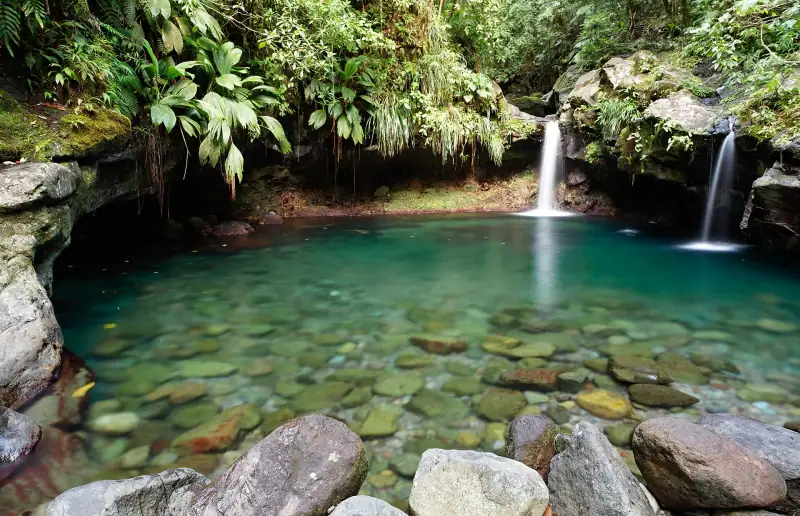
Waterfalls in Guadeloupe: Carbet Falls and the best hikes
The best waterfalls in Guadeloupe on Basse-Terre: Carbet Falls, Cascade aux Écrevisses, Saut de la Lézarde. Access, difficulty and tips for visiting.
Ready-made
Guadeloupe itineraries
3 days
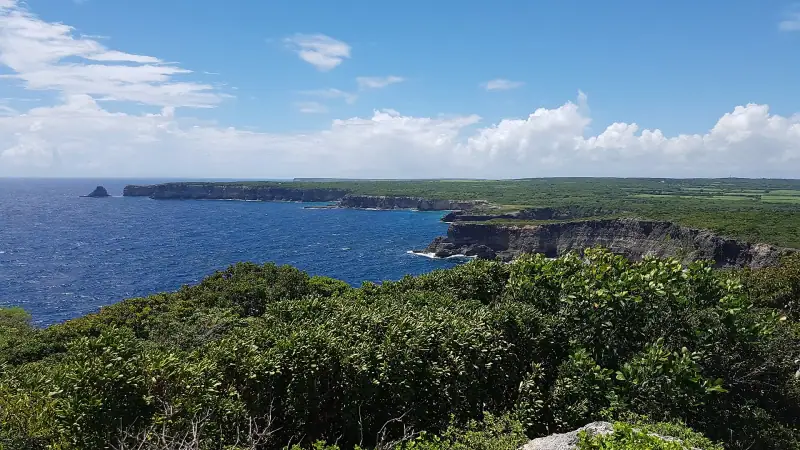
Grande-Terre in 3 days: beaches, cliffs and Pointe des Châteaux
A 3-day itinerary in Grande-Terre: Le Gosier, Sainte-Anne, Saint-François, Pointe des Châteaux, Le Moule and the northern cliffs. Stops, tips and bases.
5 days
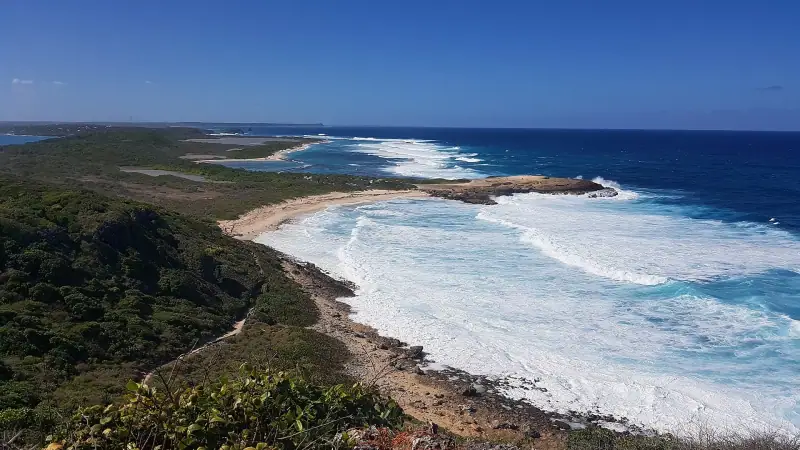
Guadeloupe in 5 days without a car: a realistic itinerary
Visiting Guadeloupe without a car in 5 days is possible: a base in Le Gosier or Sainte-Anne, buses, taxis, excursions and the boat to Les Saintes.
3 days
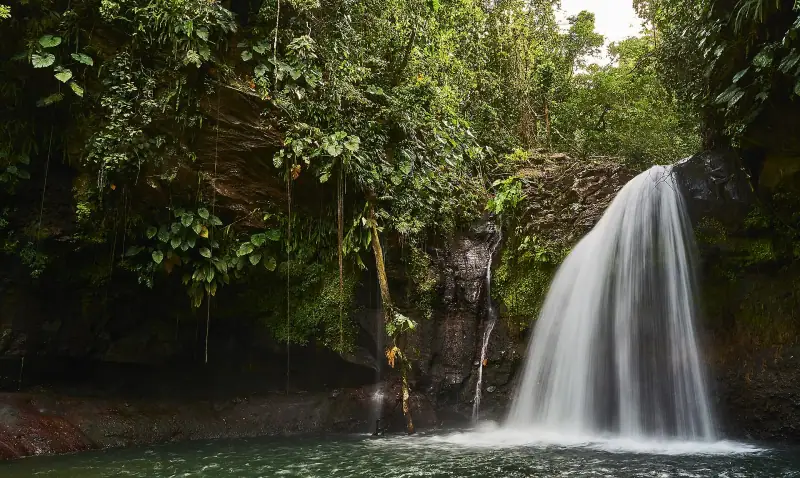
Basse-Terre road trip in 3 days: volcano, waterfalls and the leeward coast
Southern Basse-Terre (Capesterre-Belle-Eau or Saint-Claude)Leeward coast (Bouillante or Deshaies)