What to see
Waterfalls in Guadeloupe: Carbet Falls and the best hikes
We may earn a commission when you book through links on this page, at no extra cost to you. We don't visit or try the places we cover: we summarize published sources. How we work
In short
- Carbet Falls, in Capesterre-Belle-Eau, are the best known; the highest drop is well over a hundred meters. Access has changed over the years: check trail status before you go.
- The Cascade aux Écrevisses, beside the Route de la Traversée, is the easiest to reach, on a short developed trail.
- Limit a waterfall day to two or three sites. A rental car is almost essential, as public transport serves trailheads poorly.
- After heavy rain, rivers can rise within minutes: turn back if in doubt and respect local signs and bans.
With its rainforest-covered slopes and abundant rain, Basse-Terre is waterfall country. Inside the Guadeloupe National Park, rivers tumble down the flanks of the La Soufrière massif and form spectacular falls, sometimes only minutes from a parking lot, sometimes at the end of a proper hike.
This guide presents the best waterfalls in Guadeloupe, what to know about getting to them, and how to fit them into a stay without taking risks.
Carbet Falls: the most famous on the island
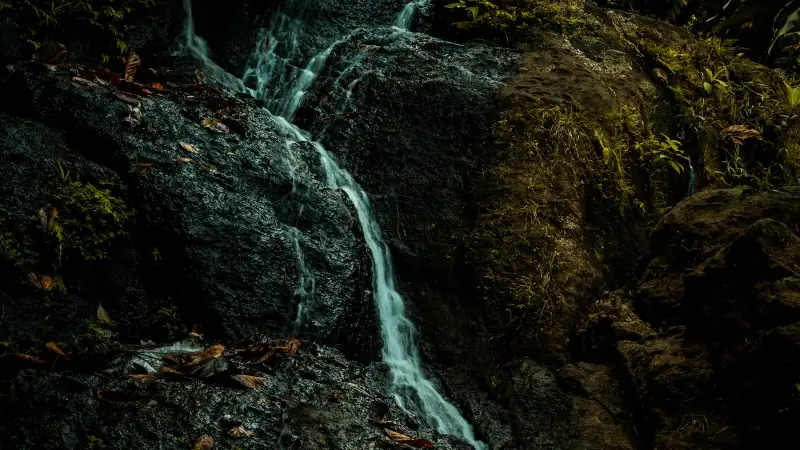
Carbet Falls, in Capesterre-Belle-Eau, are the emblem of Guadeloupe’s waterfalls. Fed by the Grand Carbet river, they consist of several tiered falls, the highest of which is well over a hundred meters (330 ft).
Access to these falls has changed a lot: some trails have been closed or modified following rockslides or floods. Before you go, find out the current state of the routes from the National Park or the tourist office, as the information changes from one season to the next.
- Bring hiking shoes: the trail is often muddy and slippery.
- Start early: afternoon showers are frequent in the rainforest.
- Follow the safety instructions: a storm upstream can make the water rise very quickly, even if the weather is fine where you are.
Places to stay in Basse-Terre
Stay as close to nature as possible to start hiking early: compare availability for your dates.
Cascade aux Écrevisses: the easiest to reach
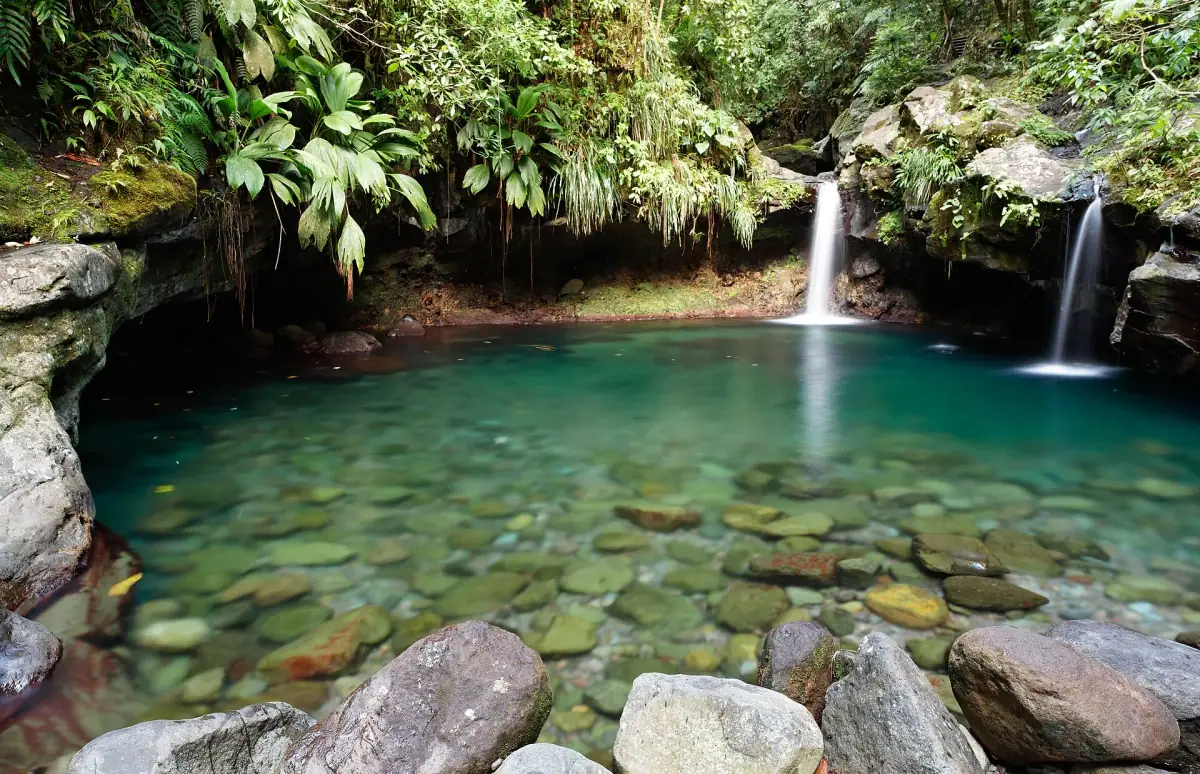
The Cascade aux Écrevisses is one of the most visited on the island, because it sits beside the Route de la Traversée, which cuts Basse-Terre from east to west through the forest. A short developed trail, accessible to most walkers, leads to the fall and its pool.
It is a great stop for a first immersion in the rainforest, including with family. Keep in mind, however, that the stones are slippery at the water’s edge and that swimming depends on current conditions and the signs posted there.
The Route de la Traversée is worth the detour on its own: it crosses the national park and links the Caribbean coast in the west to the east coast without going through Pointe-à-Pitre.
Saut de la Lézarde and the Petit-Bourg pools
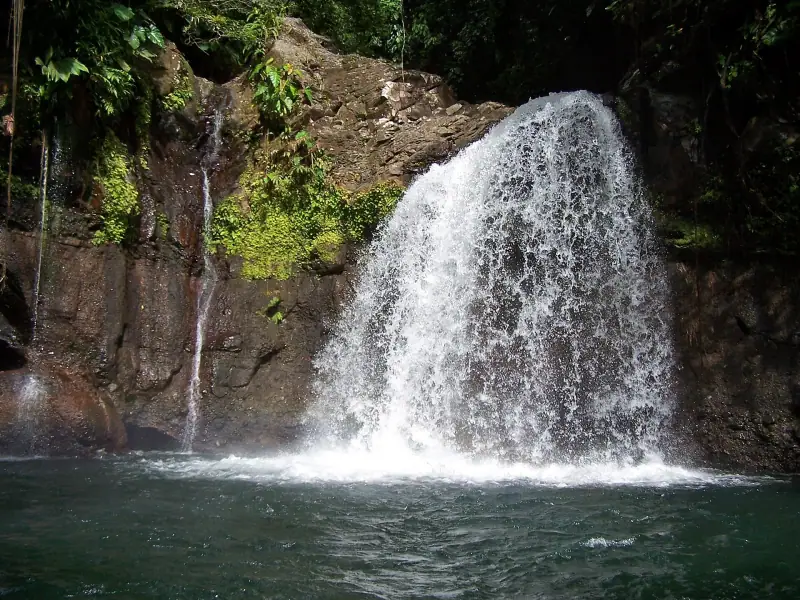
Around Petit-Bourg, several water sites can be visited in a day. The Saut de la Lézarde is a waterfall surrounded by dense vegetation, reached by a trail of modest length but often wet.
In the same area, other natural pools and rivers attract those who want to cool off. The atmosphere there is more low-key than at the busiest sites, which suits those looking for a little calm. Here again, check the accessibility and safety of the site before setting out on a trail you do not know.
Hikes and excursions in Guadeloupe
Prefer to go with a guide? See the guided outings offered in Guadeloupe.
Cascade de Paradis and the Capesterre area
Still on the windward coast of Basse-Terre, the Capesterre-Belle-Eau area has several flowing-water sites. The Cascade de Paradis is one of those places valued for its green setting and relatively easy access.
This very wet region is also home to the banana plantations that make up a typical Guadeloupe landscape. A day can therefore combine a waterfall, a walk through the fields and a treat stop. To extend the experience at altitude, see our guide to the La Soufrière hike.
How to organize your waterfall day
Basse-Terre is larger and more winding than it looks: mountain roads slow down trips. It is better to limit a day to two or three sites rather than rushing from one fall to another.
- Morning: a first waterfall as soon as the trails open, when the air is still cool and the sites quiet.
- Midday: a Creole lunch in one of the coastal villages, to rest. Our article on Creole cuisine in Guadeloupe helps you choose what to taste.
- Afternoon: a shorter site, keeping a margin before nightfall, which comes early in the tropics.
A rental car is almost essential to link these sites, as public transport serves trailheads poorly. If you are building your stay, our 7-day Guadeloupe itinerary shows how to place Basse-Terre in the loop.
Flights to Guadeloupe
Compare dates and layover times before locking in your nature stay.
Safety and good practice in the rainforest
Waterfalls are magnificent, but the environment is demanding. A few simple rules avoid most problems.
- Check the weather before leaving and turn back after heavy rain: rivers can swell within minutes.
- Do not swim where it is forbidden or discouraged, and avoid diving into pools whose depth you do not know.
- Gear up: shoes with good grip, a light rain jacket, water, mosquito repellent and sunscreen.
- Leave no trash: you are in a national park, whose fauna and flora are protected.
- Leave nothing valuable in the car at trailhead parking lots.
The timing of your trip also matters: the rainy season gives more powerful waterfalls but more delicate trails. To choose your dates, read our guide when to go to Guadeloupe.
Where to stay to explore the waterfalls
Basse-Terre is the wildest part of the archipelago. Staying overnight there, on the Capesterre side or on the leeward coast, lets you start hikes earlier and avoid long morning drives. Many travelers nevertheless prefer to stay in Grande-Terre, closer to the beaches, and do Basse-Terre as a day trip.
Both options make sense: the first suits nature lovers, the second those who want to combine beach relaxation and hiking. To compare areas, see our guide where to stay in Guadeloupe.
Frequently asked questions
What are the most beautiful waterfalls in Guadeloupe?
Carbet Falls, on the slopes of La Soufrière, are the most famous. Among the most accessible are the Cascade aux Écrevisses, the Saut de la Lézarde and the Cascade de Paradis. All are on Basse-Terre.
Can you swim in Guadeloupe's waterfalls?
Some pools allow swimming, others do not. After heavy rain, the flow can rise very fast: always follow signs and local bans, and turn back if in doubt.
Are Carbet Falls accessible?
Access to the different falls has changed over the years because of the risk of rockslides and floods. Before you go, check trail status with the Guadeloupe National Park or the tourist office.
What is the best time of year to see the waterfalls?
Waterfalls are fuller in the rainy season, but the trails are then more slippery and riskier. The dry season offers better walking conditions with a flow that is still pleasant.
Do you need a guide for Guadeloupe's waterfalls?
It is not mandatory for short, developed sites. For more demanding routes, or if you are not used to rainforest hiking, a local guide is a plus.
More Guadeloupe guides
Keep reading
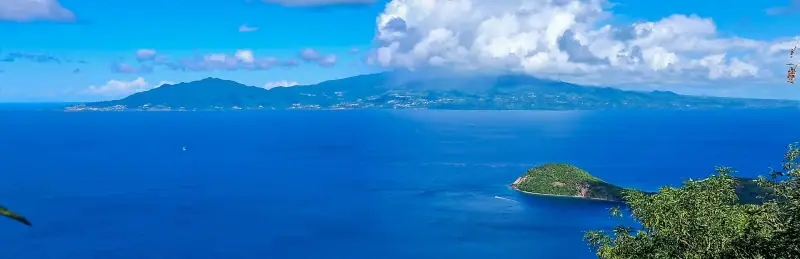
Visiting Les Saintes: what to do on Terre-de-Haut in a day or more
Visiting Les Saintes from Guadeloupe: the crossing, Fort Napoléon, Pain de Sucre, beaches and tips for organizing a day or a weekend on Terre-de-Haut.
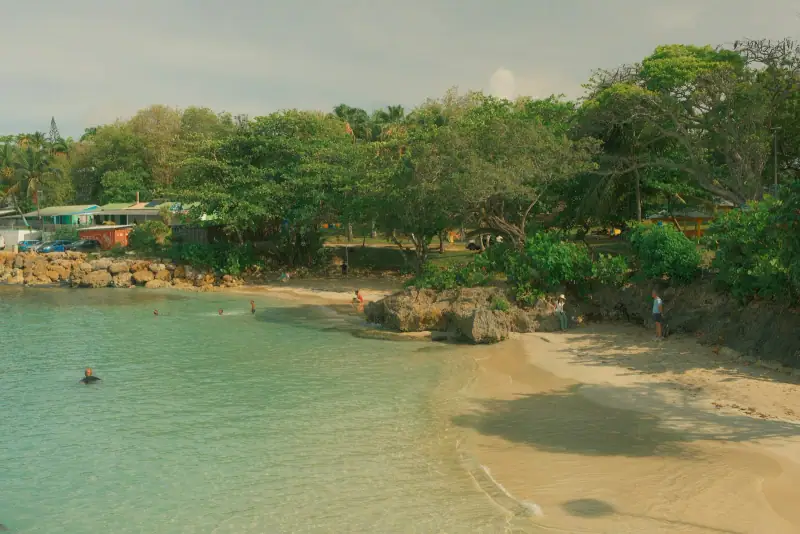
The best beaches in Guadeloupe: a selection by island
The best beaches in Guadeloupe: Grande-Terre, Basse-Terre, Les Saintes and Marie-Galante, with tips on swimming, snorkeling and safety.
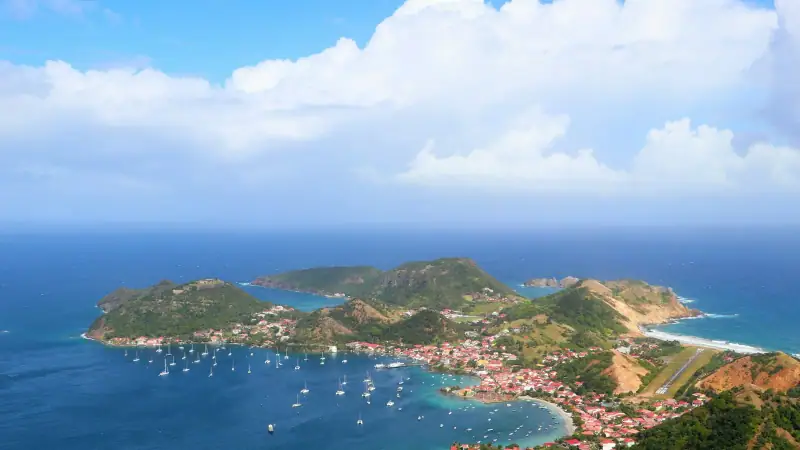
Complete guide to visiting Guadeloupe: regions, highlights and tips
Visiting Guadeloupe: regions, towns, highlights, best time to go, transport, lodging and budget. The pillar guide to plan your trip.
Ready-made
Guadeloupe itineraries
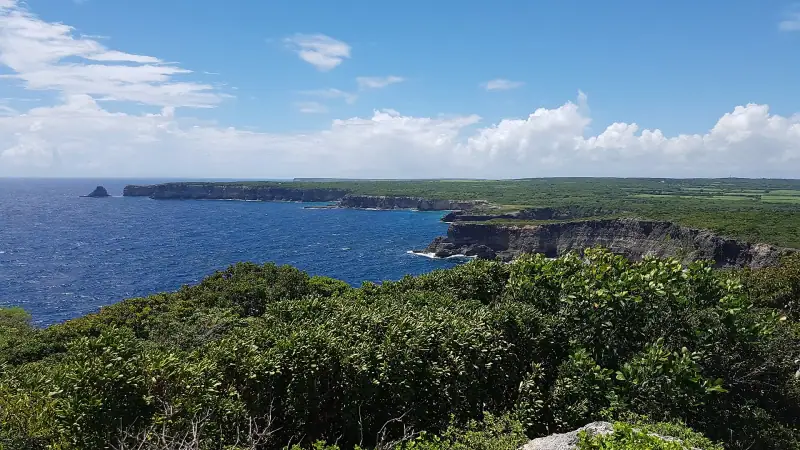
3 days
Grande-Terre in 3 days: beaches, cliffs and Pointe des Châteaux
A 3-day itinerary in Grande-Terre: Le Gosier, Sainte-Anne, Saint-François, Pointe des Châteaux, Le Moule and the northern cliffs. Stops, tips and bases.
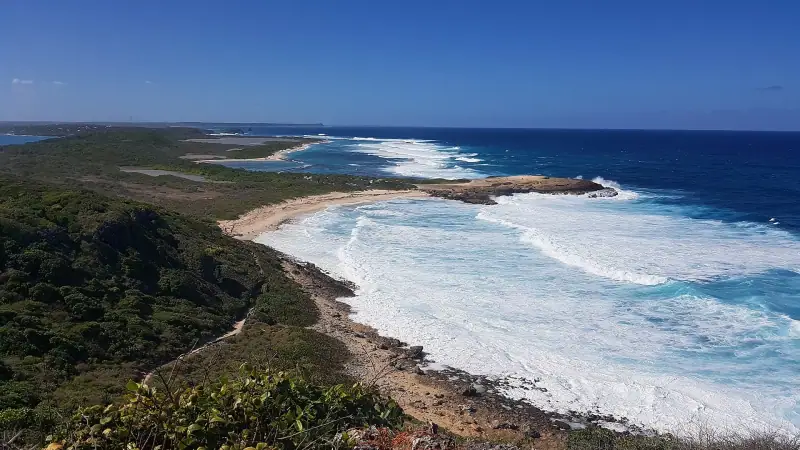
5 days
Guadeloupe in 5 days without a car: a realistic itinerary
Visiting Guadeloupe without a car in 5 days is possible: a base in Le Gosier or Sainte-Anne, buses, taxis, excursions and the boat to Les Saintes.
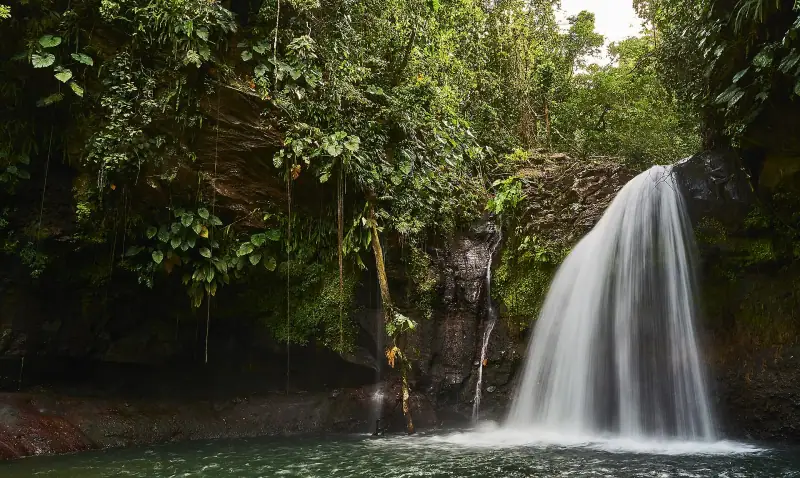
3 days
Basse-Terre road trip in 3 days: volcano, waterfalls and the leeward coast
Southern Basse-Terre (Capesterre-Belle-Eau or Saint-Claude)Leeward coast (Bouillante or Deshaies)