Itineraries
Guadeloupe in 7 days: Grande-Terre, Basse-Terre and Les Saintes
We may earn a commission when you book through links on this page, at no extra cost to you. We don't visit or try the places we cover: we summarize published sources. How we work
Day by day
- Day 1Arrival, Pointe-à-Pitre, Le Gosier
- Day 2Sainte-Anne, Saint-François, Pointe des Châteaux
- Day 3Northern Grande-Terre: Porte d'Enfer, Grande Vigie, Le Moule
- Day 4La Soufrière and the Carbet Falls
- Day 5Leeward coast: Bouillante, Pigeon Island, Deshaies
- Day 6Day trip to Les Saintes (Terre-de-Haut)
- Day 7Last swim and return
Where to sleep
- Southern Grande-Terre (Le Gosier, Sainte-Anne or Saint-François)2 nights
- Southern Basse-Terre (Capesterre-Belle-Eau or Saint-Claude)2 nights
- Leeward coast (Bouillante or Deshaies)2 nights
In short
- Seven days cover south Grande-Terre (days 1-3), La Soufrière and the Carbet Falls (day 4), the leeward coast (day 5), Les Saintes (day 6) and the return (day 7).
- Three bases follow one another: south Grande-Terre (2 nights), south Basse-Terre (2 nights), then Bouillante or Deshaies.
- A car is almost essential: no stop is far, but roads are winding and traffic around Pointe-à-Pitre slows departures. Always allow a margin.
- The dry season (December to May) has the most stable weather. Boat crossings to Les Saintes depend on sea conditions all year.
Planning a 7-day Guadeloupe itinerary is mostly about understanding the geography: the archipelago is shaped like a butterfly, with two very different wings. In the east, Grande-Terre is flat, lined with beaches and lagoons. In the west, Basse-Terre is mountainous, covered in rainforest and dominated by the La Soufrière volcano. Between the two, Pointe-à-Pitre is the crossroads.
This itinerary, designed for a first visit by car, spreads the days out to limit driving: no stop is more than a few dozen kilometers away, but the roads are winding and traffic around Pointe-à-Pitre can slow departures. Always allow a margin. To choose your dates, see our guide when to go to Guadeloupe.
The week at a glance
- Day 1: arrival, Pointe-à-Pitre and Le Gosier.
- Day 2: Sainte-Anne, Saint-François and Pointe des Châteaux.
- Day 3: northern Grande-Terre, between cliffs and villages.
- Day 4: Basse-Terre, La Soufrière and the waterfalls.
- Day 5: the leeward coast, from Bouillante to Deshaies.
- Day 6: a day in Les Saintes.
- Day 7: last swim and return.
For accommodation, three bases follow one another: south Grande-Terre for the first two nights, south Basse-Terre (the Capesterre-Belle-Eau or Saint-Claude area) for nights 3 and 4, then the leeward coast (Bouillante or Deshaies) for the end of the stay. If you prefer to change lodging less often, a single base on the Basse-Terre side is possible, at the cost of longer drives. The areas are detailed in our article where to stay in Guadeloupe.
Day 1: Pointe-à-Pitre and Le Gosier
The international airport is in Les Abymes, only a few kilometers from Pointe-à-Pitre. Depending on your arrival time, pick up your car, drop your bags in Le Gosier, then enjoy the afternoon without a busy schedule: jet lag and heat are more tiring than you might think.
If you have energy, spend a few hours in Pointe-à-Pitre. The Mémorial ACTe, a center devoted to the memory of the slave trade and slavery, is one of the archipelago’s major cultural sites. The covered market and the shopping streets of the center give a first look at Creole life: spices, tropical fruit, vanilla, flavored rum. Check opening hours before you go, especially on Sunday.
Late in the day, head to Le Gosier, a very convenient seaside resort for a first night. La Datcha beach and Îlet du Gosier, reachable by boat from the coast, offer a first swim in turquoise water. For dinner, the seafront restaurants serve classic Creole dishes: salt cod fritters (accras), colombo, grilled fish.
Hotels in Le Gosier and Sainte-Anne
Compare places to stay for your first nights, close to the airport and the beaches.
Day 2: Sainte-Anne, Saint-François and Pointe des Châteaux
This day follows the south coast of Grande-Terre eastward, a string of well-known beaches. Allow about half an hour of driving between Le Gosier and Sainte-Anne, then about twenty minutes to Saint-François.
Sainte-Anne is known for its beach of golden sand, protected by a coral barrier, and for its lively market. Arrive early: shade is scarce on the main beach and crowds grow quickly in high season.
Saint-François is the gateway to Pointe des Châteaux, the eastern tip of Grande-Terre, where the Atlantic meets the Caribbean Sea. The site is a nature reserve with wind-beaten cliffs, with a view of La Désirade and, in clear weather, Marie-Galante. A cross stands at the top of the point, reached by a short trail. Bring water, a hat and good shoes: the site is very exposed to the sun.
On the way back, several small wild beaches line the road to the point, but swimming is not always safe on the Atlantic side. Follow the signs and flags, and preferably swim in sheltered areas.
Day 3: northern Grande-Terre
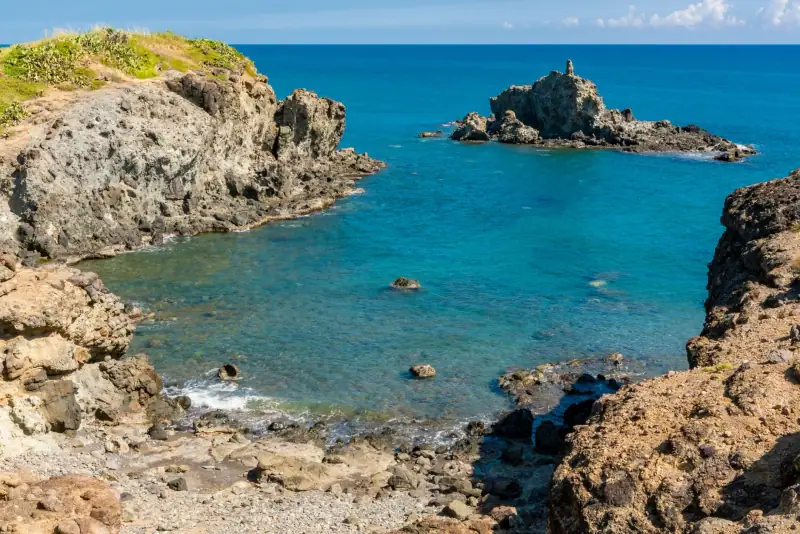
Northern Grande-Terre is wilder and drier. The road crosses sugar cane fields and quiet villages, then reaches limestone cliffs beaten by the Atlantic.
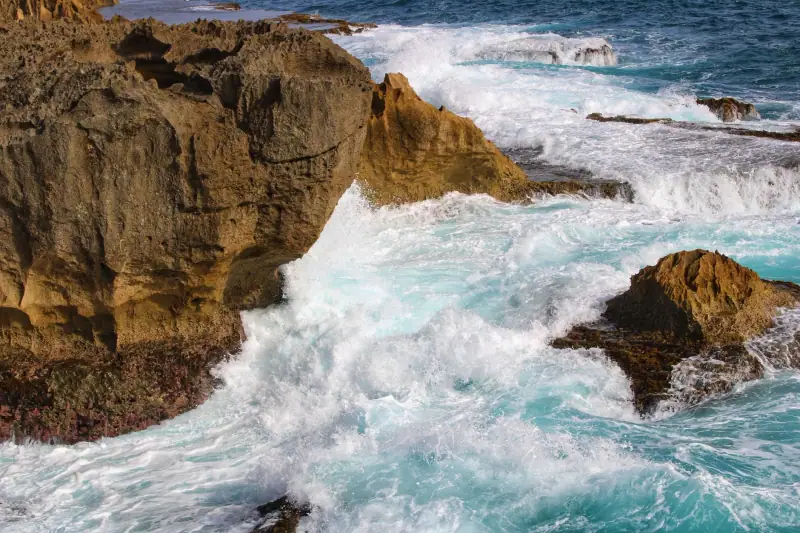
Stop at the Porte d’Enfer, in Anse-Bertrand: a natural cove protected by rocks, where the water is often calm despite the churning ocean around it. Be careful: the sea can be dangerous outside the small sheltered area. Farther north, the Pointe de la Grande Vigie offers a spectacular viewpoint from its cliffs, with a walking path along the cliff edge. Stay on the marked paths, as the cliff edge is not secured everywhere.
On the way, a stop in the town of Le Moule lets you see a traditional coastal town, as well as the island’s pre-Columbian heritage at the Edgar Clerc museum, devoted to the Amerindians. Check opening hours before you go.
In the evening, head to your lodging in southern Basse-Terre, to be in position for La Soufrière the next day. If possible, avoid rush hour around Pointe-à-Pitre.
Day 4: La Soufrière and the Basse-Terre waterfalls
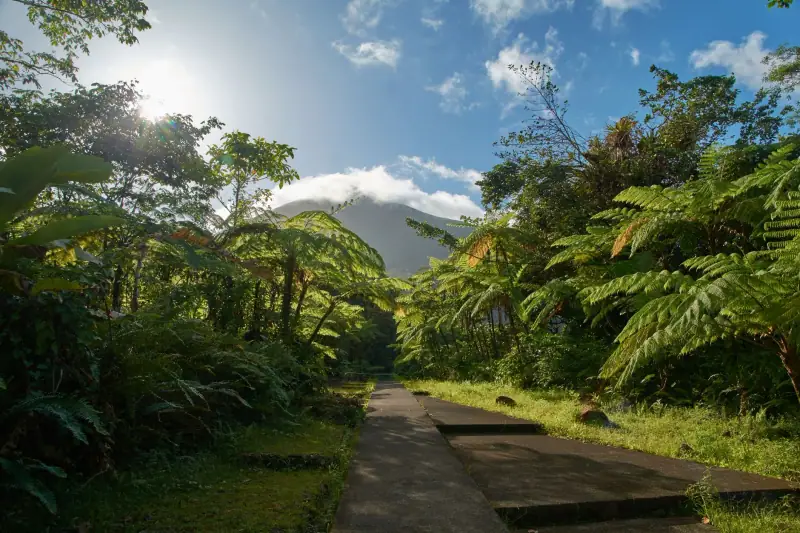
This is the most physical day of the itinerary. La Soufrière, an active volcano that dominates southern Basse-Terre, is the highest point in the Lesser Antilles: its summit is about 1,460 m (4,790 ft) high. The hiking trail starting from the Saint-Claude area is the busiest. Allow several hours round trip, with a significant elevation gain and sometimes slippery ground.
Tips for La Soufrière:
- Start early in the morning: visibility is generally better before the clouds settle in.
- Bring a waterproof jacket, water and warm clothes: the summit is clearly cooler and windier than the coast.
- Sulfur fumes can be strong at the summit: follow the posted instructions.
- Check the trail’s access status with the Guadeloupe National Park before you go, as it can be restricted depending on volcanic activity.
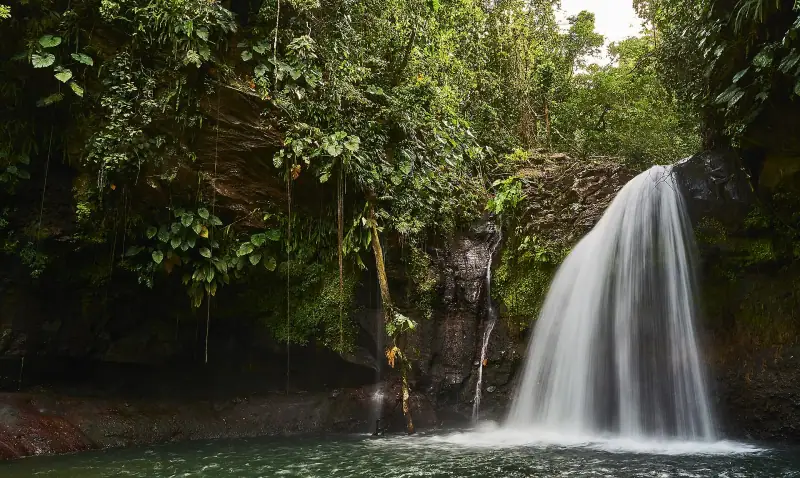
In late morning or early afternoon, the Carbet Falls, in the Capesterre-Belle-Eau area, are among the best-known waterfalls on the island. Access to some falls is by trails whose condition varies: ask locally before choosing your route.
Hikes and guided excursions
Not comfortable hiking on your own? See the guided outings offered in Basse-Terre.
Day 5: the leeward coast, from Bouillante to Deshaies
The west coast of Basse-Terre, known as the “leeward” coast, is sheltered from the trade winds: the sea is calmer and the sand is often darker, of volcanic origin. The road follows the shoreline between fishing villages and quiet coves.
Bouillante is known for its volcanic hot springs and as a departure point for dive sites. Offshore, Pigeon Island, inside the Cousteau Reserve, is one of the best-known snorkeling and diving sites in Guadeloupe. Even without diving, a mask and snorkel are enough to see tropical fish near Malendure beach. Clubs and glass-bottom boats offer trips: compare offers there and check sea conditions.
Continuing north, Deshaies is a colorful fishing village, with its crescent bay lined with palm trees. The Deshaies botanical garden, up on the hillside, is a pleasant shaded break. End the day at Grande Anse beach, a large beach of golden sand, perfect for a sunset.
Deshaies or Bouillante make good bases for the end of the stay: it is a quiet area, with gîtes, villas and small hotels.
Day 6: a day in Les Saintes
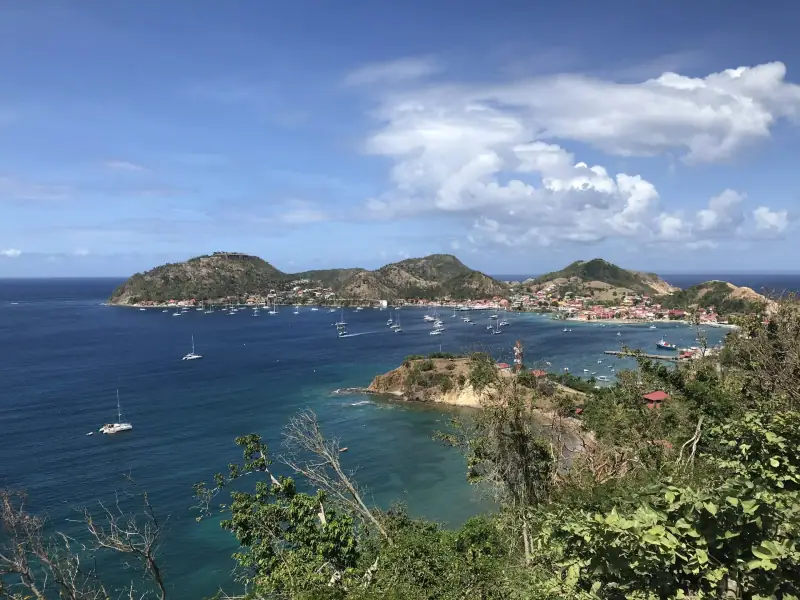
Les Saintes, a group of islands south of Basse-Terre, is one of the most beautiful places in Guadeloupe. Boats leave from several ports, notably on the south coast of Basse-Terre or from Pointe-à-Pitre depending on the company. The crossing generally takes 20 to 30 minutes from Trois-Rivières, longer from the other ports. Check schedules and book ahead in high season: crossings can be disrupted in rough seas.
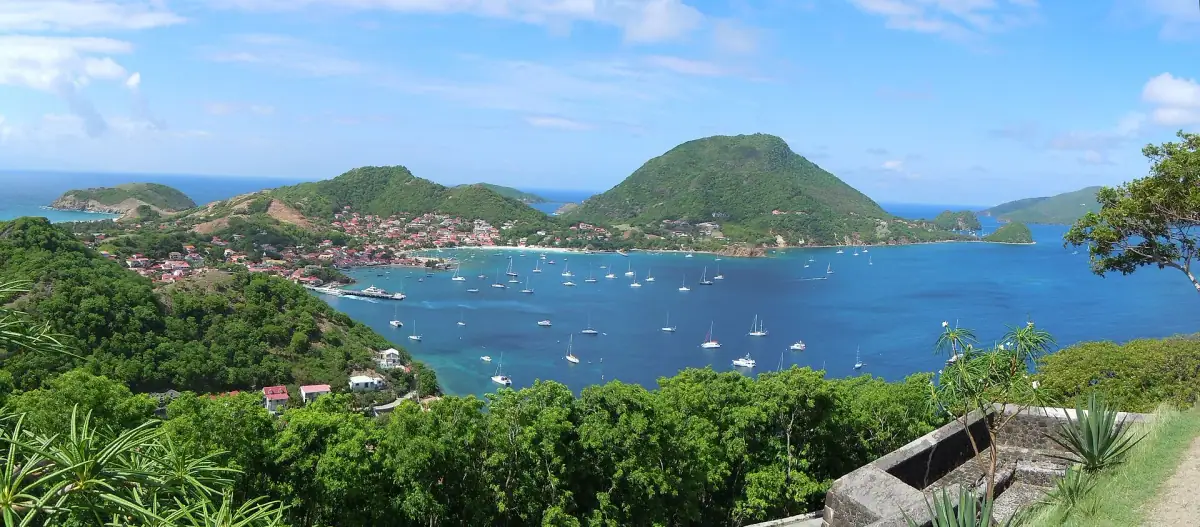
On Terre-de-Haut, the main island, the town is charming, with colorful houses and narrow lanes. The Baie des Saintes is often cited among the most beautiful bays in the world. Rent a bike or an electric scooter to get around: the island is small but hilly. Fort Napoléon overlooks the bay and offers a fine viewpoint, along with a museum.
For swimming, several beaches are reachable on foot or by bike from the town. Bring sun protection and water: shade is limited in some areas.
Remember to plan for the last boat back with a comfortable margin: missing the last crossing would force you to spend the night on the island.
Flights to Guadeloupe
Compare fares for your dates before locking in your itinerary.
Day 7: last swim and return
Depending on your flight time, enjoy a last quiet morning. If your departure is late, a beach near the airport, such as those in Le Gosier, gives you a last swim without risk of delay. Keep time for returning the rental car and for possible traffic jams around Pointe-à-Pitre.
Before leaving, stop by a market to bring back agricultural rum, spices or vanilla: these are authentic souvenirs that are easy to carry. Check the rules for carrying liquids in your luggage.
Practical tips for a successful itinerary
Car. It is almost essential: compare rental offers below and book early in high season. Driving is on the right, but the mountain roads are narrow and winding.
Time budget. Do not add stops in a single day beyond what is planned: drives are longer than you would think, because of traffic and twisting roads.
Weather. Basse-Terre is much wetter than Grande-Terre. Always keep a light waterproof jacket, even in the dry season.
Sea safety. Follow the beach flags and ask before swimming on the Atlantic side, where currents and swell can be dangerous.
Gear. Reef-friendly sunscreen, mosquito repellent, closed-toe walking shoes and water shoes for river swimming spots.
Variations by profile
With more time. Add two or three days for Marie-Galante, the island of a hundred windmills, reached by boat from Pointe-à-Pitre or Saint-François, or for the more unspoiled La Désirade.
With children. Replace the climb of La Soufrière with a shorter forest walk, and favor the sheltered beaches of Grande-Terre, such as Sainte-Anne or Le Gosier.
For diving. Add a second day on the leeward coast and book your outings in advance with a licensed club.
On a tight budget. Choose gîtes or rentals rather than beach hotels, and favor markets and roadside restaurants for meals.
This itinerary is deliberately flexible: adapt it to the weather of the day, to your pace and to your wishes. In Guadeloupe, the best day is often the one you do not plan too much.
Frequently asked questions
Is 7 days enough to visit Guadeloupe?
Yes for a first look: a week lets you see the main beaches of Grande-Terre, La Soufrière and the leeward coast of Basse-Terre, and spend a day in Les Saintes. Marie-Galante and La Désirade need extra days.
Do you need to rent a car for this itinerary?
It is strongly recommended. Public transport serves the natural sites poorly, and a car lets you move between Grande-Terre and Basse-Terre. For Les Saintes, you leave the car on Basse-Terre and take the boat.
Where should you stay to limit driving?
The simplest is to combine three bases: south Grande-Terre (Le Gosier, Sainte-Anne or Saint-François) for the start of the stay, south Basse-Terre for La Soufrière, then the leeward coast (Deshaies or Bouillante) for the end.
What is the best time of year for this itinerary?
The dry season, known as the carême, from about December to May, has the most stable weather, especially for hiking in Basse-Terre. Crossings to Les Saintes depend on sea conditions all year.
Can you climb La Soufrière without a guide?
Yes, the trail is marked and busy, but the summit is often in cloud and the ground can be slippery. Start early, bring a waterproof jacket and check the National Park's instructions before you go.
More Guadeloupe guides
Keep reading
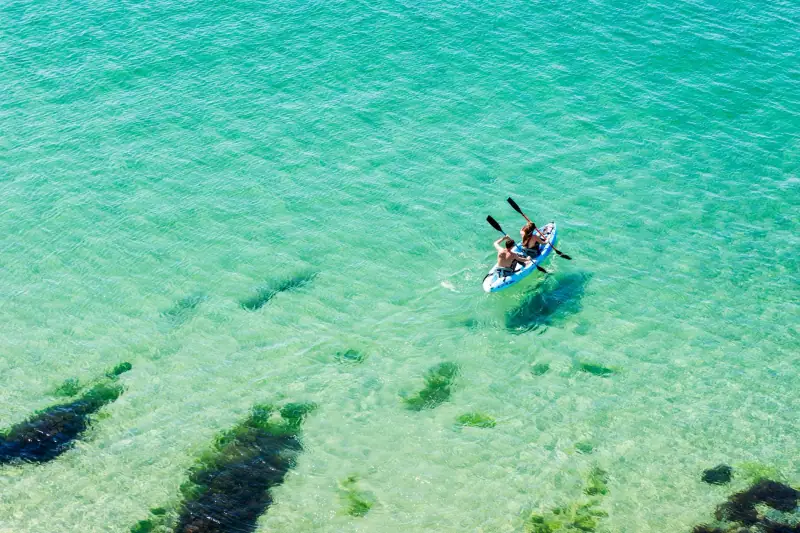
Water sports in Guadeloupe: kayak, kitesurfing, paddleboarding and boat trips
Mangrove kayaking, kitesurfing, paddleboarding, catamaran trips and whale watching: where to do water sports in Guadeloupe, when and with what precautions.
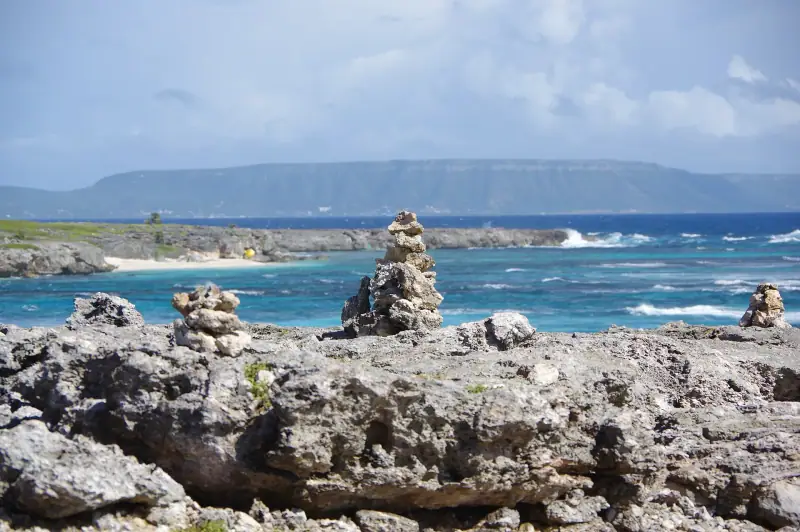
La Désirade in a day from Saint-François: ferry, booking, price and plan
La Désirade in one day: ferry times from Saint-François, booking, rentals on the island, beaches and viewpoints. A realistic plan and mistakes to avoid.
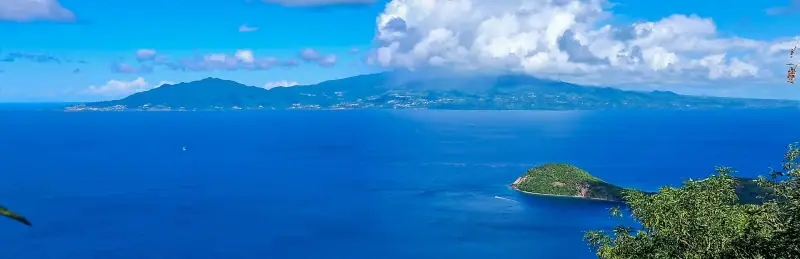
Visiting Les Saintes: what to do on Terre-de-Haut in a day or more
Visiting Les Saintes from Guadeloupe: the crossing, Fort Napoléon, Pain de Sucre, beaches and tips for organizing a day or a weekend on Terre-de-Haut.
Ready-made
Guadeloupe itineraries
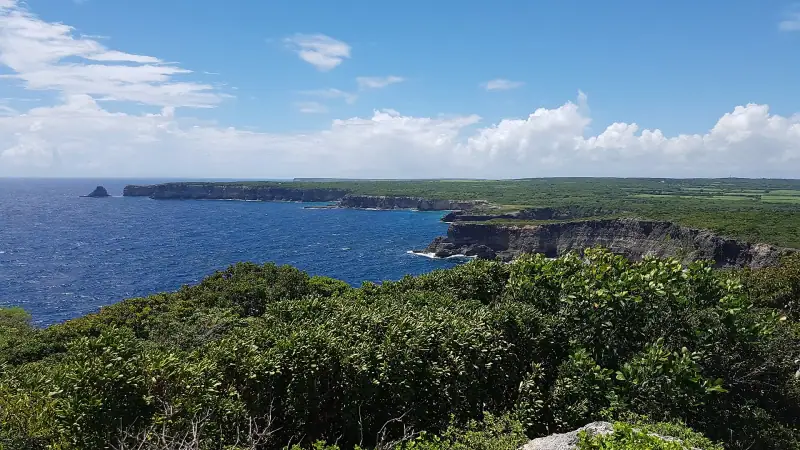
3 days
Grande-Terre in 3 days: beaches, cliffs and Pointe des Châteaux
A 3-day itinerary in Grande-Terre: Le Gosier, Sainte-Anne, Saint-François, Pointe des Châteaux, Le Moule and the northern cliffs. Stops, tips and bases.
5 days
Guadeloupe in 5 days without a car: a realistic itinerary
Visiting Guadeloupe without a car in 5 days is possible: a base in Le Gosier or Sainte-Anne, buses, taxis, excursions and the boat to Les Saintes.
3 days
Basse-Terre road trip in 3 days: volcano, waterfalls and the leeward coast
Southern Basse-Terre (Capesterre-Belle-Eau or Saint-Claude)Leeward coast (Bouillante or Deshaies)