Things to do
Watching humpback whales on Moorea and Tahiti: season, outings and tips
We may earn a commission when you book through links on this page, at no extra cost to you. We don't visit or try the places we cover: we summarize published sources. How we work
In short
- Humpback whales visit French Polynesian waters from about July to November. August and September are generally the most active months.
- Moorea is the most practical base, a short crossing from Tahiti; Tahiti also offers outings in season, and whales are sometimes spotted from the ferry.
- Two formulas: watching from the boat, or an in-water encounter with a licensed operator under strict rules. No sighting is ever guaranteed.
- French Polynesia declared a marine mammal sanctuary in 2002; follow approach rules, do not touch or chase the animals.
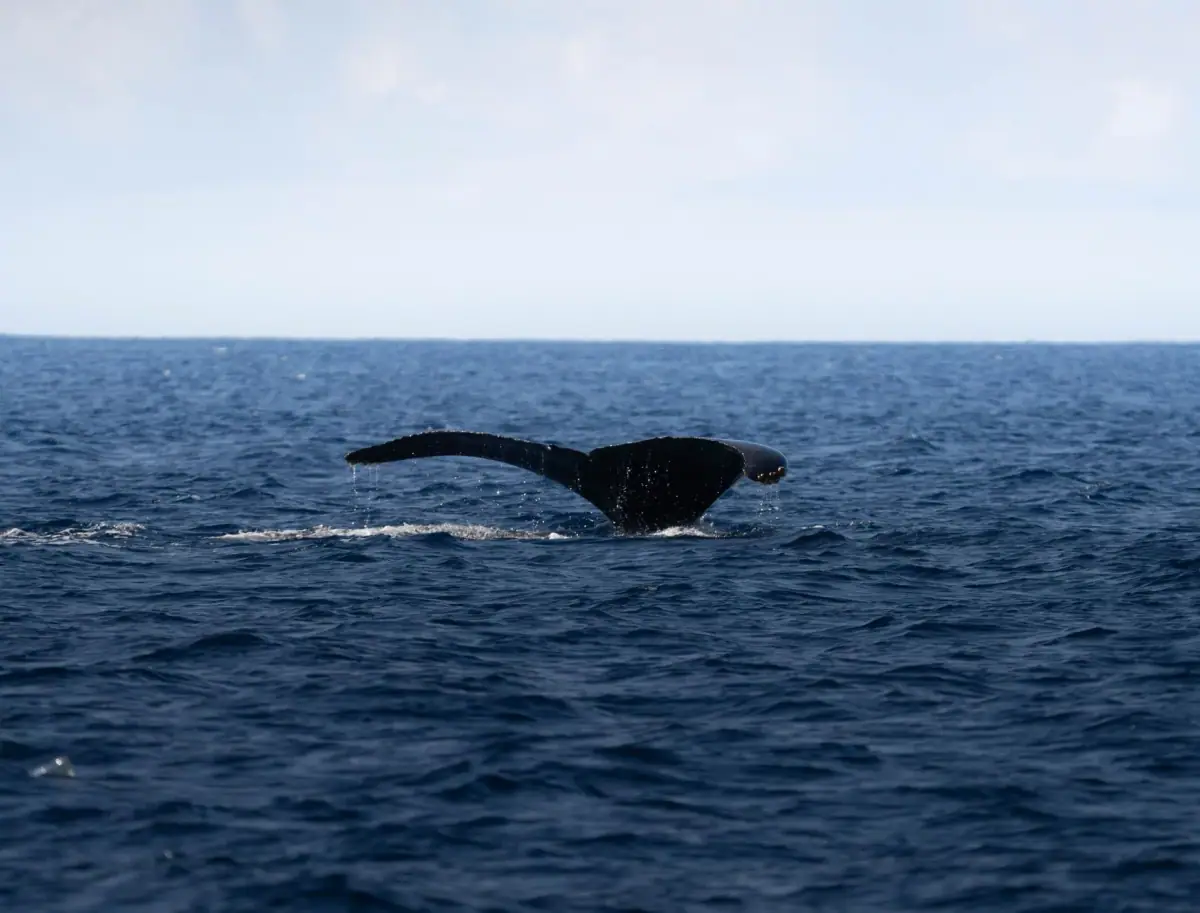
Every year, from July to November, the warm waters of French Polynesia become a meeting place for humpback whales. Coming from the cold waters of the south, they come here to breed and give birth, safe from predators. For travelers, it is one of the most striking experiences of a stay: spotting a blow a few hundred meters away, seeing a tail rise, or, with a licensed operator, slipping into the water at a respectful distance from a mother and her calf. This guide helps you choose the right period, the right island and the right outing, without unrealistic promises.
Why whales come to French Polynesia
Humpback whales spend the austral summer feeding in the rich, cold waters of the Southern Ocean. As winter approaches, they head up to warm, sheltered waters where females give birth and males compete for their attention. The lagoons and passes of French Polynesia are among these breeding zones.
This presence is no accident: French Polynesia declared itself a sanctuary for marine mammals in 2002, which protects the whales and dolphins that visit its waters. This framework explains why watching is strictly regulated: operators must follow approach rules, and travelers must accept that the animals’ well-being comes before the photo.
What you may see:
- Blows, visible from afar in calm weather.
- Jumps and fin slaps, spectacular but unpredictable.
- Mothers accompanied by their calves, often near the surface.
- Male songs, which you sometimes hear underwater during an in-water encounter.
The watching season: July to November
The watching period runs from July to November. August and September are generally the most active months, but the start and end of the season also offer fine encounters. In October, it is not unusual to see calves that are already bigger, more playful and more active.
Outside this window, there is no point hoping to meet humpback whales: better to count on dolphins, rays and reef sharks. Our guide to the best time to visit French Polynesia helps you balance weather, budget and wildlife. If you travel out of season, diving in Rangiroa and Fakarava offers another way to meet marine life.
A few benchmarks for planning:
- Book several days ahead if possible: outings depend on weather and sea state.
- Plan to leave a margin in your schedule for a second attempt.
- Outings are generally offered in the morning, when the sea is calmer, but times vary by operator.
Moorea, the most practical base
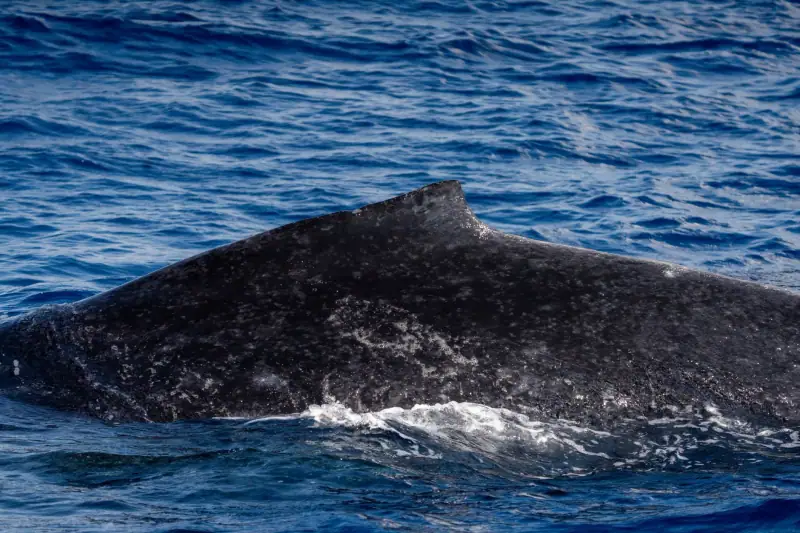
If you remember only one island for whales, remember Moorea. A short crossing from Tahiti, it has many operators, its waters are visited by whales during the season, and its lagoon lets you combine several activities in one stay.
Outings most often leave from the north or northwest coast of the island, depending on the operator. The principle is the same everywhere: the boat leaves the lagoon through a pass, runs along the outer reef and looks for blows, sometimes with the help of spotters. If you stay three days, our three-day Moorea itinerary shows how to fit an outing to sea between the island loop and the hikes.
To sleep, preferably choose a place close to your boarding point so as not to lose time in the morning. Our tips on family guesthouses in French Polynesia will help you choose a friendly, affordable option.
Stays on Moorea
Compare availability for whale season, July to November.
Tahiti: an alternative from Papeete
Only a night or two on the main island? Tahiti also offers sea outings during the season. Whales regularly pass off the west coast and in the channel separating Tahiti from Moorea, which explains why they are sometimes spotted from the ferry.
Tahiti’s advantage is ease of access: you can book an outing on arrival or before a flight to another archipelago. The drawback is a less “lagoon” atmosphere than Moorea and fewer options for small groups. Find the island’s other highlights in our guide visiting Tahiti: what to see and do.
If you arrive late and want to be in shape for a morning outing, also see our tips on sleeping near Papeete airport.
Watching from the boat or getting in the water: which to choose?
Two main formulas exist, and many outings combine both.
Watching from the boat
This is the most accessible formula. You stay on board, the captain approaches slowly, cuts or reduces the engine and you watch the animals from a distance. It suits children, people who do not want to swim in open sea and those who fear deep water. The big advantage is the overall view: you understand the group’s behavior, you see the jumps, you hear the blows.
Getting in the water with the whales
French Polynesia is one of the few destinations in the world where, under conditions, it is possible to get in the water near humpback whales. The framework is strict:
- only licensed professional operators are allowed;
- the number of people in the water is limited, a few at a time;
- the decision rests with the guide, based on the animals’ behavior and the weather;
- you do not touch the whales and never chase them: it is up to the animal to approach, if it wishes.
For this formula, you need to be comfortable in open sea with mask, fins and snorkel, and accept that it is not always possible. A mother resting with her calf, for example, may justify staying on board so as not to disturb her.
How to choose your operator
Not all operators are equal. A few criteria for sorting:
- Respect for the animals: a good operator states the approach rules clearly and does not insist when the whales move away.
- Group size: the smaller it is, the nicer the experience, notably for the in-water encounter.
- A trained guide, able to explain whale behavior.
- Cancellation terms: weather can prevent the outing. Check whether a postponement or refund is provided.
- Equipment supplied: mask, snorkel, fins, sometimes a wetsuit. A thin wetsuit top is useful, as the water can feel cool after you have been still for a while.
- Recent reviews, which show the structure’s real reliability.
Beware of promises of a “guaranteed encounter”: these are wild animals, no serious operator can guarantee a sighting.
Whale outings on Moorea
Discover the watching excursions offered during the season, with traveler reviews.
Getting ready for the outing
What to bring
- A swimsuit to wear under your clothes, even if you do not plan to get in the water.
- Reef-friendly sun protection: mineral sunscreen, UV-protective top.
- A light windbreaker: at sea, the wind can cool you even under the tropical sun.
- A cap and sunglasses with a strap.
- A camera or phone in a waterproof pouch.
- Seasickness precautions if you are sensitive: ask your doctor or a pharmacist ahead of time. The swell is sometimes marked outside the lagoon.
Find more ideas in our selection of accessories for French Polynesia.
Handling seasickness
Have a light breakfast, avoid alcohol the night before and position yourself in the middle of the boat, where motion is less marked. Fixing your eyes on the horizon helps a lot.
Photographing without disturbing
A zoom lets you keep your distance. Turn off the flash, avoid drones unless explicitly allowed, and never ask the captain to move closer for a better photo. The best pictures often come when you are not trying to interfere.
Rules of respect to know
The sanctuary protects cetaceans, but visitor behavior makes the difference. A few principles:
- Do not chase the animals and never cut across their path.
- Stay calm in the water, without noise or sudden movements.
- Do not touch the whales, even if they approach.
- Follow the guide’s instructions, notably for leaving the water.
- Do not throw trash and avoid single-use plastics on board.
These rules are not details: a mother who feels threatened may leave the area, and calves need rest to grow before their long journey back.
How much to plan for a whale outing?
Rates vary with the island, the duration, the group size and the formula, with or without getting in the water. The in-water encounter generally costs more than simple watching, as groups are smaller. Allow half a day for the outing, travel included.
To fit this expense into your overall budget, see our guide to the budget for a trip to French Polynesia. Always compare prices by checking what is included: equipment, snack, insurance, transfer.
Flights to Tahiti
Compare flights to Papeete for an arrival in the middle of whale season.
Combining whales with other activities
A whale outing fits well into a stay on Moorea or Tahiti. Here are a few ideas for combinations:
- Morning: outing to sea, when the water is most often calm.
- Afternoon: snorkeling in the lagoon, a kayak paddle or rest on the beach.
- Another day: a hike in the island’s interior or an island loop by car.
- End of stay: diving or snorkeling in another archipelago, as described in our article on Rangiroa and Fakarava.
If you continue your trip to Bora Bora, our guide to visiting Bora Bora will give you ideas for what follows. For an overview, the 10-day Tahiti, Moorea, Bora Bora itinerary fits an outing to sea well at the start of the stay.
Practical questions before booking
When to book?
In high season, book a few weeks ahead, especially for the in-water encounter, where places are limited. Once there, you can sometimes find last-minute availability, but do not rely on it.
Do you need insurance?
Good travel insurance covers cancellation and medical costs in case of an incident, which is valuable on such a remote destination.
What if the outing is canceled for bad weather?
Ask in advance what the postponement terms are. Keep a spare day in your schedule so you can reschedule the outing; it is the best way to maximize your chances.
In summary
To watch humpback whales in French Polynesia, remember the essentials: come between July and November, choose Moorea as a base if possible, pick a reputable operator that respects the animals, and plan flexibility into your schedule. Whether you stay on board or get in the water, you will live a moment of rare intensity, provided you stay humble before nature.
Frequently asked questions
What is the best time to see humpback whales in French Polynesia?
Humpback whales visit Polynesian waters from about July to November. Numbers are generally best in August and September, but October remains a very good period, often with mothers accompanied by their calves.
Can you swim with whales on Moorea?
Yes, getting in the water is possible with declared professional operators, within a regulated framework: few people in the water, slow approach and a decision made by the guide based on the animals' behavior. It is never guaranteed, even on a dedicated outing.
Do you need to be a very good swimmer to get in the water?
You need to be comfortable in open water, out at sea, with fins, mask and snorkel. An occasional swimmer's level is generally enough, but operators ask you to mention any apprehension: watching from the boat remains a very good alternative.
Can you see whales from the coast?
It is possible, notably from Moorea's east coast or from the ferry between Tahiti and Moorea during the season, with a bit of luck. Blows and jumps can be spotted from a distance, but for a real encounter, a boat outing remains preferable.
Are whale outings suitable for children?
Watching from the boat suits most children, provided they cope with the swell and the length of the outing. Getting in the water is subject to conditions set by each operator, notably a minimum age: ask before booking.
Is a whale outing guaranteed to succeed?
No, these are wild animals. Some operators offer a second outing or a goodwill gesture when there is no sighting, but conditions vary. Read the booking terms carefully and preferably allow several days there.
More French Polynesia guides
Keep reading
Visiting a pearl farm in French Polynesia: Taha'a, Bora Bora, Rangiroa, free or paid
Which pearl farm to visit in French Polynesia: Taha'a, Bora Bora, Huahine, Rangiroa, Fakarava. Free or paid tours, hours, booking and buying pearls.

Hiking on Tahiti and Moorea: belvedere, waterfalls and top trails
The best hikes on Tahiti and Moorea: Three Coconuts Pass, Opunohu belvedere, Fautaua Valley, Mount Aorai. Levels, tips, guides and safety.
French Polynesia travel budget: how much to plan for your trip
What budget for a trip to French Polynesia? Flights, accommodation, meals, inter-island transport and activities: tips for keeping spending under control.
Ready-made
French Polynesia itineraries
8 days
8-day Leeward Islands itinerary: Huahine, Raiatea, Taha'a and Bora Bora
An 8-day Leeward Islands itinerary: Huahine, Raiatea, Taha'a and Bora Bora, with transport, stays, excursions, budget and tips for linking the islands.
7 days
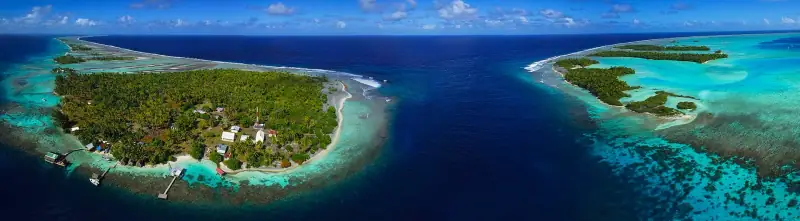
7-day Tuamotu itinerary: Rangiroa, Tikehau and Fakarava
Plan 7 days in the Tuamotu: Rangiroa, Tikehau and Fakarava in family guesthouses, Air Tahiti flights, diving, snorkeling, budget and atoll tips.
10 days
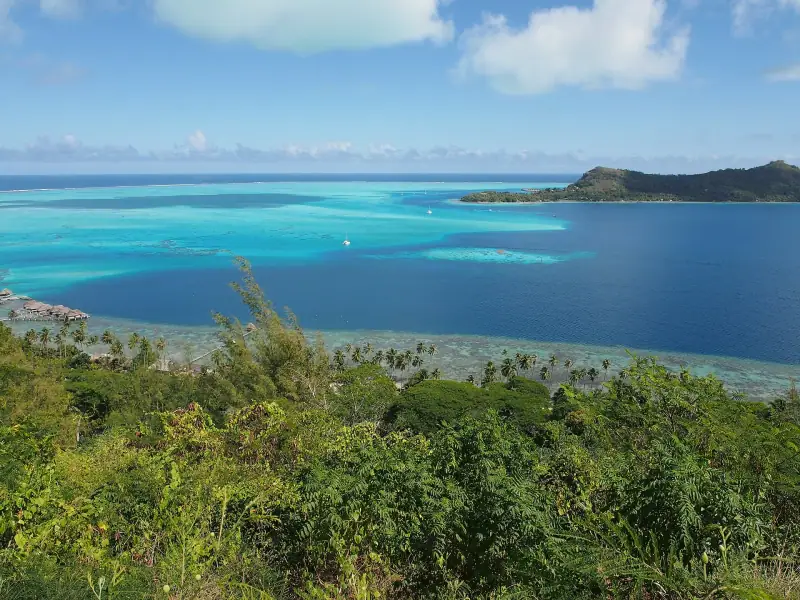
10-day French Polynesia itinerary: Tahiti, Moorea and Bora Bora
TahitiMooreaBora Bora