Plan your trip
When to go to French Polynesia: seasons, weather and best months
We may earn a commission when you book through links on this page, at no extra cost to you. We don't visit or try the places we cover: we summarize published sources. How we work
In short
- The dry season, roughly May to October, has the steadiest weather. July and August are the busiest and most expensive.
- May-June and September-October are often the best balance of weather, crowds and prices.
- Humpback whales visit from about July to October; the Heiva festival takes place around July on Tahiti.
- The wet season, roughly November to April, is hotter and rainier but cheaper; cyclones are rare but possible, so take cancellation cover.
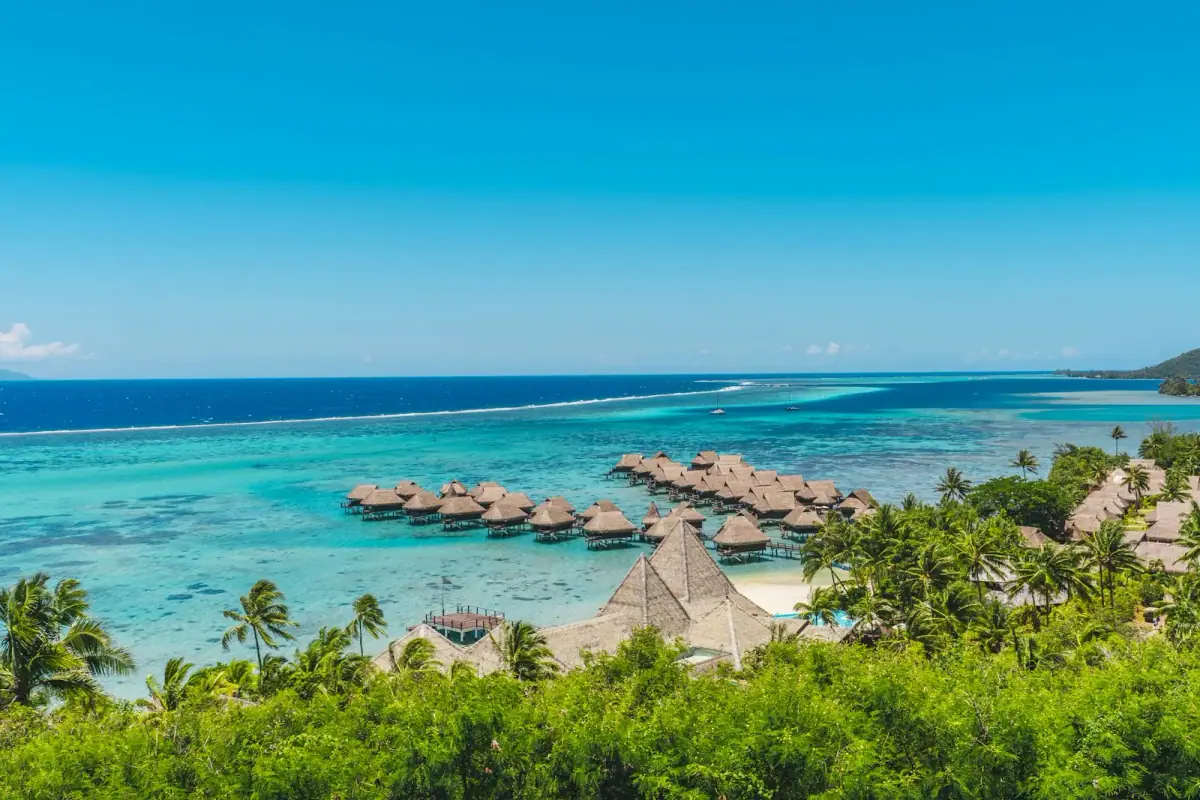
Choosing when to go to French Polynesia is one of the most important decisions in your preparation, because the trip is long, costly and often a one-off. Good news: there is no bad season for enjoying the lagoons. The climate is tropical all year, the sea stays warm and the landscapes are superb at any time. What changes from month to month is mostly rain, humidity, crowds and rates.
This guide helps you decide according to your priorities: beach, diving, whales, culture, budget or quiet.
French Polynesia’s climate in brief
French Polynesia covers an immense territory, the size of Europe, with five archipelagos: the Society Islands (including Tahiti, Moorea and Bora Bora), the Tuamotu, the Marquesas, the Austral Islands and the Gambier Islands. The climate is broadly tropical and maritime, tempered by the trade winds.
Two seasons stand out:
- The dry season, from about May to October, sometimes called the austral winter: the weather is drier, humidity lower, nights a little cooler.
- The wet season, from about November to April, hotter and heavier, with more frequent showers, often short but intense.
Temperatures vary little: generally about 27 to 31 °C (81 to 88 °F) by day on the coast, and the lagoon water stays pleasant all year, usually between 26 and 29 °C (79 to 84 °F). These ranges are indicative: one year can be rainier than the last, and some archipelagos, like the flatter Tuamotu, get less rain than the high Society Islands.
Keep one point of geography in mind: the high islands (Tahiti, Moorea, Bora Bora) catch clouds on their summits, while the Tuamotu atolls, barely above the water, get less marked rain but sometimes stronger winds.
May to October: the dry season
This is the most sought-after period, and for good reasons. The sky is clearer, the air less sticky and boat excursions run in good conditions. It is the ideal season for a first stay focused on lagoons.
The advantages:
- The steadiest weather of the year, good for lounging as well as outings at sea.
- More comfortable hiking on the high islands, with less mud on the trails.
- The period of the big cultural festivities, notably the Heiva i Tahiti, a festival of traditional dance, song and sports held on Tahiti around July.
- Humpback whale watching season, from about July to October.
The drawbacks:
- Higher flight and accommodation prices, especially in July and August, during school holidays.
- Book several months ahead for the most popular family guesthouses and overwater bungalows.
- Inter-island flights are often full in high season: book them early.
For a honeymoon or an all-arranged stay, May-June and September-October are often an excellent compromise: the weather is fine, but crowds and rates are a little less tense than in midsummer.
Stays in French Polynesia
Family guesthouses, hotels and bungalows: compare availability for your dates, especially in high season.
July to October: humpback whales and the Heiva
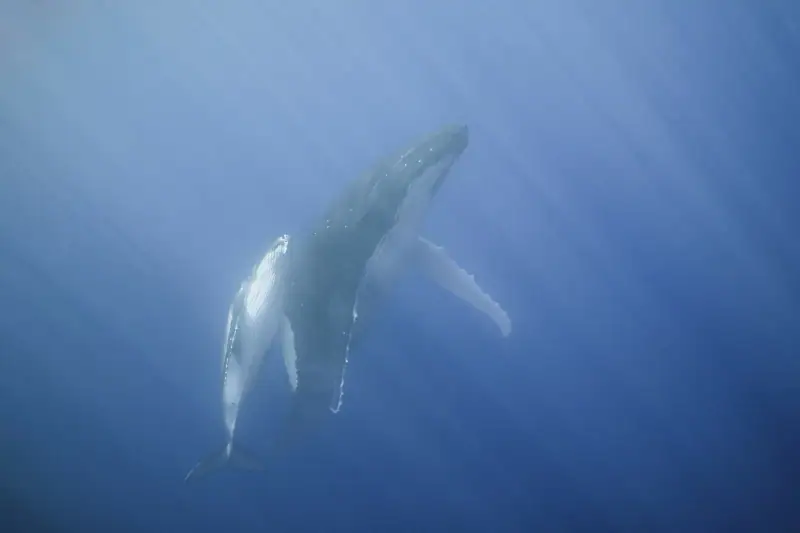
If you have the choice, this window combines two rare assets. First, humpback whales come to Polynesian waters to breed and give birth; Moorea is one of the best-known islands for watching trips. The activity is regulated: choose an operator that follows local rules, notably approach distances.
Second, July is the time of the Heiva i Tahiti, with dance competitions, songs, javelin throwing and outrigger canoe races. It is a chance to see living Polynesian culture, far from the clichés. Exact dates change from year to year: check the official program before booking your tickets.
Toward the end of the year, a big outrigger canoe race links several of the Society Islands. It is closely followed locally, but its date varies: check it before organizing your stay around this event.
November to April: the wet season
This period is hotter, more humid and greener. Showers can be heavy, but they are frequently followed by clear spells. Waterfalls are fuller, vegetation vivid, and tourists fewer.
Why go anyway?
- Noticeably lower rates on flights and accommodation, outside the year-end holidays.
- Fewer people on beaches, trails and excursions.
- Warm sea, ideal for snorkeling and diving.
- A quieter atmosphere in family guesthouses.
How to limit the unexpected:
- Take out insurance covering cancellation and trip interruption, checking that weather events are included.
- Keep a margin between your inter-island flights and your return international flight: a storm or a schedule change can delay a trip.
- Follow Météo-France Polynésie during your stay, because cyclones are rare but possible in this season.
- Stay flexible with your activities at sea: an outing may be postponed if conditions are unsuitable.
The year-end holidays are a period apart: demand rises sharply, with higher prices and little availability if you book late.
Flights to Tahiti
Fares vary greatly by season: compare several periods before committing.
Which period for your type of trip?
The “best time” depends on what you come for.
For beach and lagoon: choose the dry season, May to October. The sky is clearer and boat excursions are more regular.
For diving: the Tuamotu passes, notably Rangiroa and Fakarava, can be dived all year. Conditions vary with currents, tides and recent weather: dive centers can advise you day by day.
For whales: July to October, with Moorea as a very convenient base from Tahiti.
For hiking: the dry season is more comfortable, especially on Tahiti and Moorea, where trails can be slippery after rain.
For budget: aim for May-June or September-October, outside school holidays. Rates are generally lower than in July-August and at year-end.
For culture: July and the Heiva, if you like traditional performances.
With family: school holidays often set the calendar; if you have the choice, avoid the heart of the wet season with young children, as the sticky heat is more tiring.
Activities and excursions
Lagoon trips, snorkeling, guided hikes: discover the experiences you can book in French Polynesia.
Preparing your trip: flight, time difference and entry rules
A few practical points to plan for, whatever the season.
Length of the trip. The journey to Papeete is long. Plan a first night of recovery.
Time difference. Local time does not change with the seasons, and the time difference with most of the world is large. The first two or three days require a little adjustment.
Entry rules. They depend on your passport. Check the official travel advice of your government before you book: travel.state.gov (US), GOV.UK (UK), travel.gc.ca (Canada), Smartraveller (Australia) (checked November 2026).
Recommended gear:
- Reef-friendly sunscreen, hat and sunglasses.
- Mosquito repellent, useful all year and especially in the wet season.
- A light rain jacket for showers and sea excursions.
- Water shoes for coral and rocky sites, plus your own mask and snorkel.
- Light clothing and a thin sweater for air conditioning and windy evenings.
Health. Ask your doctor or a travel clinic, and see the official travel health pages (CDC in the US, TravelHealthPro in the UK).
Our verdict: when to go to French Polynesia?
- Best balance of weather / crowds / prices: May-June and September-October.
- Best weather, but higher budget: July and August.
- Whales and culture: July to October, with the Heiva in July.
- Low prices and calm: November to April, outside the year-end holidays, accepting more humidity.
- To avoid if you fear showers: January to March.
In short, there is no bad time to go to French Polynesia, only periods better suited to your plans. Choose your priority first, then adjust your dates, with suitable insurance and early booking of flights, especially inter-island ones.
Frequently asked questions
What is the best month to go to French Polynesia?
May to October is the dry season: rain is less frequent, humidity is more bearable and temperatures stay pleasant. June, September and October often give the best balance of weather, crowds and prices, with July and August more expensive and busier.
Can you go to French Polynesia during the rainy season?
Yes. From November to April it is hotter and more humid, with showers that are sometimes intense but often brief, and nice clear spells in between. Prices are generally lower, but it is best to keep flexibility in your schedule, especially for inter-island flights.
Are there cyclones in French Polynesia?
Cyclones remain rare, but they are possible during the hot season, from November to April. Travel insurance covering cancellation and trip interruption is advised, as is following the bulletins of Météo-France Polynésie.
When can you see humpback whales in French Polynesia?
Humpback whales visit Polynesian waters from about July to October. Moorea is one of the best-known islands for watching them, with operators supervised under specific regulations.
Do you need a visa for French Polynesia?
Entry rules depend on your passport. Check the official travel advice of your government before you book: travel.state.gov (US), GOV.UK (UK), travel.gc.ca (Canada), Smartraveller (Australia) (checked November 2026).
More French Polynesia guides
Keep reading
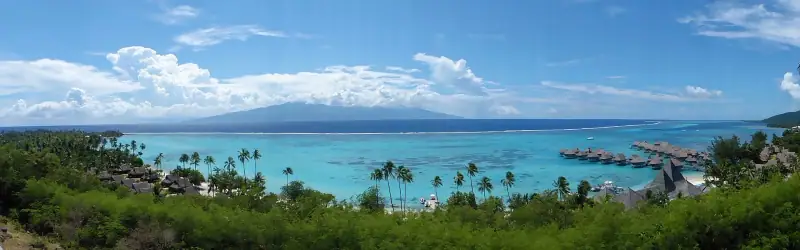
French Polynesia travel budget: how much to plan for your trip
What budget for a trip to French Polynesia? Flights, accommodation, meals, inter-island transport and activities: tips for keeping spending under control.
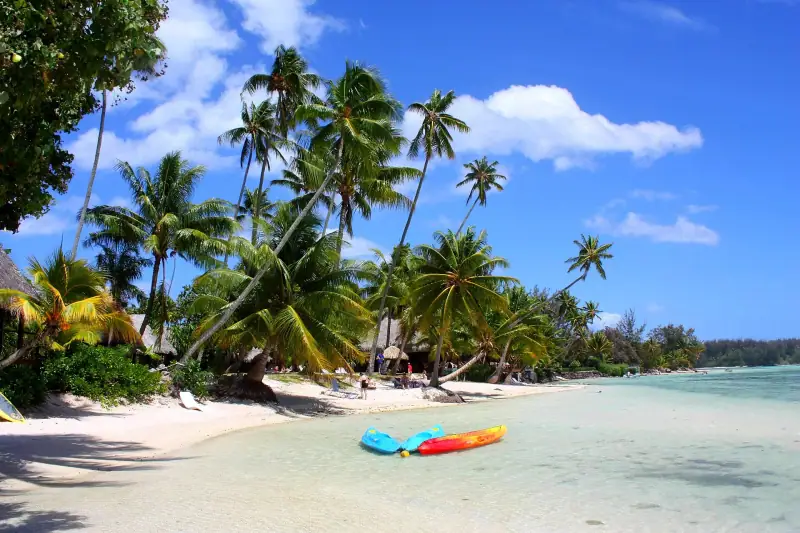
Complete guide to visiting French Polynesia: islands, budget, tips
Visiting French Polynesia: islands not to miss, when to go, getting there, where to stay, budget and itineraries. The pillar guide to plan your trip.
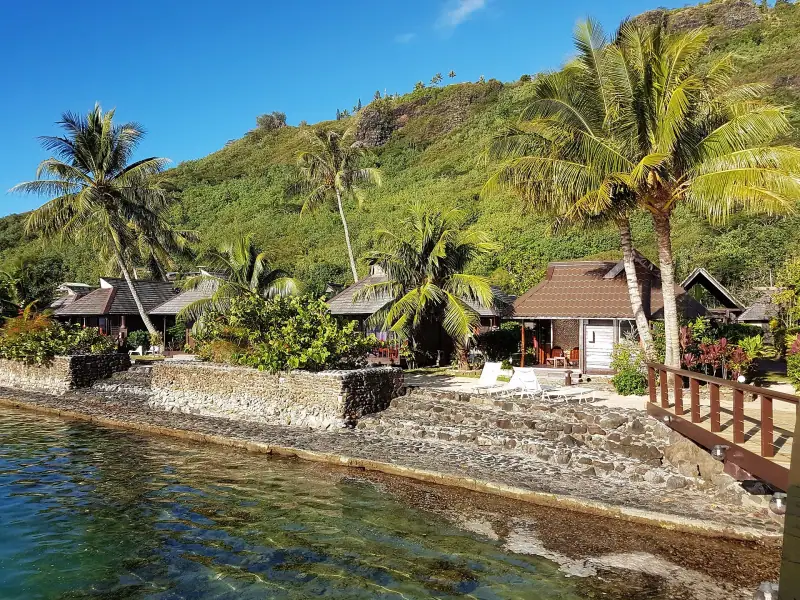
Moorea or Tahiti: where to stay in French Polynesia without a car
Without a rental car, where to sleep between Tahiti and Moorea? Neighborhoods, buses, ferry, guesthouses and pitfalls to avoid when choosing your base.
Ready-made
French Polynesia itineraries
8 days
8-day Leeward Islands itinerary: Huahine, Raiatea, Taha'a and Bora Bora
An 8-day Leeward Islands itinerary: Huahine, Raiatea, Taha'a and Bora Bora, with transport, stays, excursions, budget and tips for linking the islands.
7 days
7-day Tuamotu itinerary: Rangiroa, Tikehau and Fakarava
Plan 7 days in the Tuamotu: Rangiroa, Tikehau and Fakarava in family guesthouses, Air Tahiti flights, diving, snorkeling, budget and atoll tips.
10 days
10-day French Polynesia itinerary: Tahiti, Moorea and Bora Bora
TahitiMooreaBora Bora