Itineraries
7-day Tuamotu itinerary: Rangiroa, Tikehau and Fakarava
We may earn a commission when you book through links on this page, at no extra cost to you. We don't visit or try the places we cover: we summarize published sources. How we work
Day by day
- Days 1-3Rangiroa: lagoon, passes, motu excursion and pearl farm
- Days 4-5Tikehau: flight, lagoon swim, motu with seabirds, snorkeling
- Days 6-7Fakarava: village by bike, pass, south of the atoll, flight to Papeete
In short
- Seven days link three atolls: Rangiroa (days 1-3), Tikehau (days 4-5) and Fakarava (days 6-7), with a return flight to Papeete at the end.
- Inter-atoll links depend on Air Tahiti, with varying schedules: book internal flights first, then fix your accommodation nights.
- Prices are higher than in the Windward Islands because almost everything is shipped in; carry cash, as payment options are limited in some guesthouses.
- The dry season, roughly May to October, offers steadier weather.
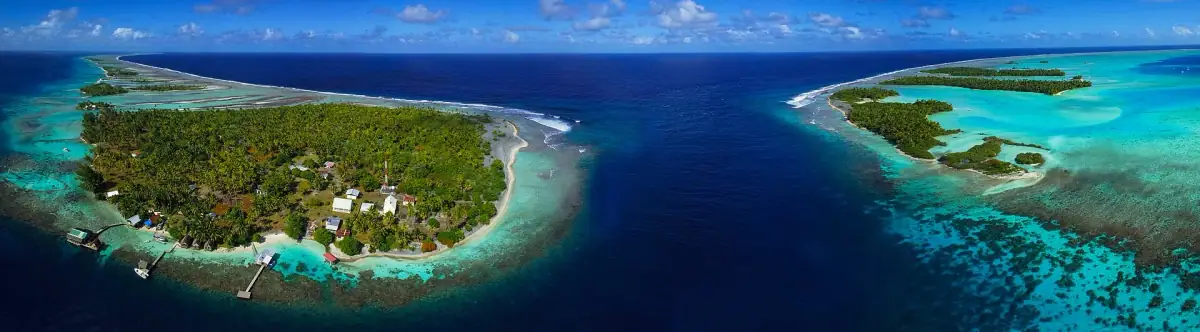
The Tuamotu form the largest archipelago in French Polynesia: dozens of atolls, long rings of coral enclosing immense lagoons. People come for the exceptionally clear water, the passes where fish gather, the nearly deserted beaches and the slow pace of life on the motu. Here is a seven-day itinerary linking three atolls with different personalities: Rangiroa, Tikehau and Fakarava.
Understanding the Tuamotu before you go
An atoll is not a high island
Unlike Tahiti or Moorea, atolls have no mountains or rivers. An atoll is a crown of coral at water level, cut into islets (the motu) and pierced by passes through which the ocean flows in and out of the lagoon. These passes concentrate marine life, and most activities are organized around them.
This geography has very concrete consequences for the trip:
- The land is low and flat: you get around by bike, on foot or by boat.
- Fresh water comes mostly from rain, so visitors are asked to use it sparingly.
- Almost everything arrives by boat or plane: prices are higher than on Tahiti.
- Shops are few and small; plan ahead for medicines and essential products.
Why seven days
Seven days (six nights) let you unpack three times without spending your life in airports. Allow half a day to change atolls, between the trip to the airstrip and settling in. Our itinerary therefore plans three nights on Rangiroa, two on Tikehau and two on Fakarava, with a return to Papeete at the end of the stay. Before fixing dates, read our guide to the best time to visit French Polynesia.
Book the flights first
Links between atolls depend on Air Tahiti, with frequencies that vary by day and season. Book internal flights before accommodation, then fix your nights around the schedules you get. Plan a buffer night on Tahiti if you arrive late.
Days 1 to 3: Rangiroa, giant of the Tuamotu
Rangiroa is one of the largest atolls in the world, with a lagoon so vast you can lose sight of the opposite shore. It is the usual entry point for travelers to the Tuamotu, and the best equipped with accommodation, dive clubs and excursions.
Day 1: arrival and first immersion
After the flight from Tahiti, settle into your guesthouse or hotel and take time to walk to the lagoon’s edge. The first hours are for understanding the place: the single road running along the atoll, the coconut palms, the low light at the end of the day. A swim in the shade of a motu is enough to set the right pace. To choose your type of stay, see our guide to family guesthouses in French Polynesia.
Stays on Rangiroa
Compare availability and traveler reviews for your dates.
Day 2: the passes and marine life
This is the highlight day of the stay. Rangiroa’s passes are famous for their currents and the richness of their wildlife: reef fish, rays, reef sharks and, sometimes, dolphins playing in the swirls. Most visitors go with a local provider, who knows the tide times and the safety conditions.
- Certified divers: drift diving in a pass is a memorable experience, to be booked with a reputable club. Our article on diving in Rangiroa and Fakarava details the required levels.
- Non-divers: guided snorkeling, or drifting by boat over the pass, already offers great sightings. Our selection of the best snorkeling spots in French Polynesia gives you some pointers.
Never venture into a pass alone: currents can be strong and change with the tide.
Day 3: the motu, pink sand and pearls
Devote the day to the lagoon’s motu. A boat excursion reaches fine-sand beaches, shallow swimming areas and places where you have a simple lunch with your feet in the water. Rangiroa is also known for its pink-tinted sand beaches, due to fragments of coral and shells: the effect varies with the light and the dampness of the sand, so do not expect a uniform color.
If the weather allows, visit a pearl farm: pearl farming is a major activity in French Polynesia, and guides gladly explain grafting, nacre growth and harvest. Do not buy on impulse: compare prices and quality before deciding.
Excursions and activities on Rangiroa
Discover the lagoon trips, snorkeling and diving offered for your stay.
Days 4 and 5: Tikehau, the intimate atoll
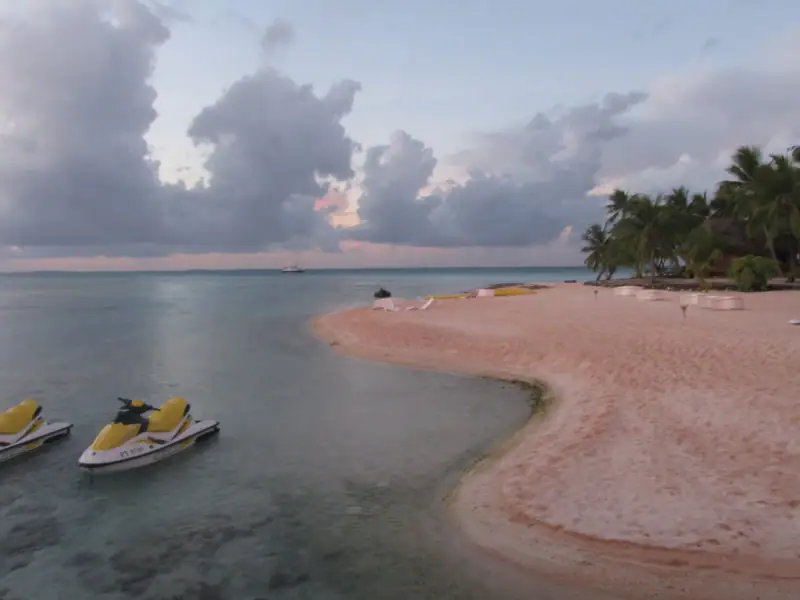
Smaller and quieter than Rangiroa, Tikehau is often described as a human-scale atoll. Its lagoon in shades of blue, its motu and its seabird colonies make it a peaceful stop, ideal for slowing down before moving on.
Day 4: transfer and an afternoon by the lagoon
The trip between Rangiroa and Tikehau is by plane, according to the airline’s schedule: expect the day to be largely taken up by the transfer and settling in. Use the afternoon for a swim near your accommodation. In many guesthouses, the evening meal is shared with other guests and consists of fish, coconut and local fruit. To understand what you will have on your plate, read our guide to local specialties and raw fish.
Day 5: motu, birds and lagoon
A boat trip reaches motu where seabirds nest: respect observation distances and avoid entering nesting areas. Snorkeling over the lagoon’s coral heads is a good complement, with plenty of fish and often very clear water. Stay flexible: on an atoll, excursions depend greatly on wind and sea.
Days 6 and 7: Fakarava, the biosphere reserve
Fakarava is one of the archipelago’s large atolls, recognized as a UNESCO biosphere reserve. It appeals with its wild lagoon, passes very rich in wildlife and quiet villages. It is the ideal final stop for nature lovers.
Day 6: the north pass and the village
After the flight transfer, settle in and explore the village by bike: the road is flat and distances are easy. The pass on the village side is one of the widest in the region, and one of the busiest with guided divers and snorkelers. A guided outing at the end of the day lets you watch the light change over the lagoon.
Day 7: the south of the atoll, then the return
Before your return flight to Papeete, a last morning outing to the south of the atoll, known for its clear water and abundant wildlife, makes a fine finale. Many travelers prefer to keep this last day for calm, though: a last swim, shopping for local crafts, an unhurried lunch. Never schedule a tight connection on the day of your international flight: push it back a night if needed.
Budget, logistics and precautions
Budget: a notch above the high islands
Flights between atolls, half board or full board in a family guesthouse and boat outings make up most of the spending. Because everything is shipped in from afar, prices are higher than in the Windward Islands. Our French Polynesia budget guide will help you build a realistic estimate. Also bring cash: payment options are limited in some guesthouses.
Gear to bring
- Sunscreen suited to the marine environment, hat, polarized sunglasses.
- Reef shoes to protect your feet from coral and sea urchins.
- Your own mask and snorkel, for comfort and hygiene.
- Mosquito repellent and light long-sleeved clothing for the evening.
- A small waterproof bag for boat trips.
To complete your list, see our selection of accessories for French Polynesia.
Insurance and health
Medical facilities are limited on the atolls and a medical evacuation can be long and costly. Travel insurance with repatriation cover is therefore strongly recommended, especially if you dive.
Stays on Fakarava
Book your final Tuamotu stop at the right time.
Respecting the atolls
Coral ecosystems are fragile. Do not touch the coral or the animals, do not take away shells or pieces of coral, take your trash with you and avoid the most polluting sunscreens. The residents live from this lagoon: a respectful traveler is always welcome.
Variations by traveler type
- Divers: lengthen your time on Rangiroa and Fakarava and cut Tikehau to a single night.
- Couples looking for calm: stay on Tikehau and Fakarava, and drop Rangiroa.
- Travelers on a tight budget: limit yourself to one atoll, with a family guesthouse and group outings.
- Combined with the high islands: add a few days on Moorea with our 3-day Moorea itinerary, or see the 10-day Tahiti, Moorea and Bora Bora route.
The Tuamotu are not visited to tick off sights: they are lived at the pace of water, wind and tides. A well-planned week is enough to take away a lasting memory, and to make you want to come back.
Frequently asked questions
How long do you need to visit the Tuamotu?
A week lets you see two or three atolls without rushing. With only three or four days, it is better to limit yourself to one atoll. Flights depend on Air Tahiti and its schedules, which sometimes call for some flexibility.
How do you get between Rangiroa, Tikehau and Fakarava?
Links are by plane with Air Tahiti, often via Papeete depending on the day. Schedules vary by season: check with the airline before fixing your accommodation nights, and keep a margin for delays.
Do you need to dive to enjoy the Tuamotu?
No. Snorkeling in the passes and on the reefs already offers great sightings, as long as you stay with a professional in current zones. For divers, the Tuamotu are one of the most renowned destinations in French Polynesia.
What budget should you plan for a week in the Tuamotu?
Internal flights, full board in a family guesthouse and excursions weigh heavily, because almost everything is imported to the atolls. Expect more than in the Windward Islands, and see our budget guide to refine your estimate.
What is the best time to go to the Tuamotu?
The dry season, from about May to October, offers steadier weather and pleasant temperatures. The rest of the year is hotter and more humid but still workable. See our article on the best time to visit French Polynesia.
Are family guesthouses a good option in the Tuamotu?
Yes, it is even the most common arrangement on the atolls. They generally offer lodging, meals and organized excursions, with direct contact with locals. Check in advance which meals are included and the transfers from the airstrip.
More French Polynesia guides
Keep reading
French Polynesia travel budget: how much to plan for your trip
What budget for a trip to French Polynesia? Flights, accommodation, meals, inter-island transport and activities: tips for keeping spending under control.
Complete guide to visiting French Polynesia: islands, budget, tips
Visiting French Polynesia: islands not to miss, when to go, getting there, where to stay, budget and itineraries. The pillar guide to plan your trip.
Moorea or Tahiti: where to stay in French Polynesia without a car
Without a rental car, where to sleep between Tahiti and Moorea? Neighborhoods, buses, ferry, guesthouses and pitfalls to avoid when choosing your base.
Ready-made
French Polynesia itineraries
8 days
8-day Leeward Islands itinerary: Huahine, Raiatea, Taha'a and Bora Bora
An 8-day Leeward Islands itinerary: Huahine, Raiatea, Taha'a and Bora Bora, with transport, stays, excursions, budget and tips for linking the islands.
10 days
10-day French Polynesia itinerary: Tahiti, Moorea and Bora Bora
TahitiMooreaBora Bora
3 days
3-day Moorea itinerary: island loop, lagoon and mountains
What to do on Moorea in 3 days: island loop, belvedere, Cook's and Opunohu bays, lagoon snorkeling, hiking and practical tips for planning your stay.