Itineraries
8-day Leeward Islands itinerary: Huahine, Raiatea, Taha'a and Bora Bora
We may earn a commission when you book through links on this page, at no extra cost to you. We don't visit or try the places we cover: we summarize published sources. How we work
Day by day
- Days 1-3Huahine: island loop, Maeva marae, Huahine Iti, lagoon excursion
- Day 4Flight to Raiatea, Uturoa and Taputapuatea marae
- Day 5Boat to Taha'a: vanilla plantation, pearl farm, motu
- Days 6-8Bora Bora: flight, island loop, Matira, lagoon excursion, departure
In short
- Eight days run west from Huahine (days 1-3) to Raiatea and Taha'a (days 4-5) and Bora Bora (days 6-8), so you never backtrack.
- Air Tahiti links Huahine, Raiatea and Bora Bora by short flights. Taha'a has no airport: reach it by boat from Raiatea, about 4.5 km (2.8 mi) away.
- The Taputapuatea marae on Raiatea has been a UNESCO World Heritage site since 2017; allow about an hour.
- The dry season, roughly April to October, is the most pleasant for this route.
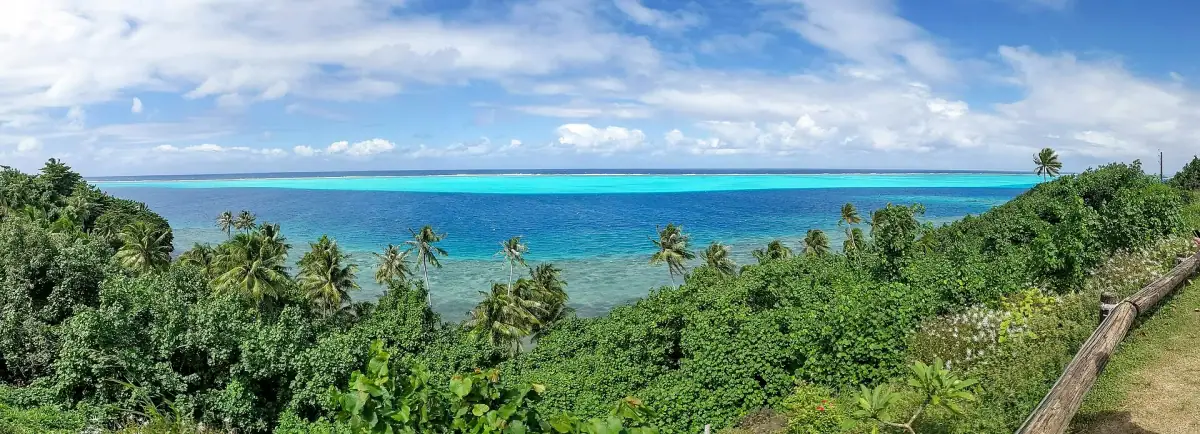
When people talk about French Polynesia, they think of Bora Bora, but the Leeward Islands offer much more: an island long governed by queens, a sacred site listed by UNESCO, the “vanilla island” and a lagoon shared by two islands. This eight-day itinerary links Huahine, Raiatea, Taha’a and Bora Bora in a logical order, at a pace slow enough to enjoy each stop.
If you are preparing a wider first trip, including Tahiti and Moorea, our 10-day Tahiti, Moorea and Bora Bora itinerary gives you a base. Here, we focus on the Leeward archipelago, which lends itself very well to a stay of its own.
Route overview and logic
The Leeward Islands form the northwest part of the Society archipelago, west of Tahiti. Huahine lies about 170 km (106 mi) northwest of Tahiti, and Raiatea about 200 km (124 mi). The islands follow one another from east to west, which allows a simple line:
- Days 1 to 3: Huahine, the quietest and most authentic island.
- Days 4 to 5: Raiatea and Taha’a, between sacred site, vanilla and shared lagoon.
- Days 6 to 8: Bora Bora, to finish with the most famous lagoon.
This order has an advantage: tourist intensity rises gradually, and you end on the most spectacular island. It also avoids backtracking, as the air links connect well in this direction from Tahiti.
Getting between the islands
The domestic airline Air Tahiti serves the airports of Huahine, Raiatea and Bora Bora, generally with small propeller planes and short flights. Schedules change by season: check them when planning, and keep a comfortable margin with your international departure flight. Taha’a has no airport: you reach it by boat from Raiatea, from which it is separated by a stretch of sea about 4.5 km (2.8 mi) wide.
Book your internal flights early if you travel in high season, especially for trips with bulky luggage: airlines apply stricter weight limits than on long-haul flights.
Days 1 to 3: Huahine, the most authentic island
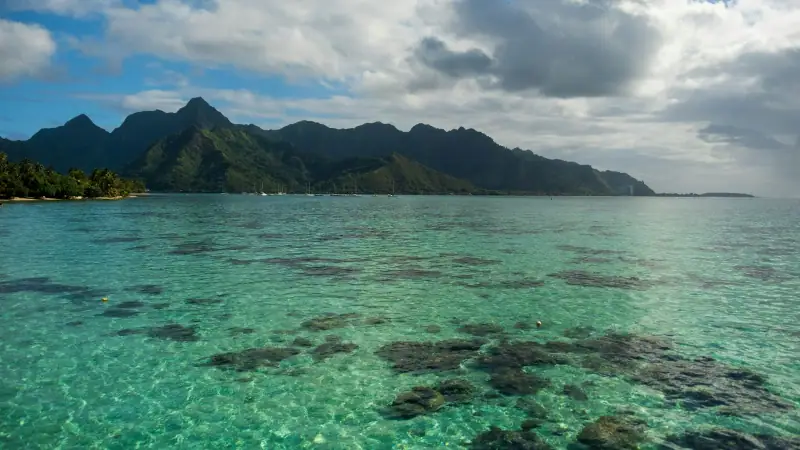
Huahine is a double island: Huahine Nui and Huahine Iti, separated by two bays but joined by a small bridge. Together they cover about 74 km² (29 sq mi) and have a few thousand inhabitants. The main village, Fare, is on Huahine Nui. The atmosphere is peaceful, far from the crowds: it is often the island that travelers who return regularly to French Polynesia name as their favorite.
Day 1: arrival and first contact
After landing, settle into your accommodation. Huahine is perfect for family guesthouses: the welcome is warm and the food simple and local. Our guide to family guesthouses in French Polynesia explains how to choose them, what rates to expect and what the meal plans include.
For the first evening, a walk around Fare’s small harbor and a meal of fresh fish are enough. Do not try to see everything on arrival: the jet lag is still being felt.
Day 2: the island loop and the Maeva sites
A full day to go around both parts of the island by car or scooter. The coastal road follows the lagoon and passes through quiet villages. Two stops worth making:
- The Maeva marae, on the shores of a shallow lake: these stone platforms recall the island’s importance in ancient Polynesian society. Walk there with respect, without climbing on the structures, and read the information panels.
- Huahine Iti, to the south, with its calm beaches and views over the lagoon. It is the ideal spot for a swim break with mask and snorkel.
A quick lunch at a roadside snack bar or at your guesthouse is enough: freshly prepared raw fish needs no fancy setting. We detail this dish and its variants in our guide to Polynesian food.
Day 3: lagoon, snorkeling and local life
Devote the day to the lagoon: a boat trip to the coral heads and motu, snorkeling, possibly meeting rays. Many operators also offer a visit to pearl farms or vanilla plantations. Choose small groups, which respect the animals and the calm of the places.
Lagoon excursions on Huahine
Boat trips, snorkeling and island tours: discover the available activities.
Days 4 and 5: Raiatea and Taha’a, the sacred site and the vanilla island
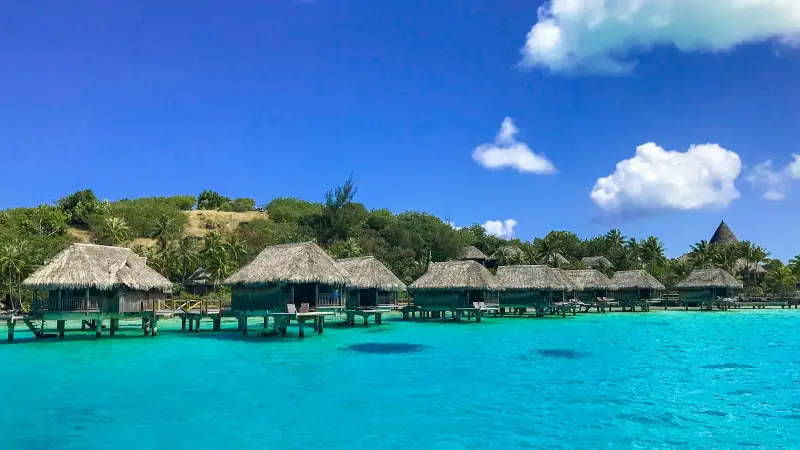
Fly to Raiatea, the largest island of the Leeward archipelago, at about 175 km² (68 sq mi). Its main town, Uturoa, is the administrative capital of the Leeward Islands. It is a small port town with a market, shops and a marina: nothing grand, but a handy supply point before heading to the more remote islands.
Day 4: Raiatea and the Taputapuatea marae
Raiatea is considered the sacred island of eastern Polynesia. The Taputapuatea marae, on the southeast coast, has been a UNESCO World Heritage site since 2017. It was a major spiritual center for the ancient Polynesian navigators, whose voyages set out from there to settle a large part of the Pacific. The site is open to visitors: allow an hour to walk through it and read the explanations.
Take time to go around the island. Raiatea is rugged, and its main summit exceeds 1,000 m (3,280 ft). The Temehani mountain shelters the tiare apetahi, a white flower that grows nowhere else. Hikes to this plateau require a local guide: do not venture out alone, especially if the weather is uncertain.
Day 5: crossing to Taha’a
Reach Taha’a by boat, on an organized excursion or by shuttle from Raiatea. The two islands share a common lagoon of about 290 km² (112 sq mi), which gives calm water and very varied landscapes. Taha’a, covering about 88 km² (34 sq mi), is nicknamed the “vanilla island”: the great majority of French Polynesia’s vanilla is produced there.
A typical day includes:
- a visit to a vanilla plantation, where you learn about hand pollination and the long preparation of the pods;
- a stop at a pearl farm, to understand how a Tahitian pearl is born;
- a swim on a motu, often with a grilled fish lunch;
- a return to Raiatea or a night there, depending on your accommodation.
Vanilla is an excellent souvenir to bring back. Choose soft, fragrant pods sold directly by a producer: the origin should be clearly stated.
Stays on Raiatea and Taha'a
Compare availability and traveler reviews for your dates.
Days 6 to 8: Bora Bora, the grand finale
Bora Bora is the last stop: a short flight from Raiatea takes you there. The island is one of the best known in the world for its blue lagoon and its central volcanic peak, Mount Otemanu, which rises to about 700 m (2,300 ft). The airport is on a motu: you reach the main island by boat, usually arranged by your accommodation. Our guide visiting Bora Bora details the island’s specifics.
Day 6: arrival and settling in
On arrival, drop your bags and take time to get used to the atmosphere: livelier than Huahine, more upscale than Taha’a, but still pleasant. At the end of the day, a walk in Vaitape, the main village, lets you spot the shops and pearl boutiques.
Day 7: island loop and lagoon
The road around the island is about 30 km (19 mi): you can do it by bike, scooter or car. The public beaches of Matira, in the south of the island, are among the busiest, with shallow water and pale sand. To get close to the lagoon’s wildlife, nothing beats a boat excursion: snorkeling among the fish, meeting rays, watching reef sharks in a supervised setting.
Do not feed the animals on your own initiative, follow the guides’ instructions and choose operators that limit group size.
Day 8: last morning and departure
Keep the morning for a last lagoon swim, a quiet breakfast and final shopping. If your international flight leaves in the evening, plan a large margin between your connections: links between the islands and Tahiti-Faa’a can be delayed by weather.
For your last night near the international airport, see our article on where to sleep near Papeete airport.
Budget: what to expect
The cost of a stay in the Leeward Islands depends a great deal on your choice of accommodation. Family guesthouses on Huahine or Raiatea are generally much cheaper than an overwater bungalow on Bora Bora. Internal flights, lagoon excursions and restaurant meals weigh the most. For a full overview, see our guide to the budget for a trip to French Polynesia.
A few ways to keep spending in check:
- Alternate guesthouse and hotel: two nights in more comfortable lodging on Bora Bora are often enough to enjoy the atmosphere.
- Take half-board plans or cook: meals are one of the costliest items.
- Book lagoon excursions as a group: they are often cheaper with several people.
- Watch for internal flight promotions, sometimes offered as multi-island passes.
When to go and what to pack
The dry season, from about April to October, is the most pleasant for this route, with steadier weather. Our article when to go to French Polynesia helps you compare seasons, temperatures and the rainy period. Whatever the season, bring:
- mineral sun protection, better suited to reefs;
- reef shoes, for sea urchins and coral;
- a light rain jacket, as showers are frequent but brief;
- mosquito repellent;
- a waterproof bag for boat excursions.
Entry rules and health requirements depend on your passport and your situation. Check the official travel advice of your government before you book: travel.state.gov (US), GOV.UK (UK), travel.gc.ca (Canada), Smartraveller (Australia) (checked November 2026). For health questions, ask your doctor or a travel clinic, and see the official travel health pages (CDC in the US, TravelHealthPro in the UK). Travel insurance covering cancellations and medical costs is a reasonable precaution for a multi-island trip.
Variations for your time and tastes
The route adapts easily:
- With 5 days: keep Huahine and Bora Bora, with two to three nights on each island.
- With 10 days: add a night on Taha’a and an extra day on Huahine, to slow the pace.
- More adventurous: extend to Maupiti, a more secluded island next to Bora Bora; check access conditions beforehand, as they depend on the weather (see how to get to Maupiti from Bora Bora).
- Before or after: add a few nights on Moorea. Our 3-day Moorea itinerary combines very well with this route.
Our advice
To make this route work, do not multiply the stops: four islands in eight days is already a good pace. Book your internal flights and accommodation early in high season, keep a half day without a plan on each island, and let local life carry you. It is often on Huahine, over a grilled fish, or on a Taha’a motu that you understand why French Polynesia appeals so much.
Frequently asked questions
How long do you need to visit the Leeward Islands?
Eight days let you see Huahine, Raiatea, Taha'a and Bora Bora without rushing, at two to three nights per stop. With fewer than five days, it is better to limit yourself to two islands so you do not spend the stay in airports.
How do you get from one Leeward island to another?
The domestic airline Air Tahiti links Huahine, Raiatea and Bora Bora with short flights, often on propeller planes. Between Raiatea and Taha'a, which share the same lagoon, you travel by boat. Ferries and sea shuttles also exist on some routes: check schedules before booking.
Do you need to rent a car on each island?
Not everywhere. On Huahine and Raiatea, a car or scooter is very handy for going around the island. On Bora Bora, the coastal road of about 30 km (19 mi) can also be done by bike or scooter. On Taha'a, an organized excursion is often simpler.
Which island should you choose if your budget is not unlimited?
Huahine, Raiatea and Taha'a are generally cheaper than Bora Bora, with many family guesthouses and simple restaurants. Bora Bora can be visited from a guesthouse or small property rather than an overwater bungalow, which cuts the bill.
What is the best time for this route?
The dry season, from about April to October, offers steadier weather, pleasanter temperatures and less humidity. The rainy season is hotter and wetter, but these islands remain accessible all year.
Can you visit Taha'a's vanilla plantations without booking?
Some farms welcome visitors, but opening hours and days vary. The simplest way is a guided island tour, or to ask your host to point you to a farm that is open the day you pass.
More French Polynesia guides
Keep reading
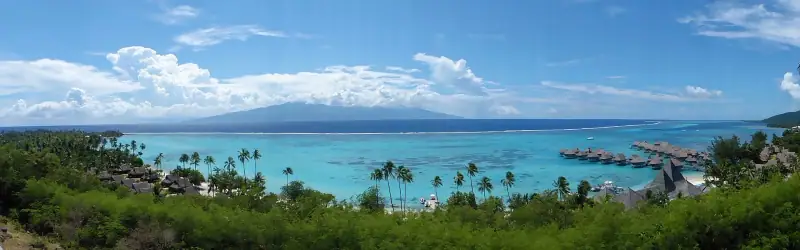
French Polynesia travel budget: how much to plan for your trip
What budget for a trip to French Polynesia? Flights, accommodation, meals, inter-island transport and activities: tips for keeping spending under control.
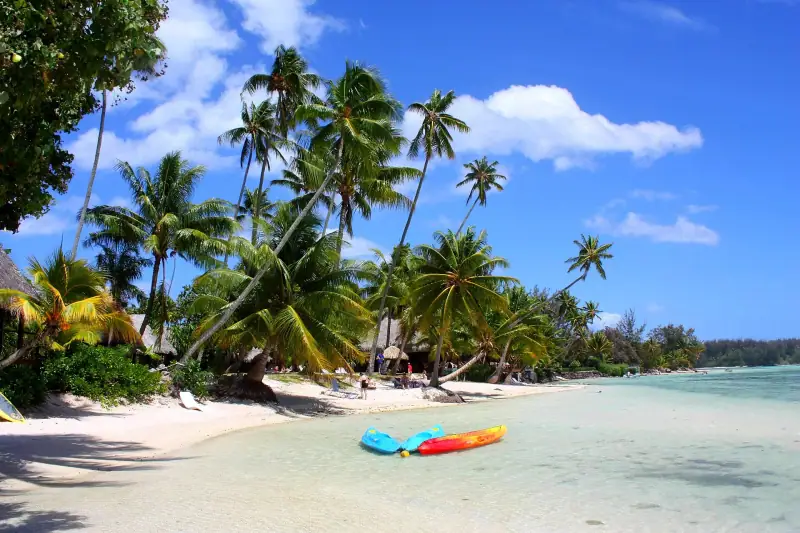
Complete guide to visiting French Polynesia: islands, budget, tips
Visiting French Polynesia: islands not to miss, when to go, getting there, where to stay, budget and itineraries. The pillar guide to plan your trip.
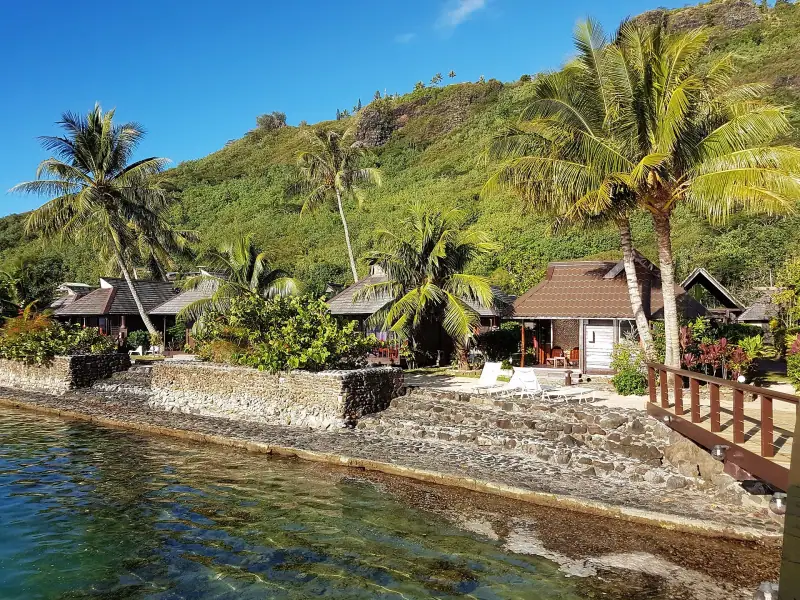
Moorea or Tahiti: where to stay in French Polynesia without a car
Without a rental car, where to sleep between Tahiti and Moorea? Neighborhoods, buses, ferry, guesthouses and pitfalls to avoid when choosing your base.
Ready-made
French Polynesia itineraries
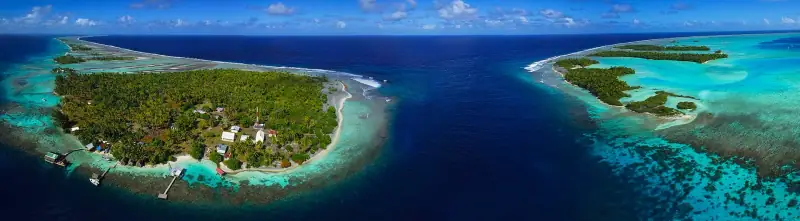
7 days
7-day Tuamotu itinerary: Rangiroa, Tikehau and Fakarava
Plan 7 days in the Tuamotu: Rangiroa, Tikehau and Fakarava in family guesthouses, Air Tahiti flights, diving, snorkeling, budget and atoll tips.
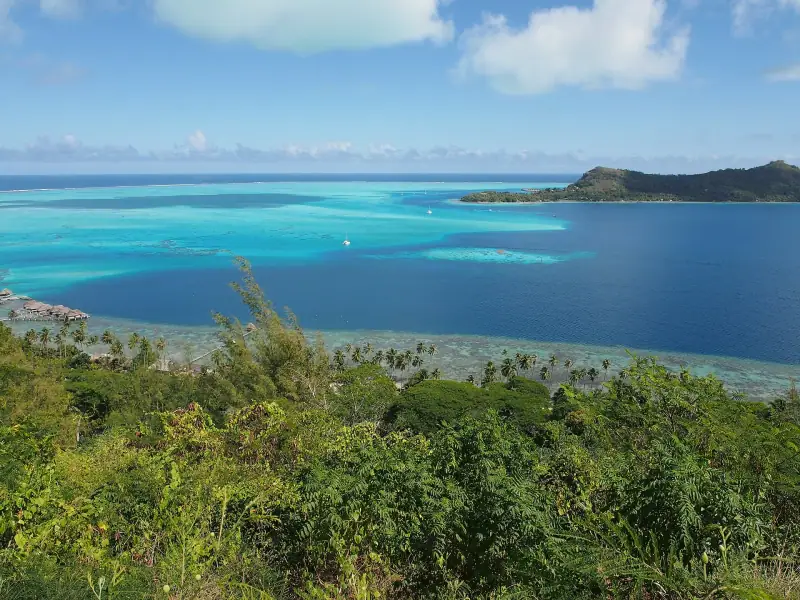
10 days
10-day French Polynesia itinerary: Tahiti, Moorea and Bora Bora
TahitiMooreaBora Bora
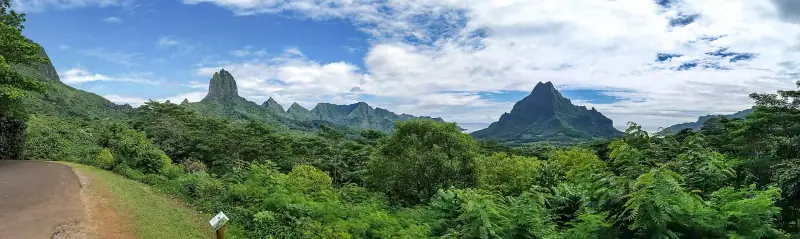
3 days
3-day Moorea itinerary: island loop, lagoon and mountains
What to do on Moorea in 3 days: island loop, belvedere, Cook's and Opunohu bays, lagoon snorkeling, hiking and practical tips for planning your stay.