Things to do
Hiking in Australia: the best walks (Blue Mountains, Tasmania, Red Centre)
We may earn a commission when you book through links on this page, at no extra cost to you. We don't visit or try the places we cover: we summarize published sources. How we work
In short
- Katoomba in the Blue Mountains is reached by train from Sydney in about two hours, so a day hike needs no car.
- Tasmania is the hiking capital: Dove Lake loop (about 6 km / 4 mi, 2 hours), Wineglass Bay lookout (about 1 hour round trip) and the multi-day Overland Track.
- The Kings Canyon Rim Walk is a loop of about 6 km (4 mi) and the Bondi to Coogee coastal path is about 6 km (4 mi), 2 to 3 hours.
- Carry plenty of water, tell someone your route, do not rely on mobile coverage and call 000 in an emergency; many parks require an entry fee or pass.
Australia is not only a country of beaches and cities: it is also an exceptional hiking destination. Sandstone cliffs dropping into eucalyptus valleys, glacial lakes of Tasmania, red desert gorges, coastal paths running along the ocean in the middle of Sydney… The landscapes are varied, often grand, and the trails are well maintained by national park services.
This guide presents the most memorable hikes by region, with the level, the best season and the points to watch for each. Distances and times are indicative: they vary by source and by your pace, and trails can close because of weather or works. Always check the trail’s condition with the park before you go.
What to know before you go
Hiking in Australia calls for a few precautions you may not be used to at home.
Climate is the first risk factor. The sun is very strong, the air sometimes very dry, and temperature swings can be large between day and night, or even within a single day in Tasmania, where the weather changes fast. Our guide on when to visit Australia details the seasons region by region: it is the first thing to check before choosing a trail.
Distances are deceptive. A trail of “only” a few kilometers can include hundreds of steps or serious elevation gain. Read the official description: parks grade their walks by difficulty level, and this grading is generally reliable.
Gear matters. Broken-in walking shoes, hat, sunglasses, high-SPF sunscreen, layered clothing, windbreaker, first-aid kit and above all plenty of water. Our selection of accessories for traveling in Australia will help you not to forget anything.
Safety rests on a few habits:
- Tell someone your route and your planned return time.
- Do not rely on mobile coverage: it is absent in many nature areas.
- Stay on marked trails and respect closure signs.
- The emergency number is 000.
- A trip like this deserves good health and repatriation cover. Compare the offers available before you leave.
Blue Mountains: the big walk from Sydney
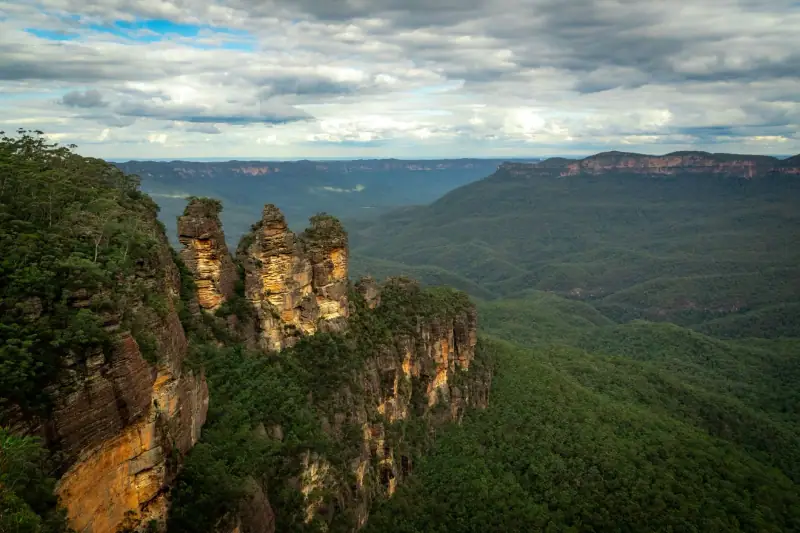
Blue Mountains tours
Without a car, a guided outing from Sydney spares you the logistics and the transport.
West of Sydney, Blue Mountains National Park is one of the most accessible hiking sites in the country. The sandstone plateau is cut by deep valleys covered in eucalyptus; the bluish haze rising from them, due to the trees’ essential oils, gave the region its name. The massif is part of the areas listed as UNESCO World Heritage sites.
The best-known starting point is the small town of Katoomba, with the Echo Point lookout facing the Three Sisters, three iconic rock pinnacles. Katoomba is reached by train from Sydney in about two hours, which makes the day trip entirely feasible without a car. If you are staying in the city, our four-day Sydney itinerary shows how to fit this day into a stay.
Types of walks:
- Short and easy: lookout trails around Echo Point, suitable for families and less athletic people.
- Intermediate: trails that descend into the valley by steps cut into the rock, then climb back. The descent is easy, the return needs legs: allow several hours and save some energy.
- Long: valley crossings over a day, reserved for trained walkers.
Tips: start early to enjoy the light and avoid the midday crowd, bring a jacket even in summer, as it is much cooler than in Sydney, and check for any trail closures after heavy rain.
Tasmania: Cradle Mountain and Freycinet
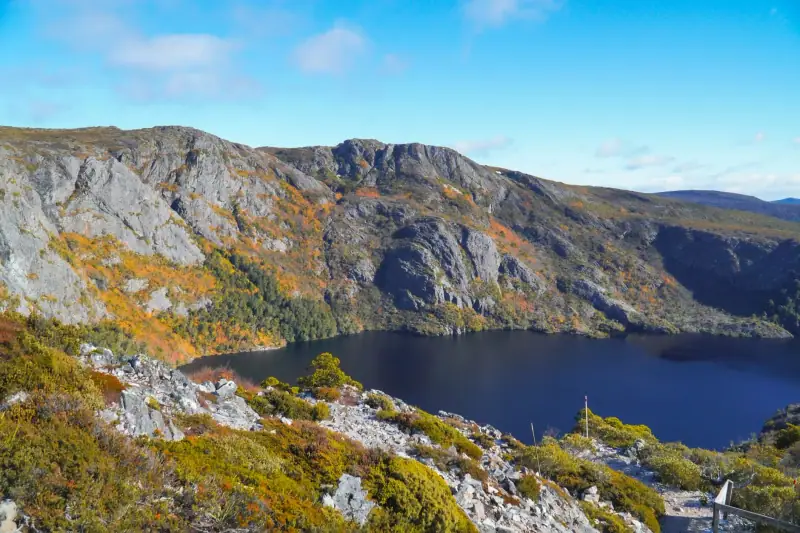
Tasmania is regarded as the hiking capital of Australia. Nearly half the island is protected, and the landscapes are cooler, greener and more mountainous than on the mainland. Two sites come up systematically: Cradle Mountain - Lake St Clair National Park and the Freycinet Peninsula.
Cradle Mountain and Dove Lake
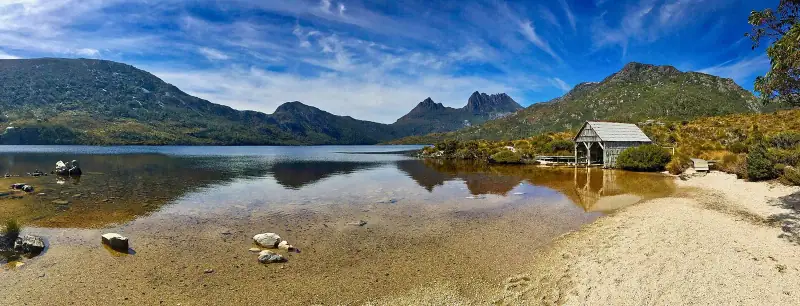
The Cradle Mountain massif overlooks Dove Lake. A loop around the lake, about six kilometers (4 mi) and two hours of walking, is accessible to most hikers: it offers lovely views of the mountain, high-altitude forests and, with luck, wombats and wallabies at dusk. For experienced walkers, more demanding climbs lead to the ridges, but the weather there is unpredictable and fog can appear quickly.
The famous Overland Track, which crosses the park from north to south, is a multi-day trek, about a week. It requires serious preparation, self-sufficiency, and a mandatory booking in high season, with an access fee. It is not to be attempted without experience of backpacking.
Freycinet and Wineglass Bay
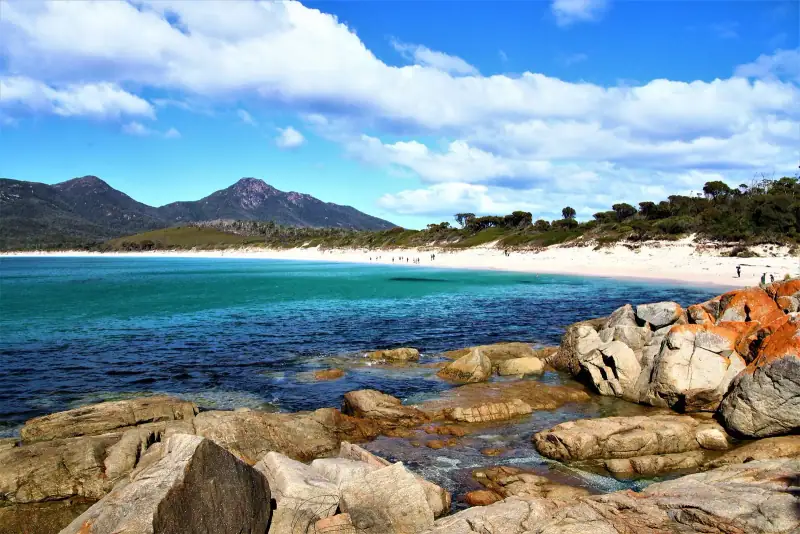
On the east coast, Freycinet National Park is famous for Wineglass Bay, an arc of white sand bordered by turquoise water and pink granite. The trail to the lookout is short but uphill; allow about an hour round trip from the parking lot. More seasoned walkers can go down to the beach or continue with a longer loop.
To combine these sites in one trip, our seven-day Tasmania itinerary offers a complete route. Remember that a car is nearly essential on the island, and that the climate changes fast there: always pack a waterproof layer.
Hotels in Hobart
An ideal base for fanning out to Tasmania's national parks.
Red Centre: Kings Canyon and Uluru
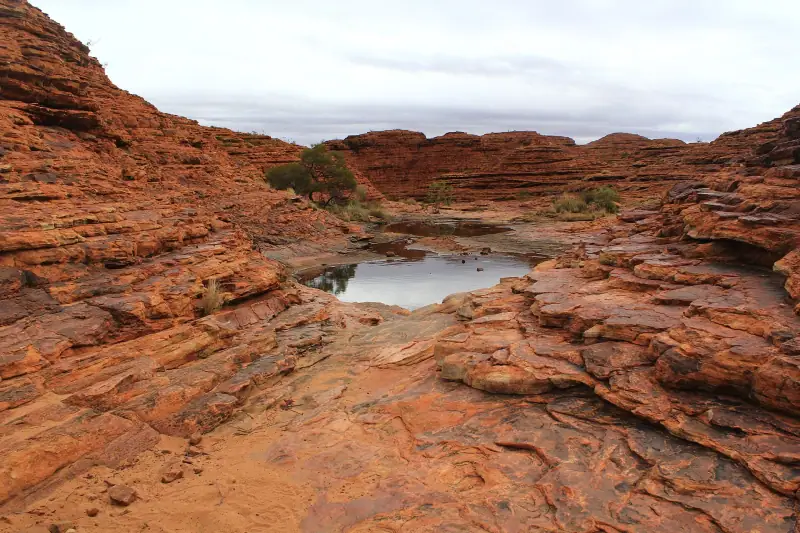
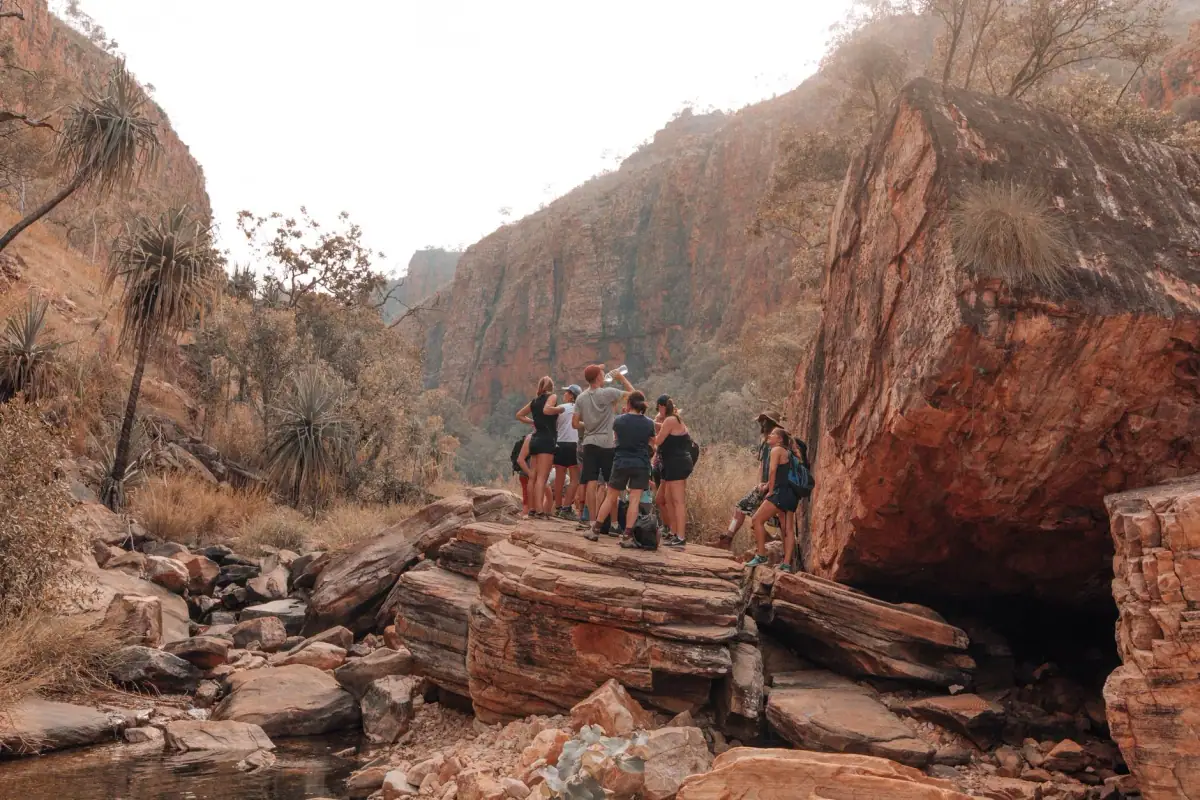
The Red Centre desert offers a completely different kind of hiking: ochre cliffs, dry gorges, an immense sky and a unique sense of space. But it is also the most demanding environment when it comes to heat.
Kings Canyon
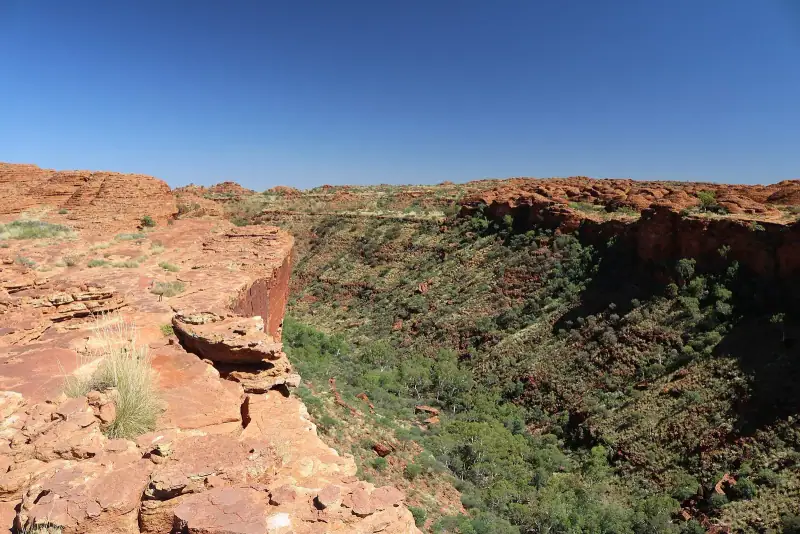
The Kings Canyon Rim Walk is one of the most famous hikes in the country. This loop of about six kilometers (4 mi), three to four hours, runs along the top of the cliffs and passes through the “Garden of Eden”, a shaded waterhole. It has a steep initial climb, then easier sections. In hot periods, access may be limited or closed in the hottest hours: start at first light, carry plenty of water and respect the instructions posted at the start.
A shorter version, at the bottom of the gorge, is accessible to almost everyone and suits times when heat rules out the full loop.
Uluru and Kata Tjuta
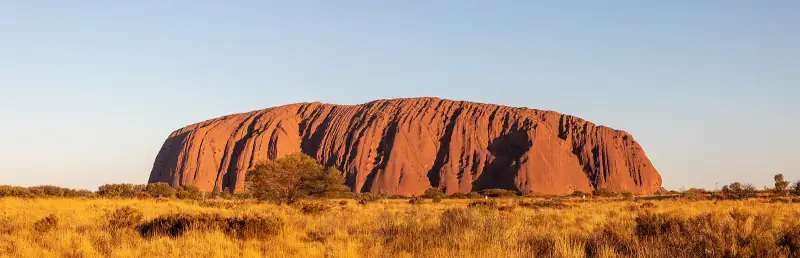
Around Uluru, the base trail of more than ten kilometers (6 mi) lets you walk around the rock, passing waterholes, rock shelters and sites sacred to the Anangu, the traditional owners. Climbing the rock has been banned since 2019: respect this decision and the zones where photography is discouraged. Nearby, the domes of Kata Tjuta offer their own walks among spectacular gorges.
All the practical details are in our guide to visiting Uluru. The Australian winter is the best season for walking in the region: mornings can be very cold, but days stay pleasant.
Coastal paths: Sydney and beyond
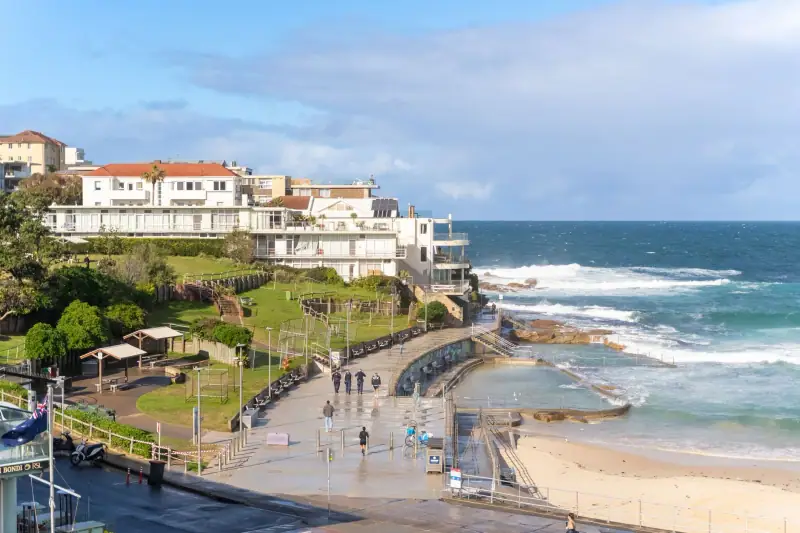
No need to go far to walk. In Sydney, the coastal path between Bondi and Coogee, about six kilometers (4 mi), runs along cliffs, beaches, natural rock pools and seaside parks. It takes two to three hours with swimming breaks, and is served by public transport at both ends. It is an excellent option for half a day, and you can stop for a coffee or an ice cream whenever you like.
In Victoria, the Great Ocean Road also offers lovely cliff and forest walks, such as those leading to the Twelve Apostles lookouts. Our three-day Great Ocean Road itinerary indicates where to stop to walk without losing too much time on the road.
Queensland rainforest
Around Cairns and the Daintree forest, the trails are less physically demanding but more humid. The heat and humidity call for a slow pace, closed shoes and insect repellent. In the rivers and estuaries of the north, never swim where a sign warns of a risk: crocodiles are very much present. It is a chance to observe wildlife very different from the south, as described in our article on watching wildlife.
Guided tours in Cairns and the rainforest
Guided hike, Daintree forest, cruises: book with a local guide.
Which hike for your level?
To choose quickly, here is a simple guide:
| Level | Walk ideas | Indicative duration |
|---|---|---|
| Easy | Blue Mountains lookouts, Dove Lake loop, Bondi-Coogee coastal path | 1 to 3 h |
| Intermediate | Wineglass Bay, Kings Canyon Rim Walk, valley trails | 3 to 5 h |
| Advanced | Overland Track, valley crossings, ridge climbs | 1 day to 1 week |
If you travel with family or with little experience, favor short loops, lakes and coastal paths, which offer lovely scenery without excessive risk. Seasoned walkers will find enough in Tasmania to fill several weeks.
Respecting nature and communities
Australian parks rest on a few simple principles:
- Take your trash with you: there are rarely bins on the trails.
- Do not feed the animals: it disturbs their diet and behavior.
- Respect the sacred sites of Aboriginal peoples, often marked by signs: some areas must not be photographed or walked on.
- Avoid walking off the trails, to protect fragile vegetation.
- Be aware of fire risk: in summer, fire bans and park closures can be decided over large areas. Check the official alerts of the fire services of the state concerned.
To round out your trip preparation, also think about entry rules: they depend on your passport. Check the official travel advice of your government before you book (travel.state.gov in the US, GOV.UK in the UK, travel.gc.ca in Canada, Smartraveller in Australia; checked November 2026).
In short
Australia offers hikes for every level: short, spectacular walks in the Blue Mountains, lake loops and dream bays in Tasmania, red gorges in the Red Centre, coastal paths in Sydney. The key is to choose the right season, start early, equip yourself seriously and carry plenty of water. With these precautions, walking becomes the best way to discover the country away from the crowds and at the pace of the landscape.
Frequently asked questions
What is the best time to hike in Australia?
It depends on the region. In the southeast and Tasmania, the Australian summer (December to February) and early autumn are the most pleasant. In the Red Centre, aim for the Australian winter (May to August), as summer is scorching. In the tropical north, the dry season (roughly May to October) is the most comfortable.
Do you need a permit to hike in national parks?
Most short walks are free to access, but many parks require an entry fee or pass, and some multi-day treks (such as the Overland Track in Tasmania) require a booking in high season. Always check the park's official website before you go.
How much water should you carry?
Plan generously, especially in arid areas: several liters per person for a day's walk in hot weather. In the Red Centre, the authorities recommend starting at dawn and not walking in the hottest hours.
Are there snakes on the trails?
Yes, but they generally flee from humans. Wear high-top shoes, stay on the trail, never put your hand in a crevice or under a rock, and do not try to approach them. In any emergency, call 000, the Australian emergency number, immediately.
Can you hike with children?
Yes, many short, well-equipped walks suit children: lake loops, forest boardwalks, accessible lookouts. Choose loops of under two hours, start early and bring water and sunscreen.
Can you hike without a car?
Some sites are accessible by public transport, such as the Blue Mountains from Sydney or the city's coastal paths. For Tasmania or the Red Centre, a car or an organized tour is in practice necessary.
More Australia guides
Keep reading
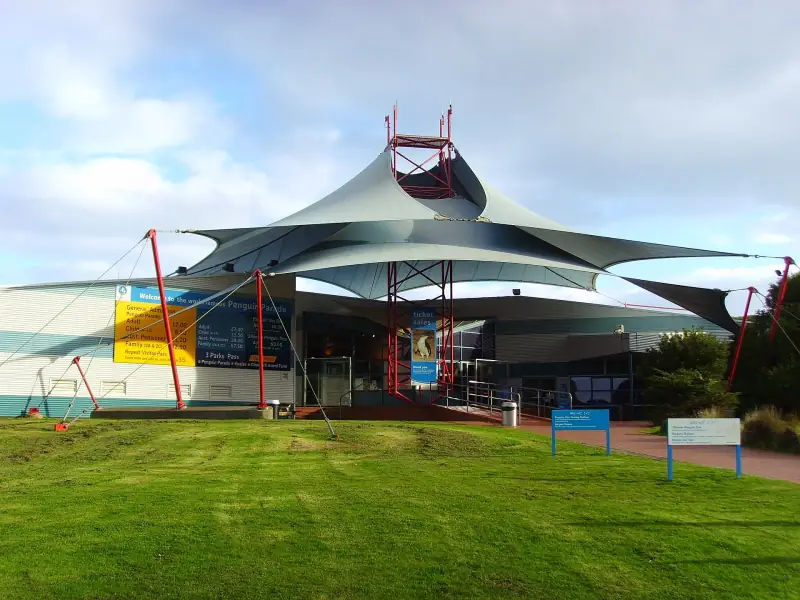
Phillip Island Penguin Parade: booking ahead, prices and getting there from Melbourne
See the Phillip Island penguins from Melbourne: required tickets, prices of the 3 options, arrival time, getting there without a car and with kids.
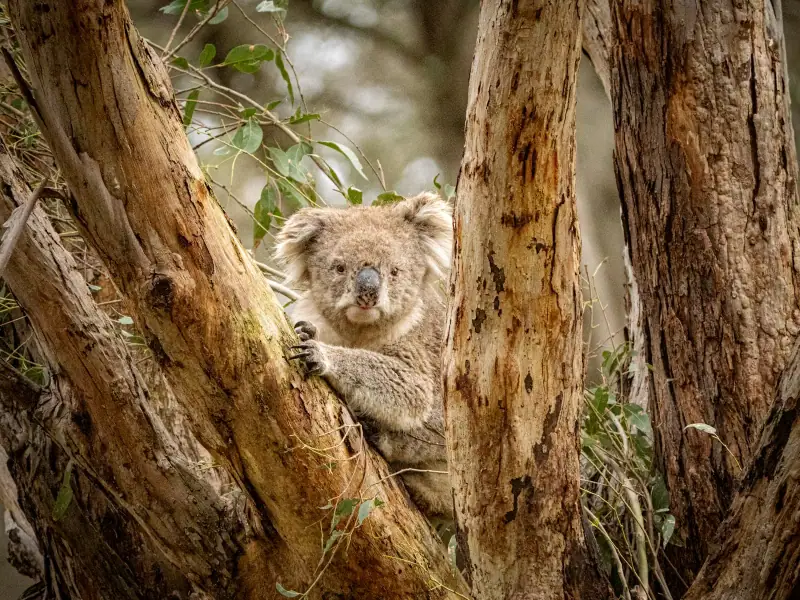
Wildlife in Australia: where to see kangaroos, koalas and penguins
Where and when to see Australian wildlife: koalas, kangaroos, wombats, Tasmanian devils, penguins, whales. Viewing tips and rules to follow.
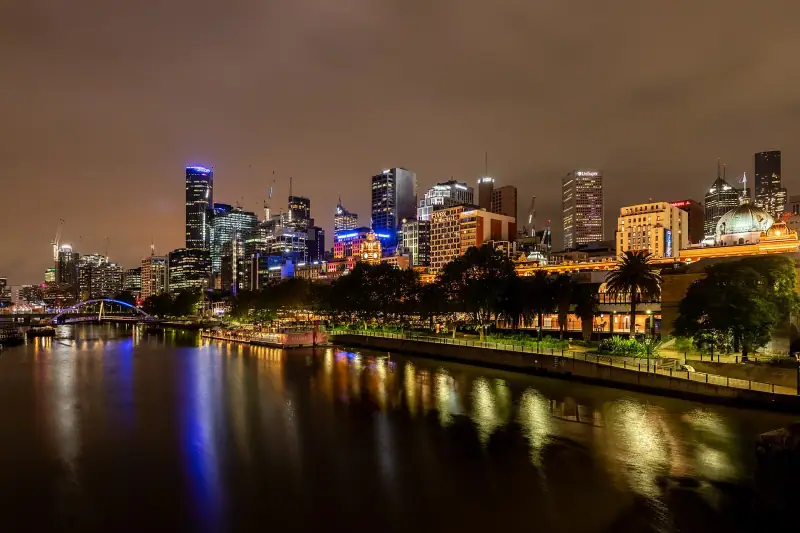
Where to stay in Melbourne: neighborhoods, budget and tips for choosing
Where to stay in Melbourne? CBD, Southbank, Fitzroy, Carlton, St Kilda, South Yarra compared: atmosphere, transport and budget to book with confidence.
Ready-made
Australia itineraries
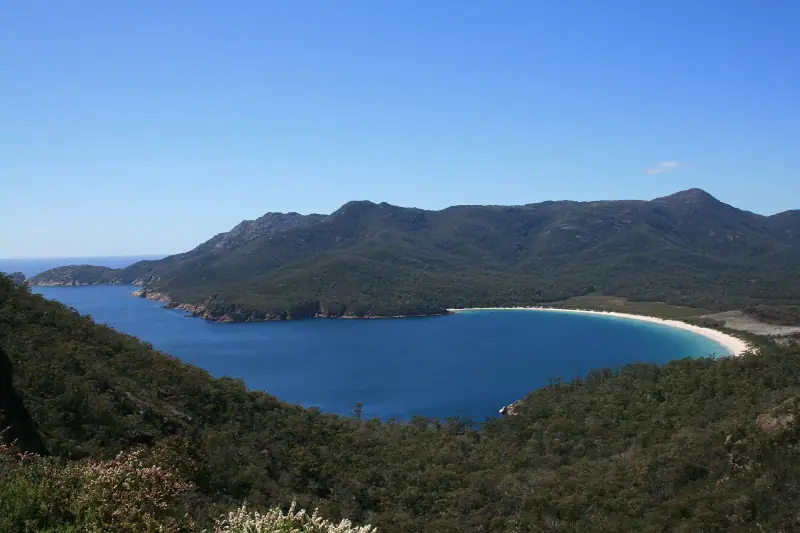
7 days
Tasmania in 7 days: a road trip itinerary from Hobart to Launceston
Tasmania in 7 days: Hobart, Port Arthur, Bruny Island, Freycinet and Wineglass Bay, Launceston. Day-by-day itinerary, distances, seasons and driving tips.
3 days
Melbourne in 3 days: a culture, street art and seaside itinerary
What to do in Melbourne in 3 days? Laneways, street art, markets, museums, St Kilda and a nature escape: a day-by-day itinerary with practical tips.

4 days
Sydney in 4 days: a day-by-day itinerary to see it all
Sydney in 4 days: Opera House, Harbour Bridge, Bondi, Manly and the Blue Mountains. A day-by-day itinerary with transport and accommodation tips.