Where to stay
Where to stay in Chicago: neighborhoods and types of lodging
We may earn a commission when you book through links on this page, at no extra cost to you. We don't visit or try the places we cover: we summarize published sources. How we work
In short
- The Loop and River North are the safe choices for a first stay: central, well served by the elevated "L" and within walking distance of Millennium Park and the Riverwalk.
- Streeterville and the Gold Coast, near the Magnificent Mile, are more elegant; Lincoln Park, Lakeview and Wicker Park suit a residential stay.
- The Blue Line links O'Hare to the Loop in about three quarters of an hour; Midway is served by the Orange Line.
- Summer is high season and winter is usually the cheapest but long, cold and windy; hotel taxes added to the bill are high.
Chicago is a city of skyscrapers on the shore of a lake that looks like a sea, and it stretches over long distances from north to south. Choosing your neighborhood therefore matters more than in a compact city: sleeping in the Loop, among the towers, has nothing to do with settling into the tree-lined streets of Lincoln Park or the trendy neighborhoods of the west. This guide compares the main areas and lodging types, whether you are already preparing your stay with the guide to visiting Chicago or are still choosing dates.
The key takeaway: proximity to a station of the elevated subway, the “L”, is often more decisive than the exact distance to an attraction. The center is walkable, but farther neighborhoods require a ride. Chicago is also a possible stop on a trip through the East and the Midwest: if you come from the coast, compare with the guides to where to stay in New York and where to stay in Boston.
The Loop: sleeping among the skyscrapers
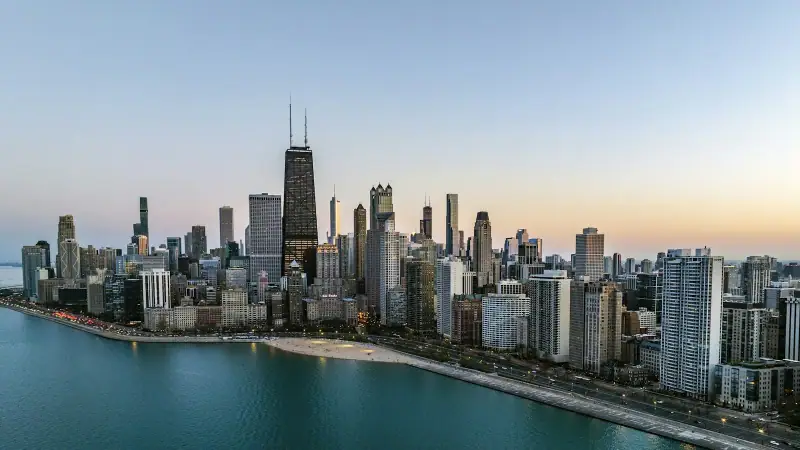
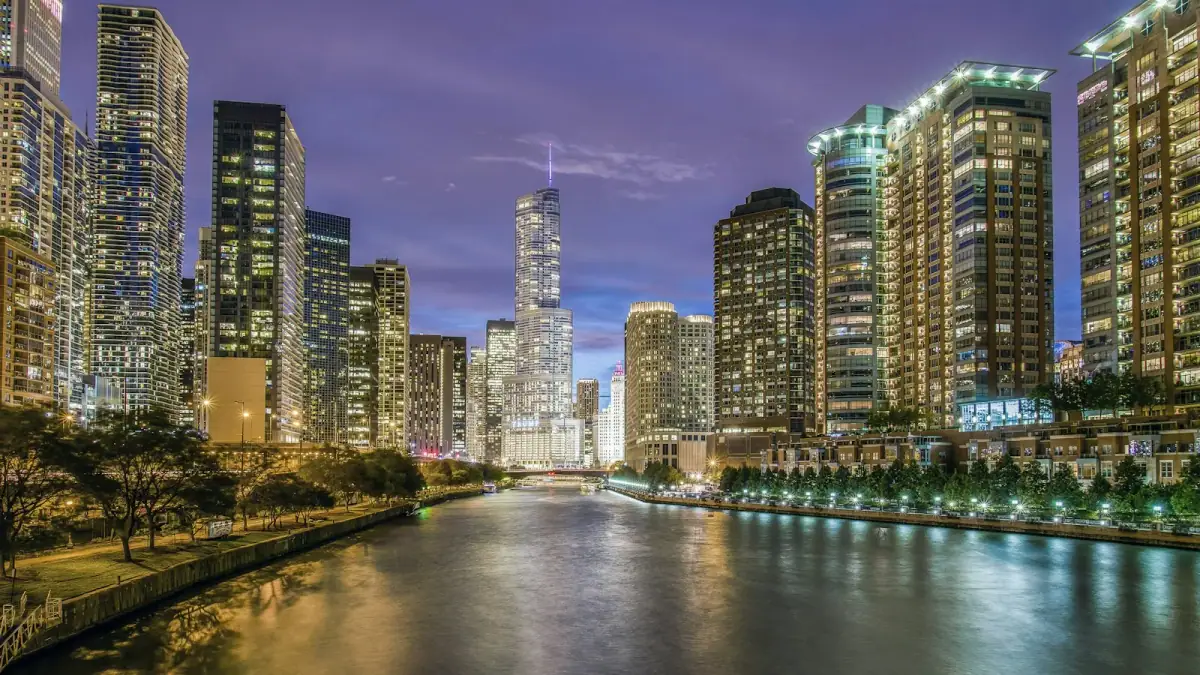
The Loop is Chicago’s historic and financial center, named after the loop formed by the elevated subway tracks that encircle it. Large 19th- and 20th-century buildings, old theaters, cultural institutions and access to Millennium Park, home to the famous Cloud Gate sculpture nicknamed “The Bean”, are concentrated here.
For a first stay, it is one of the best choices. Almost all subway lines pass through or near the Loop, which makes excursions to the north, west and south neighborhoods easy. You can walk to Millennium Park, the Art Institute and the Riverwalk. The hotel offer includes large chains, hotels set in former office or bank buildings, and more contemporary properties.
The trade-offs are those of a business district: very lively during the day on weekdays, it is quieter in the evening and on weekends, and some streets seem deserted after offices close. Weekday rates can rise during conventions. The elevated subway runs above some streets and can be noisy: ask for a high-floor room or one on the courtyard side if you are a light sleeper.
Compare hotels in Chicago
Rates vary strongly with conventions, weekends and the season: compare availability for your dates and filter free-cancellation offers.
River North: restaurants, galleries and nightlife
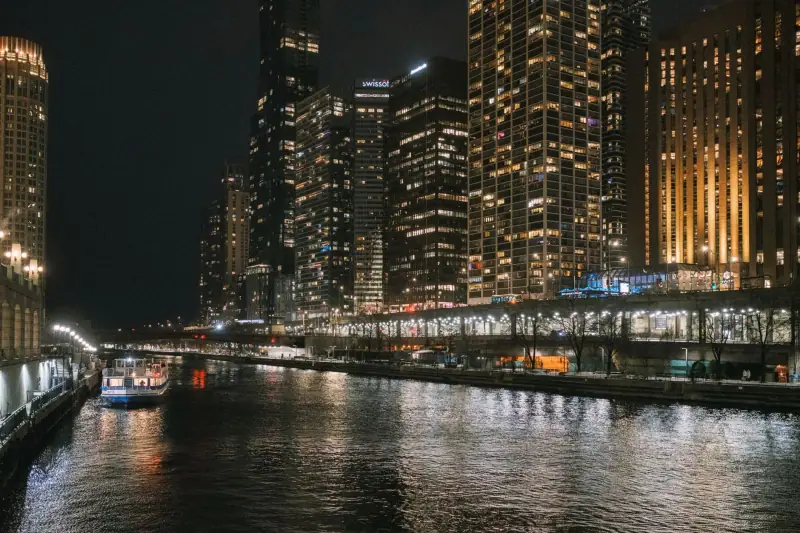
Just north of the Chicago River, River North is one of the liveliest areas to sleep in. Former warehouses converted into lofts and hotels, art galleries, restaurants of every style, bars and patios follow one another on a grid of streets easy to explore on foot. The Riverwalk, the promenade built along the river, is very close, as is the Loop, which you reach by crossing a bridge.
It is a very good choice for couples, groups of friends and travelers who like going out to dinner without depending on transport. The lodging offer is varied: chain hotels, contemporary-style places with a rooftop bar, and apartment hotels suited to longer stays. The neighborhood is well linked by subway and bus.
The flip side is the activity: on weekends, the streets most frequented by bars can be noisy late into the night. Prices are generally high in high season. If you want to sleep in peace, choose a property set back from the main arteries or on a high floor.
Streeterville, the Magnificent Mile and the Gold Coast: elegance and proximity to the lake
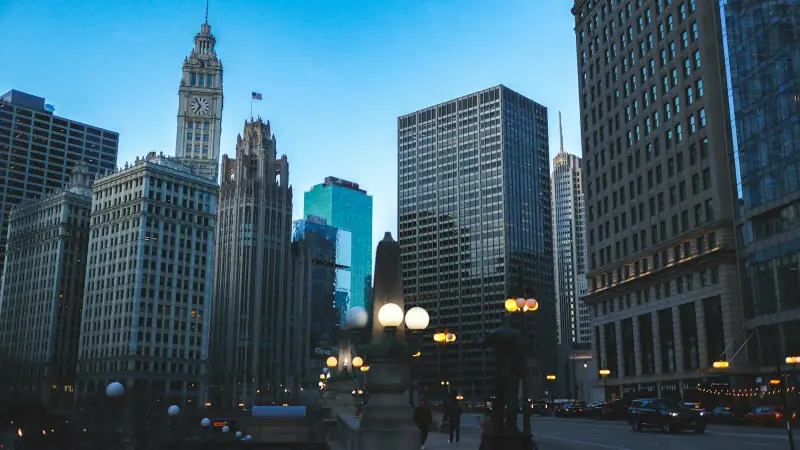
Farther east and north, between the river and Lake Michigan, Streeterville surrounds the Magnificent Mile, the city’s main shopping avenue. You find department stores, international brands, upscale hotels and, not far away, the Oak Street urban beach and Navy Pier, a large leisure pier.
Farther north, the Gold Coast is one of the city’s most upscale residential neighborhoods: 19th-century stone houses, elegant buildings overlooking the park and the lake, tree-lined streets. You sleep there in charming hotels, luxury properties and a few more modest places. The atmosphere is more peaceful than in River North, while remaining within walking distance of shops and restaurants.
This area suits travelers who like shopping, families who want to enjoy the lake and people who prefer a more hushed setting. Hotels there are often more expensive than in other neighborhoods, and the wind off the lake is felt in winter. To reach Millennium Park, allow a walk of about thirty minutes from the top of the Magnificent Mile, or a short bus ride.
Old Town and Lincoln Park: a more residential stay
North of the center, Old Town and Lincoln Park form an area of residential streets lined with trees, brick houses and small shops. Lincoln Park gives its name to a very large urban park with gardens, waterside trails, beaches and a free zoo. The neighborhood alternates cafés, neighborhood restaurants, independent shops and small performance venues.
You mostly sleep there in apartments, small charming places and a few mid-sized hotels. It is a very good option for a second stay, for a family who wants a quiet setting with green spaces or for a traveler who wants to live like a local. The subway and buses link the neighborhood to the Loop in a reasonable time, but you have to allow a real trip for downtown sights: do not choose this area if you only have one or two nights.
In the evening, the atmosphere is quiet, with several patios and family restaurants. If you like jogging, walking or cycling, the path along the lake is an asset: you can reach the center by bike along the beaches.
Lakeview and Wrigleyville: baseball and neighborhood feel
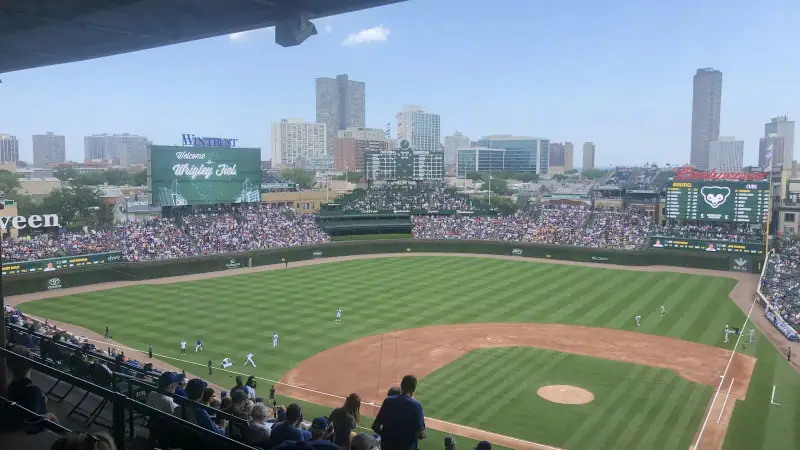
Farther north still, Lakeview spreads around a lively neighborhood life, with shopping streets, bars, cafés and concert venues. Wrigleyville, the area around the city’s historic baseball stadium, buzzes on game nights, from late spring to early fall. Outside those days, the atmosphere is quieter.
It is a good choice for sports or music fans and for those looking for a more local atmosphere. Lodging there is mainly small places, bed and breakfasts and apartments. On game nights, the streets are crowded and noisy: if you want calm, check the calendar before booking, and if you want to attend a game, book as early as possible, for seats as well as for the room.
Guided tours and activities in Chicago
Architecture river cruise, walking tours, food tours: compare available activities and cancellation terms before you book.
West Loop, Wicker Park and Bucktown: the creative atmosphere
West of the center, the West Loop is a former warehouse and market district that has become one of the city’s dining hubs. Former industrial buildings host restaurants, contemporary-style hotels and lofts. It is within reach of the Loop in a few minutes by transit, sometimes on foot from the main train station.
Farther northwest, Wicker Park and Bucktown are known for their independent shops, cafés, galleries, bars and concert venues. The subway serves these neighborhoods directly, which lets you reach the center without a car. You most often sleep there in an apartment or small places; large hotels are rare.
These areas suit travelers who have already seen a big American city and prefer neighborhood atmosphere to a downtown hotel. They are less suited to a late arrival with lots of luggage or a short stay devoted to the major sights. In the evening, some streets are lively with bars: choose lodging set back from the main roads if you value calm.
South Loop and Hyde Park: museums, universities and a gentler budget
South of the Loop, the South Loop is close to the Museum Campus, where several large science and natural history museums are grouped on the lakefront. You find chain hotels, residential buildings and varied restaurants. It is a practical choice for families planning several museum visits, and rates are sometimes more flexible than in River North or on the Magnificent Mile.
Farther south, Hyde Park, home to a major university, is a tree-lined university neighborhood, with bookstores, cafés and several museums. It suits mostly visitors who already know the city and want to get off the beaten track. The trip to the center is by commuter train or bus: allow about half an hour depending on the time and mode of transport.
As in any big American city, ask your lodging which streets to favor in the evening, stick to well-lit, busy roads, and check recent reviews before booking in an area you do not know.
Which type of lodging to choose in Chicago
Compare rental companies for the rest of the trip
No need for a car to visit the city, but useful if you continue with a road trip: compare rental companies.
Large-chain hotels dominate the Loop, River North, the Magnificent Mile and the South Loop. They offer standardized rooms, a continuously staffed front desk, often a gym and practical services for a late arrival or an early departure. They sometimes lack charm, but remain the simplest solution for a short stay. Extra fees, notably parking and any service fees, vary by property: read the terms before booking.
Historic hotels and boutique hotels occupy former office, bank or warehouse buildings, mostly in the Loop, River North and the West Loop. They offer a more personal setting and remarkable architecture, which fits the city’s image. Rooms can be smaller; read recent reviews on soundproofing, the elevator and air conditioning.
Apartment hotels and serviced apartments suit families and stays of several nights: equipped kitchen, more space and sometimes a washing machine. They are found downtown as well as in the residential neighborhoods of the north.
Short-term rentals are common in Lincoln Park, Lakeview, Wicker Park and the West Loop. They let you stay in a residential neighborhood, but check the distance to the subway, the local rules applying to this type of lodging, cleaning fees and cancellation terms before paying.
Bed and breakfasts are rare downtown, but exist in some residential neighborhoods. They suit couples looking for a hushed atmosphere; check arrival hours and accessibility.
Hostels exist in Chicago, but the offer is limited. For a tight budget, also compare hotels away from the center but served by the subway, and stays on weekdays or off-season.
Hotels near the airports can help out for a late arrival or a dawn departure. O’Hare is linked to the center by a subway line, a trip of about three quarters of an hour to the Loop. It is not the best choice for visiting the city, but it can make sense for a transit night.
Getting around from your lodging
Chicago is built on a grid that is easy to read. The center is walkable, and the river separates the Loop from River North: there are many bridges, and the Riverwalk offers a pleasant alternative to the sidewalks. The elevated “L”, run by the Chicago Transit Authority, has several lines identified by colors; most converge on the Loop. Buses complete the network, and a commuter train serves the south neighborhoods.
To choose your hotel, look at the network map before booking. Lodging a few minutes’ walk from a station on the line that takes you to the airport or the neighborhoods you want to see simplifies days a lot. In winter, a nearby station is a great comfort: the wind off the lake makes long walks hard. The guide to visiting Chicago specifies the sights to see and how to string them together.
When to book and how to lower the bill
Summer is high season: heat, outdoor festivals, river cruises and open beaches. Spring and early fall offer pleasant temperatures and often more reasonable prices. Winter is long, cold and windy, but hotels are generally cheaper and museums offer good refuges. The guide to when to go to the East Coast details the seasons.
A few habits help keep the budget under control:
- book as soon as your dates are fixed, with free cancellation until your transport tickets are confirmed;
- compare weekday and weekend nights: in business districts, weekends are sometimes more affordable, while conventions push weekday prices up;
- check the taxes and fees announced at booking, because the hotel taxes added to the bill are significant;
- look at the South Loop, the West Loop or a neighborhood served by the subway if the very center exceeds your budget;
- if you are linking several cities, compare the cost of an extra night in Chicago with that of an advance transport fare.
To prepare the whole trip, see also the article on the budget for an East Coast trip.
Chicago, a stop on an East and Midwest trip
Chicago fits into a broader trip: many visitors arrive after New York, which you can prepare with the 4-day New York itinerary, or extend with a stay in Philadelphia. The city is linked to the big metropolises of the coast by domestic flights; check schedules and included baggage before booking.
If your stay is short, two or three nights in the Loop, River North or on the Magnificent Mile are enough for the main sights. With four nights or more, add a night in a north or west neighborhood to change the atmosphere: it gives a more complete picture of the city.
Stay connected in the United States
Saily offers eSIM plans in more than 150 countries; check the offer for the United States before you leave.
To compare connection options, read the guide to SIM cards and eSIMs on the East Coast.
Before you book: formalities and insurance
Entry rules depend on your passport. Check the official travel advice of your government before you book: travel.state.gov (US), GOV.UK (UK), travel.gc.ca (Canada), Smartraveller (Australia) (checked November 2026). The article on East Coast formalities gives more context. Because medical costs are very high in the United States, travel insurance is recommended.
Frequently asked questions
What is the best neighborhood to stay in Chicago for a first visit?
The Loop and River North are the safe choices: they are central, well served by the elevated "L" and within walking distance of Millennium Park, the Riverwalk and most of the major sights. If you prefer a more elegant atmosphere and a bit fewer offices, the Gold Coast and Streeterville, near the Magnificent Mile, are good alternatives.
Is Chicago expensive for lodging?
Downtown hotels can be expensive, especially in summer, during conventions and big events, and the hotel taxes added to the bill are high. Rates often drop in winter and on weekdays without conventions. Always check the final price with taxes and extra fees when you book.
Do you need to rent a car if you stay in Chicago?
No, not to visit the city. The center is explored on foot, complemented by the "L" and buses. Hotel parking is expensive and traffic is dense. A car only makes sense if you continue with a road trip: pick it up when you leave.
How do you get from O'Hare Airport to your hotel?
The "L" Blue Line links O'Hare to downtown, a trip of about three quarters of an hour to the Loop. Taxis, ride-hailing cars and shuttles also exist, but traffic can lengthen the trip at rush hour. Midway is served by the Orange Line.
Are the north side neighborhoods of Chicago worth sleeping in?
Yes, if you have already seen the center or are staying several nights. Lincoln Park, Lakeview or Wicker Park offer a neighborhood atmosphere, local cafés and restaurants, and link to the center by subway or bus. The hotel offer is smaller there, with more apartments and small places.
How many nights should you plan in Chicago?
Three nights let you see the essentials: Millennium Park, the architecture, a major museum and the lakefront. Four or five nights leave time to explore the residential neighborhoods and add a music evening or a game. The guide to visiting Chicago details a program.
Which period should you choose to sleep in Chicago at a good price?
Winter is generally the most affordable period, but it is long, cold and windy. Early spring and late fall offer a good compromise between weather and rates. Summer is high season: book early.
More US East Coast guides
Keep reading
Where to stay in Key West: neighborhoods and types of lodging
Old Town, Truman Annex, Casa Marina, Midtown or New Town: compare Key West's neighborhoods and lodging types to choose for your budget and stay.
Where to stay in Boston: which neighborhood and type of lodging to choose
Back Bay, Beacon Hill, North End, Seaport, Cambridge or Fenway: compare Boston's neighborhoods and lodging types to choose for your budget.
US East Coast travel budget: real costs, 3 priced profiles and tips to spend less
Lodging, transport, meals, activities: how much does an East Coast trip cost? Three daily budgets with figures and tips to cut the bill.
Ready-made
US East Coast itineraries

4 days
New England fall road trip: 4 days from Boston to the White Mountains and Vermont
LincolnWoodstock
Can be adapted in the planner

3 days
Miami in 3 days: an itinerary through South Beach, Wynwood and the Everglades
What to see in Miami in 3 days: South Beach Art Deco, Wynwood, Little Havana, Coral Gables, Vizcaya and the Everglades. Day-by-day plan and tips.

2 days
Philadelphia in 2 days: an itinerary through American history and good food
What to see in Philadelphia in 2 days: Independence Hall, Liberty Bell, Old City, Reading Terminal Market, the art museum and neighborhoods. Plan and tips.