What to see
Complete Guide to Visiting Thailand: Regions, Highlights and Tips
We may earn a commission when you book through links on this page, at no extra cost to you. We don't visit or try the places we cover: we summarize published sources. How we work
In short
- Two weeks combine Bangkok, the historic north and a beach region without rushing; with one week, focus on Bangkok and a single zone.
- November to February is the cool, dry season and the high season; the Gulf of Thailand follows a different calendar from the Andaman Sea.
- Excluding the international flight, expect about €25 to 45 (about $29 to $52) per day on a budget, €55 to 95 (about $64 to $110) in comfort, and over €100 (about $115) high-end.
- Most travelers arrive in Bangkok, the country's main air hub; Phuket, Chiang Mai, Krabi and Koh Samui also have airports.
Thailand is one of the most affordable and varied destinations in Southeast Asia. In a single trip, you can visit gilded palaces in Bangkok, walk among the ruins of ancient capitals, head into misty hills in the north, then end with your feet in the water on a beach lined with limestone cliffs. Add a world-famous cuisine, a generally warm welcome and well-developed tourist infrastructure.
This variety has a downside: you do not always know where to start. Where to go depending on the season? How many days to plan? Should you favor the north or the south, temples or islands? This pillar guide answers these questions. It presents the country, its main regions and its highlights, then the practical aspects: when to go, how to get there, how to get around, where to stay and how much to budget. At each step, links point to our detailed articles, all gathered at the bottom of the page.
Thailand at a glance
- Country: a Southeast Asian kingdom, capital Bangkok.
- Language: Thai. English is common in tourist areas, much less in villages.
- Currency: the Thai baht (THB).
- Time zone: UTC+7 all year.
- Dominant religion: Theravada Buddhism, very visible in daily life and landscapes.
- Climate: tropical, set by the monsoon, with marked differences between the coasts and the north.
The country stretches over more than 1,500 km (930 mi) from north to south. It borders Myanmar to the west and north, Laos to the northeast, Cambodia to the east and Malaysia to the south. Its geography forms four large areas: the northern mountains, the fertile plains of the center where the Chao Phraya River flows, the Isan plateau in the northeast, and the long southern peninsula, bordered on the west by the Andaman Sea and on the east by the Gulf of Thailand.
This geography explains both the diversity of landscapes and the fact that you have to choose. You cannot see everything in one go, and that is just fine: most travelers build their stay around two or three zones.
Thailand’s main regions
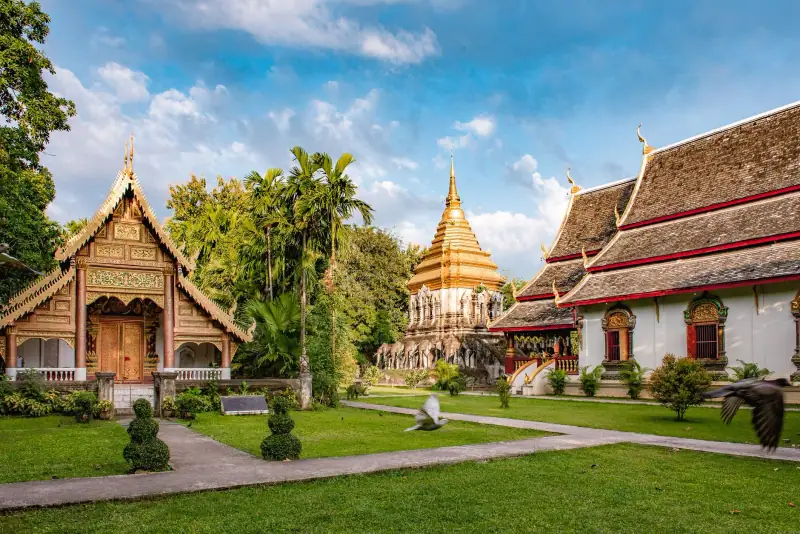
To get your bearings, it helps to think in regions. Each has its own atmosphere, climate and strengths.
Bangkok and the center
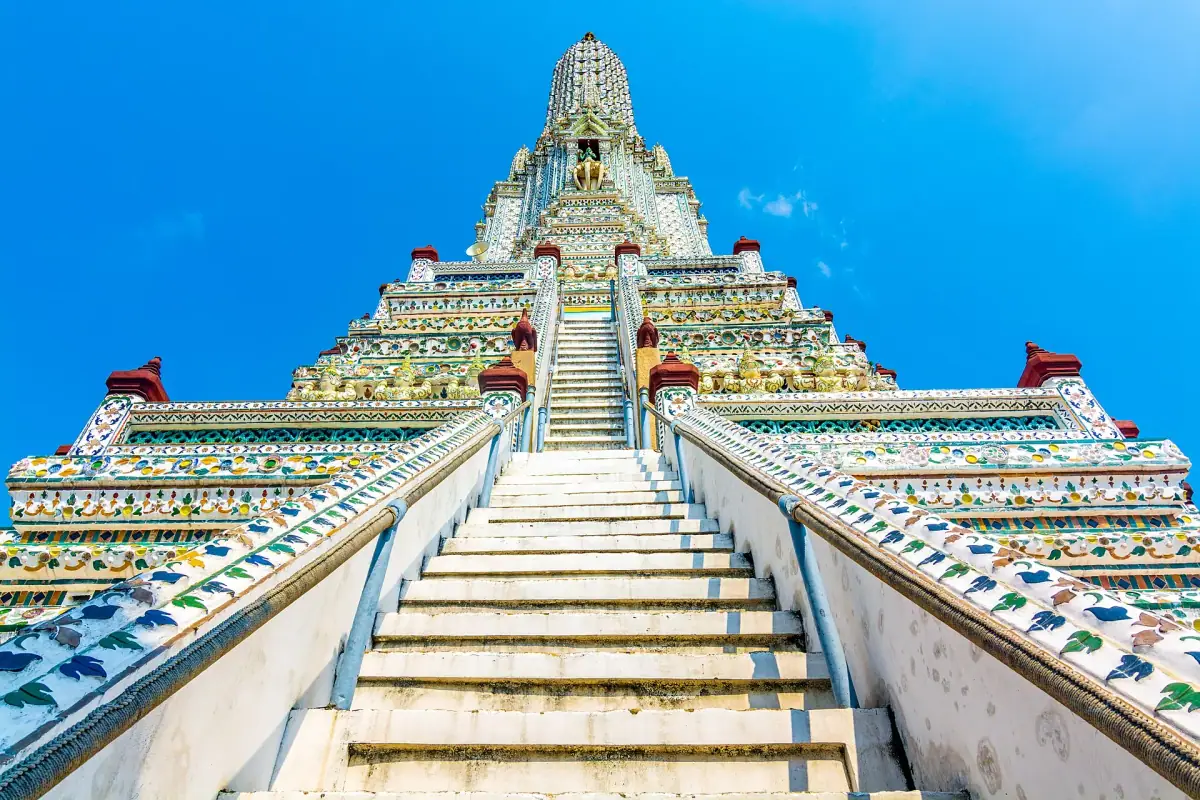
Bangkok is the gateway for most travelers. The capital is a dense, noisy and fascinating megacity, where golden temples, canals, skyscrapers, street markets and air-conditioned malls coexist. You see the Grand Palace and large Buddhist temples, get around by boat on the river or by elevated train, and eat at any hour.
Around the capital, the center of the country offers fine excursions, starting with Ayutthaya, the former capital of the kingdom, whose brick and stone ruins are easily visited in a day. Two or three nights in Bangkok are enough for a first approach; many travelers come back at the end of their stay before their flight home.
The north: Chiang Mai, Chiang Rai and the mountains
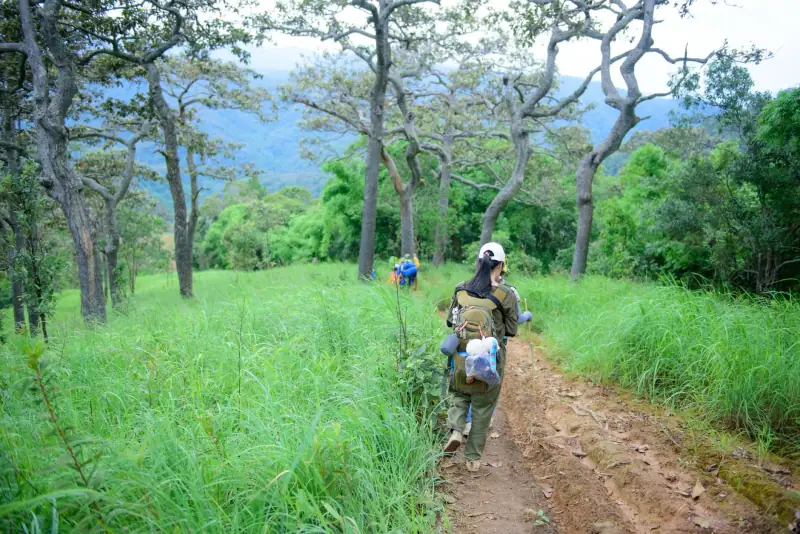
Northern Thailand is the most cultural and coolest region of the country. Chiang Mai, its big city, charms with an old town surrounded by a moat, temples, night markets and food. The surrounding hills allow hiking, discovering villages and meeting elephants in sanctuaries, provided you choose places that truly respect the animals.
Farther north, Chiang Rai is famous for its much-photographed contemporary temples, notably the White Temple. The region is also the starting point for mountain landscapes and for the “Golden Triangle,” a border zone with Laos and Myanmar. The north generally has the country’s lowest prices, which makes it a very good base for a tight budget.
Sukhothai: the cradle of the kingdom
Between the center and the north, Sukhothai is considered the first capital of the Kingdom of Siam. Its historical park, a UNESCO World Heritage site, gathers ruins of temples and Buddhas in a calm, green setting, often praised for an atmosphere more peaceful than Ayutthaya’s. It is a pleasant place to explore by bike. It is an ideal stop between Bangkok and Chiang Mai for those who take the time to drive or stop along the way.
The Andaman Sea: Phuket, Krabi and Koh Lanta
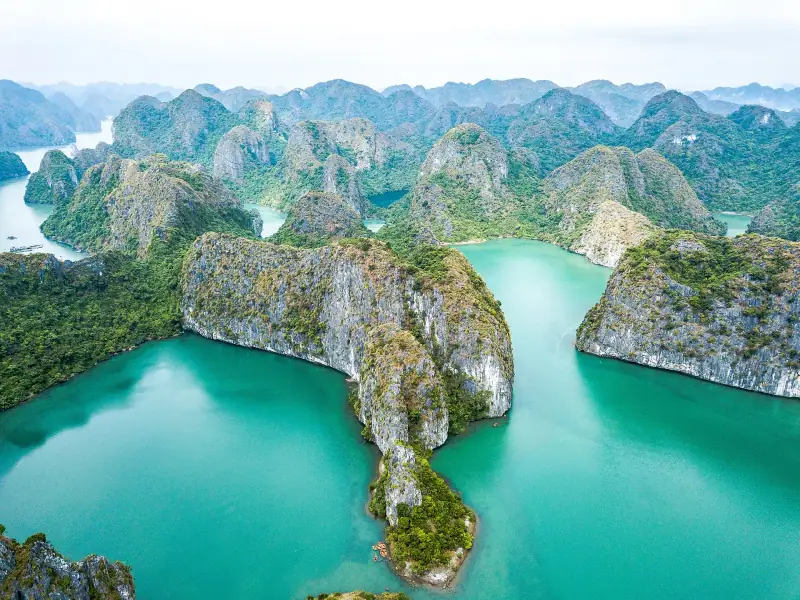
On the west coast of the south, the Andaman Sea has some of the most spectacular landscapes: karst cliffs, islets, caves, lagoons and light-sand beaches. Phuket is the country’s largest island and the most developed, with a huge choice of lodging, restaurants and excursions. Krabi, on the mainland, gives access to beaches like Railay, reachable only by boat, and to a great variety of islands. Koh Lanta, quieter, attracts those who look for calmer beaches and a relaxed atmosphere.
This is where you need to watch the season: the Andaman Sea is at its best in the dry season and can be rough during the monsoon, with excursions sometimes cancelled.
The Gulf of Thailand: Koh Samui, Koh Phangan and Koh Tao
On the east coast of the south, the Gulf of Thailand has an offset weather calendar. Koh Samui is the largest and most developed, with beaches, hotels at every level and an airport. Koh Phangan is known for its alternative vibe and full moon parties. Koh Tao, smaller, is a reference for diving and snorkeling. These islands are a very good alternative when the Andaman coast is in its wet season.
Isan and Khao Yai
The northeast of the country, Isan, is the rural and least touristy region. It has a very distinct local culture, a renowned spicy cuisine and, near Bangkok, Khao Yai National Park, appreciated for its forests and wildlife. It is a good choice for a second trip or for those who want to get off the beaten track.
The highlights not to miss
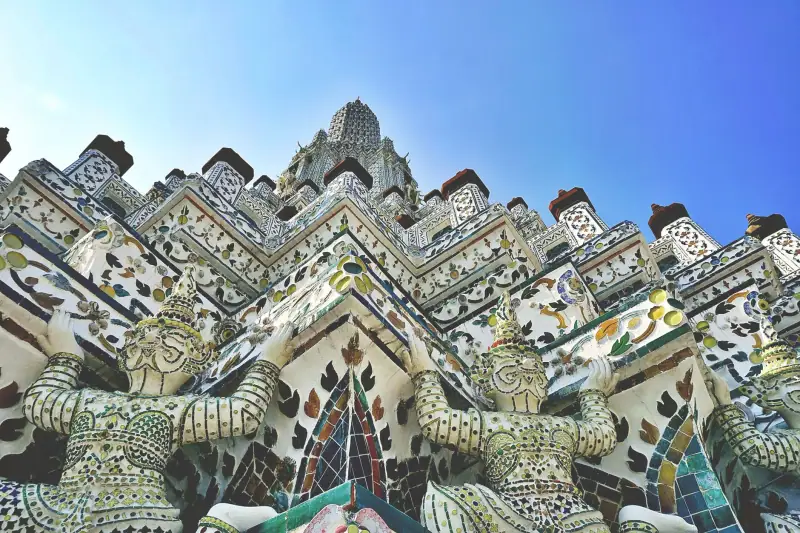
If you could only remember a few sites and experiences, here is a solid selection for a first visit.
Bangkok: palaces, temples and the river
The capital is discovered by themes: the historic district with its great monuments, the Chao Phraya River with its water taxis, the canals, the markets and the modern districts. Bring clothing covering shoulders and knees to visit religious sites. To avoid choosing the wrong area, read our guide to where to stay in Bangkok, which compares the most practical areas by traveler profile.
Hotels in Bangkok
Compare lodging by neighborhood, price and cancellation terms.
Ayutthaya, Sukhothai and Chiang Rai: the cultural triangle
Three historic or symbolic towns deserve a detour. Ayutthaya is visited as a day trip from Bangkok, to discover its prangs and stone Buddhas. Sukhothai offers an airier historical park, where you cycle among the ruins. Finally, Chiang Rai surprises with its contemporary temples, including the White Temple, the Blue Temple and the Black House. Together, they tell the story of the country, from the first kingdom to present-day religious art.
Chiang Mai: temples, markets and nature
Chiang Mai is ideal for slowing down. The old town is covered on foot or by bike, and it has many temples. You taste northern specialties, visit markets and set off on excursions into the mountains. Our article what to do in Chiang Mai offers a four-day program balanced between culture, food and nature.
Tours and visits in Chiang Mai
Discover the guided tours, hikes and activities offered around Chiang Mai.
Krabi, Phuket and the islands: the beach side
Landscapes of cliffs plunging into turquoise water are Thailand’s postcard image. Krabi is an excellent starting point for those who like boat excursions, kayaking and caves: our article what to do in Krabi details a four-day stay. To compare Phuket, Koh Samui, Koh Lanta and Koh Tao by travel style, read which island to choose in Thailand.
Food, a highlight in its own right
You do not visit Thailand without eating local. Pad Thai, noodle soups, curries, spicy salads, grilled skewers, desserts of sticky rice and mango: street food is a reason to travel in itself and costs almost nothing. Each region has its specialties, spicier in the northeast, milder and aromatic in the north, very sea-oriented in the south. Our guide to Thai cuisine and street food helps you choose what to order and how to recognize a good stall.
Cooking classes and food tours
Learn to prepare Thai classics or taste street food with a local guide.
When to go to Thailand
The question of the season is essential, because it determines which coast to choose. Three periods stand out: a cool, dry season (roughly November to February), a hot season (roughly March to May) and a rainy season (roughly June to October). The cool season is the most comfortable and therefore the busiest and most expensive. The hot season can be very trying inland, while the monsoon offers lower prices, very green landscapes and fewer people, at the cost of frequent showers.
The two coasts do not follow the same calendar. The Andaman Sea is most pleasant in the dry season and rougher during the monsoon. The Gulf of Thailand is often more favorable at other times of year, which makes it a good fallback. In the north, air quality can worsen at the end of the dry season because of agricultural fires; better to know before booking. Our article when to go to Thailand details the weather region by region and the festivals to know, such as Songkran and Loy Krathong.
How to get to Thailand
Flights
The vast majority of travelers arrive in Bangkok, the country’s main air hub. Phuket, Chiang Mai, Krabi and Koh Samui also have airports, which lets you consider an “open-jaw” trip: arrive in Bangkok and leave from another city.
Compare prices in advance and be flexible on dates: traveling outside school vacations and year-end holidays lowers the bill.
Entry requirements
Entry rules depend on your passport and change regularly. Check the official travel advice of your government before you book: travel.state.gov (US), GOV.UK (UK), travel.gc.ca (Canada), Smartraveller (Australia) (checked November 2026). Our article on entry requirements for Thailand gathers further information. Always check the official sources a few days before departure.
How to get around Thailand
The country is large, but transport is plentiful and accessible. The right choice depends on distance, budget and the time you have.
Trips between regions
- Plane: by far the fastest to reach Chiang Mai, Phuket, Krabi or Koh Samui from Bangkok. Several domestic airlines offer low fares when you book early, but checked bags often cost extra.
- Train: slow but pleasant, especially the night train between Bangkok and the north. It is an experience in itself and a way to save a hotel night. Book ahead in high season.
- Bus and minivan: the network is dense and cheap. First-class night buses are decent, but minivans can be cramped and fast.
- Ferries and speedboats: essential to reach the islands. Schedules depend on weather and season.
Local transport
In cities, favor Bangkok’s elevated train and subway, river boats, ride-hailing apps and metered taxis. Tuk-tuks are picturesque but the price is negotiated before getting in. On the islands, “songthaews” (pickup trucks with benches) and scooters are the most common means. A scooter is practical but accident-prone: a suitable license and insurance that properly covers this use are essential, and a helmet is mandatory.
Renting a car
Driving is on the left. Renting a car is possible and relevant in the north or to explore an island at your own pace, but traffic in big cities is dense and local driving demands attention. In most cases, a mix of public transport and local travel is simpler.
Where to stay in Thailand
The lodging offer is exceptionally wide, from the hostel to the villa with a private pool, via the family guesthouse and the boutique hotel. A few simple principles help you choose well.
In Bangkok, the neighborhood matters more than the property: near an elevated train or subway station, you save hours of travel. Our article where to stay in Bangkok compares the areas. In Chiang Mai, the old town is the most practical choice for a first visit. On the Andaman coast and in the Gulf, the choice of beach sets the atmosphere: lively beaches with restaurants and bars, or calmer coves. Beachfront costs more, and rates skyrocket at Christmas, New Year and during Songkran.
A few general tips: book ahead in high season, prefer free cancellation terms when possible, read recent reviews and check the real distance to the beach or transit station. Air conditioning is almost essential in the lowlands, and a fan may be enough at altitude in the north.
What budget to plan
Thailand is known for being affordable, but gaps are large depending on travel style. Excluding the international flight, expect, as a guide, €25 to 45 (about $29 to $52) per day per person on a budget, €55 to 95 (about $64 to $110) in comfort, and over €100 (about $115) high-end. The north is generally far cheaper than big islands like Phuket or Koh Samui.
Street meals are among the best value in the world; lodging remains the biggest expense, followed by transport and excursions. Bank cards are accepted in hotels and big restaurants, but cash remains useful for markets, tuk-tuks and small places. For detailed figures, budget profiles and savings tips, see our article on the budget for a trip to Thailand.
How to organize your itinerary
There is no single route, but a few rules avoid beginner mistakes. The first: do not add too many stops. Each change of city costs half a day between transport, luggage and settling in. Better to do less and enjoy more.
Here are three possible outlines depending on the length of your stay:
- One week: Bangkok (2 to 3 nights) then either an excursion to Ayutthaya and the north, or a single island or a single beach zone.
- Two weeks: Bangkok, Ayutthaya, Sukhothai, Chiang Mai and Chiang Rai for culture, then a week of beach on the coast of your choice, depending on the season.
- Three weeks and more: add a second beach zone, a hike in the north, or a foray into Isan to get off the tourist trail.
Our two-week itinerary in Thailand details a concrete route from the historic north to the beaches, with travel times and recommended stops. It is an excellent starting point that you can adapt to your wishes.
Practical tips for traveling well
Respecting customs
Thailand is a country deeply marked by Buddhism and by great respect for the monarchy. A few basic rules: take off your shoes to enter a temple or a home, cover shoulders and knees at religious sites, do not touch people’s heads, never point your feet toward a Buddha statue and avoid any disrespectful remark or gesture toward the royal family, which is punishable by law. Monks must not be touched by women.
Health and safety
Take out travel insurance with repatriation, especially if you plan to ride a scooter or do risky activities. Protect yourself from the sun, stay hydrated and use mosquito repellent. For vaccines and health recommendations: ask your doctor or a travel clinic, and see the official travel health pages (CDC in the US, TravelHealthPro in the UK). Tap water is generally not considered drinkable: drink bottled water.
Avoiding common scams
The most frequent scams affect very touristy areas: fake guides who say a site is “closed” to steer you elsewhere, tuk-tuk drivers who impose stops in shops, scooter rental with abusive billing for pre-existing damage. A few habits are enough: politely refuse, check information yourself, take photos of the rented vehicle and use ride-hailing apps or metered taxis.
Electricity, network and money
Electricity is 220 V. Several plug formats coexist; bring a universal adapter to be safe. For your phone, check your carrier’s international plan or use a travel eSIM; local SIM cards are also very affordable and easy to get on arrival at the airport. For money, withdraw larger sums at once to limit withdrawal fees and always refuse the conversion into your home currency offered by ATMs, which is unfavorable.
Activities to book in advance
In high season, some popular excursions, such as the islands around Krabi and Phuket or animal sanctuary visits in the north, fill up. Booking online in advance lets you compare options and keep cancellation flexibility. Choose reputable operators, especially for activities with animals: avoid shows and elephant rides, and favor respectful viewing places.
Articles to prepare your trip
Here are all the articles published on this site, sorted by theme, to go deeper into each aspect of your stay.
Preparing your trip
- When to go to Thailand: weather and seasons by region
- Entry requirements for Thailand: passport, visa, health and customs
- Thailand budget: how much a trip costs, item by item
Itinerary and lodging
- Thailand itinerary in 2 weeks: from the historic north to the beaches
- Where to stay in Bangkok: neighborhoods, pros and tips for choosing
Cities and sites to visit
- Visiting Ayutthaya: temples, ruins and a day trip from Bangkok
- Visiting Sukhothai: guide to the historical park and the first capital of Siam
- Visiting Chiang Rai: White Temple, Blue Temple and Black House
- Which island to choose in Thailand: Phuket, Koh Samui, Koh Lanta or Koh Tao?
Activities
- What to do in Chiang Mai: temples, markets, food and nature in 4 days
- What to do in Krabi: beaches, islands, caves and kayaking in 4 days
Food
- Thai cuisine: dishes to taste and street food from north to south
Summary
Thailand lends itself to every type of trip: cultural, foodie, beach, adventurous or family. To make your stay a success, keep three ideas in mind. Choose your regions according to the season, because the Andaman coast and the Gulf of Thailand do not follow the same calendar. Limit the number of stops to enjoy each one. Finally, book flights, lodging and highly demanded activities ahead in high season, while keeping some flexibility. With these pointers and our detailed articles, you have all the keys to build a trip to suit you.
Frequently asked questions
How long do you need to visit Thailand?
Two weeks let you combine Bangkok, the historic north and a beach region without rushing. With one week, focus on Bangkok and a single zone (the north or an island). Beyond three weeks, you can add Sukhothai, Chiang Rai or several islands and slow the pace.
What is the best time to go to Thailand?
From November to February, the cool, dry season suits most regions, but it is also high season, with higher prices. Since the country stretches over more than 1,500 km (930 mi), the climate varies: the Gulf of Thailand has a calendar offset from the Andaman Sea. Our dedicated article details the choice region by region.
Do you need a visa for Thailand?
Entry rules depend on your passport and change regularly. Check the official travel advice of your government before you book: travel.state.gov (US), GOV.UK (UK), travel.gc.ca (Canada), Smartraveller (Australia) (checked November 2026).
What budget should you plan for a trip to Thailand?
Excluding the international flight, expect about €25 to 45 (about $29 to $52) per day on a budget, €55 to 95 (about $64 to $110) in comfort and over €100 (about $115) high-end. The islands cost clearly more than the north of the country. The item-by-item detail is in our budget article.
How do you get around Thailand between regions?
Flying is fastest for long distances (Bangkok to Chiang Mai, Phuket or Krabi). The night train, buses and minivans are cheap for the north and the center. Between islands, ferries and speedboats are used; locally, taxis, ride-hailing apps, tuk-tuks and scooters fill in the gaps.
Do you have to choose between temples and beaches?
No, that is precisely the country's strength. A classic circuit combines a few cultural days (Bangkok, Ayutthaya, Chiang Mai) with a week of beach on the Andaman Sea or in the Gulf of Thailand. The key is to choose the coast according to the season.
Is Thailand suitable for a first big trip?
Yes. Tourism is very well structured, infrastructure is plentiful and there is lodging at every price. The main things to watch for are the heat, common scams in tourist areas, scooter riding and respect for customs in temples.
More Thailand guides
Keep reading
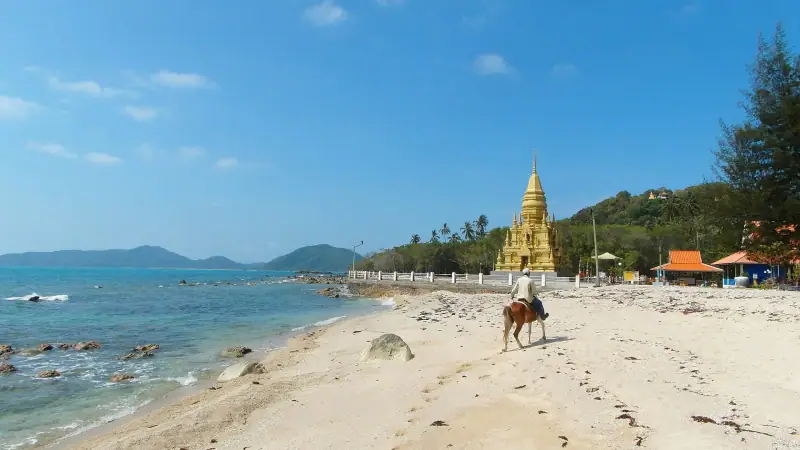
Which Thai Island to Choose: Phuket, Koh Samui, Koh Lanta or Koh Tao?
Phuket, Koh Lanta, Koh Samui, Koh Phangan or Koh Tao? Comparison of Thailand's main islands by atmosphere, season, activities and travel style.
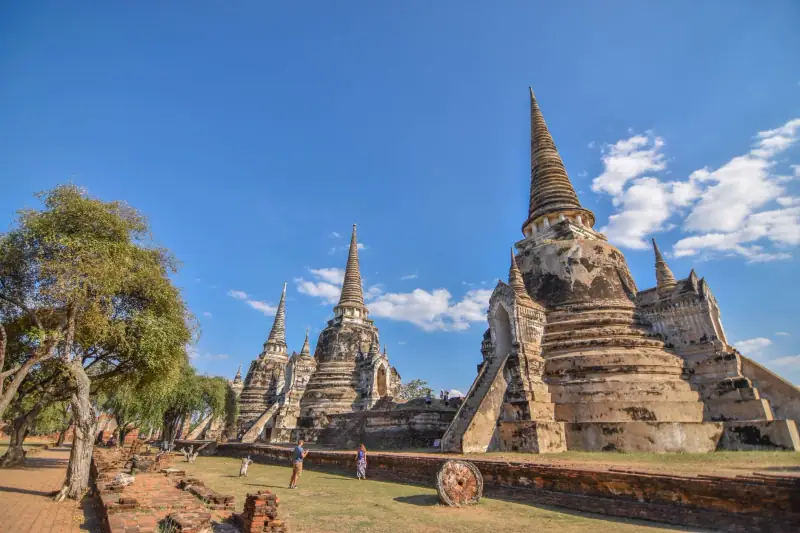
Visiting Ayutthaya: Temples, Ruins and a Day Trip from Bangkok
Visit Ayutthaya from Bangkok: iconic temples, the UNESCO historical park, transport, bikes, tuk-tuks and tips to plan your day or overnight stay.
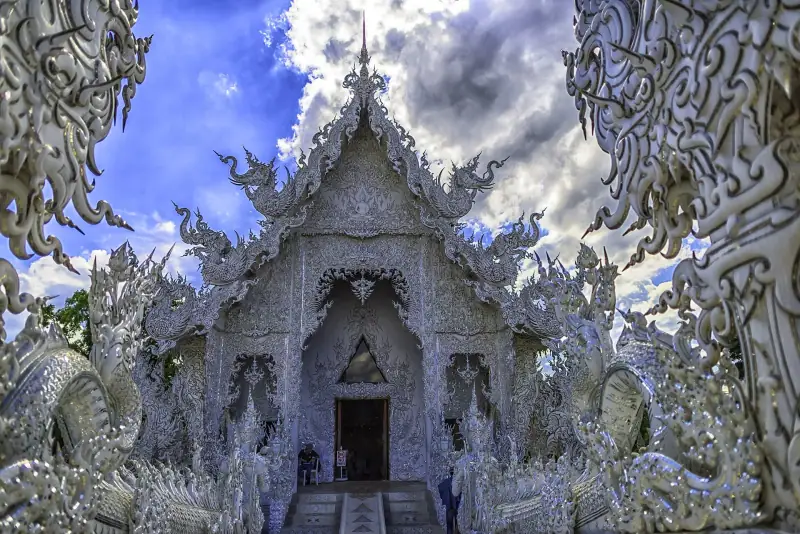
Visiting Chiang Rai: the White Temple, Blue Temple and Black House
Visit Chiang Rai: White Temple, Blue Temple, Black House, the town center and night market. How to get there from Chiang Mai and how long to allow.
Ready-made
Thailand itineraries
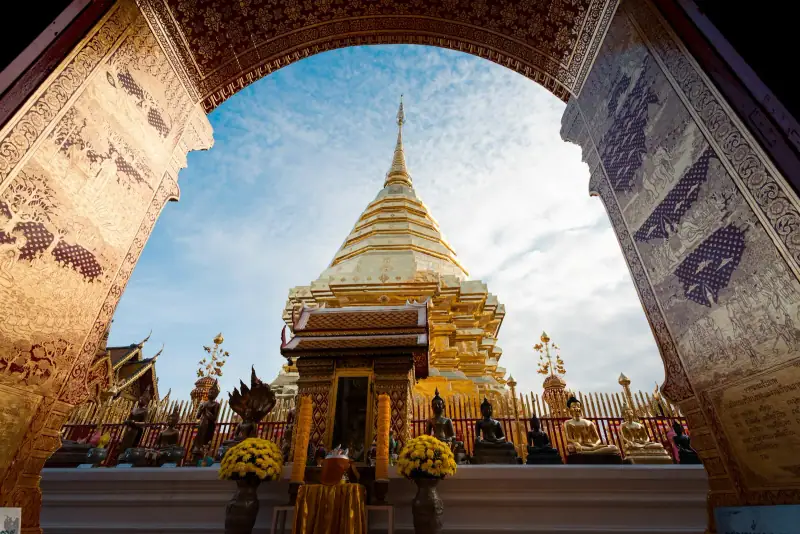
14 days
Thailand Itinerary for 2 Weeks: From the Historic North to the Beaches
A 14-day itinerary in Thailand: Bangkok, Ayutthaya, Sukhothai, Chiang Mai, Chiang Rai, then the beaches of Krabi. Stops, transport and tips.
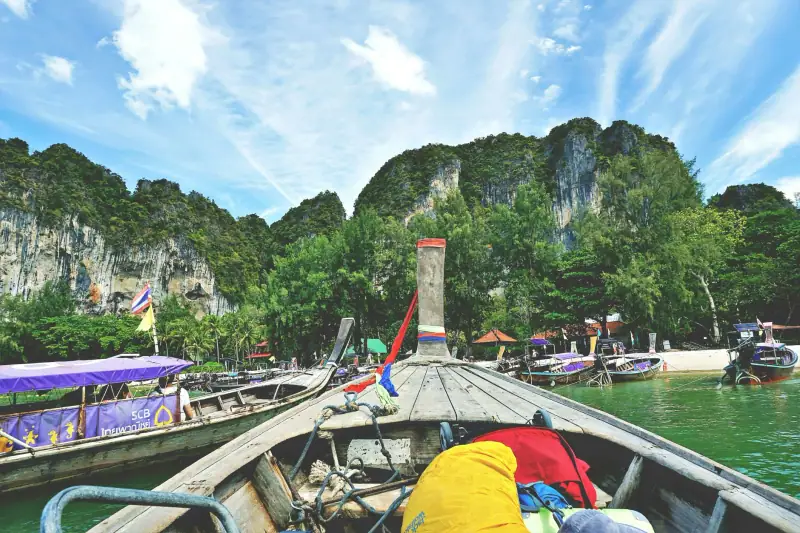
10 days
Thailand in 10 Days Without a Car: Bangkok, Chiang Mai and Krabi, a Realistic Itinerary
BangkokChiang MaiKrabi
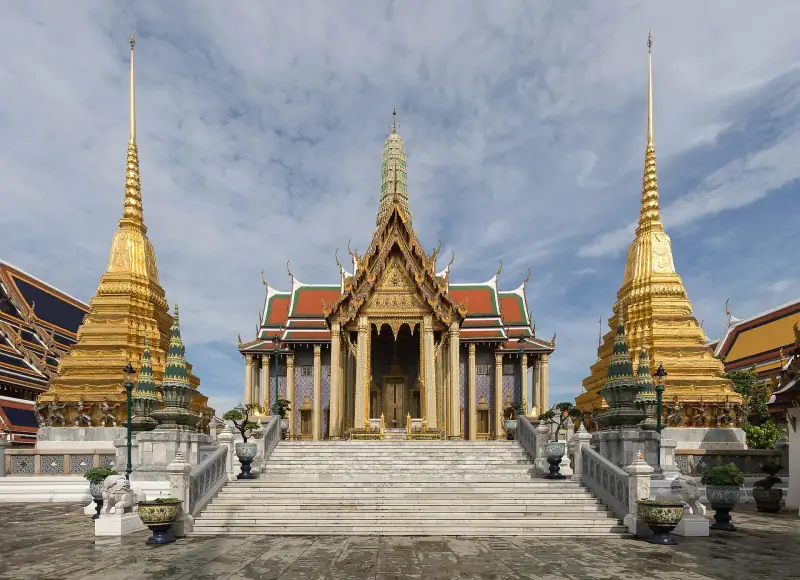
3 days
3 Days in Bangkok: A Day-by-Day Itinerary for First-Time Visitors
What to do in 3 days in Bangkok? Grand Palace, Wat Pho, Wat Arun, Chinatown, Chatuchak and markets: a day-by-day plan with transport and tips.