What to see
Visiting Chiang Rai: the White Temple, Blue Temple and Black House
We may earn a commission when you book through links on this page, at no extra cost to you. We don't visit or try the places we cover: we summarize published sources. How we work
In short
- One day covers the three big sights: the White Temple, the Black House and the Blue Temple; an overnight stay adds the town center and the night market.
- The White Temple (Wat Rong Khun) is about 13 km (8 mi) south of the center; arrive early or late in the day to avoid the crowds.
- The road from Chiang Mai takes about three hours each way, so a day trip means roughly six hours of driving.
- Shoulders and knees must be covered in temples; shoes come off to enter sanctuaries.
Chiang Rai is the northernmost large city in Thailand, smaller and quieter than Chiang Mai. It owes its reputation to three very different places, all made by contemporary artists: a dazzling white temple, a deep blue sanctuary and a dark complex of wooden houses. Around the city, the northern hills, tea plantations and mountain villages complete a stop that is easy to fit into a trip.
This guide presents the places to see, the useful distances and the best way to organize the visit. For the neighboring city, see our guide on what to do in Chiang Mai.
Why stop in Chiang Rai
Many travelers only pass through Chiang Rai on an excursion from Chiang Mai. That is a pity: the city is pleasant, clearly less touristy and more relaxed. It is easy to get around, meals are simple and tasty, and the evening atmosphere at the night market is friendly.
The trip between the two cities takes about three hours by road, through a landscape of hills and rice fields. That means a whole day if you go and return the same day, which leaves little time there. One night, or even two, truly changes the experience.
Chiang Rai also has an identity of its own. It looks toward the northern mountains, with their ethnic-minority communities, their tea and their coffee, more than toward the historic ruins of Sukhothai or Ayutthaya, which you can discover in our guide to visiting Ayutthaya.
The White Temple (Wat Rong Khun)
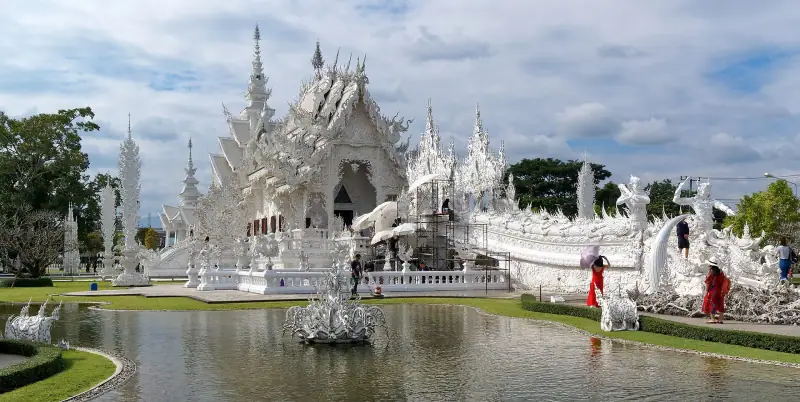
It is the region’s most famous image, and it deserves its reputation. Wat Rong Khun is in the village of Ban Rong Khun, about 13 km (8 mi) south of the center of Chiang Rai, along the main road toward Chiang Mai. Construction began in 1997, on the initiative of the Thai artist Chalermchai Kositpipat, and the complex remains an evolving artistic project.
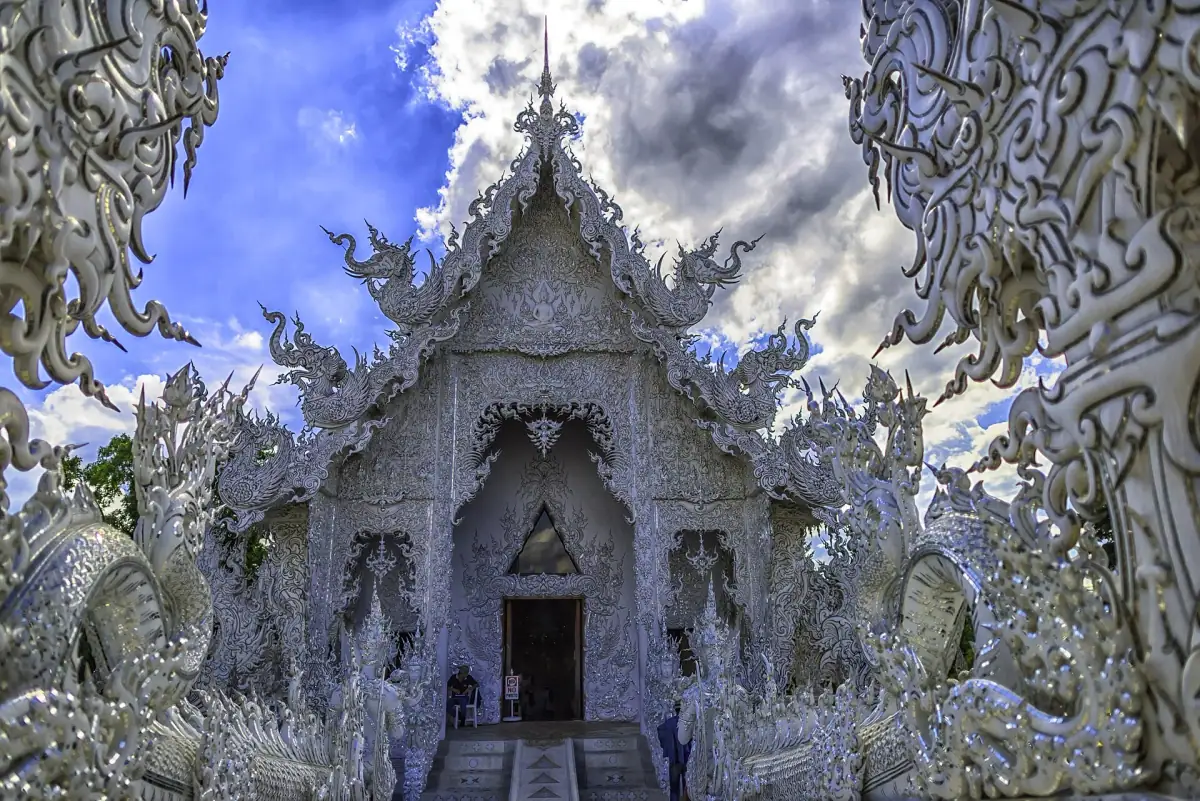
The architecture is entirely white and inlaid with small mirror fragments that sparkle in the sun. To reach the main sanctuary, you cross a bridge that symbolizes the passage from temptation to wisdom, above a sea of outstretched hands. Inside, the murals mix Buddhist themes with very contemporary references, which always surprises.
Arrive early in the morning or at the end of the day if possible: the site is one of the busiest in the north and crowds increase markedly at midday. Allow one to one and a half hours for the visit. Respectful dress is required, with shoulders and knees covered.
Hotels in Chiang Rai
Compare lodging in the town center for your dates.
The Black House (Baan Dam)
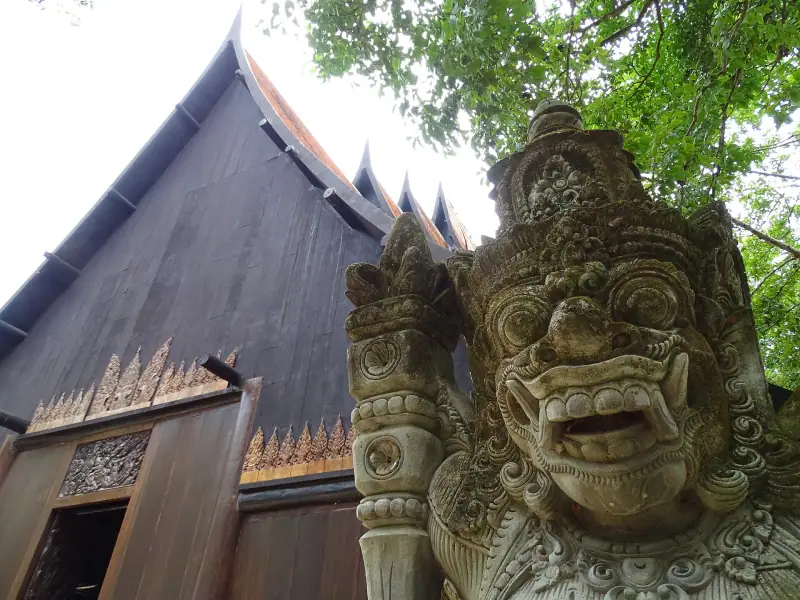
The opposite of the White Temple in spirit, Baan Dam is the work of the national artist Thawan Duchanee. It is not a temple, but a group of dark wooden buildings with imposing roofs, scattered across a large garden. You find sculptures, furniture, horns, hides and objects of very varied inspiration.
The atmosphere is strange, sometimes disorienting, and that is precisely the appeal. The visit is on foot in a quiet garden and generally takes one to two hours. It complements the White Temple well, being its almost exact counterpoint: dark, earthy and personal.
The Black House is north of the city. On a day excursion, it fits naturally between the other two sites, but check the order of stops with your driver or organizer.
The Blue Temple (Wat Rong Suea Ten)
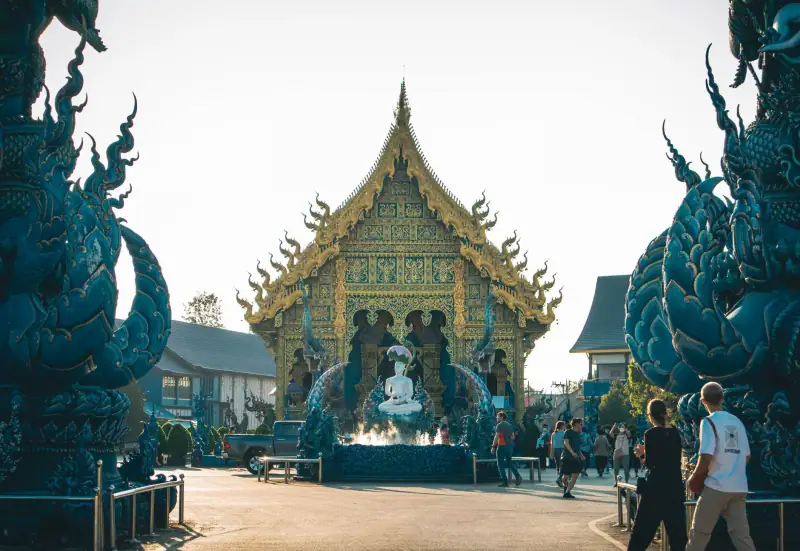
The Blue Temple is the newest of the three. Built between 2005 and 2016, Wat Rong Suea Ten is a working temple, decorated with very fine sculptures and intensely colored paintings. It was designed by the local artist Phuttha Kabkaew, who studied under Chalermchai Kositpipat on the White Temple site.
The interior is dominated by a deep blue, highlighted with gold, with a large white Buddha statue. Unlike the White Temple, the atmosphere is more contemplative and the visit shorter: half an hour to an hour is enough. Remember to take off your shoes before going in.
Chiang Rai temple excursion
One-day tours to the White Temple, the Blue Temple and the Black House.
The town center: Wat Phra Kaew and the night market
The center of Chiang Rai is explored on foot or by two-wheeler, and it offers a pleasant break after the big sights. Wat Phra Kaew is the city’s best-known temple. According to tradition, this is where the famous Emerald Buddha was discovered in 1434, after lightning struck an old stupa. The original image is now in Bangkok, within the Grand Palace grounds, but the temple houses a jade replica.
In the evening, the night market is a good place for dinner: you find stalls of northern cooking, grilled food and desserts. To find your way around the dishes, our guide to street food in Thailand will give you benchmarks.
The surroundings: tea, hills and borders
If you have one more day, the hills around Chiang Rai are worth the detour. The north of the province is a land of tea and coffee plantations, minority villages and viewpoints. The Golden Triangle, at the confluence of the Mekong and the Ruak River, marks the border with Laos and Myanmar. It is a popular stop for the view over the river.
Organized excursions often combine several of these stops. Choose one if you are not renting a car, as public transport is impractical for the mountain sites.
Getting to Chiang Rai and getting around
From Chiang Mai, the road takes about three hours. Buses and minivans leave regularly, and there are many day excursions. Chiang Rai also has an airport, served by domestic flights from Bangkok.
In town, shared taxis, ride-hailing apps and cars with drivers let you reach the temples. To link the sites at your own pace, renting a car is the most flexible option, provided you are comfortable driving on the left.
Where to stay in Chiang Rai
The town center is the most practical: it has restaurants, the night market and a choice of lodging, from simple hostels to comfortable hotels. For an early-morning temple visit, sleeping near the center spares you the trip from Chiang Mai.
Book ahead during the cool season, which is the busiest in the north. To choose your period, see our guide on when to go to Thailand.
Cooking classes and local visits
Discover the activities offered in the Chiang Rai area.
Sample two-day itinerary
Day 1: the three big sights. Leave your lodging early for the White Temple, before the crowds. Continue to the Black House, then the Blue Temple at the end of the day. Finish at the night market.
Day 2: the town and surroundings. Visit Wat Phra Kaew in the morning, then devote the afternoon to an excursion to the hills or the Golden Triangle. If you head back to Chiang Mai, allow three hours on the road.
To fit Chiang Rai into a longer trip, our two-week itinerary in Thailand shows how to link the north, Bangkok and the beaches.
Practical tips
- Dress respectfully: shoulders and knees covered in temples.
- Arrive early at the busiest sites, especially the White Temple.
- Bring water, a hat and sunscreen, since the heat can be strong at midday.
- Check opening hours and entrance fees before you go, since they can change.
- Keep a little cash for markets and small restaurants.
Chiang Rai is visited at a different pace from its more famous neighbors. With one or two nights, you will leave with images very different from those of the classic temples, and a wish to discover more of the north of the country.
Frequently asked questions
How long do you need to visit Chiang Rai?
One day is enough to see the three big attractions: the White Temple, the Black House and the Blue Temple. With a night there, you add the town center, the night market and the surroundings without rushing. Two nights are best if you also want to explore the hills.
How do you get from Chiang Mai to Chiang Rai?
The road takes about three hours each way. Intercity buses, minivans, cars with drivers and day excursions serve the route. A rental car gives more freedom to link the temples.
Where is the White Temple relative to the center of Chiang Rai?
Wat Rong Khun is in the village of Ban Rong Khun, about 13 kilometers (8 miles) south of the center of Chiang Rai, along the main road toward Chiang Mai. You can get there by taxi, two-wheeler or excursion.
Should you sleep in Chiang Rai or do it as a day trip?
The day trip from Chiang Mai is practical but tiring, with about six hours on the road in total. Sleeping in Chiang Rai lets you visit the temples early, before the crowds, and enjoy the town in the evening.
What should you wear to visit the temples?
Cover shoulders and knees, especially in active places of worship such as the Blue Temple. Shoes that are easy to remove are useful, since you take them off to enter the sanctuaries.
More Thailand guides
Keep reading
Which Thai Island to Choose: Phuket, Koh Samui, Koh Lanta or Koh Tao?
Phuket, Koh Lanta, Koh Samui, Koh Phangan or Koh Tao? Comparison of Thailand's main islands by atmosphere, season, activities and travel style.
Visiting Ayutthaya: Temples, Ruins and a Day Trip from Bangkok
Visit Ayutthaya from Bangkok: iconic temples, the UNESCO historical park, transport, bikes, tuk-tuks and tips to plan your day or overnight stay.
Complete Guide to Visiting Thailand: Regions, Highlights and Tips
Visiting Thailand: regions, cities and highlights, best time to go, transport, lodging and budget. The pillar guide to prepare your trip.
Ready-made
Thailand itineraries
14 days
Thailand Itinerary for 2 Weeks: From the Historic North to the Beaches
A 14-day itinerary in Thailand: Bangkok, Ayutthaya, Sukhothai, Chiang Mai, Chiang Rai, then the beaches of Krabi. Stops, transport and tips.
10 days
Thailand in 10 Days Without a Car: Bangkok, Chiang Mai and Krabi, a Realistic Itinerary
BangkokChiang MaiKrabi
3 days
3 Days in Bangkok: A Day-by-Day Itinerary for First-Time Visitors
What to do in 3 days in Bangkok? Grand Palace, Wat Pho, Wat Arun, Chinatown, Chatuchak and markets: a day-by-day plan with transport and tips.