Plan your trip
Thailand Budget: How Much a Trip Costs, Item by Item
We may earn a commission when you book through links on this page, at no extra cost to you. We don't visit or try the places we cover: we summarize published sources. How we work
In short
- Excluding the international flight, expect 900 to 1,800 baht per day on a budget, 2,150 to 3,600 baht in comfort, and from about €100 (about $115) high-end.
- The north (Chiang Mai, Pai) is generally 40 to 60% cheaper than big islands like Phuket or Koh Samui.
- Street meals cost roughly 40 to 80 baht; lodging is the biggest expense, followed by transport and excursions.
- ATM withdrawals with a foreign card are charged about 220 baht or more: withdraw large sums at once and decline the conversion offered by the machine.
Thailand has a reputation as a cheap destination, and it is true… provided you know what you are getting into. A pad Thai at €2 (about $2) sits next to cocktails at €10 (about $12) on the beach, and a room at €10 (about $12) in the north can turn into €120 (about $140) a night on an island in high season. The budget for a trip therefore depends less on the country than on your choices: region, season, comfort and pace.
This article details real costs item by item, offers three priced budget profiles and ends with the tips that really lower the bill. Prices are given in baht (THB) with an indicative conversion: in 2026, €1 is worth about 36 to 38.7 baht (lowest of the year in January, highest at the end of July). We use 38 baht per €1 as a calculation base. These are rough estimates cross-checked against several travel sources in 2026, not guaranteed rates: always check before booking. Amounts the source gives in euros also show a dollar equivalent at €1 = $1.16.
The overall budget at a glance
Before going into detail, here are the general benchmarks, excluding the international flight:
- Small budget (backpacker): 900 to 1,800 baht per day, about €25 to 45 (about $29 to $52).
- Comfortable budget (mid-range): 2,150 to 3,600 baht per day, about €55 to 95 (about $64 to $110).
- High-end: from €100 (about $115) per day, with no real ceiling.
Over two weeks, 2026 estimates range from about €750 (about $870) per person on a very frugal trip to over €2,500 (about $2,900) high-end, excluding the plane ticket. A simple rule applies everywhere: the north (Chiang Mai, Pai) is generally 40 to 60% cheaper than big islands like Phuket or Koh Samui, where you should expect to pay 25 to 50% more on food, lodging and activities.
Lodging: the first expense
Lodging generally makes up between a third and half of the daily budget. It is also the item with the biggest gaps.
Hostels and guesthouses
A dorm bed is generally found between 400 and 700 baht (about €10 to 18 / $12 to $21) in popular hostels. Simple guesthouse rooms start around 400 baht, and the cheapest offers in the country are in the north and in less touristy towns. This gives a double room between €10 and 25 (about $12 to $29) a night, a very low cost if you travel as two.
Mid-range hotels
For a room with air conditioning, a pool and breakfast, expect a clearly higher budget, particularly in Bangkok, Phuket or Krabi in high season. Rates vary enormously by neighborhood, date and amenities: the only reliable method is to compare on specific dates. Our guide to choosing where to stay in Bangkok details neighborhoods by budget.
When lodging prices spike
The Christmas and New Year weeks, Thai New Year (Songkran, around April 13) and high season on the Andaman coast push prices up, sometimes spectacularly. Booking early, traveling in the shoulder season or choosing a refundable room saves more than any haggling once you are there. To choose your dates, see our article on the best time to go to Thailand.
Compare hotels in Thailand
Filter by price, neighborhood and free cancellation to keep your budget under control.
Meals: where Thailand is unbeatable
This is where the country earns its reputation. A plate of pad Thai or a bowl of boat noodles at a street stall generally costs 40 to 80 baht (about €1 to 2 / $1 to $2). A sit-down meal in a mid-range restaurant is more like 150 to 350 baht (€4 to 9 / $5 to $10) per person. In Western-style or beachfront restaurants on the islands, the bill climbs fast.
Eating local means eating well and cheap
The logic is simple: the more you eat like Thais (markets, food courts, small neighborhood restaurants), the less you pay. Three street meals a day often add up to under €10 (about $12) in total. To know what to order and where, read our guide to street food in Thailand.
Drinks
- A beer at a convenience store (such as 7-Eleven): about 40 to 60 baht.
- A beer in a tourist bar: about 100 to 180 baht.
- Bottled water, pressed juices and street iced coffee remain very affordable.
Alcohol is the classic budget trap: a few cocktails a night can cost more than all your meals for the day.
Transport: choosing the right mode for the distance
Distances are long in Thailand, but there are many options and most remain cheap.
In cities
A tuk-tuk costs between €2 and 10 (about $2 to $12) depending on distance, but you must negotiate the price before getting in, and it is often pricier than a ride-hailing car. Ride-hailing apps like Grab accept bank cards and show a price in advance, which avoids haggling. In Bangkok, the elevated train and the subway are fast and cheap, and avoid traffic jams.
Between cities
- Plane: Bangkok to Chiang Mai is available from about 900 baht on promotion, and more often between 1,500 and 3,000 baht with luggage included. The flight takes about 1 h 20.
- Night train: Bangkok to Chiang Mai, expect about 12 to 13 hours of travel and fares from 370 baht (seat) to 900 to 1,400 baht for a second-class berth. It replaces a hotel night, which makes the trip worthwhile.
- Ferry: crossings between islands generally cost 200 to 800 baht, for example 300 to 450 baht between Koh Samui and Koh Phangan.
- Scooter: rental comes to about €6 to 10 (about $7 to $12) a day in Phuket. Beware: insurance and a driver’s license are essential, and two-wheeler accidents are frequent. Check your insurance policy before renting.
To organize your stops and estimate the number of trips, our two-week itinerary in Thailand gives a realistic base. If you hesitate between coasts, which island to choose in Thailand helps you limit costly transfers.
Flights to Bangkok
Compare dates and airlines: the international flight is the biggest item of the trip.
Activities and visits
Temples and cultural sites are often inexpensive, but organized excursions weigh more. A few 2026 benchmarks:
- Bangkok Grand Palace: 500 baht entry (about €13 / $15).
- Elephant sanctuary: 1,800 to 3,500 baht for half a day, and about 2,500 baht for a full day with transfers and lunch at a well-known place in the north. Choose ethical operations that do not offer elephant rides.
- Thai cooking class: between 900 and 1,500 baht (about €24 to 40 / $28 to $46), often with a market visit.
- One-hour Thai massage: about 200 to 400 baht, depending on the place.
- Boat excursions (islands, snorkeling): prices vary widely with fuel prices, the number of sites and the season.
The smart program
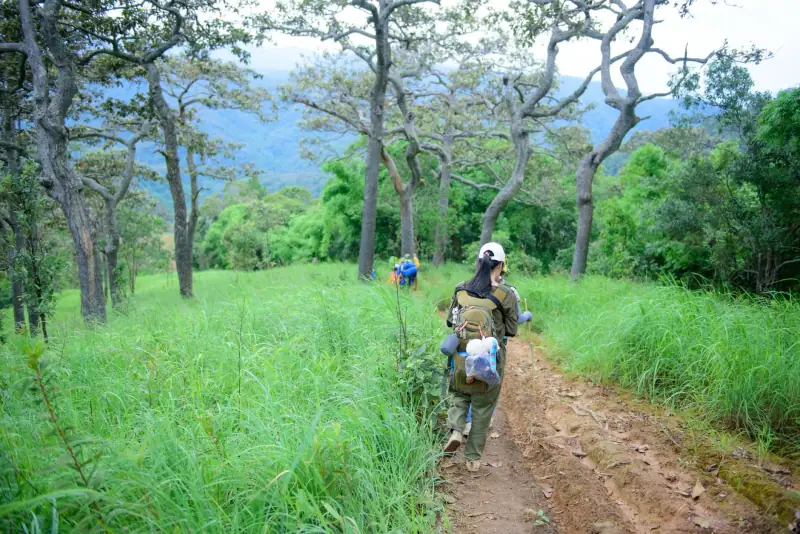
A paid day every other day is more than enough: alternate an excursion and a free day (markets, beach, city stroll). In the north, our article on what to do in Chiang Mai shows how to combine free and paid activities. On the Andaman coast, what to do in Krabi lists the excursions worth their price.
Thai cooking classes
Half a day with a market visit, to learn the recipes you eat every day.
Three priced budget profiles
Here are three budget examples per person per day, excluding the international flight. They rest on the ranges cited above and on a trip for two (shared room). They are benchmarks, not promises.
Profile 1: frugal (about €25 to 45 / $29 to $52 per day)
- Lodging: dorm or simple guesthouse, about €5 to 12 (about $6 to $14) per person.
- Meals: street food and food courts, about €6 to 10 (about $7 to $12).
- Transport: local transport, bus and second-class train, about €3 to 8 (about $3 to $9).
- Activities: temples, markets, an occasional excursion, about €3 to 8 (about $3 to $9) on average.
Total: about 900 to 1,800 baht per day. Over two weeks, that gives roughly €350 to 650 (about $405 to $755) of spending in the country, not counting extras.
Profile 2: comfort (about €55 to 95 / $64 to $110 per day)
- Lodging: hotel with air conditioning, pool and breakfast, about €25 to 45 (about $29 to $52) per person.
- Meals: a mix of street food and good restaurants, about €12 to 20 (about $14 to $23).
- Transport: ride-hailing, a few domestic flights, ferries, about €10 to 15 (about $12 to $17).
- Activities: one excursion or class a day on average, about €8 to 15 (about $9 to $17).
Total: about 2,150 to 3,600 baht per day. Over two weeks, expect about €800 to 1,300 (about $930 to $1,510).
Profile 3: high-end (from €100 / $115 per day)
- Lodging: 4 to 5-star hotels or villas, with no real ceiling.
- Meals: gourmet restaurants, bars, private beaches.
- Transport: private driver, domestic flights, private boats.
- Activities: private excursions, spa, golf, diving.
At this level, the budget is set mostly by lodging: one night can be worth more than a week on the frugal profile. Excluding flights, a two-week stay easily exceeds €2,500 (about $2,900) per person.
Hidden costs to anticipate
A few items are often forgotten in calculations:
- ATM withdrawals: Thai ATMs generally charge 220 baht per withdrawal with a foreign card, and some show 250 baht or more depending on the card. AEON ATMs in malls charge only about 150 baht. Withdraw the maximum amount allowed and decline the dynamic currency conversion.
- Travel insurance: essential, especially if you rent a scooter or dive.
- Checked bags on low-cost domestic flights.
- Tips and service charges: not mandatory, but rounding up the bill is appreciated; some upscale restaurants add service.
- Vaccines and pharmacy: ask your doctor or a travel clinic, and see the official travel health pages (CDC in the US, TravelHealthPro in the UK).
Entry requirements and any fees change regularly. Entry rules depend on your passport. Check the official travel advice of your government before you book: travel.state.gov (US), GOV.UK (UK), travel.gc.ca (Canada), Smartraveller (Australia) (checked November 2026).
10 tips to spend less
- Travel outside high season: from May to October, prices drop clearly. Favor the Gulf of Thailand if the Andaman Sea is rough.
- Favor the north: Chiang Mai and Pai cost 40 to 60% less than Phuket or Koh Samui.
- Eat local: night markets, food courts and neighborhood restaurants rather than beach bars.
- Take the night train when possible: you save a hotel night.
- Book domestic flights early: promotions around 900 baht exist, but disappear fast.
- Use a card with no foreign transaction fees: you still pay the local ATM’s fees.
- Buy alcohol at a convenience store rather than at the bar: the gap is often 2 to 3 times.
- Negotiate tuk-tuks in advance or use a ride-hailing app.
- Limit the number of stops: each change of city costs a transfer and half a day. Two or three bases are enough for two weeks.
- Book excursions locally or online by comparing, reading reviews and avoiding offers that are too cheap and cut corners on safety.
Which profile should you choose?
If it is your first trip, aim for the comfort profile for a base of Bangkok, Chiang Mai and an island, with a few nights in a nicer hotel. If you travel for a long time, a frugal profile with targeted “extras” (diving, elephant sanctuary) gives the best value. In all cases, plan a 10 to 15% margin for the unexpected: a missed flight, an excursion cancelled because of weather or medical care.
Thailand remains one of the most accessible destinations in Asia: a well-prepared budget, local meals, a good calendar and reasonable stops let you enjoy the country fully without breaking the bank.
Sources
- The Grand Palace (Bureau of the Royal Household): figures checked November 2026
Frequently asked questions
What daily budget should you plan in Thailand?
Expect about €25 to 45 (about $29 to $52) per day per person on a budget (900 to 1,800 baht), €55 to 95 (about $64 to $110) in comfort (2,150 to 3,600 baht) and from €100 (about $115) for a high-end trip. These ranges exclude the international flight and vary strongly by destination: the islands cost more than the north.
How much does a two-week trip to Thailand cost?
Excluding the international flight, estimates published for 2026 range from about €750 (about $870) per person for a very low-cost trip to over €2,500 (about $2,900) high-end. For a mid-range budget, expect roughly €1,000 to 1,500 (about $1,160 to $1,740) per person, depending on the number of islands and domestic flights.
Is Thailand always cheap?
For street meals, massages, local transport and guesthouses, clearly yes. For upscale hotels, boat excursions, drinks in tourist bars and alcohol, the price advantage is much smaller, especially in Phuket, Koh Samui and Koh Phi Phi.
Should you withdraw baht or pay by card?
Both. Cards work in hotels, malls and big restaurants, but markets, street food, tuk-tuks and many small guesthouses want cash. Each ATM withdrawal with a foreign card is charged about 220 baht, sometimes more: withdraw large sums at once and always decline the conversion offered by the machine.
What is the cheapest time to travel?
The rainy season, from about May to October, offers the lowest rates on lodging and some excursions. You do, however, have to account for the rough sea on the Andaman Sea coast. The Gulf of Thailand is often a better option at this time.
How do you get between cities cheaply?
Bus and second-class train are the cheapest. Domestic flights can be very affordable if you book ahead, with entry fares around 900 baht on Bangkok to Chiang Mai, but checked bags are often charged extra.
More Thailand guides
Keep reading
Best Time to Visit Thailand: Weather and Seasons by Region
When to go to Thailand? Seasons, monsoon, weather in Bangkok, the north, the Andaman Sea and the Gulf: pick the best month for your trip.
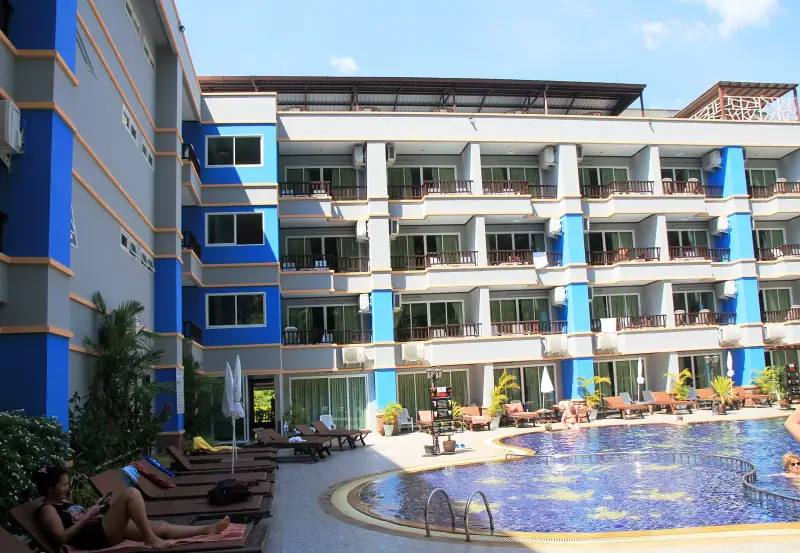
Railay or Ao Nang: Where to Stay in Krabi for Your Trip?
Railay or Ao Nang to stay in Krabi? Compare access, calm, beaches, meals, luggage and budget, with Tonsai, East Railay and Noppharat Thara as alternatives.
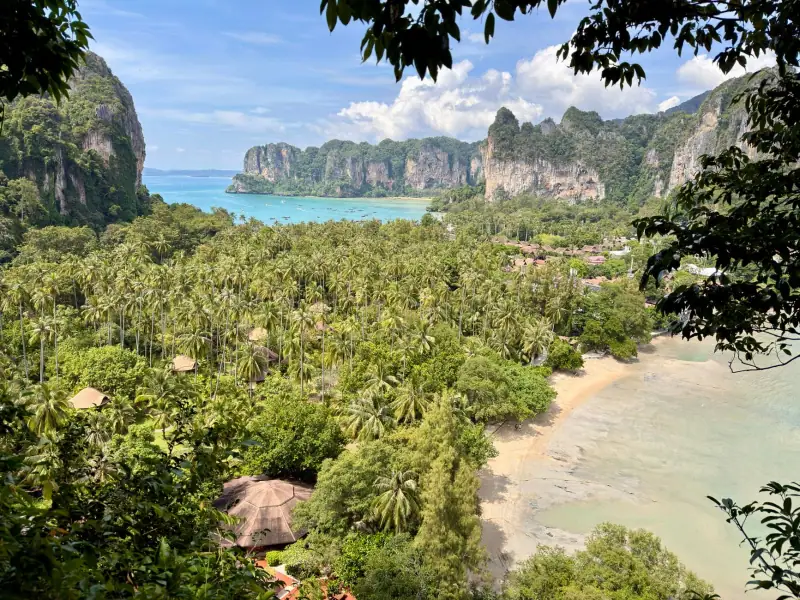
Things to Do in Krabi: Beaches, Islands, Caves and Kayaking in 4 Days
What to do in Krabi? Railay, Ao Nang, the four-islands tour, Tiger Cave Temple and mangrove kayaking: a guide to plan your Andaman Sea stay.
Ready-made
Thailand itineraries

14 days
Thailand Itinerary for 2 Weeks: From the Historic North to the Beaches
A 14-day itinerary in Thailand: Bangkok, Ayutthaya, Sukhothai, Chiang Mai, Chiang Rai, then the beaches of Krabi. Stops, transport and tips.
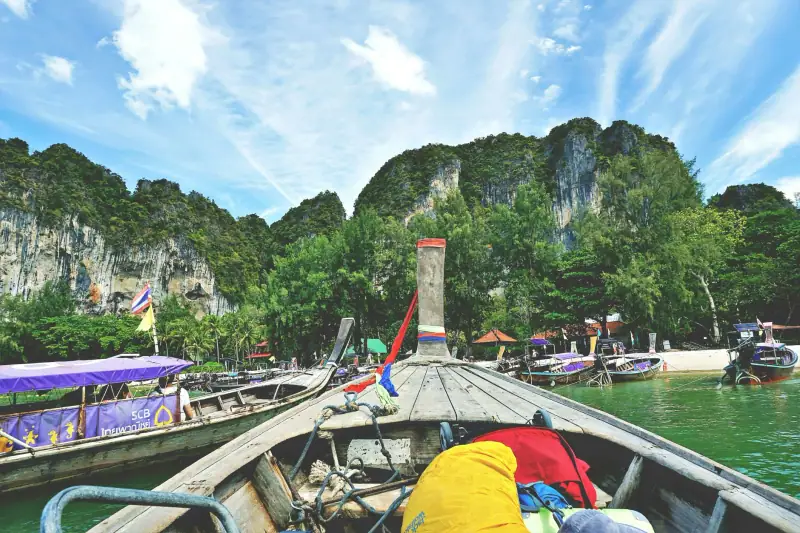
10 days
Thailand in 10 Days Without a Car: Bangkok, Chiang Mai and Krabi, a Realistic Itinerary
BangkokChiang MaiKrabi
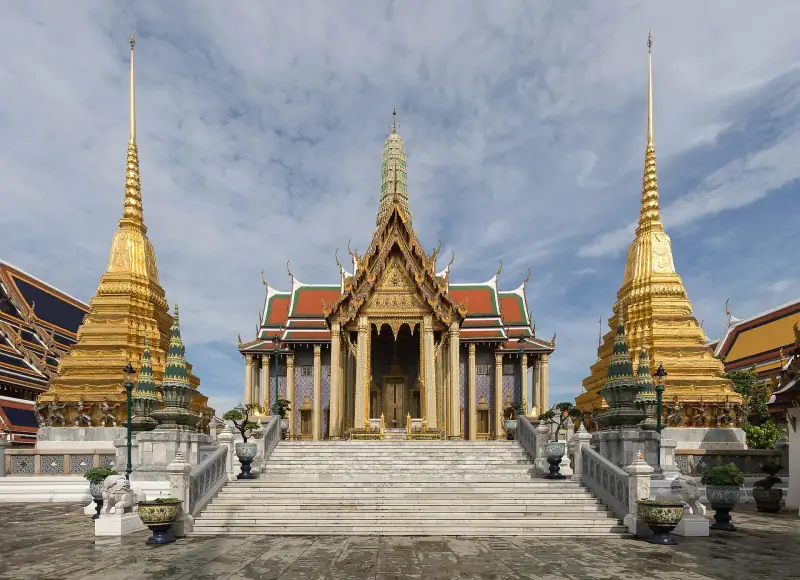
3 days
3 Days in Bangkok: A Day-by-Day Itinerary for First-Time Visitors
What to do in 3 days in Bangkok? Grand Palace, Wat Pho, Wat Arun, Chinatown, Chatuchak and markets: a day-by-day plan with transport and tips.