Itineraries
3 Days in Bangkok: A Day-by-Day Itinerary for First-Time Visitors
We may earn a commission when you book through links on this page, at no extra cost to you. We don't visit or try the places we cover: we summarize published sources. How we work
Day by day
- Day 1Grand Palace, Wat Pho, Wat Arun, evening river cruise
- Day 2Lumphini Park or Jim Thompson House, Siam malls, Chatuchak on weekends
- Day 3Chinatown (Yaowarat), optional day trip, dinner in Chinatown
Weather through the year on this route
| Jan | Feb | Mar | Apr | May | Jun | Jul | Aug | Sep | Oct | Nov | Dec | |
|---|---|---|---|---|---|---|---|---|---|---|---|---|
| High °F (°C) | 8530 | 9133 | 9535 | 9736 | 9234 | 8932 | 8831 | 8731 | 8731 | 8530 | 8329 | 8228 |
| Low °F (°C) | 6317 | 6619 | 7122 | 7524 | 7524 | 7524 | 7424 | 7323 | 7323 | 7222 | 6519 | 6116 |
| Rain in (mm) | 0.615 | 0.515 | 1.435 | 3.180 | 6.6170 | 5.9150 | 8.1205 | 9.4240 | 9.5245 | 5.9150 | 1.435 | 0.515 |
Normals 1991–2020 at Bangkok and Chiang Rai: averages over 30 years, not a forecast. Source: NASA POWER (MERRA-2), grid of about 50 km. Figures computed by us in November 2026.
In short
- Day 1 covers the old town and the river (Grand Palace, Wat Pho, Wat Arun), day 2 the modern districts and a market, day 3 Chinatown plus an outing of your choice.
- Combine the BTS, the MRT and Chao Phraya boats to avoid traffic; start early to beat the heat and the crowds.
- Shoulders and knees must be covered at the Grand Palace and in temples.
- Temples need no reservation; book river cruises, cooking classes and day trips ahead, especially from November to February.
Bangkok often throws visitors off: the city is huge, hot and noisy, and its main sights are scattered. With a little organization, though, three days are enough to grasp the essentials. This itinerary groups the visits by area to limit travel, alternates temples and breaks, and leaves room for meals, which count as much as the monuments.
The principle is simple: day 1 is devoted to the old town and the river, day 2 to the modern districts and one of the big markets, day 3 to Chinatown and an outing of your choice. Before you go, have a look at our advice on when to go to Thailand and on entry requirements. Entry rules depend on your passport. Check the official travel advice of your government before you book: travel.state.gov (US), GOV.UK (UK), travel.gc.ca (Canada), Smartraveller (Australia) (checked November 2026).
Before you start: getting around
Bangkok is explored with several complementary means of transport, and that is what makes the days either smooth or exhausting.
- The BTS (elevated train) and the MRT (subway) serve the modern districts and several stations close to the river. They are air-conditioned, fast and avoid the traffic, which is famously dense.
- Chao Phraya boats link several piers close to the main temples. They are one of the best ways to reach the old town, with a view of the city from the water as a bonus.
- Taxis and ride-hailing apps are useful for the last stretch. Always ask for the meter or agree on the price before getting in.
- Tuk-tuks are more of an experience than an economical way to get around: fares are negotiated, and drivers who offer “special tours” sometimes take you to shops.
Start early in the morning: the heat is more bearable, the sights are less crowded and the light is beautiful. Bring water, sunscreen and a light garment that covers shoulders and knees for the temples. Our article on useful accessories for Thailand details what is worth slipping into your bag.
Day 1: the old town and the river
Morning: the Grand Palace and Wat Pho
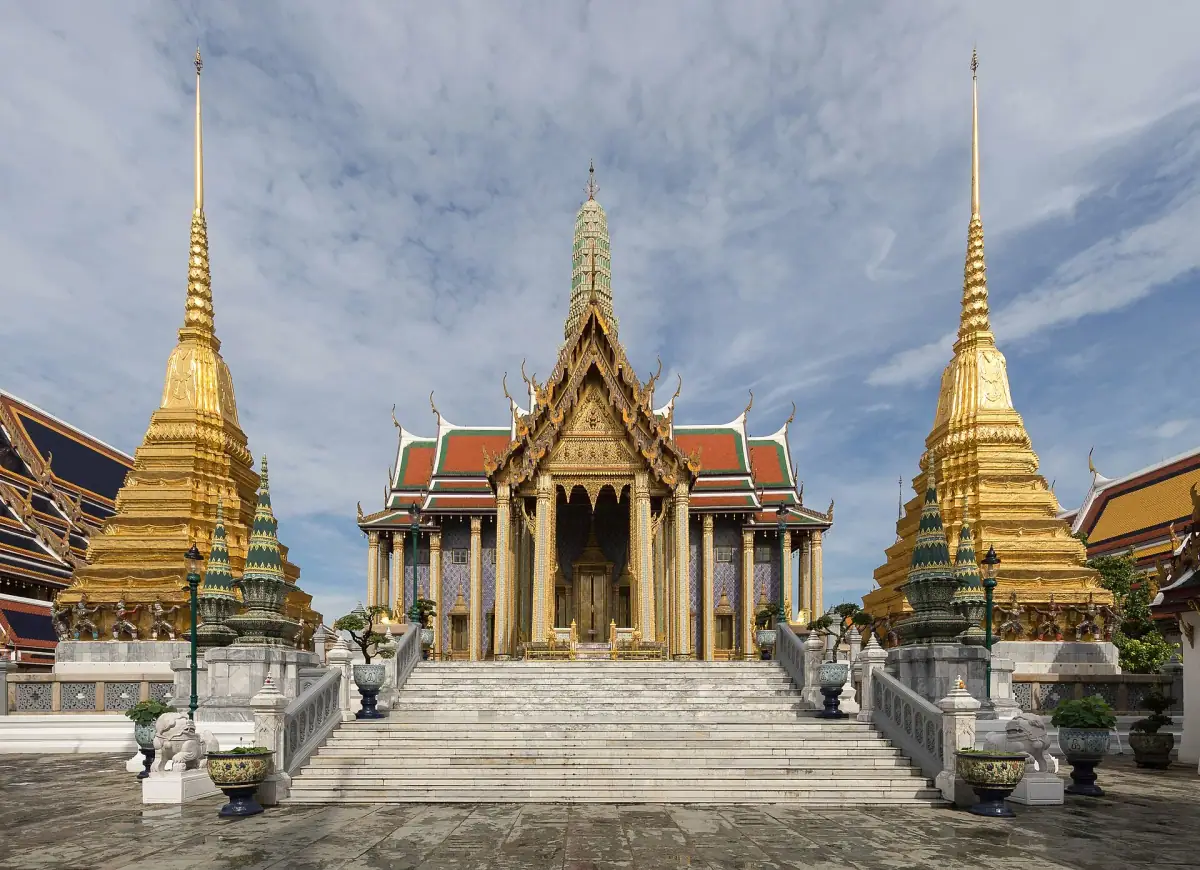
Start with the Grand Palace, the former royal residence and one of Bangkok’s most iconic sights. Its gilded-roof pavilions, murals and the Temple of the Emerald Buddha, Wat Phra Kaew, easily justify a half-day visit. The dress code is strict: shoulders and knees covered, or you may be refused entry. Arrive at opening time to avoid the tour groups.
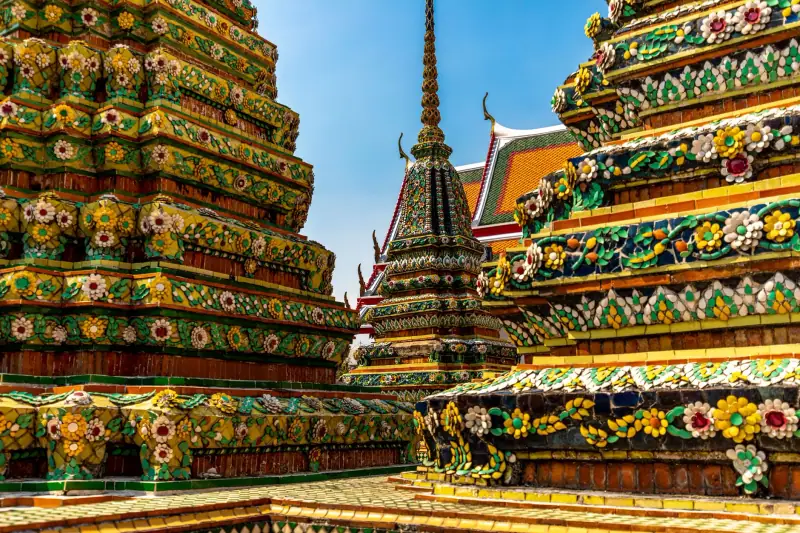
Nearby, Wat Pho houses a huge reclining Buddha covered in gold leaf. The temple is also known as the birthplace of traditional Thai massage: you can have one after your visit, a good way to rest your legs. The two sites are close to each other and can be visited on foot.
Lunch and the river crossing
Have lunch in the lanes around the temples, where you will find simple little restaurants. It is a chance to try street food: our tips are in the article on street food in Thailand. Look for stalls frequented by locals, which is generally a good sign for freshness.
Then cross the Chao Phraya by boat to Wat Arun, the Temple of Dawn, whose tall tower decorated with porcelain is visible from the riverbanks. You can climb some of its steps for a view of the river. The colors are especially beautiful in late afternoon.
Evening: the river at sunset
End the day on the river: a cruise at dusk offers a fine view of the lit-up temples and the skyscrapers. Options range from a simple boat taxi to a dinner cruise. Choose according to your budget and your wish for comfort.
Chao Phraya cruises
Day or evening cruise on the river: compare the options and book ahead.
Day 2: modern districts, nature and a market
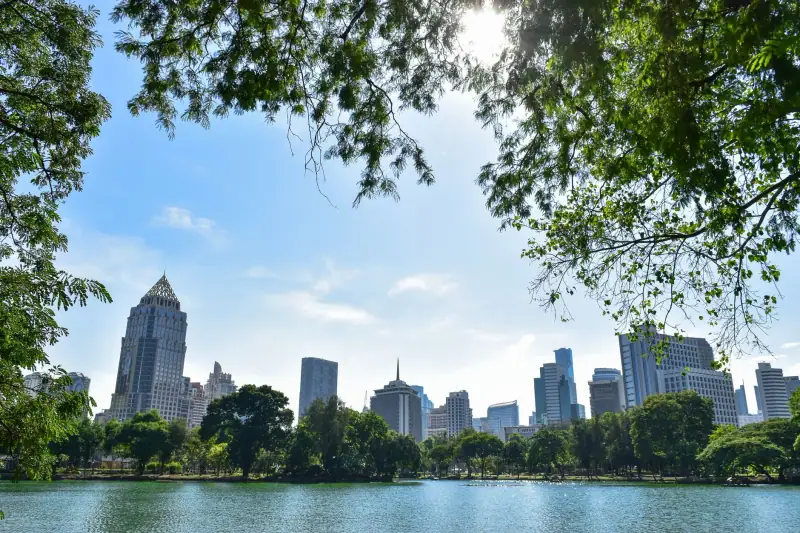
Morning: Lumphini Park or the Jim Thompson House
After a day of temples, change the mood. Lumphini Park, a large green space in the heart of the city, is a pleasant place early in the morning, when locals exercise, do tai chi or take a walk before the heat. With luck you will see large monitor lizards, which live there freely and are harmless as long as you keep your distance.
If you prefer culture, the Jim Thompson House, near the National Stadium BTS station, presents the collection of this American, known for reviving the Thai silk industry, in a group of traditional Thai houses. The visit is usually done in a group, with a guide.
Afternoon: shopping malls and cold drinks
The Siam area is packed with large air-conditioned malls: a good plan for the hottest part of the day. You will find shops, food courts and cafés. It is also the ideal time to try Thai drinks and desserts, covered in our article on drinks and desserts in Thailand.
Alternative: Chatuchak Market on the weekend
If your stay includes a weekend, Chatuchak Market is one of the biggest markets in Bangkok: thousands of stalls selling clothes, home decor, crafts, plants and food. It is easy to spend several hours there. Go in the morning, because the heat soon becomes oppressive, and bring cash for small purchases. The market is served by the BTS and the MRT.
Evening: a rooftop dinner or a night market
For the evening, two options. Rooftop bars and restaurants offer a spectacular view of the city but are often expensive: check the dress code and prices before going up. Alternatively, a night market lets you have dinner cheaply while sampling several dishes.
Day 3: Chinatown and an outing of your choice
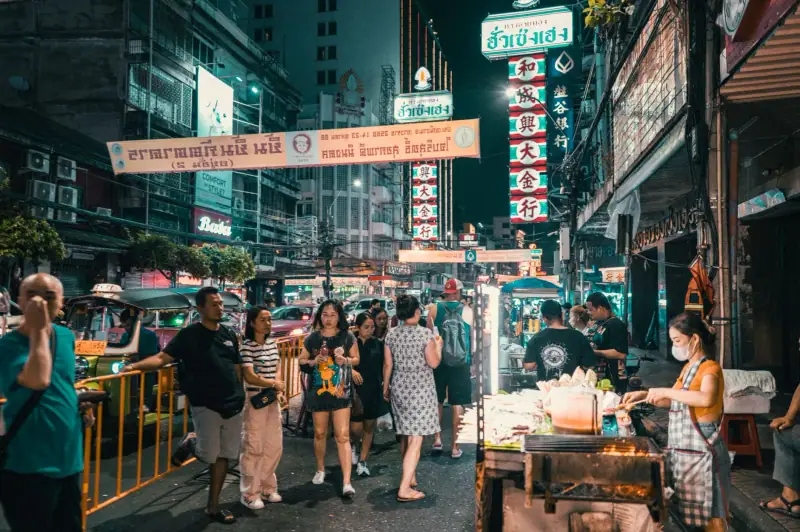
Morning: Chinatown (Yaowarat)
Chinatown, around Yaowarat Road, is one of the liveliest districts of Bangkok. Its narrow lanes are full of markets, traditional medicine shops, fruit stalls and small temples. The district is best known for its food, especially when night falls and the street stalls set up. If you love eating, save this stop for the end of the day.
In the morning, let yourself drift through the lanes: the markets are in full swing and the atmosphere is very different from that of the big temples. Chinatown is served by the MRT.
Your choice: a trip outside the city
If you still have energy, you can devote this day to an excursion:
- Ayutthaya, the former capital of the kingdom, lies north of Bangkok. Its temple ruins can be visited in a day from the capital. See our article on Ayutthaya to plan the visit.
- Floating markets and railway markets, west of the capital, are very popular. They are often touristy: leave early to limit the crowds and preferably choose an organized excursion, since public transport there is impractical.
- A rest day: if the three days have been intense, a relaxed morning with a massage and a coffee is a very good choice.
Day trips from Bangkok
Ayutthaya, floating markets, guided tours: compare the one-day excursions.
Evening: dinner in Chinatown
If you stayed in town, have dinner in the lanes of Chinatown. Stalls of seafood, noodles, desserts and drinks follow one another. Pick the stalls where locals queue, and try several shared dishes rather than one big meal.
Where to stay for a 3-day trip
For a short stay, the hotel’s location matters more than its standing. A hotel close to a BTS or MRT station, or to a pier, will save you a lot of time. Our guide to where to stay in Bangkok compares the neighborhoods by traveler profile.
Hotels in Bangkok
Compare accommodation near the BTS, the MRT or the river for your dates.
Variations on the itinerary
- With children: reduce the number of temples, plan air-conditioned breaks and favor the boat, often better tolerated than the subway at rush hour.
- As a couple: keep the evening river cruise and a rooftop dinner.
- For food lovers: add a Thai cooking class or a guided market tour. It is a pleasant way to understand the ingredients you will then see everywhere.
- If you only have 2 days: keep day 1 and the Chinatown morning, and skip the modern districts.
- If you have 4 days: devote a whole day to Ayutthaya, without combining it with a city visit.
Practical tips to make the most of your stay
- Manage the heat. Visit early, take a break at midday and drink regularly. The coolest months are generally those of the dry season, from November to February.
- Beware of false information. You will sometimes be told that a temple is closed and that you should go elsewhere: this is a classic scam. Check for yourself at the entrance.
- Haggle for tuk-tuks and at markets, but not for metered taxis or restaurants.
- Keep small change for markets, boats and small stalls.
- Protect yourself from mosquitoes in the evening, especially near canals and parks.
- Consider travel insurance: care, cancellation or lost luggage can be costly.
- Keep an eye on your budget: our article on the budget for Thailand gives benchmarks to plan your spending.
After Bangkok
Many travelers continue north, to Chiang Mai and its temples, or to the islands of the south. To structure a longer trip, our two-week itinerary in Thailand offers a complete sequence.
Summary
Three days in Bangkok are enough for a good first approach: temples and the river on the first day, parks, culture and a market on the second, Chinatown and an outing of your choice on the third. The key is to group visits by area, start early, use the BTS, the MRT and boats to get around the traffic jams, and keep time to eat: in Bangkok, that is also a way of sightseeing.
Frequently asked questions
Are three days enough to see Bangkok?
Three days cover the essentials: the big temples of the old town, the river, Chinatown, a large market and a modern district. You will not see the whole city, but it is a perfectly good length for a first visit.
What is the best way to get around Bangkok?
Combine the elevated train (BTS), the subway (MRT) and Chao Phraya river boats to avoid traffic jams. Taxis and tuk-tuks fill in the last few miles: agree on the price in advance or insist on the meter.
How should you dress to visit temples?
Shoulders and knees must be covered in temples and at the Grand Palace. Bring lightweight long pants or a long skirt, a top with sleeves and shoes that are easy to slip off, since you remove them to enter some buildings.
Do you need to book visits in advance?
Temples can be visited without a reservation. Cruises, cooking classes and excursions outside the city are easier to arrange ahead, especially from November to February, in high season.
Can you add a day trip to Ayutthaya during these 3 days?
Yes, by replacing part of day 3 with a full day out. Ayutthaya, the former capital, lies north of Bangkok and can be visited in a day from the city. Our dedicated article covers the temples and how to get there.
Which neighborhood should you choose for a 3-day stay?
For a short stay, pick a hotel near a BTS or MRT station, or near a river pier. Our neighborhood guide compares the options by budget.
More Thailand guides
Keep reading
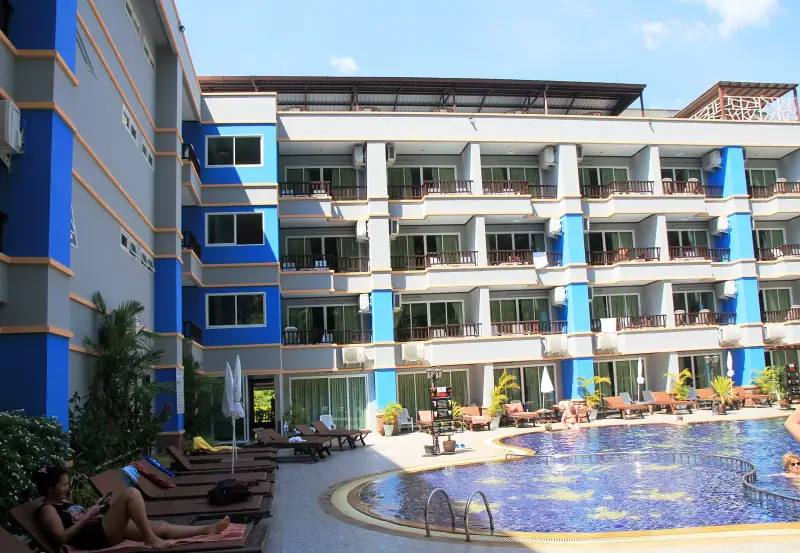
Railay or Ao Nang: Where to Stay in Krabi for Your Trip?
Railay or Ao Nang to stay in Krabi? Compare access, calm, beaches, meals, luggage and budget, with Tonsai, East Railay and Noppharat Thara as alternatives.
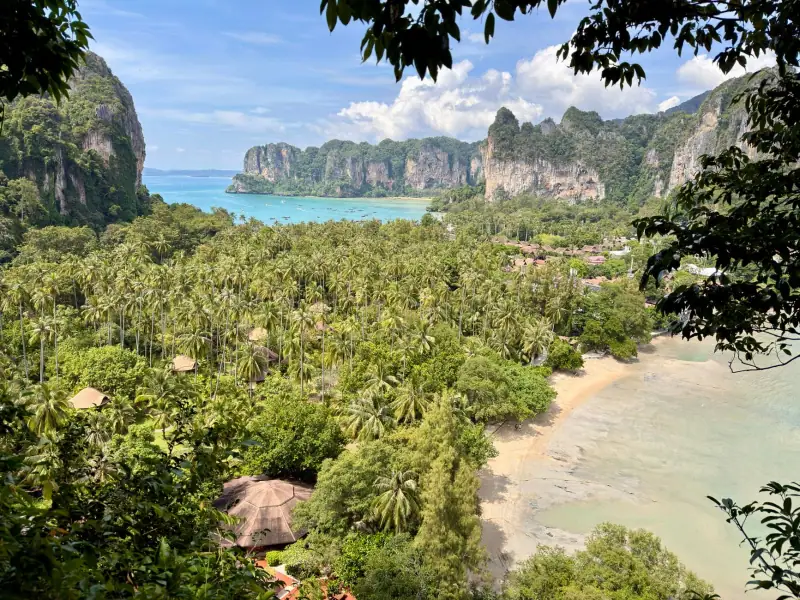
Things to Do in Krabi: Beaches, Islands, Caves and Kayaking in 4 Days
What to do in Krabi? Railay, Ao Nang, the four-islands tour, Tiger Cave Temple and mangrove kayaking: a guide to plan your Andaman Sea stay.
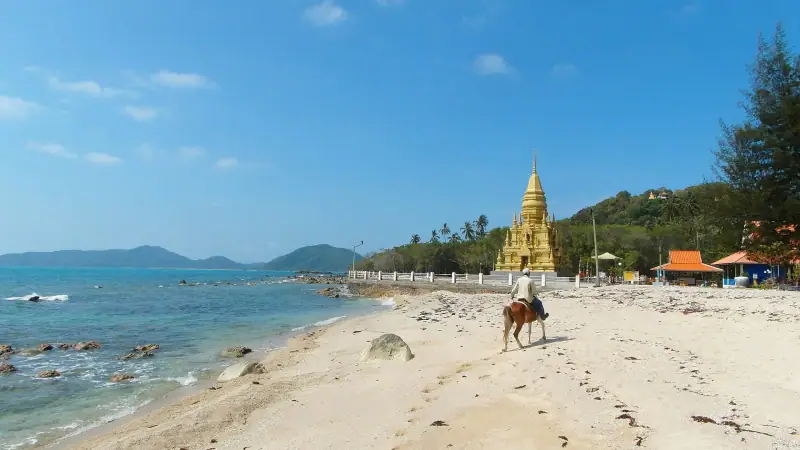
Which Thai Island to Choose: Phuket, Koh Samui, Koh Lanta or Koh Tao?
Phuket, Koh Lanta, Koh Samui, Koh Phangan or Koh Tao? Comparison of Thailand's main islands by atmosphere, season, activities and travel style.
Ready-made
Thailand itineraries
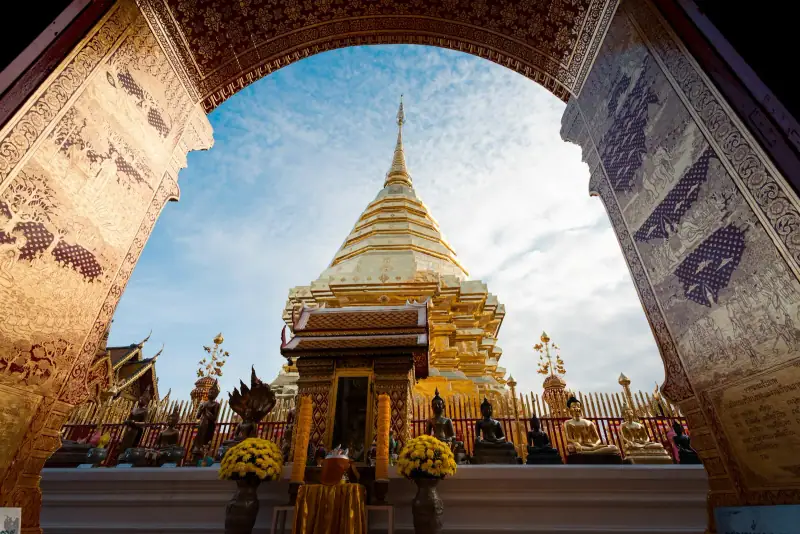
14 days
Thailand Itinerary for 2 Weeks: From the Historic North to the Beaches
A 14-day itinerary in Thailand: Bangkok, Ayutthaya, Sukhothai, Chiang Mai, Chiang Rai, then the beaches of Krabi. Stops, transport and tips.
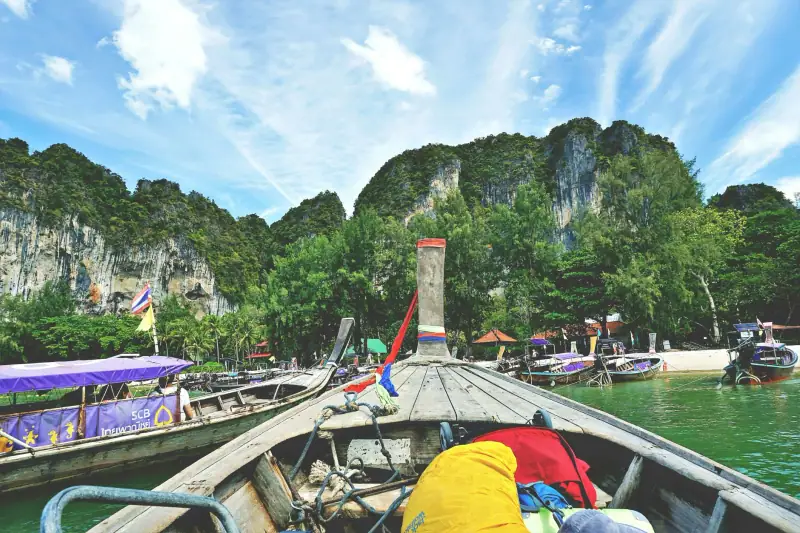
10 days
Thailand in 10 Days Without a Car: Bangkok, Chiang Mai and Krabi, a Realistic Itinerary
BangkokChiang MaiKrabi
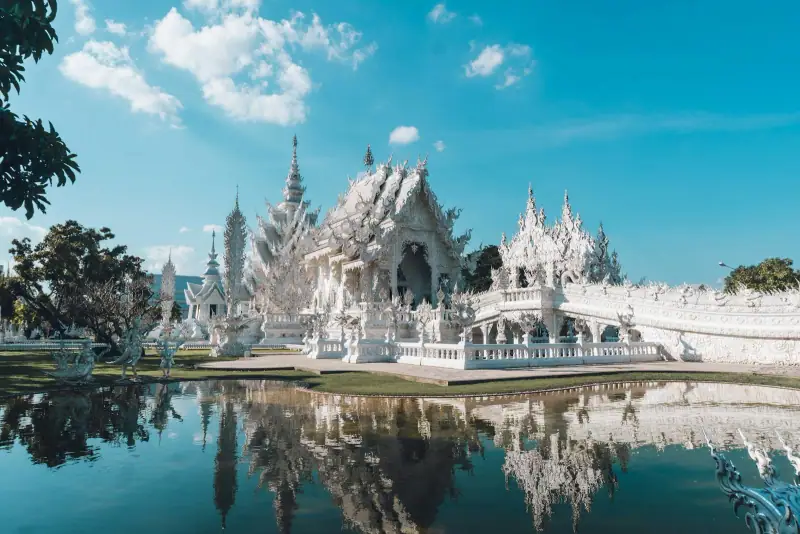
7 days
Northern Thailand in 7 Days: Chiang Mai, Pai and Chiang Rai
Chiang MaiPaiChiang Rai
Can be adapted in the planner