Itineraries
Northern Thailand in 7 Days: Chiang Mai, Pai and Chiang Rai

We may earn a commission when you book through links on this page, at no extra cost to you. We don't visit or try the places we cover: we summarize published sources. How we work
Day by day
- Day 1Arrive in Chiang Mai, first walk in the old town
- Day 2Old town temples, Doi Suthep, cooking class
- Day 3Doi Inthanon or nature day around Chiang Mai
- Day 4Road to Pai, evening in the town center
- Day 5Pai Canyon, waterfalls, hot springs, viewpoints
- Day 6Back to Chiang Mai, then on to Chiang Rai
- Day 7Chiang Rai temples, optional Golden Triangle, departure
Where to sleep
- Chiang Mai3 nights
- Pai2 nights
- Chiang Rai1 night
Opens the trip planner with these stops and nights already filled in. Add a stop, drop one or change the nights.
In short
- Seven days link three stops: Chiang Mai (days 1 to 3), Pai (days 4 and 5) and Chiang Rai (days 6 and 7).
- The cool season, roughly November to February, is the most pleasant; March and April often bring poor air quality from agricultural burning.
- The Chiang Mai to Pai road takes about 3 hours with many bends; day 6 (Pai, Chiang Mai, Chiang Rai) is the heaviest travel day.
- Book ahead in Pai in December and January, and in Chiang Mai around Yi Peng and Loy Krathong.
Northern Thailand is the ideal region for a first trip that is slower than Bangkok and the beaches: forested mountains, Lanna-style temples, night markets, spicy food and hill-tribe villages. This seven-day circuit links three stops that complement each other well: Chiang Mai, the big cultural city; Pai, the small, relaxed valley town; and Chiang Rai, quieter and famous for its contemporary temples.
The itinerary is designed with reasonable travel times, with no excessive day on the road. The durations given are rough estimates: they vary with traffic, weather and mode of transport. If you want to compare with a broader trip, see our two-week itinerary in Thailand, which also includes Bangkok and the islands.
Overview: the route at a glance
Here is the thread of the week:
- Days 1 to 3: Chiang Mai, its old town, temples, markets and a nature excursion.
- Days 4 and 5: Pai, its landscapes, hot springs and laid-back atmosphere.
- Day 6: back to Chiang Mai, then the road to Chiang Rai.
- Day 7: Chiang Rai and its temples, before departure or continuing your trip.
The circuit starts and ends in a city, which makes connections easier. Chiang Mai has an international airport linked to Bangkok by many daily flights, and Chiang Rai also has its own airport for domestic flights. You can therefore arrive in Chiang Mai and leave from Chiang Rai without retracing your steps.
Entry rules depend on your passport. Check the official travel advice of your government before you book: travel.state.gov (US), GOV.UK (UK), travel.gc.ca (Canada), Smartraveller (Australia) (checked November 2026).
Flights to Chiang Mai
Compare flights to the north, arriving in Chiang Mai and leaving from Chiang Rai.
When to do this circuit
The climate in the north is more contrasted than on the southern beaches. The cool season, roughly November to February, offers pleasant days and evenings that can be chilly at altitude: bring a light jacket for nights in Pai and in the hills. From March to April, agricultural burning in the region can sharply degrade air quality and spoil the view from viewpoints. The rainy season, from summer to fall, makes the landscape very green but slows travel.
Our guide on when to go to Thailand details the seasons region by region. If you have a respiratory condition, ask your doctor or a travel clinic before choosing your dates.
Day 1: arrival in Chiang Mai and a first walk in the old town

Chiang Mai is a human-scale city, whose old core is surrounded by a moat and remnants of ramparts. Ideally stay in or near the old town: everything is reachable on foot or by bike, and that is where you will find the most convenient temples and restaurants. Our article where to stay in Chiang Mai details the neighborhoods and types of accommodation.
For this first day, the aim is to get acclimated. After settling in, set off on foot through the lanes of the old town. You will pass many Buddhist temples with carved wooden roofs, ranging from modest to majestic. Enter them in clothing that covers shoulders and knees, and take off your shoes before going into the buildings.
Toward the end of the day, let the night markets and small street restaurants guide you. The dish to try first in this region is khao soi, a coconut-milk curry noodle soup, often topped with chicken and crispy noodles. To learn more about northern specialties, see our guide to street food in Thailand.
Hotels in Chiang Mai
Compare accommodation in the old town, within walking distance of temples and markets.
Day 2: Chiang Mai temples and Doi Suthep
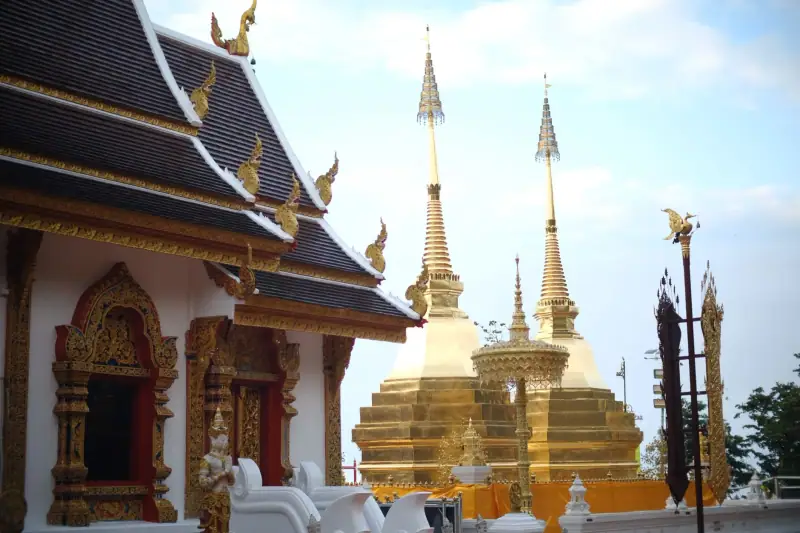
Start the morning with a few old-town temples, which are quieter early. Wat Phra That Doi Suthep, perched on the hill overlooking the city, is one of the most visited religious sites in the north. You reach it by road and then by a staircase, or by a funicular at certain times. It offers a view of the city when the sky is clear.
Allow half a day for the whole visit, travel included. Local transport, often shared red pickup trucks called songthaews, serves the hill from the city: negotiate the price before getting in or use a ride-hailing app. The rest of the day can go to a neighborhood café, a Thai massage or a cooking class.
Cooking classes are one of the most popular activities in Chiang Mai: most begin with a market visit, followed by the preparation of several dishes. You will find details on activities in our article what to do in Chiang Mai.
Cooking classes in Chiang Mai
Market visit and preparation of northern dishes with a local cook.
Day 3: Doi Inthanon or a nature day around Chiang Mai

Doi Inthanon, the highest peak in Thailand, is a classic day trip from Chiang Mai. The national park combines high-altitude forests, waterfalls, terraced rice fields and villages. The altitude makes the air cooler than on the plain: bring a warm layer, especially in the cool season. The trip from the city takes about two hours, which makes an organized excursion very practical if you are not renting a car.
If you prefer another idea, several elephant sanctuaries nearby offer observation visits. Choose carefully: favor places that ban elephant rides and shows, read recent reviews and ask questions about animal welfare. An alternative is a guided hike in the forest, linked with hill-tribe villages.
This day is also a chance to try rafting, cycling or ziplining, offered in the hills above the city.
Doi Inthanon excursion
A guided day in the mountains, with transport from Chiang Mai.
Day 4: the road to Pai
Pai is a small town nestled in a mountain valley, among rice fields, rivers and hills. The road from Chiang Mai is famous for its many bends: allow about three hours. Minivans leave Chiang Mai regularly and are the simplest solution if you do not have a car. Leave early to enjoy the afternoon there, and plan ahead if you are prone to motion sickness (the front seat helps).
On arrival, drop your bags and set off on foot to discover the center: a night market, small cafés, craft shops and a relaxed atmosphere. In the evening the main street comes alive, without the frenzy of big cities.
Pai attracts many long-term travelers. Prices can be higher in high season and accommodation fills up fast in December and January: book ahead if you travel at that time.
Day 5: landscapes and relaxation around Pai
The day is devoted to nature. Around Pai, several sites can be visited in a few hours: Pai Canyon, a set of clay ridges you walk across (be careful, the passages are narrow and have no guardrails), waterfalls, hot springs and viewpoints over the valley. Most of these sites can be reached by scooter, e-bike or with a driver.
Be very careful if you rent a scooter: accidents are frequent among travelers, and many insurance policies exclude riding without the proper license. If in doubt, take a driver instead or join an organized excursion.
For an effortless day, string together a soak in a hot spring, a massage and a sunset over the valley. Pai is above all a place to slow down. If your time is limited, you can replace this stop with two extra nights in Chiang Mai or Chiang Rai.
Accommodation in Pai
Bungalows, hostels and small hotels in the valley: compare before booking.
Day 6: back to Chiang Mai, then the road to Chiang Rai
This is the biggest travel day: you have to come back down from Pai to Chiang Mai, about three hours by road, then reach Chiang Rai, roughly three to four hours more depending on the mode of transport and traffic. Leave early to arrive in Chiang Rai in the late afternoon.
If you find this day too heavy, there are two solutions: spend an extra night in Chiang Mai to break up the trip, or skip Pai and gain a whole day in Chiang Rai. Another option: take a domestic flight between Chiang Mai and Chiang Rai if your schedule allows, or use a comfortable bus.
On arrival, settle in and enjoy the evening. Chiang Rai is quieter than Chiang Mai, with a night market and many small restaurants. It is a good chance to taste local food without crowds.
Day 7: Chiang Rai and its contemporary temples

Chiang Rai is known for its contemporary temples, very different from the old temples of Chiang Mai. Wat Rong Khun, or the “White Temple,” entirely white and decorated with small mirrors, is the best-known building: arrive early to avoid the groups. Wat Rong Suea Ten, the “Blue Temple,” surprises with its colors. Baan Dam, often called the “Black House,” is a group of dark buildings and artworks. These sites are detailed in our article visiting Chiang Rai.
Depending on your departure time, you can add an excursion to the Golden Triangle, on the Mekong, where Thailand, Laos and Myanmar meet. Check entry requirements and visas in advance, as they can change: our explanations are in the article on entry requirements for Thailand.
To fly home or onward, Chiang Rai has an airport with flights to Bangkok. Leave a comfortable margin if you have an international flight the same day.
Budget and practical organization
Northern Thailand is generally cheaper than Bangkok or the islands for lodging and food, but excursions and site entry fees quickly add to the bill. To build your budget, see our guide to the budget for Thailand, which details the spending items.
A few organizing tips:
- Book ahead in Pai in high season, and in Chiang Mai during the big festivals, notably around Yi Peng and Loy Krathong, at the end of the year.
- Keep cash for small villages and markets, while using a card in hotels and shopping centers.
- Dress in layers: hot by day, cool in the evening, especially at altitude.
- Think about accessories: water bottle, repellent, hat, light poncho. Our list of useful accessories for Thailand will help.
- Follow the rules in temples: covering clothing, silence, no disrespectful gestures toward Buddha statues.
Insurance and safety
Outdoor activities, mountain roads and two-wheelers make good travel insurance useful. Check that your policy covers medical care, repatriation and the planned activities, and read the exclusions on riding a scooter carefully.
On the health side, drink bottled or filtered water and protect yourself from mosquitoes. Ask your doctor or a travel clinic, and see the official travel health pages (CDC in the US, TravelHealthPro in the UK). Carry a copy of your documents and your insurance numbers.
Variations by time and taste
If you have fewer than seven days, drop Pai and focus on Chiang Mai and Chiang Rai: the circuit is more comfortable. If you have ten days, add two nights in Pai or one more excursion around Chiang Mai. If you love ancient cities, you can continue to Sukhothai or Ayutthaya on the way to Bangkok.
To extend the trip with a beach, Bangkok is the gateway to the southern islands: our article which island to choose in Thailand helps you pick. You can also start your trip with a stay in Bangkok using our three-day itinerary.
Key takeaways
This seven-day circuit lets you sample northern Thailand without rushing: the cultural richness of Chiang Mai, the break in Pai and the distinctive temples of Chiang Rai. Stay flexible, book early in high season, and do not hesitate to remove a stop if you prefer a slower pace. A successful trip in the north is above all time for markets, cafés, mountains and encounters.
Frequently asked questions
Are seven days enough to visit northern Thailand?
Yes for a first overview: three days in Chiang Mai, two in Pai and two in Chiang Rai let you see the essentials without rushing. If you like to take your time, drop Pai or add two or three nights to travel more slowly.
Do you need to rent a car for this circuit?
It is not essential. Buses, minivans, shared taxis and organized excursions serve the main stops well. A car gives freedom, but the Pai road is winding and driving on the left takes attention. Check the driving permit rules that apply to you before you go.
What is the best time for this circuit?
The cool season, generally November to February, is the most pleasant: mild temperatures and clear skies. From March to April, agricultural burning often degrades the air quality in the north. The rainy season turns the landscape green but complicates some roads and activities.
How do you get from Chiang Mai to Pai?
By minivan, by car, or by motorbike for experienced riders. The road has a great many bends: the trip takes about three hours. Sit at the front if you are prone to motion sickness.
Can you do this circuit with children?
Yes, by lightening the program. The Pai road can be tiring for the youngest and some days are long. Keep Chiang Mai as a base and favor short activities: markets, cooking classes, ethical animal sanctuaries.
How do you get from Chiang Mai to Chiang Rai?
By road, by bus, minivan or car, in roughly three to four hours depending on traffic and stops. Day trips exist too, but a night there leaves more time for the temples and the evening.
Do you need travel insurance for northern Thailand?
It is strongly recommended, especially if you plan activities such as hiking, rafting or renting a two-wheeler. Check that your policy covers medical costs and repatriation, and read the exclusions related to scooters.
More Thailand guides
Keep reading

Railay or Ao Nang: Where to Stay in Krabi for Your Trip?
Railay or Ao Nang to stay in Krabi? Compare access, calm, beaches, meals, luggage and budget, with Tonsai, East Railay and Noppharat Thara as alternatives.
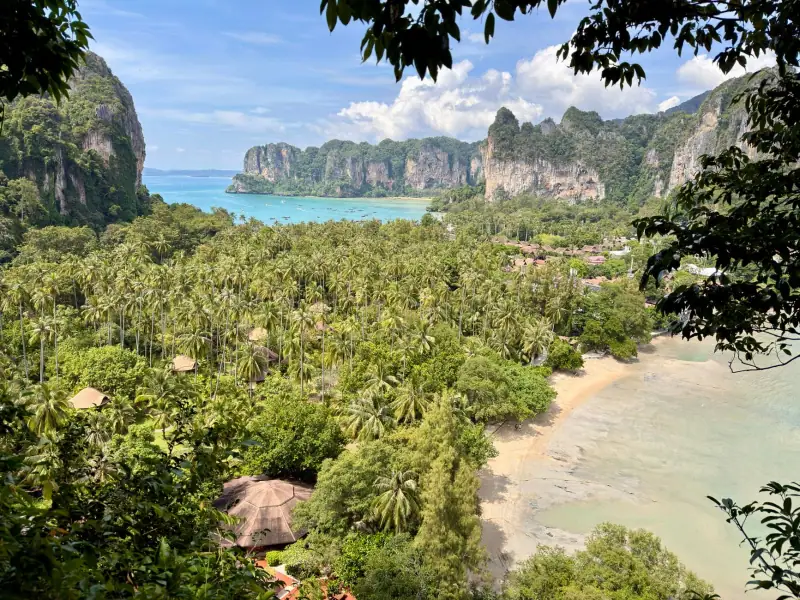
Things to Do in Krabi: Beaches, Islands, Caves and Kayaking in 4 Days
What to do in Krabi? Railay, Ao Nang, the four-islands tour, Tiger Cave Temple and mangrove kayaking: a guide to plan your Andaman Sea stay.
Which Thai Island to Choose: Phuket, Koh Samui, Koh Lanta or Koh Tao?
Phuket, Koh Lanta, Koh Samui, Koh Phangan or Koh Tao? Comparison of Thailand's main islands by atmosphere, season, activities and travel style.
Ready-made
Thailand itineraries

14 days
Thailand Itinerary for 2 Weeks: From the Historic North to the Beaches
A 14-day itinerary in Thailand: Bangkok, Ayutthaya, Sukhothai, Chiang Mai, Chiang Rai, then the beaches of Krabi. Stops, transport and tips.
10 days
Thailand in 10 Days Without a Car: Bangkok, Chiang Mai and Krabi, a Realistic Itinerary
BangkokChiang MaiKrabi

3 days
3 Days in Bangkok: A Day-by-Day Itinerary for First-Time Visitors
What to do in 3 days in Bangkok? Grand Palace, Wat Pho, Wat Arun, Chinatown, Chatuchak and markets: a day-by-day plan with transport and tips.