Where to stay
Where to Stay in Chiang Mai: Neighborhoods, Accommodation Types and Tips
We may earn a commission when you book through links on this page, at no extra cost to you. We don't visit or try the places we cover: we summarize published sources. How we work
In short
- The old city is the simplest choice for a first stay: temples, markets, restaurants and tour agencies are all within walking distance.
- Nimmanhaemin suits longer stays, cafés and a modern feel; Tha Phae is practical for the Sunday market and for buses.
- Book well ahead from about November to February and around Yi Peng and Loy Krathong, when well-located rooms go weeks in advance.
- From March to May, smoke from agricultural burning can degrade air quality: favor air-conditioned lodging and check air quality indexes.
Chiang Mai charms with a slower pace than Bangkok, golden temples hidden in the lanes, evening markets and mountains within reach. But the choice of neighborhood changes the stay profoundly: depending on where you drop your bag, you will walk from temple to temple, head out to designer cafés, or wake up in an almost rural calm. A poor choice means time lost in transit, or ending up far from the atmosphere you came for.
This guide goes through the main areas to stay in Chiang Mai, their pros and limits, then the different types of accommodation, the periods when you should book early and a few practical tips. Price information is deliberately general: it varies a lot by season, and it is better to check a booking site for your dates than to quote rates that would no longer be current. To plan your days once settled, see our guide on what to do in Chiang Mai.
How the city is laid out: landmarks before you choose
Chiang Mai is a medium-sized city, easy to understand. Its historic heart is the old city, a square bounded by a moat and remnants of ramparts, founded in the late 13th century by King Mengrai, founder of the Lanna kingdom. Around this square lie the newer districts: to the east, toward the Ping River, the Tha Phae and night bazaar area; to the northwest, toward the university and Doi Suthep mountain, Nimmanhaemin, often shortened to “Nimman.” Beyond, the city gradually fades into the countryside.
This compactness is an asset: even sleeping a few miles from the center, you are generally within twenty to thirty minutes of the old city by local transport. Getting around is by tuk-tuk, songthaew (the red pickup trucks that serve as shared taxis), taxi or ride-hailing apps. In the old city itself, distances are short and walking is pleasant in the cool hours.
One last landmark concerns the climate, which influences the choice of lodging. From November to February, days are mild and evenings cool, sometimes enough to appreciate a blanket. In April and May the heat is strong and air conditioning becomes essential, while the rainy season, roughly June to October, makes a pool less useful but a covered terrace more welcome. Details are in our article when to go to Thailand.
The old city: the obvious choice for a first stay
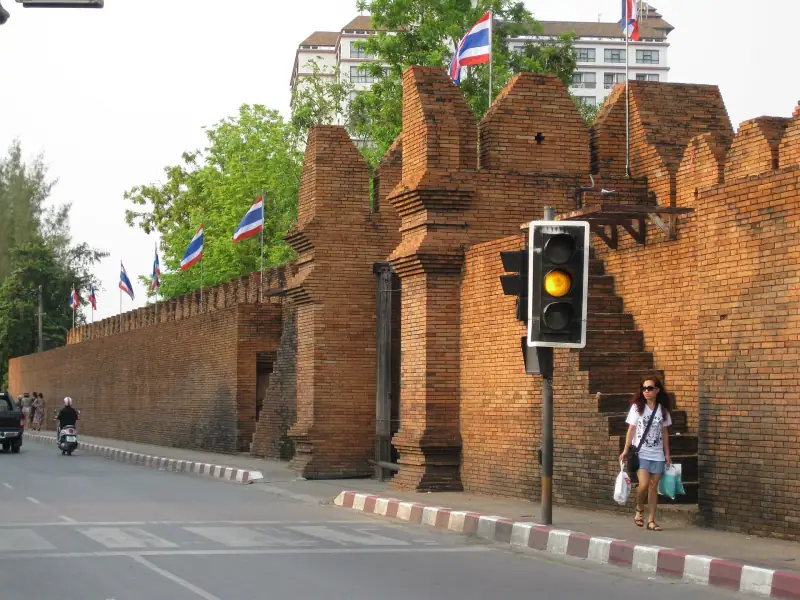
The old city is the neighborhood most travelers choose, and rightly so. It has a remarkable concentration of temples, wooden houses converted into guesthouses, cafés, massage parlors, small restaurants and agencies selling excursions and cooking classes. You can spend several days there without ever taking transport: just walk along the lanes and you pass a monastery at every corner.
Lodging is very varied: hostels with dorms, family guesthouses, small boutique hotels in Lanna-style houses, and a few more upscale properties with a courtyard and pool. The most prized rooms are those in quiet lanes, away from noisy thoroughfares. Night noise is indeed one of the few flaws of the area: some streets near the bars, notably near Tha Phae Gate, stay lively late in the evening.
Who it suits: first-time visitors, culture lovers, tight budgets and more comfortable budgets alike, and anyone who wants to explore on foot. Avoid if you want a resort-style hotel with large grounds or a very modern atmosphere.
Hotels in Chiang Mai's old city
Guesthouses, boutique hotels and hostels to compare for your dates.
Nimmanhaemin: cafés, boutiques and a modern feel
Nimmanhaemin, northwest of the old city, is Chiang Mai’s trendiest district. It stretches around a main street and a network of cross lanes, the sois, lined with cafés, international restaurants, designer boutiques, galleries and small bars. Its proximity to the university attracts a young crowd and many remote workers, which explains the many coworking spaces and cafés where you can settle in with a laptop.
On the lodging side, there are more modern hotels, apartments with kitchens and residences for long stays, often with a pool or gym. The atmosphere is more urban and contemporary than in the old city, with well-equipped streets of late-opening restaurants.
The drawback is the distance from the historic temples: expect a few miles and a local transport ride to reach the old center. On the other hand, the district is well placed for heading to Doi Suthep mountain and its temple, which overlooks the city.
Who it suits: travelers staying several days, couples, digital nomads and those who like cafés and good spots to eat. Avoid if you want temples right at your hotel door.
Tha Phae and the night bazaar: practical and lively
East of the old city, between Tha Phae Gate and the Ping River, lies an area heavily used by travelers. It has the night bazaar, many restaurants, travel agencies, scooter rental offices and hotels of all levels. The Sunday evening market, which fills the long pedestrian street starting at Tha Phae Gate, is one of the highlights of the week: if you stay nearby, you will enjoy it effortlessly.
The location is also practical for transport: the area is fairly close to the railway station and several minibus and bus departure points. Many travelers arriving overnight from Bangkok find simple lodging there with quick access. To prepare this leg, our two-week itinerary in Thailand details the classic connections between Bangkok and the north.
The flip side: the atmosphere is more commercial, sometimes noisy, and the streets very busy. If you are sensitive to noise, ask for a room at the back or facing an inner courtyard.
Who it suits: travelers arriving or leaving early, market fans, short stays. Avoid if you are looking for absolute quiet.
Tours and activities in Chiang Mai
Cooking classes, Doi Inthanon excursions, temple visits: book ahead.
The Ping riverside and the Wat Ket area: charm and calm
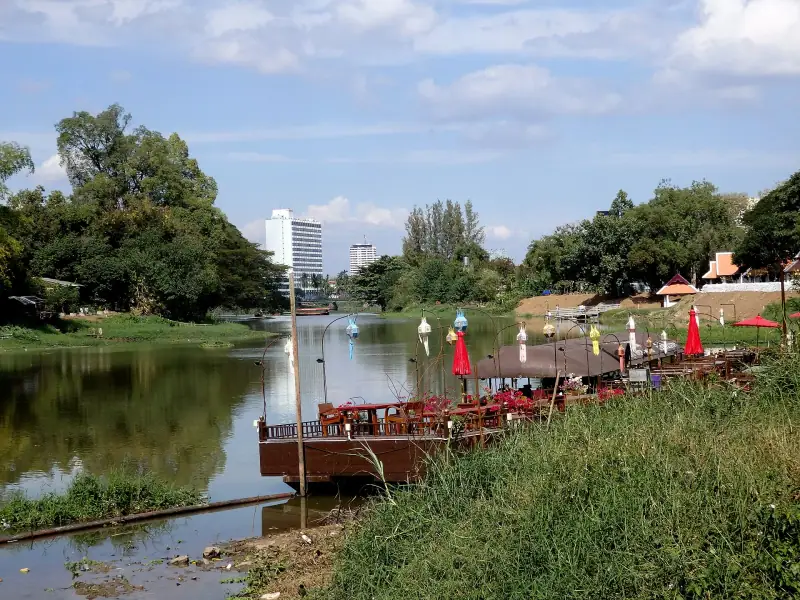
Along the Ping River, to the east, a quieter area combines old teak houses, boutique hotels, small cafés and riverside restaurants. It is more residential than the old city while staying a short distance from it. You enjoy the peaceful evening atmosphere, when strollers replace hurried tourists.
It is a very good option for a romantic stay or for those who find the center too hectic. Lodging there is often mid-sized, with careful decor and personal service. It generally offers excellent value.
The trade-off is that you will have to take transport to reach most tourist sights, even if distances stay short. Restaurants within walking distance are fewer in the evening than in the center, but enough to eat without difficulty. To know what to taste, see our guide to street food in Thailand.
Who it suits: couples, travelers looking for calm and authenticity. Avoid if you want to go out late without depending on transport.
Santitham and residential districts: the budget option
North of the old city, districts such as Santitham are residential areas used by locals and students. You will find small hotels, furnished apartments and residences for long stays, often cheaper than in tourist areas, as well as local restaurants frequented by Thais.
The appeal is twofold: lower rates and a more everyday atmosphere, away from souvenir shops. The drawback is the lack of attractions nearby, which means traveling to see anything. It is a good choice for long stays, experienced travelers and those who only use the hotel to sleep.
If you plan to stay several weeks, also look at studios and apartments with kitchens: they often cost less per month than per night, but check the rental and cancellation conditions before booking.
Outside the city: rice fields, hills and nature stays
Around Chiang Mai, the countryside offers a very different kind of stay. To the north, the Mae Rim area and the Samoeng road alternate valleys, orchards, rice fields and small boutique resorts. To the south or east, you find craft villages and simpler lodging. Some lodges in the hills offer open mountain views and a retreat atmosphere away from the noise.
This lodging suits those who want to disconnect, practice yoga, walk or simply rest between more intense stops. It does require a means of transport, however: a scooter for experienced riders, shared taxis or a driver by the day otherwise. The trip to the old city is often counted in tens of minutes, and taxis become scarcer at night.
For driving, check the license and insurance rules that apply to you before renting a two-wheeler: scooter accidents are frequent among travelers and insurance does not always cover the consequences. Entry rules depend on your passport. Check the official travel advice of your government before you book: travel.state.gov (US), GOV.UK (UK), travel.gc.ca (Canada), Smartraveller (Australia) (checked November 2026). Our article on entry requirements for Thailand lists the points to check before leaving.
Which type of lodging to choose?
Beyond the neighborhood, the type of property matters as much as the address. Here are the main families you find in Chiang Mai.
Hostels and dorms
There are many, especially in the old city and near Tha Phae. A dorm is the cheapest option for solo travelers, and recent properties offer beds with curtains, individual outlets and lockers. Check the reviews for noise and cleanliness, and bring a padlock. Many organize group activities, useful for meeting other travelers.
Family guesthouses
This is the typical Chiang Mai lodging: a house converted into a few rooms, a small garden, a warm welcome. Rooms are simple but clean, with air conditioning or a fan. It is the right choice for a moderate budget and contact with locals. Check whether air conditioning is included, as some properties offer both room types at different rates.
Mid-range hotels
They are very common and most often offer excellent value: a comfortable room, breakfast, sometimes a rooftop pool or one in a courtyard. They suit families and couples who want a balance between comfort and budget.
Boutique hotels and resorts
Chiang Mai has boutique hotels inspired by Lanna architecture, with carved wood, gardens, spas and pools. Some are set in restored old houses, others in quiet estates. It is the ideal option for a romantic getaway or a relaxing stop after days of sightseeing.
Apartments and residences
For long stays or families, an apartment with a kitchen adds flexibility. The residences of Nimmanhaemin and Santitham offer many, sometimes with a shared gym and pool. Check cleaning fees and cancellation conditions.
Compare lodging in Chiang Mai
Hostels, guesthouses, boutique hotels: filter by budget, rating and amenities.
When to book and how to avoid unpleasant surprises
High season, roughly November to February, concentrates the most travelers: nights are cool, skies clear and temperatures pleasant. Well-located rooms fill quickly then, and it is better to book several weeks ahead. This is even truer at the time of the Yi Peng and Loy Krathong festivals, in November according to the lunar calendar, when lanterns and floating candles draw crowds: exact dates change each year, so check them before booking.
Outside this period, you can book later and sometimes negotiate on arrival for long stays. From March to May, smoke from agricultural burning in the region can degrade air quality in northern Thailand: if you travel then, favor lodging with air conditioning and an air purifier, and check air quality indexes before confirming your stay.
A few general tips to avoid unpleasant surprises:
- Read recent reviews, especially about noise, cleanliness and hot water pressure.
- Check the exact location on the map: “old city” is sometimes used loosely by properties.
- Check the cancellation conditions: a free option is useful if your transport plans change.
- Ask for a quiet room if you are a light sleeper, away from the street and the bars.
- See whether breakfast is included and at what time: it can matter if you leave early for an excursion.
- Plan for a late arrival by informing the property, especially at guesthouses where the front desk is not always staffed at night.
What about the budget?
Chiang Mai remains one of the most affordable major cities in the country for lodging. The contrast with Bangkok or the islands is clear: for equal comfort, you generally pay less. To estimate all your spending (lodging, meals, transport, activities), our article on the budget for Thailand gives useful benchmarks. Keep in mind that rates vary with dates, room type and when you book: always compare for your exact dates.
Finally, think about your coverage: a stay in Thailand exposes you to medical costs that can be high in case of an accident or hospitalization. A travel insurance policy with assistance and repatriation is a reasonable precaution.
Quick picks by traveler profile
- First stay, 2 to 3 days: the old city, to do everything on foot.
- Stay of more than a week or remote work: Nimmanhaemin, with cafés, apartments and coworking spaces.
- Late arrival or early departure: Tha Phae, close to transport points.
- Romantic getaway: the Ping riverside or a boutique hotel in a Lanna house.
- Small budget: a hostel dorm in the old city or a guesthouse in Santitham.
- Nature and calm: a lodge or resort in Mae Rim, planning for a means of transport.
Whatever you choose, keep some slack in your schedule: Chiang Mai makes you want to slow down, and the best days are often the ones you had not planned. If you continue north, also consider Chiang Rai, reachable from the city, and our broader guide to organizing your trip to Thailand.
Frequently asked questions
What is the best area to stay in Chiang Mai?
For a first stay, the old city is the simplest choice: temples, markets, restaurants and excursion agencies are all reachable on foot. Nimmanhaemin suits travelers looking for cafés, boutiques and a trendier atmosphere, and the Tha Phae area is practical for the Sunday market and for buses.
How much does a hotel night cost in Chiang Mai?
Prices vary strongly by season and type of lodging. In general, Chiang Mai remains clearly cheaper than Bangkok or the islands: a dorm bed or a simple room costs little, a mid-range hotel remains affordable and high-end is relatively affordable too. Compare exact dates on a booking site before deciding.
Do you need to book ahead in Chiang Mai?
Yes in high season, roughly November to February, and during big festivals such as Yi Peng and Loy Krathong, when well-located rooms go weeks ahead. Off season you will easily find something on arrival, but booking at least the first night is still wise.
Is it better to stay in the old city or in Nimmanhaemin?
The old city is quieter in the evening, more cultural and better placed for the temples. Nimmanhaemin is more modern and lively in the evening, with many cafés and restaurants, but farther from the historic temples. The two are a few miles apart by shared taxi or ride-hailing app.
Where to stay in Chiang Mai with kids?
Look for lodging with a pool and family rooms, in the old city, in Nimmanhaemin or a little on the outskirts for more calm. Check access to restaurants on foot and the presence of air conditioning, essential in April and May when the heat is strong.
Can you stay outside the city to enjoy nature?
Yes, the countryside around Chiang Mai offers quiet lodging, sometimes with views of rice fields or hills. The downside is dependence on a vehicle or transfers: plan for a scooter if you are comfortable riding, a car with driver or shared taxis for daily trips.
More Thailand guides
Keep reading
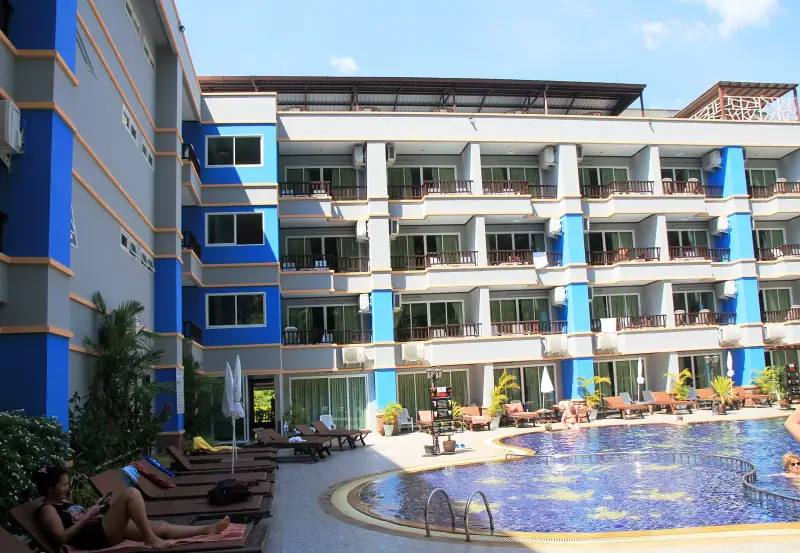
Railay or Ao Nang: Where to Stay in Krabi for Your Trip?
Railay or Ao Nang to stay in Krabi? Compare access, calm, beaches, meals, luggage and budget, with Tonsai, East Railay and Noppharat Thara as alternatives.
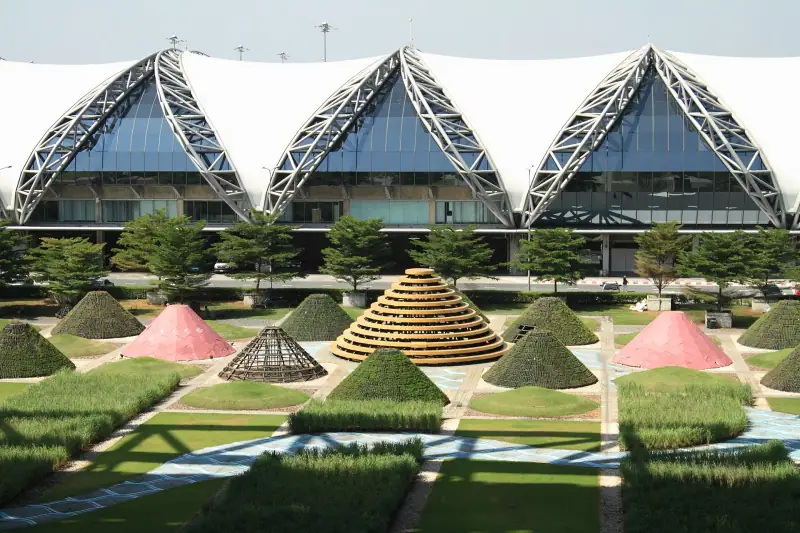
Sleeping Near Bangkok Airport: Suvarnabhumi or Don Mueang, What Are the Options?
Early flight or late arrival in Bangkok? Compare hotels near Suvarnabhumi and Don Mueang, shuttles, transfers and budgets to plan.
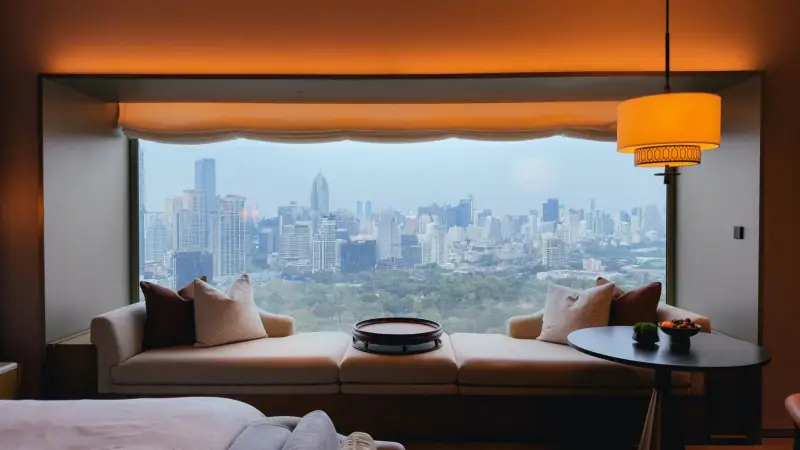
Where to Stay in Bangkok: Neighborhoods, Pros and Tips for Choosing
Where to stay in Bangkok? Sukhumvit, Silom, Siam, the riverside, the old town or Chinatown: compare neighborhoods by budget and travel style.
Ready-made
Thailand itineraries
14 days
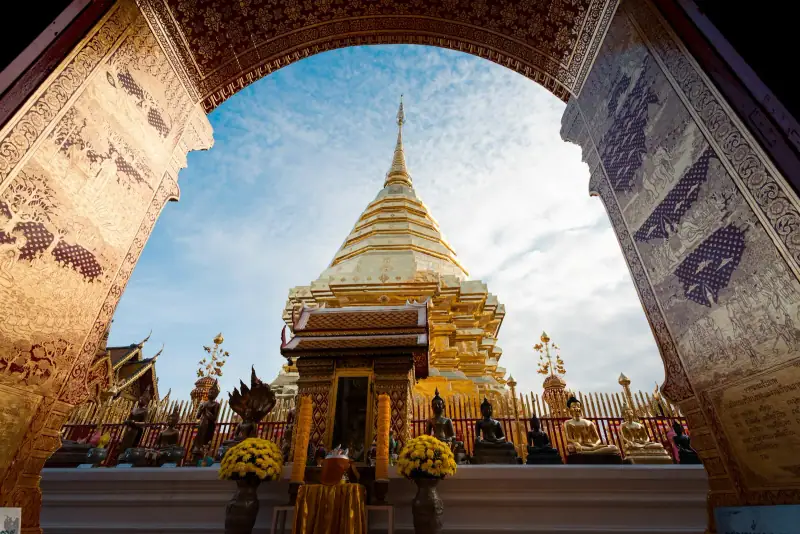
Thailand Itinerary for 2 Weeks: From the Historic North to the Beaches
A 14-day itinerary in Thailand: Bangkok, Ayutthaya, Sukhothai, Chiang Mai, Chiang Rai, then the beaches of Krabi. Stops, transport and tips.

10 days
Thailand in 10 Days Without a Car: Bangkok, Chiang Mai and Krabi, a Realistic Itinerary
BangkokChiang MaiKrabi
3 days
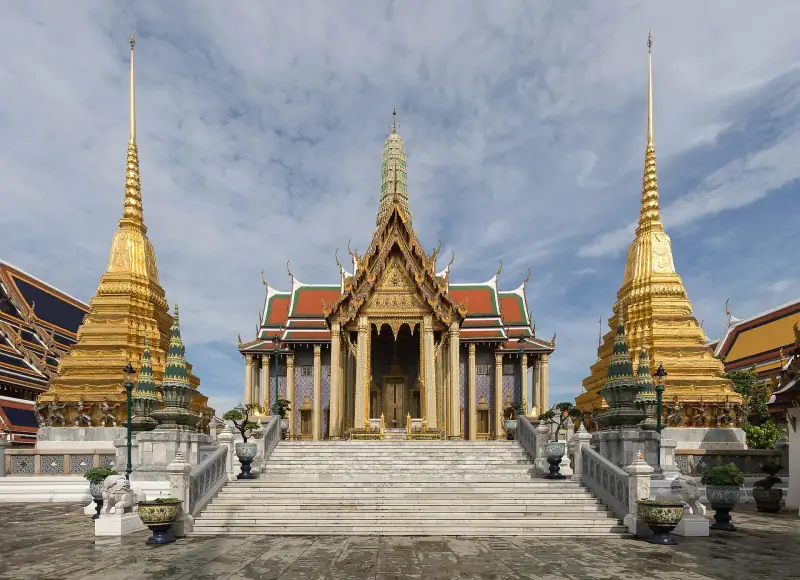
3 Days in Bangkok: A Day-by-Day Itinerary for First-Time Visitors
What to do in 3 days in Bangkok? Grand Palace, Wat Pho, Wat Arun, Chinatown, Chatuchak and markets: a day-by-day plan with transport and tips.