What to see
What to see in Graubünden: Chur, the Engadine, the National Park and UNESCO trains
We may earn a commission when you book through links on this page, at no extra cost to you. We don't visit or try the places we cover: we summarize published sources. How we work
In short
- Four to five days cover Chur, the Rhine Gorge, part of the Engadine and a National Park hike; a week adds the Val Müstair, Davos or Arosa, and a train.
- Graubünden is Switzerland's largest canton and valley journeys are long: choose two bases rather than trying to see everything.
- June to September is best for hiking; September and early October bring golden larches. Some passes and high trails close in winter.
- St. Moritz and Davos are among the priciest resorts; Chur, the Surselva and the Lower Engadine are much more affordable.
Graubünden is Switzerland’s largest canton, and probably its most varied. It has the country’s oldest town, a great canyon carved by the Rhine, legendary resorts, villages with engraved facades, the only Swiss national park and two railway lines listed by UNESCO. Yet many travelers remember only St. Moritz and a panoramic train ride. That is a pity: this canton rewards those who take the time to stop.
This guide helps you decide what to see in Graubünden depending on the length of your stay, the season and how you travel. We go through Chur and its region, the Surselva and the Rhine Gorge, Davos and Arosa, the Engadine, the National Park and the Val Müstair, then suggest three itineraries and a realistic budget. For the detailed comparison of the region’s two famous trains, our article Glacier Express or Bernina Express is entirely devoted to them: we only summarize here.
Understanding Graubünden before you go
Graubünden (Grisons in French and English, Grischun in Romansh) is made up of a multitude of valleys radiating from Chur, the capital. The canton does not look like a plain crossed by a highway the way the Valais does: each valley is a world of its own, with its dialect, its architecture and its atmosphere. Distances on the map are misleading, because mountain roads and passes lengthen journeys.
The first thing to remember is the trilingualism. German dominates, Romansh survives in several valleys, notably in the Lower Engadine and the Surselva, and Italian is spoken in a few southern valleys. Signs are sometimes bilingual or even trilingual, and place names change from one language to another. It is part of the region’s charm.
The second is altitude. St. Moritz sits at about 1,850 meters (6,070 ft), and the Engadine is a high valley where nights are cool even in summer. Bring warm layers, a windbreaker and sunscreen, because the sun is intense at altitude. To calibrate your travel dates, see our guide to the best time to go to Switzerland.
Finally, transport is excellent. The narrow-gauge Rhaetian Railway network and the PostBuses serve most valleys. You can perfectly well visit Graubünden without a car, as long as you check the timetables, which are reduced off-season.
Chur, Switzerland’s oldest town
🏨 Where to stay in Graubünden: Chur, Davos, Flims or the Engadine, accommodation books early in summer and during the winter season. Compare the canton's hotels and apartments for your dates.
Chur, the capital of the canton, presents itself as the oldest town in Switzerland. Its old town is largely pedestrian, which makes visiting very pleasant. You wander among narrow lanes, squares with fountains and old houses with colorful facades. Half a day is enough to grasp the atmosphere, a full day to savor it.
The landmark is the Cathedral of the Assumption of Our Lady, whose construction dates back to the 12th century. It stands on the episcopal hill, next to the Bishop’s Palace, which gives the district the feel of a religious citadel. The town also has several museums, including the Bündner Kunstmuseum (Graubünden Art Museum), which presents works linked to the region.
To gain height, the Brambrüesch mountain overlooks the town and offers a fine view over the Rhine valley and the surrounding peaks. You go up by cable lift from the edge of the old town, and you can hike there in summer.
Chur is also an excellent starting point. Several panoramic train journeys begin here, the Bernina Express leaves for Tirano, and this is where you head for the Engadine or the Surselva. Accommodation is more affordable than in the big resorts, which makes it an economical base for a first stay. Like many Swiss towns of this size, it has kept a lively center, with cafés and local shops.
Flims, the Surselva and the Rhine Gorge
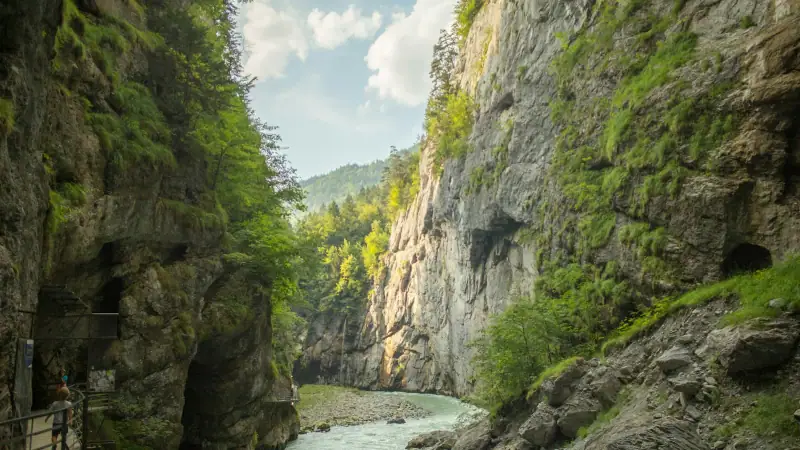
West of Chur, the Vorderrhein valley runs into the Surselva, a Romansh-speaking region where villages keep a rural character. This is where one of Switzerland’s most astonishing natural sites lies: the Rhine Gorge, called Ruinaulta in Romansh and sometimes nicknamed the “Grand Canyon of Switzerland.”
The white limestone walls, cut by the river, form an unexpected scene for the Alps. You can admire them in several ways: hiking along the banks, rafting or canoeing in the good season, or from the viewpoints above the canyon. The “Il Spir” platform, reached on foot from the Flims forest house, offers a spectacular view. Allow about two hours round trip for this walk, on well-marked paths but with a few sections of elevation change.
The Rhaetian Railway train also crosses this region and runs along part of the canyon, an alternative for those who want to see it without walking. Flims, on the plateau above the gorge, is a resort that is both family-friendly and sporty. In summer, you hike, bike and swim in turquoise lakes; in winter, ski, in an area shared with Laax. The atmosphere is more relaxed than in the Engadine resorts.
If you travel with children or want a quiet base, Flims is an excellent option. The trails are varied, from easy walks to longer outings, and the landscapes mix conifer forests, lakes and cliffs. Check the season’s conditions before you go: activities on the Rhine depend on the water level, and some paths may be closed after heavy rain.
Davos, Arosa and Graubünden’s big resorts
East and southeast of Chur, two resorts show a very different face of Graubünden. Davos is mostly known worldwide for hosting the World Economic Forum every year, but the town is above all a sports and health resort, set in a high valley. It is one of the highest towns in Europe and offers an extensive ski area in winter, hiking trails and bike routes in summer, and a pleasant mountain lake for swimming or walks.
Davos stretches lengthwise and lacks a little historic charm, but makes up for it with the variety of its activities and the quality of its infrastructure. It is a good base for a family or a group with varied wishes. It is linked to Chur and the Engadine by the Rhaetian Railway line.
Arosa, at the end of a winding valley that a small train climbs from Chur, is more intimate. The resort is nestled at the bottom of a ring of mountains, around a lake, and keeps a peaceful atmosphere. The train ride, with its many viaducts and bends, is already part of the experience. In summer, Arosa is a starting point for quiet hikes, in winter for a medium-sized ski area.
These two resorts do not always appear on the itineraries of foreign visitors, who concentrate on St. Moritz. Yet they offer a good balance of landscapes, activities and atmosphere. If you have three or four days, choose just one rather than skimming everything.
The Rhaetian Railway trains, a World Heritage site
🎟️ Excursions in Graubünden: guided tours, mountain outings, tastings and activities to book in advance. Compare the offers available in the region for your dates.
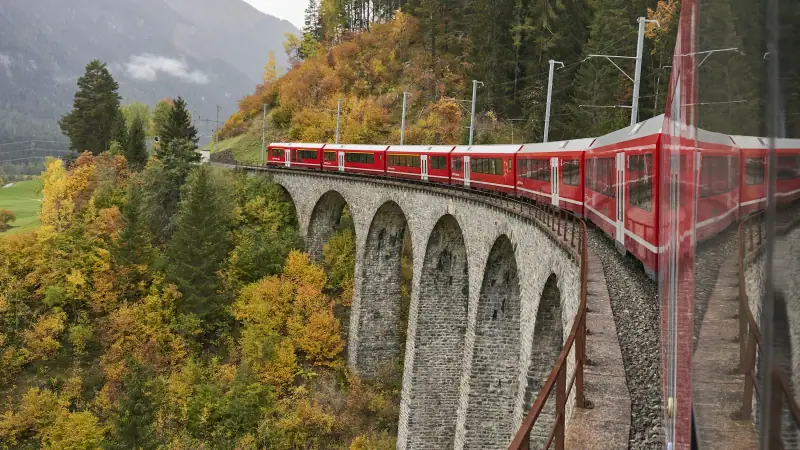
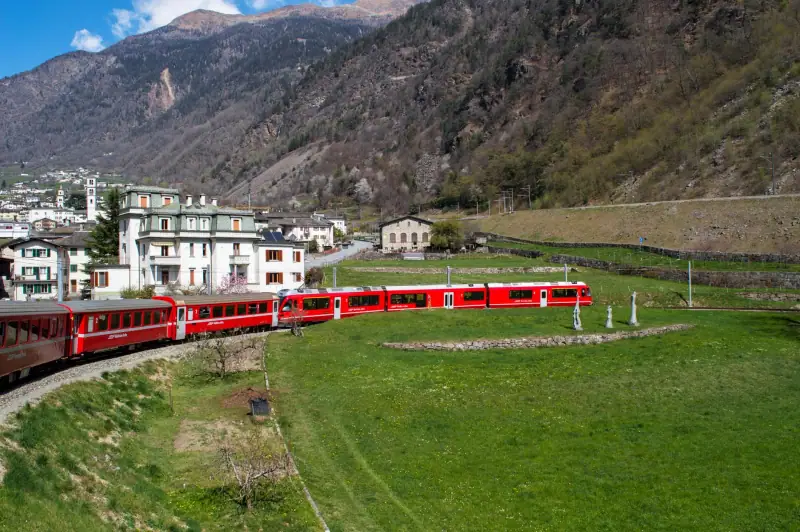
The Albula and Bernina lines of the Rhaetian Railway are listed as UNESCO World Heritage. They illustrate how early 20th-century engineers crossed difficult terrain with stone viaducts, spiral tunnels and daring alignments. The Landwasser Viaduct, near Filisur, with its tall stone pier leading straight into a rock tunnel, is one of the country’s best-known images.
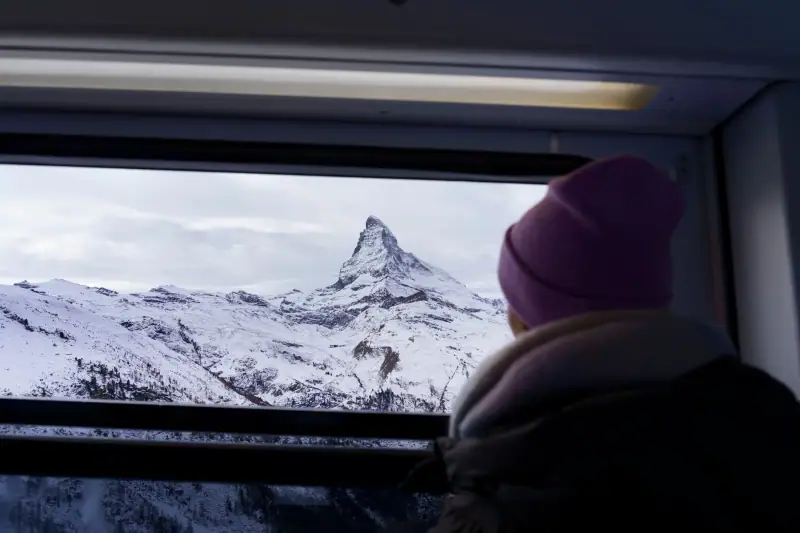
The Bernina Express links Chur to Tirano, in Italy, crossing the Bernina Pass, one of the highest railway crossings in Europe. In a few hours, the landscape goes from alpine valleys to glaciers and then to the first Italian scenery. The Glacier Express links Zermatt to St. Moritz and crosses the whole of Graubünden. Both trains are described in detail in our comparison, which gives their durations, comfort and booking arrangements: read Glacier Express or Bernina Express before booking.
A tip: you do not have to take the train from end to end. Getting off at an intermediate station for a hike or a visit, then boarding a regional train, lets you enjoy the same scenery at lower cost. The Swiss Travel Pass can simplify these journeys, but check exactly what it covers, notably for panoramic trains, which often require a paid seat reservation.
The Engadine: St. Moritz, lakes and stone villages
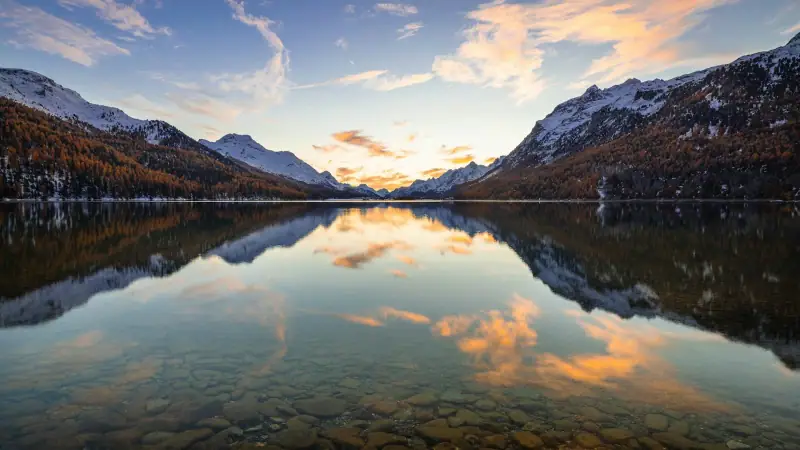
The Engadine is the high valley of the Inn, which stretches over more than 100 kilometers (62 mi) to the Austrian border. It is divided into the Upper Engadine, around St. Moritz, and the quieter Lower Engadine, toward Scuol. The light is known for its clarity, and the landscapes of blue lakes, larches and snowy peaks attract photographers as well as hikers.
St. Moritz is the region’s most famous resort. It twice hosted the Winter Olympics, and its name evokes luxury, grand hotels and designer boutiques. But the town also has a lake at its center, easy walks and viewpoints reached by funicular or cable car. Even without sleeping in a luxury hotel, you can spend a fine day there: a walk around the lake, a ride up to a viewpoint, a break in a café. Prices are high, so plan your budget accordingly.
The neighboring lakes of Silvaplana and Sils, surrounded by mountains, are quieter places. In summer, the wind draws windsurfers and kitesurfers; the rest of the time, flat trails allow walks accessible to all. The village of Sils Maria inspired writers and philosophers, and its atmosphere remains very hushed.
The Lower Engadine charms with its villages of massive houses, often decorated with sgraffito, patterns engraved in the plaster of the facades. Guarda is a classic example of a preserved Engadine village, with its narrow lanes and deep-set windows. Scuol is a small spa resort with well-known mineral waters. This part of the valley is cheaper, less visited, and is explored well on foot or by PostBus. Romansh is still spoken there every day.
For those who want the best of the region, a stay of two or three nights in the Upper Engadine, completed by a night in the Lower Engadine, offers a good balance between grand scenery and authenticity. Autumn, with its golden larches, is probably the most beautiful season.
The Swiss National Park, kingdom of alpine wildlife
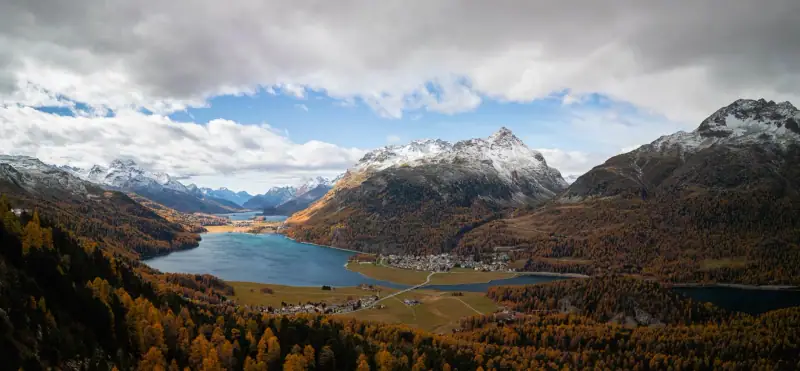
The Swiss National Park, founded in 1914, is the oldest national park in the Alps and the only one in Switzerland. It lies in the Lower Engadine, in a territory where nature is left free of human intervention. Here, no lifts, no chalets, no picking: you come to walk and observe.
There are many marked trails, from easy walks to long high-altitude outings. The Val Trupchun is particularly known for wildlife watching. Red deer, ibex, chamois and marmots are common there, and with patience you may spot a bearded vulture. The best time to see them is at dawn or at the end of the day, when animals come out of the forests. Bring binoculars: the animals keep their distance, and that is precisely what makes the place interesting.
The rules are strict and apply to everyone: you stay on the trails, you do not bring a dog, you pick neither flowers nor stones, you light no fire and you avoid noise. They guarantee the wildlife’s peace. The park is mainly accessible in summer and early autumn; the winter closing is not set on a precise date and depends on conditions, as the trails are not cleared of snow. Check the park’s official site before you go.
Bring water, a picnic and good shoes. The trails are well maintained, but the weather can change fast at altitude. A full day in the park is an excellent complement to a stay centered on the Engadine.
The Val Müstair and St. John’s Monastery
At the eastern end of the canton, the Val Müstair is one of Switzerland’s most discreet valleys. You reach it by the Ofen Pass, a mountain road that crosses the National Park, or from the south from Italy. The valley has remained relatively sheltered from mass tourism, with its quiet villages, fields and farms.
Its treasure is St. John’s Monastery in Müstair, a UNESCO World Heritage site. This convent of medieval origin, still inhabited, is famous for its ancient frescoes, which are among the most important of their kind in Europe. The visit takes one to two hours, and a museum helps you understand the history of the site. Hours vary by season: check them before traveling.
Müstair is far from the usual circuits and takes a little organization. By car, the road over the Ofen is beautiful but winding; by public transport, PostBuses provide the link from the Lower Engadine. Allow a full day from Scuol or Zernez, or two days if you want to enjoy the valley. It is an ideal excursion for those who like art, history and quiet.
Table and traditions: flavors of Graubünden
Graubünden cooking is simple and hearty, designed for the mountains. Dishes to taste include capuns, parcels of dough wrapped in chard leaves, pizokel, a kind of pasta made from flour, and barley soups, much appreciated after a day of walking. Graubünden air-dried meat, thin and salted, goes well with a glass of wine or a snack at altitude.
On the sweet side, the Bündner Nusstorte, a tart filled with walnuts and caramel, is the canton’s best-known specialty. You will find it in the bakeries and pastry shops of Chur as well as in the villages. The canton also produces wine, notably in the Rhine valley around Maienfeld, north of Chur: it is Graubünden’s wine region.
For an overview of the country’s gastronomy, read our article on the specialties to taste in Switzerland. Restaurant prices are high in resorts, more reasonable in the valleys. Alpine huts and village inns often offer the best balance between local cooking and the bill.
Sample itineraries for visiting Graubünden
🚗 Rent a car in Graubünden: to reach the Val Müstair, isolated villages or fan out from the Engadine at your own pace, a car remains practical. Compare rental companies for your dates.
Here are three options depending on your available time. Journeys stay reasonable, well under 200 kilometers (125 mi) a day.
Three days: Chur and the Surselva. On the first day, visit Chur’s old town and go up to Brambrüesch. On the second, reach Flims and walk to the viewpoint over the Rhine Gorge. On the third, take a train excursion along the canyon or enjoy a mountain lake before heading home.
Five days: adding the Engadine. To the first two days above, add a train ride to the Upper Engadine. On the third day, devote yourself to St. Moritz and the lakes of Silvaplana and Sils; the fourth, to the Lower Engadine and its villages; the fifth, to a hike in the National Park.
Seven days: a grand tour of the canton. Start with Chur and Flims, continue to Davos or Arosa, move on to the Engadine for three nights with the National Park, add the Val Müstair and finish by crossing the Bernina Pass to Tirano in Italy, where the Bernina Express takes you. To extend into Italian-speaking Switzerland, our article on Ticino, Lugano, Locarno and Bellinzona is the natural complement.
If you are coming from the Valais, our guide what to see in the Valais offers the logical next step: the Glacier Express links the two cantons, from Zermatt to St. Moritz. To take it under the snow, see our guide to panoramic trains in winter.
Budget and practical tips
Graubünden is not a cheap destination, but the gap between towns and big resorts is large. Sleeping in Chur, the Surselva or the Lower Engadine costs much less than in St. Moritz or Davos in high season. Lifts are a major expense: choose one or two standout excursions rather than doing everything. Picnics, drinking fountains and free hikes, notably in the National Park, where access to the trails is free, lighten the bill. Our article on the budget for traveling in Switzerland details typical costs.
On safety, the mountains call for caution. Check the weather, start early, bring warm clothes, water and a map, and turn back if conditions worsen. Travel insurance that covers mountain activities is a good idea.
Take seasonality into account. Many lifts, huts and high-altitude lodgings close between seasons, generally in autumn and spring. Some road passes are closed in winter. Always check timetables and road conditions on official sites before you go.
Graubünden rewards patient travelers: a morning in an old town, an afternoon by a lake, an evening in a stone village where Romansh is spoken. By choosing two bases and leaving a margin for the weather, you will see far more than the grand hotels of St. Moritz alone.
Sources
Frequently asked questions
How many days do you need to visit Graubünden?
Four to five days let you see Chur, the Rhine Gorge, part of the Engadine and a hike in the National Park. With a week, you add the Val Müstair, Davos or Arosa and a panoramic train ride without rushing. The canton is the largest in Switzerland and valley journeys are long: it is better to choose two bases.
What is the best time to visit Graubünden?
June to September for hiking and the green Engadine, with September and early October for golden larches and stable days. Winter suits skiing and snowy landscapes, but some passes and high trails are then closed. The National Park is mainly visited in summer and early autumn.
What language is spoken in Graubünden?
The canton is trilingual: German in most valleys, Romansh in several valleys including the Lower Engadine and the Surselva, and Italian in a few southern valleys. Romansh is Switzerland's fourth national language. English is well understood in tourist areas; a few words of German are useful.
Do you need a car to see Graubünden?
Not necessarily. The Rhaetian Railway network and PostBuses serve most valleys, including the Engadine. A car is more flexible for the Val Müstair or isolated villages, but passes can be closed in winter and resort parking is expensive.
Can you see wild animals in the Swiss National Park?
Yes. The Val Trupchun is known for watching red deer, ibex, chamois and marmots, and with luck bearded vultures. The park has strict rules: you stay on marked trails, dogs are banned and you pick nothing. Check the park's official site for current conditions.
Is Graubünden more expensive than the rest of Switzerland?
Well-known resorts such as St. Moritz or Davos are among the priciest in the country, especially in high season. Chur, the Surselva or the Lower Engadine are much more affordable. Staying in the valley and fanning out by train or bus helps control the budget.
Can you combine Graubünden with Ticino or Italy?
Yes. The Bernina Express reaches Tirano in Italy, and several southern Graubünden valleys touch Italian-speaking Switzerland. Ticino is covered in our dedicated article.
More Switzerland guides
Keep reading
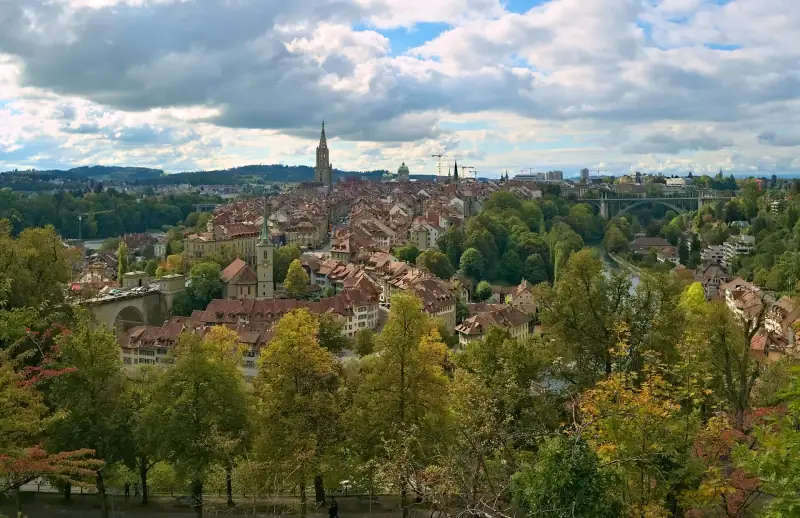
Visiting Bern: what to see and do in 1 to 2 days
Visit Bern in 1 to 2 days: UNESCO old town, arcades, Zytglogge, Münster, Bear Park, the Aare, Einstein and Paul Klee. Practical tips and budget.
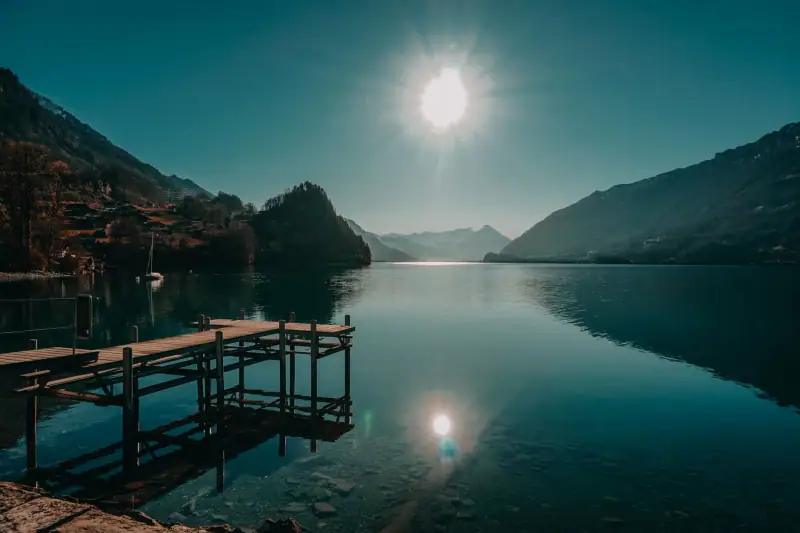
Visiting Interlaken: what to see and do between Lake Thun and Lake Brienz
Interlaken in 1 to 3 days: Harder Kulm, Höhematte, boats on both lakes, caves, paragliding and excursions. Tips to plan your stay and avoid pitfalls.
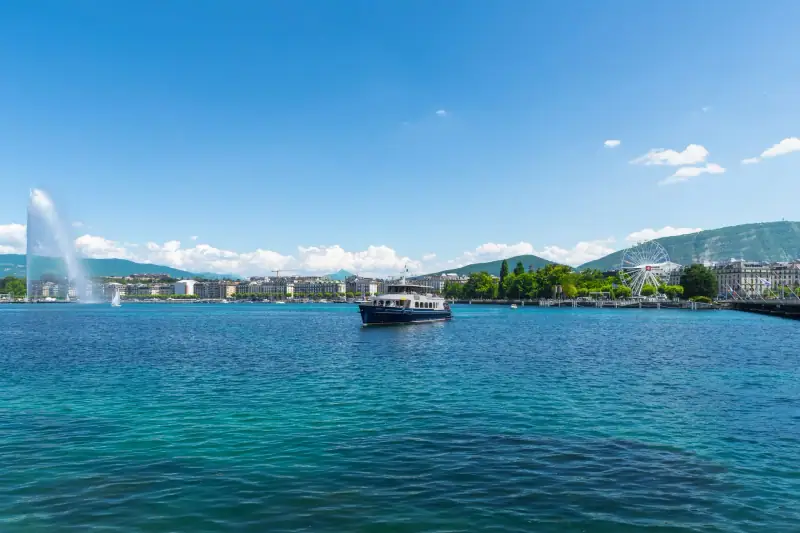
Visiting Geneva, Lausanne and Lavaux: a stay on Lake Geneva
Geneva, Lausanne and the Lavaux vineyards: what to see, how to get around by train and boat, how many days to plan. A guide to a stay on Lake Geneva.
Ready-made
Switzerland itineraries
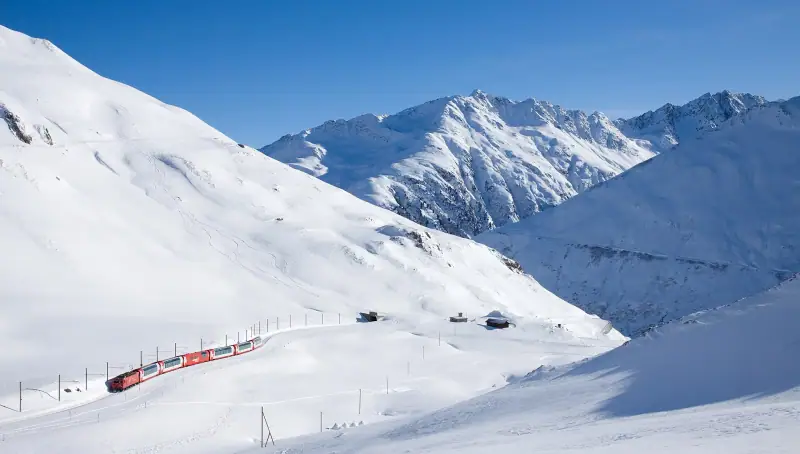
Glacier Express and panoramic trains in winter: routes, prices and reservations
Glacier Express, Bernina Express and GoldenPass in winter: 2026-2027 running dates, reservation prices, recommended routes and tips for seeing the snow.
Glacier Express or Bernina Express: which panoramic train should you choose?
Glacier Express or Bernina Express: duration, scenery, reservations and passes. Compare Switzerland's two panoramic trains and pick the one for your trip.
7 days
7-day Switzerland itinerary by train: Lucerne, Interlaken, Zermatt and Lake Geneva
LucerneInterlakenZermattLausanne