Things to do
Spain with kids: trips and activities for families
We may earn a commission when you book through links on this page, at no extra cost to you. We don't visit or try the places we cover: we summarize published sources. How we work
In short
- Under 5, favor one base near a calm beach (Catalan and Valencian coasts); from 6 to 11, cities like Valencia, Barcelona and Madrid offer parks, aquariums and zoos.
- Valencia combines beach, parks and museums within bike or tram reach; Barcelona joins city and sea; the Costa Dorada with PortAventura is the simplest with young children.
- Spring (April-June) and early fall (September-October) are gentler for walking; July and August are very hot, especially in the south.
- Do not exceed two accommodations in a week, plan one major activity a day, and book timed-slot tickets (Sagrada Família, Park Güell, Alhambra) ahead.
Spain is an almost obvious family destination: sun, beaches, lively cities, theme parks, aquariums, big parks and a way of life that makes room for children even in restaurants. You still have to pick the right place and the right pace. Between a week in Barcelona with teens, a few days in Valencia with six-year-olds and a beach stay with a toddler, the needs have nothing in common.
This article offers trip ideas by type of family, activities that children really enjoy, and organization tips to keep the vacation peaceful. To prepare the rest of the trip, rely on our guide to the budget for Spain and the one on the best time to go.
How to choose your destination by the children’s ages
Before booking, ask yourself a simple question: what will your children do with their days? A three-year-old wants sand, water and naps. A nine-year-old wants animals, rides and places to run. A teenager wants soccer, thrills or neighborhoods with atmosphere. Spain answers each of these profiles, but not in the same place.
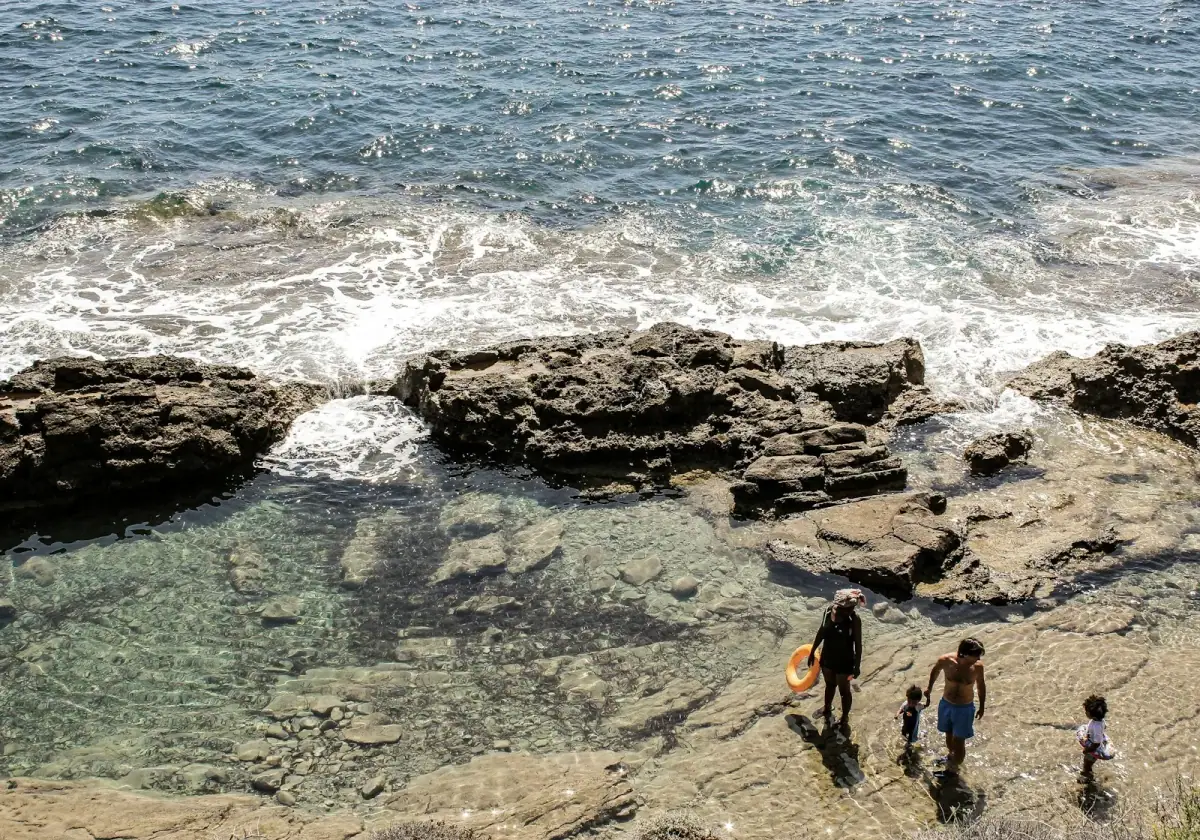
- With children under 5: favor a single base, near a calm beach, with few transfers. The Catalan and Valencian coasts offer long gently sloping sandy beaches and well-equipped resorts.
- Between 6 and 11: the ideal age for cities with a large leisure offer. Valencia, Barcelona and Madrid offer parks, aquariums, zoos and interactive museums.
- With teenagers: bet on cities (Barcelona, Madrid, Seville), sports, soccer culture, water activities and a bit of freedom to wander.
- With extended family or grandparents: an apartment with a terrace or pool in a city well served by transport simplifies logistics.
One principle applies to all: do not exceed two accommodations in a week. Each change costs half a day for children and parents alike.
Barcelona: the city that has it all

Barcelona is probably the easiest Spanish city to live in as a family, because it combines heritage, parks and a beach in a compact space served by an efficient metro. For a stay of a few days, our 3-day Barcelona itinerary gives the general framework; here is what children enjoy most.
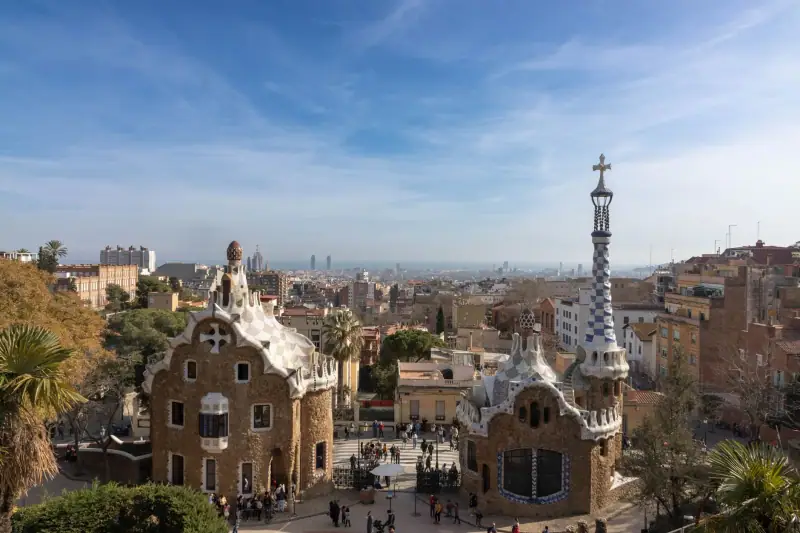
Park Güell. The colorful mosaics, the famous salamander and Gaudí’s winding paths intrigue children more than many museums. The monumental part of the park is paid and subject to time slots: book ahead, and plan on comfortable shoes, because the site is on a slope.
The Sagrada Família. The facades fascinate even the youngest, who enjoy looking for animals and details. Visiting the interior requires booking your ticket ahead; plan on a reasonable length, because little ones’ attention runs out faster than adults’.
Ciutadella Park. A large green space downtown, ideal for a break: lawns, a big pond, a monumental waterfall and the possibility of renting a rowboat. Barcelona Zoo is in this park, which lets you combine picnic, walk and animals in the same half day.
Children’s museums. CosmoCaixa, the science museum on the heights of the city, offers spaces designed for interactive discovery: it is a good option on rainy or very hot days. The Barcelona Aquarium, near the port, also charms many children, with its underwater tunnel.
Barceloneta beach. After the visits, nothing beats an afternoon with your feet in the sand. The beach is urban, so busy, but reachable on foot from the center. Keep a careful eye on your belongings, as in all big tourist cities.
The heights of Montjuïc. The cable car and the gardens, with their view of the port, make a lovely moment with children who enjoy slightly spectacular rides. In the evening, the Montjuïc fountains put on a show of water and light, but their schedule varies by season: check the days before going.
Family activities in Barcelona
Compare guided tours, skip-the-line tickets and activities suited to children in Barcelona.
To sleep, favor a neighborhood well linked to the metro rather than a hotel right next to the sites. Our guide on where to stay in Barcelona details the neighborhoods by type of traveler.
Valencia: beach, bikes and science
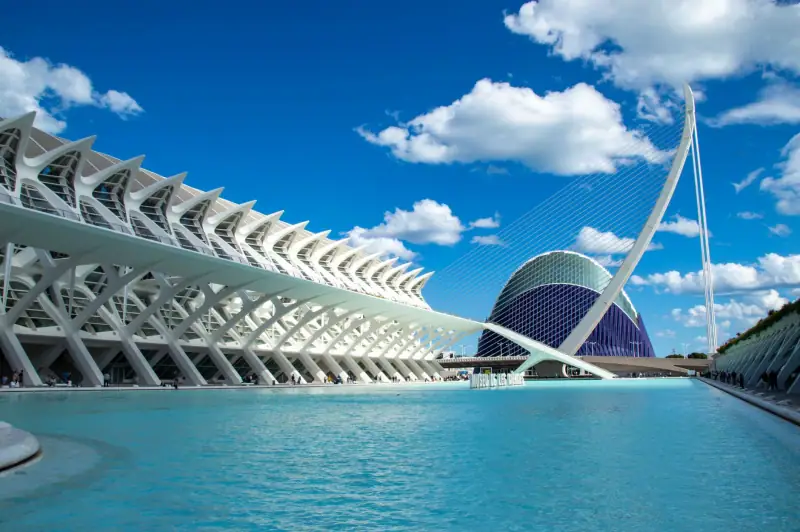
Valencia is an excellent compromise for families who want a city without Barcelona’s crowds. It is flat, which makes getting around by bike or on foot easy, and it has a sandy beach in town, reachable by tram or bus from the center.
The City of Arts and Sciences. This futuristic complex is the city’s big family attraction. It includes the Oceanogràfic, one of the largest aquariums in Europe, and a science museum where children can touch, try and experiment. Allow a full day if you want to visit several buildings, or choose just one for younger children.
The Turia Gardens. The former river bed, turned into an immense park, stretches across the city. You find bike lanes, playgrounds, sports fields and lawns: it is the ideal playground for children who need to burn off energy. It also leads to the City of Arts and Sciences, which lets you combine a walk and a visit.
The BIOPARC. This zoo presents animals in recreated environments, with few visible barriers. It is a fine alternative for children who love African animals.
Malvarrosa beach. Wide, with fine sand, a promenade and beach shacks, it suits families well. Children can spend the afternoon there while parents enjoy the closeness of the city.
For a stay of a few days, our 2-day Valencia itinerary will help you spread these visits. To choose a neighborhood, see where to stay in Valencia.
Valencia is also the birthplace of paella: a meal in a family restaurant, around a big dish to share, easily becomes a highlight of the stay. Children who do not like seafood will often find a version with chicken and vegetables.
Madrid: parks, zoo and accessible culture

Madrid has no beach, but it has enough to keep a family busy for several days, with a dry, bright climate almost all year as a bonus. Summer there is very hot: aim for spring or fall if you want to walk.
Retiro Park. The big green lung of the center is where Madrileños meet on weekends. Children row boats on the pond, watch puppeteers when the season allows and run on the big lawns. The Crystal Palace, with its glass architecture, is in this park.
The Zoo Aquarium in Casa de Campo. The big Casa de Campo park hosts a zoo that is one of the top outings with children, with a great diversity of animals. Allow half a day to a full day depending on your children’s ages.
The Madrid Amusement Park. Also located in the Casa de Campo, it offers rides for all ages, from the gentlest to the most spectacular. Check the opening dates before going, as they vary by season.
The Royal Palace and Plaza Mayor. For older children, the Royal Palace visit and a walk through the lanes of the historic center make a good cultural complement. The major museums, such as the Prado, are better visited in short targeted sequences than as a full tour.
Our 3-day Madrid itinerary can serve as a base, swapping a museum day for a park-and-zoo day. To sleep, look at where to stay in Madrid.
Family-friendly accommodation
Apartments, family rooms, hotels with pools: compare offers according to the size of your group.
Seville and Andalusia: to do with curious children
Andalusia is splendid but demanding: summer there is punishing and distances between cities are long. With children, it is better discovered in spring or fall, and by limiting the number of stops.
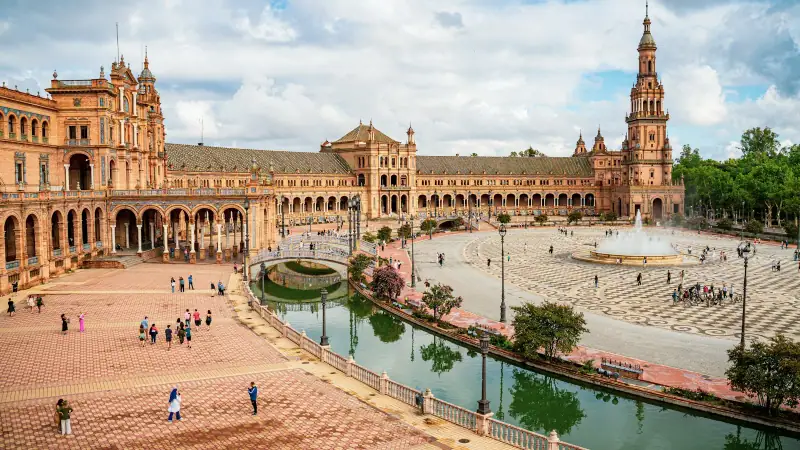
Seville. Children enjoy the Plaza de España, with its canals where you can rent a rowboat, its decorated bridges and its big squares to run in. María Luisa Park, right next door, provides the shade you need. The Alcázar, with its gardens, pools and courtyards, suits a visit of limited length. A horse-drawn carriage tour in the center is sometimes a good way to spare little legs.
Córdoba. The mosque-cathedral, with its forest of red-and-white columns and arches, impresses children, who enjoy getting lost in the setting. Our one-day Córdoba itinerary shows how to combine the visit with a quiet walk in the lanes.
Granada. The Alhambra is a magical place for children who love stories of palaces and fortresses, but the visit is long and tickets are issued in the visitor’s name. Read our guide to visiting the Alhambra before booking, and plan a visit of a length suited to your children’s ages.
A circuit between several Andalusian cities involves travel time by road or train. If you want to try it as a family, start from our 7-day Andalusia itinerary and lighten it: one city fewer often means one more rest day.
The Costa Dorada and PortAventura: the stay for families with young children
South of Barcelona, in Catalonia, the Costa Dorada is one of the regions most appreciated by families. Its golden sandy beaches, gently sloping, its well-equipped resorts and its theme park make for a simple stay, without too much logistics.
PortAventura World, near Salou, is the region’s big theme park. It includes an amusement park, a water park and several hotels. Families with children find rides suited to the smallest as well as to teens seeking thrills. Prices, opening dates and stay packages change with the seasons: check the official website before booking.
The beaches of Salou and around. Calm waters and sand make it an ideal setting for children learning to swim. Several beaches are equipped with lifeguard posts and services, but always check the day’s flag.
Tarragona. A short distance from the coast, the city preserves Roman remains, including an amphitheater facing the sea. It is a pleasant cultural outing for children interested in gladiators and Antiquity.
To reach the Costa Dorada from Barcelona, car or train are the most natural options. If you prefer to stay car-free, book in a resort where everything is done on foot.
The Balearic and Canary Islands: a different trip
Many families think of the islands first for beach vacations. Here, we focus on mainland Spain, which already offers many family beaches on the Catalan and Valencian coasts.
The advantage of the mainland, for a family, lies in variety: in a single trip you can combine a city, a beach, an amusement park and a historic site, without taking a plane or boat between stops. A stay of eight to ten days lets you, for example, split your time between Barcelona, the Costa Dorada and Valencia, with train or car trips of reasonable length for children.
If your children dream above all of swimming and coves, keep in mind that the Valencian coast and the Costa Dorada offer long sandy beaches, often better suited to little ones than rocky coasts. And if you hesitate between several destinations, first compare the travel times from your arrival airport: with children, one hour less on the road weighs more than any detail of the program.
Organizing your stay: pace, meals and transport
Family vacations succeed when the pace is adapted to the youngest. Here are the principles that work best.
One main program per day. When a day includes a major visit (amusement park, aquarium, big monument), the rest should stay light. A six-year-old copes poorly with two guided tours in the same day.
A rhythm that follows the country’s. In Spain, life starts late and ends late. Many families adopt a compromise: activity in the morning, lunch, a long break in early afternoon, then an outing at the end of the day, when the heat drops and the streets fill up. Children often adapt well, as long as you keep a reasonable bedtime.
Meals. The menú del día, offered at midday in many restaurants, is a good formula to feed the whole family at a reasonable price. Shared tapas let children taste without committing to a big dish. Safe bets for little ones: tortilla de patatas, croquettes, ham, potatoes, pasta or chicken paella. To discover the specialties, read our guide to what to eat in Spain.
Transport. In big cities, the metro, tram and bus are practical and well connected. Between cities, the high-speed train links Madrid, Barcelona, Valencia, Seville and Málaga in good conditions, with children able to get up and stretch their legs. Book ahead for long trips.
A simple idea for trips. A notebook where each child glues a ticket, draws a monument or notes a dish gives purpose to long walks and waiting times. It is also a very good keepsake on return.
Heat, sun and safety: the essentials to plan
The Spanish sun is generous, including in spring and fall. Children’s skin is more sensitive than adults’: a few simple precautions avoid most problems.
- High-SPF sunscreen, applied before going out and renewed after each swim.
- Hat, sunglasses and light clothing covering the shoulders during the hottest hours.
- Plenty of water: always carry a bottle, and take regular breaks in the shade.
- Smart hours: outdoor visits early in the morning or at the end of the day, museums and air-conditioned places in the hot hours.
For health questions, ask your doctor or a travel clinic, and see the official travel health pages (CDC in the US, TravelHealthPro in the UK). Consider travel insurance, notably for repatriation. Entry rules, including for children and minors, depend on your passport: check the official travel advice of your government before you book (travel.state.gov (US), GOV.UK (UK), travel.gc.ca (Canada), Smartraveller (Australia) (checked November 2026)). You can also see our article on formalities for Spain.
An example week with the family
Here is a framework that works well with school-age children, to adapt to your dates and wishes.
- Days 1 to 4: Barcelona. Arrival, a walk in the center and Barceloneta beach on the first day, Park Güell and the Sagrada Família on the second, the zoo and Ciutadella Park on the third, CosmoCaixa or the Aquarium depending on the weather on the fourth.
- Days 5 to 7: Valencia. Train trip, settling in, a day at the City of Arts and Sciences, biking in the Turia Gardens, then an afternoon at Malvarrosa beach.
This formula limits trips to a single transfer and alternates city, parks and sea. For a more beach-oriented version, replace Barcelona with the Costa Dorada and PortAventura, and keep Valencia for the end of the stay.
For families who like adventure, you can also plan an easy hiking day in a natural park near your chosen city, or a boat outing along the coast. Ask the local tourist office about activities suited to the children’s ages. Beware of the Caminito del Rey, near Málaga: it is off-limits to children under 8.
Budget: where to save
Traveling as a family costs more, but Spain offers several levers to control the bill: menús del día at midday, free parks and gardens, public beaches, public transport, apartments with a kitchen for breakfasts. Tickets for major sites and parks often offer reduced rates for children depending on age: check the conditions when booking. Our article on the budget for Spain details the main items.
Book ahead the tickets with a time slot (Sagrada Família, Park Güell, Alhambra): it is both cheaper and less stressful for children, who cope poorly with lines in the sun.
Frequently asked questions
What is the best destination in Spain for a family vacation?
There is no single one. Valencia combines beach, parks and museums within reach of a bike or tram, Barcelona joins city and sea, and the Costa Dorada is the simplest with young children. Choose according to the children's ages and your wish for beach or sightseeing.
When to go to Spain with children?
Spring (April-June) and early fall (September-October) offer milder temperatures for walking. July and August are very hot, especially in the south: favor the coast then and plan visits early in the morning or at the end of the day.
Do you need to rent a car for a family trip?
Not for an urban stay: metro, tram and buses serve Barcelona, Madrid, Valencia and Seville well. A car becomes useful for the Costa Dorada or a circuit between several cities, especially with luggage and tired children.
Can children keep to their usual mealtimes?
Yes, with a bit of organization. Spanish lunch is often late and dinner even later, but many tourist establishments serve earlier. Shared tapas and menús del día make it easy to adapt meals for children.
How do you avoid fatigue and heat with young children?
Alternate a morning activity, a long break in the cool or at the beach in early afternoon, then a light outing in the evening. Bring water, hats and sunscreen, and do not try to see everything in a day.
Can you travel in Spain with a stroller?
Yes in the big cities, where transport and major sites are generally accessible. Old neighborhoods, with their cobbles, slopes and stairs, remain more tiring: a lightweight stroller or a baby carrier makes getting around easier.
More Spain guides
Keep reading

Skiing in Spain: Sierra Nevada, Baqueira-Beret and the Spanish Pyrenees resorts
Skiing in Spain: Sierra Nevada, Baqueira-Beret, Formigal, Masella. 2026-2027 dates, access, lift passes, accommodation and tips to choose your resort.
Budget for a trip to Spain: real costs and 3 profiles with figures
How much does a trip to Spain cost? Lodging, transport, meals, visits: three daily budgets with figures (tight, comfort, upscale) and saving tips.

What to see in Catalonia: the region's 12 must-sees
What to see in Catalonia? Barcelona, Girona, Costa Brava, Figueres, Montserrat, Tarragona, Pyrenees: our selection to plan a stay in the region.
Ready-made
Spain itineraries

2 days
Valencia in 2 days: an itinerary through the old town, the Turia and the beach
What to do in Valencia in 2 days? Historic center, market, City of Arts and Sciences, Turia Gardens, paella and beach: our day-by-day itinerary.

7 days
Andalusia in 7 days: Seville, Córdoba, Granada and Málaga
A 7-day Andalusia route: Seville, Córdoba, Granada and Málaga, with travel times, a day-by-day pace, useful reservations and pitfalls to avoid.
3 days
Barcelona in 3 days: a day-by-day itinerary for a first stay
Sagrada Família, Park Güell, Barri Gòtic, Montjuïc and Barceloneta: a 3-day Barcelona itinerary with the best order of visits, transport and tips.