Itineraries
Andalusia in 7 days: Seville, Córdoba, Granada and Málaga
We may earn a commission when you book through links on this page, at no extra cost to you. We don't visit or try the places we cover: we summarize published sources. How we work
Day by day
- Days 1-2Seville: cathedral, Alcázar, Santa Cruz, Triana, Plaza de España
- Day 3Córdoba: Mezquita, Jewish Quarter, Roman bridge
- Days 4-5Granada: Alhambra and the Albaicín
- Days 6-7Málaga: old town, Alcazaba, beach or Ronda excursion
Estimated budget
$400 – $680 per person (€360 – €620)
For 2 travelers sharing a double room and a rental car, with mid-range lodging. Total without car rental, fuel and tolls: no checked price yet.
| Item | Per person |
|---|---|
| Lodging | $290 – $480 |
| Paid visits | $110 – $200 |
Not included: international flights, meals and insurance.
Weather through the year on this route
| Jan | Feb | Mar | Apr | May | Jun | Jul | Aug | Sep | Oct | Nov | Dec | |
|---|---|---|---|---|---|---|---|---|---|---|---|---|
| High °F (°C) | 489 | 5211 | 5915 | 6317 | 7222 | 8228 | 9032 | 9032 | 7926 | 6820 | 5614 | 4910 |
| Low °F (°C) | 310 | 331 | 362 | 405 | 479 | 5513 | 6116 | 6116 | 5513 | 468 | 384 | 331 |
| Rain in (mm) | 1.540 | 1.335 | 1.540 | 1.845 | 1.845 | 1.025 | 0.410 | 0.515 | 1.130 | 2.255 | 2.050 | 1.845 |
Normals 1991–2020 at Toledo and Segovia: averages over 30 years, not a forecast. Source: NASA POWER (MERRA-2), grid of about 50 km. Figures computed by us in November 2026.
In short
- Seven days link Seville (days 1-2), Córdoba (day 3), Granada (days 4-5) and Málaga (days 6-7), with no leg longer than about two hours.
- Distances are about 140 km (87 mi) Seville to Córdoba, 165 km (103 mi) Córdoba to Granada and 130 km (81 mi) Granada to Málaga.
- A car is not essential: trains and buses link the four cities. It helps only for white villages and back roads.
- Book the Alhambra, the Alcázar of Seville and the Mezquita ahead in high season; spring and fall are the most comfortable.
Andalusia packs the Spain you imagine into a single trip: Moorish palaces, flower-filled patios, tapas on a terrace and white towns under the sun. It can be discovered well in a week, as long as you choose a coherent route. Here is a 7-day itinerary linking Seville, Córdoba, Granada and Málaga, with short legs and a realistic pace.
The principle: a base of two nights in Seville, a quick stop in Córdoba, two nights in Granada and the end of the trip in Málaga, from where it is easy to leave. No leg exceeds about two hours, which leaves time each day to walk and linger.
Itinerary overview
| Day | Stop | Approximate travel time |
|---|---|---|
| 1-2 | Seville | Arrival, visits on foot |
| 3 | Córdoba | About 45 min by high-speed train, 1 h 45 by car |
| 4-5 | Granada | About 2 h from Córdoba |
| 6-7 | Málaga | About 1 h 30 from Granada |
Distances are around 140 km (87 mi) between Seville and Córdoba, 165 km (103 mi) between Córdoba and Granada, and 130 km (81 mi) between Granada and Málaga. Actual times vary with the mode of transport and traffic.
Days 1 and 2: Seville, between palaces and lanes
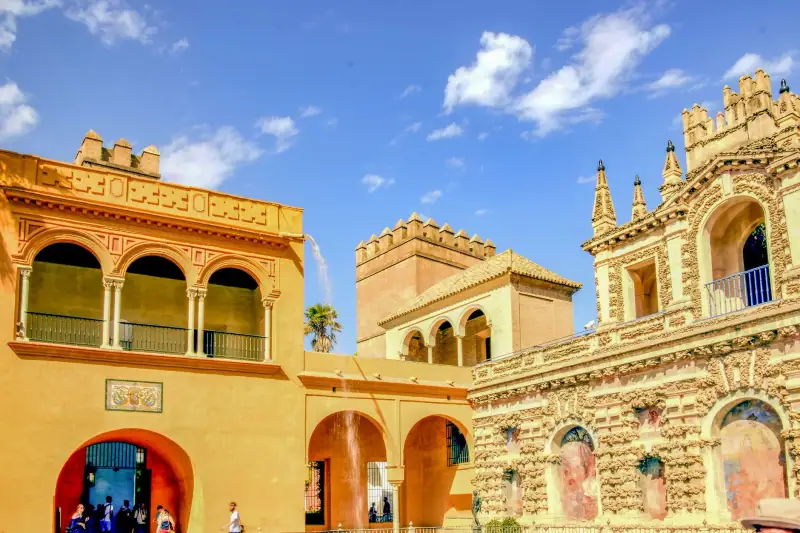
Seville can be visited almost entirely on foot. Devote the first day to the monumental center: the cathedral and its tower, the Alcázar and its gardens, then the lanes of the former Jewish quarter of Santa Cruz. The major monuments are more pleasant early in the morning, before the crowds and the heat. Book your tickets ahead in season.
On the second day, cross the Guadalquivir to the Triana district, known for its bars and its ceramics tradition, then stroll along the river. Late afternoon suits the Plaza de España and the neighboring park. In the evening, a flamenco show in a small venue is an authentic way to extend the day.
To choose where to put down your bags, our guide on where to stay in Seville compares the neighborhoods according to your budget and pace.
Where to stay in Seville
Compare accommodation in the historic center for your dates: prices climb in spring.
Day 3: Córdoba and its Mezquita
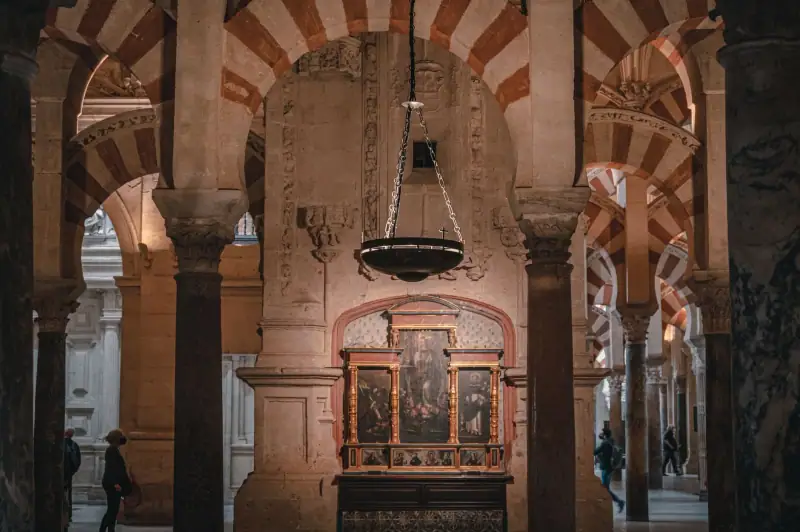
Leave Seville in the morning. The high-speed train reaches Córdoba in under an hour and drops you near the center; by car, allow about an hour and forty-five minutes. Córdoba is an ideal one-day stop: its mosque-cathedral, the Mezquita, combines a forest of columns with two-tone arches and a Christian nave, and remains one of Spain’s most striking monuments.
Then take the time to get lost in the Judería, the district of white lanes, to cross the Roman bridge and to look for the flower-filled patios, very famous in spring. The city is small: the afternoon is enough to see everything without hurrying.
Leave at the end of the day for Granada, or sleep in Córdoba if you prefer a calmer pace. On the plate, try the local specialties described in our article on what to eat in Spain.
Days 4 and 5: Granada and the Alhambra

Granada spreads out at the foot of the Sierra Nevada, whose peaks are sometimes snow-covered in spring. The highlight is of course the Alhambra, a complex of palaces, gardens and fortress perched on a hill. Allow half a day to visit it properly. Tickets are sold by time slot and sell out in high season: book as soon as your dates are fixed.
On the second day, explore the Albaicín, the former Moorish quarter with steep lanes, then head to a viewpoint at sunset to look at the illuminated Alhambra. In Granada, it is customary for a drink ordered at the bar to come with a small free portion of food: a local tradition that delights small budgets.
Guided tours in Granada
Alhambra visit, a walk in the Albaicín or a flamenco evening: compare the activities on offer.
Days 6 and 7: Málaga and the Costa del Sol

The Granada to Málaga trip takes about an hour and a half by road, and a bit longer by bus depending on the service. Málaga is a more relaxed seaside city: a pedestrian historic center, a cathedral, the Moorish fortress of the Alcazaba overlooking the port, and many museums, including those devoted to Picasso, a native son.
Day 7 can be devoted to the beach, a walk along the waterfront or an excursion to Ronda, famous for its bridge spanning a gorge. Ronda is about an hour and a half to two hours by road from Málaga depending on the route: a full day is needed to visit without rushing. Málaga’s airport, close to the center, makes the return easy.
Car or public transport?
For this route centered on the big cities, the train and bus work very well and spare you parking problems in the often narrow historic centers. A car is mainly useful if you want to add white villages or secondary roads. In that case, take it only for the relevant part, for example in Málaga.
Budget, season and practical tips
The best time for this route is spring or fall. For the month-by-month detail, see our guide to when to go to Spain. In summer, temperatures are very high in Seville and Córdoba: schedule visits early in the morning and keep the hot hours for a siesta, like the locals.
A few useful tips:
- Book the Alhambra, the Alcázar of Seville and the Mezquita ahead in high season.
- Time your meals to the local rhythm: late lunch, even later dinner.
- Plan on comfortable shoes, as the historic centers are cobbled and sometimes steep.
- Take out travel insurance to cover cancellation and medical costs, and compare plans before you leave.
Where to stay in Granada or Málaga
Book early for the last stops of the route, especially during holiday periods.
Variations depending on your time
With three more days, add Ronda as a stop, a white village in the mountains or the Atlantic coast. With only five days, concentrate on Seville, Córdoba and Granada, skipping Málaga. Whatever the formula, it is better to keep two nights in the cities richest in sights rather than chaining one-night stops.
Frequently asked questions
How many days do you need to visit Andalusia?
Seven days are enough for a first Seville, Córdoba, Granada and Málaga route without rushing. With ten days, you can add Ronda and a white village.
Do you need to rent a car for this route?
It is not essential. Seville, Córdoba, Granada and Málaga are linked by train or bus, and the historic centers are visited on foot. A car becomes useful for the white villages and small roads.
What is the best time to do this itinerary?
Spring (March to May) and fall (October-November) are the most comfortable. In July and August, temperatures are very high inland, notably in Seville and Córdoba.
Do you need to book the Alhambra in advance?
Yes, tickets are sold by time slot and go fast in high season. Book as soon as your dates are set, through the official ticket office or a guided tour.
Which direction should you do the route in?
The Seville, Córdoba, Granada, Málaga direction is logical: it limits backtracking and ends on the coast, with an international airport in Málaga.
More Spain guides
Keep reading

Budget for a trip to Spain: real costs and 3 profiles with figures
How much does a trip to Spain cost? Lodging, transport, meals, visits: three daily budgets with figures (tight, comfort, upscale) and saving tips.

What to see in Catalonia: the region's 12 must-sees
What to see in Catalonia? Barcelona, Girona, Costa Brava, Figueres, Montserrat, Tarragona, Pyrenees: our selection to plan a stay in the region.

Skiing in Spain: Sierra Nevada, Baqueira-Beret and the Spanish Pyrenees resorts
Skiing in Spain: Sierra Nevada, Baqueira-Beret, Formigal, Masella. 2026-2027 dates, access, lift passes, accommodation and tips to choose your resort.
Ready-made
Spain itineraries

2 days
Valencia in 2 days: an itinerary through the old town, the Turia and the beach
What to do in Valencia in 2 days? Historic center, market, City of Arts and Sciences, Turia Gardens, paella and beach: our day-by-day itinerary.
3 days
Barcelona in 3 days: a day-by-day itinerary for a first stay
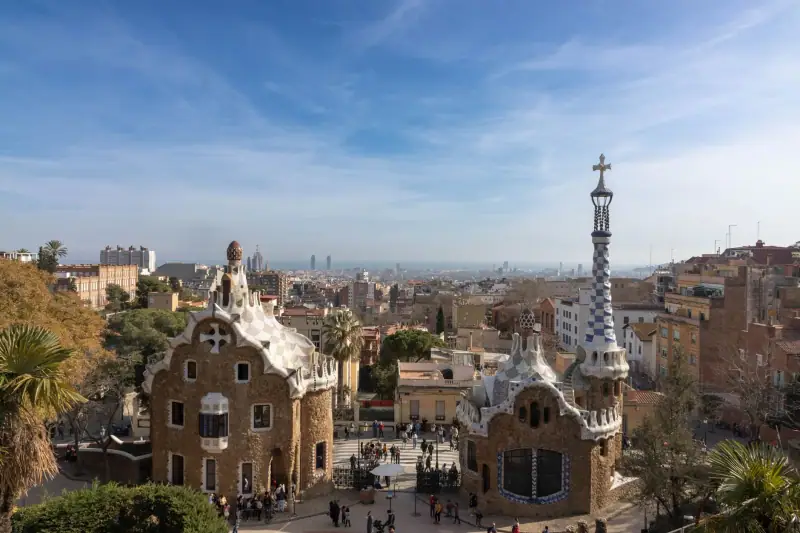
Sagrada Família, Park Güell, Barri Gòtic, Montjuïc and Barceloneta: a 3-day Barcelona itinerary with the best order of visits, transport and tips.

3 days
Madrid in 3 days: an itinerary to discover Spain's capital
Royal Palace, Prado, Retiro, Gran Vía and tapas neighborhoods: a 3-day Madrid itinerary with the best order of visits, transport and practical tips.