Itineraries
Barcelona in 3 days: a day-by-day itinerary for a first stay
We may earn a commission when you book through links on this page, at no extra cost to you. We don't visit or try the places we cover: we summarize published sources. How we work
Day by day
- Day 1Sagrada Família, Eixample and Park Güell
- Day 2Barri Gòtic, Born and Barceloneta
- Day 3Montjuïc, then a last city tour
Where to sleep
- Barcelona2 nights
Estimated budget
$140 – $250 per person (€130 – €230)
For 2 travelers sharing a double room, with mid-range lodging.
| Item | Per person |
|---|---|
| Lodging | $96 – $160 |
| Paid visits | $49 – $86 |
Not included: international flights, meals, local transport and insurance.
Weather through the year on this route
| Jan | Feb | Mar | Apr | May | Jun | Jul | Aug | Sep | Oct | Nov | Dec | |
|---|---|---|---|---|---|---|---|---|---|---|---|---|
| High °F (°C) | 489 | 5211 | 5915 | 6317 | 7222 | 8228 | 9032 | 9032 | 7926 | 6820 | 5614 | 4910 |
| Low °F (°C) | 310 | 331 | 362 | 405 | 479 | 5513 | 6116 | 6116 | 5513 | 468 | 384 | 331 |
| Rain in (mm) | 1.540 | 1.335 | 1.540 | 1.845 | 1.845 | 1.025 | 0.410 | 0.515 | 1.130 | 2.255 | 2.050 | 1.845 |
Normals 1991–2020 at Toledo and Segovia: averages over 30 years, not a forecast. Source: NASA POWER (MERRA-2), grid of about 50 km. Figures computed by us in November 2026.
In short
- Three days cover Gaudí and the Eixample on day 1, the old town and the waterfront on day 2, and Montjuïc plus a last city tour on day 3.
- Book the Sagrada Família and the Park Güell monumental zone ahead; entry is by timed slot.
- No car is needed: the metro and walking cover every site in this itinerary.
- Watch your belongings in the metro, on the Rambla and on the beach, where pickpocketing is frequent.
Barcelona is one of the most enjoyable cities in Europe for a short stay: a medieval historic center, the legacy of Catalan Modernisme, a hill for viewpoints and a beach in the city. Three days give you time to see the essentials without rushing, as long as you group your visits by neighborhood.
The principle of this itinerary: one day for Gaudí’s architecture and the Eixample, one day for the old town and the waterfront, one day for Montjuïc hill and a last tour at your own pace. To choose your season, see our guide to when to go to Spain.
Day 1: Sagrada Família, Eixample and Park Güell
Start with the Sagrada Família, Antoni Gaudí’s emblematic basilica, whose construction began in the late 19th century and is still going on. The interior, with columns that evoke a forest and colorful stained glass, is worth the trip on its own. Book an early-morning slot: the light is better and the crowd thinner. Allow at least an hour and a half there.
Then continue to the Eixample, the gridded district built in the 19th century. The Passeig de Gràcia holds several Modernista creations, including Casa Batlló and Casa Milà, better known as La Pedrera. Even without going in, their facades deserve a pause. If you want to visit one of them, choose just one to save time: the visits are fairly long and access is also by reservation.
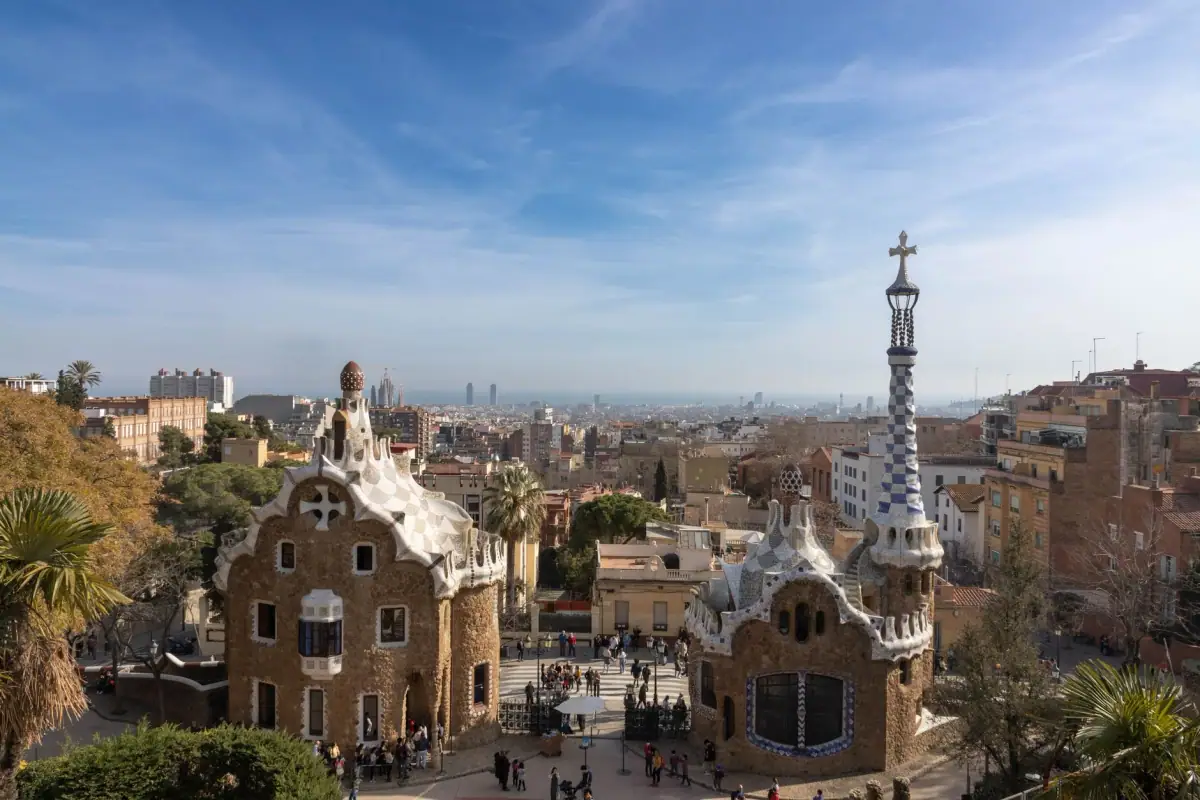
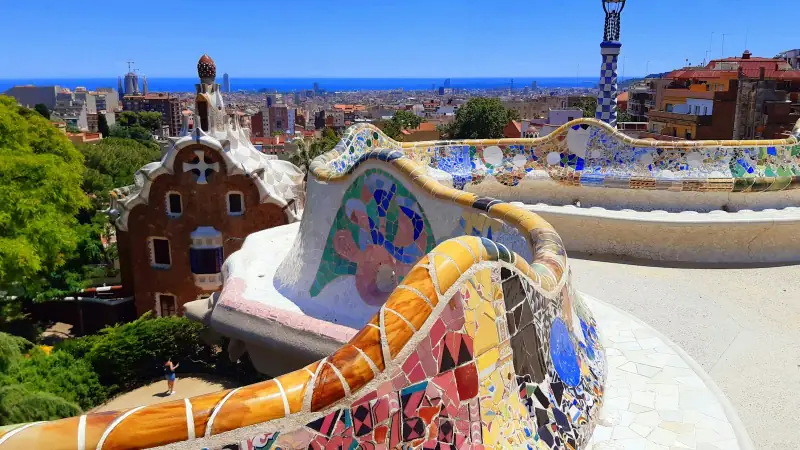
In the afternoon, go up to Park Güell, on the heights in the north of the city. This park designed by Gaudí offers colorful mosaics and a fine view of the city and the sea. The monumental zone has regulated access, with a timed ticket: book it ahead. The climb is partly on foot on slopes, so plan on good shoes.
Where to stay in Barcelona
Compare accommodation in the Eixample, the Born or the Barri Gòtic for your dates and budget.
Day 2: Barri Gòtic, Born and Barceloneta
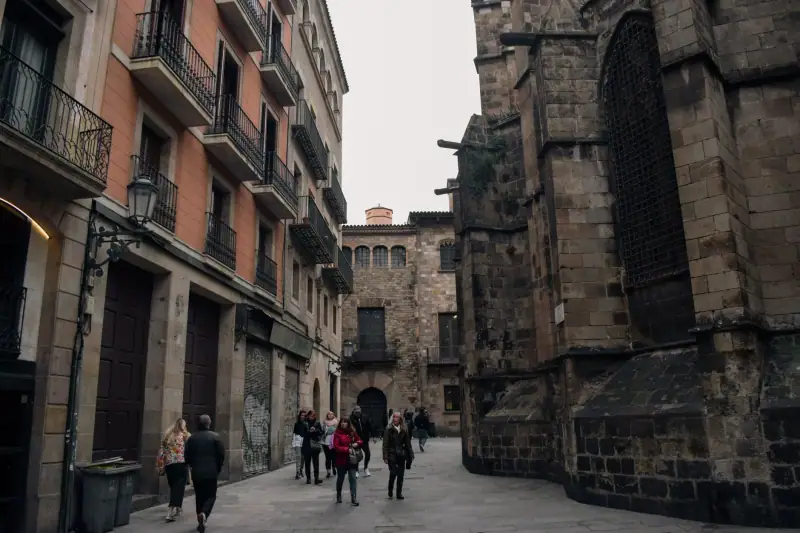
Devote the second day to the old town. The Barri Gòtic is a labyrinth of lanes around the Cathedral of the Holy Cross and Saint Eulalia, the Plaça de Sant Jaume and many small squares. The nicest approach is to get lost with no precise plan, keeping an eye on the details: carved portals, inner courtyards, small artisan shops.
Then cross the Via Laietana to reach the Born, a district of medieval lanes that has become one of the liveliest in the city. Its large Gothic church, Santa Maria del Mar, is a masterpiece of Catalan architecture, plain and bright. The neighborhood also holds the Palau de la Música Catalana, a Modernista jewel that you can tour or discover during a concert.
For lunch, head to the Boqueria market, reached from the Rambla. It is very busy: for a quieter meal, prefer the small bars of the neighboring streets, where you can eat tapas, croquetas or pa amb tomàquet (bread rubbed with tomato). To learn more about the dishes to try, our guide on what to eat in Spain details the specialties.
End the day in Barceloneta, the former fishermen’s district turned waterfront. The beach is very busy in summer, but a walk at sunset remains a good moment, including in the off-season. Be careful with your belongings on the sand.
Tours and activities in Barcelona
Guided tour of the Gothic Quarter, a bike ride or a tapas discovery: compare the experiences on offer.
Day 3: Montjuïc and a last city tour
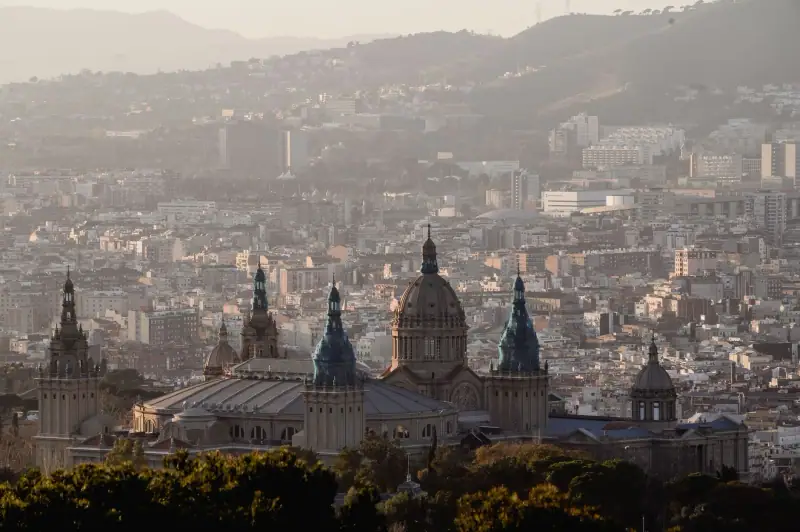
Montjuïc hill overlooks the port and the south of the city. You can go up on foot, by bus or on the cable transport depending on the season: check that it is running before you go. Once there, you have several options: Montjuïc Castle and its panoramic view, the terraced gardens, the National Art Museum of Catalonia (MNAC) housed in a large palace, or the facilities left over from the 1992 Olympic Games.
Depending on your wishes, the afternoon can go to another Modernista site, such as the Sant Pau hospital, or to a more local neighborhood like Gràcia, with its lively squares, independent shops and terraces. It is a good place for a last meal before leaving.
If you have some time in the evening, go up to one of the city’s viewpoints for the sunset. The hills in the north and west offer panoramas over the whole city, from the Sagrada Família to the sea.
Getting around Barcelona
This whole itinerary can be done without a car. The metro is dense and handy, and the historic center is explored on foot. Connections from the airport to the center are by train, bus or taxi: compare before you go according to your accommodation. A multi-trip transit pass is generally cheaper than single tickets, especially for a three-day stay.
If you plan to extend your stay with a getaway outside the city, a car can be useful, but rent it only for those days.
Budget, safety and practical tips
Barcelona is a city where you walk a lot: plan on good shoes and something to drink in summer, when it can be very hot. A few useful tips:
- Book the most visited monuments ahead, notably the Sagrada Família and Park Güell.
- Watch your belongings in the metro, on the Rambla and on the beach: pickpocketing is frequent there.
- Restaurants often serve lunch later than you may be used to. For a more local meal, avoid places with menus in several languages on the main avenues.
- Consider travel insurance suited to your trip.
Book your stay in Barcelona
Well-located accommodation fills up fast in high season: book as soon as your dates are set.
What if you have more time?
With four or five days, add a day trip outside the city: the Catalan coast, a neighboring town reachable by train or mountain scenery, depending on your wishes. To extend your trip into the south of the country, our 7-day Andalusia itinerary is a good complement.
Frequently asked questions
Are three days enough to see Barcelona?
Yes, for a first stay. Three days let you see the essentials: Gaudí's work, the Gothic Quarter, Montjuïc and the waterfront. You will have to make choices, but the pace stays pleasant.
Do you need to book the Sagrada Família in advance?
It is strongly recommended. Entry is by timed slot and places go fast in high season. Book as soon as your dates are set, only on the monument's official website or through a recognized reseller.
Do you need a car in Barcelona?
No. The metro, buses and walking are enough for every site in this itinerary. A car is more of a handicap in the city: heavy traffic and complicated parking.
Which neighborhood should you choose to stay in Barcelona?
For a first stay, the Barri Gòtic, the Born and the Eixample are the most convenient. The Eixample is calmer in the evening, the Gòtic and the Born livelier.
How do you avoid pickpockets in Barcelona?
Stay alert in the metro, on the Rambla, near very busy sites and on the beach. Keep your bag closed in front of you and do not leave your phone on a café table.
More Spain guides
Keep reading
Budget for a trip to Spain: real costs and 3 profiles with figures
How much does a trip to Spain cost? Lodging, transport, meals, visits: three daily budgets with figures (tight, comfort, upscale) and saving tips.
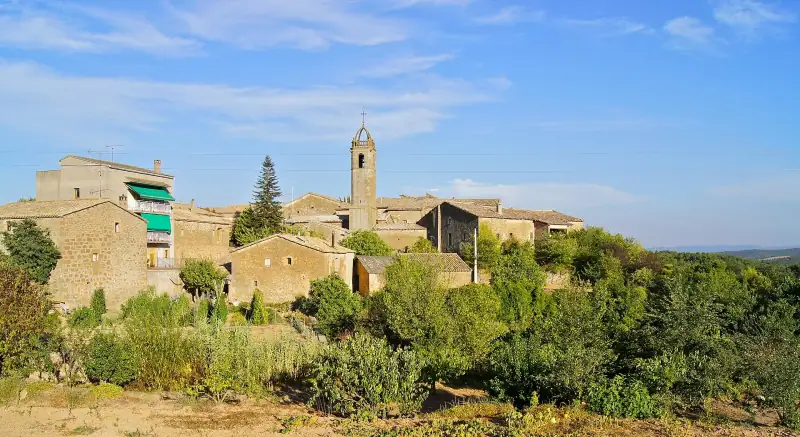
What to see in Catalonia: the region's 12 must-sees
What to see in Catalonia? Barcelona, Girona, Costa Brava, Figueres, Montserrat, Tarragona, Pyrenees: our selection to plan a stay in the region.

Skiing in Spain: Sierra Nevada, Baqueira-Beret and the Spanish Pyrenees resorts
Skiing in Spain: Sierra Nevada, Baqueira-Beret, Formigal, Masella. 2026-2027 dates, access, lift passes, accommodation and tips to choose your resort.
Ready-made
Spain itineraries
2 days
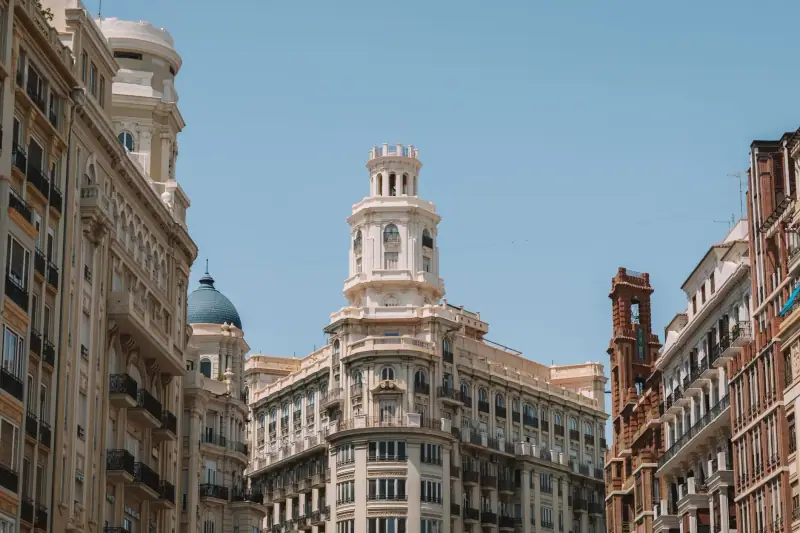
Valencia in 2 days: an itinerary through the old town, the Turia and the beach
What to do in Valencia in 2 days? Historic center, market, City of Arts and Sciences, Turia Gardens, paella and beach: our day-by-day itinerary.
7 days
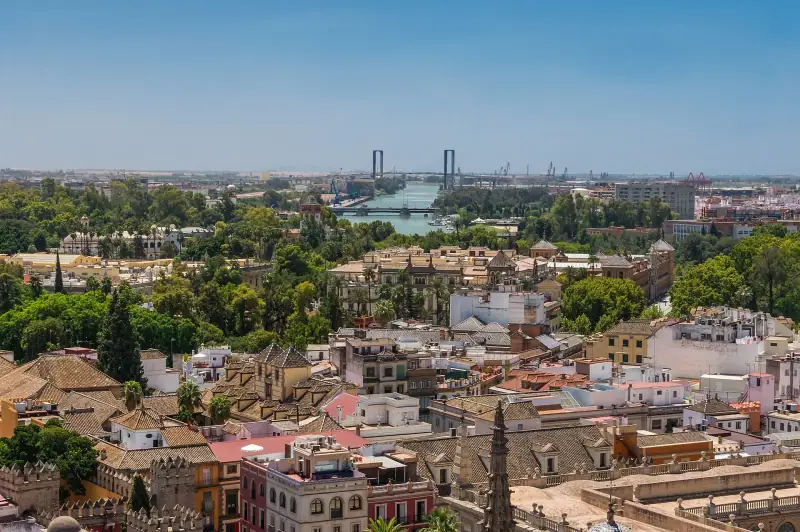
Andalusia in 7 days: Seville, Córdoba, Granada and Málaga
A 7-day Andalusia route: Seville, Córdoba, Granada and Málaga, with travel times, a day-by-day pace, useful reservations and pitfalls to avoid.
3 days
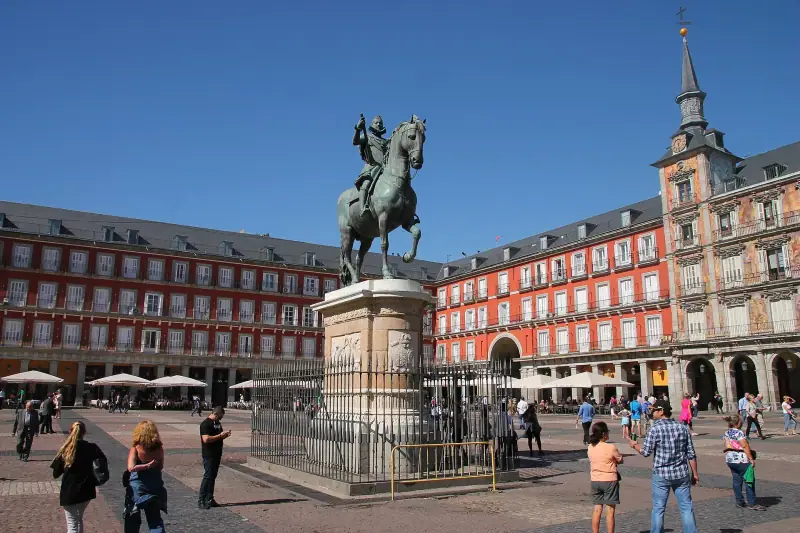
Madrid in 3 days: an itinerary to discover Spain's capital
Royal Palace, Prado, Retiro, Gran Vía and tapas neighborhoods: a 3-day Madrid itinerary with the best order of visits, transport and practical tips.