Things to do
Hiking in Quebec: the best national parks (Sépaq)
We may earn a commission when you book through links on this page, at no extra cost to you. We don't visit or try the places we cover: we summarize published sources. How we work
In short
- Quebec's national parks are run by the Sépaq: a daily access fee, marked trails graded by difficulty, and lodging to book ahead for summer and fall colors.
- Parks covered: Jacques-Cartier (about an hour from Quebec City), Fjord-du-Saguenay, Hautes-Gorges-de-la-Rivière-Malbaie, Forillon in Gaspésie, and Mont-Tremblant.
- Hiking season is generally June to October; black flies and mosquitoes can be bothersome in late spring and early summer, and early fall brings color and fewer insects.
- A car is the most flexible way to reach the parks; check trail conditions and hours on the official Sépaq site before you go.
Quebec is an immense territory, covered in forests, lakes, rivers and mountains worn down by time. To discover it on foot, the national park network run by the Sépaq is the best entry point: marked trails, clear maps, welcome centers, lodging in the middle of nature and staff who share the day’s conditions. You can do a one-hour walk or a multi-day crossing, without ever being completely left to yourself.
This guide presents a few parks particularly suited to a trip to Quebec, explains how to combine them with a visit to the cities, and gathers the practical tips to know before lacing up your boots: seasons, insects, bears, gear and booking. If you are preparing a broader circuit, you can fit it into our 9-day road trip.
How Quebec’s national parks work
In Quebec, a “national park” is a provincial protected territory. The network is run by the Sépaq (Société des établissements de plein air du Québec), whose official website is sepaq.com. That is where you check maps, trail conditions and booking options.
A few simple principles to remember:
- A daily access fee is charged to enter the park. It is paid at reception or online, depending on the park. Rates change: check them before you leave.
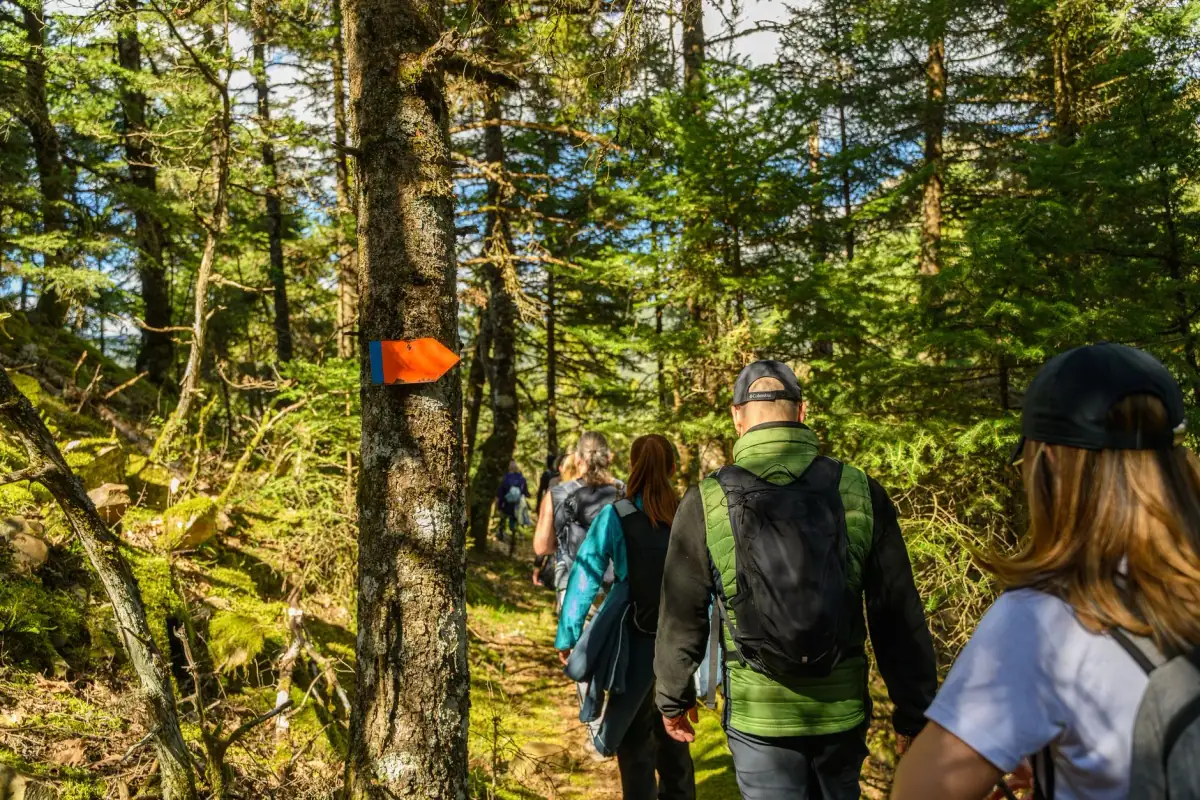
- Trails are marked and graded by difficulty. You find short loops, day trails and multi-day crossings with a night in a refuge, ready-to-camp unit or campground.
- Lodging must be booked ahead, especially in summer and during the fall colors. The most requested spots go early.
- Dogs, fires, foraging and wild camping are regulated. Rules vary by park: read them before you go.
Another thing to keep in mind: distances. One park can be an hour from Quebec City, another more than six hours’ drive from Montreal. You therefore have to plan for travel time, as our guide when to visit Quebec explains for seasonality and weather conditions.
Jacques-Cartier National Park: nature next to Quebec City
Nature excursions from Quebec City
Compare guided outdoor outings around Quebec City, for your dates and level.
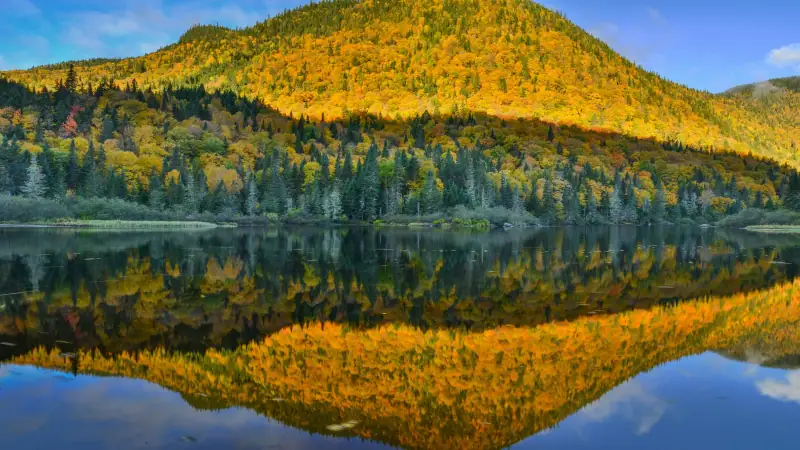
Jacques-Cartier National Park is one of the most accessible for a traveler staying in the capital. It lies north of the city, in the Quebec City region, about an hour’s drive from the center. Its main landscape is a deep glacial valley, carved by the Jacques-Cartier River, with wooded slopes descending to the water.
Why go? Because you can spend a full day there without sleeping there: you leave Old Quebec in the morning, hike and come back for dinner in town. It is ideal if you have already explored Quebec City and want a day of nature.
What you can do:
- trails of varying difficulty, some offering viewpoints over the valley;
- walks along the river;
- canoeing, kayaking or calm-water descents depending on current offers;
- winter activities (snowshoeing, cross-country skiing), depending on conditions.
Good to know: check trail conditions and open services before you come, as the offer changes from one season to another.
Fjord-du-Saguenay National Park: the fjord on foot
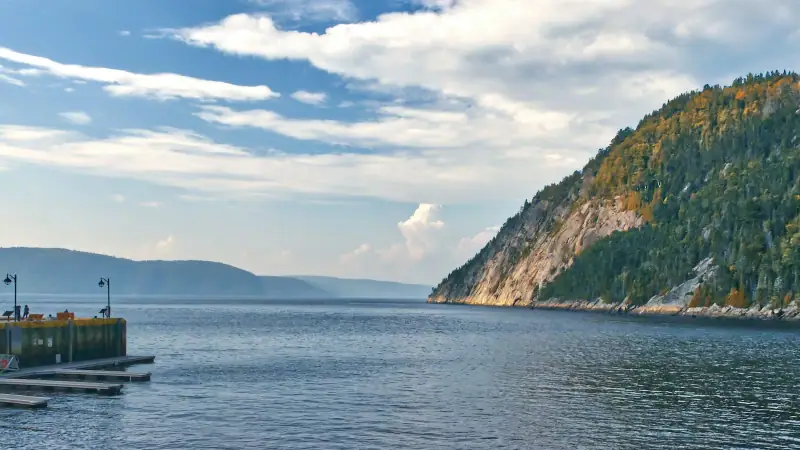
The Saguenay is one of the great fjords of the northern hemisphere. Its cliffs drop straight into the water, and Fjord-du-Saguenay National Park protects part of it. The trails offer spectacular viewpoints over the deep river, sometimes several dozen meters above the water.
One of the best-known sites is Baie Éternité, with its statue of Notre-Dame-du-Saguenay overlooking the fjord. Hikers especially appreciate the lookout trails and the areas reachable from the village of Tadoussac and from Baie-Sainte-Catherine, on the other side of the river.
Combining hiking and whales. The Tadoussac area is also one of the best places in Quebec to watch cetaceans. A typical day is to hike in the morning on the fjord, then board in the afternoon or the next day for a cruise. Our guide to whale watching in Tadoussac details the season, the types of boats and tips.
Who is it for? All levels: there are easy walks, but also longer and more demanding trails for those seeking wilder viewpoints.
Hautes-Gorges-de-la-Rivière-Malbaie: the backcountry of Charlevoix
Lodging in Charlevoix
Compare gîtes, inns and hotels around Baie-Saint-Paul, before or after your hikes.
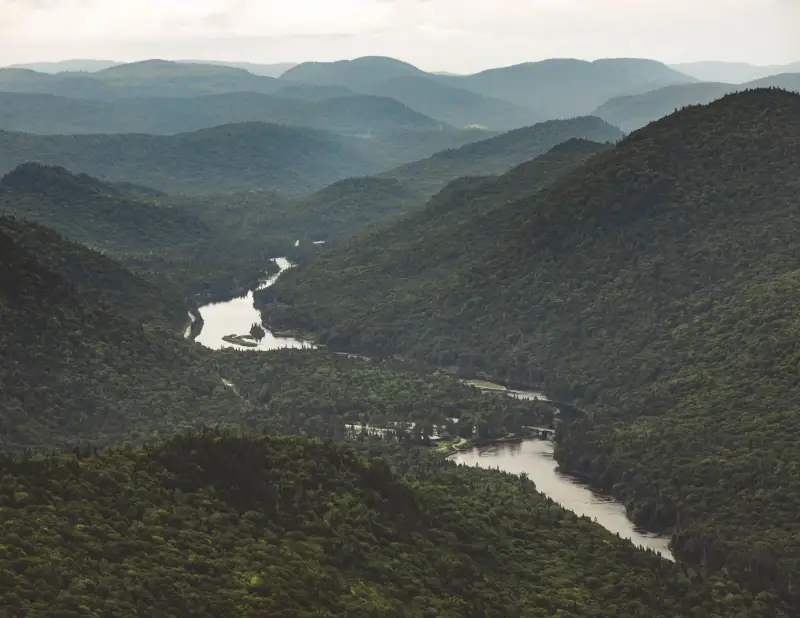
Charlevoix is best known for its countryside landscapes, its villages along the St. Lawrence and its artists, as told in our guide Charlevoix and Baie-Saint-Paul. But the backcountry hides another face: Hautes-Gorges-de-la-Rivière-Malbaie National Park, a very deep valley, with rock walls among the highest in eastern Canada.
Here, the atmosphere is one of big nature: a river at the bottom of the valley, dense forest, trails climbing to lookouts and the possibility of boating on the river depending on the park’s offers. Access takes a bit of driving from the coast: allow a full day, and check available services before you go.
Organizing tip. Sleep in Baie-Saint-Paul or the La Malbaie area, then devote a whole day to the park. Do not combine it with a long drive: mountain roads are driven slowly, and you will want to take the time to stop.
Forillon National Park: the end of Gaspésie
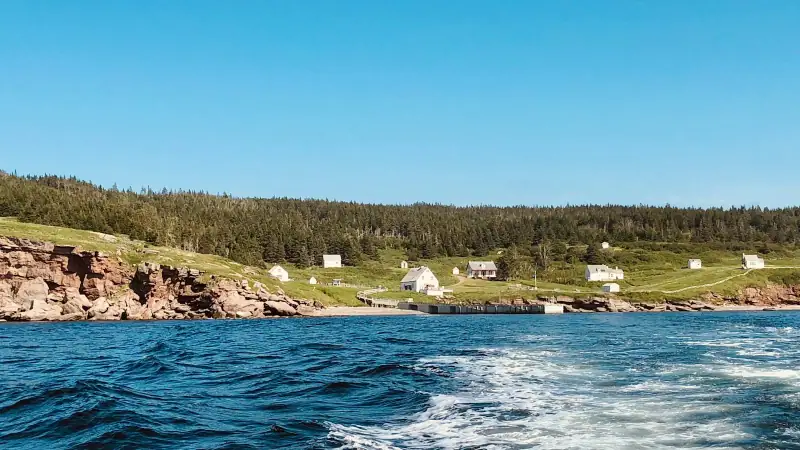
At the tip of the Gaspé peninsula, Forillon National Park is a place where forest, cliffs and sea meet. The trails follow the coast, reach headlands above the Gulf of St. Lawrence and cross very varied landscapes, between limestone cliffs, pebble beaches and boreal forest.
It is also a good place to watch wildlife: seals, seabirds and, depending on the season, whales from the coast or by boat. You come for the end-of-the-world feeling: you are truly at the end of the road, far from everything.
Forillon is generally visited as part of a broader Gaspésie trip, with Percé and Bonaventure Island park. Our guide visiting Gaspésie, Percé and Forillon explains how to organize this journey.
Watch the distances. Gaspésie is far from everything. Allow at least three to four nights there, otherwise you will spend more time on the road than on the trails.
Mont-Tremblant and the Laurentians: the mountain accessible from Montreal
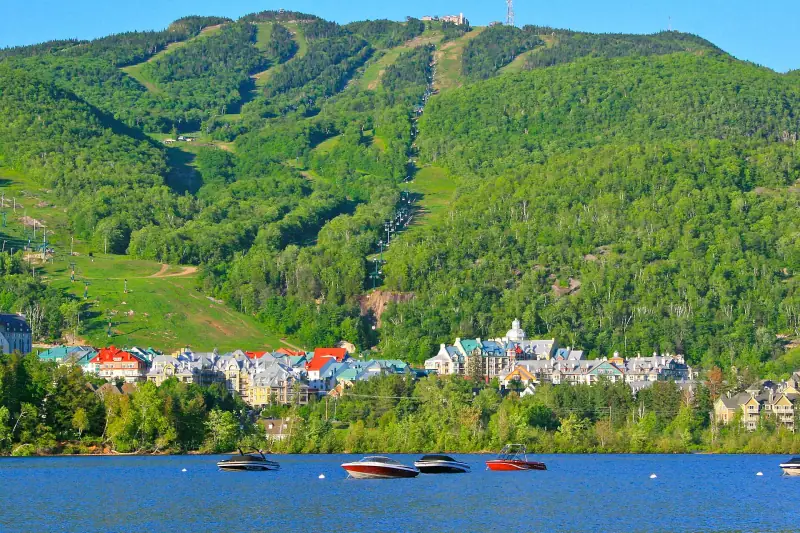
For those who do not leave the Montreal area, the Laurentians are the simplest solution. Mont-Tremblant National Park, larger and wilder than the resort of the same name, offers lakes, rivers, forests and summits. You can spend half a day there or several days.
We detail this area, the resort and its activities in our article on Mont-Tremblant and the Laurentians. Remember above all that it is possible to combine an urban stay in Montreal with easily accessible nature, which suits travelers with limited time.
When to hike: seasons, insects and colors
Quebec has four very distinct seasons, and hiking looks different depending on the period.
Late spring (May-June). Nature wakes up, trails may still be damp or even muddy, and the first insects arrive. Black flies and mosquitoes can be very present in some regions: long clothing, a suitable repellent and a head net are useful.
Summer (July-August). This is the busiest period and the easiest for hiking. Temperatures are pleasant, services are open, but you must book lodging ahead. Bring sun protection and water.
Early fall (September-October). Many hikers consider it the best season: the air is cooler, insects decline and hardwood forests turn red and orange. The exact date of the color peak varies from one area to another and from year to year. Darkness falls earlier: set out early to finish before dark.
Winter. Quebec is then discovered on snowshoes or cross-country skis. Our article on winter activities in Quebec details the possibilities. Conditions are more demanding: intense cold, early nightfall, trails sometimes closed.
Gear: what you really need to bring
Many hikers underestimate Quebec’s weather, which changes quickly. Here is a basic list for a day hike:
- Walking shoes already broken in, with good grip.
- A waterproof layer and a warm jacket, even in summer.
- Layered clothing: a breathable base, a fleece and a windbreaker.
- Water in sufficient quantity, and energy food.
- A repellent against mosquitoes and black flies.
- A map or the park’s app, with a charged battery.
- A headlamp and a simple first-aid kit.
- Hiking poles if you like to spare your knees on descents.
For more details on gear to bring, see our selection of accessories for traveling in Quebec. Also think about your luggage: a hard suitcase suits trails poorly, but a 20 to 30 liter backpack serves both for the day and for plane trips.
Wildlife, bears and safety
Walking in Quebec forests is generally safe, but it means following a few common-sense rules.
Black bears. They live in Quebec’s forests and are usually discreet. To limit risks: make a little noise as you walk, never leave food within reach, keep it in closed containers or in the car, and never approach an animal, even for a photo. Follow the instructions posted in the park.
Moose and other animals. The moose is impressive and can become dangerous if it feels threatened, especially during the fall rut. Keep a good distance.
Ticks. In some regions, notably in the south, ticks are present. Check the park’s guidance on ticks before you go.
Weather and thunderstorms. Summer storms can be sudden. If the sky clouds over in the mountains, give up on an exposed summit.
Tell someone. In isolated areas, let park reception or your lodging know your route and expected return time. Phone coverage is not guaranteed everywhere.
Also plan travel insurance with good health cover: care in Canada can be costly for non-residents. Check the guarantees that suit you, notably assistance and whether outdoor activities are covered.
Getting around: renting a car to reach the parks
Most national parks are best reached by car. Renting a vehicle in Montreal or Quebec City lets you plan your itinerary freely, leave early in the morning to avoid the crowds and come back at the pace of the light. In Quebec, you drive on the right, speed limits are posted in kilometers per hour, and road signs are in French.
Before you go, check the rental conditions: accepted license, insurance, deductible, mileage and any restrictions on unpaved roads. To budget the whole trip, our Quebec budget guide gives an idea of the costs to plan.
Putting together a 7 to 10-day hiking itinerary
Here is an example of organization, to adapt to your pace and the season. It takes up the parks described above, limiting daily distances.
- Montreal (2 nights): arrival, discovering the city, picking up the car.
- Laurentians or Mont-Tremblant (1 to 2 nights): first day of hiking, an easy start.
- Quebec City (2 nights): visit Old Quebec and a day in Jacques-Cartier park.
- Charlevoix (1 to 2 nights): coastal walks, then a day in the Hautes-Gorges.
- Tadoussac and the Saguenay (1 to 2 nights): fjord trails and a watching cruise.
Gaspésie calls for a separate trip, with several days on the road. If you only have ten days, it is better to choose between the Laurentians-Quebec City-Charlevoix-Saguenay circuit and a longer stay in Gaspésie, rather than wanting to do everything.
Each stage should stay reasonable: in practice, back roads are slower than the map suggests. Keep a margin, especially with road construction, which is frequent in summer.
Practical tips before you go
- Book early lodging in and around the parks, especially for July, August and the colors period.
- Download maps offline before you leave: phone coverage is patchy in valleys and forests.
- Check the Sépaq website for trail conditions, closures and weather alerts.
- Allow slack in your schedule: a hike always takes longer than planned with photo breaks.
- Follow the “leave no trace” rule: take all your trash, stay on the trails and do not disturb animals.
- Consider electricity: an outlet adapter may be useful if your chargers are not North American, to recharge your phone, power bank and camera in lodgings.
- Entry requirements: they depend on your passport. Check the official travel advice of your government before you book: travel.state.gov (US), GOV.UK (UK), travel.gc.ca (Canada), Smartraveller (Australia) (checked November 2026).
A good hike in Quebec is often a question of preparation: good gear, a realistic schedule and a little humility before nature. With these basics, the national parks offer some of the most beautiful landscapes you can see without leaving the marked trails.
Frequently asked questions
Do you have to pay to enter a Quebec national park?
Yes, national parks run by the Sépaq charge a daily access fee, sold at the entrance or online. Rates and any passes or annual cards change over the years: check them on the official Sépaq website before you go.
What is the best time to hike in Quebec?
Generally from June to October. Summer is the easiest period, but black flies and mosquitoes can be bothersome in late spring and early summer. Early fall offers beautiful colors and fewer insects, with cooler days.
Are there bears in the national parks?
Yes, the black bear lives in much of forested Quebec. Encounters are rare and the animal most often flees. Make noise on the trail, leave no food outside, never approach an animal and follow the instructions posted at the park reception.
Do you need a car to reach the parks?
In most cases, yes. The parks are often one to several hours from the big cities, with little public transit. Some parks near Quebec City or Montreal are easier to reach, but a car remains the most flexible means.
Can you hike in these parks in winter?
Several parks stay open in winter for snowshoeing, cross-country skiing or walking on groomed trails. The offer is different from summer, however: some trails and services close. Check the park's conditions and hours before you travel.
What minimum gear should you bring?
Good walking shoes, a waterproof layer, layered clothing, water, food, insect repellent, a map or the park's app and a headlamp if you set out for the day. Conditions can change quickly, even in summer.
More Quebec guides
Keep reading
Mont-Tremblant and the Laurentians: things to do in summer, fall and winter
Mont-Tremblant and the Laurentians: hiking, P'tit Train du Nord, fall colors, skiing and winter activities. Seasons, length of stay and tips.
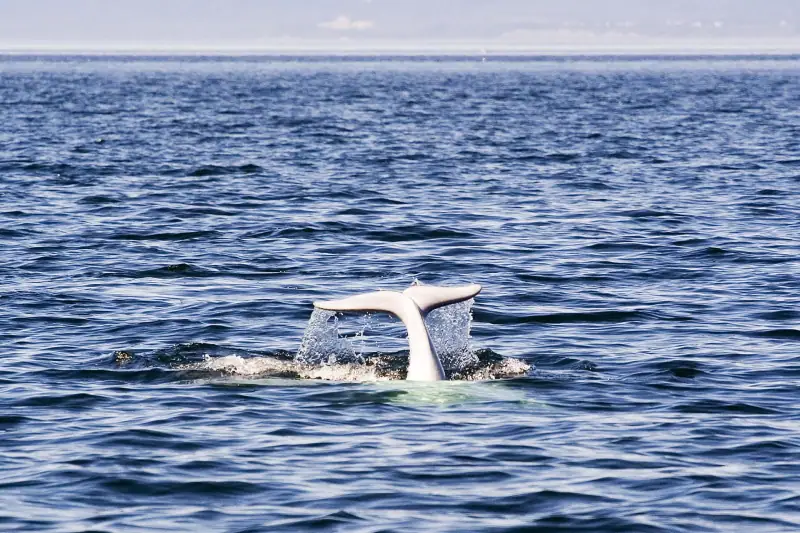
Whale watching in Tadoussac: season, trips and tips
Whale watching in Tadoussac: best time, inflatable boat or large boat, watching from shore, lodging and tips to prepare your trip.
Quebec trip budget: real costs and 3 profiles
What budget for Quebec? Costs by item (lodging, transport, meals, activities), three costed profiles and tips to spend less.
Ready-made
Quebec itineraries
5 days
5 days
Eastern Townships in 5 days: Magog, Orford, Sherbrooke and wine country itinerary
MagogSherbrooke or North HatleySutton or Dunham area
8 days
Quebec with kids: an 8-day itinerary (Montreal, Quebec City, Charlevoix)
8-day Quebec itinerary with children: Montreal, Quebec City, Montmorency Falls, Charlevoix and whales. Stops, pace, distances and tips.