What to see
What to see in the Luchonnais: valleys, Romanesque villages and lakes around Luchon
We may earn a commission when you book through links on this page, at no extra cost to you. We don't visit or try the places we cover: we summarize published sources. How we work
In short
- The Luchonnais is the mountain region of Haute-Garonne around Bagnères-de-Luchon, with valleys radiating from the town: Pique, Lys, Oô and Larboust, and Oueil.
- Three days cover the essentials: Luchon and the Lys valley, the Larboust and Lac d'Oô, then Saint-Bertrand-de-Comminges or the Val d'Aran.
- Lac d'Oô sits at about 1,500 m (4,900 ft); the climb from the Granges d'Astau parking lot (about 1,140 m / 3,740 ft) takes about an hour.
- A car is strongly recommended: villages and trailheads are scattered and public transport is limited.
When people talk about Luchon, they first think of its spa town and its avenues lined with plane trees. Yet what makes the region rich is what surrounds it: valleys that open like the fingers of a hand, stone villages nestled on terraces, Romanesque churches, mountain lakes and, a short distance away, a Roman city turned into one of the most beautiful villages in France. This whole area has a name: the Luchonnais.
The guide to Bagnères-de-Luchon details the town itself. This article takes the opposite approach: what to see in the Luchonnais beyond Luchon, valley by valley, with ideas for organizing two, three or five days of discovery.
The Luchonnais: understanding the region’s geography
The Luchonnais lies in the south of Haute-Garonne, on the border with Spain. Luchon, at about 630 m (2,070 ft) of altitude, is its natural capital. Several valleys converge on the town, each with its own personality:
- the Pique valley, which climbs toward the Hospice de France and the Spanish border;
- the Lys valley, with its waterfalls and the Superbagnères road;
- the Oô valley and the Larboust, to the west, which come down from the Col de Peyresourde;
- the Oueil valley, more discreet, which joins the Larboust valley;
- the Garonne plain to the north, where Saint-Béat and Saint-Bertrand-de-Comminges are found.
This star-shaped layout is an asset: from a single base, you can completely change scenery every day. To compare the areas to put down your bags, read the article where to stay in Bagnères-de-Luchon.
The Larboust valley: moraine villages and Romanesque heritage
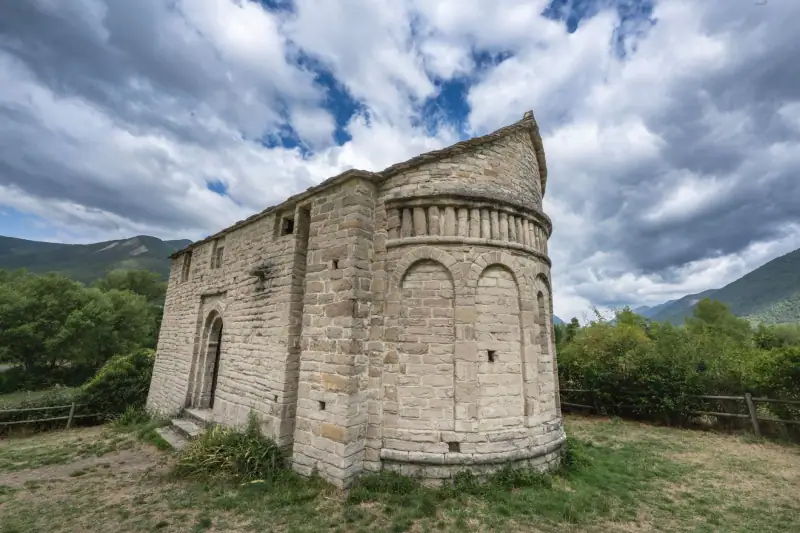
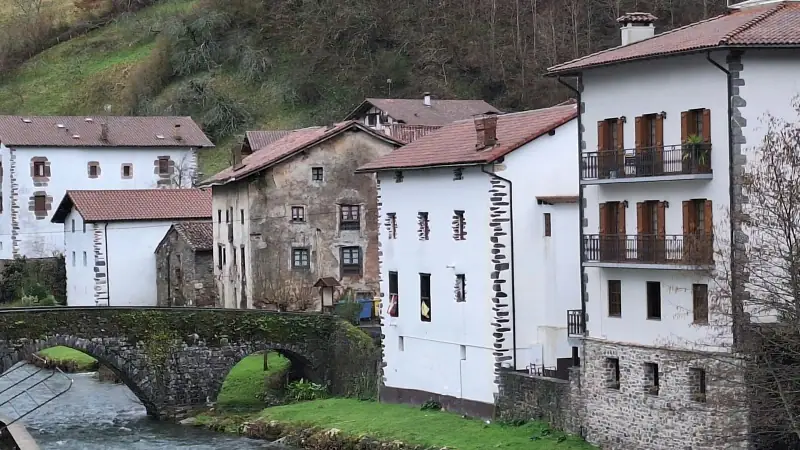
West of Luchon, the Larboust valley is one of the region’s loveliest surprises. It is crossed by the One river, which joins the Pique at Luchon, and it rises near the Col de Peyresourde, at about 1,570 m (5,150 ft). The villages (Portet-de-Luchon, Cazeaux-de-Larboust, Garin, Castillon-de-Larboust, Saint-Aventin, Oô and others) sit on moraine terraces, deposits left by ancient glaciers, which gives open views of the valley.
What strikes you when crossing the Larboust is the density of heritage: Romanesque churches, isolated chapels, Gallo-Roman stones reused in walls. The road that climbs toward Peyresourde was built in the 18th century at the initiative of the intendant d’Étigny, the same man who helped develop Luchon. Take the time to drive slowly and stop in the hamlets: that is the spirit of this valley.
The church of Saint-Aventin
The church of Saint-Aventin is considered one of the most remarkable Romanesque buildings in the Pyrenees. It dates from the 12th century, on an older place of worship, and its silhouette is easy to recognize thanks to its two square bell towers. Its carved portal tells episodes from the life of the saint, an 8th-century hermit whose tomb, behind the high altar, made the place a pilgrimage site. Inside, 12th-century apse paintings, rediscovered in the 19th century, complete the visit. The building has been a listed historic monument since 1840.
Visiting conditions (permanent opening, guided visit, period) can change: ask the tourist office before you come.
Cazeaux-de-Larboust, Garin and the chapels
Higher up the valley, other churches deserve a stop. The one at Cazeaux-de-Larboust is Romanesque in style, with a bell tower of Lombard influence, and mural painting enthusiasts know it for its late decoration. At Garin, the chapel of Saint-Pé de la Moraine recalls that the Larboust was long a passage and pilgrimage corridor. These visits are short: allow half a day to link three or four villages without rushing.
Sleeping in the Luchonnais
Hotels, gîtes and guesthouses in Luchon and the neighboring valleys.
The Oô valley and its lake: the great classic
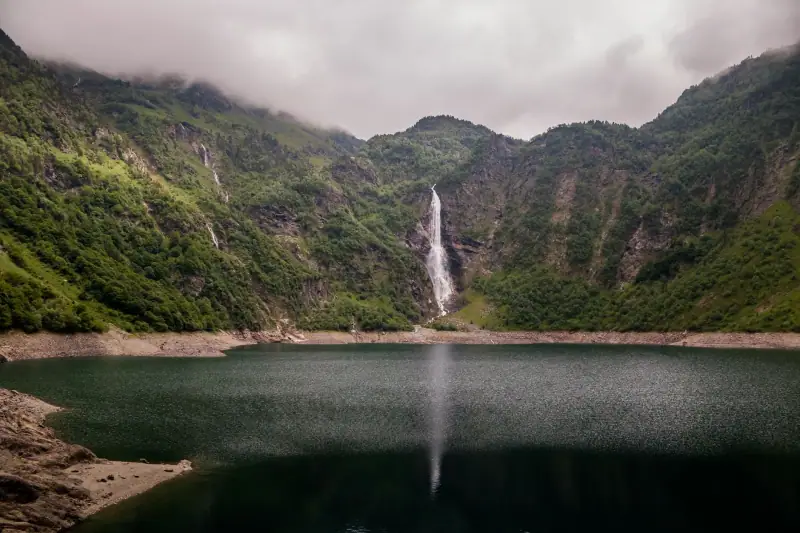
From the Larboust, a road climbs to the village of Oô, then to the Granges d’Astau plateau, at about 1,140 m (3,740 ft) of altitude. This is the starting point of one of the Luchonnais’s most famous hikes: the climb to Lac d’Oô.
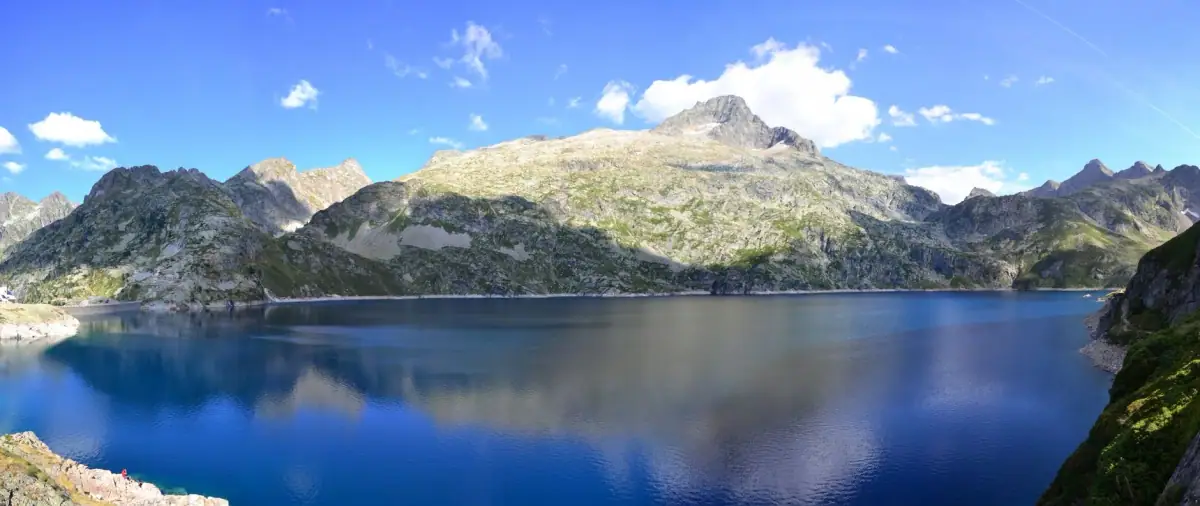
The lake lies at about 1,500 m (4,920 ft) of altitude. It is fed by a waterfall with a drop of about 275 m (900 ft), spectacular in early summer when snowmelt is at its peak. The climb from the parking lot takes about an hour for an easygoing walker, which makes it an outing accessible to many families. The path is steady, but it climbs: good shoes and water remain essential.
More seasoned walkers can continue to the Espingo lakes and their staffed hut, on a more committing mountain route. The area is also linked to the GR 10 long-distance trail, which crosses the Pyrenees from one end to the other. To place this outing among other walks in the range, see the best hikes in the Pyrenees.
A few practical tips:
- Leave early: the Granges d’Astau parking lot is very busy in summer.
- Check road access and any seasonal restrictions with the tourist office.
- Keep a time buffer for the descent, photo stops and a possible mountain thunderstorm.
- Leave nothing in the car: a rule that applies to all trailhead parking lots.
Peyragudes and the Col de Peyresourde: winter sports, cycling and cinema
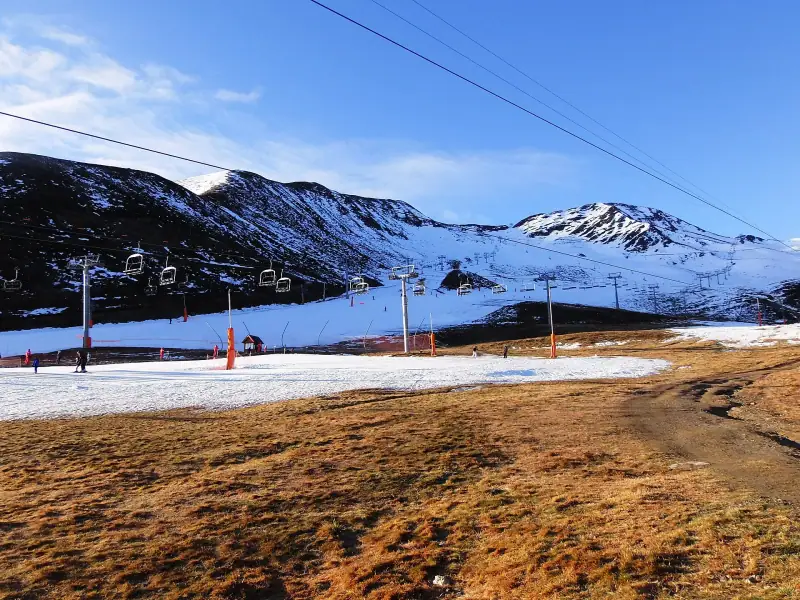
At the western end of the Larboust, the Col de Peyresourde marks the boundary with the Hautes-Pyrénées and the Louron valley, which then continues to Arreau and the Aure valley. It is a legendary place for cyclists: the Tour de France passes through regularly, and the neighboring resort of Peyragudes has hosted several stage finishes.
Peyragudes was born in 1988 from the merger of two resorts, Peyresourde on the Hautes-Pyrénées side and Les Agudes on the Haute-Garonne side. Skiers cross from one slope to the other along the ridge. The ski area extends from about 1,450 to more than 2,300 m (4,760 to more than 7,550 ft) and offers about fifty runs, including a snowpark. Film fans will note that scenes from Tomorrow Never Dies (1997) were shot there: the resort has since opened a run named “007” and a gondola called Skyvall, a nod to the film Skyfall.
Outside the ski season, the area lends itself to hiking, mountain biking and panoramic walks. The opening dates of lifts and activities vary each year: check the resort’s official information.
The Oueil valley: the Luchonnais off the beaten path
If you are looking for tranquility, turn aside toward the Oueil valley. This small valley is crossed by the Neste d’Oueil, a stream about a dozen kilometers (7 mi) long that rises near Mont Né, at about 1,800 m (5,900 ft), then joins the Neste d’Oô to form the One. It passes through nine communes, including Bourg-d’Oueil, Mayrègne, Saint-Paul-d’Oueil, Benque-Dessous-et-Dessus, Saccourvielle and Trébons-de-Luchon.
You will not find major tourist sights there, but authentic villages, churches (at Mayrègne, Benque-Dessous or Benque-Dessus), a medieval tower at Mayrègne and a castle at Saint-Paul-d’Oueil. It is where time slows down: ideal for a drive, a picnic or a quiet hike far from the crowds. The road is narrow: drive carefully, especially in winter.
Saint-Bertrand-de-Comminges: a Roman city turned village of character
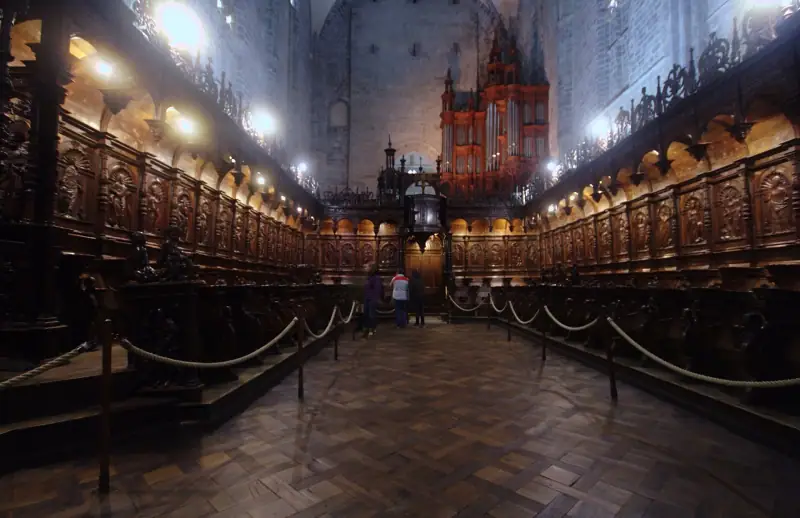
North of Luchon, the mountains give way to gentler scenery. Saint-Bertrand-de-Comminges, listed among the “Most Beautiful Villages of France,” has barely more than two hundred inhabitants. It lies a few dozen kilometers from Luchon, less than an hour by road: an easy half-day or day excursion.
The village climbs a hill crowned by its cathedral, whose construction began in the 11th century. It is a listed historic monument and houses a remarkable cloister. Its great particularity is a Renaissance organ case and a choir added in 1535, rare in the Pyrenees. The building is associated with Bishop Bertrand de l’Isle, whose name was given to the village.
At the foot of the hill lie the remains of Lugdunum Convenarum, the ancient Roman city. At its height it covered about 32 hectares (79 acres) and had nearly 10,000 inhabitants, with a forum, baths and a theater. Strolling among these ruins, with the Pyrenees as a backdrop, is an uncommon experience. Hours, prices and visiting conditions of the different sites change with the season: check them before you go.
Activities around Luchon
Guided hikes, canyoning and mountain outings in the Luchonnais.
The Pique and Lys valleys: the highlights from the town
It is impossible to talk about the Luchonnais without mentioning the two valleys that open directly south of the town.
The Lys valley is home to the Cascade d’Enfer and the Superbagnères road, a plateau of about 1,800 m (5,900 ft) reached by a gondola from Luchon. The Pique valley leads to the Hospice de France, the starting point of a demanding hike to the Port de Vénasque, a border crossing with Spain that offers a striking view of the Maladeta massif. Both sites are detailed in the guide to Luchon, which you should consult for hiking advice.
The idea is to place them at the right time in your stay: in good weather, favor high-altitude outings (Superbagnères, Vénasque, Lac d’Oô); in uncertain weather, save the Romanesque churches, Saint-Bertrand-de-Comminges and the baths.
A trip into Spain: the Val d’Aran
From Luchon, the road over the Col du Portillon leads in a few kilometers to the Val d’Aran, a Spanish valley of the Catalan Pyrenees. Its particularity is linguistic and cultural: people speak Aranese there, a variety of Gascon, a form of Occitan, now an official language alongside Catalan and Spanish. The valley, long isolated in winter before the Vielha tunnel opened in 1948, has kept stone villages and Romanesque churches. It is also home to the Baqueira-Beret resort.
Half a day is enough for a first look, a full day if you want to stop in several villages. Bring your passport, check your government’s official travel advice for entry rules and the traffic rules in force at the border, and keep in mind that meal times are later in Spain than on the French side.
What to eat in the Luchonnais
Local cooking is that of the mountains and the foothills: garbure (a hearty cabbage and meat soup), sheep’s or cow’s milk cheeses, cured meats, stream trout, slow-cooked dishes. Village inns often offer regional menus at moderate prices, while Luchon’s restaurants widen the choice. To understand the specialties before choosing, read the guide to Pyrenean food specialties and the article on garbure.
A simple tip: avoid planning a specific meal in an isolated village without checking opening, as many small restaurants close off-season or on certain days of the week. A picnic made of local products is always a pleasant solution.
How to get around the Luchonnais
A car is by far the most practical way. Villages are scattered, trailheads are far from the center and public transport is limited. Valley roads are generally easy, but those climbing to lakes or passes call for caution, especially in rain or winter.
To rent a vehicle, you can compare rental companies before you book. The article getting around the Pyrenees details the other options (train to Montréjeau, bus, seasonal shuttles).
Rent a car
Compare rental companies to explore the valleys of the Luchonnais freely.
Three itinerary ideas in the Luchonnais
A weekend (2 days). Day 1: Luchon, its avenues and the Lys valley. Day 2: the Larboust, the church of Saint-Aventin, then the climb to Lac d’Oô.
Three days. Keep the previous program and add a day at Saint-Bertrand-de-Comminges, with the cathedral, the cloister and the Roman remains. In the evening, return to Luchon for a spa evening.
Five days. Add the Oueil valley by car, half a day in the Val d’Aran and a high-altitude hike (Hospice de France or the Espingo lakes). Keep some slack for the weather: in the mountains, a rainy day can upset plans. If you then plan to continue west, the itinerary 5 days in the Hautes-Pyrénées follows on naturally.
When to visit the Luchonnais
- Spring: powerful waterfalls, flowers in the valleys, high-altitude trails still snowy.
- Summer: the best season for hiking, with heavier crowds around Lac d’Oô and Superbagnères.
- Autumn: golden forests, pleasant temperatures and quiet villages. A lovely time for Romanesque heritage.
- Winter: skiing at Peyragudes or Superbagnères, snowshoeing and spa relaxation in Luchon.
To compare with the other areas, the guide when to go to the Pyrenees details the seasons across the range.
Practical tips before you go
- Check the mountain weather, not just Luchon’s: summer thunderstorms break quickly at altitude.
- Check road conditions to the passes and trailhead parking lots, especially in spring and winter.
- Fill up before leaving Luchon: gas stations are rare in the valleys.
- Carry some cash for small shops and parking lots, as mobile coverage can be patchy. Check your carrier’s international plan or use a travel eSIM.
- Respect pastoral farming: close gates behind you, and keep your distance from herds and guard dogs.
- Check opening hours of churches and monuments: many are open only at certain times of year.
To estimate your overall budget, see the article on the budget for a stay in the Pyrenees.
The Luchonnais, a region to explore beyond the town
The Luchonnais is discovered through its valleys: the Larboust and its Romanesque churches, Lac d’Oô and its waterfall, Peyragudes and the Col de Peyresourde, the little Oueil valley, not forgetting Saint-Bertrand-de-Comminges, its Roman ruins and its cathedral. In a few days, you go from Romanesque art to high mountains, then to the Spanish border. It is a region that rewards curiosity and slowness. To place this destination in a wider trip, see the complete guide to the Pyrenees.
Frequently asked questions
What is the Luchonnais?
The Luchonnais is the mountain region of Haute-Garonne centered on Bagnères-de-Luchon. It brings together several valleys that converge on the town: the Pique valley and the Hospice de France, the Lys valley, the Oô valley, the Larboust and the little Oueil valley.
How much time should you allow to visit the Luchonnais?
Three days let you see the essentials: one day for Luchon and the Lys valley, one day for the Larboust and Lac d'Oô, one day for Saint-Bertrand-de-Comminges or the Val d'Aran. With a week, you add serious high-altitude hikes and the Oueil valley.
Do you need a car to explore the valleys of the Luchonnais?
It is strongly recommended. The villages of the Larboust and the Oueil valley and the trailheads are scattered, and public transport there is limited. Seasonal shuttles sometimes exist: ask the tourist office before you go.
Is Lac d'Oô accessible to families?
Generally yes. From the Granges d'Astau parking lot, at about 1,140 m (3,740 ft), the climb to the lake, at about 1,500 m (4,920 ft), takes about an hour for an easygoing walker. The path is steady but it climbs: bring good shoes and water.
What is there to see near Luchon when it rains?
The Romanesque church of Saint-Aventin, the cathedral of Saint-Bertrand-de-Comminges and the site's Gallo-Roman remains can be visited largely under cover. The Luchon baths are the other safe bet. Check opening hours before traveling.
Can you combine the Luchonnais with Spain?
Yes. The Val d'Aran, a Spanish valley of Occitan culture, is reached from Luchon by the Col du Portillon road. Bring your passport, check your government's official travel advice for entry rules, and check the traffic rules in force before crossing the border.
What is the best season to visit the Luchonnais?
June to September for hiking and lakes, with clear trails. Autumn is ideal for colorful forests and quiet. Winter is geared to skiing, at Peyragudes or Superbagnères, and to the Luchon baths.
More Pyrenees guides
Keep reading
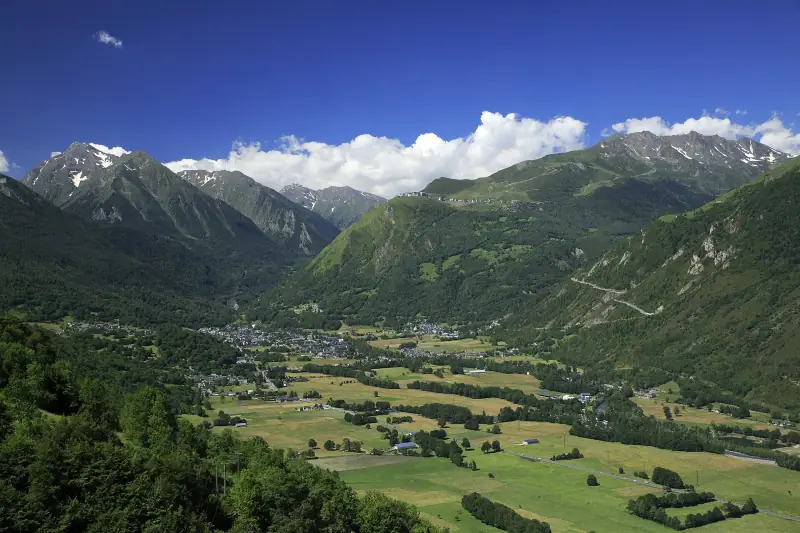
What to see in the Aure valley: Saint-Lary, Néouvielle, Arreau and villages of character
What to see in the Aure valley (Hautes-Pyrénées): Saint-Lary-Soulan, Néouvielle reserve, Arreau, Sarrancolin, Aragnouet and passes.
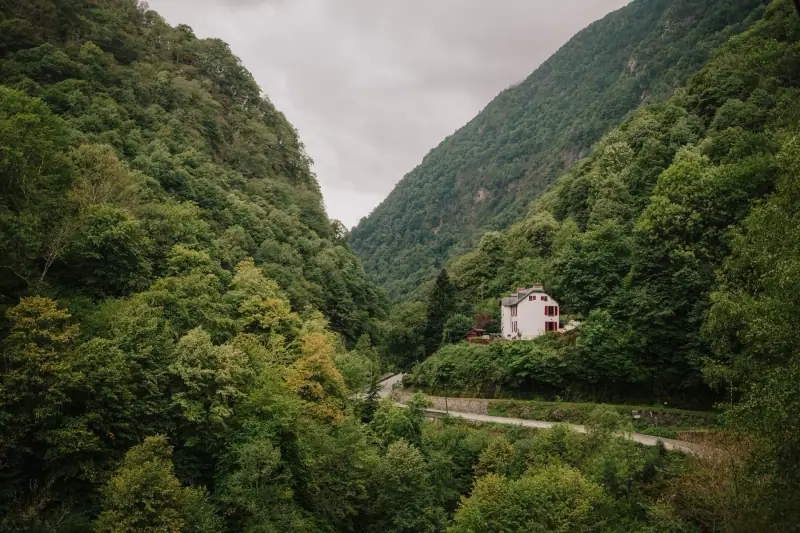
Visiting Ax-les-Thermes: what to see and do in Haute-Ariège
Visiting Ax-les-Thermes: Bassin des Ladres, thermal baths, Bonascre gondola, Beille plateau and excursion ideas. A guide to plan your stay.
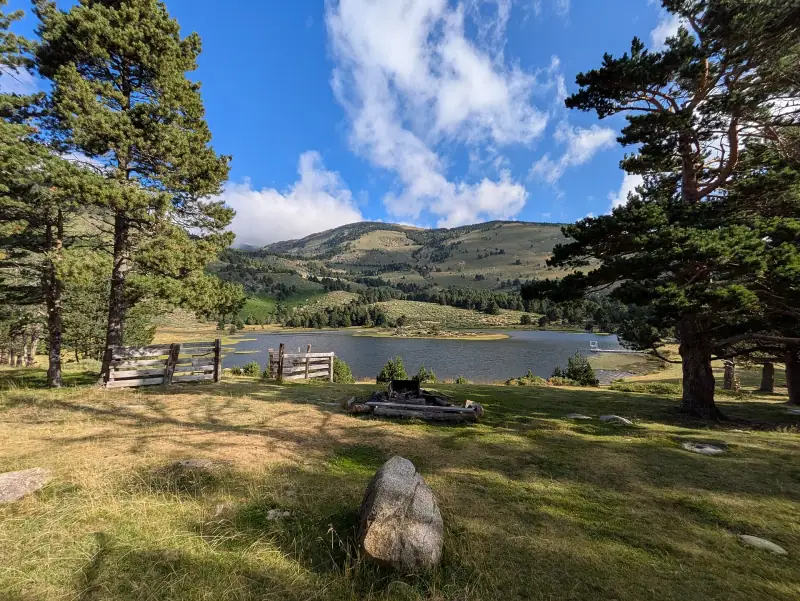
Catalan Pyrenees: what to see? The 12 essential sights
What to see in the Catalan Pyrenees? Canigó, Villefranche-de-Conflent, Mont-Louis, the Yellow Train, Cerdagne, Capcir: a selection to plan your stay.
Ready-made
Pyrenees itineraries
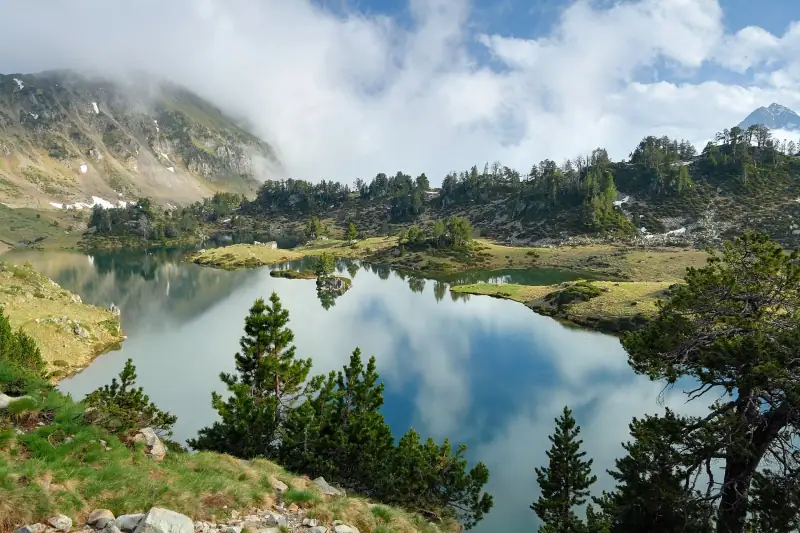
7 days
Hautes-Pyrénées and Ariège in one week by car: is the itinerary doable?
CauteretsBagnères-de-LuchonFoix
Can be adapted in the planner

5 days
5 days in the Hautes-Pyrénées: an itinerary through Lourdes, Cauterets and Gavarnie
CauteretsLuz-Saint-Sauveur
Can be adapted in the planner
4 days
4-day road trip in Ariège and the Cerdagne: Foix, Montségur, Ax-les-Thermes, Font-Romeu
FoixAx-les-ThermesFont-Romeu
Can be adapted in the planner