What to see
Visiting Ax-les-Thermes: what to see and do in Haute-Ariège
We may earn a commission when you book through links on this page, at no extra cost to you. We don't visit or try the places we cover: we summarize published sources. How we work
In short
- Ax-les-Thermes sits at about 720 m (2,360 ft) where three valleys meet, with more than sixty hot springs and a free open-air foot bath, the Bassin des Ladres.
- A gondola links the village to the Bonascre ski and hiking area (Ax 3 Domaines, about 8 km / 5 mi away); the Beille plateau is a cross-country skiing center.
- Half a day covers the town; a day with a bath session; two to three days if you add Bonascre or Beille.
- Foix is about 40 to 45 km (25 to 28 mi) away, Toulouse a little over 100 km (62 mi), and Andorra about thirty kilometers (19 mi).
At the bottom of the Ariège valley, where three valleys meet, Ax-les-Thermes is a small mountain town that lives to the rhythm of its hot springs. At about 720 m (2,360 ft) of altitude, it has barely more than 1,200 inhabitants year-round, but its reputation goes well beyond its size: water gushes out in the street, public basins steam on the squares, and the ski slopes are a few kilometers from the center.
This guide details what to see and do in Ax-les-Thermes, whether you come for a spa stopover, a ski weekend or a hiking base. To place the town within the department (Foix, Montségur, decorated caves), see the guide to Ariège: Foix, Montségur and the caves, and if you are looking for a route that links several stops, the 4-day road trip in Ariège and the Cerdagne passes through Ax.
Ax-les-Thermes at a glance: location and key facts
The commune covers about thirty square kilometers (12 sq mi), with altitudes ranging from about 700 m (2,300 ft) in the valley to more than 2,400 m (7,870 ft) on the summits. This range explains the variety of activities: you can spend the morning in a hot bath in the town center and the afternoon on a high plateau. The climate is that of an oceanic mountain: regular precipitation, cold and snowy winters at altitude, cool summers.
A few reference points to get your bearings:
- From Foix: about 40 to 45 km (25 to 28 mi) south, or 40 to 45 minutes by road.
- From Toulouse: a little over 100 km (62 mi); allow between two hours by road and two and a half hours by train.
- From the Ax 3 Domaines slopes: about 8 km (5 mi), or the gondola from the village.
- Andorran border: about thirty kilometers (19 mi) away.
The town’s name comes from the Latin aquis, “waters.” The springs have been used since Roman times, and the current name dates from 1888, when a decree added “les-Thermes” to avoid confusion with other communes of the same name. To compare this spa atmosphere with that of the Hautes-Pyrénées, see also the article on Cauterets.
The Bassin des Ladres: the town’s emblem
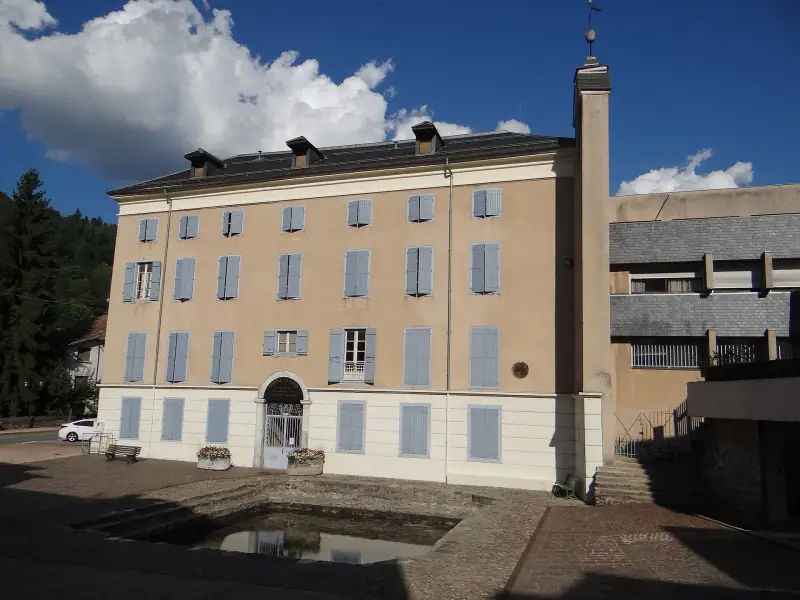
If you could see only one thing in Ax-les-Thermes, it would be the Bassin des Ladres. This large rectangular basin, about 12.5 by 10 m (41 by 33 ft), surrounded by three granite steps, is on the Place du Breilh, right in the center. It was built in the second half of the 13th century, next to the hospital founded in 1260, to treat lepers (the “ladres”) and other people with skin diseases, notably crusaders returning from the expeditions of Saint Louis.
Today the basin is a listed historic monument (since 1979) and works as a thermal foot bath. Hot water flows through the slabs at the bottom. The ritual is simple: you sit on the steps, take off your shoes and let your feet soak. It is a much-loved pause after a day of walking or skiing, and an excellent way to understand why the town was built around its springs.
Come in the late afternoon when walkers and hikers gather there: the atmosphere is friendly, especially in cool weather, when steam rises from the basin.
Open-air fountains and springs
Ax’s charm also comes from its springs, visible everywhere. The town has more than sixty thermal springs, whose temperature can reach about 77 °C (171 °F). Some feed public fountains in the streets of the center, where the water steams in winter. This sodium sulfur water gives off a slight smell of sulfur, characteristic of mountain thermal waters.
A stroll with no particular goal in the center is enough to come across several. Be careful: the water in some fountains is very hot, so do not let children play unsupervised nearby.
The thermal baths: relaxing in Ax
Three thermal establishments operate in the town: Couloubret, Modèle and Teich. They welcome spa-goers for treatments linked to rheumatism, sciatica and respiratory conditions, but some also offer relaxation packages open to passing visitors.
The Couloubret baths are the best known to travelers: you enjoy basins of thermal water heated to a pleasant temperature (around 35 °C / 95 °F), with an open view of the surrounding mountains. The contrast between cool air and hot water is one of the destination’s great pleasures, especially in autumn and winter.
A few tips to prepare for your session:
- Book ahead during school holidays and on weekends: slots fill quickly.
- Check hours and rates on the establishments’ official websites, as they change with the season.
- Bring a swimsuit, a cap if required and flip-flops, as some sites require them or sell them there.
To place this thermal offer within the whole range, read the guide to winter activities in the Pyrenees: skiing, snowshoeing and spas.
Sleeping in Ax-les-Thermes
Town-center hotels, guesthouses and apartments close to the baths and the gondola.
The historic center and the Saint-Vincent church
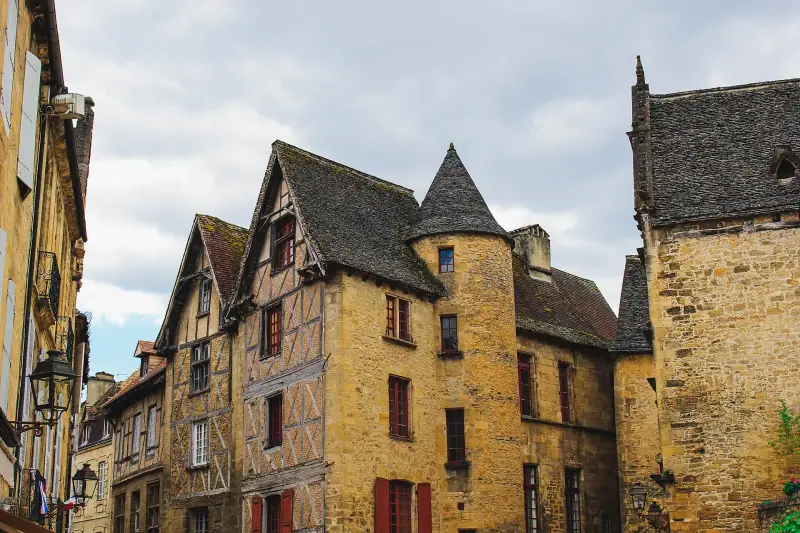
The center of Ax can be visited on foot in a little under an hour, longer if you wander. Around the Place du Breilh, narrow streets mix mountain houses, craft shops and café terraces. The town has kept traces of its medieval past, notably the Saint-Vincent church, whose visit rounds off a town tour, and the former Saint-Louis hospital, which recalls the place’s healing vocation since the 13th century.
Do not expect a big program of monuments: Ax is above all a town where you slow down. The pleasure is in the atmosphere, the steam from the fountains, the shops selling local products and the comings and goings of hikers.
To compare with another little town of character in Ariège, see the guide to visiting Foix, more focused on the castle and the Middle Ages.
Ax 3 Domaines and the Bonascre plateau
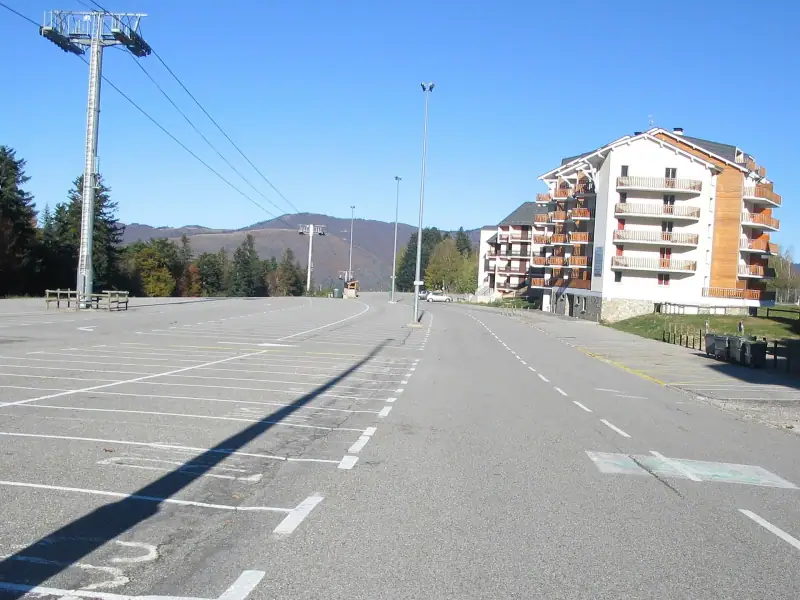
About 8 km (5 mi) from the center, Ax 3 Domaines is the town’s ski resort, created in 1955. It is divided into three sectors: Bonascre, the lowest, with the plateau where the gondola arrives; Saquet, intermediate; and Campels, the highest. The whole spans about 1,400 to 2,350 m (4,590 to 7,710 ft) of altitude.
A very practical feature: the gondola links the village directly to the slopes. About 2.8 km (1.7 mi) long, it avoids taking the car and lets you go up even without skis, for example for a snowshoe walk or a high-altitude lunch.
In summer: hiking and mountain biking
The ski area does not stop when the snow melts. The Bonascre plateau is a starting point for hiking trails, with about 230 km (143 mi) of marked paths in the area, and for mountain bike routes. It is a good plan for going up to cool off during hot summers. For a selection of routes across the range, see the best hikes in the Pyrenees.
In winter: skiing and a family atmosphere
The ski area is known for its easy access from Toulouse and its approachable atmosphere, appreciated by families and weekend skiers. Check the opening of the runs, lift passes and snow cover on the resort’s official website before you go, as this information changes every season.
Activities around Ax-les-Thermes
Guided hikes, nature outings and guided visits in Ariège.
The Beille plateau: cross-country skiing and Tour de France legend
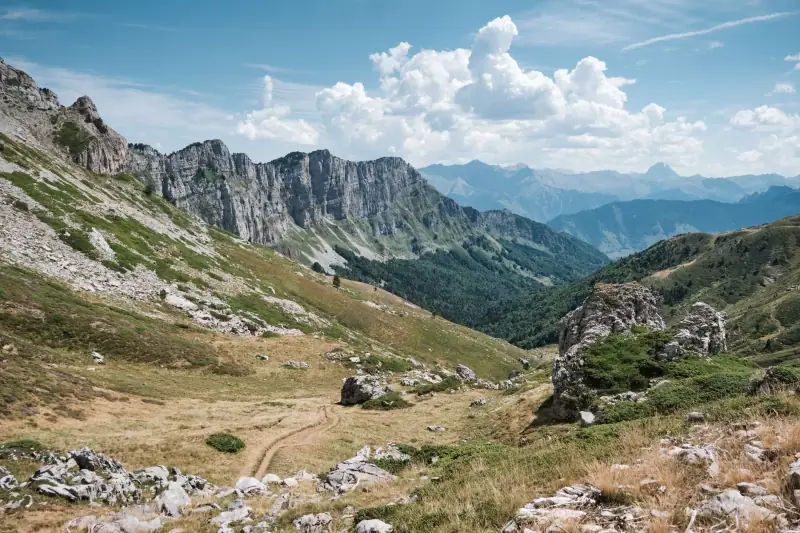
Between Tarascon-sur-Ariège and Ax-les-Thermes, the Beille plateau peaks at around 1,700 to 2,000 m (5,580 to 6,560 ft) of altitude. It is a paradise for cross-country skiing fans: the resort is presented as the first Nordic ski resort in the Pyrenees, with several dozen kilometers of trails, about 42 km (26 mi) of snowshoe routes and a biathlon stadium. It is also a good alternative to downhill skiing if you want a quieter activity in a forest setting.
For cycling fans, Beille is a legendary name. The climb from Les Cabannes, about 16 km (10 mi) to reach 1,790 m (5,870 ft) of altitude, has served as a Tour de France stage finish seven times since 1998, always rated hors catégorie. Motivated recreational cyclists can try the ascent, at their own pace, in summer.
In spring, summer and autumn, the plateau also offers gentler activities, such as introductions to pastoral farming. The Tour de France is, moreover, a common thread in the town: Ax-les-Thermes has hosted the race eleven times since 1933.
Hiking around Ax-les-Thermes
Haute-Ariège is a very varied playground: mid-mountain trails, high lakes, ridges and forests. Tourist offices provide sheets for all levels, from loop walks starting in town to more athletic days at altitude.
A few simple tips:
- Set out early, especially in summer, to avoid afternoon thunderstorms.
- Check the mountain weather, more reliable than the valley forecast.
- Bring water, a snack and a warm layer: the weather changes fast.
- Respect herds and guard dogs.
- Equip yourself properly: the selection of useful accessories in the Pyrenees will help you pack your bag.
What to do around Ax-les-Thermes
Ax is an excellent base for ranging across southern Ariège and beyond:
- Foix and its castle, about 40 to 45 km (25 to 28 mi) away, for a day of heritage.
- The prehistoric caves of the upper valley, from Tarascon-sur-Ariège: book ahead.
- Andorra, about thirty kilometers (19 mi) from the border, for a day trip.
- The Cerdagne and Font-Romeu, to continue toward the Catalan Pyrenees, as in the road trip between Ariège and the Cerdagne.
If you want to make Ax your base, it is a good choice: the town is served by train and road, and offers activities in both summer and winter.
Where to stay in Ax-les-Thermes
The offer is typical of a small mountain and spa town: town-center hotels, residences, apartments and guesthouses, as well as campsites in season. A large part of the housing stock is second homes, which multiplies short-term rentals, especially in winter.
For a spa stay or a stopover without a car, sleep in the center: baths, restaurants, station and gondola are within walking distance. If you mainly come to ski, lodging near the gondola or in Bonascre can save time in the morning. In winter holidays and in summer, book early. To compare bases across the range, read the article where to stay in the Pyrenees.
Ax-les-Thermes in one, two or three days
In one day. In the morning, a tour of the center, the Bassin des Ladres and the fountains. After lunch, a session at the thermal baths. At the end of the day, back to the Bassin des Ladres for a foot bath at sunset.
In two days. Add half a day at altitude: the gondola to Bonascre for a hike or a snowshoe walk depending on the season, then a hot bath to recover.
In three days. Devote a day to the Beille plateau (cross-country skiing, snowshoeing or hiking) or to an excursion to Foix or Andorra. For day-by-day itineraries, the Ariège-Cerdagne road trip is a good starting point.
Flights to Toulouse
Compare flights to reach Ariège, about two hours by road or train from Ax-les-Thermes.
How to get to Ax-les-Thermes
By train. Ax-les-Thermes station, opened in 1888, is served by the line that runs up the Ariège valley from Toulouse, with several trains a day. A night train also serves Ax on its way to Latour-de-Carol. Check timetables before you go: the offer varies by season.
By car. The N20 road and the D613 cross at Ax. From Toulouse, allow a little over two hours. A car is valuable for the surrounding villages, but the town itself is walkable. To compare ways of getting around across the range, read the article on getting around the Pyrenees by car, train or bus.
By air. Toulouse-Blagnac Airport is the most convenient. From there, reach Ax by train or road.
When to visit Ax-les-Thermes
- Winter: the season for skiing, snowshoeing and hot baths in the snow. It is the town’s most typical atmosphere.
- Spring: mild temperatures, snow still at altitude, low crowds.
- Summer: hiking, mountain biking and mountain coolness. The baths are pleasant in the evening.
- Autumn: golden light, calm and cool temperatures, ideal for a relaxing stay.
The guide to choosing the best time in the Pyrenees details the seasons across the range.
Practical tips to prepare your visit
- Check hours and rates of the baths, the gondola and the lifts before you come.
- Book in high season: winter holidays, long weekends and the summer months.
- Bring warm clothes even in summer if you go up to altitude.
- Wear good shoes: streets are sloped and trails rocky.
- Consider travel insurance if you combine skiing or hiking, and check what it covers.
- Carry a map and some cash: mobile coverage can be unreliable in some valleys. Check your carrier’s international plan or use a travel eSIM.
To estimate your spending there, see also the article on the budget for a trip to the Pyrenees.
Why stop in Ax-les-Thermes
Ax-les-Thermes does not have the monumental prestige of Gavarnie or the elegance of Cauterets, and that is what makes its charm: a small valley town where hot water flows in the street, where you can go from a medieval foot bath to a cross-country ski plateau in under an hour. It combines relaxation, sport and heritage, in summer and winter alike.
Whether you come for a few hours of spa break or a long mountain weekend, give yourself time. Ax is discovered at the pace of its springs: unhurried, with your feet in hot water.
Frequently asked questions
How much time do you need to visit Ax-les-Thermes?
Half a day is enough to tour the center, see the Bassin des Ladres and pass by the thermal fountains. With a session at the baths, allow a day. To add a mountain outing (Bonascre or the Beille plateau), allow two to three days.
Is the Bassin des Ladres paid?
The Bassin des Ladres is an open-air basin in the heart of town where you soak your feet in hot thermal water. It is presented as a free-access stop on a stroll. Ask the tourist office about any rules in force at the time.
Can you visit Ax-les-Thermes without a car?
Yes for the town itself: the station is in the center, with trains from Toulouse, and the center is walkable. A gondola links the village to the slopes and trails of Bonascre. For the Beille plateau or the surrounding villages, a car is more practical.
What is there to do in Ax-les-Thermes in winter?
Downhill skiing at Ax 3 Domaines, about 8 km (5 mi) from the center, cross-country skiing and snowshoeing on the Beille plateau, then a hot bath to recover. The gondola leaves directly from the village, which avoids driving up to the slopes.
Is Ax-les-Thermes interesting in summer?
Yes. Mid- and high-mountain trails, the mountain bike routes of the Ax 3 Domaines area and the open-air thermal baths let you enjoy the town in the good season, with cooler temperatures than on the plain.
Are the waters of Ax-les-Thermes really hot?
Yes. The town has more than sixty thermal springs, whose temperature can reach about 77 °C (171 °F). They are sodium sulfur waters, used since antiquity and exploited today by several thermal establishments.
How far is Foix from Ax-les-Thermes?
About 40 to 45 km (25 to 28 mi) separate the two towns, or 40 to 45 minutes by road. They are also linked by train, on the line that runs up the Ariège valley from Toulouse.
More Pyrenees guides
Keep reading
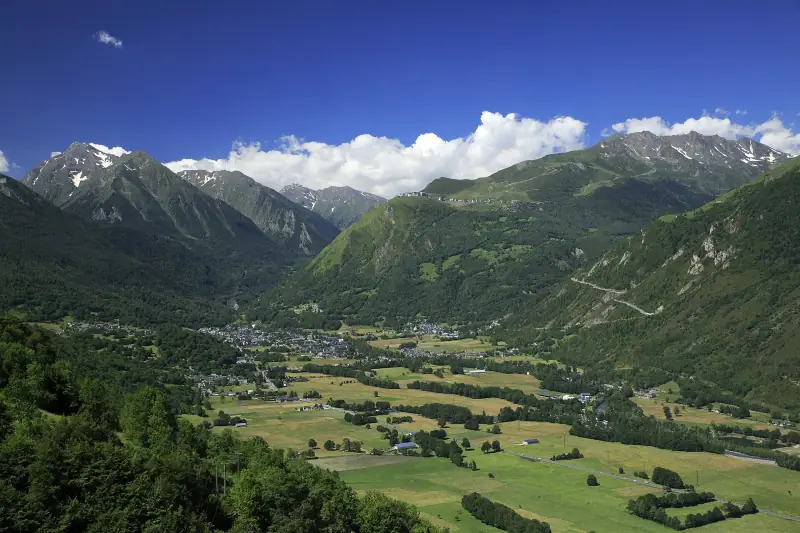
What to see in the Aure valley: Saint-Lary, Néouvielle, Arreau and villages of character
What to see in the Aure valley (Hautes-Pyrénées): Saint-Lary-Soulan, Néouvielle reserve, Arreau, Sarrancolin, Aragnouet and passes.
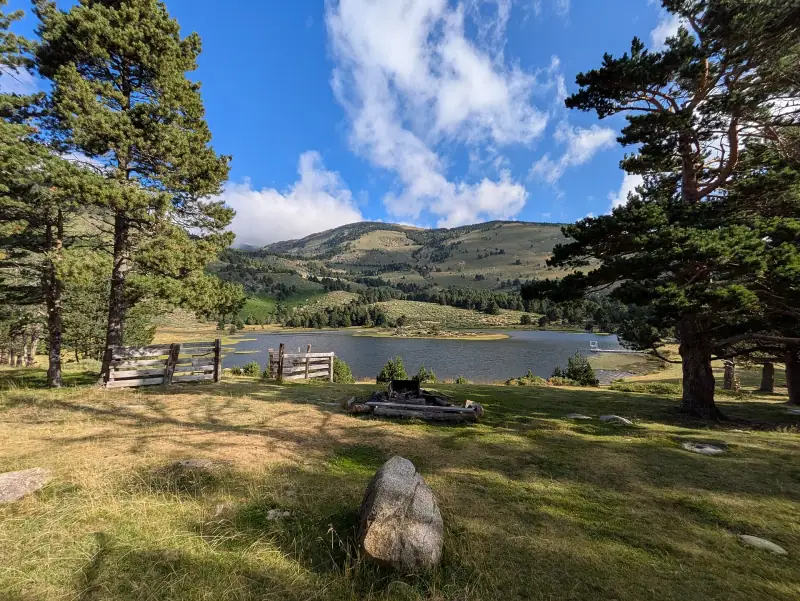
Catalan Pyrenees: what to see? The 12 essential sights
What to see in the Catalan Pyrenees? Canigó, Villefranche-de-Conflent, Mont-Louis, the Yellow Train, Cerdagne, Capcir: a selection to plan your stay.
What to see in the Luchonnais: valleys, Romanesque villages and lakes around Luchon
What to see in the Luchonnais? Larboust valley, Saint-Aventin church, Lac d'Oô, Peyragudes, Oueil valley and Saint-Bertrand-de-Comminges.
Ready-made
Pyrenees itineraries
7 days
Hautes-Pyrénées and Ariège in one week by car: is the itinerary doable?
CauteretsBagnères-de-LuchonFoix
Can be adapted in the planner

5 days
5 days in the Hautes-Pyrénées: an itinerary through Lourdes, Cauterets and Gavarnie
CauteretsLuz-Saint-Sauveur
Can be adapted in the planner

4 days
4-day road trip in Ariège and the Cerdagne: Foix, Montségur, Ax-les-Thermes, Font-Romeu
FoixAx-les-ThermesFont-Romeu
Can be adapted in the planner