Itineraries
Hautes-Pyrénées and Ariège in one week by car: is the itinerary doable?
We may earn a commission when you book through links on this page, at no extra cost to you. We don't visit or try the places we cover: we summarize published sources. How we work
Day by day
- Day 1Lourdes sanctuary or castle, then drive to Cauterets
- Day 2Day trip to the Cirque de Gavarnie and back
- Day 3Pic du Midi, Aspin and Peyresourde passes to Luchon
- Day 4Luchon, its baths and the Lys or Oô valleys
- Day 5Drive to Foix: castle and old town
- Day 6Montségur fortress, then a prehistoric cave near Tarascon
- Day 7Ax-les-Thermes, then drive back to Toulouse
Where to sleep
- Cauterets2 nights
- Bagnères-de-Luchon2 nights
- Foix2 nights
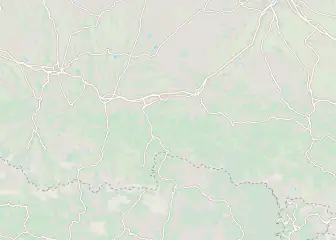
Opens the trip planner with these stops and nights already filled in. Add a stop, drop one or change the nights.
In short
- Seven days by car link Lourdes to Foix via Cauterets, Gavarnie, the Pic du Midi and Bagnères-de-Luchon, about 650 km (404 mi) in total.
- Expect two long transfer days on slow mountain roads, and no big hike; average speeds on passes are often 40-50 km/h (25-31 mph).
- A car is essential and the passes are normally open from June to September; September is often the best compromise.
- Book the Pic du Midi, decorated caves and lodging in Gavarnie and Cauterets as soon as your dates are fixed.
Many travelers hesitate between the two faces of the Pyrenees: on one side the great cirques and summits of the Hautes-Pyrénées, on the other the Cathar castles, caves and more discreet valleys of Ariège. The question comes up often: can you do both in one week?
The short answer: yes, but accepting two transfer days and giving up on big hiking. This 7-day driving itinerary links Lourdes to Foix via Cauterets, Gavarnie, the Pic du Midi and Bagnères-de-Luchon. The distances and durations below are rough estimates: on mountain roads, always add a buffer.
The itinerary at a glance
| Day | Stage | Approximate distance | Driving |
|---|---|---|---|
| 1 | Lourdes → Cauterets | 35 km (22 mi) | 50 min |
| 2 | Cauterets → Gavarnie (round trip) | 90 km (56 mi) | 2 h 30 |
| 3 | Luz → Pic du Midi → Luchon | 120 km (75 mi) | 3 h |
| 4 | Luchon and its valleys | 40 km (25 mi) | 1 h |
| 5 | Luchon → Foix | 130 km (81 mi) | 2 h 30 |
| 6 | Foix → Montségur → Foix | 90 km (56 mi) | 2 h |
| 7 | Foix → Ax-les-Thermes → Toulouse | 150 km (93 mi) | 2 h 45 |
The total is around 650 km (404 mi), mostly on secondary roads. Expressways are used only at the start and end of the stay.
Before you go: what to know
A car is essential. Buses between valleys are rare, and the longest transfers go over passes. The article on how to get around the Pyrenees details the alternatives. If you arrive by train or plane, book a car in advance.
Rent a car for the road trip
Compare rental companies and pick up the vehicle in Lourdes, Tarbes or Toulouse.
The season matters. Between June and September, the passes are normally open. Outside that, check before each stage: a pass closure can lengthen a transfer by several hours. See the guide when to go to the Pyrenees.
Fill up before the mountain areas: gas stations become scarce in the upper valleys.
Day 1: Lourdes and the climb to Cauterets
Arrive in Lourdes in the morning, pick up the car and take a quick look at the sanctuary or the castle if time allows (see Lourdes: what to see and do). Then take the road to Cauterets, about 35 km (22 mi) and 50 minutes along the Gave valley.
Late in the afternoon, stroll around the spa resort, then have dinner there. The article Where to stay in Cauterets helps you choose a neighborhood.
Sleeping in Cauterets
Two nights in town limit hotel changes at the start of the stay.
Day 2: Gavarnie, a round trip for the day
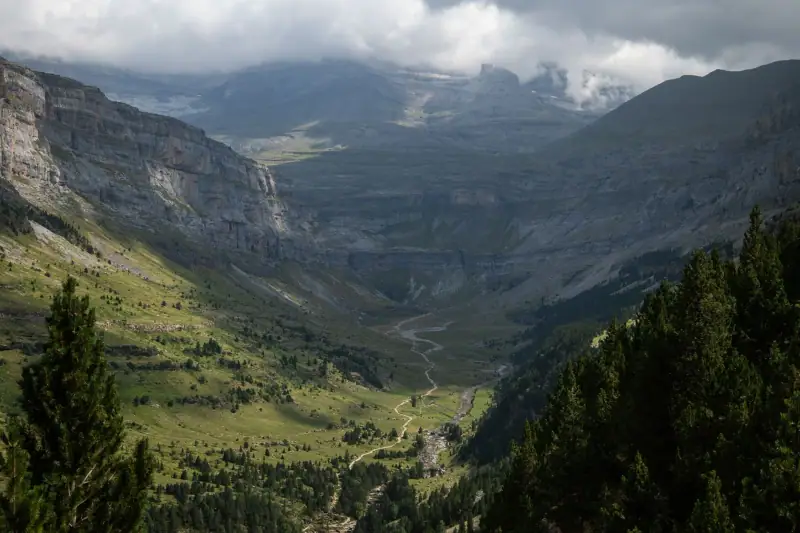
From Cauterets, go down to Luz-Saint-Sauveur, then up the valley to Gavarnie. Allow about 45 km (28 mi) and 1 h 15 of driving each way. The Cirque de Gavarnie, a UNESCO World Heritage Site, is reached on foot from the village by an easy path of about 1 h 30 to 2 hours one way.
Leave the car at the village parking lot, walk to the foot of the cirque, have a picnic, then walk back down. For details, read Gavarnie: what to see and do. If the weather is bad, replace this day with the waterfalls and Lac de Gaube, closer to Cauterets.
In the evening, come back to sleep in Cauterets or change base to Luz-Saint-Sauveur, which shortens the next day.
Day 3: Pic du Midi, then on to Luchon

This is the densest day. In the morning, go up the Pic du Midi de Bigorre from La Mongie (access over the Col du Tourmalet from Luz). Book ahead in high season, and aim for early morning before the clouds rise.
In the afternoon, continue on the road to Luchon: descent from La Mongie to Sainte-Marie-de-Campan, Col d’Aspin, the Arreau valley, then the Col de Peyresourde. Allow 70 to 80 km (43 to 50 mi) from La Mongie, or about 2 hours, plus stops.
Activities around the Pic du Midi and Gavarnie
Excursions and guided visits to discover the high-altitude sites without the stress of driving.
Day 4: Bagnères-de-Luchon and its valleys
Take this calmer day to catch your breath. Luchon is an elegant spa town surrounded by valleys. You can wander the town center, enjoy the baths or take an easy walk in the Lys valley or the Oô valley. The articles Luchon: what to see and do and Luchonnais: valleys and villages of the Comminges detail the options.
For where to sleep, see where to stay in Bagnères-de-Luchon.
Day 5: Luchon → Foix
Leave Luchon northward, then reach Saint-Girons via the Comminges and the roads of the Couserans, before getting to Foix. The drive is about 130 km (81 mi) and takes about 2 h 30. Do not overload it: stop in a village, have a simple lunch, and arrive in Foix in mid-afternoon.
There is time to go up to the Foix castle and discover the old town. See Foix: what to see and do.
Sleeping in Foix
Foix is a practical base for two nights: Montségur and the caves are reachable in a day.
Day 6: Montségur and Ariège’s prehistory
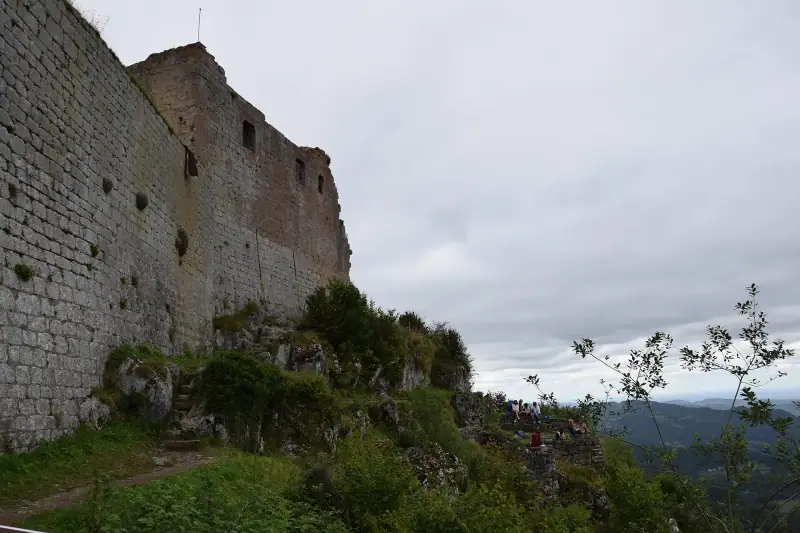
From Foix, Montségur is about 1 hour by road. The climb on foot to the fortress is short but steep: bring water and good shoes. In the afternoon, go up the Ariège valley toward Tarascon for a prehistoric cave (reservation mandatory for some). The guide Foix, Montségur and the caves of Ariège gives the details, and the 4-day road trip in Ariège and the Cerdagne extends the exploration if you have more time.
Day 7: Ax-les-Thermes and the return
Go up to Ax-les-Thermes (45 km / 28 mi, about 50 minutes) to soak your feet in the Bassin des Ladres and have lunch. Then drive back down to Toulouse (about 120 km / 75 mi, 1 h 45), where you will return the car. Do not plan a flight too early: keep a safety margin.
The morning. Leave Foix without hurrying: the road climbs the Ariège valley, with fine viewpoints over the first summits. Ax-les-Thermes is a spa town whose hot springs flow in the street. The Bassin des Ladres, free, is ideal for a relaxing pause before heading back. See also Ax-les-Thermes: what to see and do.
Lunch. Take the opportunity to taste mountain cooking one last time: garbure, cured meats and local cheeses are on most menus.
The return. Plan to leave Ax early in the afternoon if you have a train or a flight in the evening. Keep some slack for returning the car and refueling, especially if you go through Toulouse-Blagnac Airport.
What to sacrifice
In one week, you cannot see everything. Here are the compromises to accept:
- No big hike: only short walks. If walking is your priority, read 5 days in the Hautes-Pyrénées.
- No Cerdagne or Canigó: these areas call for a separate stay.
- Little weather margin: a rainy day at Gavarnie or the Pic du Midi cannot be made up.
If the idea of a more relaxed stay appeals to you, it is better to choose just one of the two massifs and visit it in detail.
Booking without stress
Book the Pic du Midi, the caves and lodging in Gavarnie and Cauterets as soon as your dates are fixed.
Sleeping in Bagnères-de-Luchon
Compare Luchon hotels for your two nights at the center of the route.
Frequently asked questions
Is it realistic to visit the Hautes-Pyrénées and Ariège in one week?
Yes, as long as you accept trade-offs. In 7 days, you can see the great sites of the Hautes-Pyrénées (Cauterets, Gavarnie, Pic du Midi) then cross the Luchonnais to finish in Ariège. You do have to plan for two long transfer days, on slow mountain roads.
How many kilometers should you plan for the week?
About 600 to 650 km (370-405 mi) in total, from Lourdes to the return to Toulouse. The figure is modest, but winding roads cut the average speed: you often average 40-50 km/h (25-31 mph) on the passes.
What is the longest drive of the itinerary?
Going from the Hautes-Pyrénées to Luchon, over the Tourmalet (or Aspin) and Peyresourde passes, is about 2 hours of driving from La Mongie, so 3 hours with stops. The transfer from Luchon to Foix takes roughly 2 h 30. These are the two stages not to overload.
Can you do this itinerary without a car?
It is not realistic. Public transport links between valleys are rare and slow, and sites like Gavarnie or Montségur are poorly served. If you have no car, it is better to choose a single base, as described in the article on Cauterets or Luz without a car.
What is the best time for this road trip?
From June to September, passes are open and sites accessible. September often offers the best compromise between stable weather and reduced crowds. Off-season, passes may be closed by snow or bad weather: check road conditions before each stage.
Which direction should you do the itinerary?
Both directions work. Starting from Lourdes (station, near the Tarbes-Lourdes airport) and finishing in Foix lets you return the car in Toulouse at the end of the stay, about 1 h 15 from Foix. The reverse direction is possible if you arrive via Toulouse.
Do you need to book in advance?
Yes for lodging in July and August, especially in Cauterets, Gavarnie and Luchon. Visits to decorated caves in Ariège should be booked well ahead. The Pic du Midi also requires a reservation in high season.
More Pyrenees guides
Keep reading
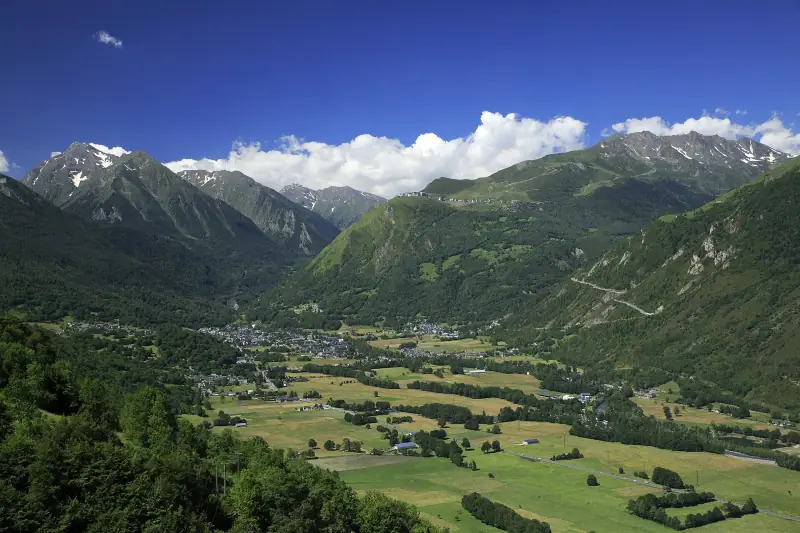
What to see in the Aure valley: Saint-Lary, Néouvielle, Arreau and villages of character
What to see in the Aure valley (Hautes-Pyrénées): Saint-Lary-Soulan, Néouvielle reserve, Arreau, Sarrancolin, Aragnouet and passes.
Where to stay in Bagnères-de-Luchon: neighborhoods, nearby villages and types of accommodation
Where to stay in Bagnères-de-Luchon? Spa center, Saint-Mamet, Montauban, Lys valley, Superbagnères: areas, hotels, gîtes, campsites and tips compared.
Budget for a trip to the Pyrenees: real costs and 3 priced profiles
What budget for the Pyrenees? Costs by item (lodging, transport, meals, activities), three priced traveler profiles and tips to spend less.
Ready-made
Pyrenees itineraries

5 days
5 days in the Hautes-Pyrénées: an itinerary through Lourdes, Cauterets and Gavarnie
CauteretsLuz-Saint-Sauveur
Can be adapted in the planner

4 days
4-day road trip in Ariège and the Cerdagne: Foix, Montségur, Ax-les-Thermes, Font-Romeu
FoixAx-les-ThermesFont-Romeu
Can be adapted in the planner