What to see
What to see in the Aure valley: Saint-Lary, Néouvielle, Arreau and villages of character
We may earn a commission when you book through links on this page, at no extra cost to you. We don't visit or try the places we cover: we summarize published sources. How we work
In short
- The Aure valley runs about 40 km (25 mi) along the Neste d'Aure, from Sarrancolin to the Spanish border, with Arreau as historic capital and Saint-Lary-Soulan as main resort.
- The Néouvielle nature reserve has more than seventy lakes between about 1,800 m (5,900 ft) and over 3,000 m (9,800 ft); vehicle traffic there is regulated.
- Two days give a first look; allow three to five days for hiking, the neighboring Louron valley or the spa.
- A car is strongly recommended: the valley is long and trailheads are far from the villages.
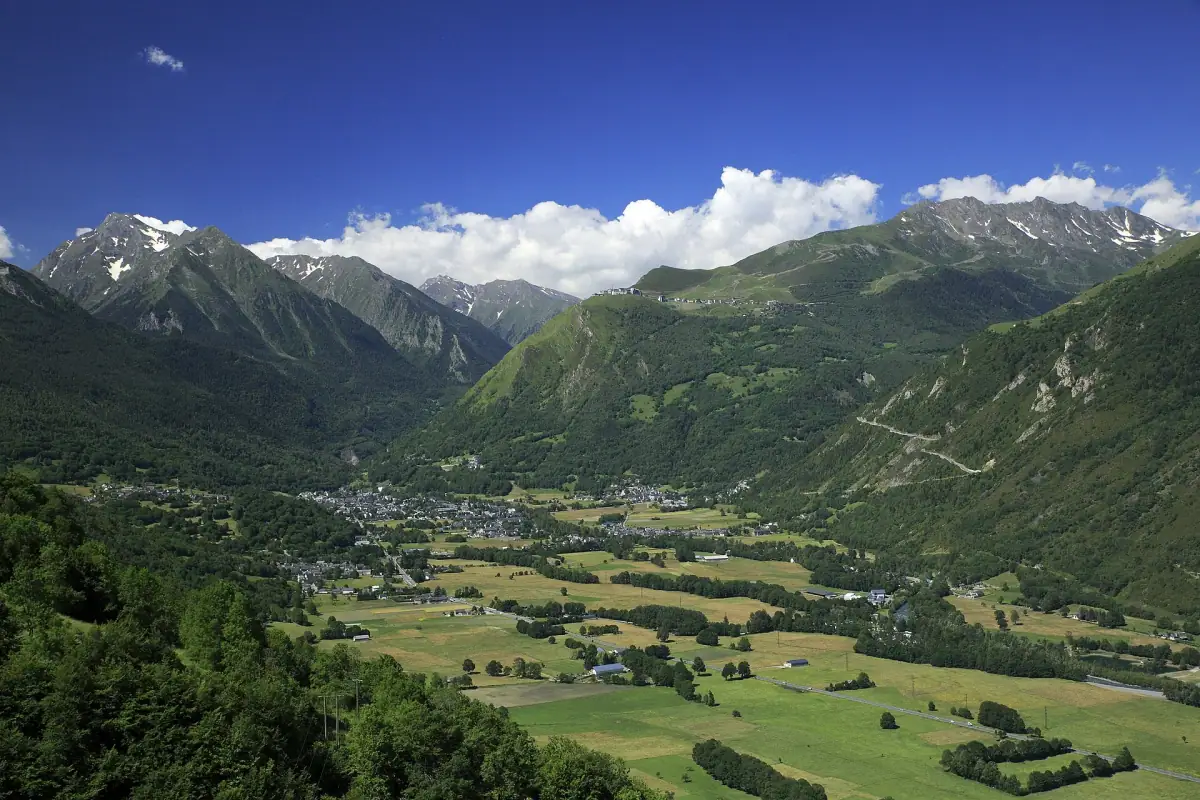
Between the Gavarnie massif to the west and the Luchonnais to the east, the Aure valley remains one of the most pleasant in the Hautes-Pyrénées for anyone who wants high mountains without the crowds of the most famous sites. It stretches for about forty kilometers (25 mi) along the Neste d’Aure, from Sarrancolin to the Spanish border, and brings together a well-known ski resort, stone villages, high lakes and the Néouvielle nature reserve, one of the finest hiking areas of the range.
This guide details what to see in the Aure valley, in what order to travel through it and how to split your stay, whether you come for a long weekend or a week.
The Aure valley at a glance: location and key facts
The Aure valley is a former glacial valley with about thirty communes. Its historic capital is Arreau, at the confluence with the neighboring Louron valley. Going south, you pass through Sarrancolin, then Guchen and Vielle-Aure before reaching Saint-Lary-Soulan, the valley’s most touristy commune, and finally Aragnouet, the last village before the border.
The main axis is the D 929 road, which starts at Lannemezan, passes through Arreau and leads to Saint-Lary and then to the lakes of the upper valley. Part of the area is included in the Pyrenees National Park.
A few reference points to get organized:
- Arriving from the north: the valley is approached from Lannemezan, from where you go up the Neste d’Aure.
- Arriving from the west: from Luz-Saint-Sauveur and Barèges, you can cross the Col d’Aspin and reach Arreau (a mountain road generally open in the good season).
- From the east: the Col de Peyresourde links the Louron valley to the Luchonnais. The guide to visiting Bagnères-de-Luchon helps you combine the two areas.
To compare ways of getting here and around across the range, read getting around the Pyrenees.
Arreau: the gateway to the valley
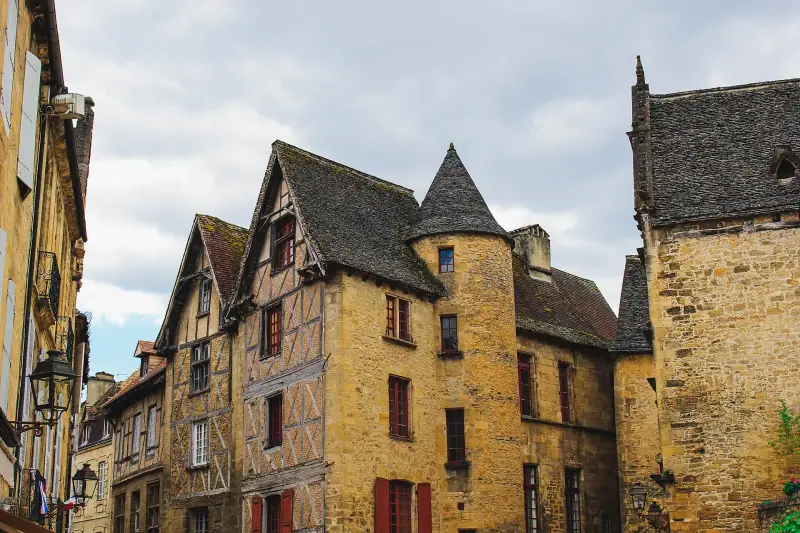
Arreau is the best starting point for understanding the valley. The town grew up where the Neste d’Aure and the Neste du Louron meet, which gave it an early role as a crossroads and market. Its lanes have kept old houses from the 16th and 17th centuries.
Among the buildings to spot, the Maison des Lys, a Gothic house with a wooden facade decorated with fleurs-de-lis, is partly listed as a historic monument. The Saint-Exupère church, from the 16th century, also contains an older Romanesque element. Allow a little under an hour to stroll along the water, cross the bridges over the two Nestes and observe the architecture.
Arreau makes a good first break: cafés, bakeries and food shops let you taste regional products before heading higher. For ideas on what to eat, see the article on Pyrenean food specialties.
Sleeping in the Aure valley
Hotels, gîtes and guesthouses in Arreau, Saint-Lary and the surrounding villages.
Sarrancolin: the marble village
A few kilometers downstream from Arreau, Sarrancolin is known for its marble, quarried for centuries in the nearby quarries. This stone, veined in red and gray tones, was used on prestigious projects: it is associated with the Palace of Versailles, notably the Petit Trianon, and is also said to have decorated famous buildings well beyond France.
The village is above all worth a detour for its Saint-Ébons church, Romanesque in style (11th-12th centuries), which adjoins the remains of a former Benedictine priory. The Porte Sainte-Quitterie, a square 16th-century tower, bears witness to the place’s fortified past. It is a stop of 45 minutes to an hour, useful if you like understated heritage.
Saint-Lary-Soulan: the tourist heart of the valley
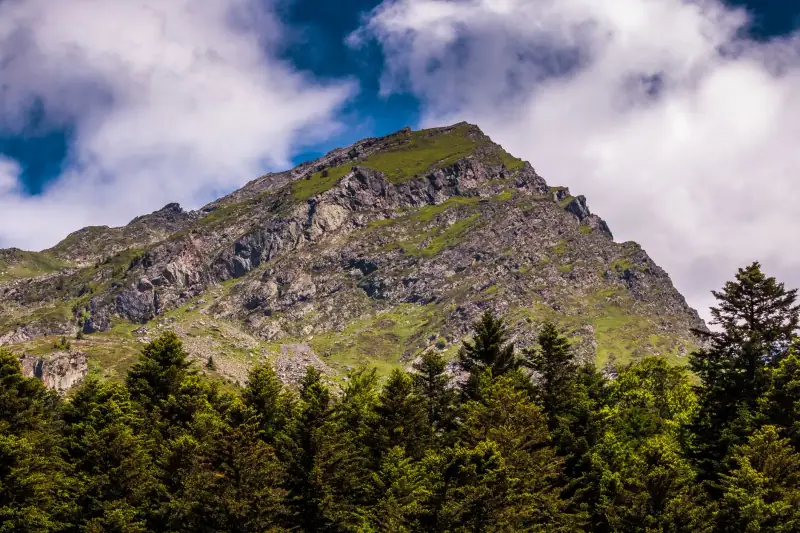
With the village of Saint-Lary, the Pla d’Adet resort (about 1,680 m / 5,510 ft of altitude) and the Soulan area, Saint-Lary-Soulan is the valley’s hub of activity. Together they form a ski area whose lifts reach about 2,350 m (7,710 ft). Two gondolas link the village to the Pla d’Adet resort.
The village and its baths
The center of Saint-Lary keeps a mountain village atmosphere, with its shops, terraces and thermal facilities. After a day of hiking, the thermal-inspired relaxation areas are a pleasant way to recover. Rates and hours vary by season: check the establishment’s website before you go.
The Pla d’Adet: summer and winter
In winter, the Pla d’Adet is the starting point for the ski runs. In summer, the resort transforms: walks, panoramas over the valley, mountain biking and paragliding (the Pla d’Adet is a takeoff site). To compare this ski area with other resorts of the range, read the tips on winter activities in the Pyrenees and the comparison of resorts and lift passes 2026-2027.
Vielle-Aure and the lakes of Aumar and Laquettes
About two kilometers (1 mi) from Saint-Lary, Vielle-Aure keeps the character of a traditional village. Within its commune are the lakes of Aumar and Laquettes, which give access to gentler walks than the upper valley. Lac d’Aumar is the largest natural lake in the Néouvielle reserve, which makes it a good introduction before heading higher.
Activities in Saint-Lary and the valley
Guided hikes, mountain outings and outdoor activities in the Hautes-Pyrénées.
The Néouvielle nature reserve: high-mountain lakes
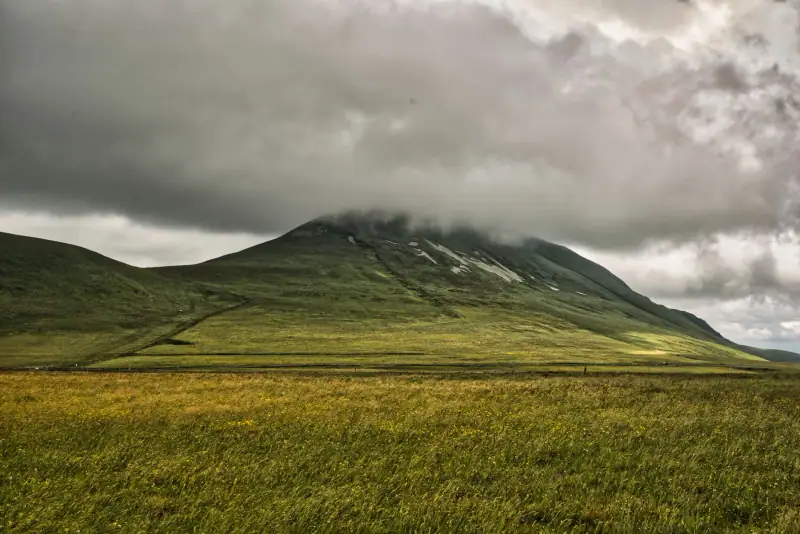
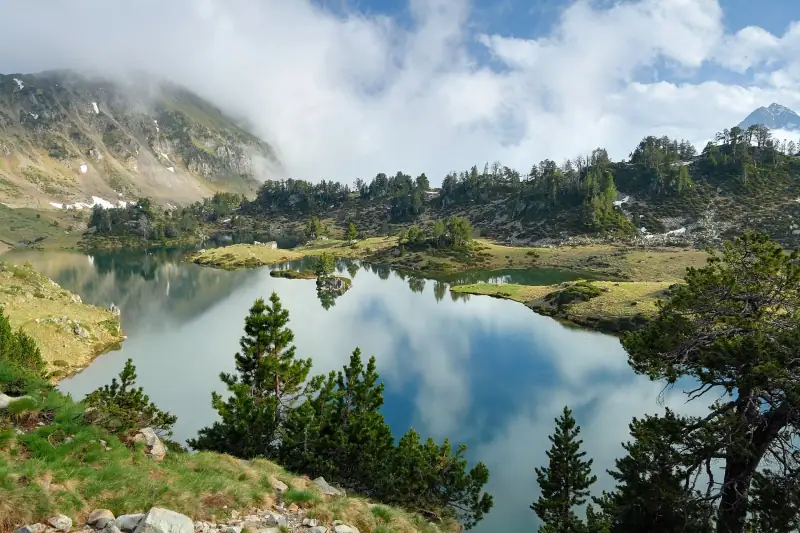
This is the valley’s flagship site. The Néouvielle national nature reserve, created in 1935, covers more than 2,300 hectares (5,700 acres) spread over the communes of Aragnouet, Saint-Lary-Soulan and Vielle-Aure. It has more than seventy lakes and ponds, nestled between about 1,800 m (5,900 ft) and more than 3,000 m (9,800 ft), with the Pic de Néouvielle peaking at about 3,090 m (10,140 ft).
What strikes you is the atmosphere: clear waters, granite summits and vast forests of mountain pines, which grow here at one of the highest altitudes in Europe. The whole gives an impression of Scotland or Scandinavia a few hours from the plain.
Cap de Long, Aubert and Orédon
Among the most visited lakes are Cap de Long, Aubert and Orédon. These are reservoir lakes, developed for hydroelectric production, while Aumar, smaller, is the largest natural lake of the reserve. Lac de Cap de Long is reached by the upper-valley road, which stops at the foot of its dam.
Rules to know
Vehicle traffic is regulated in the reserve, notably between Orédon and Aubert, with paid parking lots and shuttles. Bivouacking is forbidden there except in a very limited zone. Respect these rules and the posted instructions: they protect a fragile environment. For more outing ideas, see the selection of the best hikes in the Pyrenees.
Aragnouet and the upper valley
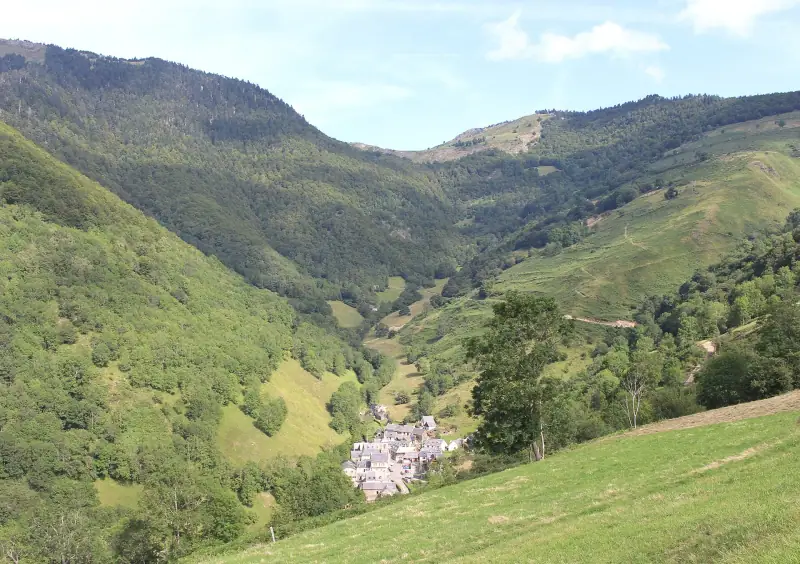
At the end of the road, Aragnouet is the largest commune of the upper valley: its territory climbs to about 3,190 m (10,460 ft). The upper valley is wilder, with scattered hamlets, barns and summer pastures. This is also where the Piau-Engaly resort is found, geared to skiing and mountain sports.
The valley opens toward Spain through the Aragnouet-Bielsa tunnel, which lets you reach the Aragon side. Traffic and crossing conditions change: check them before organizing a cross-border excursion.
The neighboring passes: Aspin and Peyresourde
Two passes open the valley to its neighbors. The Col d’Aspin links Arreau to the Campan valley and the Bagnères-de-Bigorre area; the Col de Peyresourde leads from the Louron to Bagnères-de-Luchon. Both are famous with cycling fans and offer open panoramas over the range. They are generally passable from late spring to autumn, but the road status must be checked before departure.
Combining Aure and Luz is entirely feasible: the article on Luz-Saint-Sauveur details this neighboring area.
The Louron valley: a quiet detour
From Arreau, the Louron valley climbs eastward. Less known than its neighbor, it offers peaceful villages, lakes and less-trodden trails. If you want quiet in midsummer, it is an interesting alternative to the upper Aure valley. Allow half a day to explore it, adding if time permits a short hike to a lake or a viewpoint over the ridges. It is also a good option for families who want to avoid the busiest parking lots.
How to organize your stay: 3 days in the Aure valley
- Day 1: lower valley. Morning in Arreau (Maison des Lys, confluence of the Nestes), then a stop at Sarrancolin for the Romanesque church. End the day in Saint-Lary.
- Day 2: Néouvielle. A full day around the lakes (Cap de Long, Aubert or Orédon depending on your level), setting off early in the morning in summer.
- Day 3: resort and relaxation. Go up to the Pla d’Adet for the view, a walk around Aumar, then the baths or relaxation in the village.
To stretch the stay, add a day in the Louron or an excursion to the Col d’Aspin. You will find more ideas for linking stops in the 5-day itinerary in the Hautes-Pyrénées.
When to go to the Aure valley
- June to September: hiking season. The lakes are accessible, services open and days long. In July-August, set out early to avoid crowds at the Néouvielle parking lots.
- Autumn: golden colors, cool temperatures and a quiet valley, but some services close.
- Winter: skiing at Saint-Lary-Soulan and Piau-Engaly, snowshoeing and the baths. Snow cover varies from year to year.
- Spring: an in-between season, with snow still present at altitude and pass roads sometimes closed.
The month-by-month detail is in the article when to go to the Pyrenees.
Rent a car for the valley
Handy for reaching the lakes and villages: compare rental companies.
Where to stay in the Aure valley
The choice depends on your program:
- Saint-Lary-Soulan: the most choice (hotels, residences, gîtes), ideal for combining the resort, the baths and access to the Néouvielle.
- Arreau: quieter and more central for ranging out to Aure, Louron and the passes.
- Upper-valley villages: gîtes and guesthouses for anyone who wants to sleep near the trailheads.
To choose between the village, the Pla d’Adet and the neighboring villages, read the guide where to stay in Saint-Lary-Soulan. Book early in July-August and during winter school holidays. For an overview of the types of accommodation in the range, read the article where to stay in the Pyrenees.
Practical tips
- Equipment: walking shoes, a warm layer and a windbreaker, even in summer. The weather changes fast at altitude. The list of accessories for the Pyrenees will help.
- Water and supplies: bring the essentials before heading up to the lakes, as shops there are rare.
- Mobile network: coverage is patchy in the upper valley, so download your maps in advance. Check your carrier’s international plan or use a travel eSIM.
- Budget: accommodation varies strongly between high and low season. The budget for the Pyrenees gives guidelines.
- Respect for the environment: stay on the trails, take your trash with you, keep dogs on a leash.
Also consider travel insurance suited to mountain sports, and check what it covers before you leave.
The Aure valley, in short
The Aure valley is an excellent compromise: equipped enough to travel comfortably, wild enough to offer genuine high-mountain scenery. Between the charm of Arreau, the heritage of Sarrancolin, the activity of Saint-Lary-Soulan and the Néouvielle lakes, it deserves more than a simple stop on the road over the passes. To continue your preparation, browse the complete guide to the Pyrenees.
Frequently asked questions
Where is the Aure valley?
It lies in the Hautes-Pyrénées, east of the Luz and Barèges valley. About 40 km (25 mi) long, it follows the Neste d'Aure from Sarrancolin to the Spanish border, with Arreau as historic capital and Saint-Lary-Soulan as main resort.
How much time should you allow to visit the Aure valley?
Two days are enough for a first overview (Arreau, Saint-Lary, an outing to the Néouvielle). Allow three to five days if you want to hike, discover the neighboring Louron or enjoy the spa and the resort.
What is there to do in the Aure valley when it rains?
The wellness facilities of Saint-Lary, the villages of Sarrancolin and Arreau with their churches and old houses, and local producers' shops are fallback options. Check hours directly with the tourist office.
Can you drive to the Néouvielle lakes?
Part of the reserve is accessible by road, but vehicle traffic is regulated there, notably between the lakes of Orédon and Aubert. Paid parking lots and shuttles exist: find out the conditions in force before you go, as they vary by season.
What is the best time to visit the Aure valley?
June to September for the lakes and hiking, with trails generally clear in July-August. Autumn is ideal for colors and quiet. In winter, the valley lives to the rhythm of skiing at Saint-Lary-Soulan and Piau-Engaly.
Do you need a car in the Aure valley?
It is strongly advised: the valley is long and the trailheads are far from the villages. A few seasonal shuttles exist, but their schedules change from year to year.
Is the Aure valley suitable for families?
Yes. Easy walks around the lakes, the resort's summer and winter activities and quiet villages suit children well. Choose short routes and check the weather before any high-altitude outing.
More Pyrenees guides
Keep reading
Visiting Ax-les-Thermes: what to see and do in Haute-Ariège
Visiting Ax-les-Thermes: Bassin des Ladres, thermal baths, Bonascre gondola, Beille plateau and excursion ideas. A guide to plan your stay.
Catalan Pyrenees: what to see? The 12 essential sights
What to see in the Catalan Pyrenees? Canigó, Villefranche-de-Conflent, Mont-Louis, the Yellow Train, Cerdagne, Capcir: a selection to plan your stay.
What to see in the Luchonnais: valleys, Romanesque villages and lakes around Luchon
What to see in the Luchonnais? Larboust valley, Saint-Aventin church, Lac d'Oô, Peyragudes, Oueil valley and Saint-Bertrand-de-Comminges.
Ready-made
Pyrenees itineraries
7 days
Hautes-Pyrénées and Ariège in one week by car: is the itinerary doable?
CauteretsBagnères-de-LuchonFoix
Can be adapted in the planner

5 days
5 days in the Hautes-Pyrénées: an itinerary through Lourdes, Cauterets and Gavarnie
CauteretsLuz-Saint-Sauveur
Can be adapted in the planner

4 days
4-day road trip in Ariège and the Cerdagne: Foix, Montségur, Ax-les-Thermes, Font-Romeu
FoixAx-les-ThermesFont-Romeu
Can be adapted in the planner