Itineraries
3 days between Marseille, Cassis and Aix-en-Provence: a detailed itinerary
We may earn a commission when you book through links on this page, at no extra cost to you. We don't visit or try the places we cover: we summarize published sources. How we work
Day by day
- Day 1Marseille: Vieux-Port, Le Panier, MuCEM, Notre-Dame de la Garde, corniche
- Day 2Cassis: harbor, calanques by boat or on foot, Route des Crêtes
- Day 3Aix-en-Provence: Cours Mirabeau, old town, market, Cézanne
Weather through the year on this route
| Jan | Feb | Mar | Apr | May | Jun | Jul | Aug | Sep | Oct | Nov | Dec | |
|---|---|---|---|---|---|---|---|---|---|---|---|---|
| High °F (°C) | 5010 | 5312 | 5815 | 6418 | 7222 | 8127 | 8630 | 8630 | 7625 | 6820 | 5714 | 5211 |
| Low °F (°C) | 373 | 373 | 415 | 468 | 5412 | 6217 | 6519 | 6519 | 5915 | 5412 | 457 | 394 |
Normals 1991–2020 at Avignon and Arles: averages over 30 years, not a forecast. Source: NASA POWER (MERRA-2), grid of about 50 km. Figures computed by us in November 2026. Rain is shown only where a weather station confirms the figures.
In short
- Three days: Marseille (Vieux-Port, Le Panier, MuCEM, Notre-Dame de la Garde), Cassis and its calanques, then Aix-en-Provence. The three towns are each under an hour by road.
- Cassis and Aix are each about 30 km (19 mi) from Marseille, roughly half an hour by road outside rush hours. Trains and regional buses also link them.
- The article's simple suggestion: two nights in Marseille and one in Aix-en-Provence, or swap one Marseille night for a night in Cassis.
- Spring and early fall are ideal. In summer, access to the calanques can be restricted or closed for fire risk: check official information the same day.
Marseille, Cassis and Aix-en-Provence make an ideal trio for a short stay: a big port city full of character, a small fishing harbor backed by cliffs and calanques, and a city of art and water, elegant and shaded. The three are less than an hour apart by road, which lets you move from one atmosphere to another without ever losing time in transit.
This 3-day itinerary is designed for those discovering the southern side of Provence: a long weekend, a getaway between two stays or a first stop before heading up to the Luberon. It alternates cultural visits, outings by sea or on foot, meals in the shade and free time. Distances stay short, days are reasonable and each stop can be shortened or lengthened depending on your energy and the weather.
Itinerary overview
Here is the general flow, before detailing each day:
- Day 1: Marseille. Vieux-Port, Le Panier district, MuCEM, Notre-Dame de la Garde, sunset on the corniche.
- Day 2: Cassis and the calanques. Morning at the Cassis harbor, boat ride or walk to the calanques, afternoon swim or Route des Crêtes.
- Day 3: Aix-en-Provence. Cours Mirabeau, old town, fountains, market, in the footsteps of Cézanne.
The three towns lend themselves to a hub-and-spoke or a linear plan. If you have a car, you can base yourself in Marseille and make round trips. Without a car, the train links Marseille to Aix-en-Provence and Cassis, with a station in Cassis that is some distance from the center: check connections with local shuttles. To compare all transport possibilities, see our guide to getting around Provence by car, train or bus.
Day 1: Marseille, the Phocaean city
Founded by Greek sailors more than 2,600 years ago, Marseille is one of the oldest cities in France. It is also one of the liveliest: cosmopolitan, working-class, turned toward the sea. The first day lets you grasp its spirit without rushing. Wear comfortable shoes: you cover a lot of the city on foot, with a few climbs.
Morning: the Vieux-Port and Le Panier
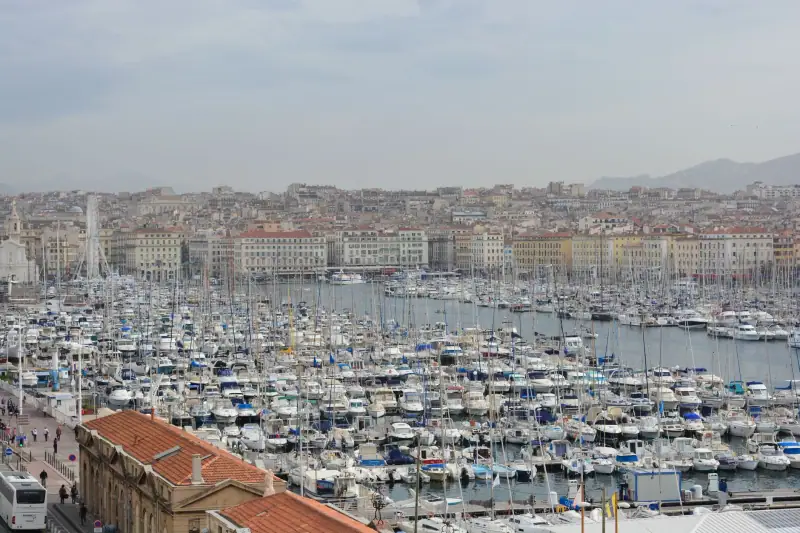
Start with the Vieux-Port, the historic and visual heart of the city. The harbor is lined with fishing and pleasure boats, and every morning there is a fish market, a picturesque scene where fishermen sell their catch directly. On the quay, the Ombrière, a large mirrored structure inaugurated in 2013, makes a nice play of reflections for photos.
From there, walk up to Le Panier, the city’s oldest district. Its steep lanes, colorful facades, shaded squares, artists’ studios and street murals make it a pleasant place to stroll. Take your time: it is a district to discover without a plan, getting lost on purpose. You will come across the Vieille Charité, a former 17th-century almshouse whose chapel and arcades form a fine architectural ensemble, now housing museums and exhibitions.
Lunch: bouillabaisse or market cooking
Marseille is the home of bouillabaisse, a rockfish soup served with rouille and croutons. The dish is traditionally served in two stages: the broth first, then the fish. It is generally expensive and worth choosing with care: be wary of menus that offer it cheaply and see whether the restaurant commits to respecting tradition. If your budget is tighter, turn to simpler specialties: panisse, fish soup, supions à la provençale (small squid) or simply a grilled catch of the day. To learn more about the region’s products, read our guide to Provence markets.
Stay in Marseille
Compare hotels near the Vieux-Port, Le Panier or the corniche for your first night.
Afternoon: the MuCEM, Notre-Dame de la Garde and the waterfront
After lunch, head to the MuCEM (Museum of European and Mediterranean Civilizations), at the entrance to the Vieux-Port. Its modern building, wrapped in a concrete lattice, is linked to Fort Saint-Jean by a footbridge suspended above the water. Even without visiting the exhibitions, the walk on the roofs and terraces offers fine views of the sea, the harbor and the city. Check hours and the weekly closing day before you come.
Late in the afternoon, go up to Notre-Dame de la Garde, the “Bonne Mère,” a basilica that overlooks the city from the top of its hill. From its forecourt, the panorama over Marseille, its roofs, its islands and the roadstead is one of the finest in the city. You can go up on foot via sloping streets, by city bus or by car: if you walk, bring water and save your energy.
Evening: the corniche and the sunset
To end the day, follow the Corniche Kennedy, a scenic road that follows the coast to the south. Rocks, small coves, terraces and villas overlook the sea. The Vallon des Auffes, a small fishing harbor nestled under a bridge, is a favorite place for a drink or dinner facing the water at dusk. The sunset over the sea, in summer, lasts a long time and colors the bay in orange shades.
If you have more time, another option is to take a boat to the Frioul islands or the Château d’If, famous for Alexandre Dumas’s novel The Count of Monte Cristo. Both excursions leave from the Vieux-Port, by boat, and take half a day.
Day 2: Cassis and the calanques
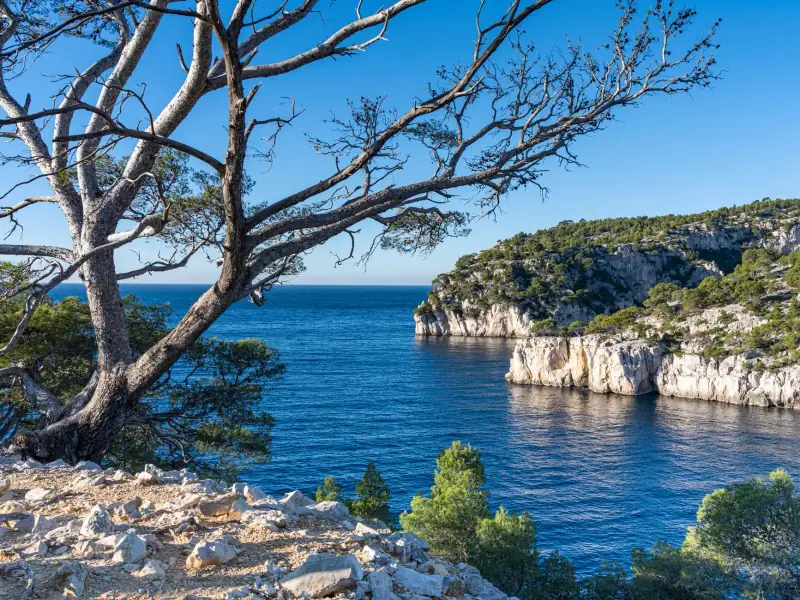
The second day is devoted to the coast. Cassis is a small colorful fishing harbor, sheltered from the wind by the cliffs. It is about 30 kilometers (19 mi) from Marseille, a good half hour to three quarters of an hour by road depending on traffic. Around it, the Calanques massif, a national park since 2012, offers spectacular landscapes: white cliffs, narrow inlets, turquoise water, umbrella pines.
Morning: the Cassis harbor
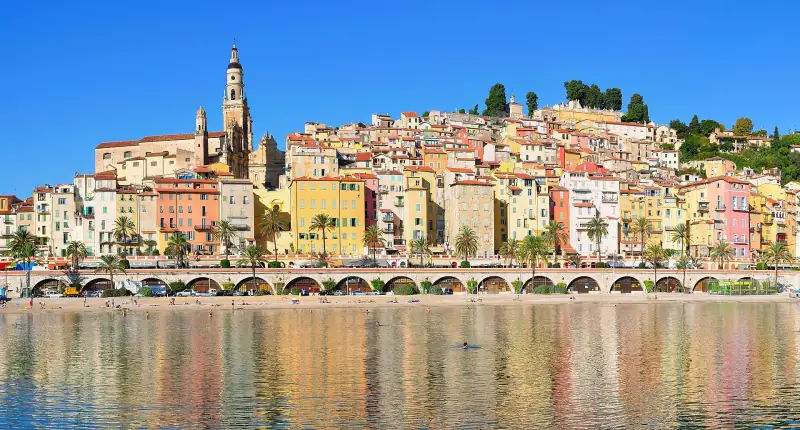
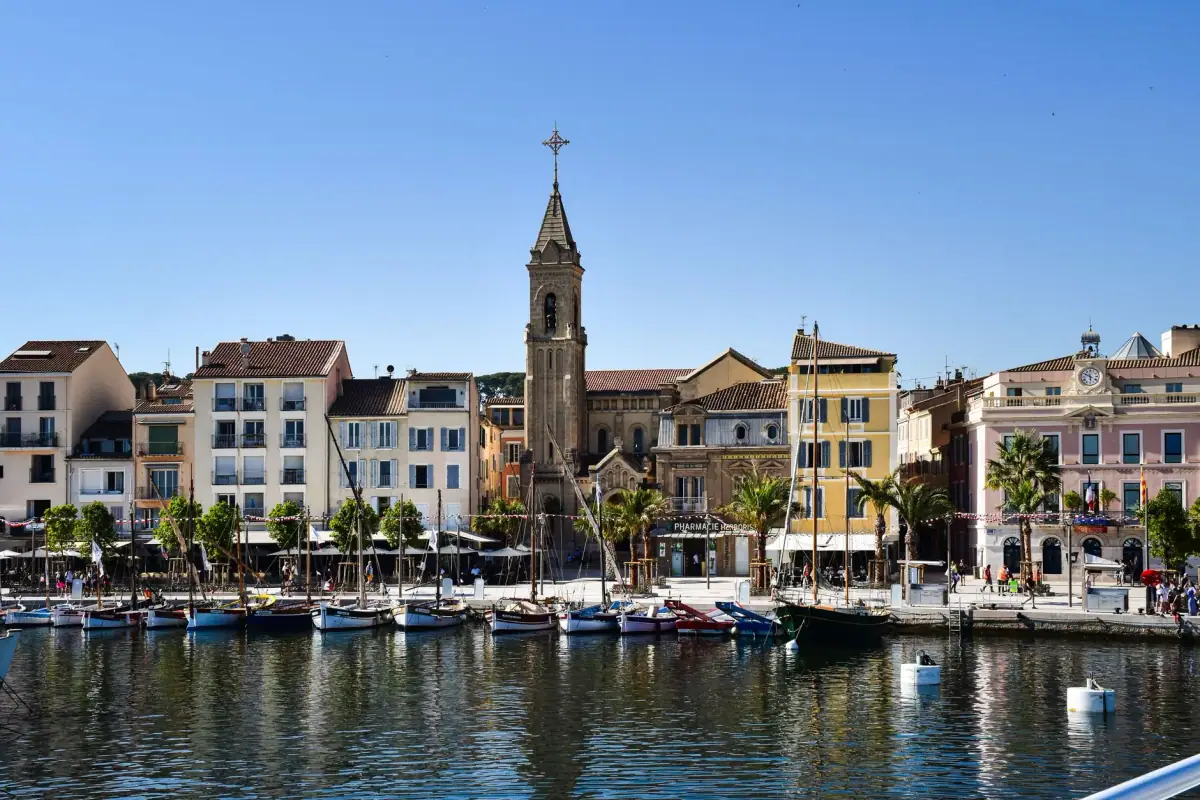
Arrive early to avoid the crowds and the parking trouble, which are worst in season. Stroll along the harbor, lined with colorful houses and restaurant terraces. Above the village, the Cassis castle overlooks the bay. Cap Canaille, very close, is one of the highest sea capes in France: its reddish cliffs, visible from the village, are one of Cassis’s symbols.
Cassis is also a wine region. Its vineyard, one of the smallest in France, produces mostly fresh, aromatic white wines, but also rosés and a few reds. The Cassis appellation is among the first appellations d’origine contrôlée in Provence. To learn more, see our guide to Provence wines.
The calanques: three ways to discover them
The Cassis calanques can be discovered in several ways, depending on your energy, budget and the weather:
- By boat: sea trips leave from the Cassis harbor and tour several nearby calanques, often in one to two hours. It is the simplest and most accessible option, including for children and people with limited mobility. It lets you admire the cliffs and inlets from the sea, without effort.
- On foot, toward the nearby calanques: the first, Port-Miou, is reached by a relatively easy path from town. Further on, Port-Pin and then En-Vau require more walking and more elevation gain. En-Vau is renowned as one of the most beautiful, with its vertical cliffs and clear water, but it has to be earned: bring good shoes, plenty of water and at least half a day.
- By kayak: guided outings are offered from Cassis or neighboring calanques. It is a sportier way to discover the coast and reach quiet inlets.
One essential point: the calanques are a protected and fragile natural area. Access to the massifs can be restricted, even banned, in fire-risk periods, especially in summer. Before leaving, check official information from the Calanques National Park and the prefecture, and always keep a fallback. Bring nothing flammable, do not smoke, leave no litter, and respect the marked trails. There are practically no water points or shade: bring at least two liters per person, a hat and sunscreen.
Boat trip in the calanques
Compare sea outings and guided excursions to discover the calanques from the water.
Afternoon: swimming or the Route des Crêtes
After lunch, two options. The first is to enjoy the beach: the Grande Mer beach, in the center of Cassis, is the most accessible, with its pebbles and clear water. The water is often cool, even in summer, but pleasant for cooling off.
The second option is the Route des Crêtes, which links Cassis to La Ciotat along the cliffs of Cap Canaille. This road offers spectacular views of the sea, but it can be closed depending on weather conditions or fire risk: check its opening status before setting out. Stops are made only at designated places, and safety barriers must be respected.
Evening: back to Marseille or a night in Cassis
Two possibilities for the evening. You can return to Marseille to sleep there and reach Aix the next day, which avoids changing lodging. Or you can sleep in Cassis to enjoy the village once the day visitors have left, calmer and more pleasant. In that case, book early: supply is limited and prices rise quickly in season.
Stay in Cassis
Compare hotels and B&Bs in Cassis, steps from the harbor and the calanques.
Day 3: Aix-en-Provence, city of art and water
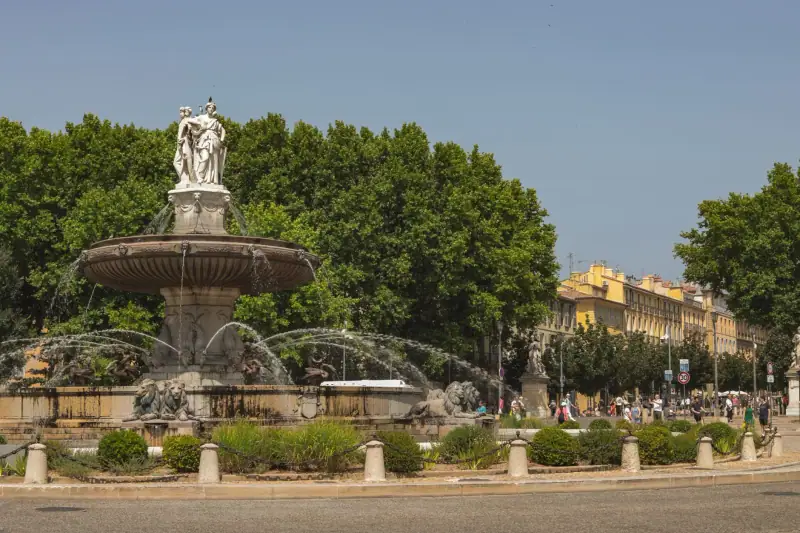
Aix-en-Provence is about 30 kilometers (19 mi) from Marseille, roughly thirty minutes by road outside rush hours. A former capital of Provence, the town is known for its elegance, plane trees, fountains, mansions and student life. It is also the town of Paul Cézanne, who was born here and lived here for much of his life.
Morning: Cours Mirabeau and the old town
Start with Cours Mirabeau, a grand avenue lined with century-old plane trees, fountains and terraces. It separates the old town from the more recent districts and is the heart of Aix life. The cafés lining it are pleasant for a morning break.
From there, get lost in the old town: pedestrian streets, small squares, ocher facades and fountains form a very harmonious whole. Place d’Albertas, Place des Quatre-Dauphins and Place de l’Hôtel de Ville are among the most photographed. Saint-Sauveur cathedral, which mixes several eras and styles, is worth a visit for its architecture and its cloister.
If you visit Aix in the morning, enjoy the markets that enliven the squares of the center: fruit and vegetables, flowers, regional products, flea-market goods depending on the day. Days and locations vary: check with the tourist office before you come, or see our guide to Provence markets.
Afternoon: in the footsteps of Cézanne
Cézanne’s studio, north of town, has been preserved in its original state. You see objects, models and tools that appear in his still lifes. It is generally visited by reservation or with a time slot: check access conditions before you come. Art lovers can also visit the Granet museum, which presents old and modern works.
If you like the landscapes that inspired the painter, Montagne Sainte-Victoire, east of town, dominates the horizon and can be discovered by many trails or from the road. It takes an extra half day: keep it for another trip if you are short of time.
Tours and excursions in Aix-en-Provence
Guided tours, outings to Sainte-Victoire or tastings: compare the activities on offer.
Evening: calissons and dinner on a terrace
Aix is the capital of the calisson, a small diamond-shaped confection made of almonds and candied melon, covered with white icing. It is an easy souvenir to bring home: buy some in a confectioner’s shop in the old town rather than a generic souvenir shop, and taste before choosing. Dinner is easily taken on a terrace on one of the small squares: Provençal cooking, market produce and local rosés.
How to get around between the three towns
The three towns are close, but how you travel changes the organization of your stay.
- By car: this is the most flexible option, notably for the Route des Crêtes and for leaving early for the calanques. Watch out for parking: it is complicated and often paid in the centers of Marseille, Cassis and Aix. Use public lots on the edge or park-and-ride lots. In summer, Cassis is particularly saturated, and access to the center can be limited: arrive early.
- By train and bus: Marseille is linked to Aix-en-Provence and Cassis by the regional network. Hours and frequency vary by season: check them before you leave. In Cassis, the station is far from the harbor, hence the value of asking about shuttles.
- By urban transport: Marseille has a metro, tram and buses, very useful for reaching districts far from the center without a car.
For more details, our guide to getting around Provence compares the different options.
Budget and practical tips
Budget varies greatly by season. Marseille is generally more affordable than Cassis or Aix for lodging and dining. Cassis is where prices rise fastest in high season, which can justify sleeping in Marseille and coming for the day. To limit spending:
- Picnic with market produce rather than lunching at a restaurant every day.
- Book lodging early for summer, long weekends and big events.
- Choose spring and early fall: lower rates, thinner crowds, pleasant temperatures.
- Compare transport formulas: a regional pass can be cheaper than a car rental depending on your program.
If you rent a car, compare offers in advance and check the insurance, deposit and return conditions. Also remember to ask whether parking at your lodging is included: it is a key criterion in all three towns.
What to pack
- Good walking shoes, for Le Panier, the calanques and Aix’s old town
- A hat, sunglasses and sunscreen
- A water bottle: at least two liters for the day in the calanques
- A swimsuit and water shoes for the pebble beaches
- A light jacket: the mistral can cool the air quickly, even in summer
When to go for this itinerary
This itinerary can be done all year, but some periods are more pleasant than others. Spring is ideal for walking and sightseeing: mild temperatures, flowering nature, moderate crowds. Summer is hot and very busy: aim for early-morning starts and swimming late in the day, and keep in mind that access to the calanques can be restricted. Fall, especially September and early October, offers a still-warm sea, soft light and fewer people. Winter is quieter, with short days and some water activities reduced, but Marseille and Aix remain pleasant to visit. To refine your choice, see our guide to when to go to Provence.
Where to stay: Marseille, Cassis or Aix?
The choice of base depends on your travel style. Marseille offers the widest choice of lodging, varied prices and a central position between Cassis and Aix. Aix-en-Provence is more elegant, calmer and pricier, ideal for lovers of old stone and terraces. Cassis is the most charming but also the most limited in capacity. Our guide where to stay in Provence helps you compare bases according to your budget and means of transport.
For three days, a simple solution is to sleep two nights in Marseille and one in Aix-en-Provence, which limits the luggage to move and leaves you a calm evening in Cézanne’s town. If you want to spend an evening in Cassis, replace one Marseille night with a night by the harbor.
Key takeaways
This three-day itinerary between Marseille, Cassis and Aix-en-Provence offers great variety: a big Mediterranean city, a wild coast and an elegant Provençal town, all without long trips. Leave early, leave some slack in your schedule, check access conditions to the calanques before going and book your lodging in advance in high season. If your stay is longer, you can extend the adventure to the Luberon, the Alpilles or the Camargue with our 5-day Provence itinerary.
Frequently asked questions
Can you do this itinerary without a car?
Largely, yes. Marseille, Cassis and Aix-en-Provence are linked by train and regional buses, and each town is mostly visited on foot. A car becomes useful for the Route des Crêtes or to reach some trailheads: check timetables before you go.
How long does it take between Marseille, Cassis and Aix-en-Provence?
The three towns are close: allow about 30 to 40 minutes by road between Marseille and Cassis, and about the same between Marseille and Aix-en-Provence, outside traffic jams. Between Cassis and Aix, allow a little over an hour, taking traffic into account.
Do you need to reserve to visit the calanques?
It depends on the season and the site. In summer, access to some calanques is regulated to protect the natural environment, and can be restricted or even closed in case of fire risk. Check official information from the Calanques National Park and the prefecture the same day, and keep a fallback.
What is the best time for this itinerary?
Spring (April-June) and early fall (September-October) are ideal: mild temperatures for walking, pleasant sea in September and fewer people than in midsummer. In July-August it is very hot and access to the massifs can be limited.
Where should you stay for this 3-day itinerary?
The simplest is to sleep two nights in Marseille, or one night in Marseille and one in Cassis or Aix. The three towns are close enough that you can change base without losing a day. Our guide on where to stay in Provence helps you compare.
Is this itinerary suitable for children?
Yes, as long as you adapt the pace. The Vieux-Port, the Frioul islands, boat rides in the calanques and Aix's fountains appeal to children. Avoid long calanque hikes in great heat and bring plenty of water.
Can you add the Luberon or the Verdon to this itinerary?
It is possible by extending the stay by a few days. Aix-en-Provence is a good starting point toward the Luberon, but the Verdon and the Luberon each deserve more than a day. See our 5-day itinerary for another loop.
More Provence guides
Keep reading
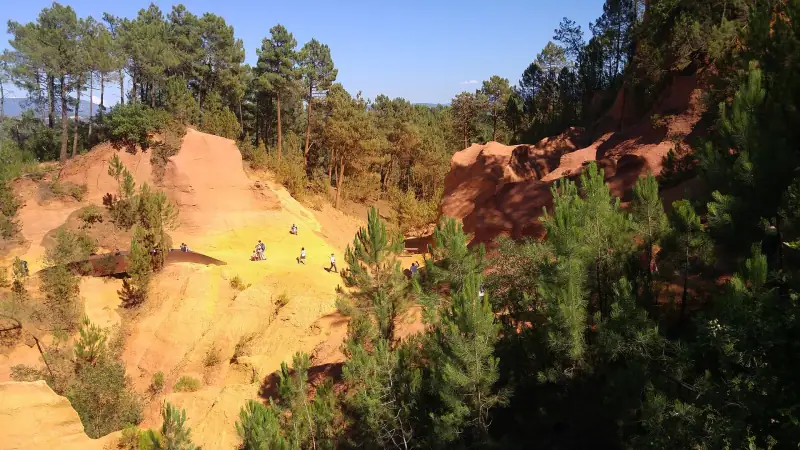
Roussillon Ocher Trail: price, hours, duration and practical tips
Roussillon Ocher Trail: €3.50 ticket, 30 or 50 minutes on foot, hours by season, parking, dogs, strollers and what to wear.
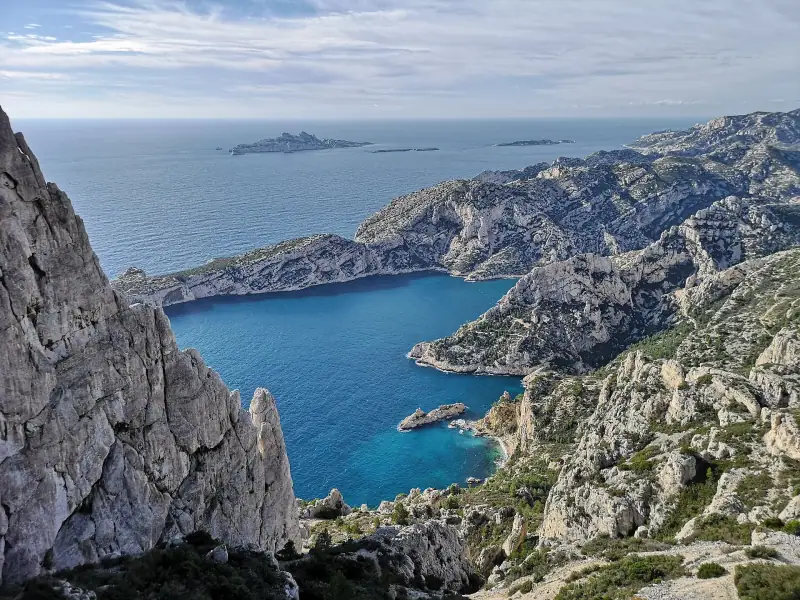
Calanque de Sugiton: mandatory reservation, dates, how to book and alternatives
Sugiton requires a free reservation in summer: 2026 dates, booking opens 3 days ahead, 400 spots a day, access from Luminy and calanques without booking.
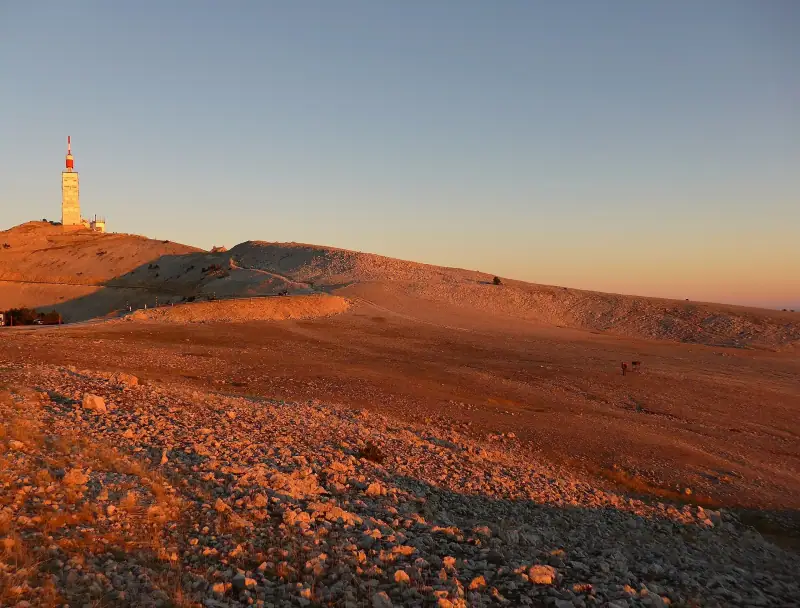
What to see around Mont Ventoux: the climb, Nesque gorges, Dentelles and villages
What to see around Mont Ventoux: the summit, Nesque gorges, Dentelles de Montmirail, Sault, Bédoin and Vaison-la-Romaine. A guide to plan your visit.
Ready-made
Provence itineraries

3 days
Lavender route in Provence in 3 days: Valensole, Sault and the Luberon, stops and distances
Moustiers-Sainte-MarieSault
5 days
5-day Provence itinerary: Avignon, Luberon, Alpilles and Camargue
A day-by-day 5-day Provence itinerary: Avignon, Luberon, Alpilles, Arles, Camargue, Aix and Cassis, with realistic distances and practical tips.
Can be adapted in the planner