Things to do
Camargue: activities, pink flamingos, horses and Saintes-Maries-de-la-Mer
We may earn a commission when you book through links on this page, at no extra cost to you. We don't visit or try the places we cover: we summarize published sources. How we work
In short
- Flamingos are present in the Camargue all year. Spring and early summer show them in large numbers; fall is quieter and milder.
- One day covers an observation park, a horseback or 4x4 outing and Saintes-Maries-de-la-Mer, about 40 km (25 mi) from Arles. Two days add the sea dike and the salt pans.
- A car is the most practical option; buses link Arles and Saintes-Maries-de-la-Mer with seasonal frequencies. Bring insect repellent from spring to fall.
- Book horseback rides, 4x4 outings and lodging ahead in summer, during school holiday periods and big local events such as the May gathering.
Between the two arms of the Rhône, the Camargue is a world apart: an immense plain of lagoons, reedbeds, salt flats and dunes opening onto the Mediterranean. Here the horizon is flat, the sky immense, and wildlife is easy to see. Pink flamingos, herons, free-roaming white horses and black bulls make up a setting you don’t forget.
Located in the west of Provence, around Arles and Saintes-Maries-de-la-Mer, the Camargue is a large regional natural park. You visit it differently from a city: you have to slow down, get up early, look. This guide presents the most interesting activities, how they fit each season and how to organize them, whether you come for a day or a longer stay.
Watching pink flamingos and birds
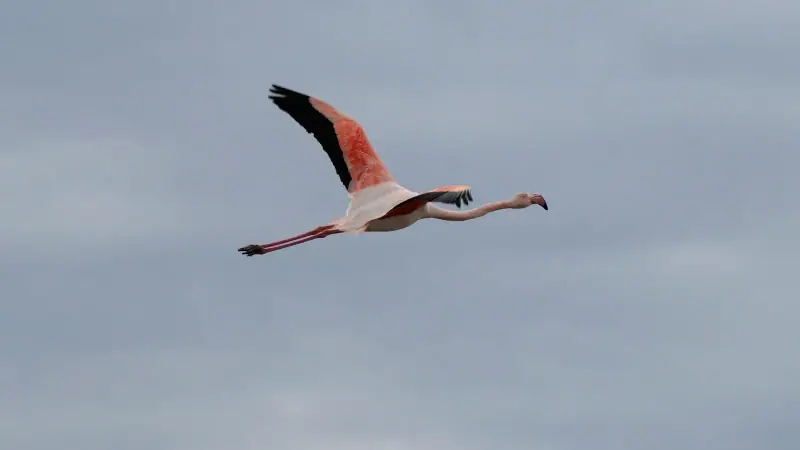
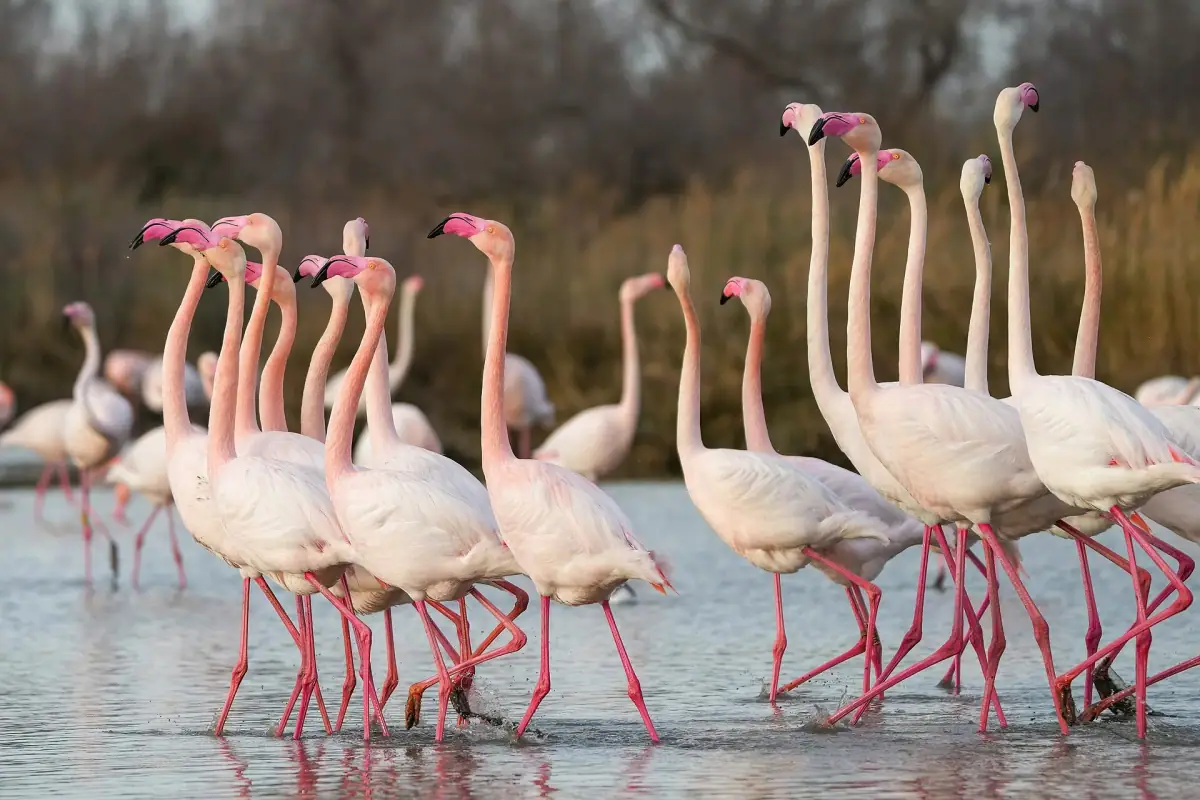
This is the region’s most famous image, and it does not disappoint. Pink flamingos feed in shallow lagoons, heads submerged, in sometimes very large groups. They are present all year in the Camargue, even if their numbers vary with the seasons and water conditions.
Where to watch them
- The Pont de Gau ornithological park, near Saintes-Maries-de-la-Mer, offers laid-out trails, observatories and lagoons where birds let you come close. It is an excellent option for a first visit, including with children.
- The roadsides between Arles and Saintes-Maries-de-la-Mer offer many viewpoints. Stop only at designated places and stay discreet: birds are sensitive to noise.
- The lagoons around Salin-de-Giraud, further east, are less visited and let you enjoy the landscape in a wilder atmosphere.
The Camargue is also a top spot for birdwatching in general: herons, egrets, avocets, storks and birds of prey are seen depending on the season. A pair of binoculars makes a big difference.
A few watching tips
- Come early in the morning or late in the day: the light is softer, birds more active and the heat less strong.
- Wear neutral colors and avoid sudden movements.
- Never try to approach nests or leave the trails: wildlife and plants are fragile.
- Bring a telephoto lens or binoculars rather than trying to get closer.
A horseback ride in gardian country
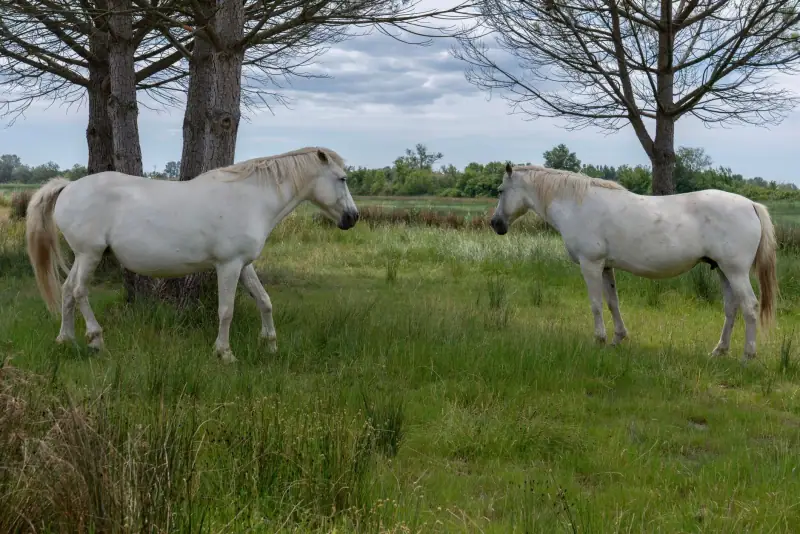
The Camargue horse, small and gray-coated, turning white in adulthood, is inseparable from the landscape. It is raised in semi-freedom, alongside bulls, by the gardians, the local herders. Riding here means following the same tracks you see on postcards, but from the inside.
Many ranches and riding centers offer rides of varying length: an hour for an introduction, half a day or more for longer outings. The flat terrain and the steady pace of the mount make the activity accessible to beginners, as long as you tell the team your level.
Choosing well
- Choose centers where groups stay small and led by a guide.
- Wear long pants, closed shoes and a hat.
- Outside summer, ask about hours: some operators reduce their activity.
- If you travel with children, ask in advance whether suitable outings are offered.
Camargue excursions
Compare horseback rides, 4x4 outings and nature excursions from Arles or Avignon.
Exploring by 4x4 or by boat
Some areas of the Camargue are hard to reach in an ordinary car. 4x4 outings let you go deep inland, on reserved tracks, to approach herds of bulls (manades), more isolated lagoons and salt-flat landscapes. They are generally narrated by a guide who knows the wildlife, plants and local traditions.
Boat rides also exist, notably from Saintes-Maries-de-la-Mer or on the Petit Rhône. They offer another view of the banks, vegetation and birds. It is a pleasant option for those who prefer to avoid walking or who travel as a family.
Saintes-Maries-de-la-Mer: beaches, church and traditions
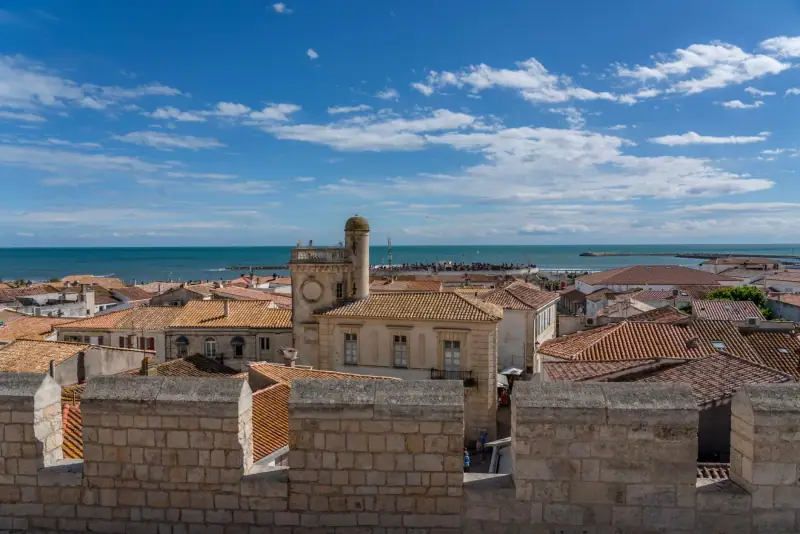
The symbolic capital of the Camargue, Saintes-Maries-de-la-Mer is a white village set between sea and lagoons. Its fortified church, overlooking the lanes, recalls the history of the place, tied to the legend of the Saintes Maries. You can climb onto its rooftop terrace for an overview of the village, the beach and the surrounding plain.
The village is also known for its annual gathering of traveling communities in May, a high point of local life, with processions and music. If you come at that time, the crowds are very heavy: book lodging well in advance.
The beaches
The sandy beaches of Saintes-Maries-de-la-Mer are one of the commune’s assets. Wide and open to the Mediterranean, they suit families as well as walkers. They are busiest from June to September. Be vigilant when the wind rises: the water can become rough and conditions change quickly.
Strolling through the village
Pedestrian streets, craft shops and terraces give the village the atmosphere of a human-scale seaside resort. The arena hosts bull events according to the local calendar. The course camarguaise, in which participants try to snatch attributes tied to the bull’s horns without harming it, is a tradition very different from the corrida.
Cycling along the sea dike
On perfectly flat terrain, the Camargue lends itself very well to cycling. The sea dike, between Saintes-Maries-de-la-Mer and Salin-de-Giraud, is a long track separating the lagoons from the Mediterranean. It is regularly cited among the most spectacular rides in the region.
- Advantages: open landscape, no elevation, many birds, magnificent light late in the day.
- To bring: plenty of water, sun protection, a hat, possibly a windbreaker. There is little shade and few resupply points on the route.
- Wind: the mistral can make the ride much harder in one direction. Check the weather before leaving and choose a loop over an overly ambitious one-way trip.
Bike rental companies are based in Saintes-Maries-de-la-Mer and a few neighboring towns. Ask locally about the state of the tracks and any access restrictions, which can vary with the season and weather.
Stay in the Camargue
Compare accommodation in Arles and the surroundings to easily reach the Camargue.
The salt pans and fleur de sel
Another face of the Camargue: the salt marshes. In the south, around Salin-de-Giraud, large expanses of shallow water are used to produce salt, an old know-how in the region. Depending on conditions and light, some basins take on spectacular pink or purple shades, linked to the presence of micro-organisms.
Depending on the period, visits or viewpoints help you better understand salt production and the landscape. Find out in advance about access and visiting conditions, which can change. Camargue fleur de sel is an easy edible souvenir to bring home, best bought from producers or local shops.
Manades, bulls and Camargue traditions
Camargue culture revolves around the manades, the breeding ranches for bulls and horses. Several of them open their doors to visitors: you discover the work of the gardians, the herds and sometimes cattle-sorting techniques. Some offer a typical meal based on bull meat, a local specialty often served as gardianne, a stew simmered in red wine.
To experience this tradition, you can also attend a course camarguaise in the arena of a village in the region, according to the season’s calendar. It is a popular, family show that immerses you in local life. If you like village festivals, it is an experience to add to your itinerary.
Arles, the ideal gateway
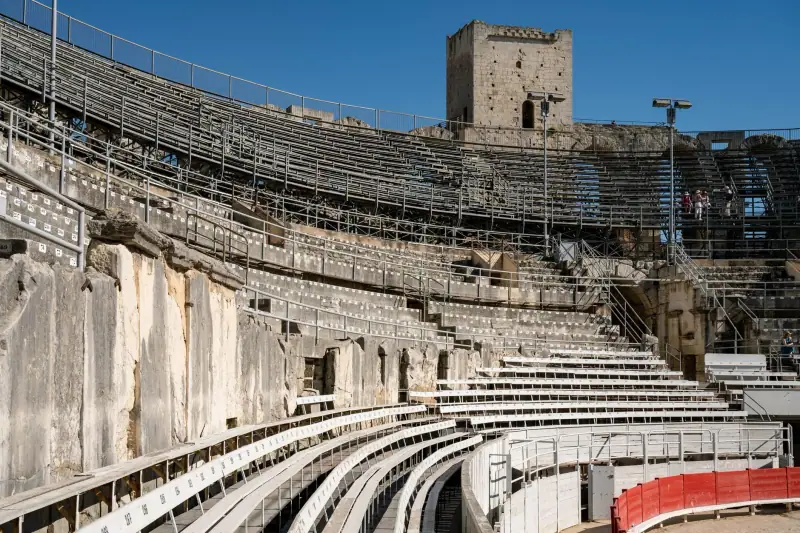
Many visitors choose Arles as a base to explore the Camargue. The Roman town, with its amphitheater and ancient theater, deserves half a day of sightseeing on its own. It is also a practical starting point for Camargue excursions: trips to Saintes-Maries-de-la-Mer generally take under an hour by road, about 40 kilometers (25 mi).
To combine Arles, the Alpilles, the Luberon and the Camargue in one stay, see our 5-day Provence itinerary. It details a balanced and realistic route by car. To choose your base, the guide where to stay in Provence compares the most practical options.
When to go to the Camargue
Each season has its assets, and the Camargue can be visited almost all year.
- Spring (April to June): nature is green, birds active, temperatures pleasant. An ideal period for hiking and cycling. Mosquitoes begin to appear late in the season.
- Summer (July-August): marked heat, lively beaches, heavy crowds. Activities happen mostly early in the morning or late in the afternoon. Mosquitoes are very present.
- Fall (September to November): golden light, fewer people, sea still pleasant early in the season. Many travelers consider it the best time for photography.
- Winter: calm, wild atmosphere, cool temperatures, possible wind. Some operators are closed or on reduced hours, but the landscapes remain superb.
To compare seasons across the whole region, read our guide to when to go to Provence.
How to get there and get around
A car is the most practical way to explore the Camargue: sites are scattered and public transport is limited. The trip between Arles and Saintes-Maries-de-la-Mer is on a single road, sometimes busy in summer. Allow extra time, especially in high season.
If you don’t drive, buses link Arles to Saintes-Maries-de-la-Mer, with frequencies that vary by period. Once there, bikes and organized excursions complement the offer effectively. Our guide to getting around Provence details the options by car, train and bus.
Practical tips before you go
- Mosquitoes: bring an effective repellent, especially from spring to fall.
- Sun and wind: open areas offer little shade. A hat, sunglasses and sunscreen are essential, and a windbreaker can help outside summer.
- Shoes: sneakers or walking shoes are enough. For horseback rides, wear closed shoes.
- Respect for nature: stay on the trails, don’t disturb wildlife, take your litter with you.
- Binoculars and camera: they make all the difference for enjoying the birds fully.
- Water: carry plenty of water, notably for cycling.
A suggested plan for a first stay
If you have only one day, here is a balanced program: a morning of birdwatching in a laid-out park, a horseback or 4x4 outing in the middle of the day, then an afternoon in Saintes-Maries-de-la-Mer, climbing to the church roof and free time on the beach. End with a quiet sunset over the lagoons.
With two days, add a bike ride on the sea dike and a visit to the salt pans. You will then have a complete overview of the Camargue, between nature, traditions and landscapes. Whatever the formula, set out without rushing too much: slowness is what makes the charm of the trip here.
Frequently asked questions
What is the best time to see pink flamingos in the Camargue?
Flamingos are present all year, because part of the population stays there. Spring and early summer let you watch them in large numbers, in beautiful light. Fall is also very pleasant, with fewer people and milder temperatures.
Can you visit the Camargue without a car?
It is possible but restrictive. Bus connections exist between Arles and Saintes-Maries-de-la-Mer, but the natural sites are scattered. A bike rented there helps cover trips around Saintes-Maries, on flat terrain. Check bus timetables before you go, as they vary by season.
How much time should you allow for the Camargue?
A full day lets you see the essentials: an observation park, a horseback ride or 4x4 outing and Saintes-Maries-de-la-Mer. With two days, you enjoy the lagoons, the sea dike and the salt pans without rushing.
Are mosquitoes a problem in the Camargue?
Yes, in marsh areas, especially from late spring to fall and at dusk. Bring repellent, wear covering clothes in the evening and avoid lingering near stagnant water after sunset.
Are horseback rides accessible to beginners?
Yes. Many ranches offer guided walking-pace rides suited to beginners, sometimes from a very young age. As the terrain is flat, it is a good way to get started. State your level when booking and wear long pants and closed shoes.
Can you swim at Saintes-Maries-de-la-Mer?
Yes, the commune has long sandy beaches open to the Mediterranean. Swimming is generally pleasant from June to September. Follow safety instructions and flags, especially when the wind rises.
Do you need to book Camargue activities in advance?
In summer, during school holiday periods and at big local events, it is wise to book horseback rides, 4x4 outings and lodging. Off-season, you will find space more easily, but some operators reduce their opening days.
More Provence guides
Keep reading
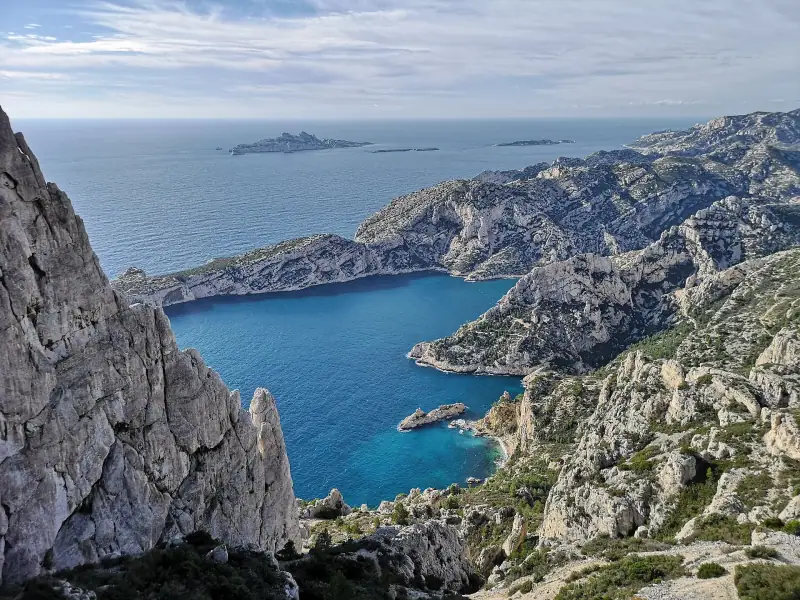
Calanque de Sugiton: mandatory reservation, dates, how to book and alternatives
Sugiton requires a free reservation in summer: 2026 dates, booking opens 3 days ahead, 400 spots a day, access from Luminy and calanques without booking.
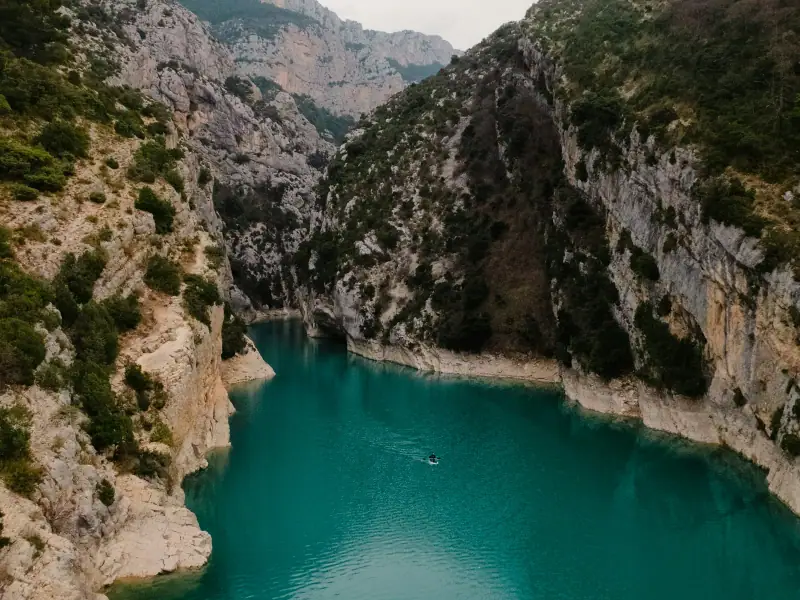
Verdon Gorge: hiking, kayaking and activities not to miss
Verdon Gorge: hiking trails, kayaking, pedal boats, the Route des Crêtes, canyoning and practical tips to plan your activities by season.
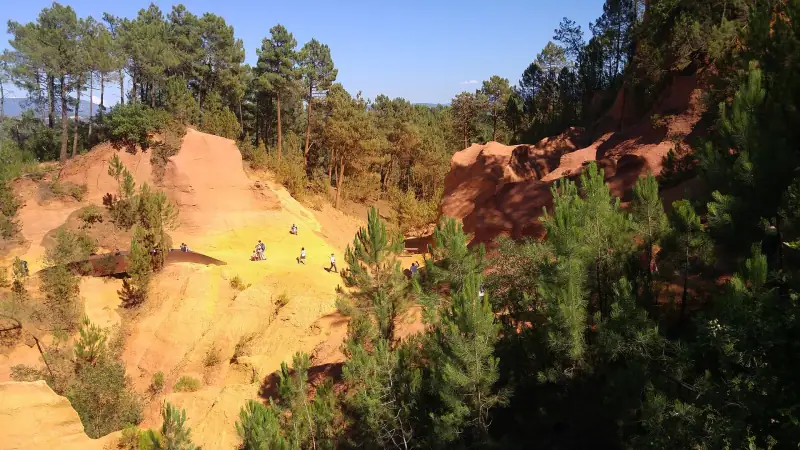
Roussillon Ocher Trail: price, hours, duration and practical tips
Roussillon Ocher Trail: €3.50 ticket, 30 or 50 minutes on foot, hours by season, parking, dogs, strollers and what to wear.
Ready-made
Provence itineraries
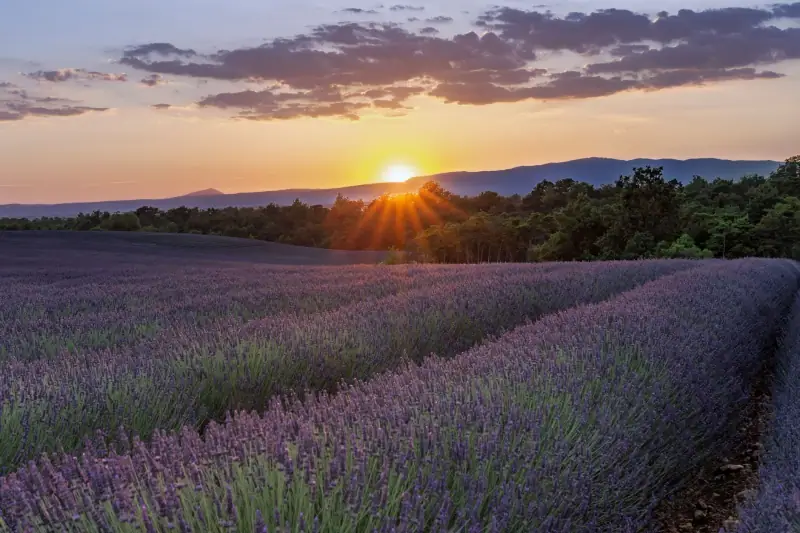
3 days
Lavender route in Provence in 3 days: Valensole, Sault and the Luberon, stops and distances
Moustiers-Sainte-MarieSault
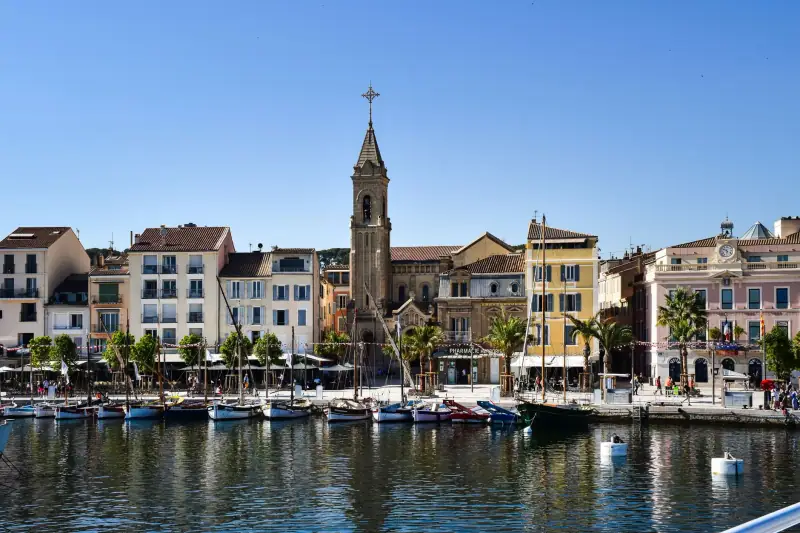
3 days
3 days between Marseille, Cassis and Aix-en-Provence: a detailed itinerary
3-day Provence itinerary: Marseille and the Vieux-Port, Cassis calanques, Aix-en-Provence and its fountains. Day by day, distances and tips.
5 days
5-day Provence itinerary: Avignon, Luberon, Alpilles and Camargue
A day-by-day 5-day Provence itinerary: Avignon, Luberon, Alpilles, Arles, Camargue, Aix and Cassis, with realistic distances and practical tips.
Can be adapted in the planner