Things to do
Portugal with kids: trip ideas and family activities
We may earn a commission when you book through links on this page, at no extra cost to you. We don't visit or try the places we cover: we summarize published sources. How we work
In short
- Keep to two or three overnight bases for a week, and plan one major activity per half day.
- In Lisbon, the Parque das Nações district groups the Oceanário, the Pavilhão do Conhecimento science museum and flat, open ground that is easier with a stroller than the old-town hills.
- Coimbra has the Portugal dos Pequenitos miniature park; Aveiro's moliceiro boats and flat streets suit families.
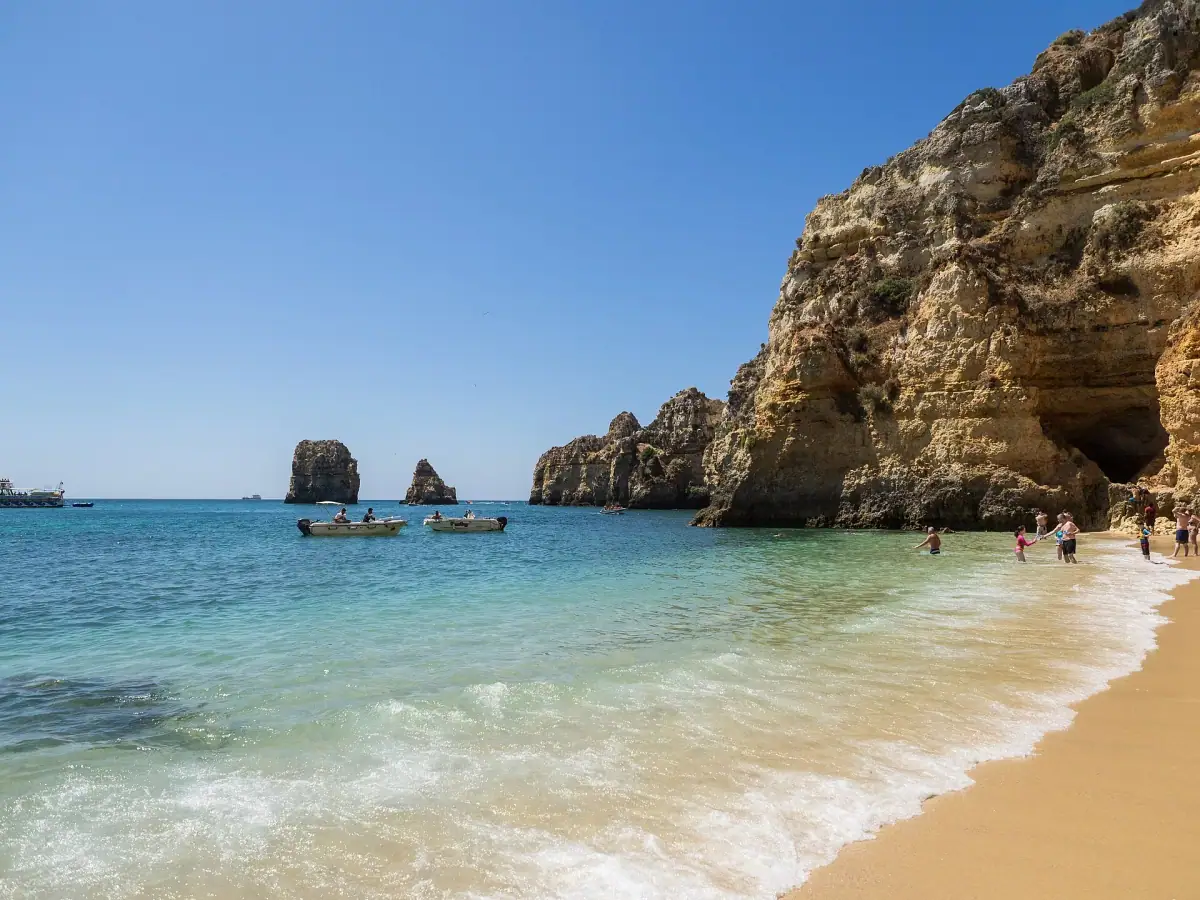
- Atlantic beaches can have strong waves and currents: swim only at supervised beaches and follow the day's flag.
Traveling to Portugal with children is simpler than you might think. Families are well received, meals are relaxed, distances stay reasonable and activities are varied: a big aquarium, interactive museums, castles that fire the imagination, colorful villages, beaches and, for the more adventurous, the levadas and landscapes of Madeira. All in a country where the climate is mild for a good part of the year.
This guide does not just list attractions. It suggests a way to organize a stay: how many places to sleep in, which activities to keep depending on age, how to alternate highlights and quiet times, and which pitfalls to avoid (cobblestones, sun, overloaded drives). You will find ideas for Lisbon, Sintra, Coimbra, Aveiro, the coast and Madeira.
Principles of a successful trip with children
Before choosing activities, a few simple rules make the difference between a relaxed vacation and an exhausting race between stops.
Limit changes of lodging. With children, each move costs half a day between suitcases, trips and tiredness. For a week, two or three bases are plenty. Our one-week Portugal itinerary offers a realistic sequence that you can adapt by slowing the pace.
One major activity per half day. An aquarium in the morning, a nap or a break in the park in the afternoon: that is a rhythm everyone can handle. Children also need free time to play on a square, eat an ice cream or watch the pigeons, and these moments often count as much as the sights.
Plan for the sun. From spring, the sun is strong, and even more so between June and September. A hat, sunglasses, sunscreen, water and breaks in the shade are essential. Our guide to when to go to Portugal helps you choose the most comfortable season for your family: spring and early fall are often a good compromise between heat and crowds.
Adapt logistics to age. The cobblestones of the historic neighborhoods and the steep slopes are hard going with a regular stroller. For babies and toddlers, a baby carrier or an all-terrain stroller is often more practical; for older children, bring good shoes and accept walking less than planned.
Lisbon: the aquarium, science and animals
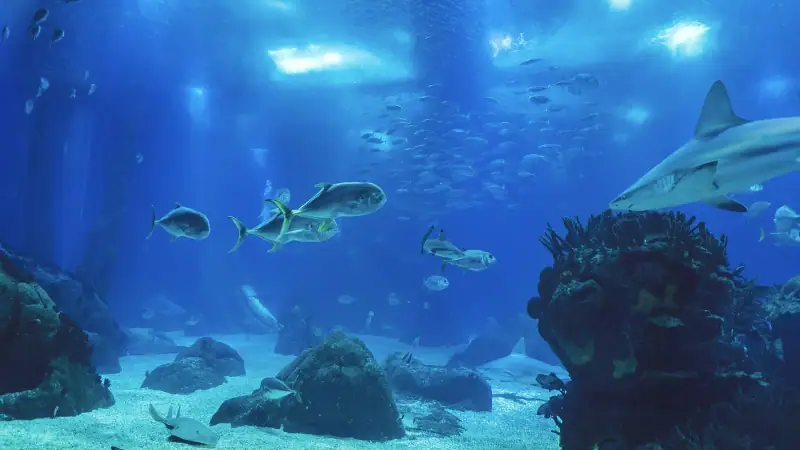
Family activities and tours in Lisbon
Compare excursions, guided tours and child-friendly activities from Lisbon: boat rides, tastings and day outings.
The capital concentrates the outings that are easiest to organize with children, and most are grouped in the modern Parque das Nações district, built for the 1998 World Expo, east of the center. Within a few hundred meters you find enough to fill a whole day, with flat, open spaces, much more pleasant with a stroller than the hills of the old town.
The Lisbon Oceanário is the stop families like most. Its tanks hold more than 500 species, according to the official site, and the route can be done at your own pace, which suits toddlers and older children alike. The site also offers educational programs and children’s activities, including a night among the sharks from age 4, an experience that requires booking ahead and costs more than a simple visit. The aquarium is open every day, with hours that vary on certain holidays: check them on the official site before coming.
The Pavilhão do Conhecimento is an interactive science museum, located nearby. It belongs to the family of interactive museums: you handle, experiment, test. It is an excellent rainy-day plan, liked by children aged 6 to 12, but younger ones find fun there too. See the official site for the current exhibitions, which change.
The Lisbon Zoo completes the program for animal lovers. The official site mentions a cable car that flies over the park, children’s activities and holiday programs. The park is large: bring good shoes and a stroller suited to the paths.
For the rest of the city, you can offer children a “mini-tour”: a tram ride on a little-used line at off-peak hours, a snack in a pastry shop, a viewpoint and a garden to run in. Avoid trying to see everything. Our three-day Lisbon program gives you the list of major sights: for a family, choose one or two a day instead of following the itinerary to the letter.
As for meals, Portuguese food is very accessible to children: grilled meats, rice, potatoes, soups, grilled fish, fresh fruit. Also know that bread, butter and olives placed on the table are charged if you touch them, as our article on the cover charge at restaurants explains.
Sintra: palaces and fairy-tale forests

For children, Sintra is an ideal setting: colorful palaces on top of wooded hills, towers, parks and paths under the trees. Pena Park and Palace are the most spectacular, with their yellow and red facades, but the whole hill range is large and steep.
The main challenge is logistical: steep roads, heavy traffic in the warm season and walking between monuments. With children, visit only one or two sites in the day, and save energy for the gardens rather than the interiors. Older children are often more drawn to gardens, grottoes, passages and towers than to museum rooms. Little ones can tire quickly: a baby carrier is then more practical than a stroller.
Our guide to visiting Sintra in a day from Lisbon details access and means of transport. If you travel with very young children, consider splitting the visit over two half days rather than packing everything into one, or stay overnight in Sintra: our article where to stay in Sintra compares the areas.
Coimbra: Portugal in miniature
In Coimbra, one address is made for children: the Portugal dos Pequenitos park. It presents, at a child’s scale, monuments and typical houses of the country, as well as references to the Portuguese-speaking world. Open since 1940 and run by the Bissaya Barreto Foundation, it is one of the oldest parks of this kind in Portugal. Children can enter some of the little houses, climb, run and get an idea of the country’s architecture while playing.
The park takes about half a day. It combines well with discovering the university town, which appeals mostly to older children: the tiered old town, the student tradition and the famous library. Our article on visiting Coimbra in a day offers a plan you can shorten. For lodging, see where to stay in Coimbra.
A tip: start the day with the park, when children have the most energy, then go up to the upper town at the end of the afternoon, planning breaks. The climbs are steep and cobbled.
Aveiro and the coast: boats, colors and beach
Aveiro, often nicknamed the “Portuguese Venice”, is an ideal stop for families. The colorful boats that crisscross the canals, called moliceiros, delight children, and the town is flat, so easy with a stroller. The striped houses and the beaches of the neighboring coast add a change of scenery. You will find the practical details in our guide to visiting Aveiro; for lodging, see where to stay in Aveiro.
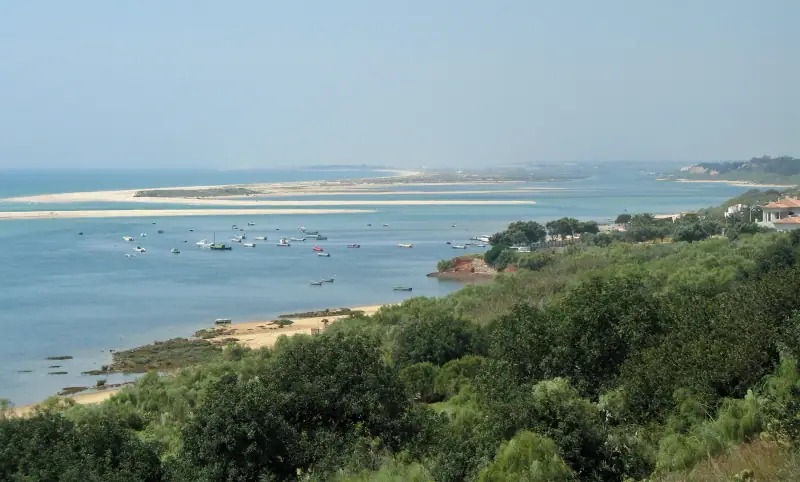
For beaches, a few safety rules apply. The Atlantic Ocean is not the Mediterranean: waves, currents and tides can surprise you. Choose a supervised beach, respect the day’s flag, keep children within arm’s reach and avoid swimming outside the marked zones. Lagoons, like that of Óbidos, offer calmer water and suit little ones better. Our guide to visiting Óbidos says more about this fortified village and its lagoon; be careful, however, around the ramparts, which do not have guardrails everywhere.
Rent a car to get around as a family
To chain villages, coast and parks at your own pace, with luggage and the children's gear, compare rental companies.
Porto and the north: a calmer pace
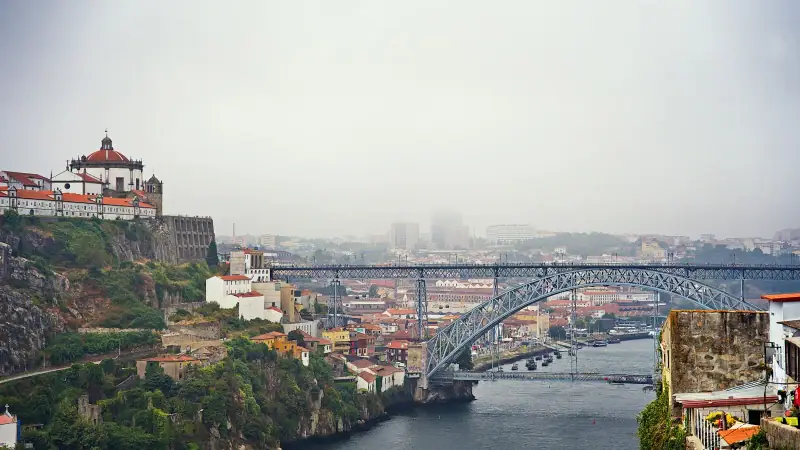
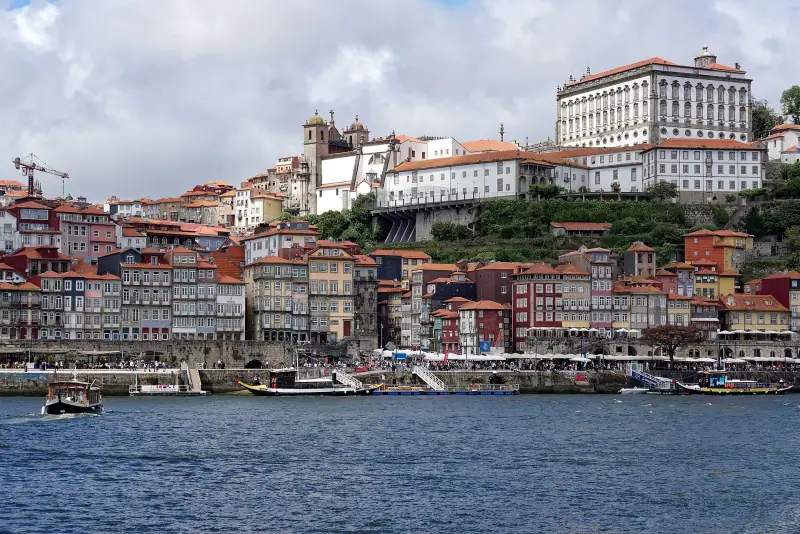
Porto charms families with its human-scale city atmosphere, its lively Douro banks and its bridges. For children, the walk along the river is often the best moment: you watch the boats, eat an ice cream, observe the seagulls. The slopes are steep, and the lower town is built on terraces: plan breaks and public transport to go back up.
Avoid overloading the program: one monument or museum a day is plenty. Our three-day Porto program will help you select the most suitable stops. For lodging, see where to stay in Porto. The Douro Valley, longer to cover by car, suits children over 6-7 better, who will not be too tired by the trips.
Évora and the Alentejo: white villages and wide open spaces
The Alentejo offers another Portugal: open plains, white villages, very clear skies. Évora, a historic town, is visited on foot and lends itself to a walk on the squares and in the lanes. Some sites, such as ossuaries and other somber places, suit young children less: choose according to their sensitivity.
With children, the Alentejo is mostly lived as a quiet stop: the countryside, farm animals at some rural lodgings, pools to cool off in summer. The heat can be very intense in midsummer, hence the interest in favoring spring or early fall. Our guide to visiting Évora details the town, and the article what to see in the Alentejo gives an overview of the region.
Madeira with the family: nature and gentle adventure
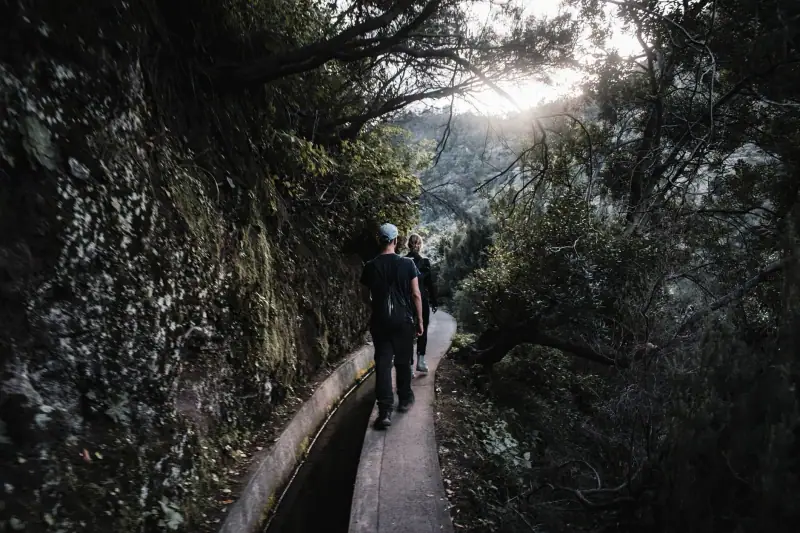
Madeira is a destination more and more chosen by families, with spectacular nature reachable without too much effort. In Funchal, the cable car that goes up to the Monte district delights children. Up there, you find a tropical garden and the famous wicker toboggan ride, a traditional attraction; check rates, hours and access conditions (notably the minimum age) before going, as they change.
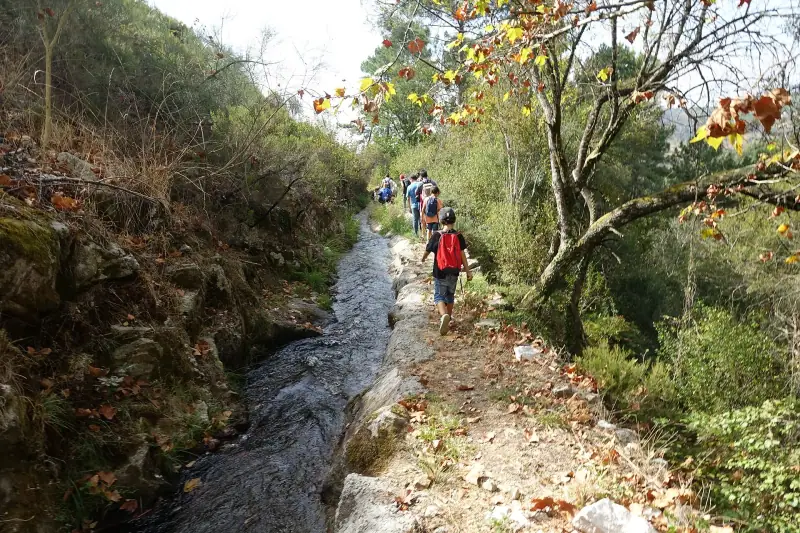
The levadas, those irrigation canals lined with paths, offer walks in lush vegetation. They are not all equal: some are flat and easy, others have exposed passages, dark tunnels or elevation changes that do not suit young children. Choose short routes, without drops, and find out about the state of the trails. Our guide to hiking the levadas helps you sort them. For the city, see visiting Funchal and, for a complete program, the 5-day Madeira itinerary. The article where to stay in Funchal compares the areas.
Finding family-friendly lodging
Apartments with a kitchen, family rooms, a pool: compare lodging by dates and the size of your family.
Which lodging to choose with children?
The type of lodging strongly influences the comfort of the stay. Apartments or studios with a kitchen are very practical: they let you prepare breakfast, warm a bottle or a meal and not depend on restaurant hours. They also offer more space for naps, the children’s bedtime often being out of step with yours on vacation.
Family hotels with connecting rooms or suites are an alternative, especially if you want breakfast included. In the countryside, rural lodgings with a garden or pool delight children, but require a car. In Lisbon, choose an apartment or a well-served neighborhood: our article where to stay in Lisbon compares the areas. In every case, check access: stairs, elevator, street slope, as old buildings do not always have an elevator and the streets can be cobbled and steep.
Always ask in advance whether a crib or extra bed is available, and at what price. Conditions vary from one property to another.
Organizing a week as a family: an example of pace
Here is an example of an eight-day stay, to adapt to your children’s ages and your budget. It assumes an arrival in Lisbon, a stop in central Portugal and a return via the capital.
- Days 1 to 3: Lisbon. A quiet first day (walk, garden, snack), a day at the Parque das Nações (aquarium, science museum), then a day of your choice: zoo or excursion to Sintra.
- Day 4: drive to central Portugal. Stop at Óbidos for the village, then arrival in Coimbra for the night.
- Day 5: Coimbra. Morning at the Portugal dos Pequenitos park, free afternoon in town.
- Day 6: Aveiro. Boat ride on the canals and ice cream in the center. Possible afternoon at the beach, if the weather allows and if swimming is supervised.
- Days 7 and 8: back to Lisbon. A freer day, souvenir shopping and last pastéis de nata before the flight.
This itinerary has only three or four lodging bases and few long drives. If you prefer to stay in one place, Lisbon lends itself very well to a hub-and-spoke stay with day excursions. For the budget, our article on the budget for a trip to Portugal helps you estimate basic costs; add activity entries, which add up fast with a family.
Practical tips for traveling with children
- Health and safety. Check the official travel advice of your government before departure: travel.state.gov (US), GOV.UK (UK), travel.gc.ca (Canada), Smartraveller (Australia) (checked November 2026). For health questions, ask your doctor or a travel clinic, and see the official travel health pages (CDC in the US, TravelHealthPro in the UK).
- Entry rules. Entry rules depend on your passport, and each child, even a baby, needs their own valid ID. Check the official sources above before you book, including for special cases such as traveling with one parent.
- Insurance. Travel insurance covers medical costs and unforeseen events, useful with children.
- Meals. Portuguese dinner hours are on the late side, but restaurants generally serve families early or offer children’s menus. Ask for half portions, often possible.
- Water and snacks. Always keep water and a snack: lines and trips are longer than you think.
- Stroller or baby carrier. In the historic neighborhoods, a baby carrier avoids many detours. In the modern city and in parks, a stroller remains comfortable.
- Gear. Bring a hat, a cap, sunglasses, a light layer for the evening and comfortable closed shoes for the cobblestones.
Traveling with teenagers: adapting the program
Teens have other expectations. They enjoy activities that move and experiences to share: surfing or a lesson on the Atlantic coast, bike or electric scooter rides in town, cooking workshops, slightly offbeat visits, street art and markets. Involve them in choosing the program: for example, let them decide on a half day.
For teens, walking distances are generally no problem, and public transport becomes an activity in itself, like the funicular or the tram in Lisbon. Food can also become a game: taste pastéis de nata in several pastry shops and vote for the best. To structure these discoveries, our guide to Portugal’s culinary specialties lists the dishes to try.
Sources
Frequently asked questions
Is Portugal suitable for trips with young children?
Yes, it is a destination known for being welcoming to families: children are well received in restaurants and distances are short. The main challenges are practical: cobblestones and slopes with a stroller, strong sun in summer and sometimes long car trips.
What is the best age to visit Lisbon with children?
From about 4-5 years old, children enjoy the headline outings such as the aquarium, the zoo or interactive museums. Before that age, a baby carrier or an all-terrain stroller is better than the town's cobbled hills, and it is best to limit the program to one activity per half day.
How many days should you plan for a family stay?
A week lets you combine a city (Lisbon or Porto), a calmer stop such as Coimbra or Aveiro and a day of nature or beach. With children, it is better to sleep in two or three places at most rather than change hotels every night.
Should you rent a car for a family trip to Portugal?
It is not essential for a stay centered on Lisbon, Porto or Coimbra, well served by train and bus. A car becomes useful for the coast, villages and parks outside the towns, and it simplifies logistics with car seats and kids' luggage. Remember to reserve child seats with the rental company.
What can you do when it rains with children?
Portugal offers many indoor activities: aquarium, interactive science museums, a zoo with sheltered areas, pastel de nata workshops, pastry shop visits or indoor play areas in shopping centers. Fall and winter are rainier, especially in the north.
Are Portuguese beaches safe for children?
Many beaches are supervised in season, but the Atlantic Ocean can be powerful, with waves and currents. Respect the day's flag, swim only in supervised areas and keep children within arm's reach. Lagoons and sheltered beaches are calmer for little ones.
Where can you find official information to prepare the trip?
Check the official travel advice of your government: travel.state.gov (US), GOV.UK (UK), travel.gc.ca (Canada), Smartraveller (Australia). For health information, see the CDC travel pages in the US or TravelHealthPro in the UK, and ask your doctor or a travel clinic.
More Portugal guides
Keep reading
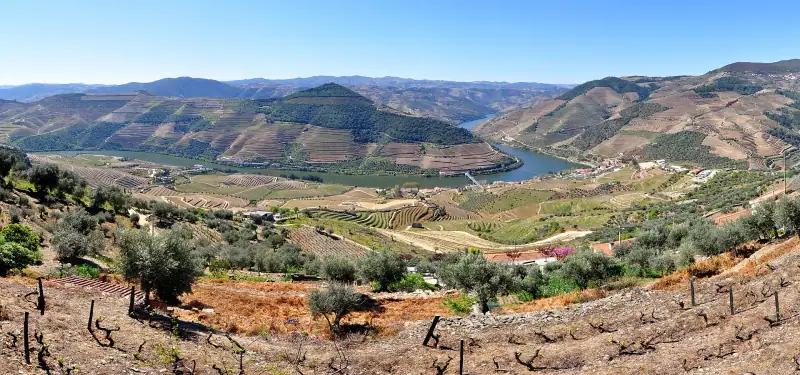
Douro Valley in 2 days from Porto: vineyards, train and cruise
Visit the Douro Valley in 2 days from Porto: train, Pinhão, Peso da Régua, viewpoints, quintas and a river cruise. A realistic plan with tips and seasons.
Hiking the levadas of Madeira: trails, booking and tips
Madeira's levadas in practice: Caldeirão Verde, 25 Fontes, Pico Ruivo, mandatory online booking, fee, gear and mistakes to avoid for walking them well.

Portugal trip budget: real costs and 3 priced profiles
How much does a trip to Portugal cost? Lodging, transport, meals, activities: prices item by item, three sample budgets and tips to spend less.
Ready-made
Portugal itineraries
3 days
Porto in 3 days: a day-by-day itinerary
What to do in Porto in 3 days: Ribeira, São Bento azulejos, Gaia port cellars, Foz and a Douro Valley excursion. A relaxed day-by-day plan.

3 days
Lisbon in 3 days: day-by-day itinerary, neighborhoods and tips
What to do in Lisbon in 3 days: Baixa, Alfama, Belém, miradouros, Bairro Alto, pastéis de nata and transport tips for a relaxed stay.

1 day
Sintra in a day from Lisbon: itinerary and tips
Sintra in one day from Lisbon: train, Pena Palace, Quinta da Regaleira, Moorish Castle and old town. A realistic itinerary and tips to avoid the crowds.