Things to do
Hiking the levadas of Madeira: trails, booking and tips
We may earn a commission when you book through links on this page, at no extra cost to you. We don't visit or try the places we cover: we summarize published sources. How we work
In short
- Levadas are irrigation canals; the maintenance paths beside them are among Europe's finest hikes, in a network of over 2,000 km (1,240 mi).
- Classified trails such as PR6 (25 Fontes) and PR9 (Caldeirão Verde) require online booking with a time slot and a fee on the official SIMplifica portal; rules change, so check.
- Caldeirão Verde is about 17 km (10.5 mi) round trip and 5 to 6 h 30 of walking; bring a headlamp for the tunnels.
- Funchal is the most practical base; keep a spare day, as in Madeira the weather decides.
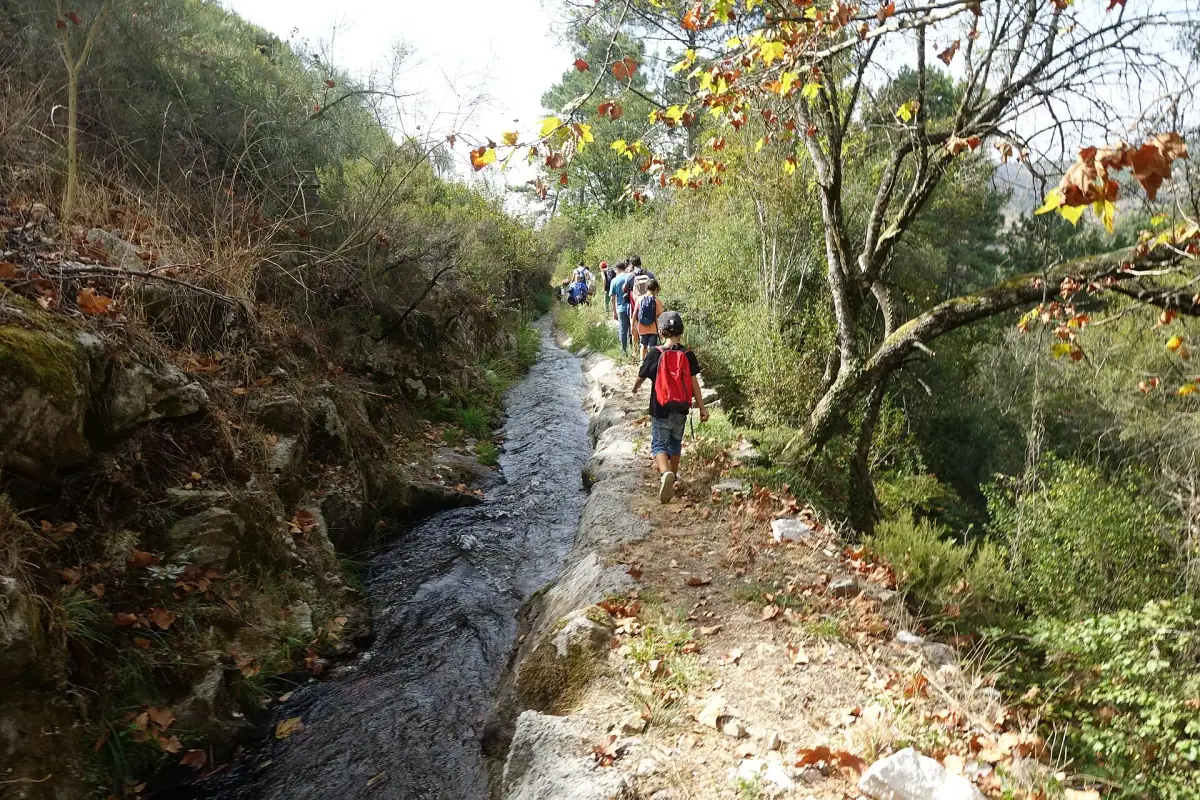
In Madeira, you do not just walk in the mountains: you follow the water. The levadas are irrigation canals built over the centuries to carry water from the wet heights, in the north and center, to the farming terraces of the south. Together they form a network of more than 2,000 km (1,240 mi), and the maintenance paths that run beside them, narrow but gently sloping, offer some of the most beautiful hikes in Europe: laurel forest, waterfalls, tunnels, cliffs.
You still have to choose the right levada, understand the booking system and set out well equipped. That is the purpose of this guide. To set your dates, first see our article on the best time to go to Portugal, which details the island’s climate and its microclimates.
How the levadas work (and why they are so beautiful)
Madeira is a steep volcanic island. Rain falls mostly on the reliefs of the north and center, while the crops, notably sugar cane, then bananas and vines, are in the drier south. The islanders therefore dug canals in the rock, sometimes along cliff faces, to divert the water. The keepers of these canals opened paths to maintain them: these are the paths we walk today.
Two main families of hikes stand out. “Plateau” levadas follow the canal with very little elevation change and suit almost everyone. Trails leading to waterfalls or cirques, on the other hand, have narrow passages, tunnels and sometimes a drop on one side. The elevation gain is small, but vertigo, dampness and length can make the day demanding.
Levada do Caldeirão Verde: the great classic of the north
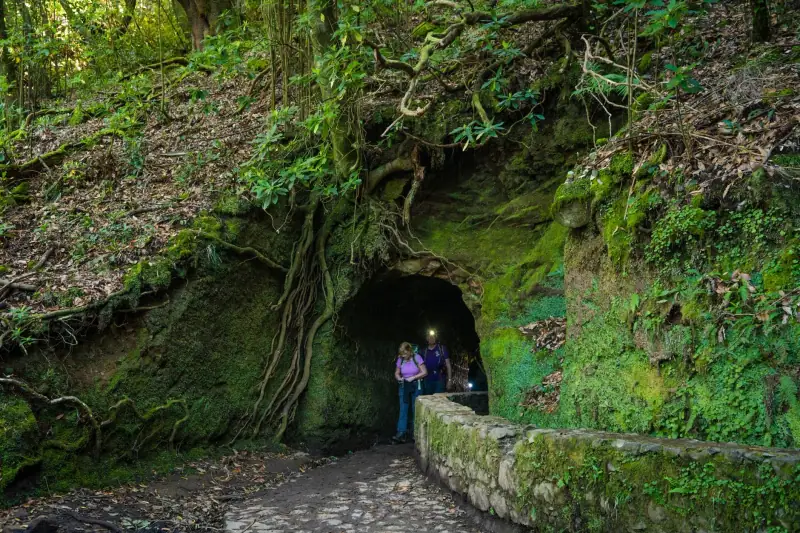
On the north coast, near Santana, the Levada do Caldeirão Verde (marked trail PR9) is one of the most picturesque hikes on the island. It starts from the Queimadas recreation area and takes you to the “green cauldron”, a rocky cirque where a waterfall of about a hundred meters (330 ft) falls. According to the official sheet, allow about 17 km (10.5 mi) round trip and 5 to 6 h 30 of walking, breaks extra: it is a full day.
The levada slips through dense vegetation, clings to vertical walls and plunges into several tunnels. A headlamp is essential. Some passages are narrow and exposed: if you are uneasy with heights, move slowly and keep to the wall side. After rain, the ground becomes slippery. Leave early, as the parking lots fill fast and the trail is more pleasant without the crowd.
Guided levada hike
Without a car, or to avoid worrying about transport and slots: compare guided hikes with pickup in Funchal.
Levada das 25 Fontes: waterfalls and laurel forest at Rabaçal
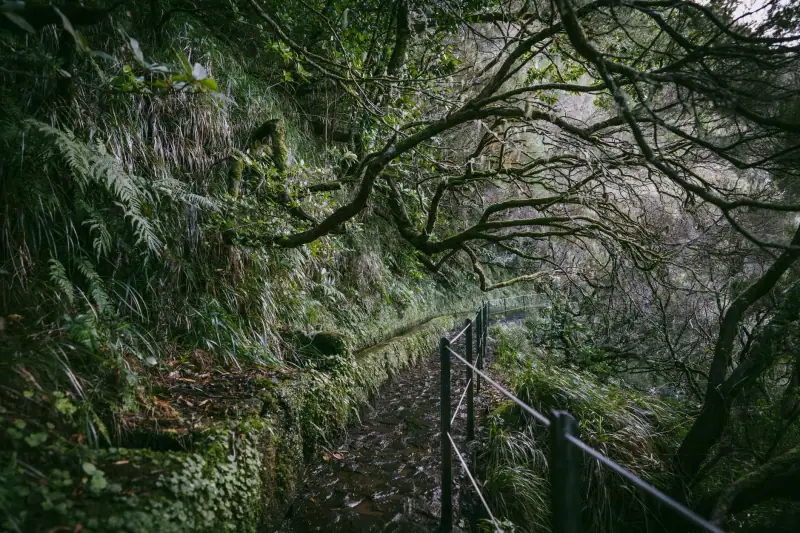
In the west of the island, the Rabaçal valley holds the Levada das 25 Fontes (PR6), one of Madeira’s most emblematic hikes. The trail starts from a parking lot on the ER110 road, near the Paul da Serra plateau, and descends into a laurel forest listed as a UNESCO World Heritage site, before reaching a pool fed by several waterfalls.
The main trap is the return: the descent on the way out turns into a climb on the way back, with many steps. Allow half a day and keep some energy. This hike is very busy, especially in the middle of the day. The timed entry slots are meant to spread the crowds, as we explain below.
Pico do Arieiro to Pico Ruivo: the high mountain
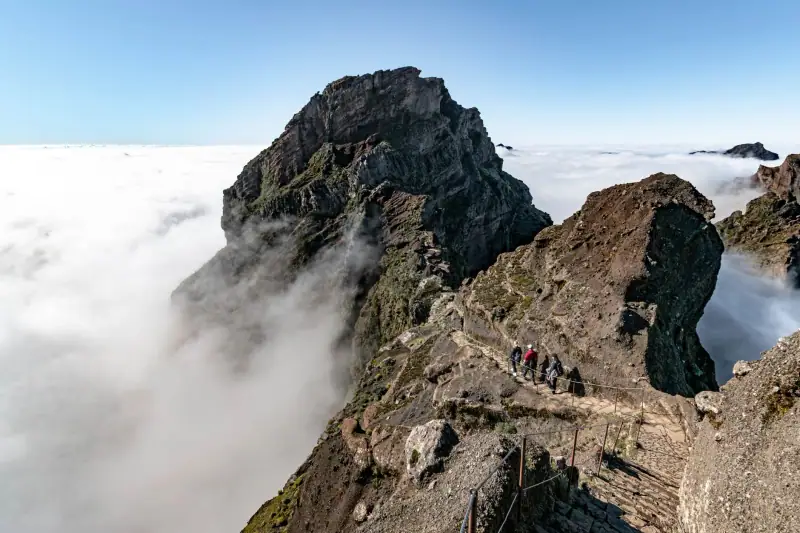
For a change from the levadas, the PR1 links Pico do Arieiro to Pico Ruivo, two of the island’s highest summits, by a spectacular ridge with stairs, tunnels and sections on the crest. It is one of the most famous hikes in Madeira, but also one of the most demanding: plan a full day, good shoes, water and warm clothing, as it is clearly cooler and often cloudy at altitude.
A shorter variant, the PR1.2, climbs to Pico Ruivo from Achada do Teixeira. It suits those who want to reach the island’s highest point without doing the whole ridge. Whichever you choose, look at the day’s weather: fog can hide the views entirely.
Where to stay in Funchal before your hikes
Funchal is the most practical base for exploring the island. Compare lodging by dates.
Booking, fee and time slots: what to know
This is the point that has changed most in recent years. Classified trails run by the regional forestry authorities now work with online booking, a fee and 30-minute entry slots. Booking is done on the regional government’s official portal, SIMplifica: you create an account, choose the trail, the date and the time, then pay online.
According to information published by specialist sites, the fee is about €4.50 (~$5) per classified trail, with a higher rate for the full PR1, and a reduced rate for customers of certain contracted operators. Children aged 12 or under and residents are exempt. These rules and amounts can change: check them on the official portal before you go, and book ahead in high season.
Not all trails are concerned, and many short levadas remain free to access. When in doubt, the simplest is to check the booking requirement for your trail on the portal.
Gear and safety: the essentials
Most accidents on the levadas come down to a lack of preparation. A few simple rules:
- Walking shoes with a lugged sole: the stones are wet and slippery.
- Headlamp for the tunnels, more practical than a phone.
- Waterproof jacket and a warm layer: the weather changes fast with altitude.
- Water and snacks: there are no shops on the trails.
- The day’s weather: give up in case of heavy rain or strong wind.
- Charged phone and a power bank. The European emergency number is 112.
Also tell someone your route, especially if you walk alone. Stay on the path and do not venture onto the edge of the canal: the little wall is narrow.
Excursions and activities in Madeira
Hikes, boat trips, visits of Funchal: compare the activities available on the island.
Organizing your hiking week from Funchal
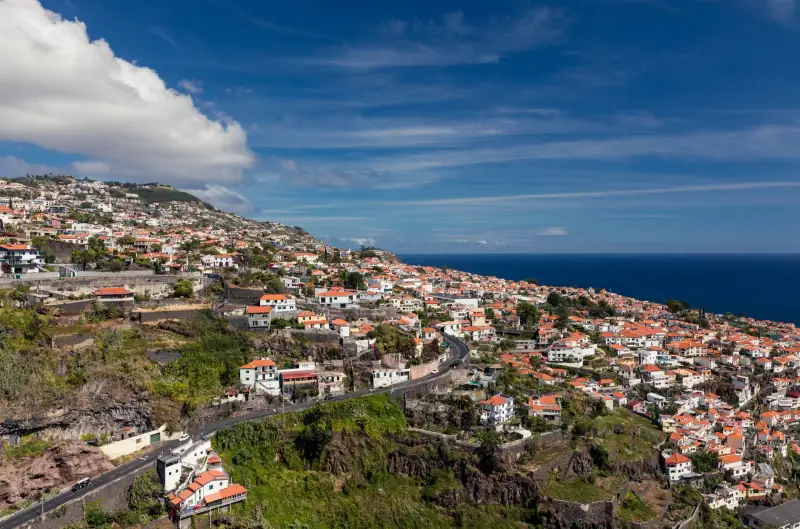
Funchal, on the south coast, is the best base: varied lodging, restaurants and departures for many excursions. Most of the trails mentioned are reached by car or an organized excursion in half an hour to an hour and a half of driving, depending on the start. For the detail of travel times, always check on an online map before leaving.
A simple organization: one day for a short, easy levada to warm up, one day for a big hike (Caldeirão Verde or 25 Fontes), one rest day in Funchal or on the coast, then a high-mountain day if the weather allows. Always keep a spare day: in Madeira, the weather decides.
As for food, after the effort, try the local specialties. Our guide to what to eat in Portugal gives you the basics of Portuguese cooking to round out your stay.
If you then travel on the mainland, our guide where to stay in Lisbon can help you prepare the next stop.
Travel insurance: a useful precaution
A mountain hike, even a marked one, carries risks of falls or injury. Travel insurance with assistance is a reasonable precaution.
Before booking, check what your contract really covers: medical assistance abroad, medical repatriation, coverage of search or rescue costs, and above all the exclusions tied to sports and mountain hiking. Some policies distinguish simple marked walking from more committed activities, and the difference is found in the general conditions.
Also carry your insurer’s contact details and the contract references. In case of trouble, these few items save precious time, far from the roads and sometimes without a signal.
Frequently asked questions
What is a levada in Madeira?
It is an irrigation canal dug or built to bring water from the wet mountains of the north and center of the island to the drier crops of the south. The maintenance paths beside them have become very popular hikes.
Do you need to book to hike the levadas?
For the classified trails run by the regional authority, such as PR6 (25 Fontes) or PR9 (Caldeirão Verde), online booking with a time slot and a fee is now required. It is done on the official SIMplifica portal. As the rules change, check them before you leave.
Which levada should you choose the first time?
The Levada das 25 Fontes is very popular for its waterfalls and its laurel forest setting. Caldeirão Verde suits those who accept a full day, with tunnels and ledge passages. For a quieter walk, short, flat levadas exist near Funchal.
Do you need a headlamp?
Yes, on several levadas: some pass through dark and sometimes wet tunnels. A reliable headlamp is better than a phone light, because you need your hands free.
Can you hike alone or is it better to have a guide?
The marked trails are very doable on your own outside bad-weather days. A guide is useful for exposed stretches, less-traveled routes or if you have no car, as the guide handles transport.
What is the best time to walk the levadas?
Spring and early fall are popular, but the island is walkable almost year-round. The most important thing is to check the day's weather: rain makes passages slippery, and the summits are often in cloud.
More Portugal guides
Keep reading
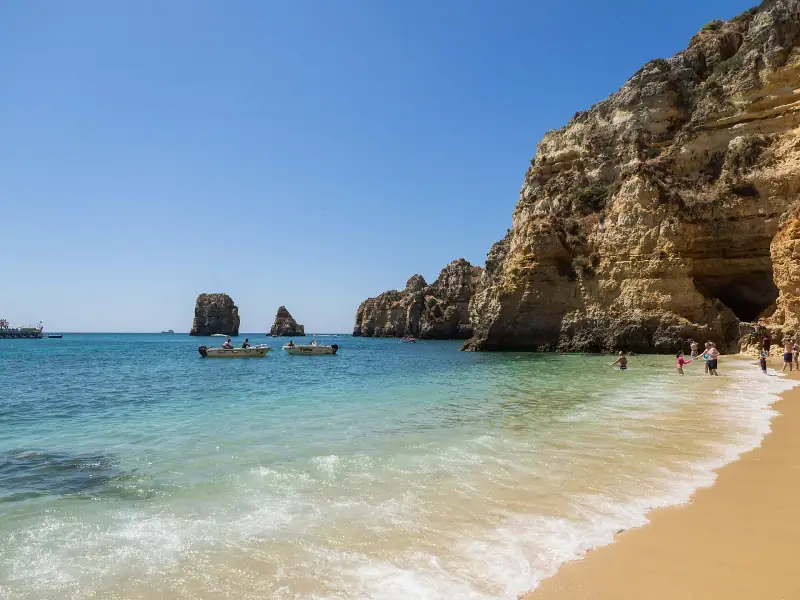
Portugal with kids: trip ideas and family activities
What to do in Portugal with children? Aquarium, zoo, parks, beaches, villages and Madeira: activity ideas by age, recommended pace and practical tips.
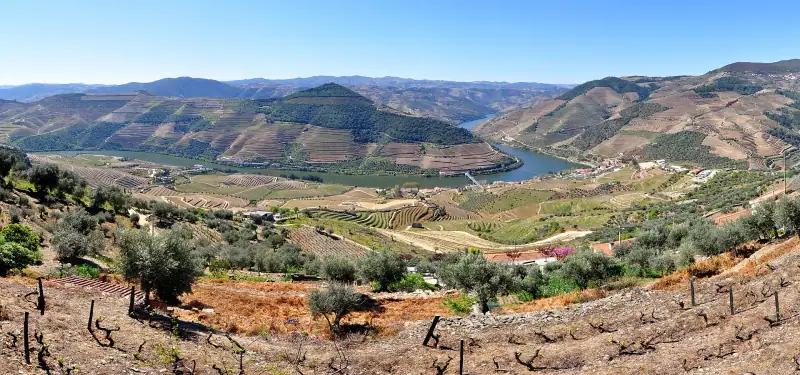
Douro Valley in 2 days from Porto: vineyards, train and cruise
Visit the Douro Valley in 2 days from Porto: train, Pinhão, Peso da Régua, viewpoints, quintas and a river cruise. A realistic plan with tips and seasons.

Portugal trip budget: real costs and 3 priced profiles
How much does a trip to Portugal cost? Lodging, transport, meals, activities: prices item by item, three sample budgets and tips to spend less.
Ready-made
Portugal itineraries
3 days
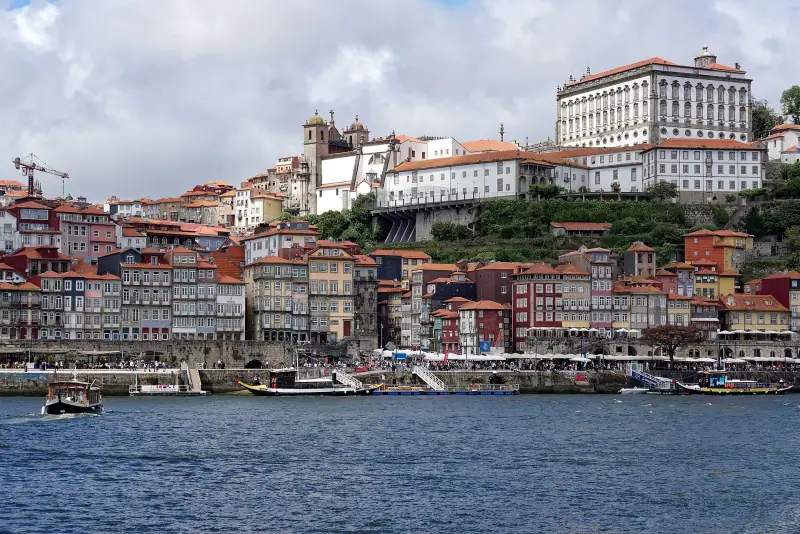
Porto in 3 days: a day-by-day itinerary
What to do in Porto in 3 days: Ribeira, São Bento azulejos, Gaia port cellars, Foz and a Douro Valley excursion. A relaxed day-by-day plan.
3 days
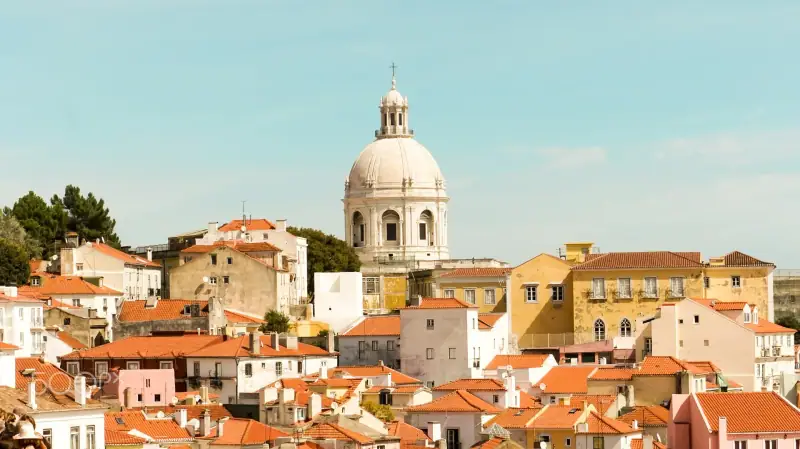
Lisbon in 3 days: day-by-day itinerary, neighborhoods and tips
What to do in Lisbon in 3 days: Baixa, Alfama, Belém, miradouros, Bairro Alto, pastéis de nata and transport tips for a relaxed stay.

1 day
Sintra in a day from Lisbon: itinerary and tips
Sintra in one day from Lisbon: train, Pena Palace, Quinta da Regaleira, Moorish Castle and old town. A realistic itinerary and tips to avoid the crowds.