Itineraries
From El Chaltén to Punta Arenas in 11 days: Argentina to Chile, one way
We may earn a commission when you book through links on this page, at no extra cost to you. We don't visit or try the places we cover: we summarize published sources. How we work
Day by day
- Days 1-3El Chaltén: Fitz Roy and Cerro Torre hikes
- Days 4-5El Calafate and the Perito Moreno Glacier
- Days 6-9Cross into Chile; Puerto Natales and Torres del Paine
- Day 10Punta Arenas, on the Strait of Magellan
- Day 11Short drive to Punta Arenas Airport
Where to sleep
- El Chaltén3 nights
- El Calafate2 nights
- Puerto Natales4 nights
- Punta Arenas1 night
In short
- Fly into El Calafate (FTE), fly out of Punta Arenas (PUQ): 4 bases, 10 nights, about 950 km (590 mi) of driving in five legs, none longer than 4 h 40.
- One border, on day 6, between El Calafate and Puerto Natales. The rental company must obtain the cross-border permit days ahead and charge a fee.
- A one-way drop in Chile is possible with Avis Argentina (ARS 225,000 on top of the crossing fee, 2026); Avis Chile does not allow the reverse.
- Best window: mid-November to March. Wind is the main hazard on every road and boat trip.
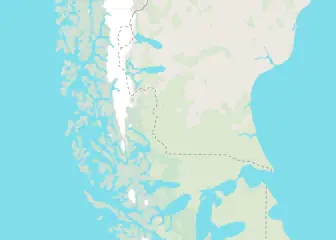
This route suits travelers who want Patagonia’s two best-known landscapes, the Fitz Roy massif and Torres del Paine, in about a week and a half, without driving back to where they started. You fly into El Calafate International Airport (FTE), drive south and cross from Argentina into Chile once, and fly home from Punta Arenas Airport (PUQ). Four bases cover 10 nights: El Chaltén (3), El Calafate (2), Puerto Natales (4) and Punta Arenas (1).
No driving day is longer than 4 h 40, and the stages total about 950 km (590 mi). The real constraint is the border on day 6 and the one-way rental, both covered below. Wind can slow any day, so the legs are kept short and the two big hiking and glacier days sit in the middle of each stay, not on a travel day.
The route at a glance
| Days | Base | Nights | Drive from previous base |
|---|---|---|---|
| 1-3 | El Chaltén | 3 | From El Calafate International Airport (FTE): 3 h 40, 201 km (125 mi) |
| 4-5 | El Calafate | 2 | From El Chaltén: 3 h 55, 212 km (132 mi) |
| 6-9 | Puerto Natales (Chile) | 4 | From El Calafate: 4 h 40, 268 km (167 mi), with the border |
| 10 | Punta Arenas | 1 | From Puerto Natales: 3 h 05, 247 km (153 mi) |
| 11 | Departure from Punta Arenas Airport (PUQ) | - | From Punta Arenas: 20 min, 22 km (14 mi) |
Compare rental companies in El Calafate
When you compare, tick or ask for the cross-border option and list Argentina and Chile, plus the one-way drop-off in Punta Arenas.
Day by day
Days 1-3: El Chaltén and the Fitz Roy trails
Pick up the car at El Calafate airport and fill the tank in El Calafate: our El Chaltén guide says there is no reliable gas station on the road north. The drive is 3 h 40, 201 km (125 mi), on the paved RN40. Strong winds (up to 100 km/h / 62 mph) can make it harder, so leave plenty of daylight. In the evening, the easy forest loop (5 km / 3 mi, 1 h 30) or the Mirador del Río de Las Vueltas (1 h) fits an arrival day.
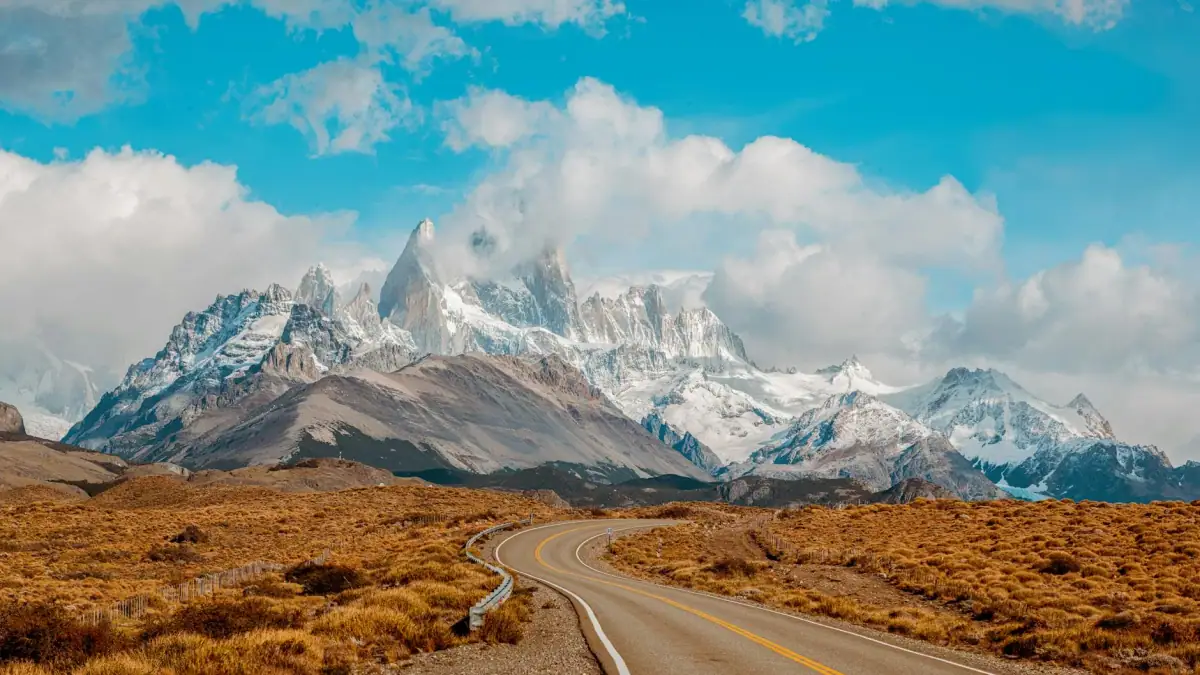
Day 2 is for Laguna de los Tres, the flagship hike: 21 km (13 mi) round trip, +800 m (2,625 ft), 8 to 10 hours, with a steep last climb. Start at 7 or 8 am for morning light on the spires. Day 3 is for Laguna Torre and the view of Cerro Torre: 18 km (11 mi) round trip, 7 to 9 hours, moderate. If clouds sit on the peaks, Laguna Capri (10 km / 6 mi, 3 to 4 hours) is the shorter option. The guide’s advice for cloud is patience, since it often lifts by mid-morning or afternoon. Trails need no guide. Park entry has been paid since late 2024 (about ARS 50,000 a day in 2026).
ATMs in El Chaltén are few and can run out of cash, so bring pesos. A waterproof, windproof jacket is described as essential. Details are in our guide to El Chaltén, and the hiking guide compares the routes. Hotels in El Chaltén are tight in December and January, so book 2 to 3 months ahead.
Days 4-5: El Calafate and the Perito Moreno Glacier
Day 4 is the drive back south: 3 h 55, 212 km (132 mi). In the afternoon, walk the lakefront on Lago Argentino or the Laguna Nimez bird reserve (1 to 2 hours), a short walk from downtown, where the guide lists flamingos and black-necked swans. In summer the sun sets late, up to 10:30 pm.
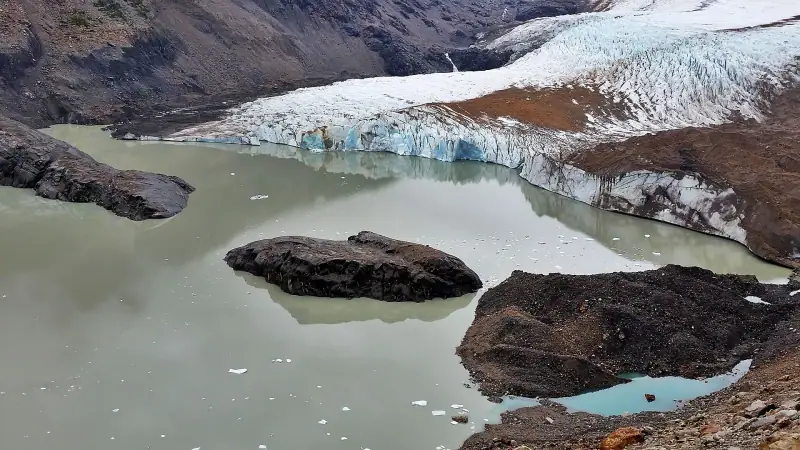
Day 5 belongs to the Perito Moreno Glacier, about 80 km (50 mi) from town by a paved road, roughly 1 h by car. The park opens at 8 am. Our Perito Moreno guide says to allow 2 to 4 hours for the walkways, about 3 km (1.9 mi) of walking, and to arrive early for the best light on the ice front. Two ice-walk options exist, Mini Trekking and Big Ice, booked ahead; in December and January book at least a week before. Park entry costs about ARS 50,000 (since June 2026). You can compare glacier activities for the boat and ice-walk options. For rooms, see hotels in El Calafate and the El Calafate guide.
Days 6-9: Puerto Natales and Torres del Paine
Day 6 is the longest drive and the border day: 4 h 40, 268 km (167 mi) from El Calafate to Puerto Natales. Leave early, since our road trip guide notes winds are generally weaker in the morning, and read the border section below first. The guides give 30 to 90 minutes of formalities for the crossing, so keep the afternoon free.
Puerto Natales sits on the Última Esperanza Fjord. Spend the first evening on the Costanera and the Plaza de Armas. The town is where hikers rent gear, buy food and arrange shuttles to the park. Our guide says cash is easier to withdraw here than inside the park.
Day 7 can be a Torres del Paine day visit. Puerto Natales is about 70 to 112 km (43 to 70 mi) from the park entrances, and our comparison guide calls a day visit feasible from here, with an early-morning start. Park entry is bought online in advance at pasesparques.cl and costs about 25,000 to 50,000 CLP depending on length (since May 2026). This is a day visit, not the multi-day trek; the Torres del Paine trek guide covers the W and O circuits, whose refuges are booked months ahead.
Day 8 is the full-day fjord cruise to the Balmaceda and Serrano glaciers (about 8 am to 5 pm). Day 9 is lighter: the Cueva del Milodón, 24 km (15 mi) north (allow half a day), then the Padre Alberto de Agostini museum in town. The Puerto Natales guide has the restaurants, including lamb roasted over a fire (cordero al palo), and the Puerto Natales or El Calafate comparison explains why this base works better than El Calafate for the park. Search hotels in Puerto Natales early: the town is saturated in the trekking season. For tours, try activities in Puerto Natales.
Day 10: Punta Arenas
The last drive is 3 h 05, 247 km (153 mi), on the paved RCH 9. Punta Arenas faces the Strait of Magellan. The Plaza Muñoz Gamero with its Magellan statue, the Palacio Sara Braun and the Palacio Mauricio Braun (regional museum) are all within walking distance, and the municipal cemetery is a few hundred meters north of the center (30 to 45 minutes, free). Cerro de la Cruz gives the best view of the town at sunset. Our Punta Arenas guide has the details, and you can find hotels in Punta Arenas downtown.
Day 11: return the car and fly
The airport is 20 min away, 22 km (14 mi). Return the car, with time for the one-way drop-off paperwork. Our guide says wind and sea cancel penguin boats often, which is why an Isla Magdalena trip does not belong on the day before a flight.
Crossing the borders
There is one border on this route: Argentina to Chile on day 6, at Río Don Guillermo, between El Calafate and Puerto Natales. A rental car crosses only with a permit that the rental company obtains in advance. Chile’s customs grants it per car, free, valid up to 90 days, but the company charges its own fee. Ask when you book. Published 2026 examples: Avis/Budget Argentina charges ARS 206,611.57 per rental from El Calafate and asks for 7 business days’ notice. Rental companies say they are not responsible if a border closes. Tell the company every country you will enter. The tour page has the border section for the whole Patagonia tour.
Chile requires SOAPEX, a compulsory personal-accident insurance for foreign-registered cars (CMF, 2026). It covers people, not damage to the car. Ask whether the permit includes it. There is no Green Card system here, and no vignette in either country. Carry your passport, licence, rental contract and the company’s permit (plus the SOAPEX certificate if separate). Everyone 18 or over fills in Chile’s free SAG sworn declaration, online at sag.gob.cl up to a day before or on paper at the border. Declare fruit, vegetables, seeds, meat, dairy and honey; undeclared food is fined, so arrive with no fresh food. Hours change, so check pasosfronterizos.gob.cl or argentina.gob.ar before you go. For visas, entry rules and driving licence or IDP requirements, read your own government’s advice: travel.state.gov (US), gov.uk/foreign-travel-advice (UK), travel.gc.ca/destinations (Canada) or smartraveller.gov.au (Australia). Argentina uses the Argentine peso and Chile the Chilean peso.
This is a one-way trip across a border, which is where rentals get expensive. Avis Argentina allows some drops in Chile for a one-way fee of ARS 225,000 from El Calafate to Puerto Natales or Punta Arenas (2026 page), on top of the crossing fee. Avis Chile does not allow a drop in Argentina, so this direction is the one that works. A loop back to El Calafate avoids the one-way fee (only the crossing fee is paid), but adds a return border and drive. Other companies set their own terms, so compare before booking.
Getting there and away
Fly into El Calafate International Airport (FTE). It is about 23 km (14 mi) from town, and our guide gives flights from Buenos Aires as 3 h to 3 h 30 with Aerolíneas Argentinas, JetSMART or LADE. Travelers from the US, UK, Canada and Australia usually reach Buenos Aires or Santiago on a long-haul flight first; our guides do not describe those routes, so check airlines directly. Leave from Punta Arenas Airport (PUQ), about 20 km (12 mi) north of downtown. Flights generally connect through Santiago, about 3 h 15 with LATAM or Sky Airline. Bariloche (BRC), El Tepual in Puerto Montt (PMC) and La Araucanía in Temuco (ZCO) are not on this route.
When to go
Our best-time guide points to mid-November to March. Mid-November has everything open, flowers out and fewer tourists. Late-spring weather is unstable, with some trek refuges not yet open in October. The first half of December is a good compromise before the holiday crowds. January is peak season for crowds and prices, with full services and the longest days. February is still good. March often has stabler weather, calmer winds and prices 20 to 40% lower, with autumn colors from late in the month. El Calafate runs 5 to 12 °C (41 to 54 °F) in spring and 15 to 22 °C (59 to 72 °F) in summer; Punta Arenas sees 10 to 17 °C (50 to 63 °F) in November to March. See when to go to Patagonia.
Budget
Our Patagonia budget guide offers estimates per person per day, excluding domestic transport and flights: mid-range is €80-150 (about $93 to 175), comfort €150-300 (about $175 to 350). Specific figures:
- El Chaltén park entry: about ARS 50,000 a day (2026). Los Glaciares, Perito Moreno: ARS 50,000 (since June 2026).
- Torres del Paine entry: about 25,000 to 50,000 CLP depending on length (since May 2026).
- Bus El Calafate to El Chaltén: ARS 70,000 one way in October 2026, for comparison with driving.
- Car rental (budget guide): an economy car €40-60 (about $46 to 70) a day, an SUV €60-100 (about $70 to 115), full insurance €15-25 (about $17 to 29) extra. The guide calls an SUV the best choice for Patagonian roads.
- Border crossing and one-way drop: ARS 206,611.57 and ARS 225,000 at Avis (see above).
Argentina is described as more expensive than Chile: El Calafate is one of the priciest towns in Patagonia, while Puerto Natales is more affordable.
Adapt it
For a shorter trip, drop El Calafate’s second night and Puerto Natales’ day 9, which gives 9 days with the same bases. For a longer one, add a night at Punta Arenas to fit the Isla Magdalena penguin excursion (October to March, about 2 hours each way, wind cancellations common) and keep a spare day before the flight. Our Patagonia road trip guide covers a three-week version. If you would rather start in the north, the other stops of our Patagonia planner are Bariloche, Esquel, Puerto Varas, Frutillar, Puerto Montt and Pucón; they are not part of this route and need a different rental plan.
Frequently asked questions
Can you drop a rental car in Chile if you pick it up in Argentina?
Sometimes. Avis Argentina allows some drops in Chile for a one-way fee of ARS 225,000 from El Calafate to Puerto Natales or Punta Arenas (2026 page), on top of the crossing fee. Avis Chile does not allow a drop in Argentina, so the route only works in this direction.
How do you cross from Argentina to Chile with a rental car?
The rental company must obtain the permit in advance and charge its fee. Avis/Budget Argentina asks for 7 business days' notice. You carry your passport, licence, rental contract and the permit, and you fill in Chile's free SAG declaration.
Is the driving on this route hard?
The longest leg is 4 h 40 and the roads are paved, but wind is strong. Our guides report gusts up to 100 km/h (62 mph) on the road to El Chaltén and up to 80-100 km/h (50-62 mph) in Punta Arenas. Leave early, when winds are generally weaker.
When is the best time for this trip?
November to March. Mid-November is a good compromise with fewer tourists. December and January have the longest days but peak prices and crowds. March is calmer and cheaper, with autumn colors starting.
Do you need a guide to hike in El Chaltén?
No. The marked trails of Los Glaciares National Park can be hiked without a guide. Park entry has been paid since late 2024, about ARS 50,000 a day in 2026.
Ready-made
Patagonia road trip (Chile & Argentina) itineraries
12 days
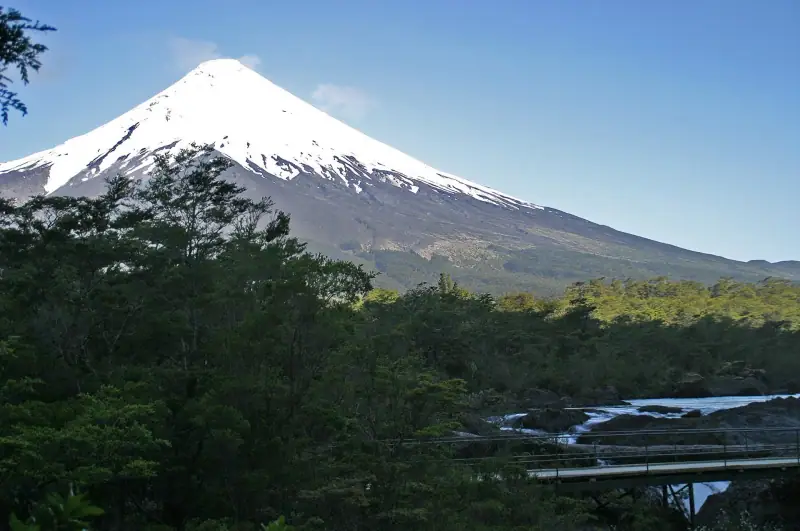
Bariloche and Chile's Lakes District in 12 days: a loop by car
Puerto VarasPucónBarilocheEsquel
10 days
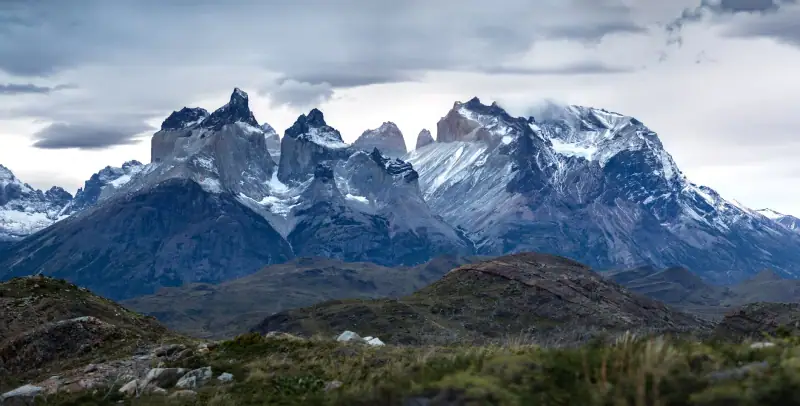
Patagonia in 10 days: El Calafate, Torres del Paine and El Chaltén by car
Puerto NatalesEl CalafateEl Chaltén